

Slovak cuisine stands on three pillars: sheep cheese, cabbage and potatoes, with bryndzove halusky holding the official title of national dish. This is hearty shepherd food from the mountains, glorious after a day in the Tatras and considerably less so in summer heat on a Bratislava terrace. A plate of halusky in a country tavern costs around 6-9 euros, which makes eating your way across Slovakia one of the cheapest food trips in Central Europe. Here is what to order, where exactly, and what to wash it down with.
Bryndzove halusky: the national dish
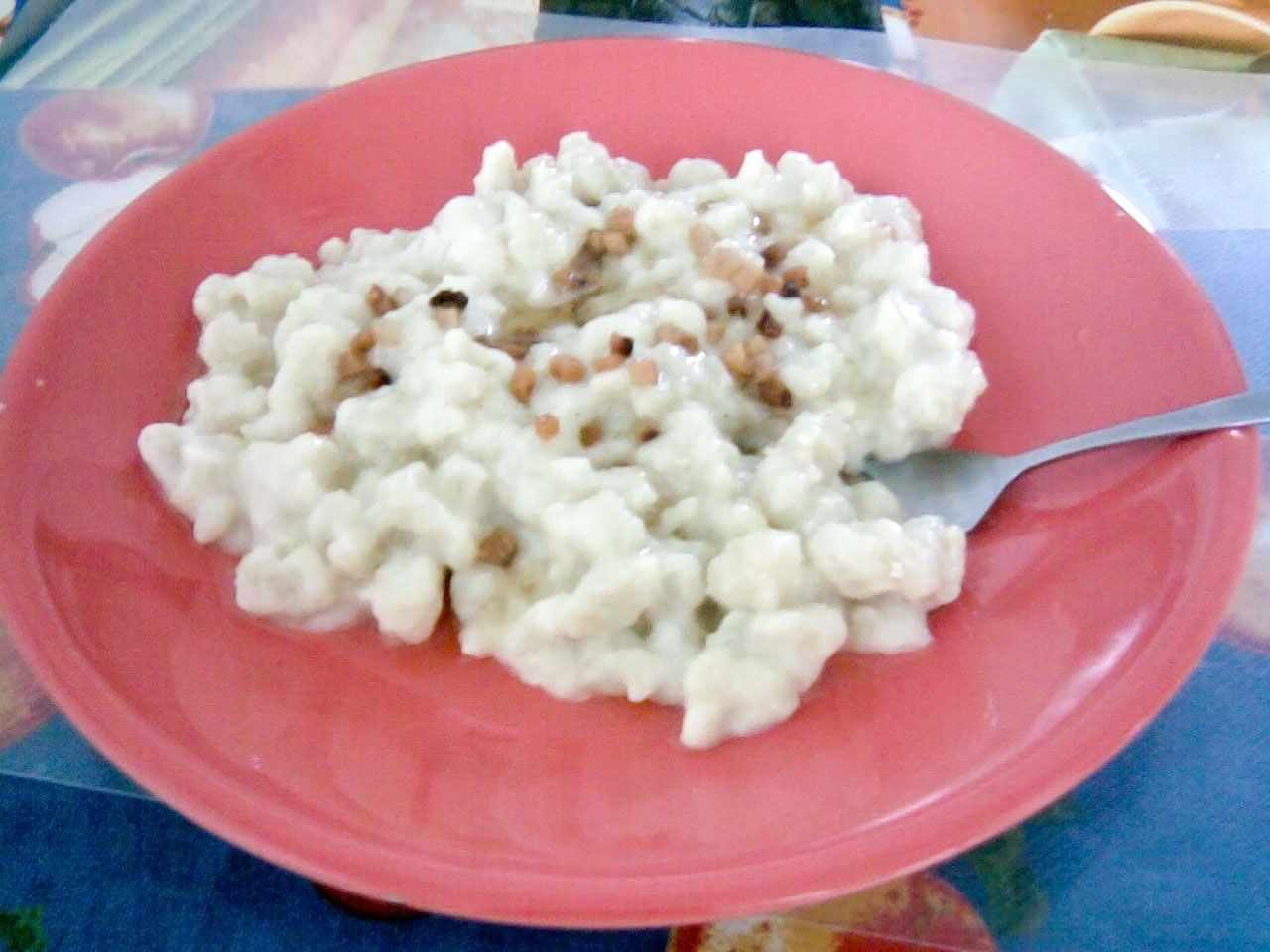
Halusky are small potato dumplings tossed with bryndza, a soft, tangy sheep's milk cheese, and topped with crispy bacon bits. It sounds basic and works flawlessly: the sour cheese melts against the hot dumplings and turns into a sauce. Bryndza is not some generic "sheep cheese" either; it carries EU protected geographical status, and the real thing is made only in Slovakia's mountain regions.
Two tips. First: the best halusky are served not in Bratislava's tourist restaurants but at a salas, the roadside shepherd huts in the mountains where the bryndza is made on site. Second: the traditional pairing is zincica, a sour sheep's whey drink served in a mug. The taste is an acquired one, but try it at least once; it is as much a symbol of the Slovak highlands as the cheese itself.
Kapustnica: the soup winter starts with
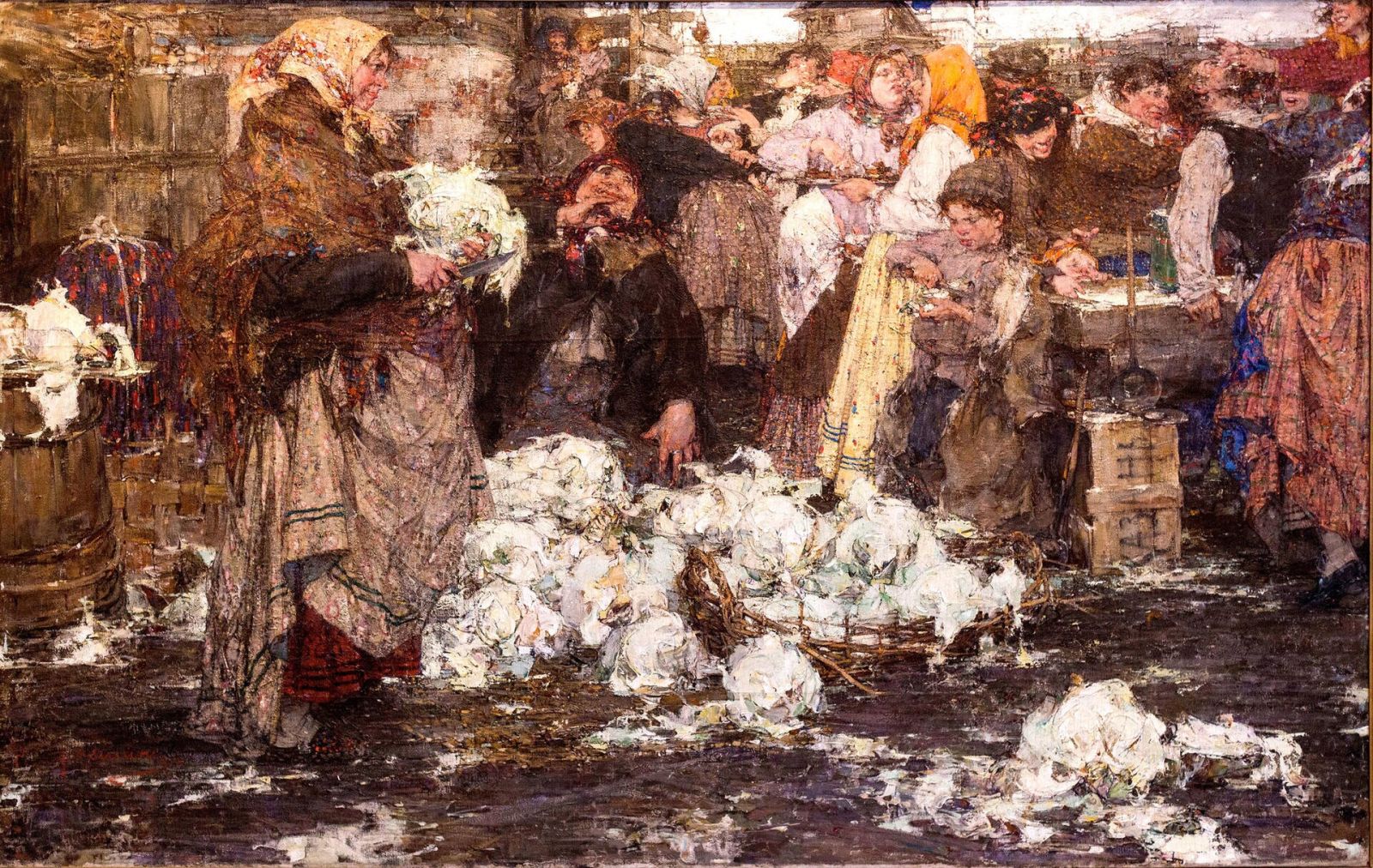
A thick sauerkraut soup with smoked meat, sausage, mushrooms and, in some regions, prunes. Every family guards its own recipe and argues about it roughly the way Italians argue about ragu. Traditionally kapustnica is the Christmas Eve dish, but restaurants serve it year-round. Order it when you are cold and need rescuing: the portion is dense enough to make a main course optional. You will also spot demikat on menus, a lighter bryndza soup with croutons, and it deserves attention too.
Lokse: flatbreads that go with goose and with coffee
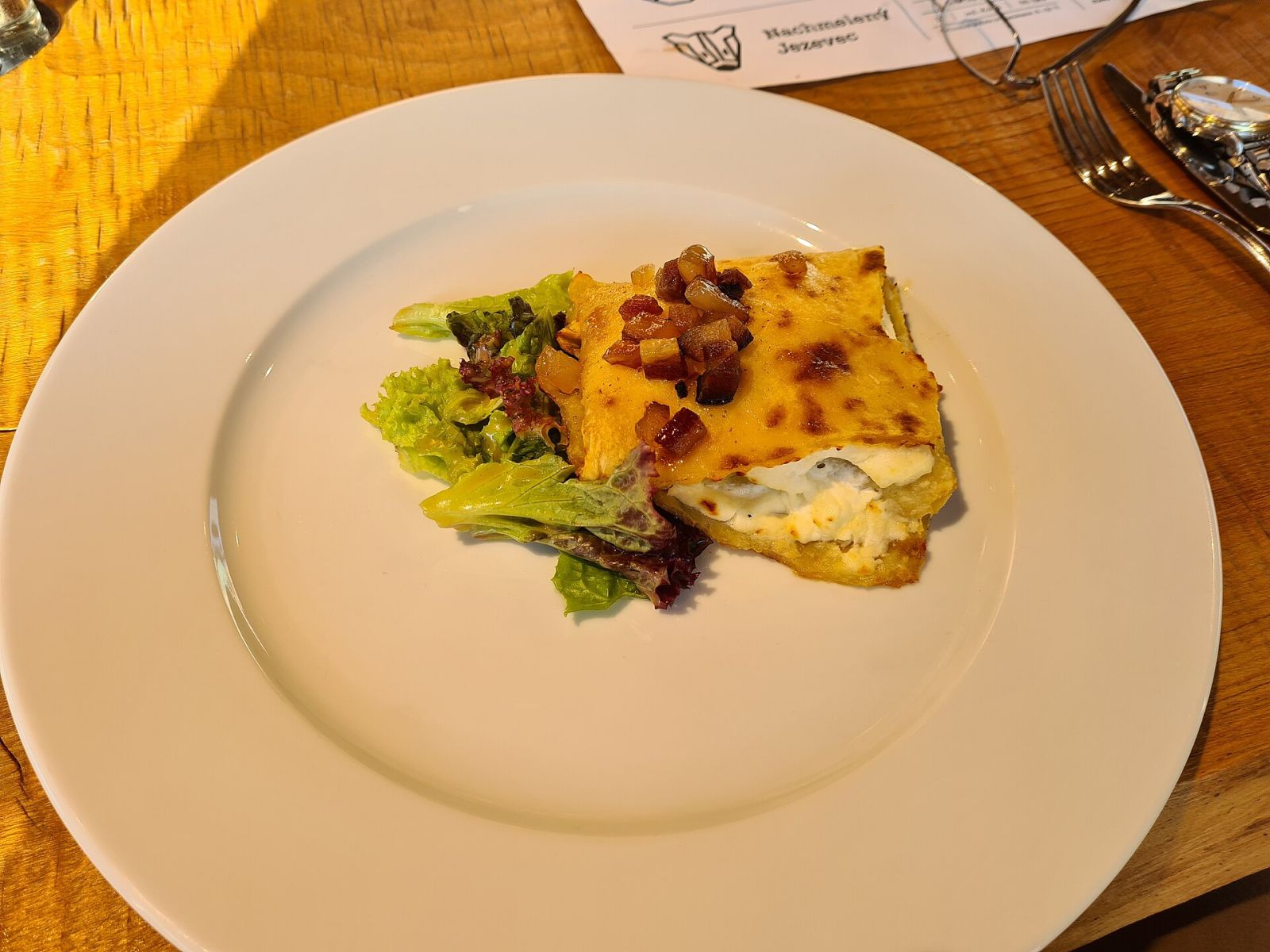
Lokse are thin potato flatbreads baked on a dry pan, and they lead double lives. The savoury path: brushed with goose fat and served alongside roast goose or duck, the way they do it in Slovensky Grob near Bratislava, where autumn goose feasts draw queues. The sweet path: walnuts, poppy seeds or plum jam, and suddenly it is dessert. If you see husacina s loksami on a menu, goose with lokse, in autumn that is the single best order in the country.
Trdelnik: delicious, but is it even Slovak?
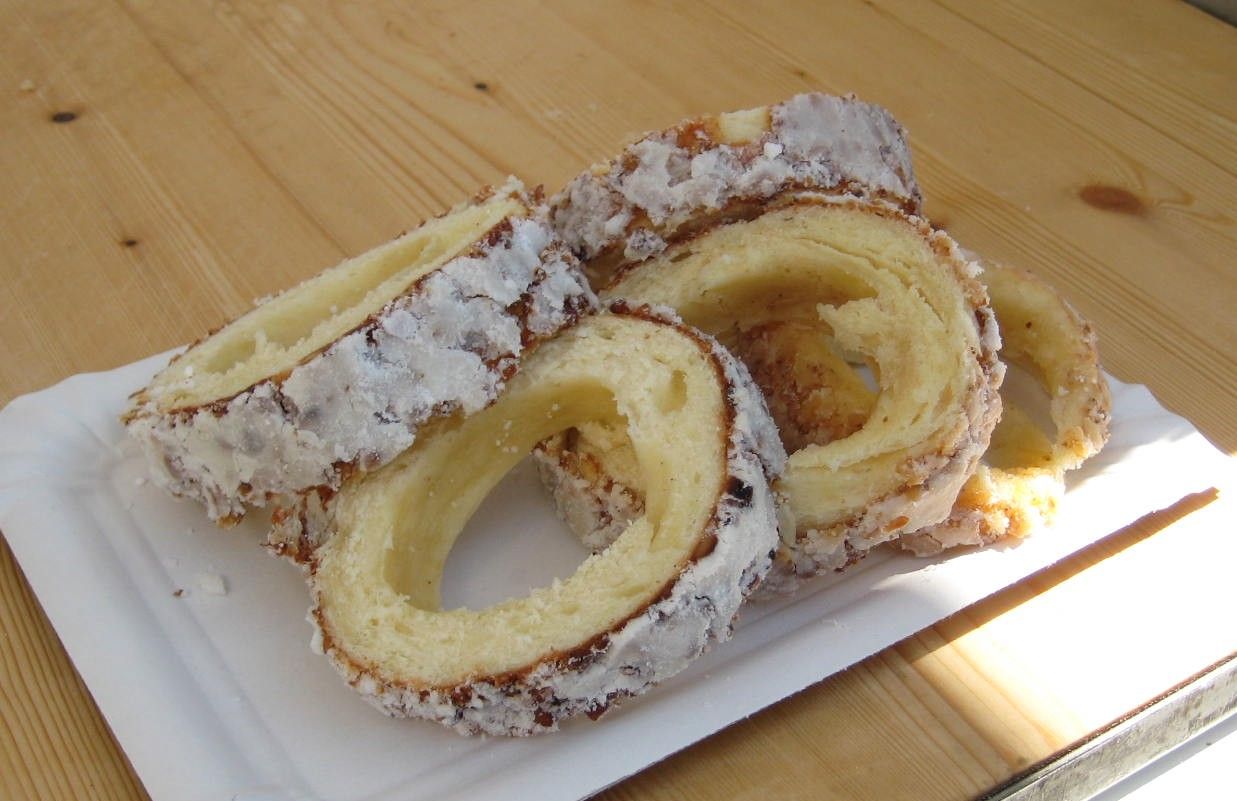
A sweet tube of yeast dough wound around a wooden spit, roasted over coals and rolled in sugar and nuts. Tourists assume trdelnik is Czech, Czechs point at Hungary, yet the strongest documented roots belong to the Slovak town of Skalica: skalicky trdelnik has held an EU protected geographical indication since 2007. The proper place to try it is Skalica itself, where festivals bake it to the old recipes. Bratislava sells trdelnik on every corner too, but that is the fairground version for tourists, often stuffed with ice cream or chocolate spread. Tasty, sure, only distantly related to the original.
What else belongs on the table?
- Vyprazany syr: breaded fried cheese with fries and tartar sauce. Slovakia's ultimate comfort food.
- Strapacky: the same dumplings, but with stewed sauerkraut and bacon instead of bryndza.
- Pirohy: filled dumplings with bryndza or potato, close cousins of Polish pierogi and Ukrainian varenyky.
- Gulas: thick and Hungarian-hot; in the east of the country it is cooked in a cauldron at every festivity.
- Ostiepok and parenica: smoked sheep cheeses, one egg-shaped with pressed patterns, the other rolled into a ribbon. Both travel well, the perfect edible souvenir.
Tokaj wines: yes, Slovakia has its own Tokaj
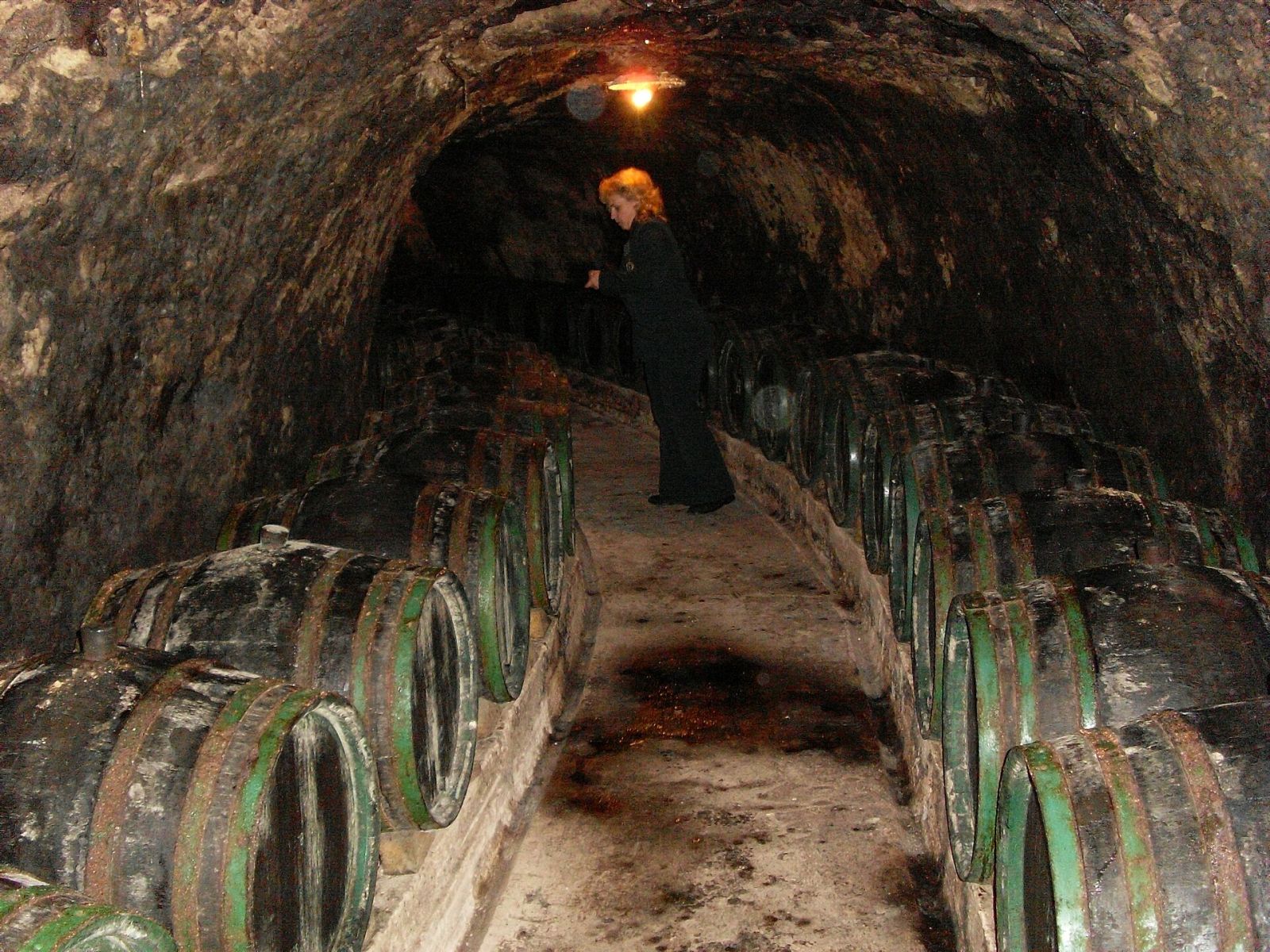
The famous Tokaj wine region lies mostly in Hungary, but its northern tip, seven villages near Trebisov in Slovakia's southeast, belongs to Slovakia and holds the legal right to the same name. The wines are the same botrytised sweet legends: Tokaj vyber of three to six puttonyos, samorodne, plus dry Furmint. Cellars in the villages of Mala Trna and Vinicky host tastings; a flight of five or six wines runs roughly 10-20 euros, and booking ahead is wise. Beyond Tokaj, the Small Carpathians deserve a detour: the wine towns of Pezinok and Modra sit half an hour from Bratislava, and route details are easy to find on the official tourism portal slovakia.travel.
On the stronger side, try borovicka, the juniper spirit Slovaks consider their national drink, and slivovica plum brandy. Among soft drinks there is one true phenomenon: Kofola, a herbal cola alternative born in the socialist era, which locals prefer to the original and pour from the tap like beer.
What does it cost and where should you eat?
| Dish or drink | Rough price | Where to get it |
|---|---|---|
| Bryndzove halusky | 6-9 euros | Roadside salas huts, mountain taverns |
| Kapustnica | 4-6 euros | Taverns, Christmas markets |
| Goose with lokse | 15-25 euros | Slovensky Grob, season from September |
| Trdelnik | 2-4 euros | Skalica for the real thing, fairs for fun |
| Tokaj wine tasting | 10-20 euros | Tokaj region cellars, book ahead |
| Draught Kofola | 1-2 euros | Any tavern |
Prices are ballpark figures, so check current ones before your trip. The general rule for picking a place is simple: look for koliba or salas signs outside towns and krcma in them; that is where locals eat. The weekday lunch special, denne menu, costs 6-8 euros including soup and usually beats the evening tourist menu on flavour.
The hungry traveller's summary
The minimum three-day programme reads like this: halusky with zincica at a salas, kapustnica in a tavern, fried cheese for a lunch special, goose with lokse if autumn cooperates, and an evening in a Tokaj cellar. Slovak cuisine makes no claim to Michelin refinement; instead it honestly delivers what it promises: generous portions, reliable warmth and moderate bills. For a mountain country, that is exactly the right formula.