

Wondering about the best things to see in Malta: nearly everything that matters fits on an island 27 kilometres long, and its temples are older than the Egyptian pyramids by roughly a thousand years. In four or five days you can realistically cover Valletta, medieval Mdina, the fishing harbour of Marsaxlokk, take the ferry to Gozo and swim in the Blue Lagoon of Comino.
Valletta: a capital the size of a neighbourhood
Valletta is the smallest capital in the EU, under a kilometre wide, and at the same time a UNESCO World Heritage city in its entirety. The Knights Hospitaller built it after the Great Siege of 1565, and the grid of streets has not changed since. The key stops:
- St John's Co-Cathedral. Austere outside, gold to the ceiling inside, plus two Caravaggio paintings including The Beheading of Saint John the Baptist, the only canvas the artist ever signed. Entry costs around 15 euros, and the cathedral is closed to tourists on Sundays.
- Upper Barrakka Gardens: a balcony over the Grand Harbour with the best view of the forts. The Saluting Battery fires at noon and 4 pm, arrive 15 minutes early.
- Republic Street and its stepped side alleys with the famous enclosed wooden balconies, the gallariji. The most photogenic facades hide on Strait Street and St Lucia Street.
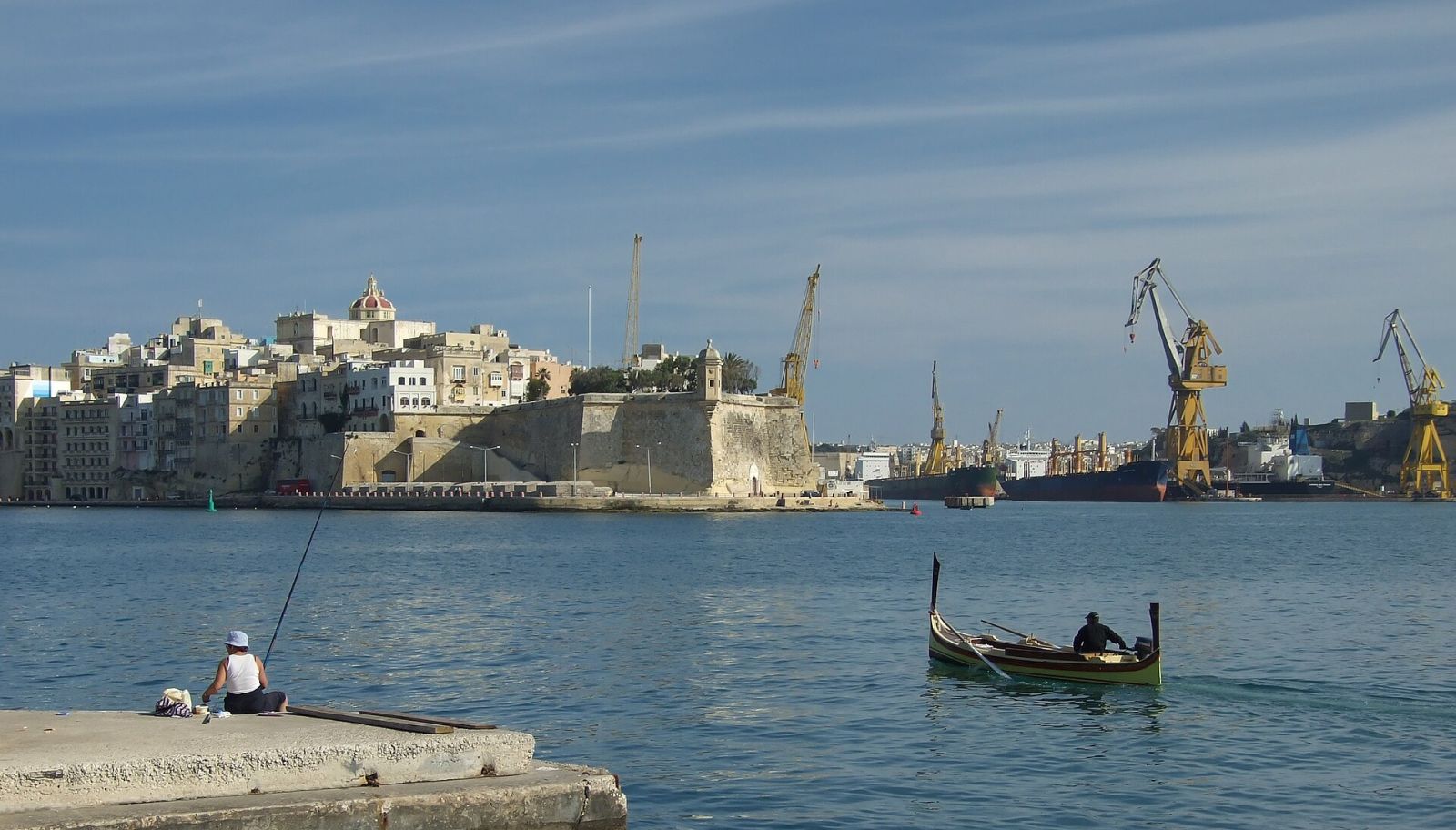
A practical note: do not drive into Valletta, parking is scarce. Leave the car in Floriana or arrive by dghajsa, the traditional water taxi from the Three Cities. It costs 2-3 euros and is easily the most beautiful way to enter the capital.
Mdina: the quiet city behind the walls
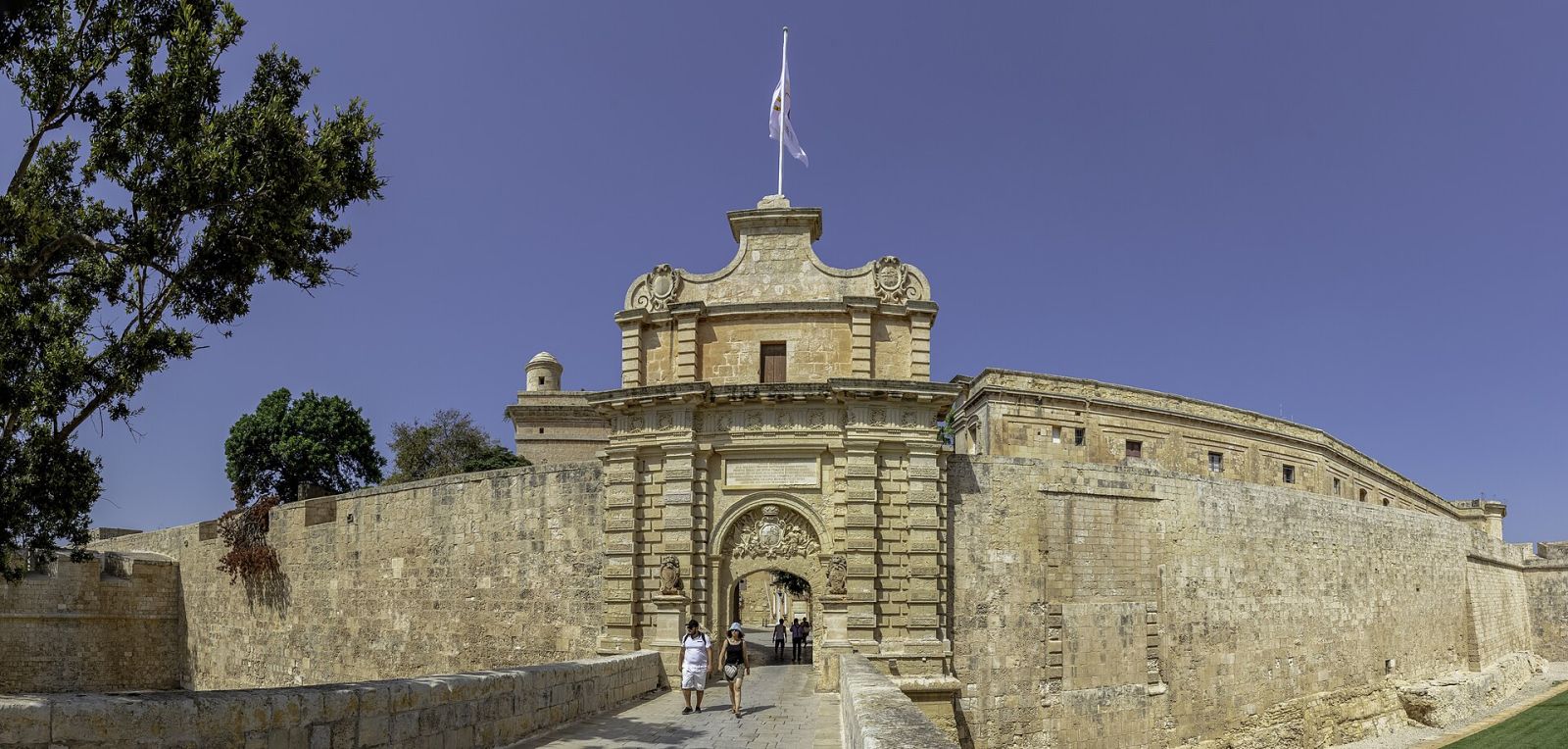
Mdina was Malta's capital before the knights arrived and has stayed frozen in time: fewer than three hundred people live inside the walls, and cars enter by permit only, hence the nickname the Silent City. Narrow honey-coloured lanes, baroque palazzos, and from the bastions you can see half the island. Game of Thrones fans will recognise the Mdina Gate: it played the entrance to King's Landing in season one.
The main trick with Mdina is timing: come at eight in the morning or after 6 pm, when the tour groups vanish and the city finally sounds the way it should, which is to say not at all. In neighbouring Rabat, effectively Mdina's suburb, the St Paul's Catacombs are worth an hour, an underground maze of early Christian burials.
The Blue Lagoon of Comino: worth it or not
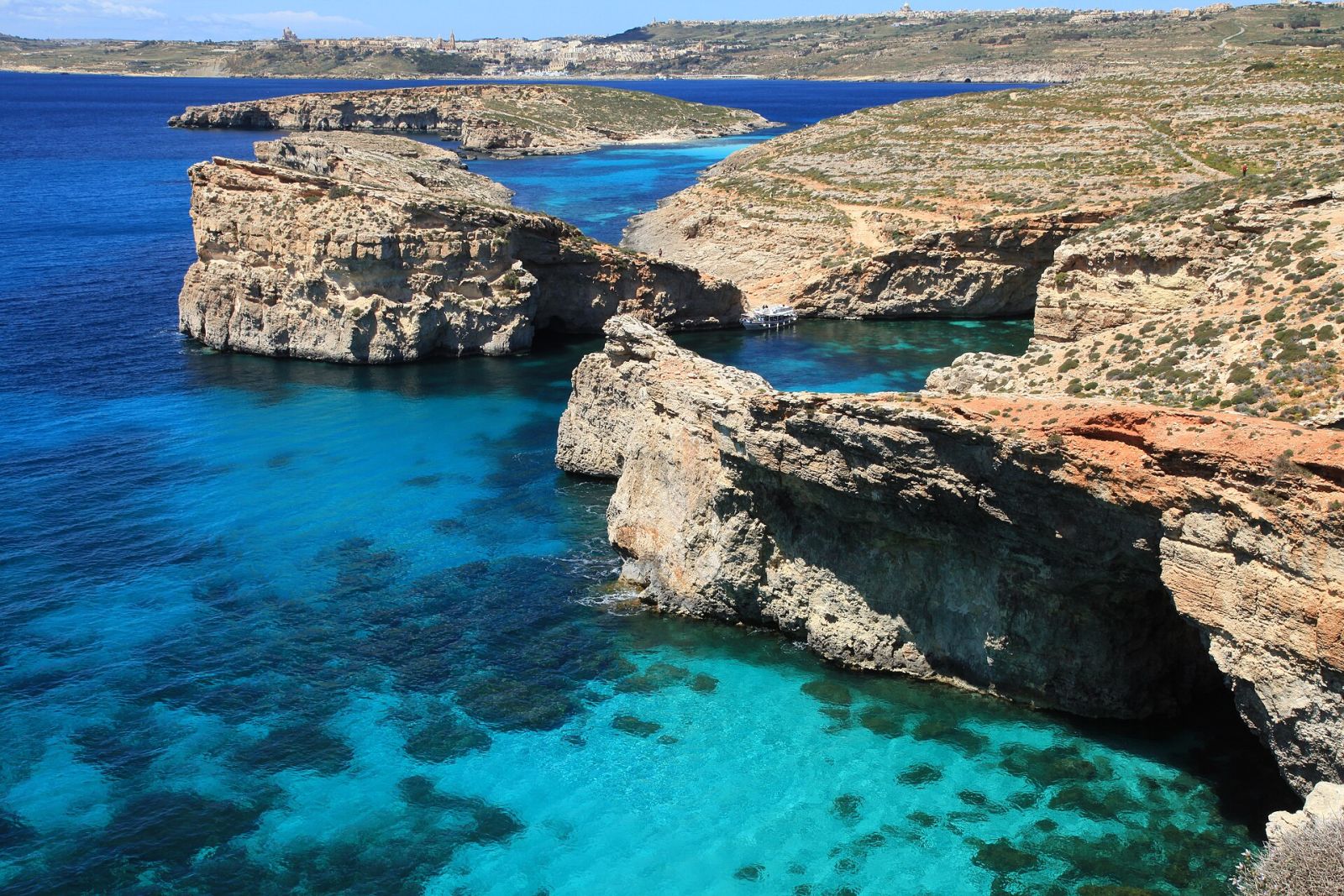
The Blue Lagoon on the islet of Comino is that neon-turquoise water from every postcard. The colour is honest, no filters required. The problem lies elsewhere: in July and August, between 10 am and 4 pm, the tiny bay holds several thousand people at once, and paradise turns into an unticketed beach festival. Since 2024 the authorities have capped daily visitor numbers and removed some of the sunbeds, yet it still gets crowded.
How to do it right: take the first morning boat from Cirkewwa or Sliema around 9 am, and by 11:30 you will have swum and explored the caves. Or reverse it and arrive after 4 pm as the crowds sail away. Off season, in May or October, the lagoon regains its dignity and becomes one of the finest spots in the country. Visibility runs 10-15 metres, bring a mask.
Gozo: the little brother with a personality
The ferry from Cirkewwa to Gozo takes 25 minutes and costs about 5 euros return (you pay on the way back). Gozo is greener, quieter and more rural than Malta, and it deserves a full day. What to see:
- The Cittadella in Victoria: a fortress above the island's capital with a 360-degree view over all of Gozo. The bastions are restored and walking the walls is free.
- The Ggantija temples: a megalithic complex around 5,500 years old, older than Stonehenge. The name means "tower of giants", and standing next to six-metre stone blocks makes the giant theory feel less silly.
- The Marsalforn salt pans: chessboard fields of salt basins cut into the rock centuries ago, still harvested by hand.
- Dwejra Bay. The famous Azure Window collapsed in a 2017 storm, but the Inland Sea with its tunnel through the cliff justifies the trip even without the arch.
- Ramla Bay: a wide terracotta-sand beach, a rarity in the Maltese islands.
Marsaxlokk: a fishing village under luzzu sails
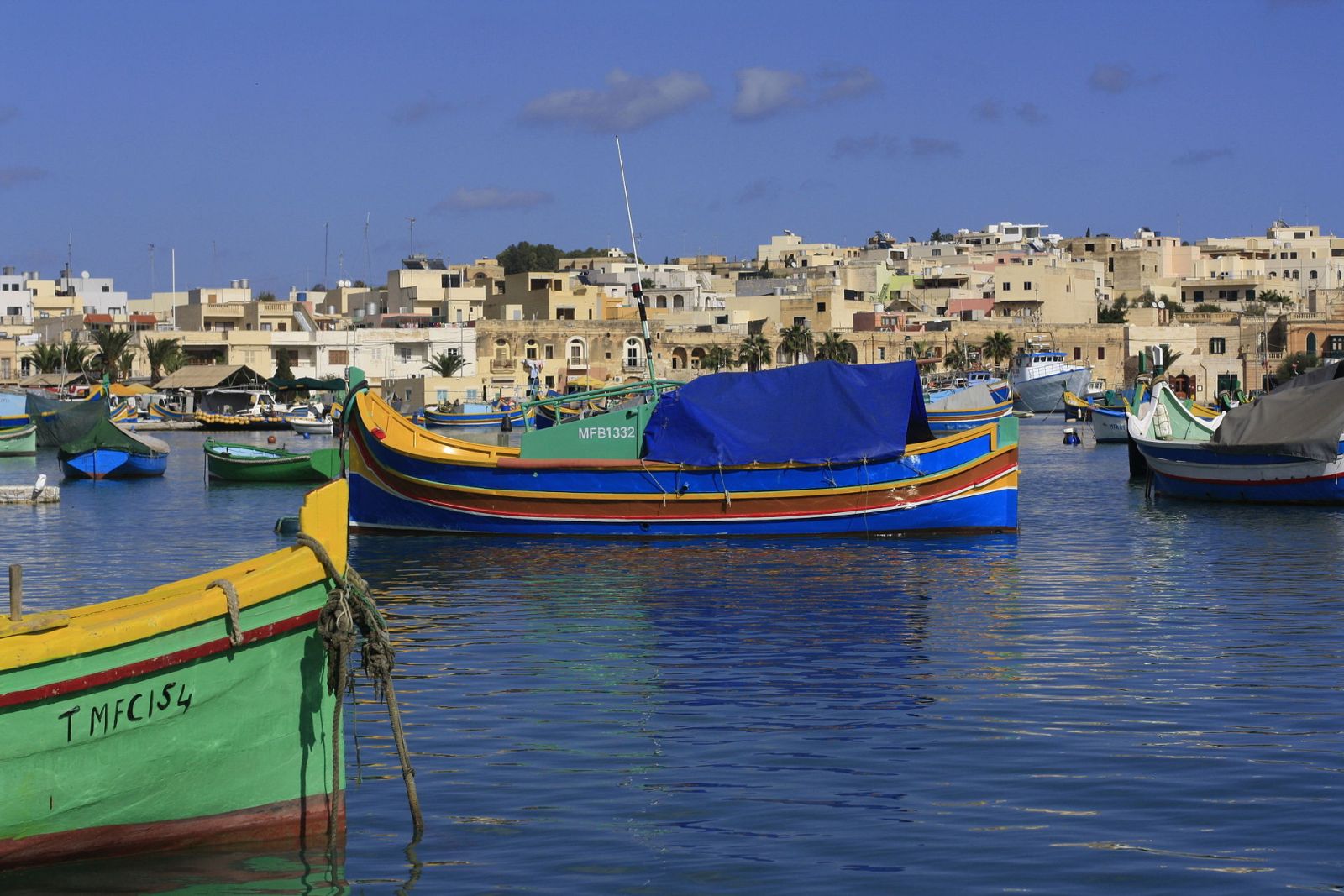
Marsaxlokk in the southeast is a harbour full of luzzu, traditional boats painted in blue, yellow and red stripes with the eyes of Osiris on the bow. The eyes are still painted today, believed to protect the fishermen. The event of the week is the Sunday fish market along the waterfront, which draws half the island. Arrive by 10 am, after that the crush begins.
Lunch in Marsaxlokk is a programme item in its own right: the waterfront tavernas serve the day's catch, and here it genuinely is fresh. Ask for lampuki, the local dorado, in season from August to December. A 20-minute walk from the village lies St Peter's Pool, a natural swimming hole in the rocks for those who like jumping in from the ledges.
The megalithic temples: the oldest buildings on Earth
Malta's temples are UNESCO-listed as the world's oldest free-standing structures, built between 3600 and 2500 BC. The two headline complexes on the southern coast, Hagar Qim and Mnajdra, stand 500 metres apart above the sea and share one ticket, roughly 10 euros. The protective canopies hurt the photos a little but save the stone from erosion. On the solstices a sunbeam passes precisely through Mnajdra's main portal, three and a half thousand years before textbook astronomy existed.
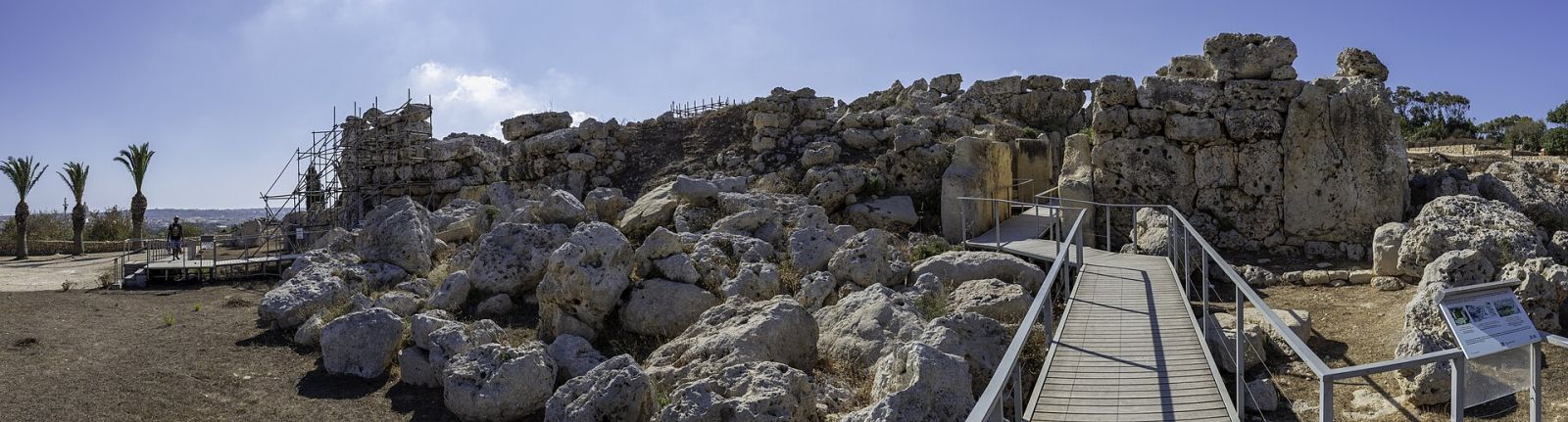
A separate story is the Hypogeum of Hal Saflieni, a three-level underground temple and necropolis carved into the rock. Only 10 visitors per hour are admitted, by advance booking only, and tickets sell out weeks ahead on the Heritage Malta website. If it is on your list, book right after buying your flights. It is the scarcest ticket in the country.
How much time to budget
| Location | Minimum time | Best timing |
|---|---|---|
| Valletta | Full day | Weekdays, cathedral before 11 am |
| Mdina + Rabat | Half a day | Morning or after 6 pm |
| Blue Lagoon | Half a day | Before 11 am or after 4 pm, not August |
| Gozo | Full day | Any day, first ferry out |
| Marsaxlokk | 2-4 hours | Sunday before 10 am (market) |
| Hagar Qim + Mnajdra | 2-3 hours | Morning, before the heat |
Getting between the sights
Malta drives on the left, a British legacy, and drives with temperament. Malta Public Transport buses cover the whole island, a single ticket costs 2-2.5 euros in summer, and a 12-ride card works out noticeably cheaper. The catch: at peak hours full buses sail past crowded stops. The Valletta-Sliema and Valletta-Three Cities ferries run every 15-30 minutes and often beat the bus. A rental car buys freedom, but parking in Valletta or Sliema is a daily quest. Timetables and prices shift, so double-check before you go.
A five-day plan practically writes itself: Valletta, then Mdina with the temples, a day on Gozo, an early morning at the Blue Lagoon and Sunday in Marsaxlokk. Dense, no wasted transfers, and no two days feel alike.