

The essence of Moroccan food: it is slow cooking in clay pots, meat stewed for hours with fruit and spices, and bread doing the job of a fork. Tagine and couscous here are not restaurant exotica but daily life, and the best versions often cost two or three dollars in a hole-in-the-wall with no English menu. Morocco keeps landing in world rankings of top food destinations, and for once the rankings are not lying.
Here is the full rundown: what to try, where to find it, roughly what it costs, and which table manners will save you from awkward moments.
Tagine: a dish and a pot sharing one name
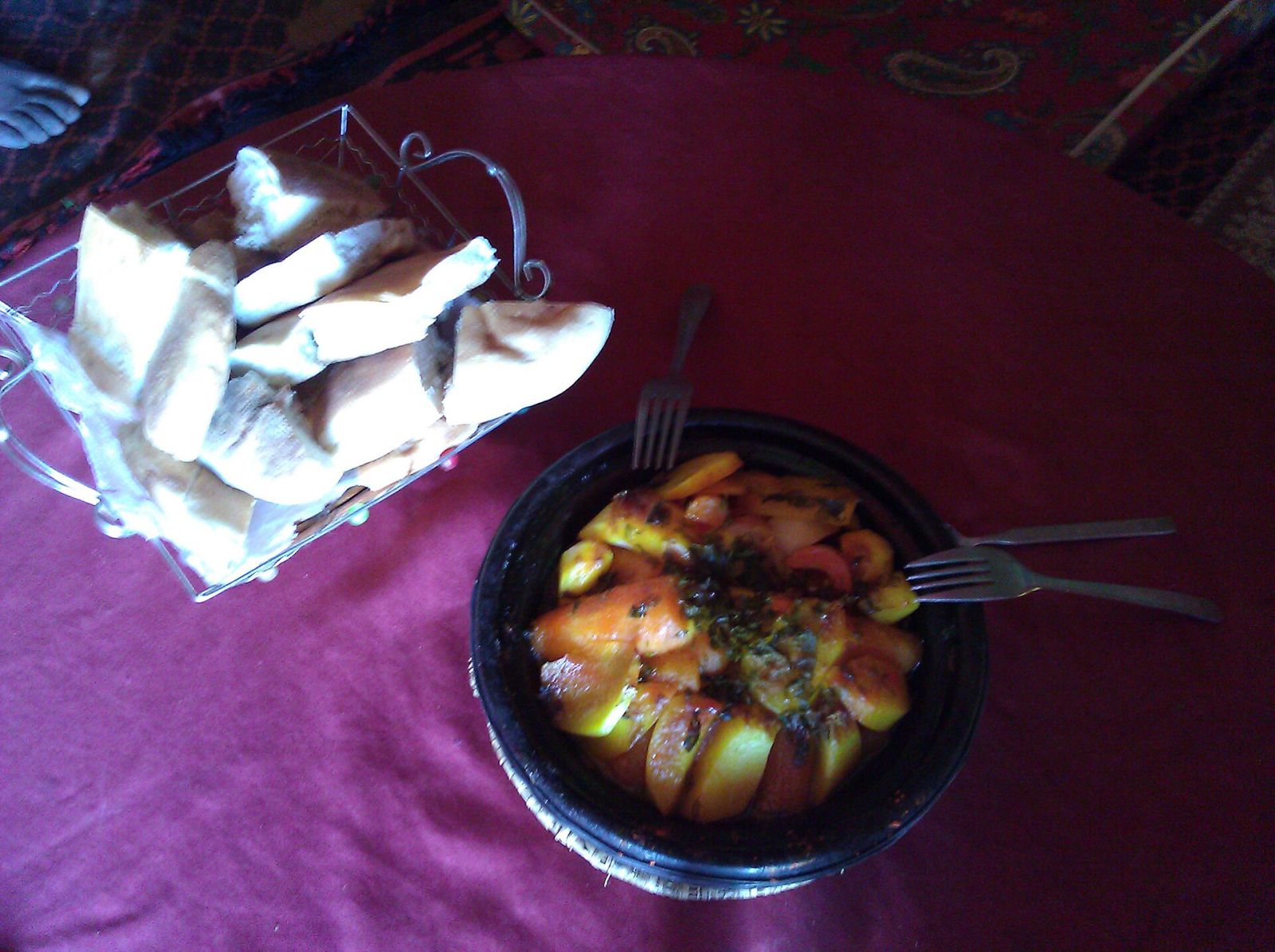
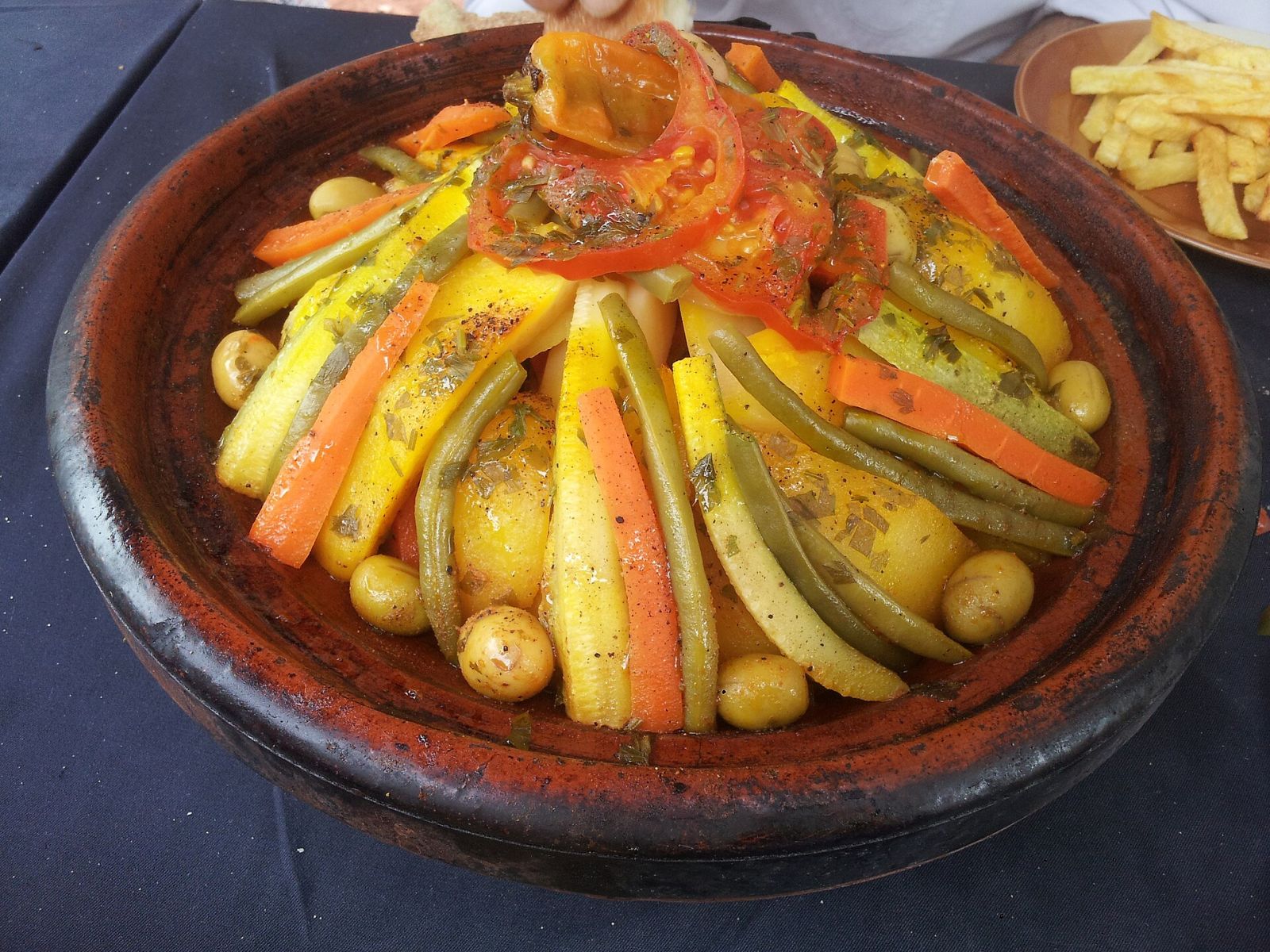
A tagine is both the clay pot with the cone-shaped lid and whatever gets cooked inside it. The cone traps steam and sends it back into the food, so after two or three hours over low heat the meat falls apart at a touch. The classic combinations differ to the point of being opposites: chicken with preserved lemons and olives runs sour and salty, lamb with prunes and almonds runs sweet, and kefta (meatballs in tomato sauce with an egg cracked straight into the pot) is the most filling budget option. Vegetable tagine is a full dish in its own right, not a side.
One tip that genuinely changes the experience: order tagine where the pots are sitting on coals by the entrance, not where they get reheated in a microwave. Roadside cafes between cities often cook better than tourist restaurants inside the medina. Expect roughly 35-60 dirhams in simple places, and check current prices before your trip.
Couscous: why it is a Friday dish
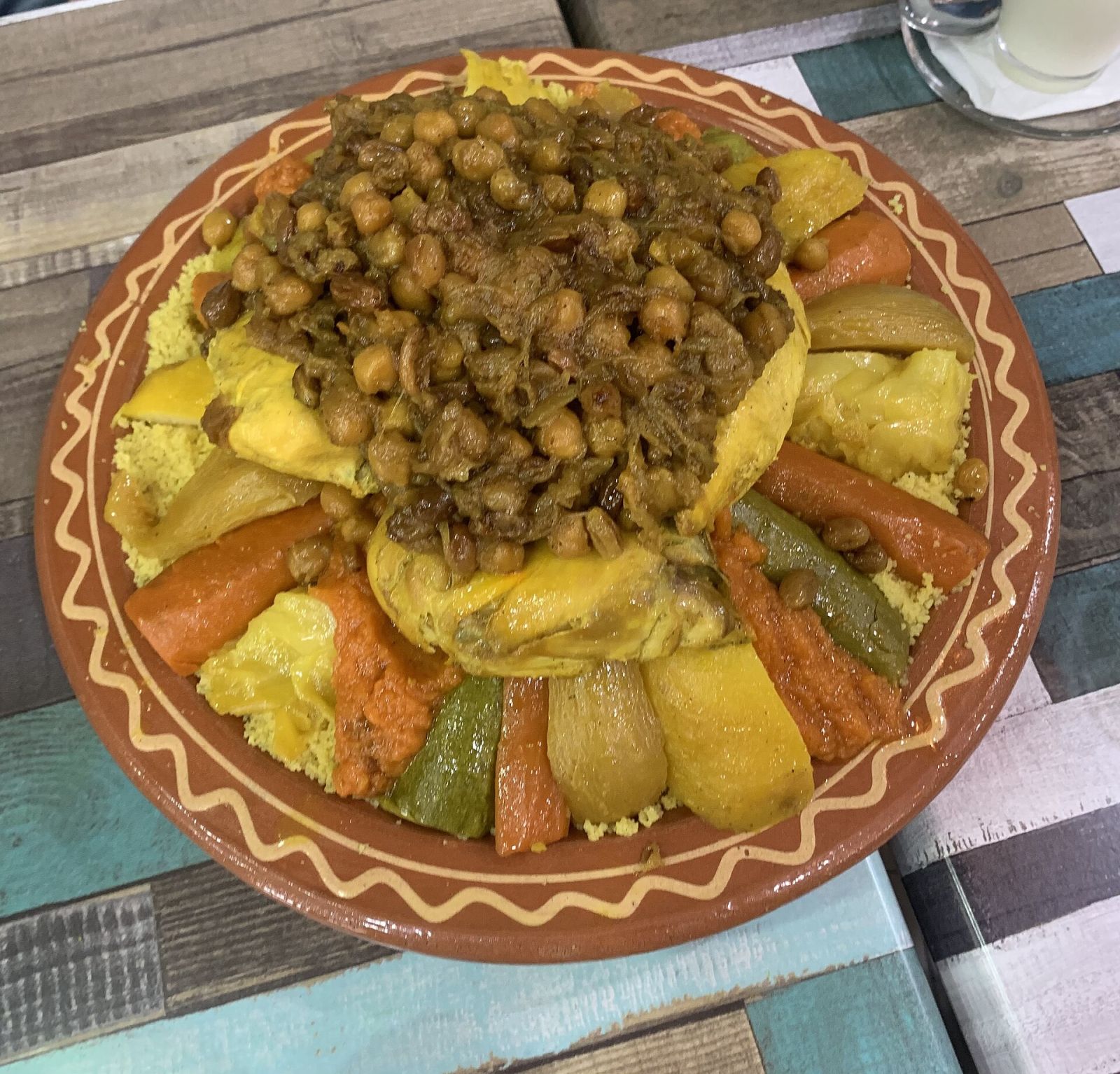
In Morocco couscous is ritual food. Traditionally it is cooked on Friday after midday prayers, when families gather around one huge platter: a mountain of steamed semolina topped with stewed vegetables, meat, chickpeas and broth. Steaming it in several rounds is what makes the grain light and fluffy, and this is exactly what separates homemade couscous from the boxed stuff sold in Europe. In 2020 UNESCO added couscous-making to its intangible heritage list, on a joint bid from four Maghreb countries.
The practical takeaway: hunt for the best couscous on a Friday, since many local canteens cook it only on that day. Try the version with caramelized onions and raisins (tfaya) at least once; the sweet-and-savory pairing is perfected here.
Harira, pastilla and other dishes that are easy to miss
- Harira. A thick tomato soup with lentils, chickpeas and noodles, sometimes meat. During Ramadan it traditionally breaks the fast; the rest of the year it is simply a great one-dollar dinner. It comes with dates or sweet chebakia cookies, and those are part of the composition, not dessert.
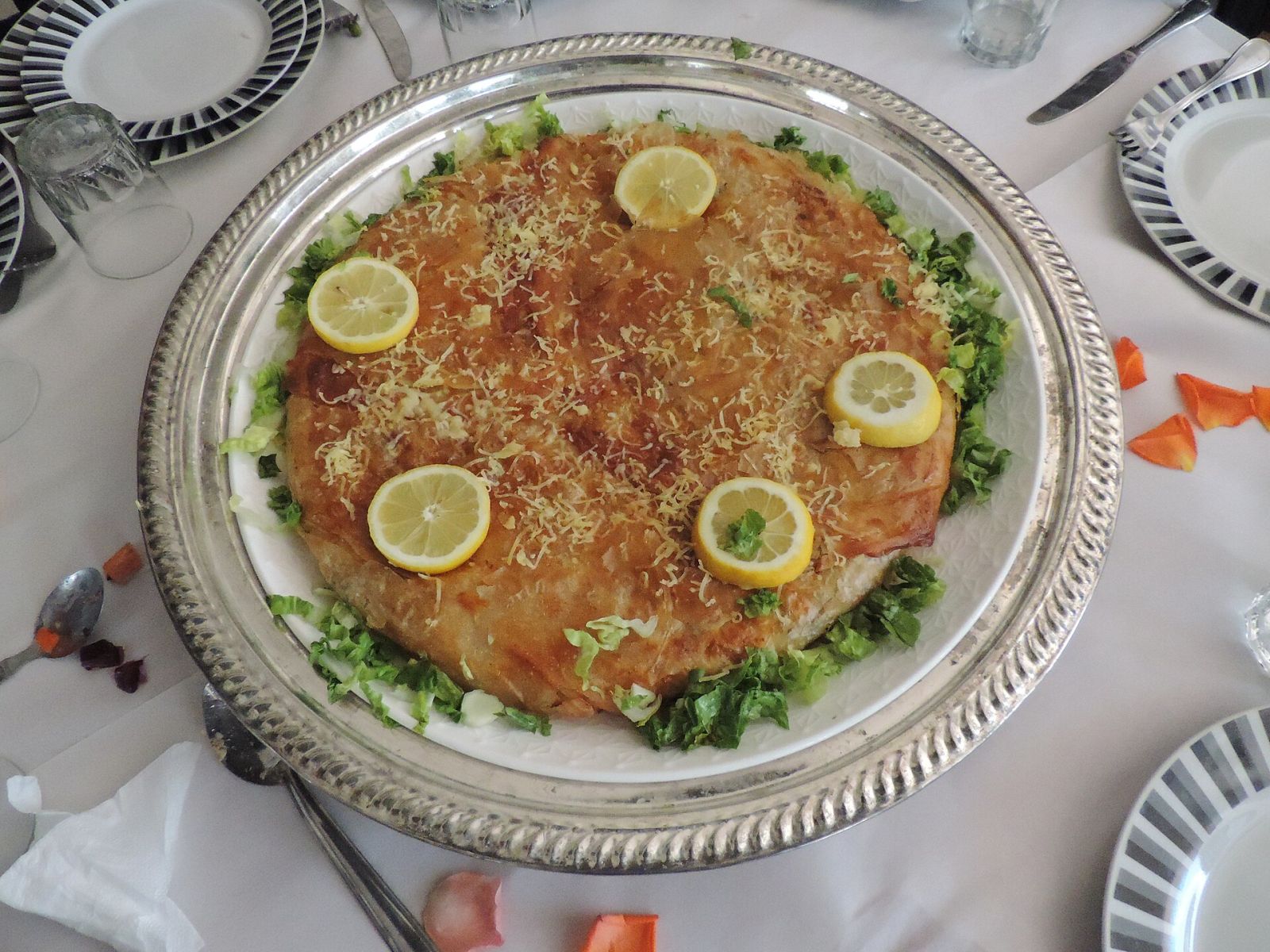
- Pastilla. A flaky pie filled with poultry (pigeon in the classic version, chicken more often), almonds, cinnamon and powdered sugar on top. A sweet crust over a spiced meat filling sounds odd and works flawlessly. The signature dish of Fes.
- Tangia. A Marrakesh specialty: meat slow-cooked in a clay urn buried in hammam ashes for 6-8 hours. Look for it in Marrakesh; elsewhere it barely exists.
- Bissara. A fava bean puree soup with olive oil and cumin, the working-class breakfast of Morocco for pennies.
- Msemen and baghrir. Layered fried flatbreads and yeasty "thousand-hole" pancakes: eat them warm with honey or cheese at breakfast or straight off a street cart.
Mint tea: a ceremony, not a beverage
Green tea with fresh mint and a serious amount of sugar is half-jokingly called Berber whiskey. It is brewed strong, poured from half a meter up so a foam forms on top, and offered everywhere: in carpet shops, in homes, at gas stations. You can decline, but know that a glass of tea is a gesture of hospitality, and accepting is more polite than refusing. Ordering it without sugar is possible ("atay bla sukar"), though you will get a sympathetic look.
A useful nuance for souk haggling: tea from a vendor commits you to nothing. Drinking it and buying nothing is normal, part of the game rather than a trap.
Street markets: what to order and how not to get sick
Jemaa el-Fnaa in Marrakesh after dark is the country's main food court: dozens of numbered stalls with grills, smoke and touts. Go for babbouche snails in spiced broth (the vendor hands you a pin, and the broth gets drunk from the bowl), kefta sandwiches, grilled sardines, and a glass of fresh orange juice for 4-5 dirhams as dessert. The braver eaters order steamed sheep's head, which is local classic fare, not a tourist stunt.
| What | Where to find it | Price ballpark |
|---|---|---|
| Tagine at a local canteen | Any city, side streets of the medina | 35-60 MAD |
| Harira | Stalls and cafes, toward evening | 5-15 MAD |
| Fresh orange juice | Jemaa el-Fnaa, markets | 4-10 MAD |
| Msemen with honey | Street carts in the morning | 3-10 MAD |
| Pastilla | Restaurants in Fes | 60-120 MAD |
The safety rules are simple and they work. Eat where locals queue, and make sure meat is grilled in front of you rather than sitting cooked in the sun. Stick to bottled water and skip raw salads in questionable places. What actually wrecks travelers' stomachs is rarely the stalls; it is ice in drinks and fruit rinsed under the tap.
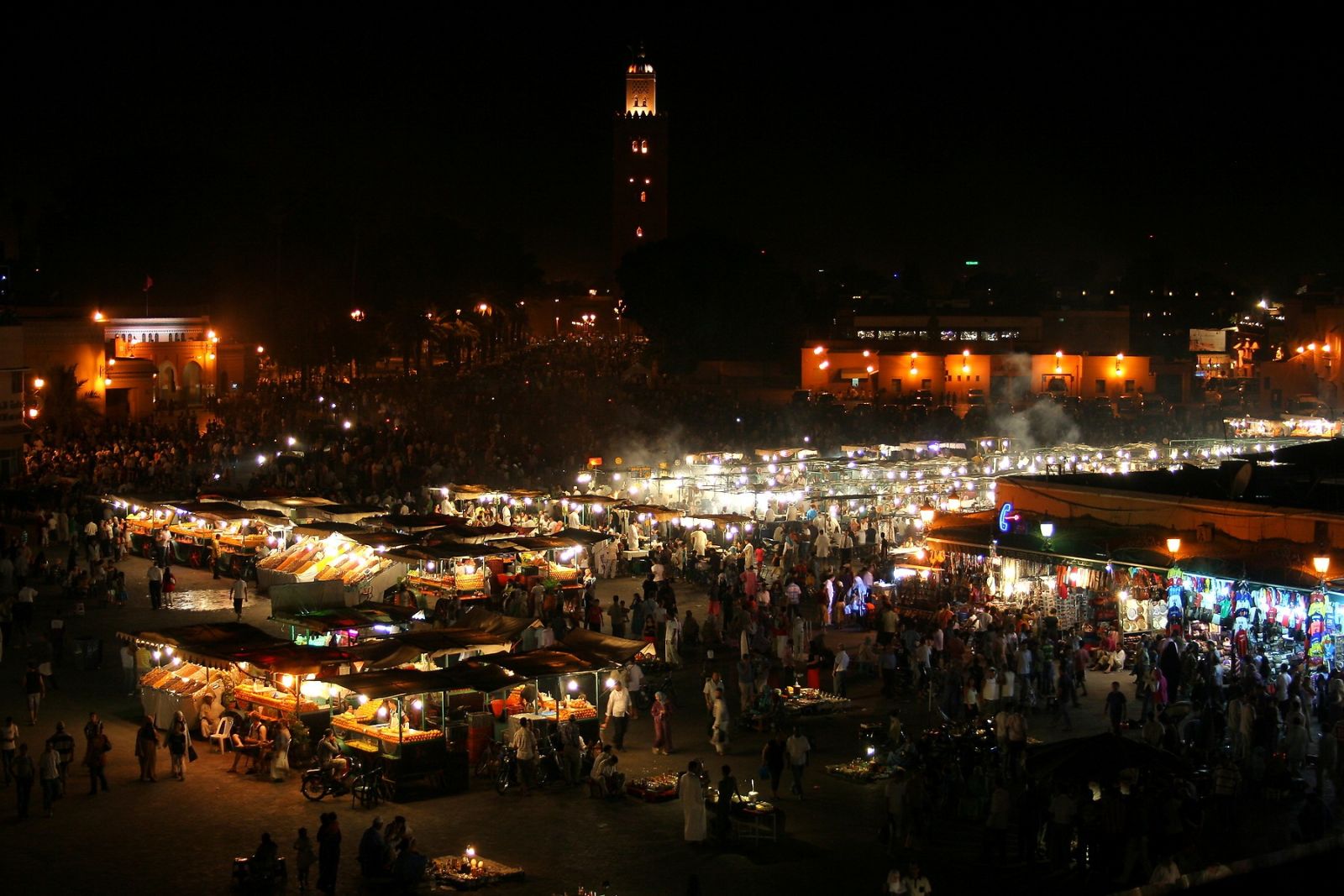
Table etiquette: the rules worth knowing
A traditional meal happens around a shared platter, and unwritten laws apply. Eat with your right hand; the left is considered unclean in Moroccan culture and is used neither for taking food nor passing it. Bread (round khobz) is the tool: a torn piece scoops up meat and sauce instead of a fork. Take from your own sector of the shared dish and do not reach across it for the best piece; the host will serve you. A pitcher of water often arrives before the meal, and it is for washing hands, not drinking.
Alcohol is legal for tourists but sold in limited places: licensed bars, hotel restaurants and certain supermarkets, with even fewer options during Ramadan. Drinking on the street is a firm no. And a general hospitality rule: if you are invited into a home, a small sweet gift (cookies, fruit) is welcome, and accepting at least a symbolic second helping is more polite than flatly refusing.
The food here deserves its own day in the itinerary: a cooking class with a market tour costs a modest amount and explains the country better than a third palace in a row. Even without one, a simple principle is enough: turn one street off the tourist drag, look for a queue of locals, and order whatever is smoking over the coals.