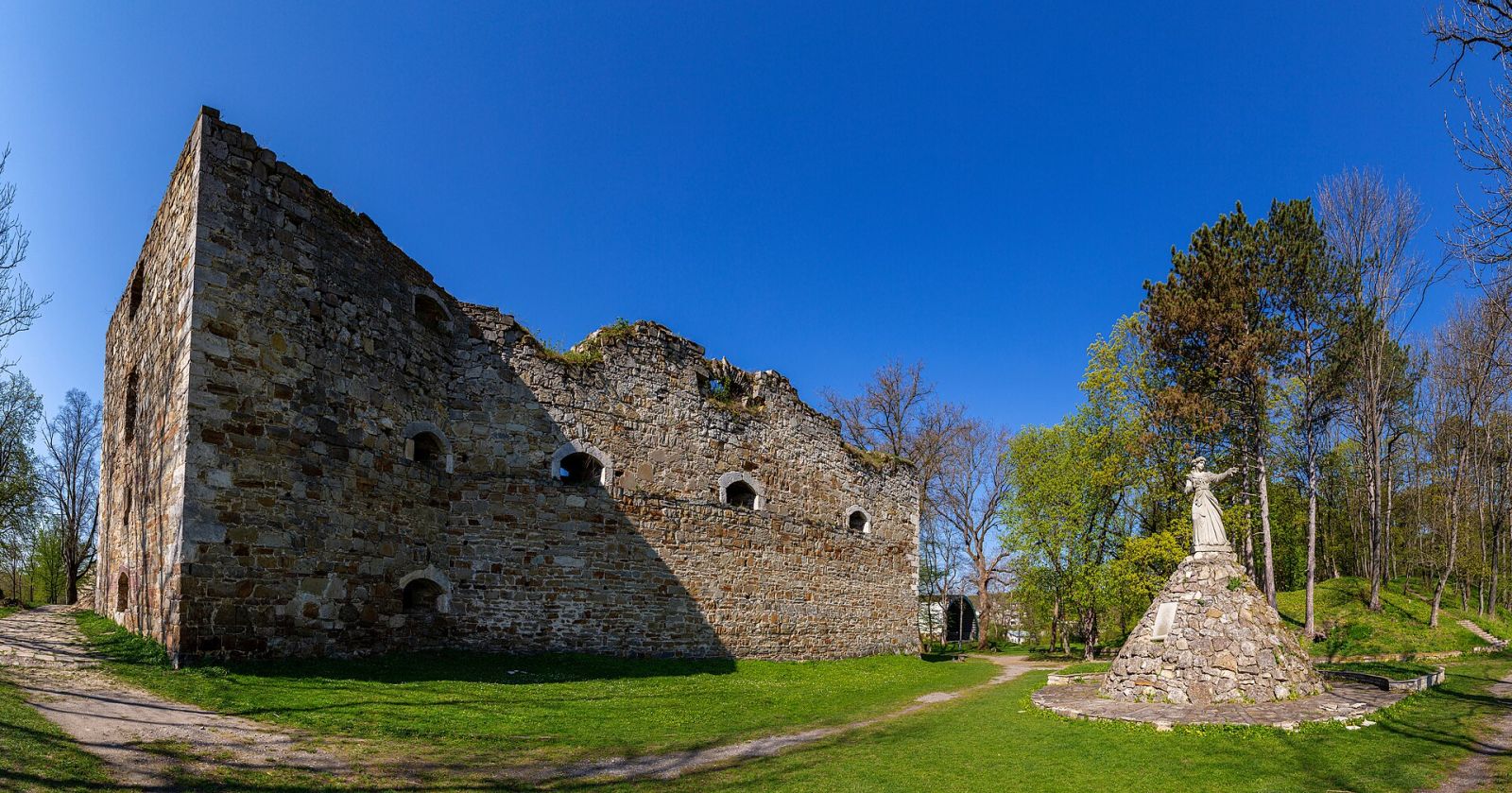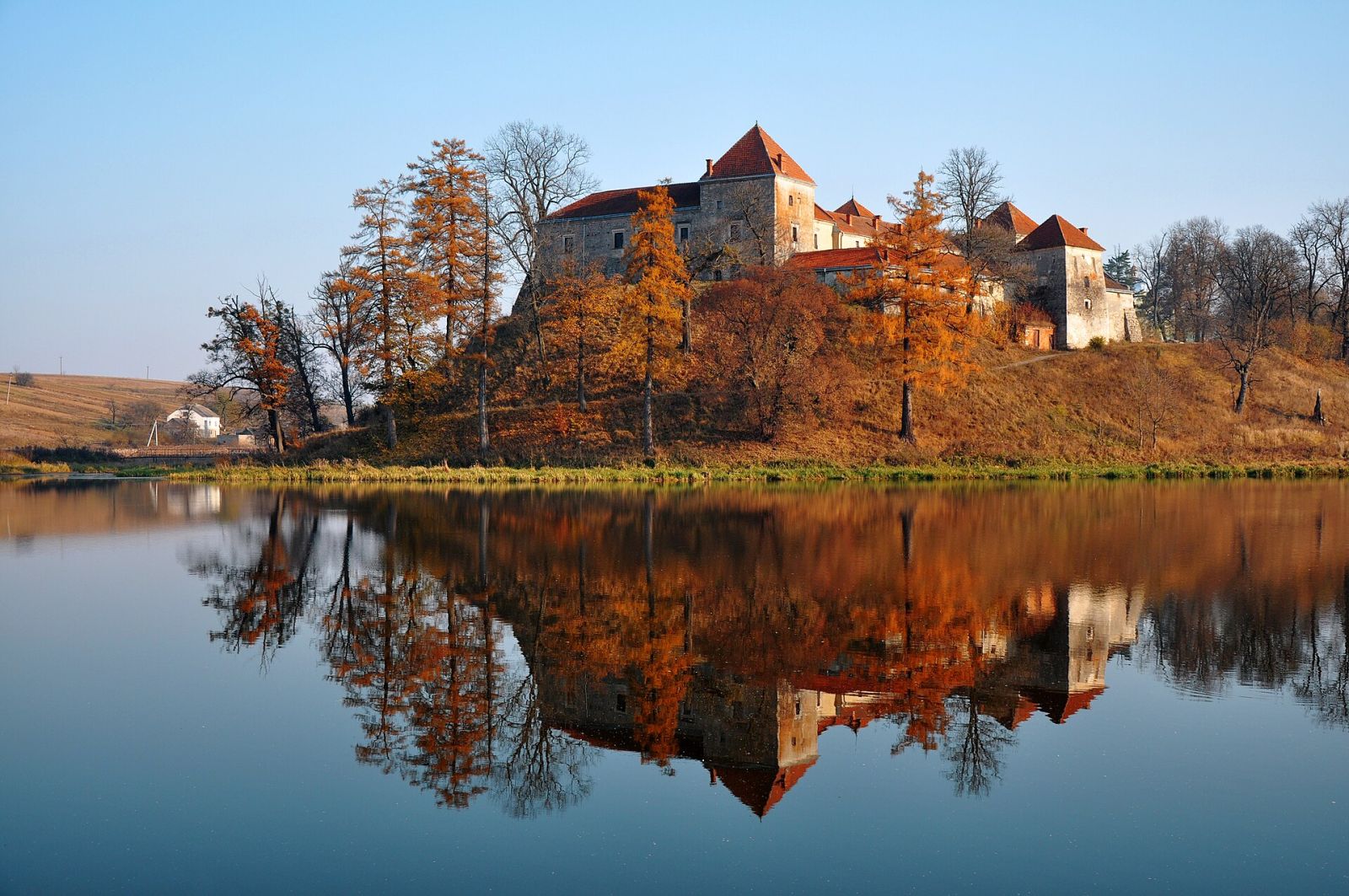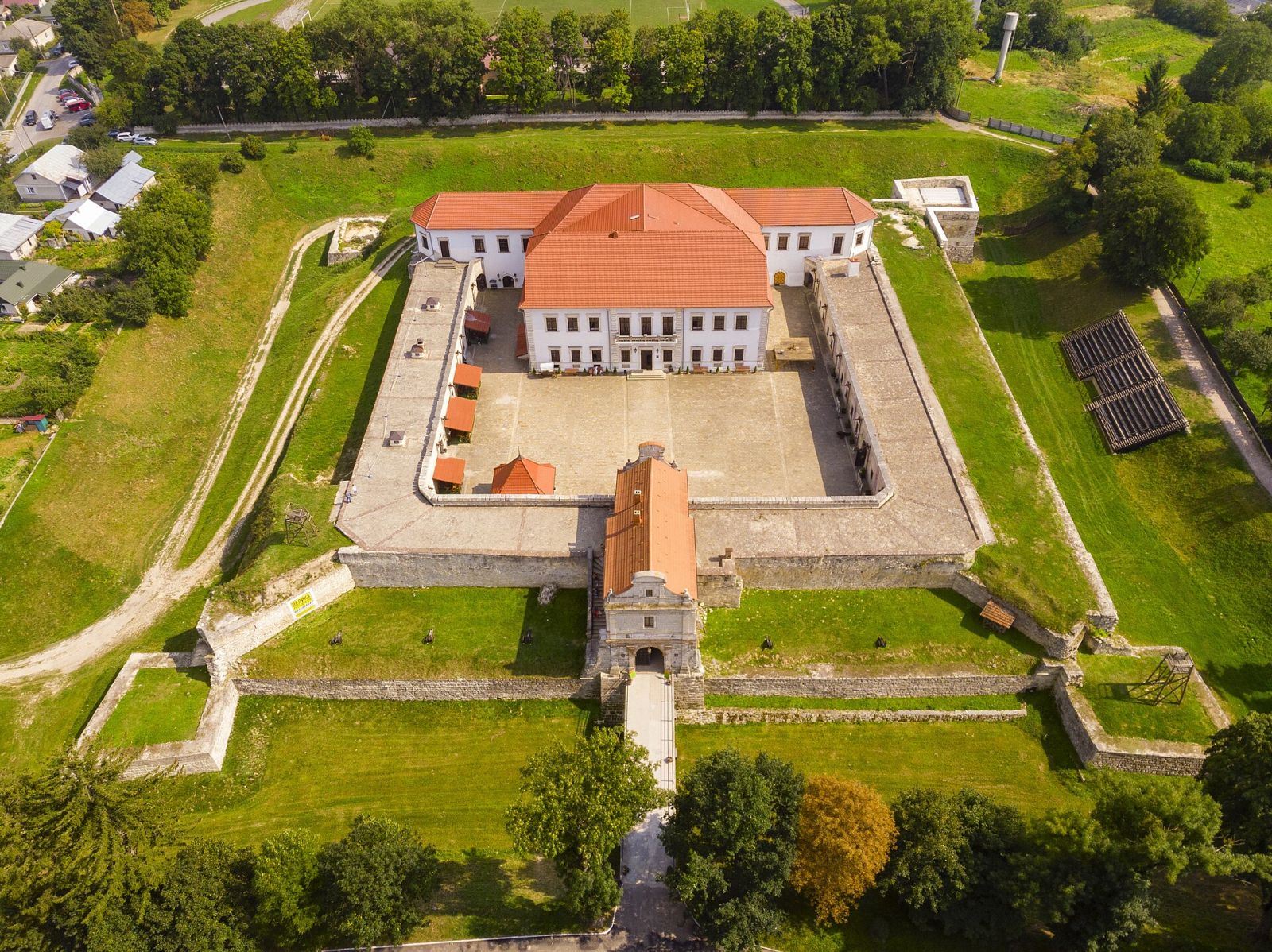


The castles of the Ternopil region remain Ukraine's most underrated castle country: the region holds over thirty fortresses and ruins, more than anywhere else in the nation, yet tourists traditionally head for Kamianets-Podilskyi or the Lviv area instead. Meanwhile the five key sites, Zbarazh, Vyshnivets, Kremenets, Skalat and Terebovlia, link up into a compact two-day route based in the city of Ternopil, with less than a hundred kilometres between the farthest points.
Zbarazh: the flagship museum of the route
Zbarazh Castle, 20 kilometres from Ternopil, is where the trip should start. The bastioned palace-fortress went up in the 1620s to a design tracing back to the ideas of the Venetian architect Vincenzo Scamozzi: not a medieval stronghold but a Renaissance residence wrapped in earthworks. It was beneath these walls in the summer of 1649 that the Cossack army of Bohdan Khmelnytsky besieged the Polish garrison, one of the pivotal episodes of the Khmelnytsky Uprising, later fictionalised in Sienkiewicz's novel With Fire and Sword.
Condition: the best in the region. The castle is fully restored and houses the National Reserve "Castles of Ternopil Region" with museum halls of weaponry, sacred art, furniture, a picture gallery and casemates in the cellars. There is a tidy park, a ticket office, set hours and guided tours. Allow two to three hours including the park. One honest caveat: parts of the restoration feel brand new, and little of the authentic 17th-century interiors survives, so this is a museum within fortress walls rather than frozen history.
Vyshnivets: a palace and terraces above the Horyn river
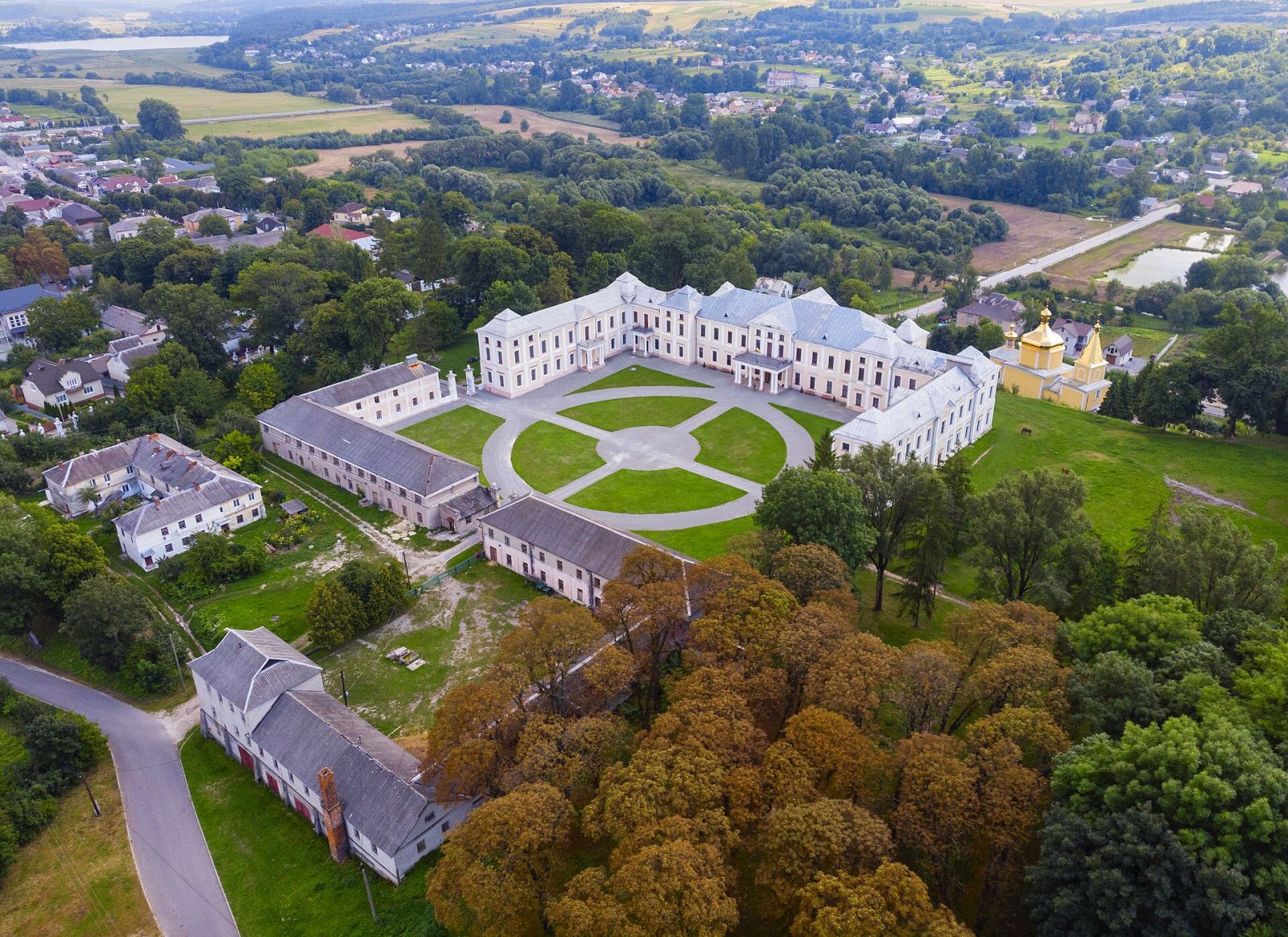
Twenty kilometres north of Zbarazh lies Vyshnivets, the ancestral seat of the Vyshnevetsky princes, the family of Dmytro Baida-Vyshnevetsky, the legendary founder of the Zaporozhian Sich. Barely a trace of the original defensive castle remains, but the 18th-century palace once nicknamed the "Versailles of Volhynia" still stands: a horseshoe-shaped building, a ceremonial courtyard, a hall of mirrors and park terraces descending to the Horyn river. Honore de Balzac stayed here as a guest, and by local tradition so did half the aristocracy of the Polish-Lithuanian Commonwealth.
Condition: the facades and some halls have been restored, with museum displays inside and concerts held in the mirror hall. Do not expect Versailles literally though: much of the interior decoration was lost in the 20th century, some rooms stand empty and the park is only partly maintained. Even so, the ensemble of palace, terraces and the river bend below is the most photogenic spot of the whole route. Next door stands the baroque church that served as the Vyshnevetsky family crypt. An hour to ninety minutes covers it.
Kremenets: ruins on Bona Castle Hill
Kremenets, 40 kilometres from Vyshnivets, closes day one and is the oldest site of the route. The castle on the 400-metre Bona Hill is recorded from the 12th century and withstood the siege of Batu Khan's Mongols in the 1240s, one of very few in Rus to do so, falling only in 1648 to the Cossacks of Maksym Kryvonis. It has stood in ruins ever since: an entrance tower, stretches of wall, and nothing more.
Yet Kremenets rewards the drive more than many intact castles, and the reason is the panorama. The hill overlooks the whole town in its hollow, the ridges of the Kremenets Mountains and the baroque towers of the former Jesuit collegium, the heart of the old town. The walk up from the centre takes half an hour at most and entry costs next to nothing. Condition, honestly: a conserved ruin with no museum, so watch your step, railings are minimal. The compensation waits below: the 18th-century collegium, one of Ukraine's oldest botanical gardens and the museum of the poet Juliusz Slowacki, who was born here.
Skalat: four towers under conical roofs
Day two logically starts at Skalat, 30 kilometres southeast of Ternopil. Built in 1630 as a fortified residence, the castle's signature is its four corner towers with sharp conical roofs, rebuilt during a 2000s restoration. From a distance it looks almost fairy-tale; up close the truth is plainer: the towers are reconstructed, sections of wall are conserved, and the palace building inside the perimeter did not survive, so the visit is mostly about the courtyard and the outer circuit. The site belongs to the "Castles of Ternopil Region" reserve, and small exhibitions sometimes run in the towers. A 40-60 minute stop with no queues or crowds: odds are good you will have the castle entirely to yourself.
Terebovlia: the most massive ruins in Podillia
The final point is Terebovlia, 35 kilometres from Skalat. A castle stood on the hill above the town and the Hnizna river back in the days of the Galician princes; the current walls date to 1631, when the local gentry funded a rebuild. The ruin here differs from Kremenets: enormous fragments of walls and towers survive with masonry up to four or five metres thick, and the sheer scale of the defensive architecture still reads clearly. The ramparts overlook the town and valley, and a landscaped park with stairways leads up.
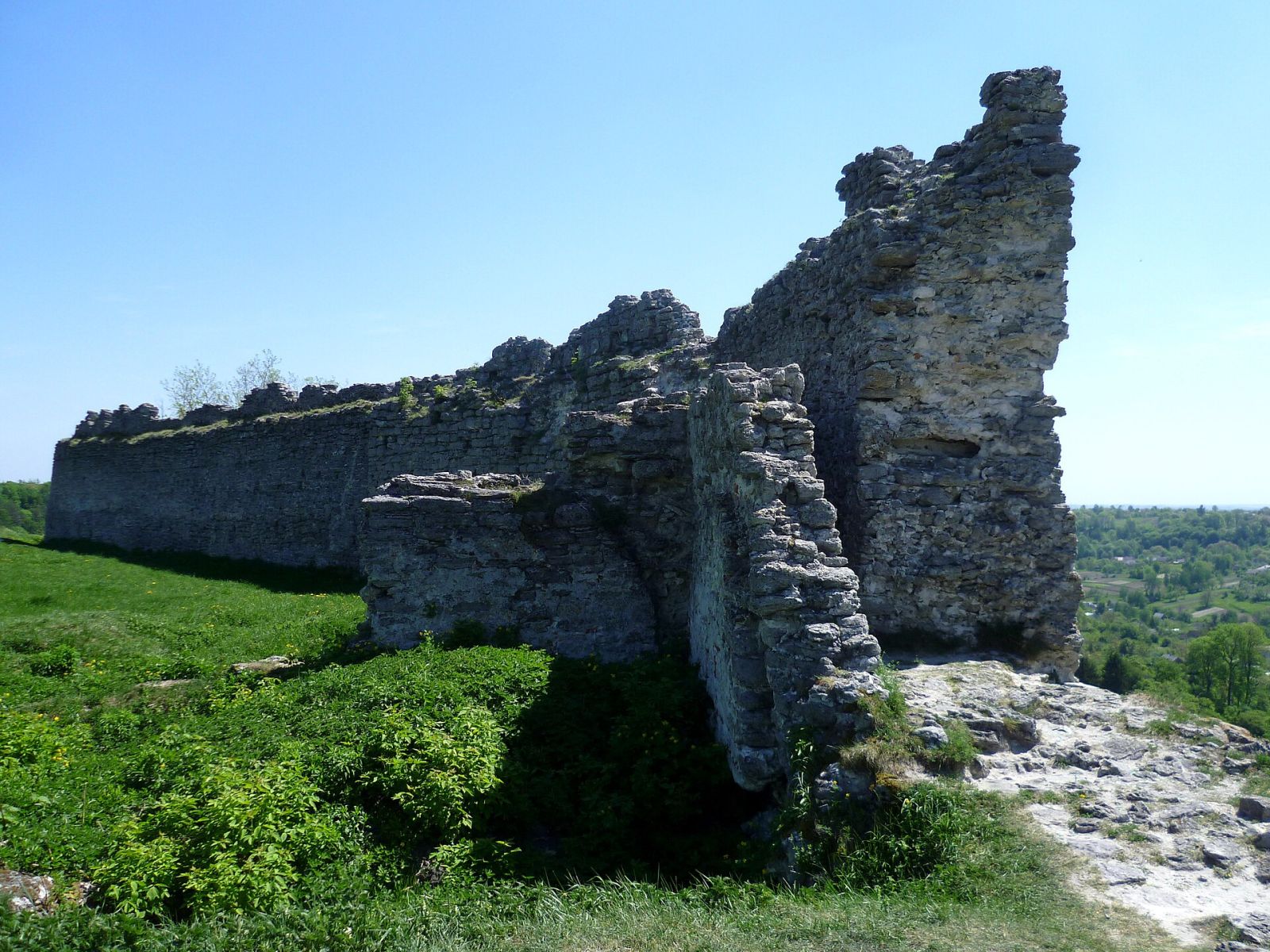
Condition: a well-kept ruin, free to roam, with no ticket office or museum. Terebovlia carries one of Podillia's most famous legends, of princess Sofia who rallied the town's defence against the Turks in 1675: her monument stands in the town. An hour covers the castle and park, and from here it is 30 kilometres back to Ternopil.
The two-day route
| Day | Stops | Distance | Time on site |
|---|---|---|---|
| Day 1 | Ternopil, Zbarazh, Vyshnivets, Kremenets, overnight in Kremenets or return | about 90 km one way | 2-3 h Zbarazh, 1-1.5 Vyshnivets, 1.5-2 Kremenets |
| Day 2 | Skalat, Terebovlia, back to Ternopil | about 95 km as a loop | about 1 hour per site |
Day one runs exactly in that order, south to north: Zbarazh, Vyshnivets and Kremenets sit along a single road. Staying overnight in Kremenets lets you add the Pochaiv Lavra, 25 kilometres away, to the next morning; returning to Ternopil gives you a wider choice of accommodation.
Practical notes
- Base of the route: Ternopil. Overnight trains from Kyiv and western Ukraine stop here daily; tickets are easiest to buy on the Ukrzaliznytsia website.
- Doable without a car, but slower: suburban trains and buses serve Zbarazh, Kremenets and Terebovlia, while Vyshnivets and Skalat see buses less often. A car turns two packed days into two relaxed ones.
- Tickets and hours: the museum sites, Zbarazh and Vyshnivets, keep a schedule with Monday usually the day off; in wartime, hours depend on the security situation, so check the reserve's pages before setting out.
- Footwear: do not tackle Bona Hill in Kremenets or the Terebovlia ramparts in flip-flops, the climbs are unpaved.
- Season: May through October, with the golden autumn in the Kremenets Mountains a highlight of its own. The ruins stay open in winter, but paths get slippery.
The takeaway: the castles of the Ternopil region deliver the full spectrum in two days, from the restored museum of Zbarazh to the medieval ruin above Kremenets. It is a route without queues, big costs or tourist gloss, and that is precisely its strength: here you examine history up close, not from behind a barrier in a crowd.