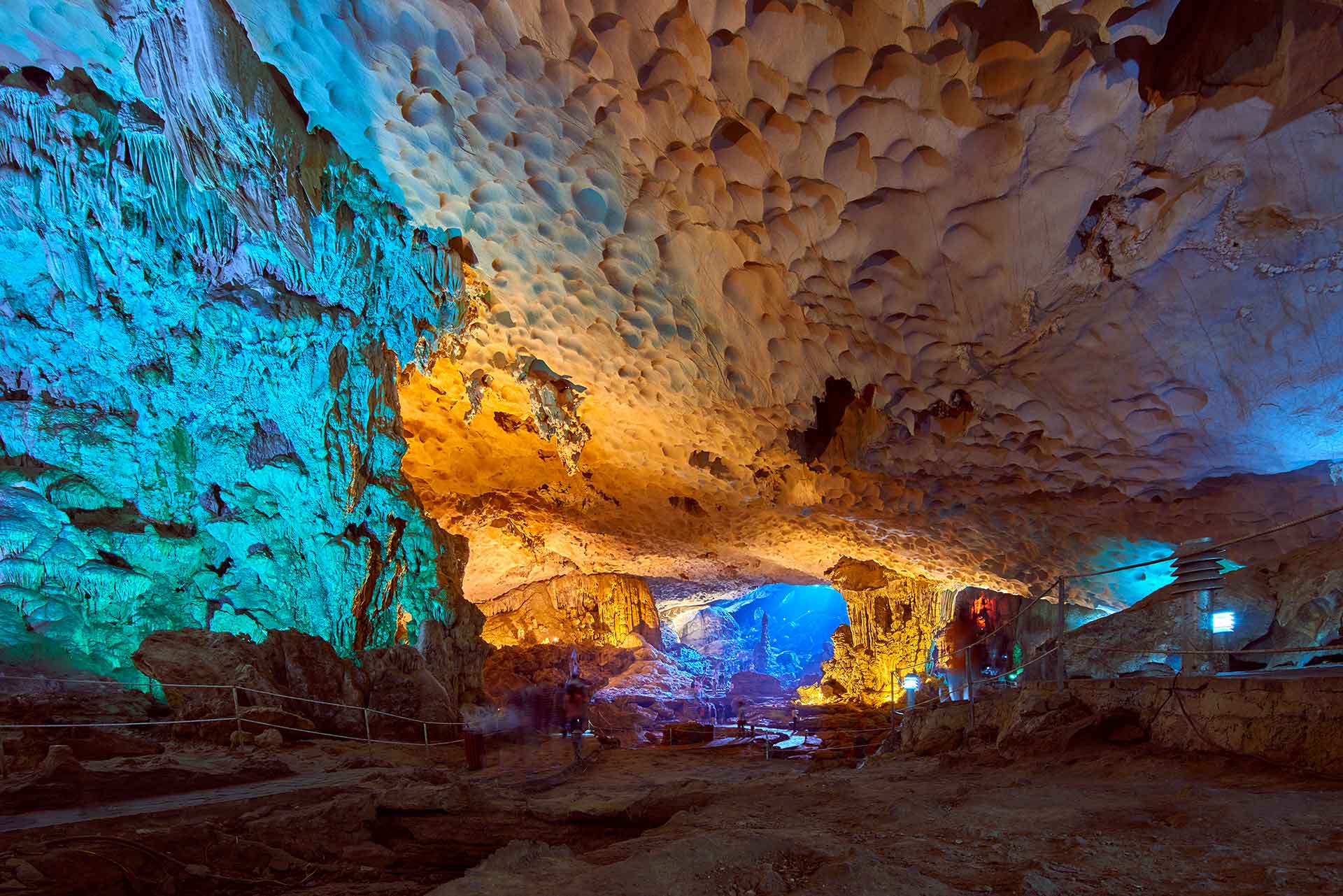


Vietnam already enjoys a global reputation for its food, beaches, ancient history and varied landscapes. And over the past decade it has also become one of the world's leading destinations for cavers.
Quang Binh Province in central Vietnam is especially famous for the UNESCO-protected Phong Nha-Ke Bang National Park, also known as the Kingdom of Caves. Last year alone the region welcomed more than 3.9 million visitors, up 18.2% on the year before.
"Vietnam is home to some of the best caves in the world. The temperature is pleasant year-round, the jungle scenery is gorgeous, the formations are stunning... everything is untouched and pristine, nothing has been damaged," says Howard Limbert, a technical adviser for Oxalis, the company that runs adventure tours in Quang Binh.
Partner links: booking through them supports the blog at no extra cost to you.
"My team [the British Cave Research Association] has explored more than 500 caves in Vietnam. But we've only covered about 30% of this territory. There are many, many more caves left for us to discover."
For anyone eager to explore Vietnam's most enchanting underground worlds, here are a few adventures worth considering:
Son Doong and Hang En
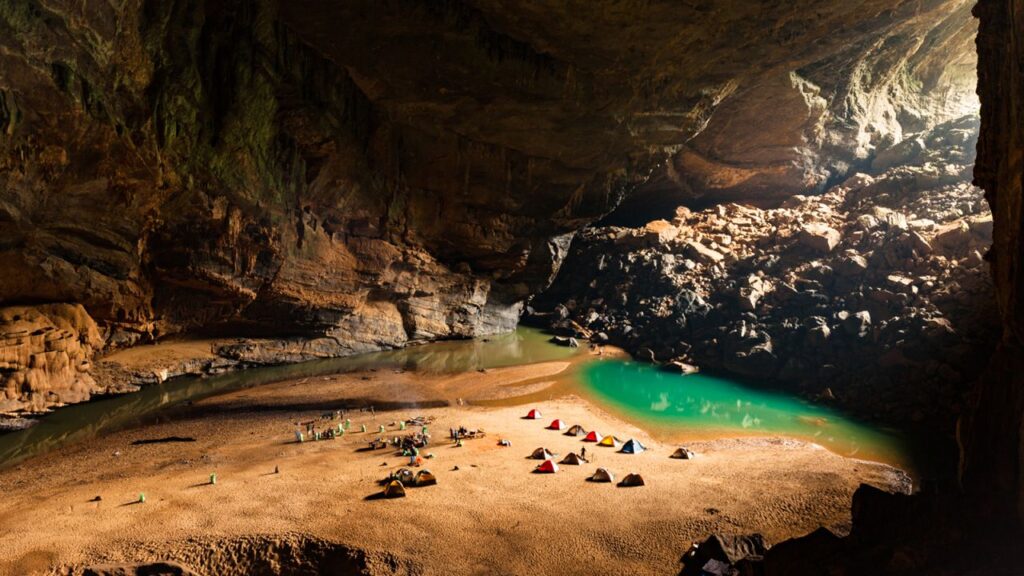
Considered the largest cave in the world, Son Doong currently spans 38.5 million cubic metres (roughly 1.35 billion cubic feet), so vast that it even has its own jungle inside.
Following the recent discovery of an underwater tunnel connecting Son Doong to the neighbouring Hang Thung cave, it may be another 1.6 million cubic metres larger than previously thought.
Oxalis, in partnership with the British Cave Research Association, holds exclusive access to the cave and leads small groups of six to 10 people on four-day expeditions during the dry season, from January to August.
On the first day, travellers hike through the jungle for about an hour before stopping for lunch in the village of Ban Doong.
After a few more hours of trekking, the group sets up camp in Hang En cave (the third largest in Vietnam), where you can swim in the underground rivers and refuel with Vietnamese cuisine.
The next day, trekkers continue on to reach the remote Son Doong cave, where they strap on harnesses and rappel down an 80-metre rock wall using ropes.
Once inside, travellers spend the following two days exploring the ancient fossils, subterranean jungles, stalagmites and underground rivers of the enormous cave.
The trip culminates in an epic ascent of the "Great Wall of Vietnam," an 80-metre rock face that demands a mix of scrambling and climbing with ropes and ladders.
"This is definitely not just a stroll. There are plenty of river crossings, wonderful jungle, mountains and cliffs, plus lots of wildlife... birds and monkeys that are endemic to the area, for example," says Limbert. "Many people find the scenery just as impressive as the cave itself."
Hang Va and Nuoc Nut
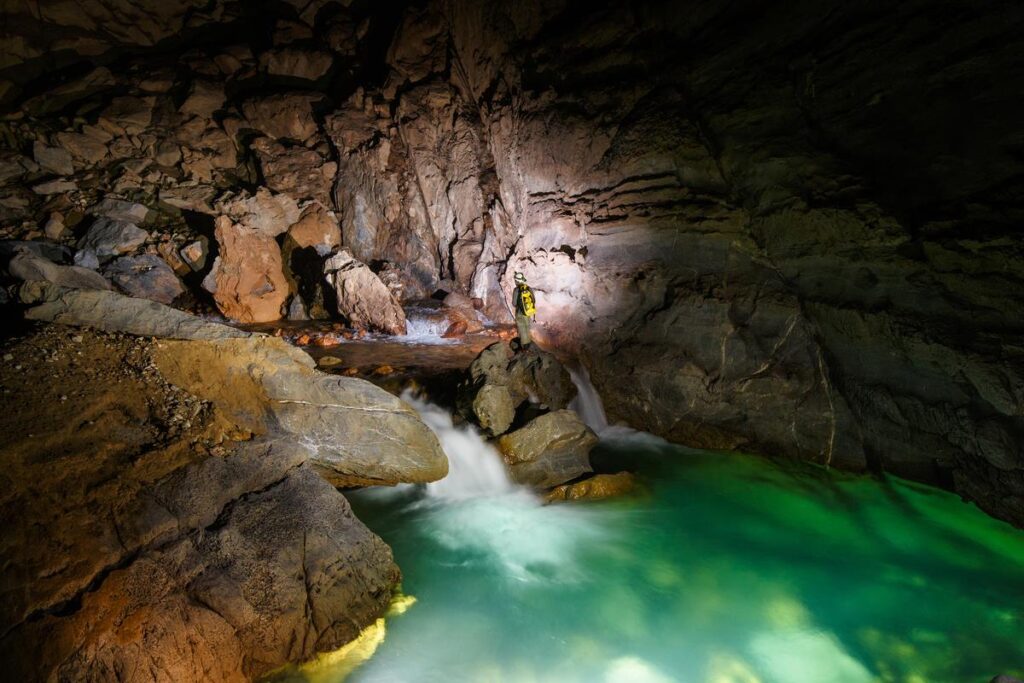
Oxalis offers two-day tours to the Hang Va and Nuoc Nut caves.
On the first day, you take a two-kilometre hike to Nuoc Nut cave, where an incredible underground river awaits inside.
After swimming 100 metres along the river, you arrive at the entrance to Hang Va cave, where travellers set up camp for the night.
Although this cave expedition is more accessible than Son Doong, it is still an adventure with plenty of chances to push through dense jungle foliage, scramble over rocks, cross underground rivers and marvel at surreal stalactites and stalagmites.
Hang Va, in particular, is known for its unusual field of stalagmites.
"There are more than 100 rare calcite rock formations here that we call tower cones," says Limbert. "Essentially, they are stalagmites that formed underwater, and they are incredibly rare!"
The Tu Lan Cave System
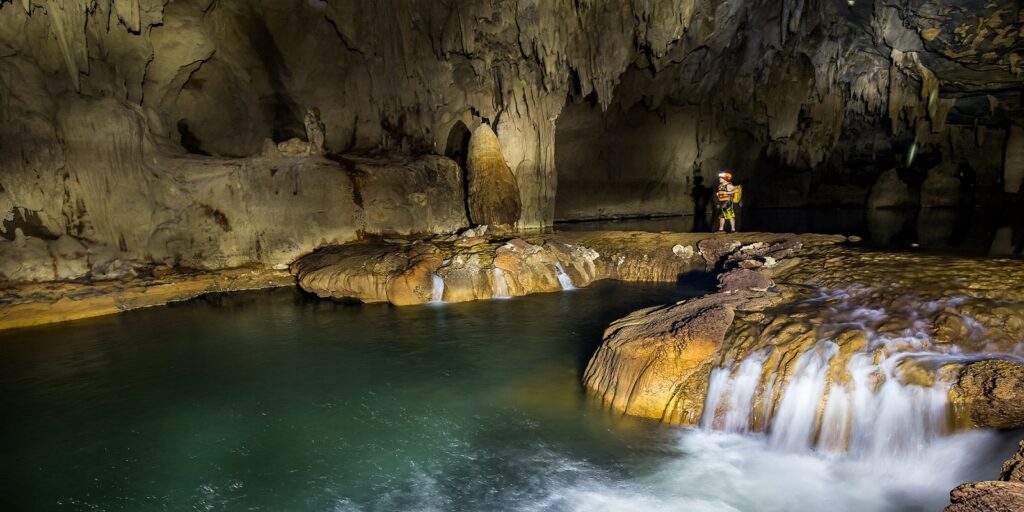
The Tu Lan cave system, made up of more than 10 caves in Quang Binh Province, shot up in popularity after it featured in the 2017 blockbuster "Kong: Skull Island."
"A lot of people come here because of the film, but they discover the scenery is even more beautiful than they imagined," says Limbert.
"All the campsites are next to lakes or waterfalls, so in warm weather you can swim here. On our Tu Lan tours, you go in through one cave entrance, come out into another part of the jungle, then head back into another cave."
Oxalis offers tours of the region lasting from one to four days, which keeps route options flexible and caps visitor numbers to protect the region's pristine nature.
"In this area we keep everything under control, and you rarely see other people. You get an entire cave to yourself," says Limbert.
In Tu Lan, one of the most popular outings is the two-day tour of Hang Tien (or Fairy Cave), named for its magical rock formations that resemble terraced rice paddies and the enchanting swirling patterns that appear on the limestone walls.
After passing through two caves (Hang Tien 1 and Hang Tien 2), travellers set off on a jungle trek before plunging into vast dry caves that stretch a combined 5.5 kilometres in length and reach 100 metres in height.
"These caves are drier than many others in the area, so they're popular with travellers who don't want to swim during the tour," says Limbert. "They're simply enormous, you'll never feel claustrophobic in these two caves."
Paradise Cave
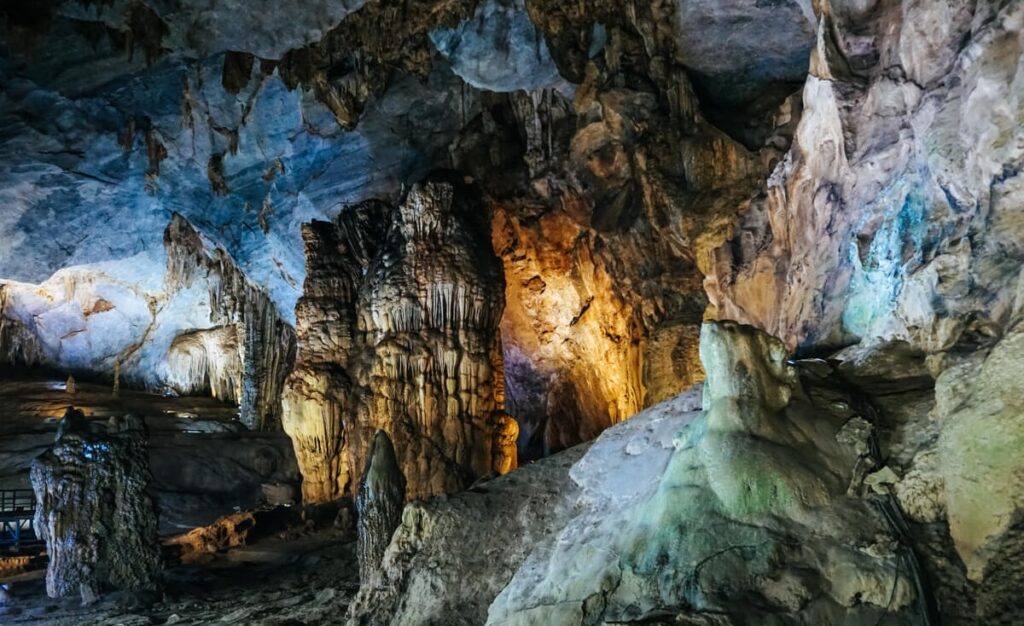
Another standout attraction in Phong Nha-Ke Bang National Park is Paradise Cave (also known as Thien Duong cave).
A local resident stumbled upon its entrance, just an opening in the rock hidden behind thick foliage, back in 2005.
Soon afterward, the British Cave Research Association explored the cave's interior, noted its grandeur and beauty, and later opened it to travellers.
Today it is one of the most popular caves in Vietnam, with otherworldly stalactites cascading from the ceiling like waterfalls and sculptural columns that never fail to amaze visitors.
The scale is impressive too: the limestone cave, considered the longest dry cave in Asia, runs more than 31 kilometres long and is big enough to hold a jumbo jet.
Travellers can explore it in two ways: walking one kilometre along a network of illuminated wooden staircases, or taking an overnight tour that includes a seven-kilometre hike.
"I always recommend the seven-kilometre hike, because you'll come away with a far richer experience after spending at least six hours deep inside the cave," says Loc Nguyen, founder of the private tour company Xinchao. "It's a truly unforgettable experience."
Tam Coc
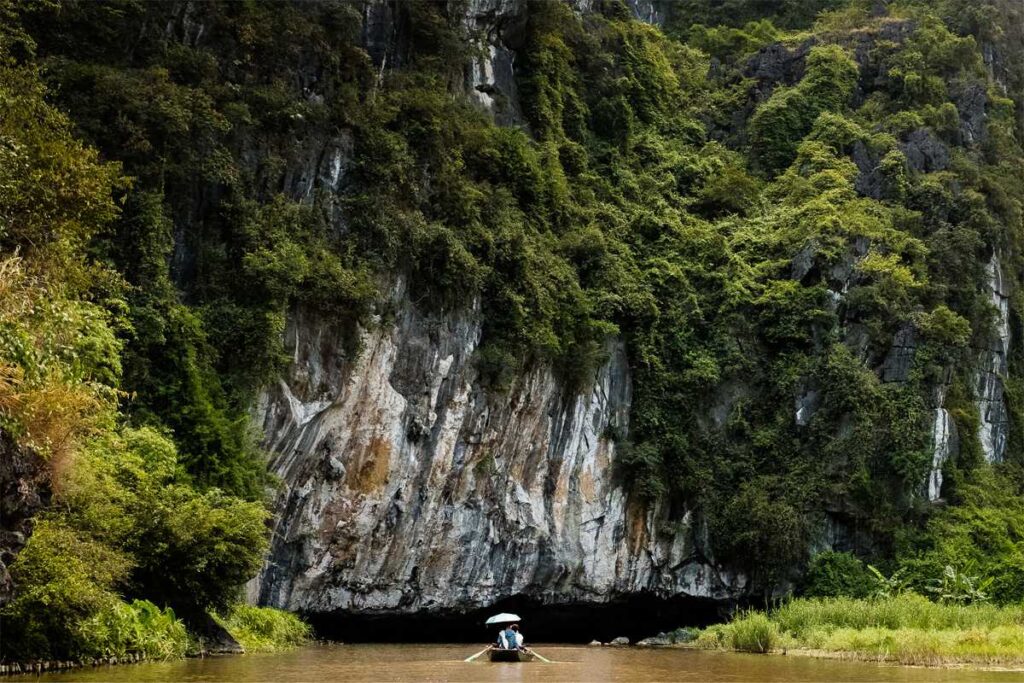
Beyond the popular Quang Binh Province lies the UNESCO-listed Trang An Scenic Landscape Complex. Set in the northern province of Ninh Binh, it is another place where you can find beautiful caves.
"What I love about Vietnam's caves is that each one has its own character," says Nguyen.
"The journey is part of the experience too. Sometimes what makes it special is how you reach the caves, on foot, by boat or by swimming. That adds to the adventure."
This is especially true of Tam Coc, which means "three caves," in Trang An. This trio of caves, Hang Ca, Hang Hai and Hang Ba, can be reached by rowing boat departing from Van Lam village.
A gentle three-kilometre cruise along the Ngo Dong River glides past shimmering rice fields and karst formations before you finally reach the caves.
Hang Ca cave is the largest of the three, stretching more than 120 metres, while Hang Ba is the smallest at just 45 metres long.
"Because you simply float through the caves by boat, it's very pleasant and easy to reach," says Nguyen.
"The best time to visit is from March to May, when farmers are growing rice in the fields. It's a wonderful sight, just a sea of bright green and yellow."
Sung Sot
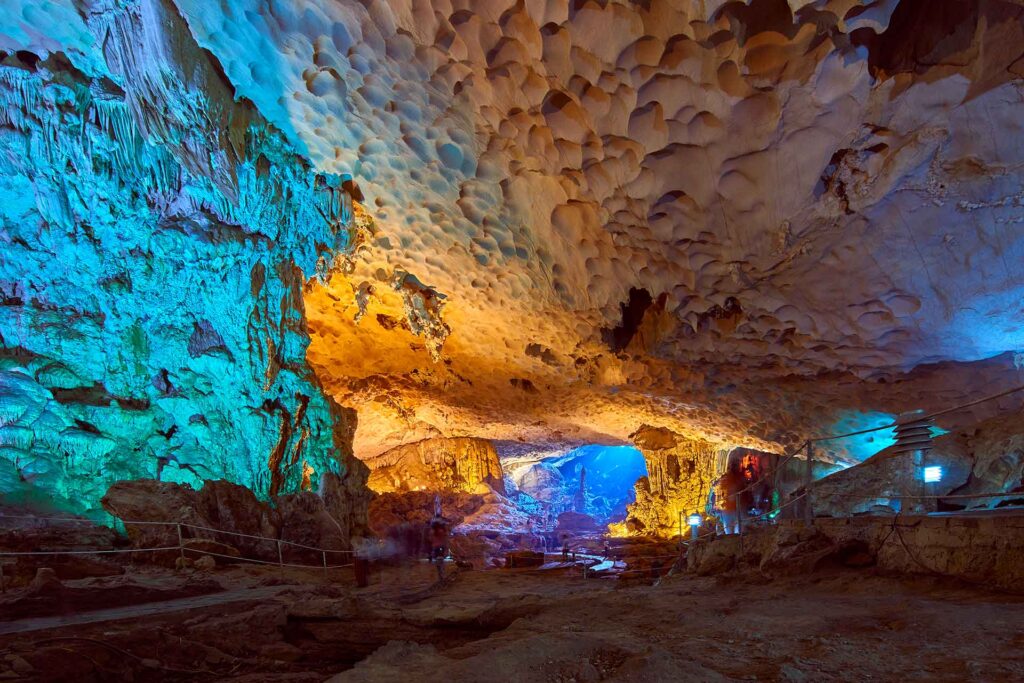
Ha Long Bay is perhaps best known for the thousands of limestone islands rising out of the water. But it is also home to plenty of caves, at least 59 counted to date.
The most famous of them is Sung Sot, also known as Surprise Cave. Located on Bo Hon Island in Ha Long Bay, the cave was first discovered in 1901 by French explorers.
Sprawling across 10,000 square metres, the cave is wide and spacious, with an astonishing number of stalactites and stalagmites, many of them shaped like flora and fauna.
"There's a wealth of folklore and myth around the shapes and patterns of the rocks, which travellers may find intriguing," says Nguyen.
"Most boat tours include Sung Sot on the itinerary, stopping at the entrance and letting you off for a couple of hours to explore."
Luon Cave
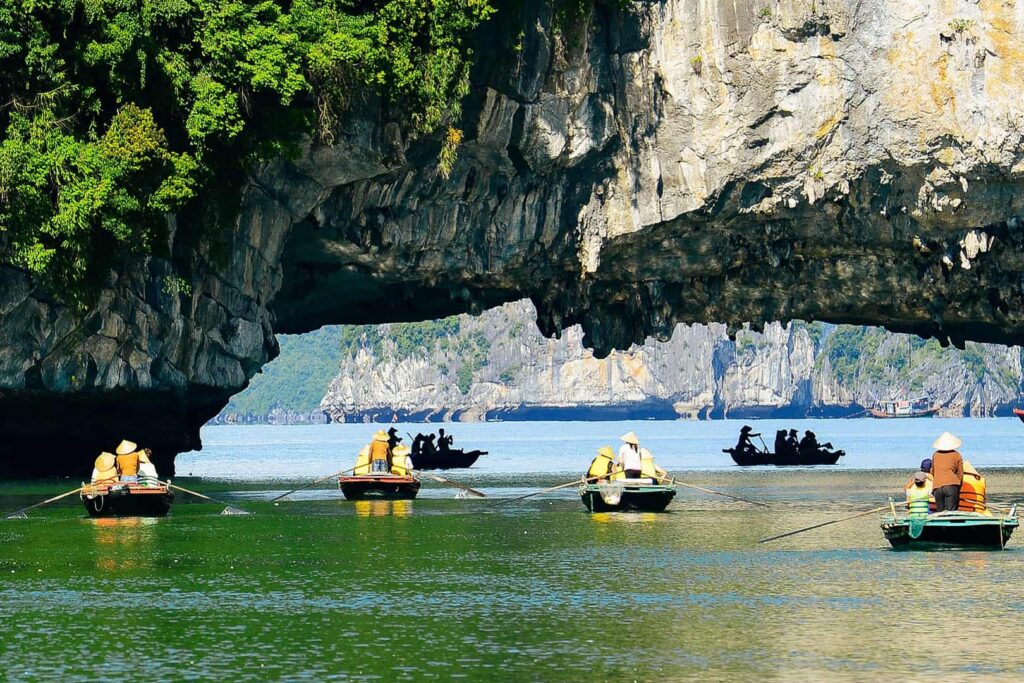
Luon Cave, though far smaller than Sung Sot, feels like a gateway to a secret world in Ha Long Bay.
This arched grotto, just 60 metres long and four metres high, can only be reached by kayak or small boat.
When the water is high, you have to crouch down to pass through the low entrance.
Inside, the cave looks eerie and feels cool, with clear blue water below and another narrow exit straight ahead.
On the other side of the cave lies a quiet lagoon surrounded by limestone cliffs, where troops of monkeys complete the scene.