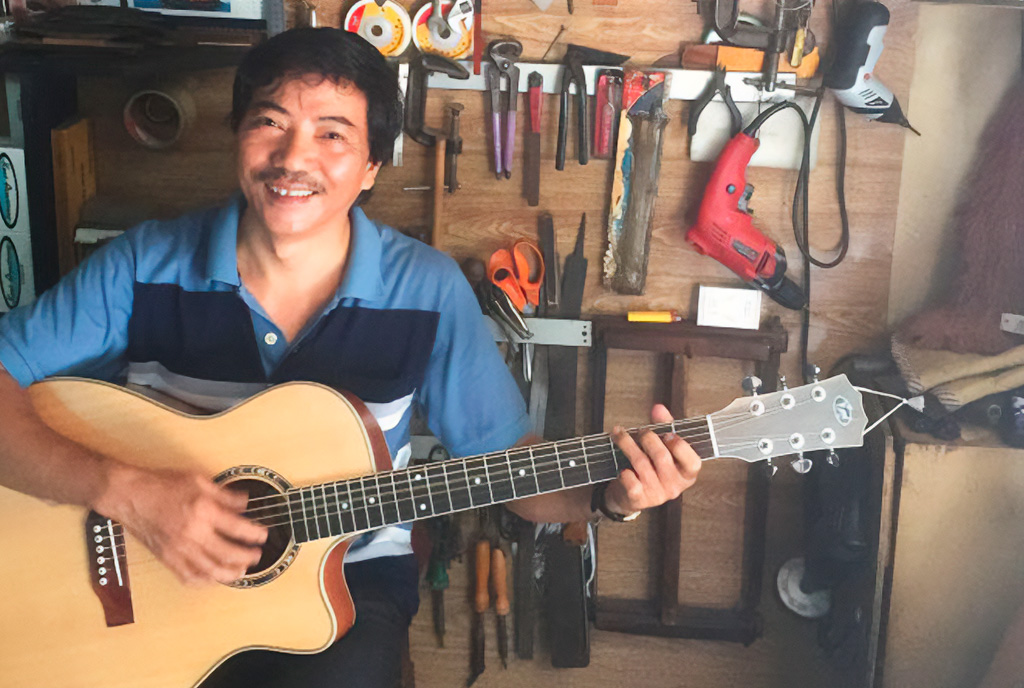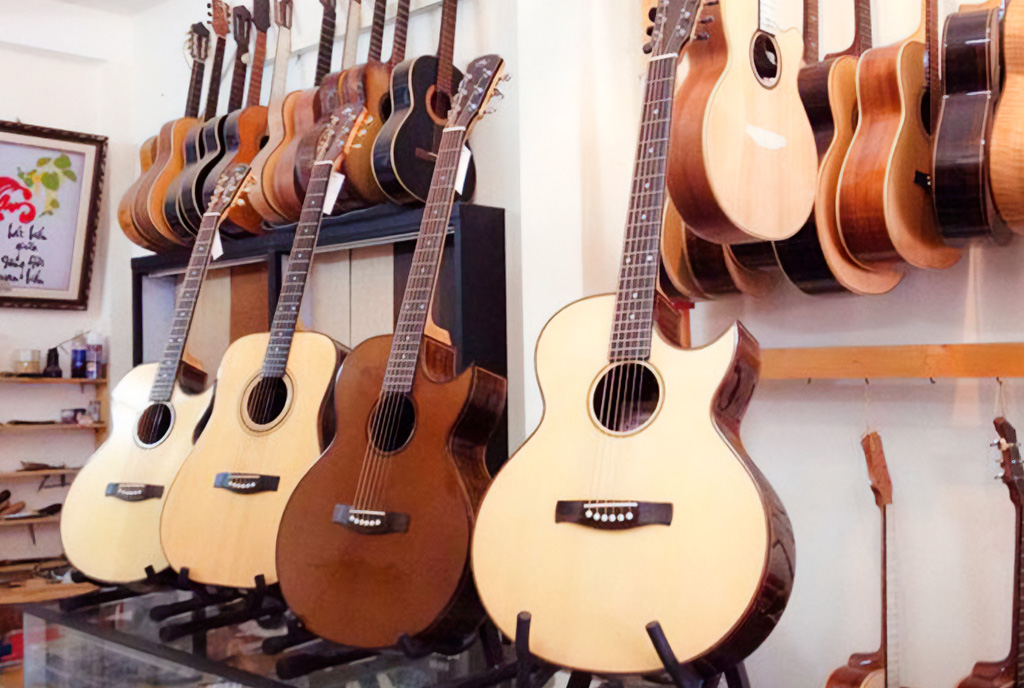


Ton That Anh looks worried, and not only because I'm mumbling and dithering over which of his handmade acoustic guitars to buy.
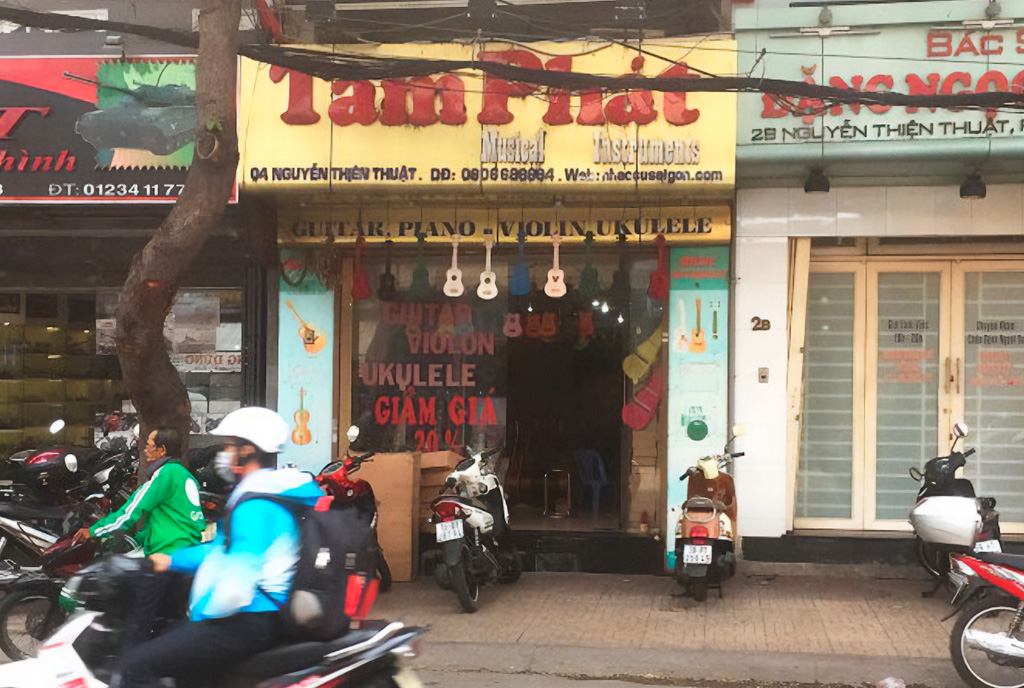
One of the longest-standing craftsmen on Nguyen Thien Thuat street in Ho Chi Minh City, known to generations of musicians in southern Vietnam simply as "Guitar Street", Anh co-owns Duy Ngoc Guitars with his siblings, and he has witnessed plenty of change over the years.
And it's clear that some of it doesn't sit well with him.
Partner links: booking through them supports the blog at no extra cost to you.
"Standards have slipped," he grumbles, cradling the neck of a lovely light-toned Dreadnought copy I've been eyeing while perched on one of those tiny plastic stools you find all over Southeast Asia.
"Too many people are making too many guitars, and the quality isn't always there anymore," he says.
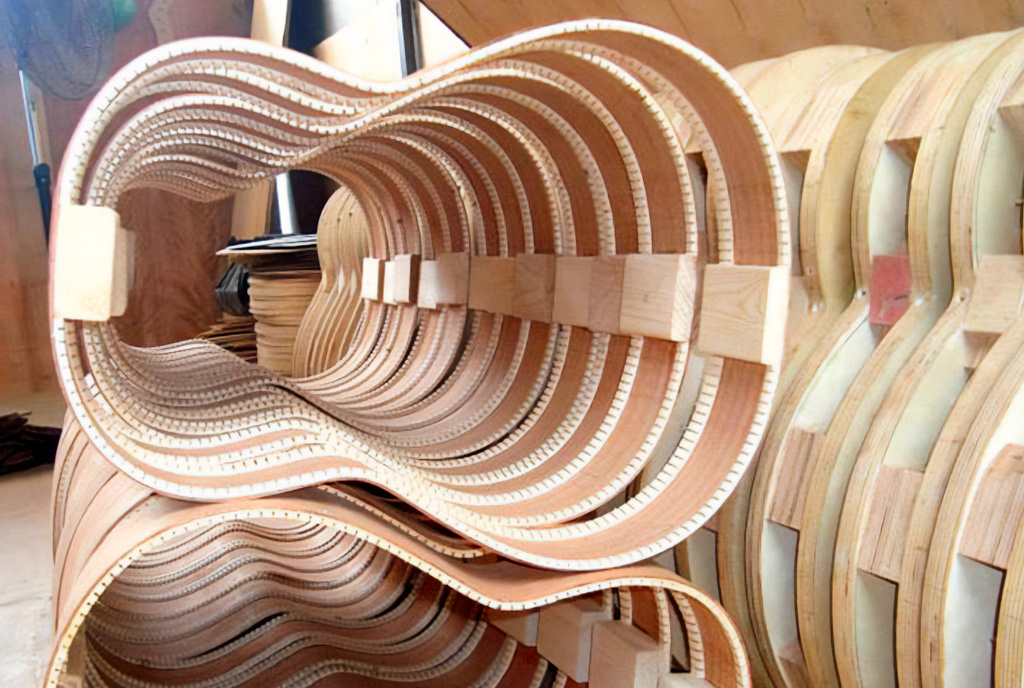
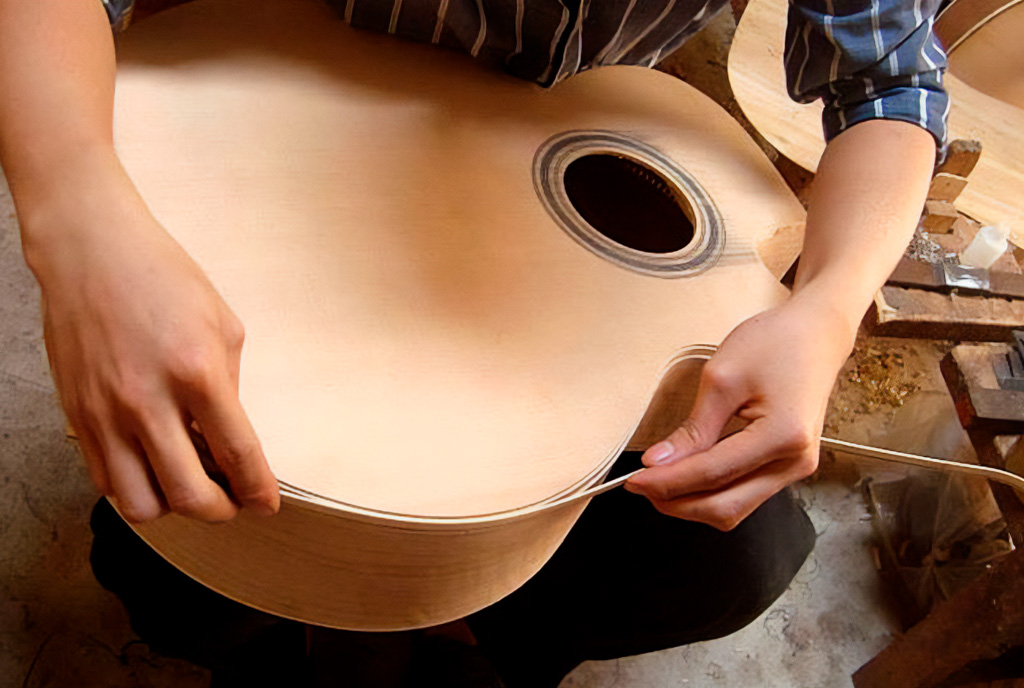
A guitar at Duy Ngoc usually takes around a month to build. Premium instruments, with more intricate finishes and detailing, can demand up to four months of a craftsman's time. Prices start at $200 and climb to $1,000, which is still a bargain when you consider that comparable instruments in the West can run as high as $10,000.
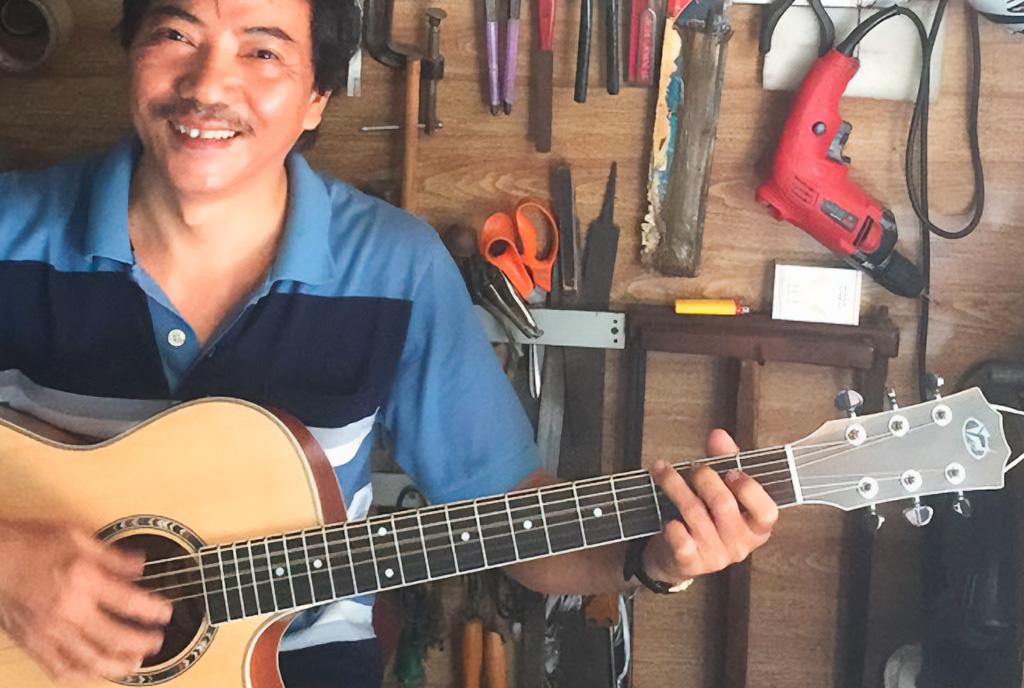
Anh and his brothers use timber sourced from the forests of Europe and North America for their guitars.
"Vietnamese and other tropical wood isn't as stable," he says. "It cracks very easily."
It isn't hard to see why Anh and the other seasoned craftsmen on the street are wary of shoddy work.
Like any artisan, guitar makers live and die by their reputation. They have built theirs carefully ever since Nguyen Thien Thuat became a hub for guitar production after Vietnam's reunification in 1975, when the city was renamed from Saigon to Ho Chi Minh City.
For decades, their skill at building guitars has earned the gratitude and respect of legions of Vietnamese musicians. Meanwhile, as the country opened up to the outside world after years of isolation, an influx of foreigners and bargain hunters began bringing serious business to craftsmen like the Duy team.
Proof of this shift in the customer base is easy to find.
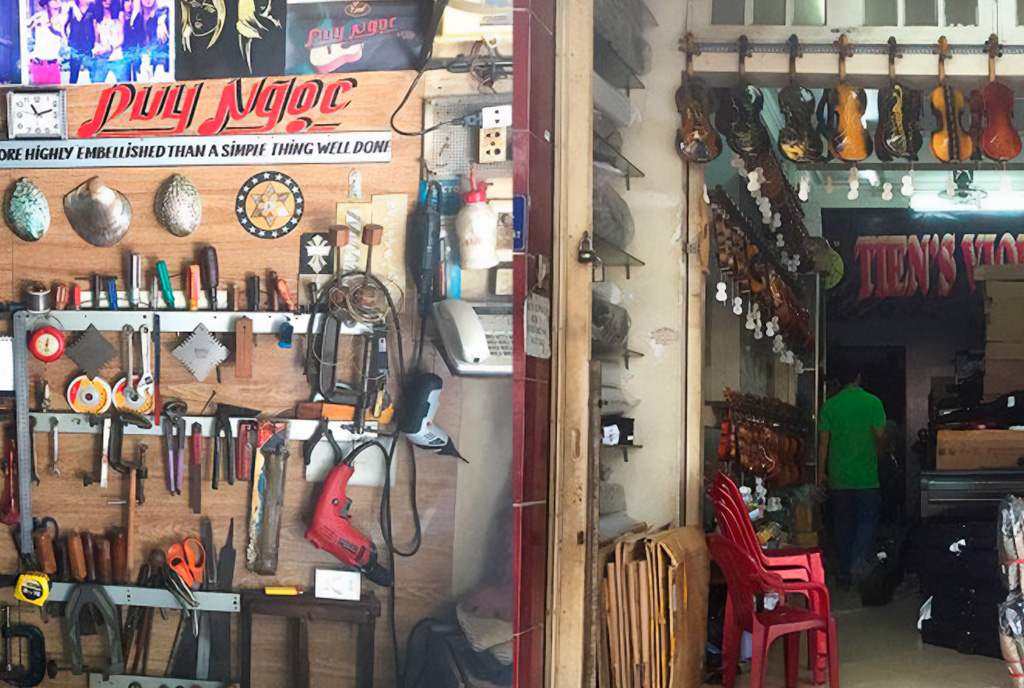
Photos of grinning Western rockers posing with Anh and his guitars and mandolins are plastered across the wall right behind the craftsman's head.
"Business is booming"
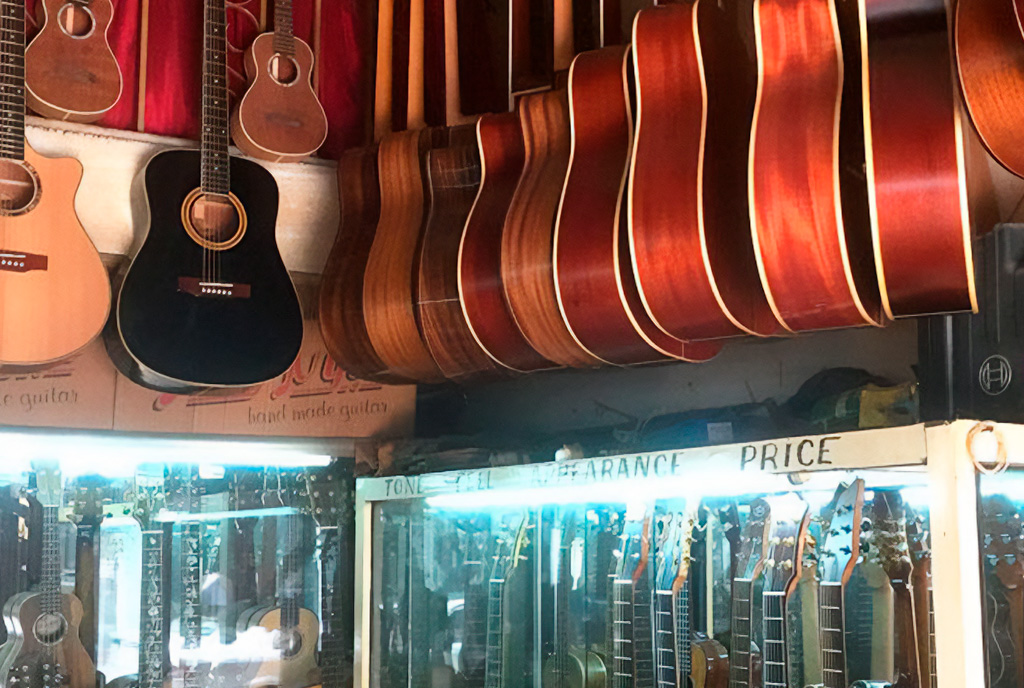
"They come from everywhere," he says.
"From Australia, America, the UK. I even had an order from Chile recently. In the West, a handmade guitar can cost thousands of dollars. Here they're far cheaper, and the quality is still very good."
Further down the street at Binh Guitar, owner Nguyen Van Binh seems delighted by Nguyen Thien Thuat's growing fame. I've barely stepped through the door before he thrusts a photocopy of an article from an American guitar magazine into my hands. "Business is booming thanks to all the good press and word of mouth," he says.
The idea that Vietnam is becoming internationally known for the quality of its acoustic guitars might be news to some people, but musicians in the country have had an affinity for stringed instruments for centuries.
Instruments like the dan nguyet (a two-stringed moon lute) and the dan ghi-ta (an acoustic guitar with a scalloped fretboard) sit right at the heart of the country's folk music traditions.
The modern music scene, meanwhile, is starting to gather momentum after years of stagnation. While commercial pop is the most popular genre among Vietnamese youth, a growing crowd of young guitarists is following in the footsteps of Trinh Cong Son, the legendary songwriter known as "the Bob Dylan of Vietnam", and stepping into the spotlight.
The city's music scene has come a long way since the days right after reunification, when the sensual, romantic nhac vang (yellow music) so popular in Saigon was banned. For many years the triumphant, militaristic strains of nhac do (red music) were the only style the authorities allowed, and the city's rich songwriting heritage was largely left to wither on the vine.
A neighborhood out of tune
Those restrictions were lifted long ago, and a growing crop of venues, including Old Compass Cafe, Yoko and Indika, gives local talent a stage, from solo performers such as Tofu, David Tran and Thanh Luke to bands like Ca Hoi Hoang, Gac Mai and Bet.
All of this should be good news for the traders on Guitar Street, but talking to the merchants makes it clear that things aren't quite as harmonious as the sounds ringing out from their instruments.
Along a 500-meter stretch of Nguyen Thien Thuat sit more than 30 guitar shops, selling everything from the custom-made acoustics that made the street famous to flamboyantly styled electric guitars, mandolins and traditional Vietnamese stringed instruments.
Yet, as anywhere, quantity doesn't necessarily equal quality on Guitar Street, and that's one of the biggest worries for people who have spent much of the past 40 years building and reinforcing their reputations.
According to Anh, some of the instruments sold by newly arrived competitors are made from low-grade wood in a rushed production process, purely to get stock onto the shelves faster. The rising cost of rent in this booming Asian city is another source of concern.
Even my own guitar purchase, at a bargain price of around $250, doesn't seem to lift Anh's mood much.
"Business is good on the whole," he says. "But rent keeps getting more and more expensive, and some people cut corners to make ends meet. We all used to work and then play music together in the evenings. That happens less now, and it's a shame."
Duncan Forgan is a freelance writer based in Southeast Asia.