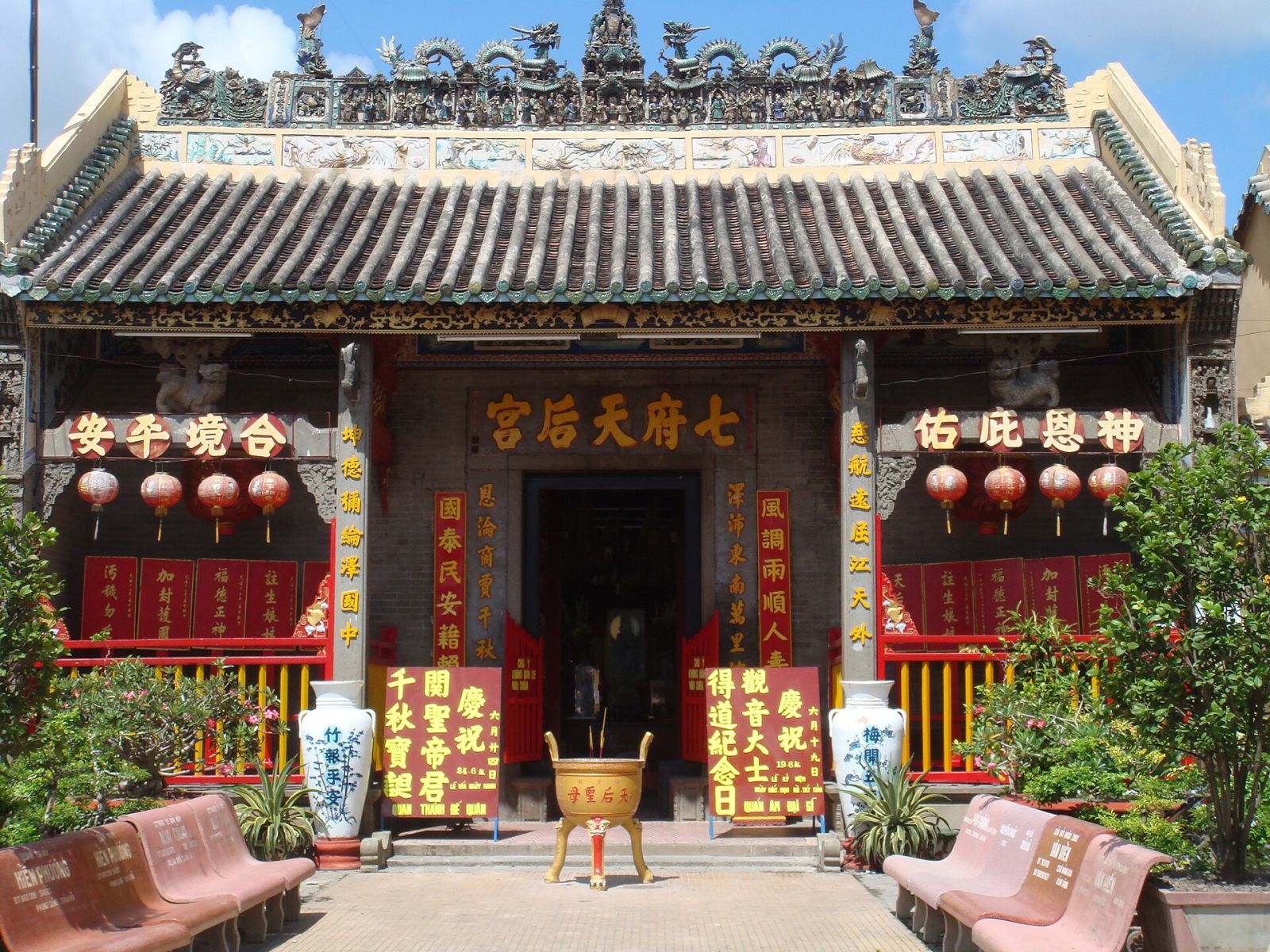


For several centuries in Vietnam, Dao Mau, or Mother Goddess worship, has been a source of strength, inspiration and spirituality, especially among working-class families.
Over the years this religion has waxed and waned, but recently its practices have been enjoying a revival after UNESCO recognised them as intangible cultural heritage in 2016.
In Hanoi, travellers can get to know this ritual religion through the show "Four Palaces".
Partner links: booking through them supports the blog at no extra cost to you.
The captivating performance at the Cong Nhan Theatre depicts the trance-like practice of hau dong, a ritual of spirit possession.
"Worshipping mother goddesses is a popular belief in Vietnam. It has existed for a long time," says Dr Nguyen Ngoc Mai, head of religious studies at the Vietnam Academy of Social Sciences.
"Vietnam is an agricultural country, so the worship of agricultural goddesses is especially widespread. Before (the inclusion on the UNESCO list), the audience was made up mainly of farmers or businesspeople. Today's audience includes everyone, from civil servants to high-ranking officials."
What is Mother Goddess worship?
Dedicated to female deities, Mother Goddess worship was established in the 16th century as an alternative to Confucianism.
"Women are expected to play a passive, submissive and subordinate role (in Confucianism)," says Dr Nguyen.
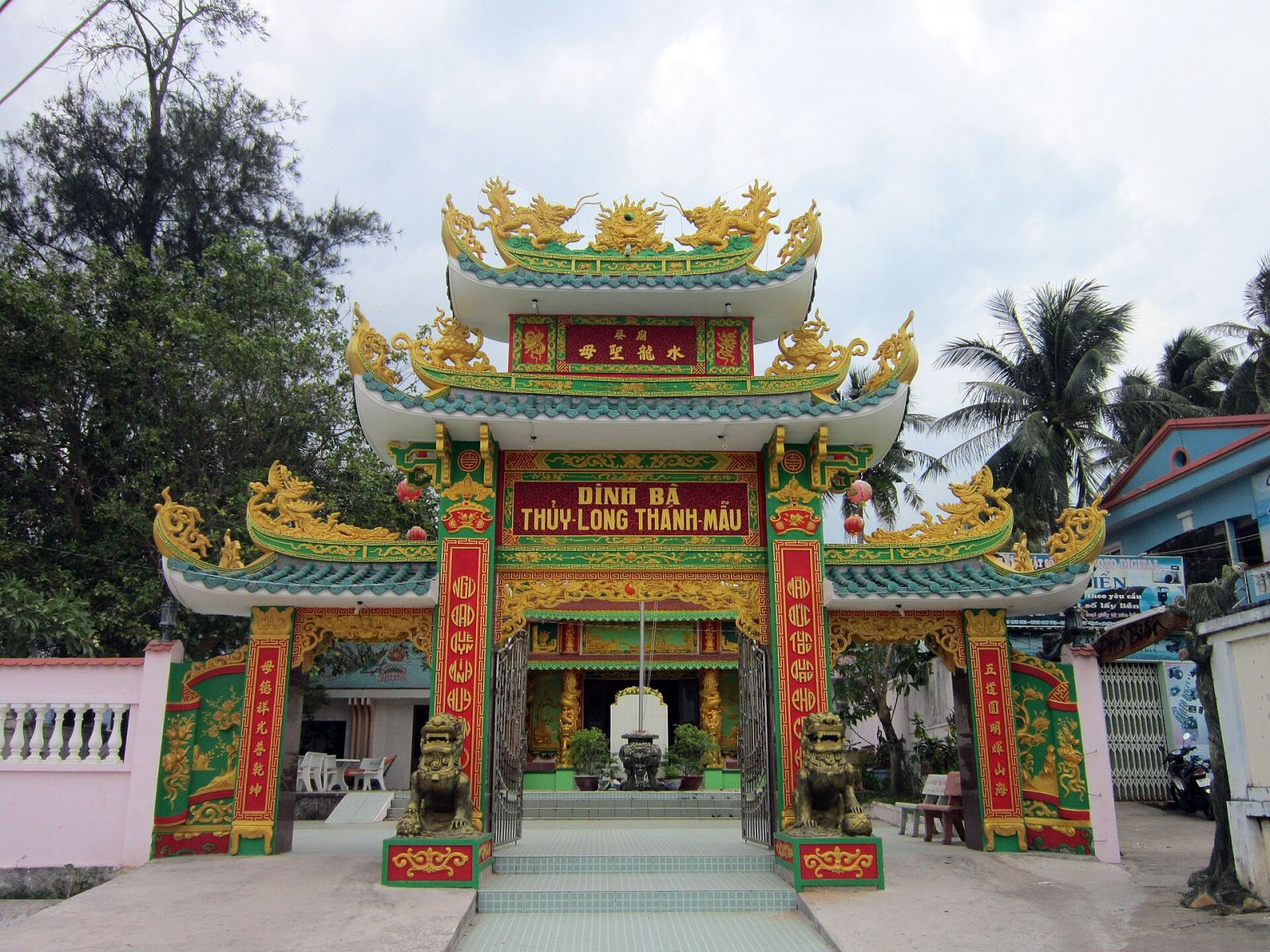
"They are not especially respected, and they have to rely on men. People needed a symbol, so they invented the mother goddess 'Lieu Hanh'.
"She embodies the ardent longing of Vietnamese women for freedom, independence and happiness."
In Mother Goddess worship, hau dong (which roughly means 'to mount the medium' or 'to enter a trance') is the most important step.
During the ceremony, mediums (who are traditionally chosen by the deities at birth) and their assistants put on vivid costumes, make offerings to Buddha, perform folk dances and ask the goddesses to descend and possess their bodies.
When the spirits are believed to have entered the body, the medium appears to change personality. From that moment on, all actions and words are considered to belong to the spirit.
The goal? Mediums believe that these spirits bless them with health, hope, happiness and good fortune.
"The hero will come and mount my body... they act inside my body," says Nguyen Duc Hien, a medium.
"When the scent of incense and the music come together... you have the chance to ask the god to embody himself in you. The dance is very different from ordinary action in life."
The evolution of hau dong
Considered a superstitious ceremony under communist rule, hau dong was banned until 1987.
Since the government eased the restrictions, the ritual has slowly returned to urban communities such as Hanoi.
"The main thing is to help you find peace of mind: you can learn to help people, be open with people, do good things, avoid bad ones," adds Nguyen.
"These are Vietnamese heroes, the gods of Vietnam. They are very, very holy, ready to help people."
Over the years the ritual has modernised with an influx of new practitioners who do not always follow the ancient customs.
"With growth come many changes," says Nguyen. "For example, in the past the costumes were also embroidered with certain patterns that signified religious and philosophical symbols. Today's patterns are quite spontaneous."
Where to see it
Inspired by a hau dong performance in 2013, director Viet Tu decided to bring this ritual to the stage with respect.
"Alongside water puppetry, hau dong is one of the few rare art forms that is purely Vietnamese, untouched by other cultures," says Tu, whose wife is a medium.
"My show should be not only lively and entertaining but also accurately reflect the Mother Goddess worship ceremony."
He decided to explore the spiritual tradition, albeit with a few changes, to make it more accessible and enjoyable on stage.
"We have far more open space on the stage, which allows us to perform bigger movements, such as spinning. Mediums are not allowed to spin: their faces must always be turned towards the altar of the Mother Goddesses," explains performer Lien Kim.
"Every country has its own spiritual practice. For the Vietnamese, it is the tradition of worshipping the Mother Goddesses. I think the beauty of it lies in appreciating women and their role in society."
Four Palaces, Cong Nhan Theatre, 42 Trang Tien Street, Hoan Kiem, Hanoi; +8490 703 3553