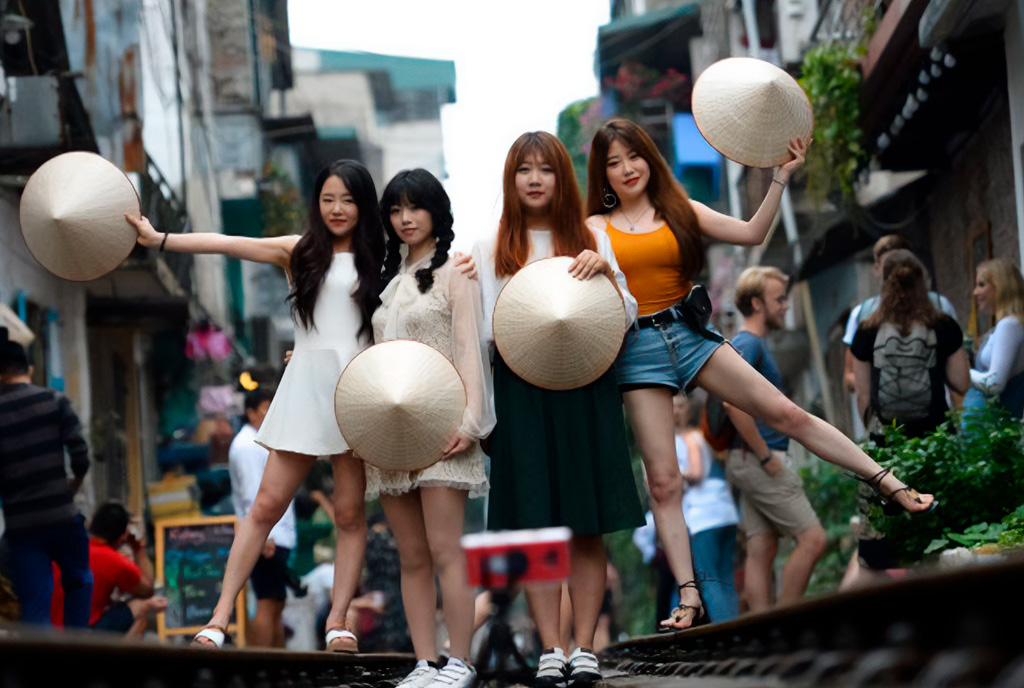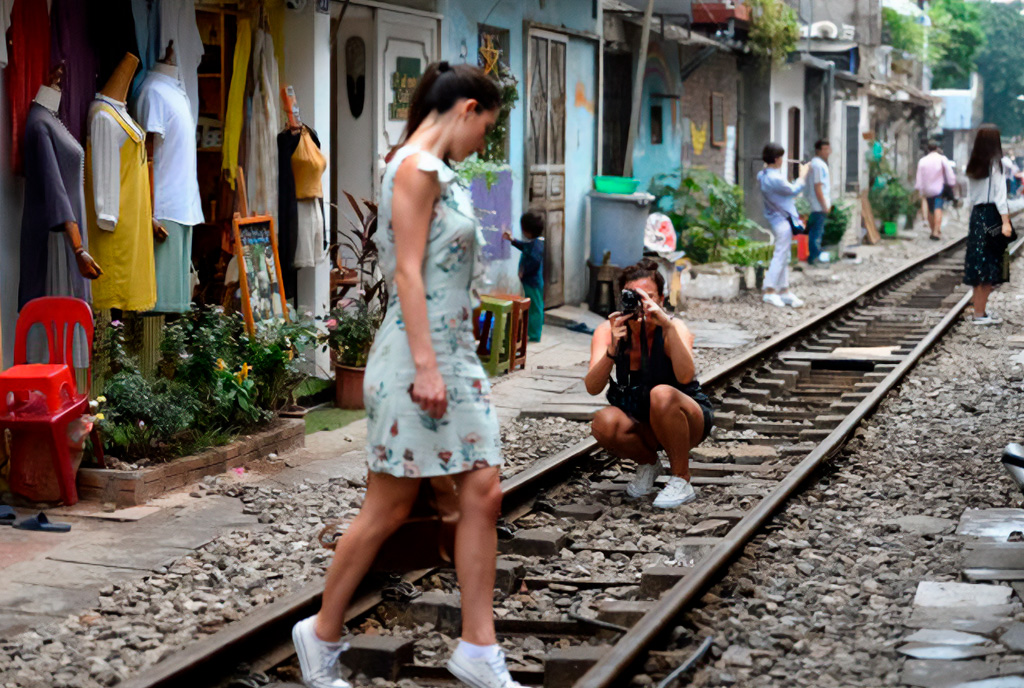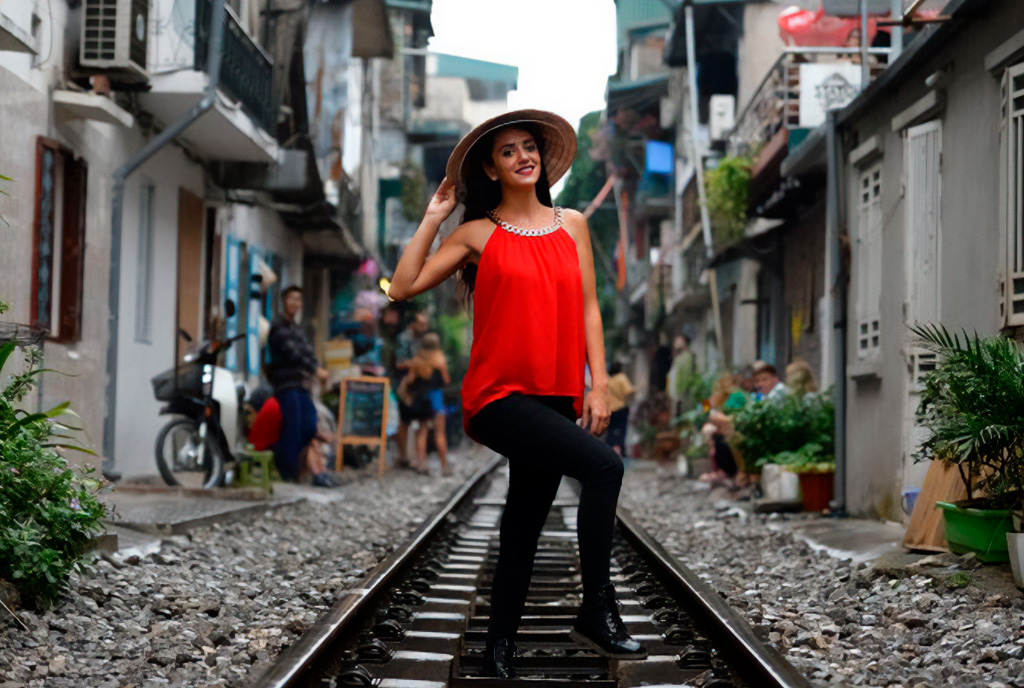


Gone are the days when polite travelers stepped aside so they wouldn't wander in front of someone's vacation photo. Now the trick is not to wander behind people and ruin their selfies.
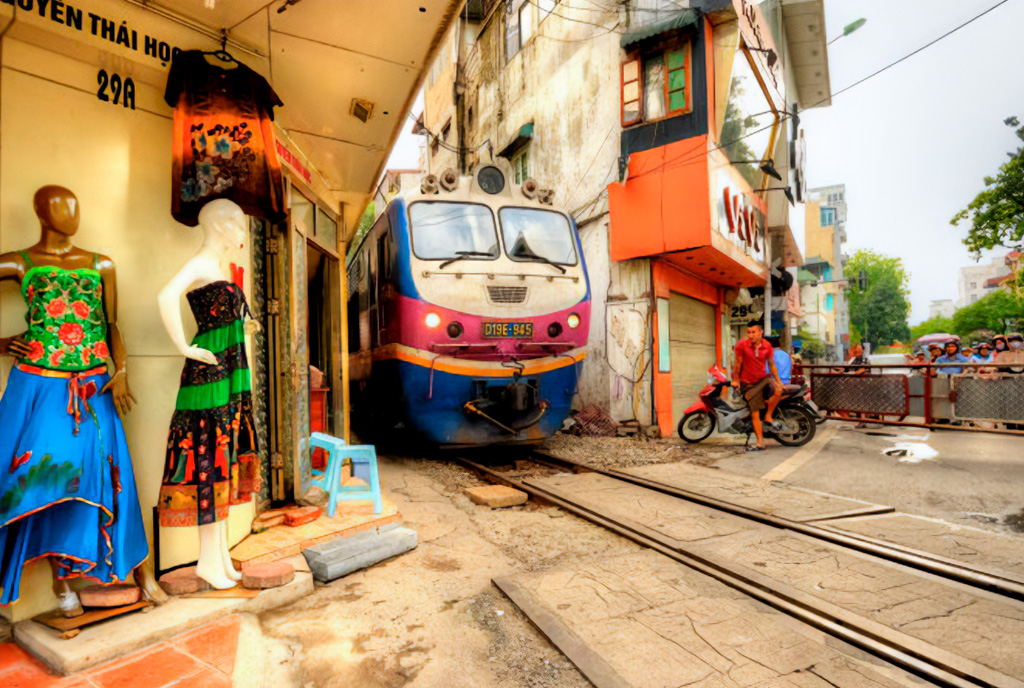
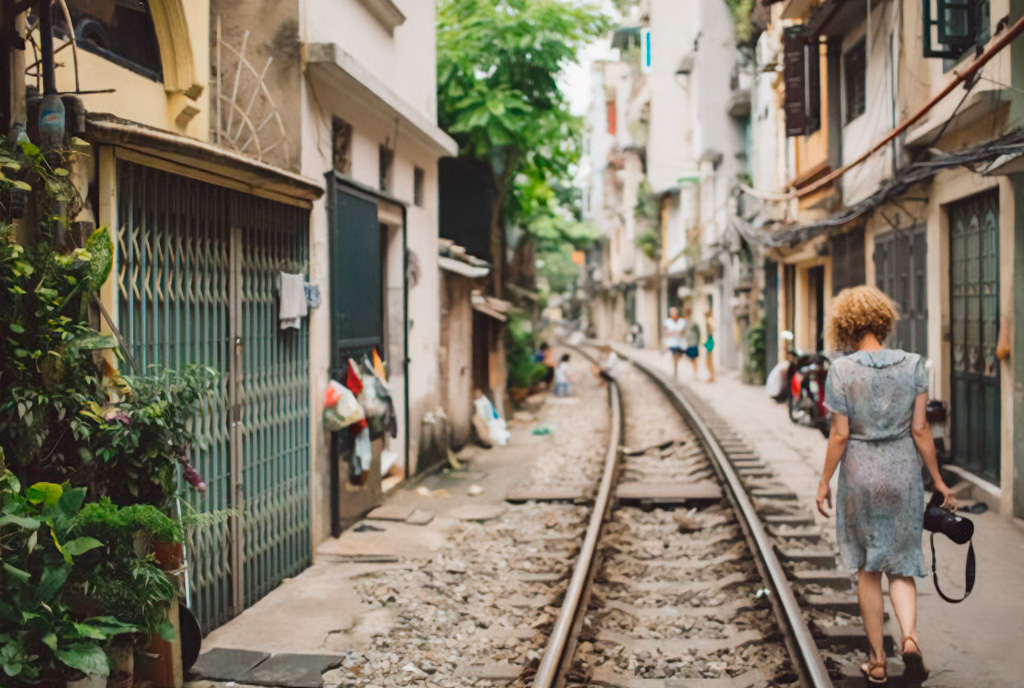
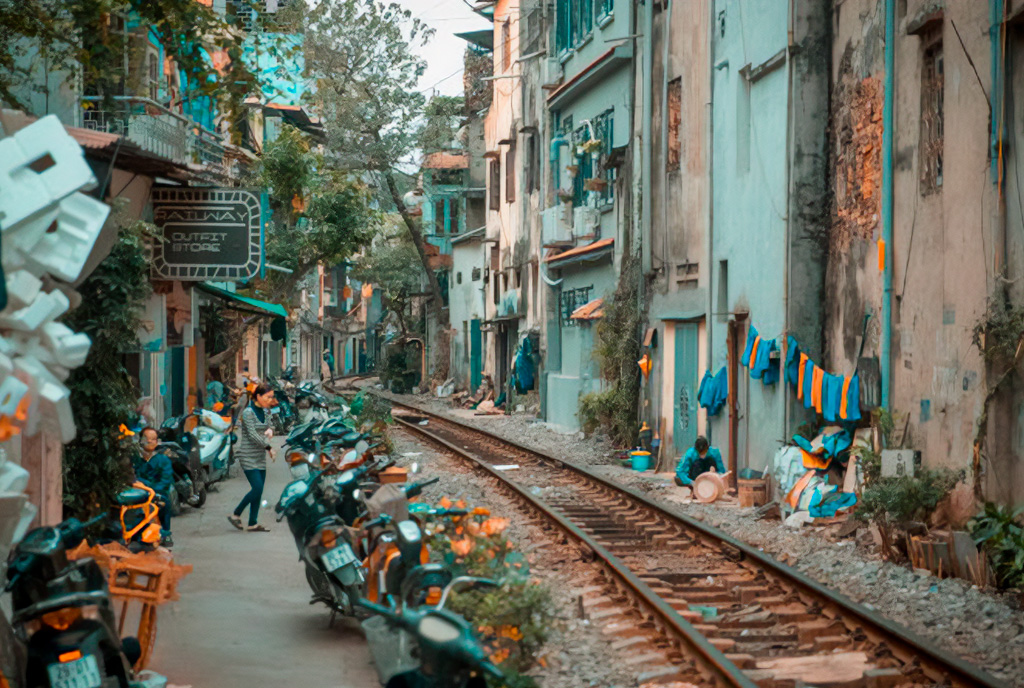
Few places show off selfie culture quite like Hanoi, Vietnam, where a blend of old and new creates a captivating backdrop for visitors' photos. Hanoi's "selfie street" sits in the Old Quarter, running along railway tracks first laid by French colonists.
Related article: 30 of the most beautiful places in Vietnam
Partner links: booking through them supports the blog at no extra cost to you.
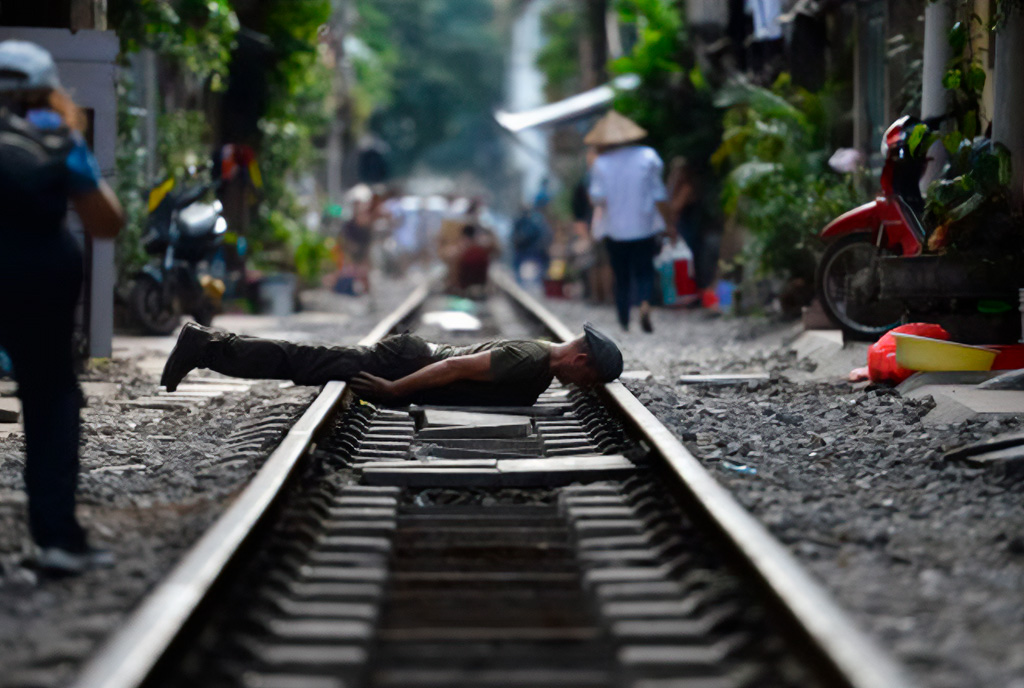
And while selfie enthusiasts sometimes irritate locals by blocking the sidewalks for the perfect shot, Hanoi faces a more serious problem: the tracks are still in use. That means both residents and visitors can put their lives at risk if they aren't careful while standing on or crossing the rails.
Many locals know the train timetable by heart and plan their day around it, and they warn the photographers who show up.

"It was pretty quiet when we arrived, since it was early in the morning," says Instagrammer Christabel about her visit to "train street," where she posted several photos on October 29. "The locals were really friendly, and they mentioned the train arrival times as we walked by."
Christabel is just one of thousands who have shared photos from "train street."
Related article: Hanoi vs. Ho Chi Minh City: what makes each one unique?
Some people have become so obsessed with finding the perfect spot for social media that they hire professional photographers or travel to remote locations purely for an Instagram shot, giving rise to the phrase "do it for the gram."
A quick social media search turns up photos of visitors sitting, running, jumping, dancing, kissing, pretending to fall, and even planking along the tracks. Only a handful of the images actually show a train passing by.
Dave Fox, a writer and writing coach based in Vietnam, has watched locals-only spots like "train street" grow crowded in the social media era. He first visited the street in 2010, and it saddens him to see it "trampled" by tourists.
Lately he has been hearing stories about tourists who play a game: standing on the tracks for as long as they can, then leaping off right before an oncoming train, all while filming it on a camera or GoPro.
"Overtourism is the new buzzword for something that has been around for a long time," Fox says.
Selfies are one thing, but he is also troubled by what he calls "grab and go" photography: quickly snapping a picture of a local, then rushing off to the next landmark.
"Travelers need to consider how it comes across," he says. "Photographing people is fine if you ask first, and most people in Vietnam are welcoming. You have to treat people as people, not as objects in a museum."
Fox follows one guiding principle: how would you feel if it happened to you? He asks travelers to put themselves in the locals' shoes and imagine how they would react if a stranger ran up and photographed them without permission.
Related article: In search of the best banh mi in Vietnam
Although the Vietnamese locals living along "train street" seem understanding toward the people who travel from all over the world just to take a photo, not every destination shares that attitude.
Tourist spots around the world, from Venice to New Orleans, are struggling to cope with overtourism. Selfie mania isn't the only factor, but it certainly plays a part, as destinations try to balance the number of people visiting a landmark against the free publicity that beautiful Instagram photos can bring.
Instagram's "save" button was added in 2018 as a way to help users keep track of places they wanted to visit for their own trips and photo shoots.
"Suddenly some waterfall that is fairly hidden and that not many people went to becomes really popular, because some celebrity posted about it or it appeared in a popular TV show [...] You can see this with some of the places featured in 'Game of Thrones' that became popular," says Maria Reynisdottir of Iceland's Department of Tourism.
She adds: "And then suddenly a lot of people start visiting the place, but it isn't ready for that kind of influx. So you have to react quickly, but that isn't always possible."