


"Best of" lists are contentious, unscientific, inherently subjective and guaranteed to ruffle feathers. But that is exactly what makes them great: they get us talking about food.
To put together our own list, we spoke with a handful of certified foodies, people who are obsessed with food roughly as much as we are. One of them is Jun Kyung-woo, co-author of the bestseller "Dining in Seoul."
"The first question is: how do you define Korean food?" Jun says. "Is it the ingredients? Is it Korean because it exists in Korea? Is it what Koreans actually eat?"
Partner links: booking through them supports the blog at no extra cost to you.
Indeed, the ever-shifting landscape of Korean cuisine now includes dishes like pizza topped with fried shrimp and sweet potato, and Chinese food such as jajangmyeon (noodles in black bean sauce). They are branded as "Italian" and "Chinese" food, yet they are so heavily Koreanized that they would be unrecognizable to the natives of those countries.
There is a long, dynamic history that involves certain ingredients and flavors, such as soy, garlic and red pepper, along with techniques like pickling, marinating and braising. So while an extravagant pizza might be a thoroughly Korean creation, for this list we are looking at food with a long lineage on the Korean Peninsula.
That said, our idea of Korean food is far from narrow. We treasure a bowl of naengmyeon from a restaurant that has been running for more than three decades just as much as artfully plated dishes that filter Korean flavors through molecular gastronomy.
Korean cuisine is remarkable in its diversity. We like to think this is only the beginning:
Song Juk Heon (송죽헌)
Authentic hanjeongsik, or traditional Korean cuisine, is all about space, literal, physical space.
"In a true hanjeongsik, you would wait in an empty room," says Gang Hon, a music and food critic. "Then they would bring in a table loaded with 30 different dishes. Where there had been nothing, abundance would suddenly appear."
These days it is hard to find restaurants that still operate this way.
"As a result of Western influence, there has been a shift," Gang says.
As a concession to Westernization, most hanjeongsik restaurants in Seoul serve food as timed courses rather than as an abundance of dishes crowding the table. According to Gang, if you are going to be in Seoul, you should visit Song Juk Heon, the Seoul branch of a restaurant across from the secret garden of Changdeokgung Palace.
The original establishment is in Gwangju, in South Jeolla Province, and serves a delicious set of dishes including grilled abalone with roasted ginkgo nuts, duck patties with hints of ginger, and cod dumplings topped with egg white foam.
They also honor special requests, so you will be served samgyetang or a spicy chicken stew if you call ahead.
Reservations are absolutely essential.
The meal ends, in true Jeolla-do style, with rice and an assortment of jeotgal and jangajji, or salted fish roe and anchovies. The flavors are pungent, uncompromising and not for beginners.
"It is hardcore," Gang says.
Yong Su San (용수산)
If royal Jeolla-do cuisine is, as Gang puts it, the "boss" of Korean food, then the food of Kaesong, the former capital during the Goryeo dynasty, is its main rival. Where Jeolla food is boldly, almost aggressively seasoned, Kaesong food is clean and more delicate.
The Kaesong style is easier on Western palates. Yong Su San has opened a number of branches over the past three decades, including one in Los Angeles.
Kaesong food also has the advantage of being visually stunning, whether it is gujeolpan, pancakes served with thinly sliced vegetables and proteins arranged by color, or sinseollo, a soup rich with meat, seafood and vegetables served in a heated silver brazier.
Yong Su San has several locations.
Eulji Myeon Ok (을지면옥)
"Naengmyeon is a uniquely Korean dish," Gang says. "It is not just noodles, it is soul food."
Gang's favorite naengmyeon restaurant is a slightly rundown spot that has been running for more than 30 years, called Eulji Myeon Ok.
"They have preserved a lot of the traditional flavor," he says.
The taste is not heavy and meaty, as it is at many naengmyeon restaurants these days, but rather clean and refreshing.
Eulji Myeon Ok has a sister restaurant (actually run by the sister of the original's founder) called Pil Dong Myeon Ok (필동면옥) near Chungmuro. Which one is better? According to Gang, Eulji is the winner.
"It is a little more homey."
Tosokchon Samgyetang (토속촌)
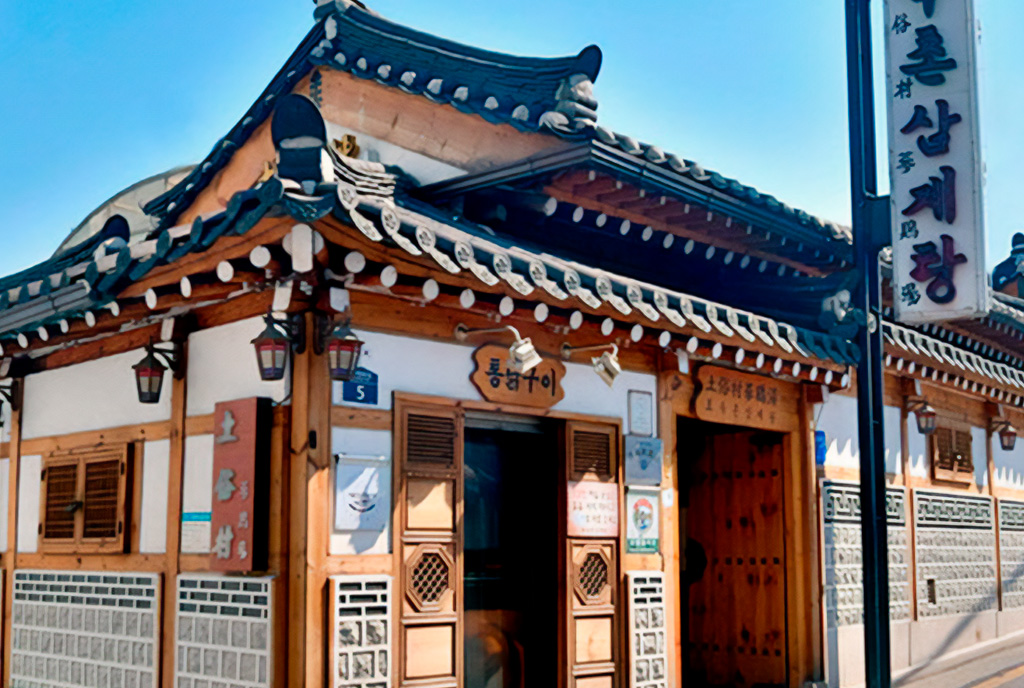
Tosokchon Samgyetang is famous for being famous. It was once a favorite haunt of the late President Roh Moo-hyun. It is a must-visit in Seoul guidebooks, as its popularity with tourists attests, and yet the hype is entirely justified.
The restaurant is best known for a single dish: samgyetang. A young spring chicken, stuffed with chestnuts, garlic, dried dates and, most importantly, ginseng, is slow-cooked for hours. The dish is meant to restore energy to a weakened spirit, and it is traditionally eaten on one of the three dog days of summer, sambok.
But once you taste the nutty, sweet and soothing broth, you will not want to wait until next summer to have it again.
Si Hwa Dam (시화담)
"We run this restaurant like a museum," says Oh Chun, the owner of Si Hwa Dam. "There are things here you can only see in a museum."
The entrance floor has display cases filled with ancient relics and antiques, including traditional funerary accessories from the second and third centuries, clay ducks and roosters, spiritual intermediaries between heaven and earth.
This artistic sensibility comes to the fore in dishes that seem too beautiful to eat.
The food itself stands modestly against such presentation, two flounder fish balls resting on a cascade of pebbles beside a blossoming branch of an apricot tree.
"We do not want any one thing to dominate," Oh says. "We would rather it harmonize with the rest of the dish."
Indeed, the meal is a parade of handmade plates (there are different set menus depending on the price), each adorned with flowers gathered that very day. The food, however, fades from memory like a hazy dream that has just slipped away from you.
Goraebul (고래불)
If you still have not acquired a taste for raw seafood, this is the place to develop one. The seafood restaurant Goraebul, which literally means "whale fire," takes its name from a seaside town in the northern part of North Gyeongsang Province, where they source their seafood.
The restaurant may sit in the Yeoksam-dong area of Gangnam, but it receives fresh seafood from fishermen on the eastern coast of the peninsula every morning.
Because the ingredients are so fresh, Goraebul often serves raw seafood dishes of whale, flounder and abalone chilled and thinly sliced, with sauces such as the spicy and vinegary chojang or with doenjang, a fermented soybean paste. The rest of the menu includes set courses that showcase the bounty of the East Sea, with rock octopus, clams and turbot.
Jung Sik Dang (정식당)
In 2009, chef Yim Jung-sik opened a restaurant in Apgujeong called Jung Sik Dang, a play on his own name and the word for a set menu. While studying at the Culinary Institute of America, Yim formed a strong bond with some of his classmates, with whom he later opened the restaurant.
Jung Sik Dang is one of the first restaurants in Korea to bring molecular gastronomy techniques to Korean cuisine. Building on that success in Seoul, they opened a second location in the Tribeca neighborhood of Lower Manhattan.
The menu changes regularly with the whims of the chef and the seasons. One of their signature dishes, however, is sea urchin bibimbap. They give a twist to the classic dish, using fresh raw sea urchin as the protein and a seaweed puree in place of the traditional spicy red pepper paste, gochujang, creating a savory, umami flavor profile. The dish is finished with a sprinkling of toasted millet, which lends the rice a smoky crunch.
Jinju Jip (진주집)
There is little pretension when it comes to dining after a long, hard night of drinking. After all, when you need a hangover cure, nothing soothes an upset stomach quite like a hearty bowl of beef soup.
Jinju Jip, tucked away in an unremarkable alley near Namdaemun, is open 24 hours for exactly this reason. Their signature dish is oxtail soup, in which the meat has been simmered for hours and is so tender it quivers at the touch of a spoon.
"This soup can be universally appreciated," Jun says. "It is inexpensive, and you can eat it in comfort."
Byeokje Galbi (벽재갈비)
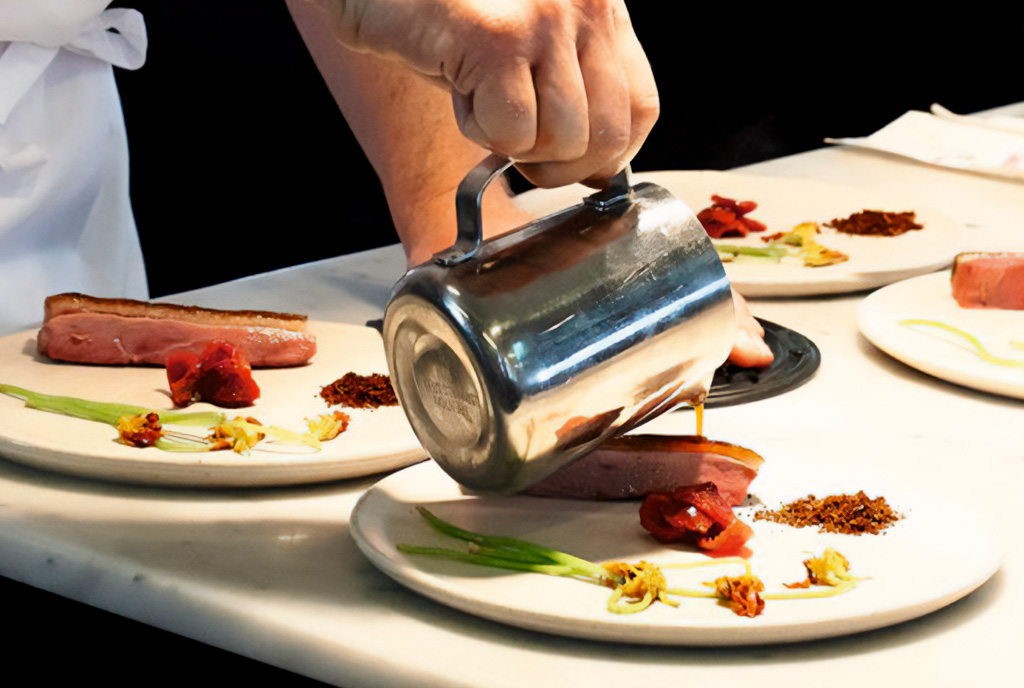
No list would be complete without a good old-fashioned Korean barbecue restaurant. When it comes to grilled meat, nothing matters more than the quality of the meat, and no one is more obsessed with it than the owners of Byeokje Galbi.
The meat here comes from organically raised Korean cattle, also known as hanwoo, which is far more expensive than most imported beef.
"Korean beef is more like Japanese Kobe," Jun says. "People in Seoul love meat that melts in your mouth."
Congdu
Congdu was once based in the Seoul Museum of History, but the restaurant has since moved into a beautiful former home of the grandmother of the last Joseon emperor.
The fine dining establishment serves some of the best Korean cuisine in Seoul, with owner Vivian Han traveling across Korea in search of the finest suppliers and ingredients.
"My concept was to take authentic Korean flavors and use high-quality local ingredients, preparing them creatively to tickle modern tastes and sensibilities," she says.
Congdu is best known for its ganjang gejang (soy sauce crab), which is made from Korean blue crab and served with white rice and dried seaweed.