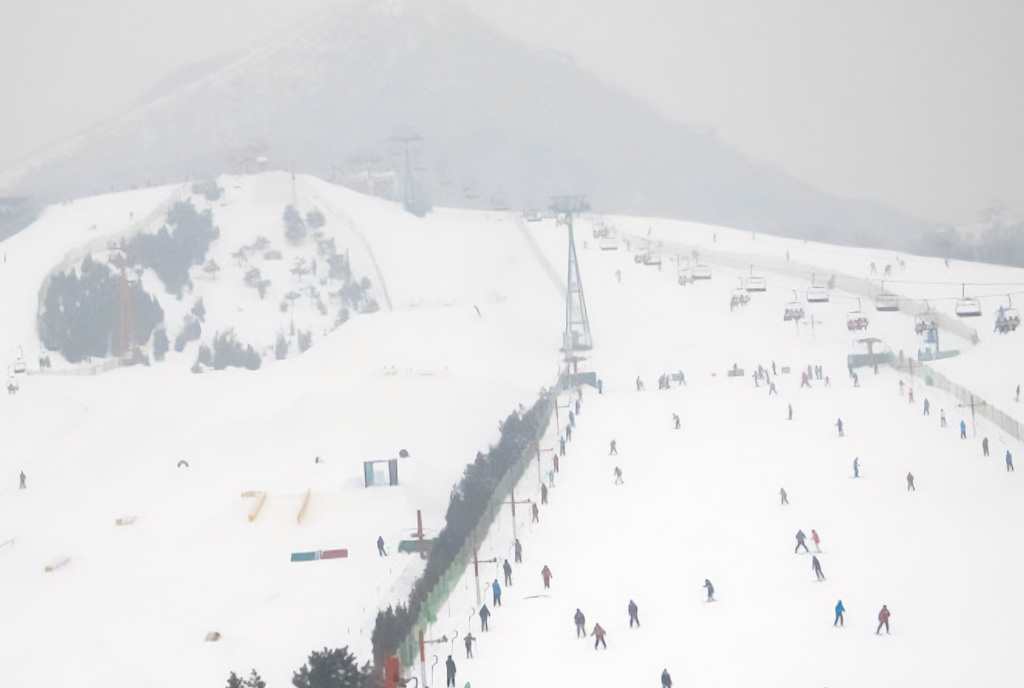


Fancy wading through waist-deep powder in Japan? Hunting down massive jumps in China? Here is your guide to hitting the slopes across Asia.
Appi Kogen, Tohoku, Japan
Appi Kogen, or simply Appi to its regulars, boasts 282 hectares of ski terrain and 21 runs with an average length of two kilometres, the longest average run length in Japan. Many of them stay empty even in peak season and are blanketed in fresh, dry powder. Seasoned skiers can carve down the ungroomed steeps of Mount Nishi Mori, while children can stick to the gentle 5.5-kilometre Yamabato run.
Appi also offers plenty of off-piste activities, including an on-site dairy farm that makes its own ice cream and cheeses, snowmobile and sled trails, and onsen. The little ones won't want to leave the SpongeBob Kids' Park, which has mini ski zones for beginners.
Partner links: booking through them supports the blog at no extra cost to you.
Getting there: From Tokyo, take the JR East Shinkansen line to Morioka. Once you reach Morioka Station, hop on the "Hanawa" train heading to Appi Kogen Station. A free shuttle bus runs from Appi Kogen Station to the resort.
Niseko, Hokkaido, Japan

Thanks to the winter storms rolling in from Siberia, the Niseko resort area ranks among the snowiest destinations in the world. It is also one of the few ski resorts in Japan with a lively nightlife, which perhaps explains why it is the most popular ski destination in Japan among Australians.
Regulars rave about riding through deep, chest-high dry powder with zero resistance. Niseko is also known for its off-piste terrain and night skiing.
Niseko has four ski resorts, each with its own separate but interconnected ski zones. The terrain totals 2,191 acres and is accessible on a single lift pass.
Niseko Hirafu is the largest of the four resorts and has a small town at its base, complete with two amusement parks, snowmobile trails, onsen and massage spots.
Getting there: JR trains run to Niseko from Otaru, Sapporo, Hakodate and New Chitose Airport. Skiers can also drive there or catch a bus from Sapporo and New Chitose Airport.
Rusutsu Ski Resort, Hokkaido, Japan

Rusutsu Ski Resort, a stone's throw from Hokkaido's capital of Sapporo, has some of the densest and driest powder in Japan. Its 37 runs add up to 42 kilometres and spread across three mountains. Its tree runs, set within a silver birch forest, are one of the main attractions.
For those looking to take a break from the slopes, Rusutsu offers dog sledding, horseback riding, snow rafting and snowmobiling. The youngest guests can slide across the ice on inflatable rubber "snow trains" or head indoors for the cooking and craft classes the resort runs.
Getting there: Rusutsu Resort is a 90-minute drive from Sapporo, New Chitose Airport, Tomakomai and Muroran.
Alpensia Resort, Pyeongchang, South Korea

Seoul spent years building ski facilities to win the right to host the Winter Olympics. In 2018, Alpensia Resort in Pyeongchang will host the Winter Olympic Games.
Alpensia Resort was completed in 2009 and covers 4.9 square kilometres. Alpensia Sports Park has cross-country skiing and biathlon tracks, along with two international-standard ski jumps.
The 160-metre ski jump tower offers stunning views of Daegwallyeong from the top, and you can reach it by monorail for 2,000 won. The resort sits close to Odaesan National Park and Samyang Ranch.
Getting there: The drive to Alpensia from Incheon International Airport takes roughly three and a half hours.
Yongpyong, Gangwon-do, South Korea

Yongpyong Ski Resort is the oldest ski resort in South Korea and remains one of the most popular, not only for the excellent skiing but also because it was the filming location for "Winter Sonata", arguably the most beloved television drama in a country obsessed with soap operas.
Yongpyong has 1,620 hectares of ski terrain with 31 groomed slopes totalling 25 kilometres. The 5.6-kilometre "Rainbow Paradise" is the resort's longest run and is reached by a 3.7-kilometre gondola that lifts guests up from the base. There is also a good chance skiers and snowboarders will find fresh powder at Yongpyong.
Off the slopes, Yongpyong offers tours of the "Winter Sonata" filming locations for die-hard soap opera fans, plus a water park with hot springs.
Yongpyong is often chosen to host international tournaments, including the Asian Winter Games in 1999. The Winter Olympics will return in 2018.
Getting there: Yongpyong is a two-and-a-half-hour drive from Seoul by car. Click here for directions. Alternatively, shuttle buses run daily from Seoul, and from Hoenggye, Gangneung.
Jisan Forest Resort, Icheon, South Korea

Jisan Forest Resort is just a 40-minute drive from Seoul, which means city dwellers can sometimes reach the snowfields faster than they get to work. Jisan's terrain may be too tame for advanced skiers, but its 10 slopes should be plenty to please beginner and intermediate riders. The resort's longest run is 1.5 kilometres and is designed for intermediate skiers.
Jisan Forest Resort also has two slopes that stay open past midnight from 23 December to 12 February.
The resort is a stone's throw from Hanteo Pony Farm, where little ones can spend the day riding farm animals and planting crops. Those who want to stay overnight can book condominiums at the resort.
Getting there: Jisan Forest Resort is a 40-minute drive from Gangnam, south of Seoul. There are also buses running from Incheon International Airport to the resort, and the trip should take about an hour and a half.
Gulmarg, Kashmir

In the 19th century, Gulmarg was a hill station where British colonisers escaped the summer heat. These days it is a world-class ski resort, blanketed in fresh, light powder from the Himalayas, drawing ski bums weary of the alpine lift queues and fondue.
The resort's pride and joy is the Gulmarg Gondola, the highest ski lift in the world at a dizzying altitude of 3,979 metres. From the top station, skiers can take on challenging runs with Nanga Parbat, the ninth-highest peak in the world, as their backdrop.
Gulmarg is periodically hit by unrest, leading to security lockdowns that can stretch on for months, but that hasn't deterred the 400,000 brave skiers who rode the gondola last year.
Getting there: Gulmarg is 35 miles from the state capital of Srinagar. Visitors can take a taxi to Gulmarg from Srinagar Airport, a journey of about two hours.
Arxan Alpine Ski Resort, Inner Mongolia, China
At Arxan Alpine Ski Resort, daily snowfall guarantees the slopes are always covered in thick powder.
Much of the resort is used by China's national ski team for training, but it also has gentler slopes that are open to the public.
The amateur alpine and cross-country runs total 10 kilometres and cover 5.5 square kilometres. The resort sprawls across the high mountains along the Inner Mongolian border and is surrounded by pristine forests.
Getting there: From Beijing, take a flight to Ulanhot. Buses and trains run from Ulanhot Airport to Arxan Alpine Resort.
Yabuli Ski Resort, Heilongjiang, China

Yabuli Ski Resort is China's largest ski area, with ski slopes totalling around 30 kilometres. And while it is a key training base for China's national ski teams, it also serves up plenty for adrenaline seekers.
Yabuli has 18 runs across a range of difficulty levels. The 3-kilometre A1 is the longest intermediate run in China and has earned the nickname "Trail to Happiness". Experienced skiers can test their mettle on the 2.7-kilometre A5, known as the "Road for the Brave".
Kids will be thrilled by the descent down the 2.2-kilometre toboggan run, the longest in Asia, with 48 twists and turns.
Yabuli is home to China's first Club Med resort. Club Med Yabuli opens to the public on 27 November 2010.
Getting there: Take a flight to Harbin from Beijing, or to Mudanjiang. Trains and resort shuttle buses run to Yabuli from both cities. Another way to get there is to catch the overnight train from Beijing to Yabuli.
Nanshan Ski Village, Beijing

Nanshan Ski Village is a 30-minute drive from Beijing and is a great option for anyone looking to leave the capital's hustle and bustle behind. Nanshan spans 150,000 hectares of land and has 21 runs. Most of them are beginner and intermediate runs, but the mogul field at the top has monstrous bumps for daring skiers.
The resort relies mainly on artificial snow. The instructors are helpful and speak good English.
Getting there: From Beijing, take the Jingcheng Expressway, exit 16, Miyun, and follow the signs to Nanshan Ski Village. The drive shouldn't take more than 35 minutes.