

On the night of 13 August 1961, the East German army began stringing more than 48 km of barbed wire through the heart of Berlin, splitting the city into two starkly different halves.
On one side, the East, backed by the Soviet Union, operated as a socialist state, while the West was controlled by the Allied forces, forming a small urban island of democracy inside East Germany.
In time, the soldiers replaced the barbed wire with a heavy concrete barrier, which became the Berlin Wall. For 28 years it stood as a grim and powerful reminder of the physical and ideological division of the city and the country during the Cold War.
Partner links: booking through them supports the blog at no extra cost to you.
The wall finally came down in 1989, as Cold War tensions eased around the world. The most exuberant celebration of the city's reunification took place on 9 November 1989, shortly after the East German government announced that everyone in the capital was free to move around the city.
Euphoric Berliners rushed to the wall and set about tearing it down with shovels, hammers and pickaxes, eager to bring an era of restriction and repression to an end.
This year, Germany marks the 30th anniversary of the wall's fall. Anyone visiting Berlin can see what remains of the 155-kilometre structure at the following sites, all of which are free to visit.
Each of these places has its own story and offers its own perspective on what is still one of the most chilling symbols of the "Iron Curtain":
East Side Gallery
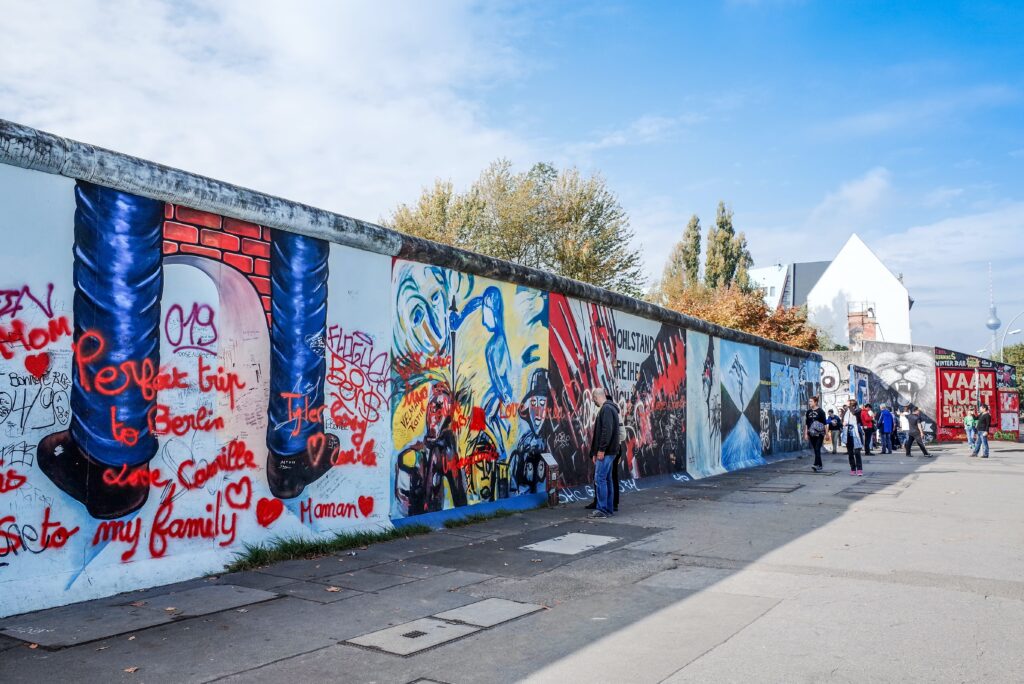
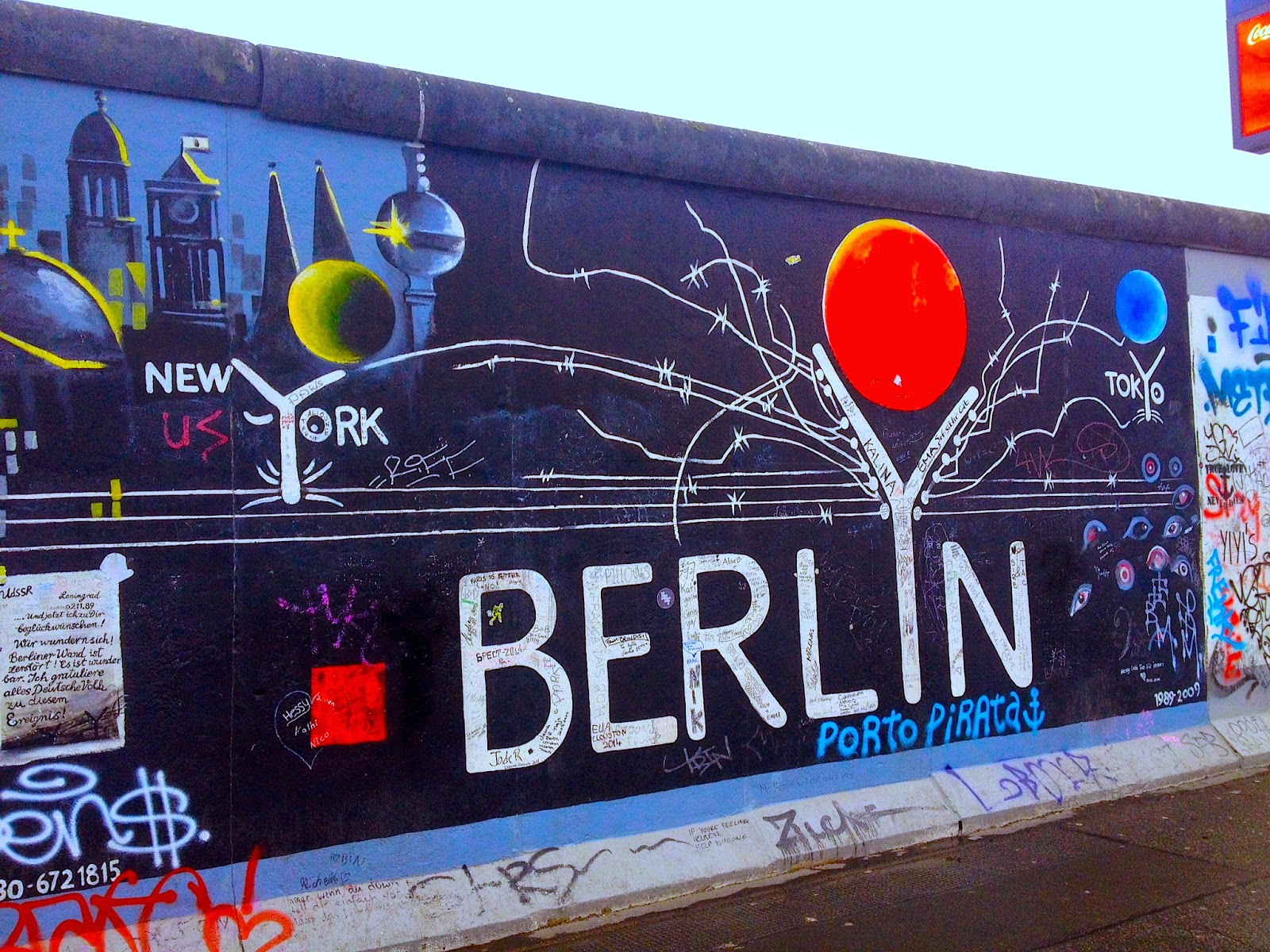
The East Side Gallery is an open-air memorial featuring 100 vivid murals that cover the longest continuous surviving stretch of the wall.
The project began after the wall came down, when 118 artists from 21 countries offered to paint the remaining structure with their own visual takes on the events that led up to reunification and followed it.
The most popular images are still the bright yellow "Trabant" car by Birgit Kinder and Dmitri Vrubel's "Fraternal Kiss". The best way to take in these colourful works is to start at Ostbahnhof railway station and walk the 1.3 km (8 miles) route to see them all.
Topography of Terror
At this museum dedicated to the terror and persecution carried out by the Third Reich, a 200-metre section of the wall stands out in the open.
Once the barrier between the Mitte and Kreuzberg districts, this substantial remnant of the wall has been preserved and listed as a national monument. Visitors can explore the "Topography of Terror" for free and see this exhibit, which is part of the museum's Documentation Centre.
Bornholmer Strasse
Bornholmer Strasse was one of seven crossing points on the border between East and West Berlin. On 9 November 1989, however, thousands of people heard the news that things had changed and that people would be able to cross the border freely.
Residents of East Berlin headed for the bridge on Bornholmer Strasse and demanded that the guards let them through. Even without any official order, the border guards relented.
They let more than 20,000 people through to the West, and Bornholmer Strasse became the first border crossing to open in the city. Today the open-air exhibition "9 November 1989 Square" tells the story of these events, as well as of how the border crossing was built.
Bernauer Strasse
When the city was divided, the Berlin border ran straight through a row of apartments on Bernauer Strasse in Mitte. If one side of a building sat in the East, the other faced West, and residents could escape through the windows and doors.
They climbed down on ropes and jumped from balconies into rescue nets set up by firefighters on the western side, risking serious injury. Eventually every window and door of the building that faced West was sealed and boarded up, and the remaining residents were forced to move out.
Today, at a small interactive display set up on the building's former foundations, visitors can watch videos and listen to audio recordings that tell the stories of how people made their escape.
Schlesischer Busch Watchtower
This low, squat watchtower, tucked into a quiet corner of Schlesischer Busch park and covered in swirls of graffiti, does not look like much. Years ago, though, it was a central part of Berlin's border regime. The structure was tied into a network of 18 watchtowers and electronic security devices covering the nearby sections of the wall.
The ground floor held a toilet and a holding cell, while the observation point at the top offered a view over the surrounding area. A searchlight is still visible on the tower's roof, but anyone wanting to go inside can only visit by prior appointment from May to October.
Checkpoint Charlie
Checkpoint Charlie became one of the most important border crossings during the Cold War years, not least because non-German tourists used it to enter East Berlin.
The huge sign reading "YOU ARE LEAVING THE AMERICAN SECTOR" in several languages became a blunt physical expression of the city's division.
These days Checkpoint Charlie has turned into a popular tourist attraction. If the costumed guards asking to pose for photos feel a little too kitschy, the open-air exhibition at the corner of Schutzenstrasse and Zimmerstrasse tells far more compelling stories of the Berliners who tried to cross the border.