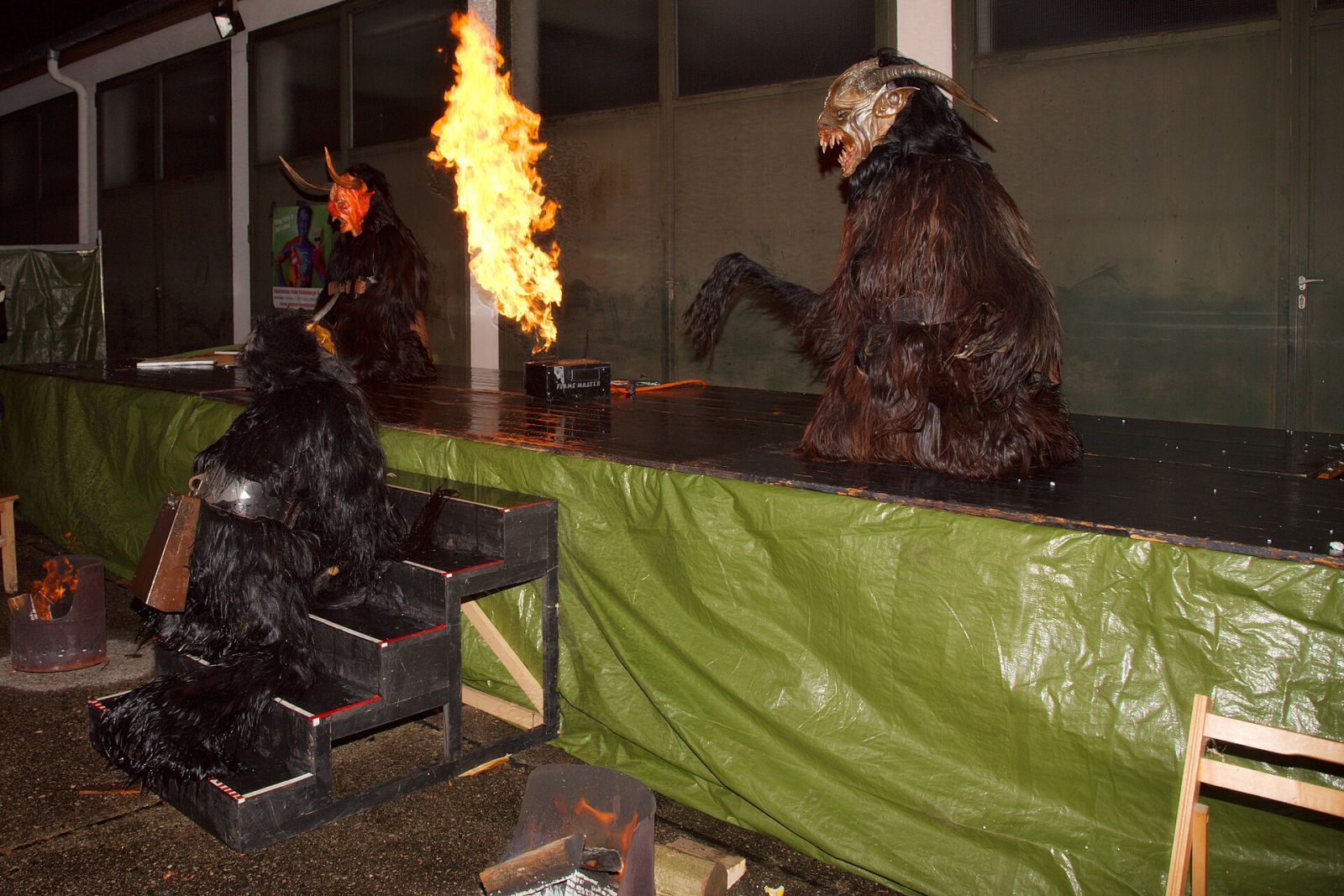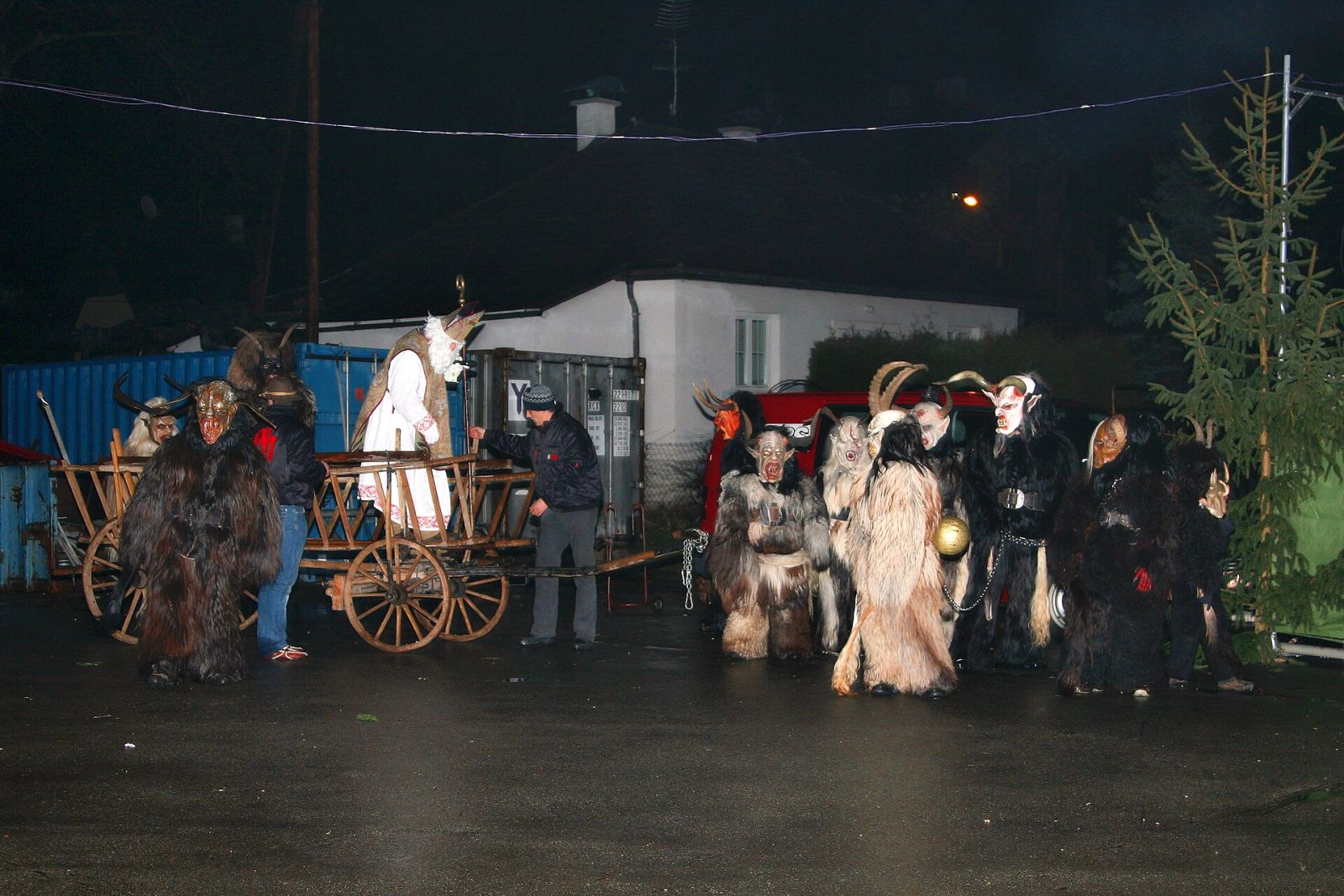


On Saturday 5 December 2026 several Krampus processions will wind through Salzburg's old town at once: at the Christmas market by the cathedral, along Linzer Gasse and down Getreidegasse, where Mozart was born. Hundreds of horned, shaggy figures with bells on their belts and birch rods in their hands will take over streets that were selling gingerbread that morning. Every year Krampus comes out in dozens of Alpine towns on the night before St Nicholas, and for a visitor it is the loudest and scariest Christmas spectacle in Europe, so it pays to go prepared.
Who Krampus is and why he walks with St Nicholas
In Austria, Bavaria and South Tyrol St Nicholas never comes alone. While he praises good children in his bishop's mitre and hands out nuts and tangerines, his dark companion rattles chains beside him: horns, fur, a long red tongue and a bundle of birch twigs. Krampus frightens the naughty ones, and in old legends he even carries them off in a basket on his back. The name is usually traced to an Old German word for claw. In the early 20th century Austrians posted each other humorous Krampus cards, some showing the horned gentleman flirting with ladies, so the jokes around him go back a long way.
Krampusnacht, Krampus Night, falls on 5 December, the eve of St Nicholas Day. In 2026 that is a Saturday, so nearly every village will have a procession that evening. The season is much longer, though: the first parades, the Krampusläufe, start in mid-November and the last ones run around 8 December. According to Salzburg's tourist office, the province alone has some two hundred Krampus groups, each with its own masks and its own run.
Wooden masks, pelts and bells
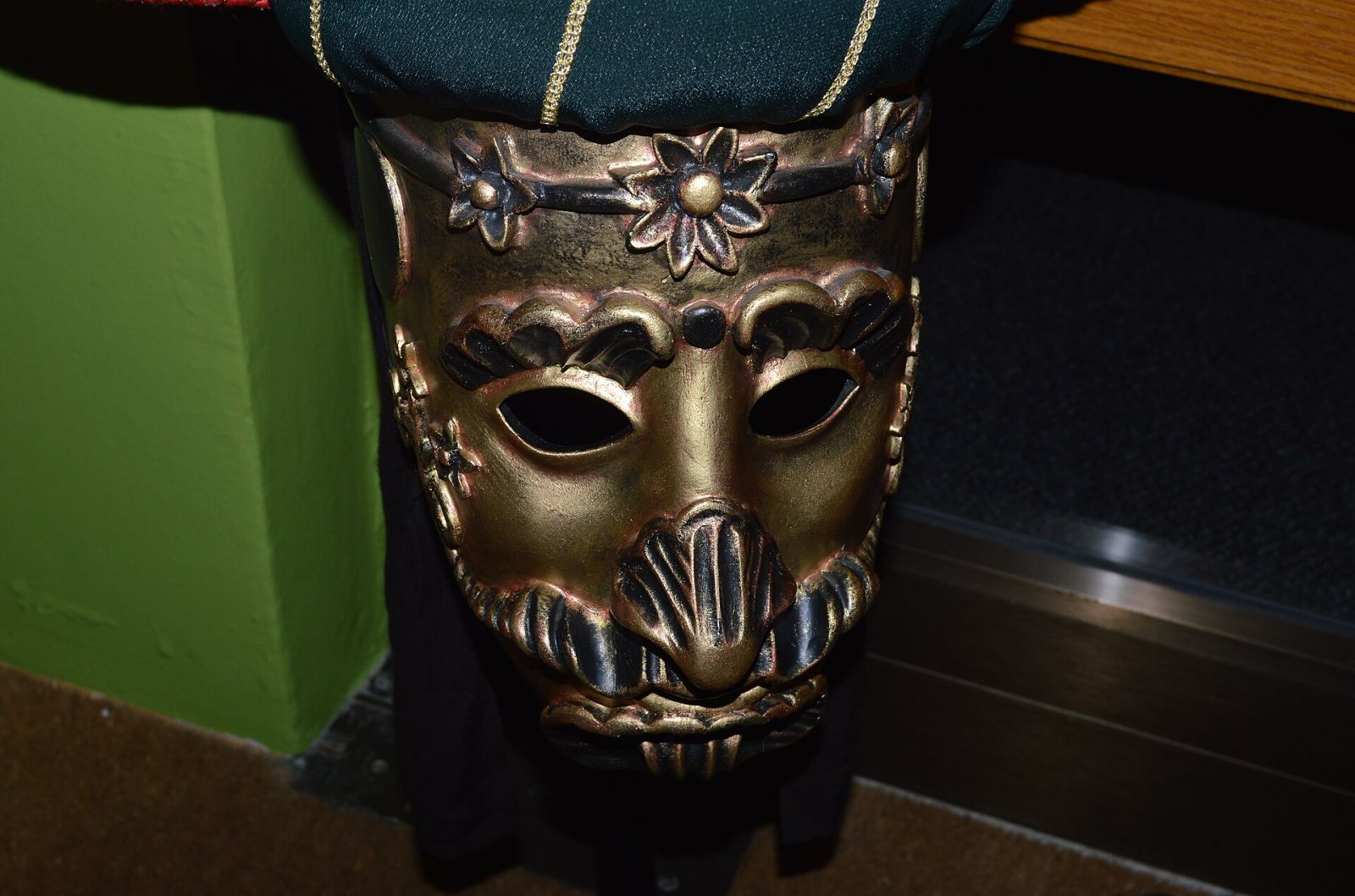
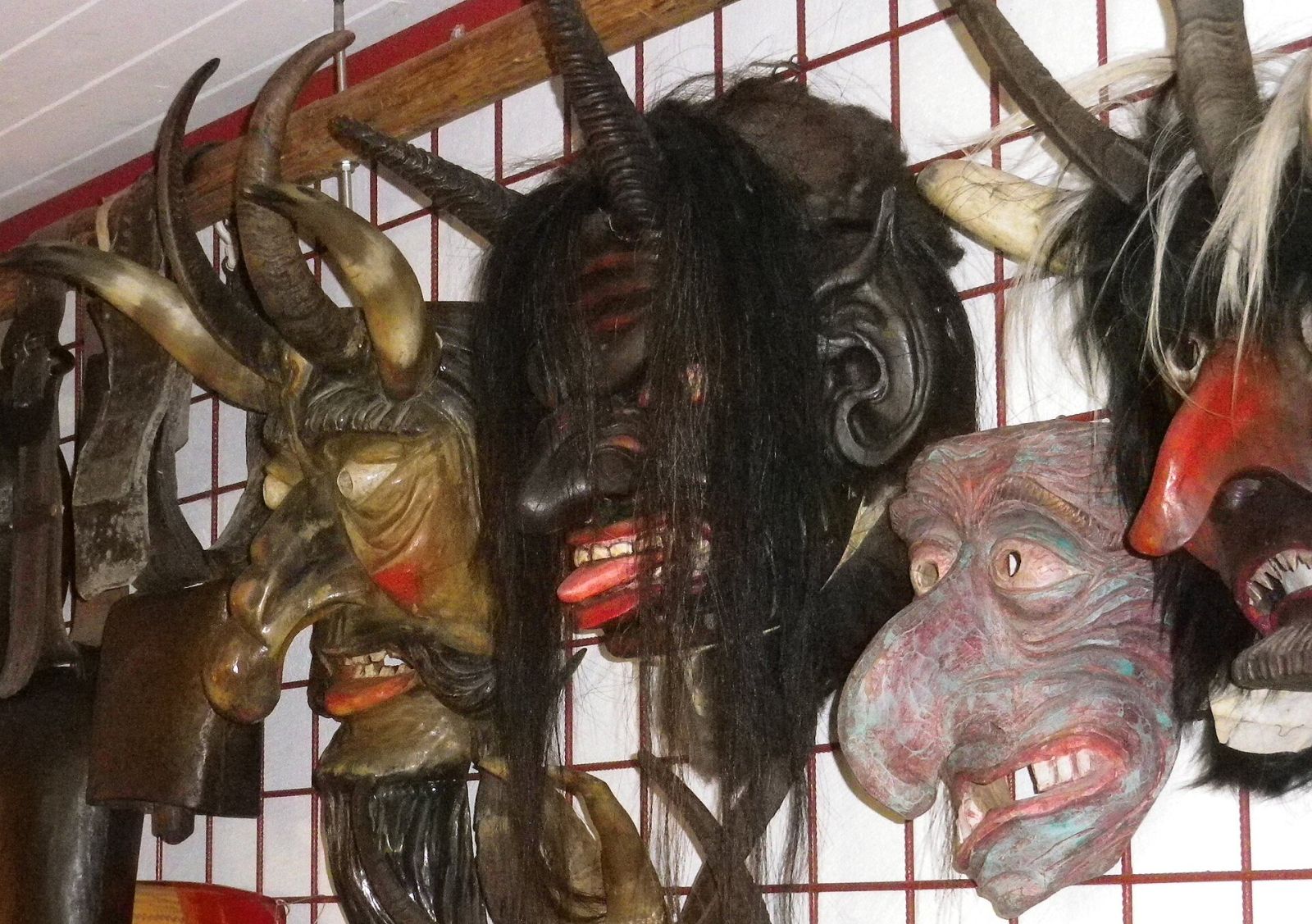
A proper Krampus mask, the Larve, is carved by hand, most often from Swiss stone pine, which is light and smells of resin. The horns are real goat or ram horns, and the costume is sewn from sheep or goat pelts. Heavy bells hang from the belt, and their clanging, audible several streets away, makes children's knees give way before the first Krampus even appears. A handmade mask from a well-known carver costs hundreds or even thousands of euros, and there are waiting lists. People in this gear can barely see or hear, which spectators should keep in mind.
Perchten: different spirits, a different season
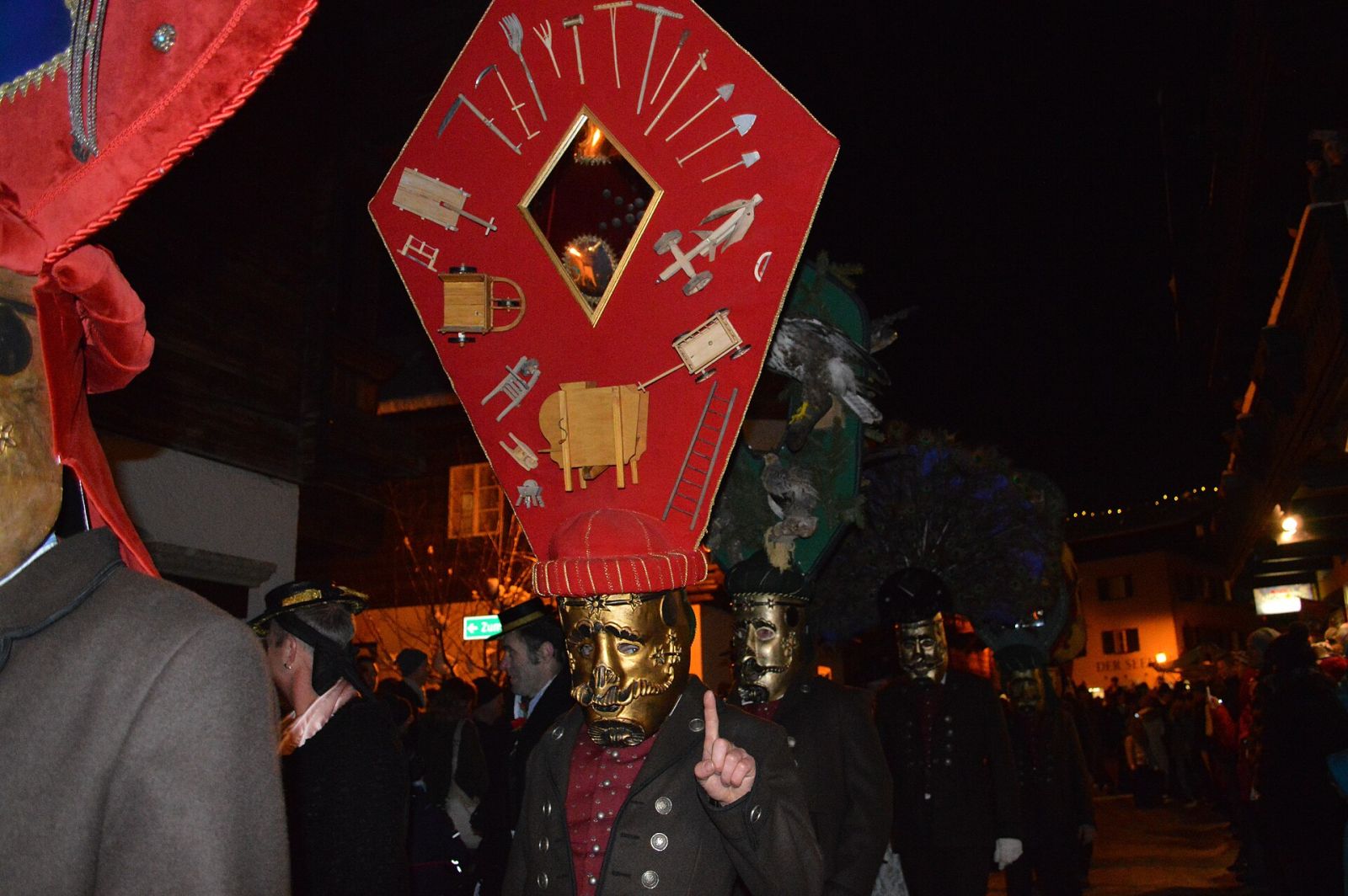
Perchten are often confused with Krampus, but they are separate characters. They belong to the Raunächte, the "rough nights" between Christmas and 6 January, and by old belief they drive out the evil spirits of winter. In Salzburg province people distinguish ugly Perchten, with fangs and horns, from beautiful ones in tall decorated headdresses. Perchten runs now happen in December too: in Salzburg one will be held at the Christmas market on Monday 21 December, the first Raunacht. The most authentic ones are still in January, for example in Pfarrwerfen on 1 January 2027 or in Mühlbach on 3 January.
Where to watch: Austria, Bavaria, South Tyrol
Salzburg is convenient because everything is close together: besides the Saturday processions on 5 December, on Sunday the 6th St Nicholas appears at the Christmas market with child Krampuses, and the district run in Gnigl, the 51st, is set for 28 November. The city and regional programme is collected on Salzburg's official tourism site. In Tyrol there are processions in Innsbruck on 3-4 December, in Seefeld on 4 December and in Lienz on 3-6 December, and East Tyrol has a reputation for the roughest version of the custom.
The big run in Graz, the Styrian capital, took place unusually early this year, on 8 November, because of construction work in the centre. If you are reading this later, Styria still has smaller village parades, best found on municipal websites.
Munich's Krampuslauf is on Sunday 13 December from 15:00 to 17:00, starting on Augustinerstraße by the Frauenplatz and finishing at the Old Town Hall. According to the official Munich city portal, about 25 groups take part, more than 300 Krampuses, Perchten and Klausen, and you need to arrive early to get a front-row spot. In South Tyrol, already in Italy, the key dates are Sand in Taufers on Saturday 5 December from 18:00, with more than 450 Krampuses, and Toblach on Monday 7 December from 18:00 to 22:00, where around 600 "devils" gather. To combine Krampus with Christmas markets, see our guide to the Christmas markets of Vienna, a few hours from Salzburg by train.
How to watch safely
A Krampuslauf is no selfie carnival, and the rules are worth knowing in advance.
- Stay behind the barriers. Large processions fence off the route, and anything on the other side happens at your own risk.
- You may get a swipe of the rod across the legs, a smear of soot on the cheek or a bell clanged right by your ear. That is part of the custom, so wear thick trousers and clothes you do not mind spoiling.
- Do not touch the participants, grab horns or masks, or pull anyone over for a photo. Someone in a mask can barely see, and a person full of adrenaline may react harder than necessary.
- Alcohol fires up both sides of the barrier. One mulled wine after the run beats three before it.
- At many Austrian runs participants wear numbers on their costumes. If someone crosses the line, note the number and tell the organisers or the police.
- Keep your phone and wallet close, which is sensible in any crush.
Should you bring children?
Small children get genuinely frightened, and the Munich organisers openly advise standing further back from the route with them. Start with a children's Krampus run or a daytime St Nicholas appearance, like the one in Salzburg on 6 December, and explain beforehand that under the mask is an ordinary lad from the next village. Teenagers, on the other hand, usually love the night processions most. For more family ideas, see our guide to winter holidays with kids.
Table: Krampus runs 2026 as a guide
| Town | Date | Format |
|---|---|---|
| Graz, Styria | 8 November, Sunday (already past) | large city run on Freiheitsplatz |
| Salzburg-Gnigl | 28 November, Saturday, 18:30 | district Krampuslauf |
| Innsbruck, Tyrol | 3-4 December | processions in town |
| Lienz, East Tyrol | 3-6 December | Krampus processions and St Nicholas |
| Salzburg, old town | 5 December, Saturday | runs at the Christmas market, Linzer Gasse, Getreidegasse |
| Sand in Taufers, South Tyrol | 5 December, Saturday, from 18:00 | 450+ Krampuses, then a party |
| Salzburg, Christmas market | 6 December, Sunday, daytime | St Nicholas and child Krampuses |
| Toblach, South Tyrol | 7 December, Monday, 18:00-22:00 | around 600 participants |
| Munich, Bavaria | 13 December, Sunday, 15:00-17:00 | about 25 groups, 300+ participants |
| Salzburg, Christmas market | 21 December, Monday | Perchten run on the first Raunacht |
| Pfarrwerfen and Mühlbach, Pongau | 1 and 3 January 2027 | traditional Perchten runs |
We gathered these dates from town and tourist office websites at the end of October 2026. Times sometimes differ between sources, and villages may move a run because of the weather, so check the schedule on the specific municipality's site a few days before you travel. And pack warm boots: watching Krampus means an hour or two standing in the frost.