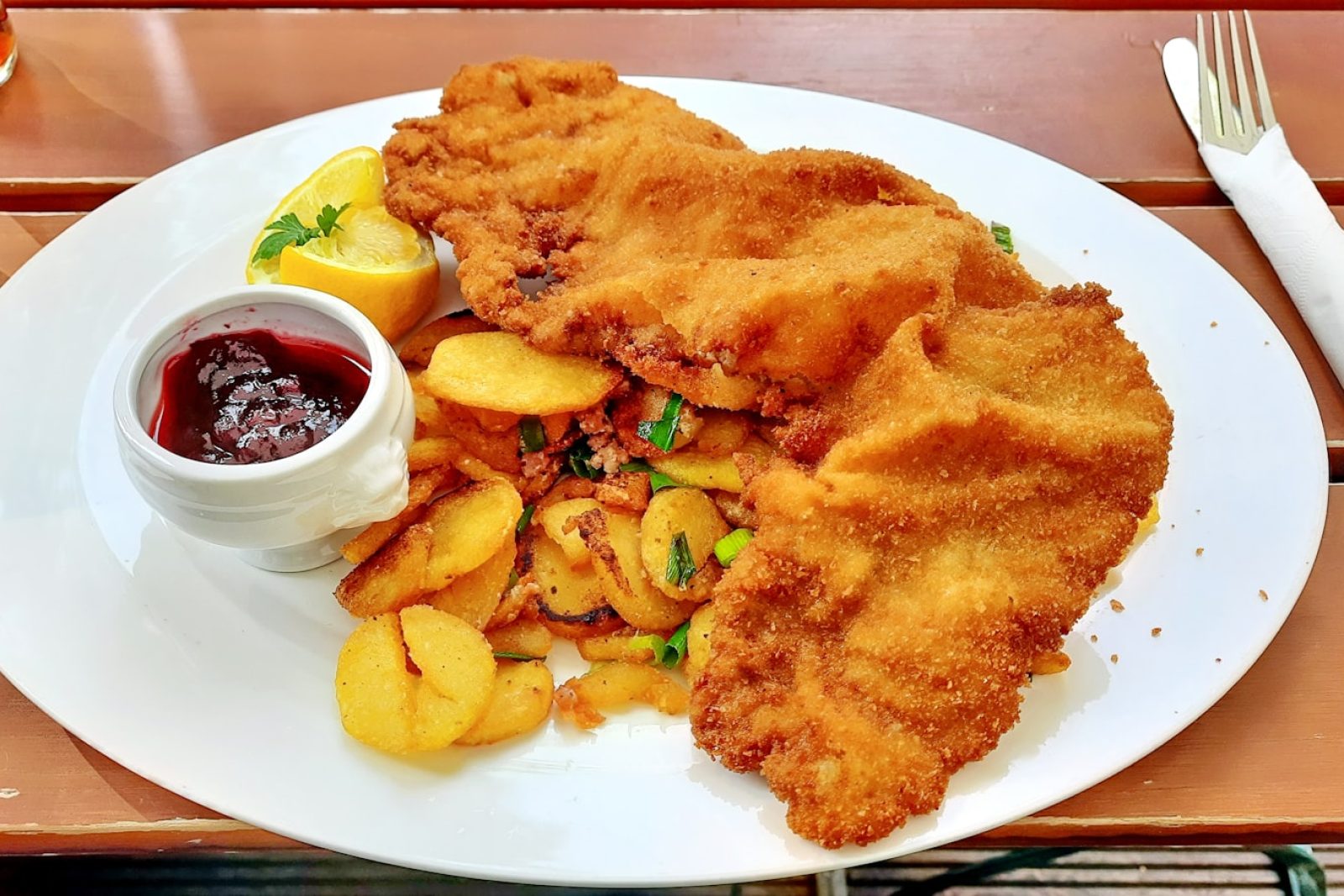


If a restaurant in Vienna serves you a pork schnitzel, it is no longer a Wiener schnitzel, and that is not a foodie talking, it is the law. Under the Austrian food code, only a veal dish may carry the name "Wiener Schnitzel"; a pork version has to be labelled "Schnitzel vom Schwein" or "Wiener Art" (Viennese style). Food in Austria rests on a handful of these signature dishes: veal schnitzel, boiled tafelspitz, Sacher torte, apple strudel, and coffee, around which an entire city culture has been built. Below is the honest version of each, with real prices and an explanation of exactly what you are paying for.
What does "Austrian cuisine" actually mean?
"Viennese" would be the more accurate word. Most of the dishes the world thinks of as Austrian grew out of the kitchens of the Habsburg Empire, where recipes flowed in for centuries from Bohemia, Hungary, northern Italy and the Balkans. So here you find a breaded cut of meat from southern Europe sitting happily beside a Hungarian-spirited goulash, dumplings with Czech roots and a Turkish-descended layered strudel.
The second thing to know: Austrian classics are almost all hearty, built on meat and pastry. Traditional menus are short on vegetables, so a vegetarian will need to aim for strudel, dumplings and cafes rather than the main hot courses.
Partner links: booking through them supports the blog at no extra cost to you.
Why is a real Wiener schnitzel always veal?
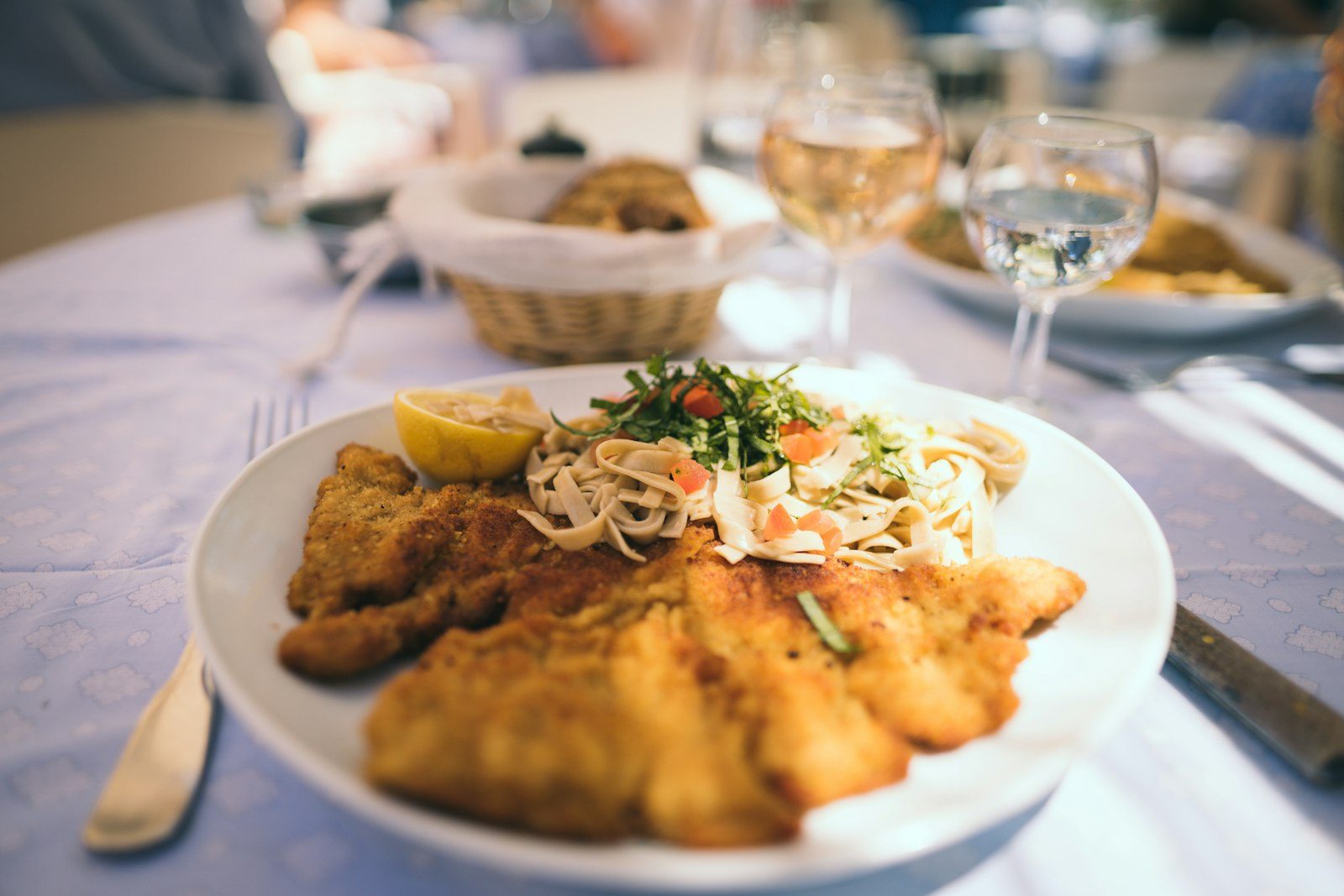
Food in Austria starts right here. A classic Wiener Schnitzel is a thinly pounded cut of veal (around 4 mm thick), coated in flour, egg and breadcrumbs and fried in plenty of fat or clarified butter so that the coating puffs up and lifts away from the meat. A proper schnitzel is often so big it hangs over the edge of the plate, and when you cut into it the inside should be dry, not greasy.
The classic side is not fries but potato salad or boiled parsley potatoes with a slice of lemon. The pork version is tasty and half the price, but it is a different dish, and honest places label it honestly.
The price depends on how touristy the spot is. At an ordinary restaurant a veal schnitzel usually runs around 18-25 euros; at big-name addresses like Figlmüller or Plachutta it climbs to 25-28 euros and up. The pork version sits around 12-16 euros. These figures are a rough guide, so check before you travel.
Why did the emperor eat tafelspitz almost every day?
Tafelspitz is boiled beef (a specific cut from the rump) served in a clear broth with root vegetables and spices, alongside fried potatoes and a sauce of apple and horseradish, or sour cream and chives. The dish is traditionally linked to Emperor Franz Joseph I, who, as the story goes, loved it so much that he ate it almost daily.
For a traveller the key is to understand how it is served: often the broth arrives first, on its own, as a soup, and only then comes the meat with its sides. These are not two random plates but a single lunch in two acts. The portion is large, so ordering it "just to try" on top of a schnitzel is a bad idea.
Sacher or Demel: what is Vienna's "cake war" really about?
Sacher torte is a dense chocolate sponge with a layer of apricot jam under a mirror-smooth chocolate glaze, served with unsweetened whipped cream. It was invented back in 1832 by 16-year-old Franz Sacher, when the head pastry chef fell ill and Prince Metternich urgently needed a dessert for his guests.
Then the interesting part began. The recipe split between the Hotel Sacher and the Demel patisserie, and the dispute dragged on for decades. The formal difference is where the apricot layer sits: in the Sacher version the jam is inside, between two layers of sponge, while at Demel a single layer of jam sits right under the glaze. An Austrian court eventually granted the Hotel Sacher the right to call its cake the "Original Sacher-Torte," while the Demel version got the name "Eduard-Sacher-Torte."
The practical takeaway is simpler than the court case: both are worth trying, and a slice with coffee will run you roughly 10-14 euros. Café Sacher is nearly always packed with tourists, so go in the morning or pick Demel or any of dozens of other cafes.
Is strudel actually Austrian or not?
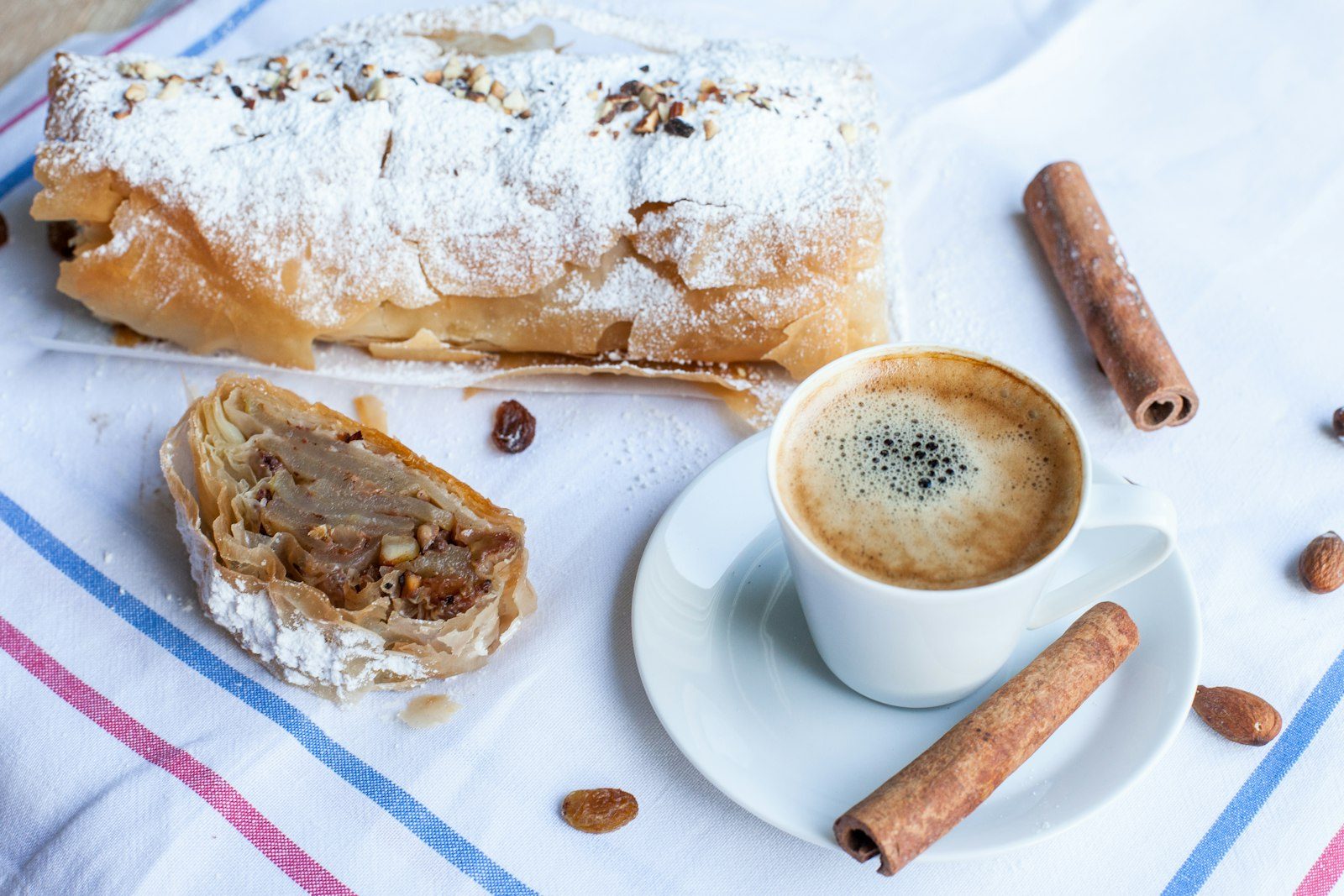
The thin, almost transparent stretched pastry of strudel is an inheritance from eastern sweets like baklava; the technique of pulling the dough came to Central Europe during the Ottoman expansion. In other words, the most Austrian of desserts has Turkish roots, and that does not diminish it, it just makes it more honest than the legend of a "timelessly Viennese" recipe.
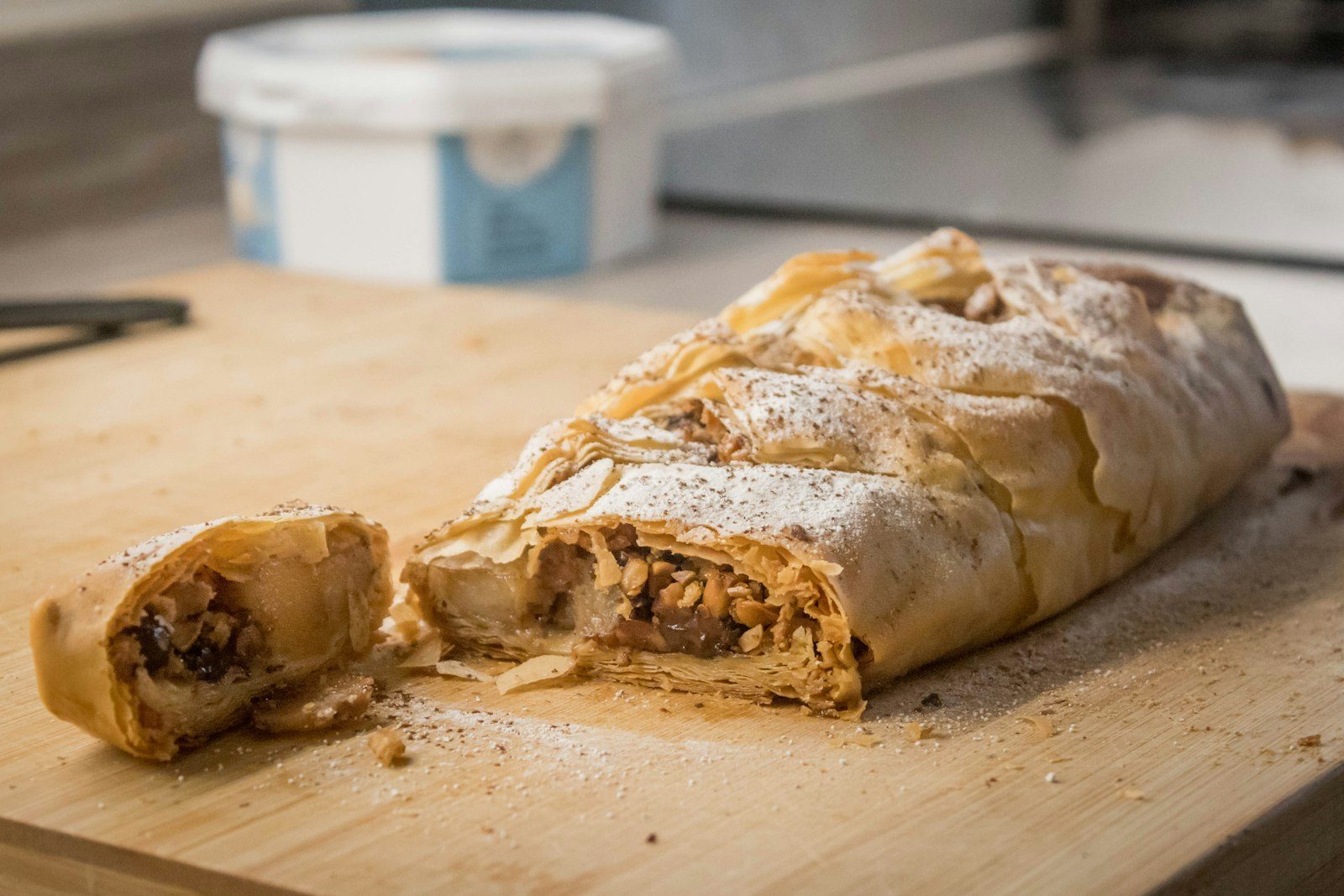
The oldest known handwritten strudel recipe dates to 1696 and is kept in the Vienna City Library, and it is, incidentally, not an apple strudel but a milk-cream one (Millirahmstrudel). The apple Apfelstrudel became the city's calling card later. Besides apples, the filling usually holds raisins, cinnamon, zest and crumbs toasted in butter; it is served warm, often with a vanilla sauce or a scoop of ice cream.
How does Viennese coffee culture work?
In 2011 Viennese coffee house culture was added to Austria's national inventory of intangible heritage (under the framework of the 2003 UNESCO Convention). The wording is lovely: a place where time and space are consumed, but only the coffee appears on the bill. For centuries the cafes were unofficial clubs where writers finished their novels and newspapers were handed out free along with a glass of water.
The etiquette here is about pace, not protocol: you can sit for an hour or two over a single coffee and nobody will rush you. And one more detail that trips up tourists: it is almost impossible to simply order "a coffee," they will ask you which one. So here is a quick cheat sheet.
| Name | What it actually is | Who it suits |
|---|---|---|
| Melange | Espresso with hot milk and milk foam, in a large cup | Anyone who likes something cappuccino-like; the number one Viennese classic |
| Einspänner | Strong coffee in a glass under a cap of whipped cream, not stirred | Anyone who wants strong and dessert-like at once |
| Franziskaner | Like a melange, but with whipped cream instead of foam | Fans of a softer, sweeter taste |
| Verlängerter | Diluted espresso, the Viennese take on an "americano" | Anyone who finds espresso too concentrated |
| Kleiner/Großer Brauner | Espresso with a drop of cream or milk, small or large | Anyone who drinks coffee without milk foam |
A glass of water is almost always served with the coffee, free of charge; that is not a waiter's mistake but an old tradition. A cup of coffee in a classic cafe usually costs around 4-6 euros, and half of that sum is really the price of your right to be in no hurry at all.
How much does it cost to eat, and do you need a visa for Austria?
The answer to the visa question is short: as of 2026, Ukrainian citizens do not need a visa for Austria. Visa-free travel applies within the Schengen area for holders of a biometric international passport, with stays of up to 90 days within any 180-day period. At the border you may be asked to confirm the purpose of your trip, for example an accommodation booking and a return ticket. Be sure to double-check the current rules on official sources (mfa.gov.ua, the European Commission portal) before you travel, because new entry systems are launching this year.
This refers to the EES (the Entry/Exit System with fingerprint registration) and to the ETIAS authorisation, whose launch is expected closer to the end of 2026. ETIAS is not a visa but an online authorisation for a token fee that you will need to arrange in advance. The exact launch dates have been pushed back several times, so this is precisely the item to check right before you set off.
Now for the food budget. Austria is not cheap, but you can eat in very different ways.
| Format | What it is | Rough bill per person |
|---|---|---|
| Würstelstand (street stall) | Sausages, wieners, kebab on the go | 5-9 euros |
| Cafe, dessert with coffee | A slice of Sacher or strudel plus a coffee | 10-16 euros |
| Simple restaurant, lunch | A main course in an ordinary Gasthaus | 15-25 euros |
| Tourist restaurant in the centre | Schnitzel at a big-name address plus a drink | 30-45 euros |
All the amounts are approximate and change quickly, so treat them as a range rather than a price list. The easiest place to save is lunch: many places offer a daily menu (Mittagsmenü) at a noticeably lower price than the same dishes in the evening.
So what is genuinely worth tasting?
If it is your first time in Vienna and you have a couple of days, the minimum set looks like this: one real veal schnitzel, one slice of strudel or Sacher with a coffee in a classic cafe, and one sausage from a street stall late at night, when the restaurants have already closed. That is enough to get a taste of the city.
If you have been before and already seen the tourist zones, go deeper. Order tafelspitz in an old Gasthaus well away from the centre, and try several different kinds of coffee in one sitting instead of a single "correct" one. Then drop by the Naschmarkt, where Austrian cooking still meets the Balkan and Turkish flavours it once borrowed half its ideas from.