

Austria fits neatly into a single trip: a capital full of imperial palaces, baroque Salzburg and postcard-perfect Hallstatt all sit two or three hours apart by train, and just beyond them the Tyrolean Alps begin. So the real question of what to see in Austria is not “Vienna or the mountains,” but how much of it you can fit into the days you have. Here are the specifics: the main cities, the alpine lakes, ticket prices for 2026 and honest warnings about where the crowds are waiting.
Let us clear up the practical question first, since it always comes up before anything else.
Do Ukrainian citizens need a visa for Austria in 2026?
No, you do not need a separate visa. Austria is part of the Schengen area, and a Ukrainian citizen with a biometric international passport can enter visa-free for up to 90 days within any 180. At the border you may be asked to show proof of the purpose of your trip, your accommodation booking, medical insurance covering at least 30,000 euros and evidence of enough money for your stay, so it is worth having these documents printed out.
Partner links: booking through them supports the blog at no extra cost to you.
One change is on the horizon: in late 2026 the European Union plans to launch ETIAS, an electronic travel authorisation. It is not a visa but an online form with a one-time fee of around 20 euros, and the authorisation will be valid for three years. Check the exact launch date and current requirements before you travel on official sources (bmeia.gv.at, mfa.gov.ua), because the timeline has been pushed back more than once.
Vienna: palaces, coffee and a few less boxes to tick
Vienna is best explored in rings. The historic core is enclosed by the Ringstrasse boulevard, which follows the line of the old city walls, and strung along it are the opera house, parliament, city hall and the museum quarter. You can walk the centre in a day, but this is exactly where the trap lies: half your time gets eaten by palaces that require a timed-slot ticket.
The main imperial residence on the edge of the city is Schönbrunn, the Habsburgs’ summer palace with its park and the Gloriette on the hill. The park itself is free and opens early, but the state rooms admit visitors strictly by time slot: the basic Imperial Tour costs around 30 euros, the full Grand Tour around 42 euros as of 2026. Buy the ticket online in advance, because daytime slots sell out in high season and without a booking you can queue for an hour at the entrance.
In the centre itself stands the Hofburg, the winter residence, now home to the Sisi Museum and the imperial apartments. For art, head to the Belvedere: the Upper Palace holds Klimt’s “The Kiss,” the country’s most recognisable painting, and here too you are admitted only by time slot. St. Stephen’s Cathedral, with its patterned roof, stands right at the heart of the city: entry to the main nave is free, and only the towers, catacombs and treasury are ticketed.
But reducing Vienna to its palaces would be a mistake. The city is just as valuable for its coffee houses, where people order a melange and sit for hours over a single cup, for the Naschmarkt with food from half the world, and for the Hundertwasser quarter with its crooked walls. If you have only one free evening, spend it not on another museum but in a Viennese coffee house: it is a landmark in its own right, just an edible one.
Salzburg is done in a day, and that is its strength
Salzburg is compact to an almost impossible degree: the old town fits between the Salzach river and the cliff crowned by its fortress, and everything genuinely worth seeing can be covered on foot in a few hours. Above the city looms Hohensalzburg, one of the largest surviving medieval fortresses in Europe, and it is best reached by funicular. The all-inclusive ticket with the funicular costs around 19 euros for an adult, while walking up is cheaper. If you plan to visit several sights in a day, consider the Salzburg Card (from around 35 euros a day): it already covers the fortress with the funicular and city transport.
From there everything revolves around two names: Mozart and the film “The Sound of Music.” The house where the composer was born stands on the narrow shopping street Getreidegasse with its wrought-iron signs, and the gardens of Mirabell Palace are the very ones where the heroine sang “Do-Re-Mi.” Sound of Music tours are sold on every corner, but the town is small and the key locations are easy to reach on your own with a map.
Salzburg’s honest downside is the price and the crowds during the summer festival (late July and August): accommodation gets pricier and the narrow lanes fill up. If the music is not what draws you, come outside festival season, when it is cheaper and less crowded.
Hallstatt: the postcard itself, with a few caveats
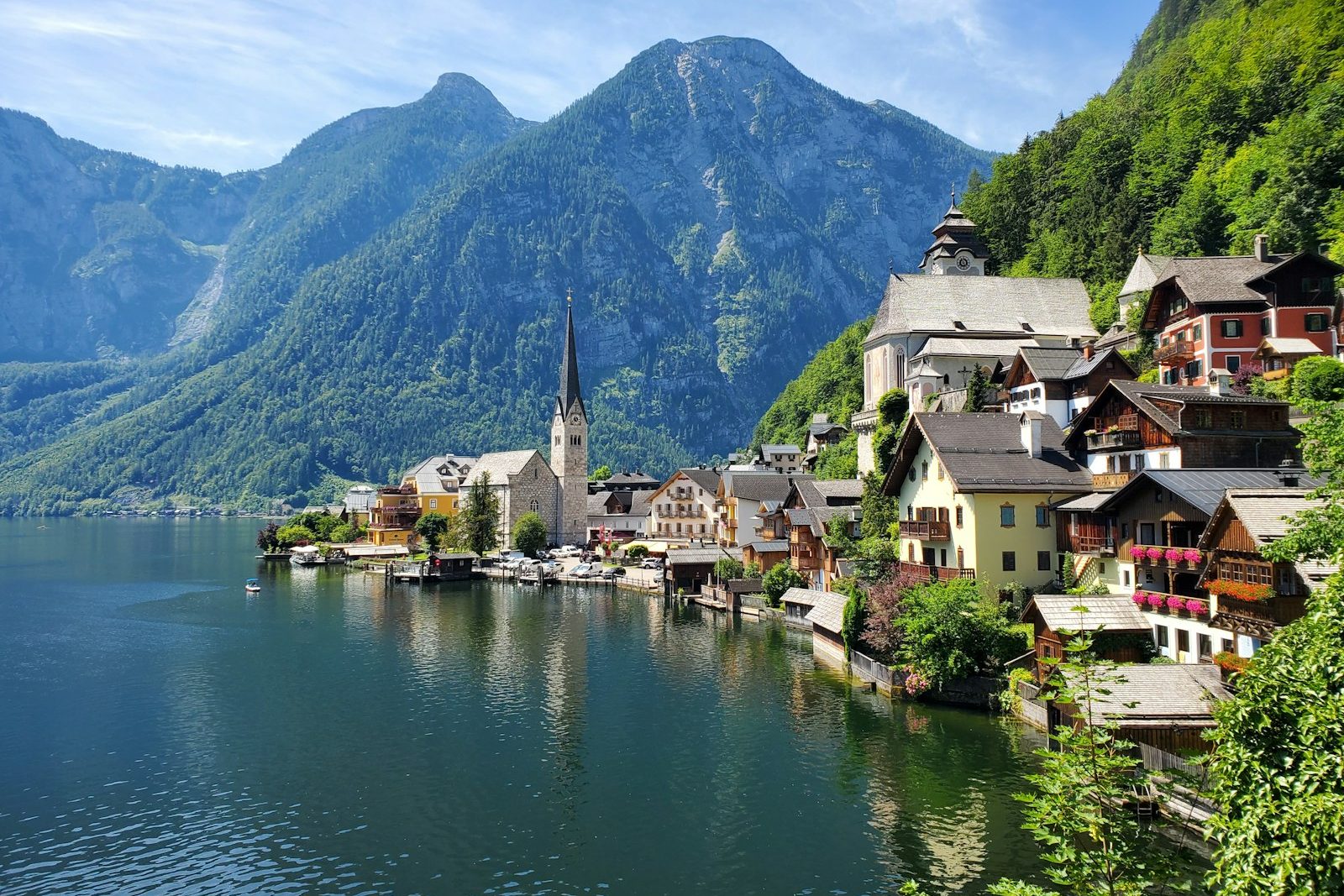
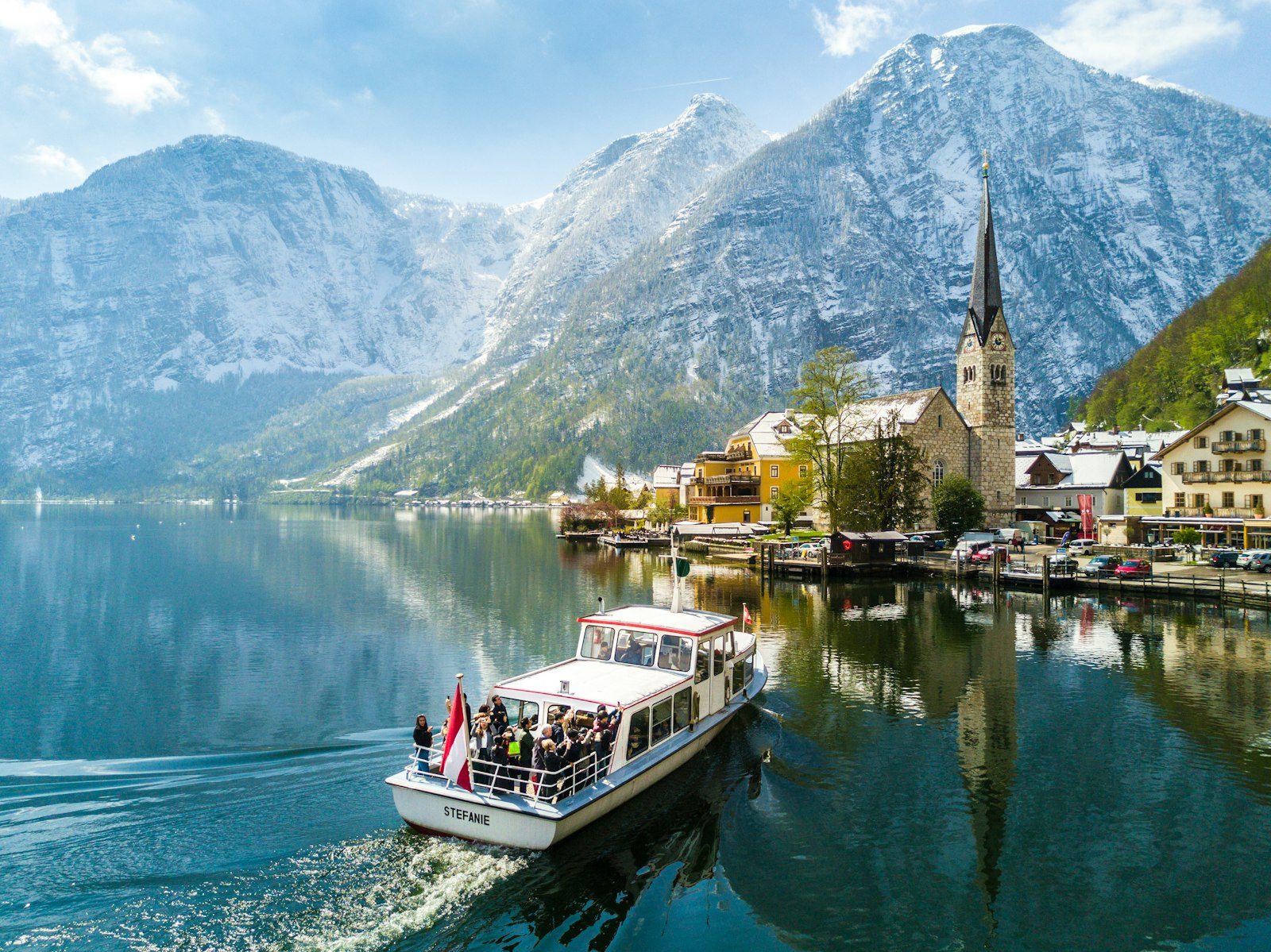
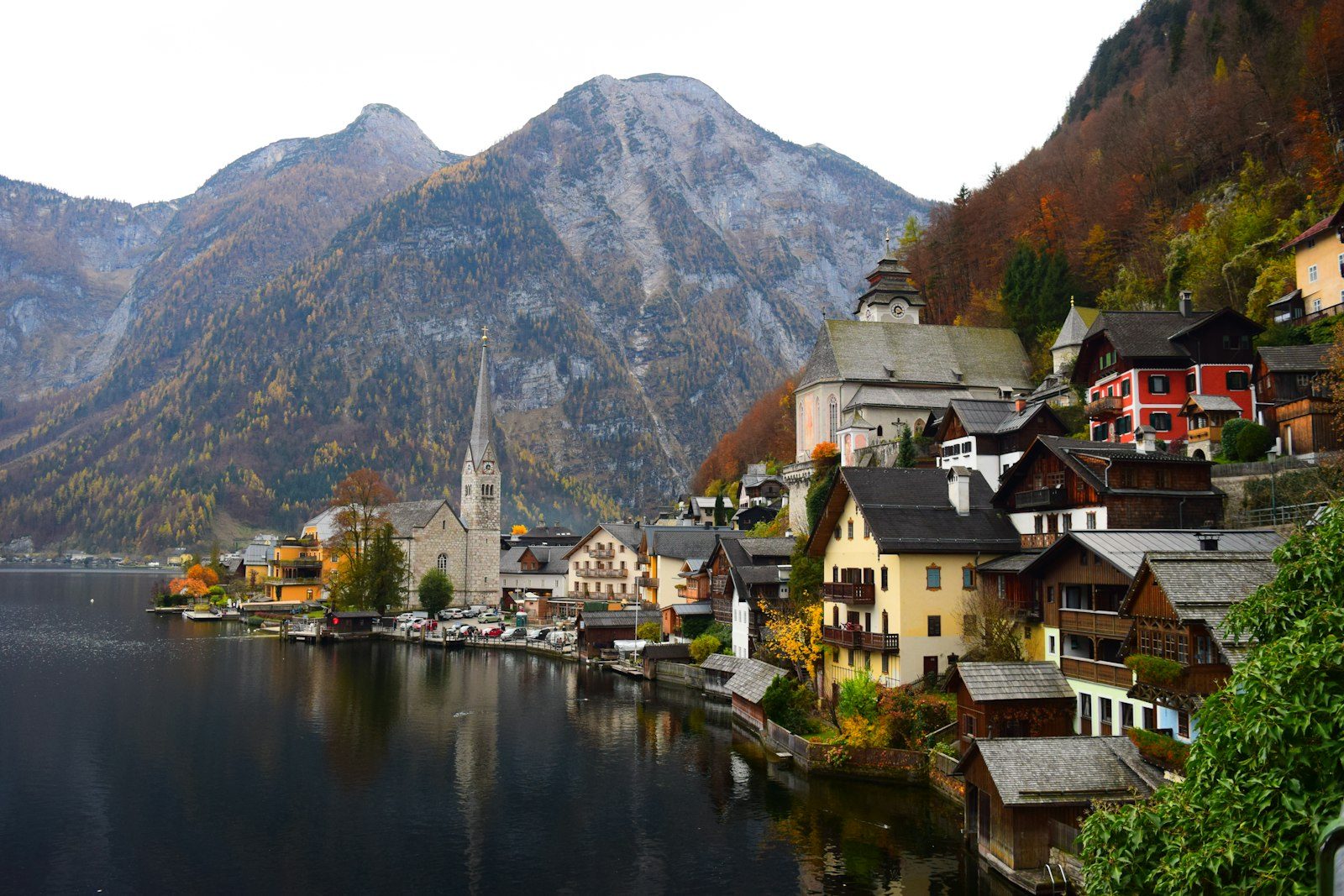
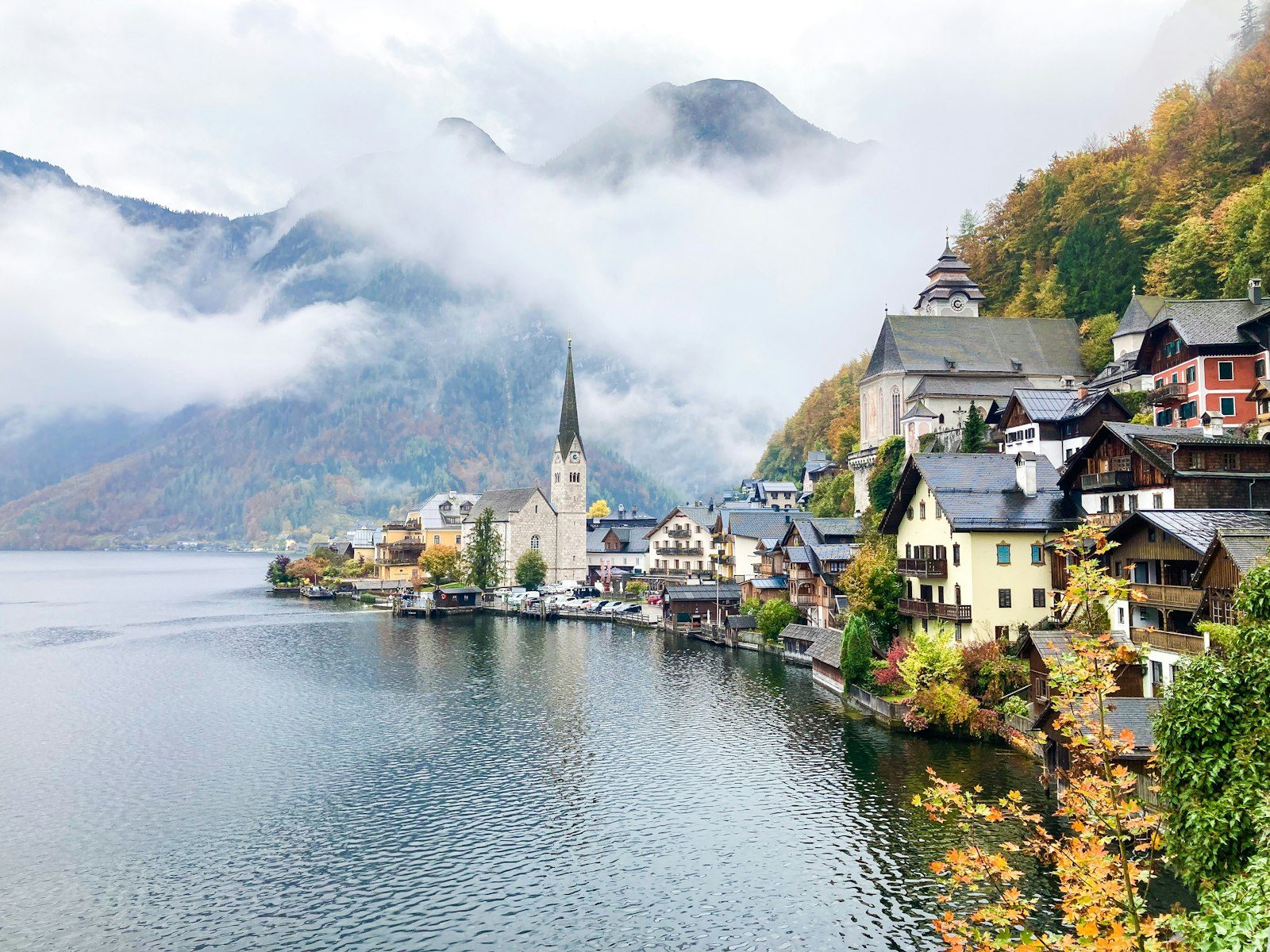
Hallstatt is a village of about 740 residents, squeezed between a lake and a mountain, and it is the one splashed across millions of photos and even copied in China. There is plenty to see here: the church above the water, wooden houses on the slope, boats on the lake and the panorama from the Skywalk viewing platform above the village.
The main local attraction is the Salzwelten salt mine, the oldest known in the world, with its wooden miners’ slides and an underground lake. An important detail for 2026: the mine and its funicular were closed for a major renovation, with reopening scheduled for the end of August 2026. If the mine is on your list, check salzwelten.at to see whether it is open for the date of your trip.
A tip that saves the whole experience. Private cars are banned from entering Hallstatt without a parking or hotel booking, so you leave the car at the entrance. There is no entry fee to the village yet, though local authorities have been debating the idea for years. And most important of all: during the day, buses bring in day-trippers, and the tiny streets simply cannot hold the crowds. Arrive before nine in the morning or stay overnight, and the very same village will feel completely different.
Tyrol and Innsbruck: the Austria everyone pictures
If Vienna and Salzburg are history, then Tyrol is the mountains proper. The regional capital, Innsbruck, lies in a valley between ridges, and straight from the centre the Nordkette cable car lifts you above the city in just a few minutes to a height where you can see both the old-town rooftops and the snow. In the centre itself, do not miss the Golden Roof, an oriel window with more than 2,600 gilded copper tiles, the symbol of the city.
Tyrol is a destination for those who want more than cities. In summer people head into the mountains and to the lakes, and in winter it is one of Europe’s main ski regions. It makes sense to come here not to tick a box but to spend a few days in the mountains, which is why on a short “Vienna plus Salzburg” trip Tyrol is usually saved for next time.
Which alpine lakes in Austria are worth the detour?
The lakes are what many people come to Austria for in the first place, and they are often what leaves the strongest impression. The most famous is Lake Hallstatt (Hallstätter See), on whose shore that very village stands. Nearby, in the Salzkammergut region, lies Wolfgangsee with the towns of St. Wolfgang and St. Gilgen: the lake stretches roughly 10.5 kilometres, and in summer the water warms to about 20-24 degrees.
In Tyrol the largest lake is the Achensee, nine kilometres between the mountains and shaped like a fjord. Because of the altitude and depth the water here is cooler, around 16-20 degrees even in summer, but the colour and the views are stunning. For swimming, people look for smaller, warmer lakes: the Schwarzsee near Kitzbühel, for instance, warms up to 27 degrees and is set up for families.
Swimming in Austria’s lakes is generally free and the water is clean, but the rules and the equipped beaches vary from lake to lake, so it is worth checking the signs once you are there.
What to see and where: a quick map
| Place | What makes it worth it | How much time to set aside |
|---|---|---|
| Vienna | Schönbrunn, Hofburg, Belvedere with Klimt, the cathedral, coffee houses | 2-3 days; palaces by online time slot |
| Salzburg | Hohensalzburg fortress, Mozart, Mirabell gardens | 1 full day; the town is compact |
| Hallstatt | Village above the lake, salt mine, Skywalk | Half a day to a day; arrive early |
| Innsbruck and Tyrol | Golden Roof, Nordkette cable car, mountains and skiing | 2+ days; a separate mountain trip |
| Salzkammergut lakes | Wolfgangsee, Lake Hallstatt, swimming and scenery | From a day; easier with a car |
When to go and what it costs
The most popular season is summer, from June through August: warm weather, warmed-up lakes, long daylight hours. It is also the peak for prices and crowds, especially in Hallstatt and in festival-time Salzburg. September and early October are often the better bet: the mountains turn autumn colours, there are fewer people and the weather is still mild. Winter is a different trip altogether, built around skiing and Christmas markets, when the cities are beautiful but the days are short.
| Cost | Approximate, 2026 | The catch |
|---|---|---|
| Schönbrunn, state rooms | around 30-42 euros | the park is free; timed-slot ticket online |
| Salzburg fortress | around 19 euros with the funicular | covered by the Salzburg Card |
| St. Stephen’s Cathedral, Vienna | nave free, full complex around 18 euros | towers and catacombs charged separately |
| Salzburg Card, one day | from around 35 euros | worth it if you visit several sights in a day |
Prices and opening hours in Austria change every season, so check the exact amounts on the official sites of each attraction before you travel. Everything is priced in euros and cards are accepted almost everywhere, but it is worth carrying some small cash for village coffee houses and parking machines.
Where to start, specifically for you
If you are visiting Austria for the first time and have about a week, take the classic triangle: two or three days in Vienna, a day in Salzburg and a side trip to Hallstatt with the Salzkammergut lakes in between. All of it strings along a single rail line, and a car is not essential, though it does make reaching the smaller lakes easier.
If you have already seen the capital and the baroque towns, next time trade the museums for Tyrol quite deliberately: a few days in Innsbruck and by the alpine lakes will give you that postcard Austria you cannot see from the window of a Viennese tram.