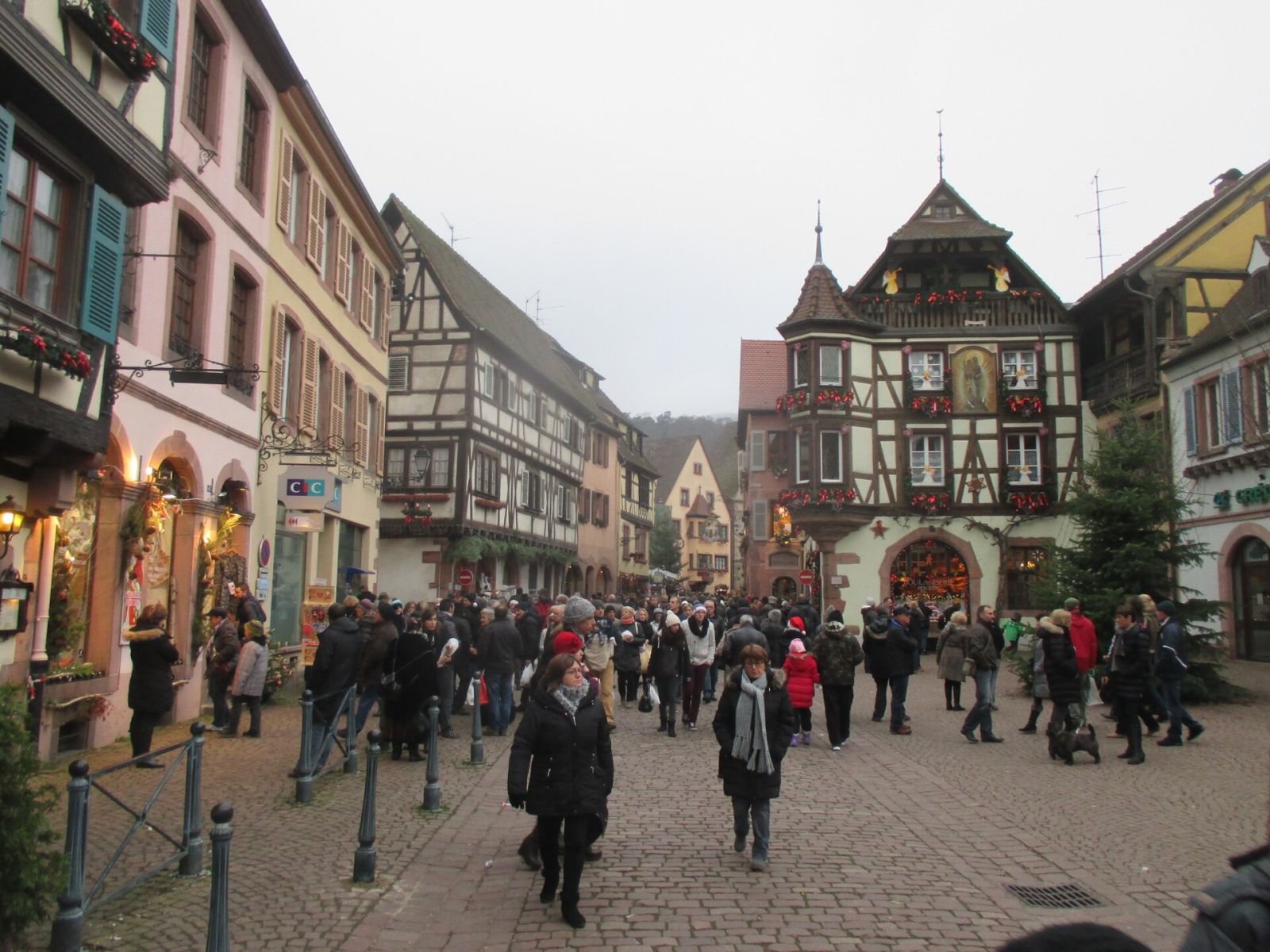


In the town accounts of Sélestat, under 21 December 1521, there is a small expense: four shillings paid to foresters to guard the "meyen", the young fir trees townspeople cut for the holiday, on St Thomas's Day. It is the oldest known written reference to a Christmas tree, and a facsimile of the entry is shown at the town's Humanist Library. The Alsace Christmas markets worth the trip are right here, in small towns 15 to 40 minutes by train from Strasbourg, where the festivities are more intimate and the story of the Christmas tree begins, quite literally, in a ledger.
Colmar: six markets in one Old Town
In 2026 the Colmar Christmas markets run from 23 November to 29 December. There are six of them, spread across different quarters: by the Dominican Church, on Place Jeanne d'Arc, in the old Koïfhus customs house, where craftspeople sell indoors, and in Little Venice, where the market is designed for children. The gourmet market and the Ferris wheel stay longer, until 3 January 2027. From Monday to Thursday they open from 11:00 to 19:00, from Friday to Sunday from 10:00 to 20:00, and on 24 December everything closes at 17:00.
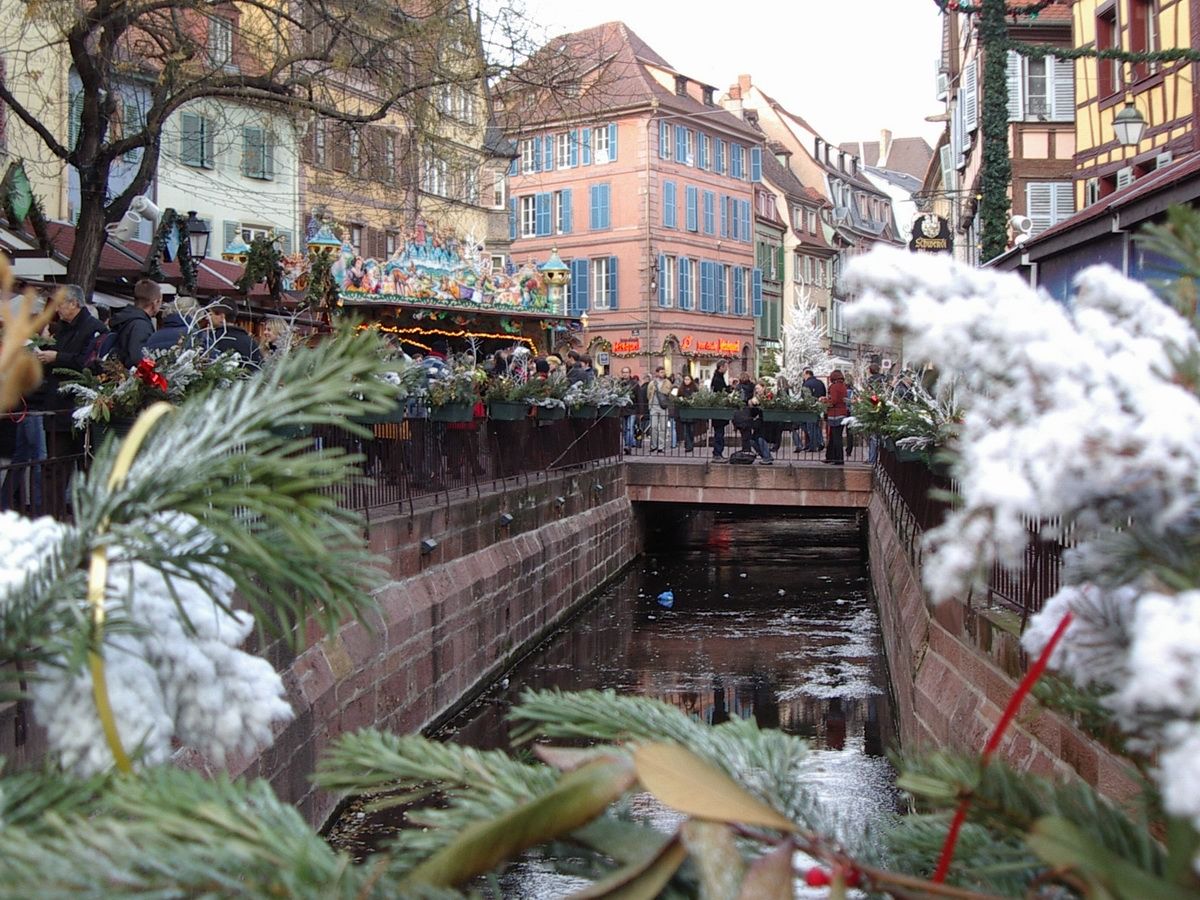
Little Venice, with its half-timbered houses over the river Lauch, looks like a postcard in December. Weather permitting, flat-bottomed boats take visitors along the water, but the winter timetable depends on the season, so ask at the landing stage. The centre is closed to cars during the markets; drivers use the park-and-ride at the exhibition centre, and the Old Town is about fifteen minutes' walk from the station. The programme and map are on the official Noël à Colmar website.
Kaysersberg and Riquewihr: wine villages behind their walls
Kaysersberg sits in a valley below a ruined castle, with a fortified bridge over the river Weiss and the house where Albert Schweitzer was born. Its market is often called one of the most authentic in Alsace, with less plastic and more craftspeople. In 2026 it runs from 27 November to 20 December.
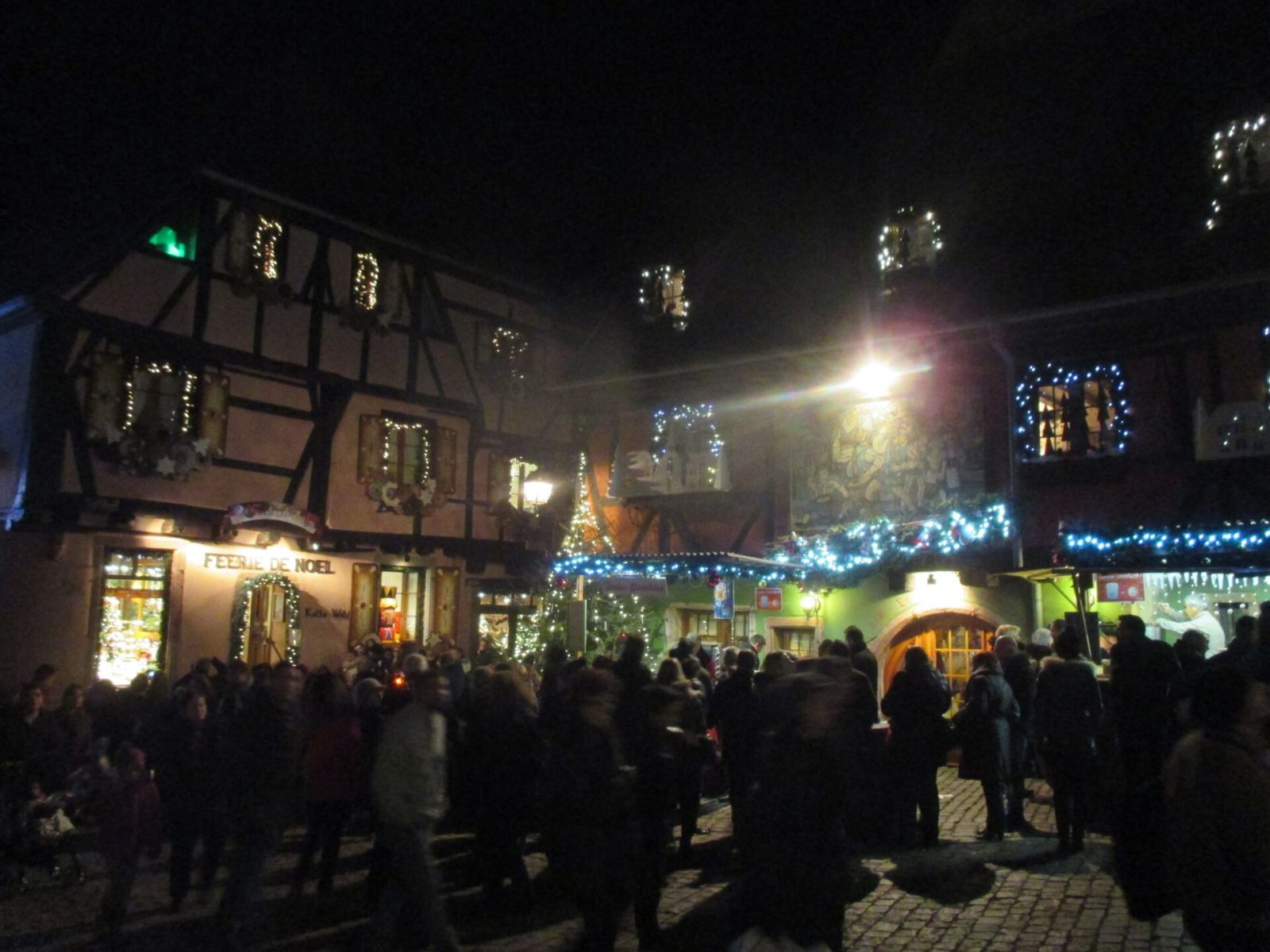
Riquewihr is ringed by vineyards and ramparts topped by the Dolder tower. The market is open daily from 27 November to 20 December, the streets are narrow, and on Saturdays they are hard to get through, as coaches arrive from Germany and Switzerland. A park-and-ride with a shuttle runs at weekends, but a weekday visit is far more pleasant.
Eguisheim: streets that go round in circles
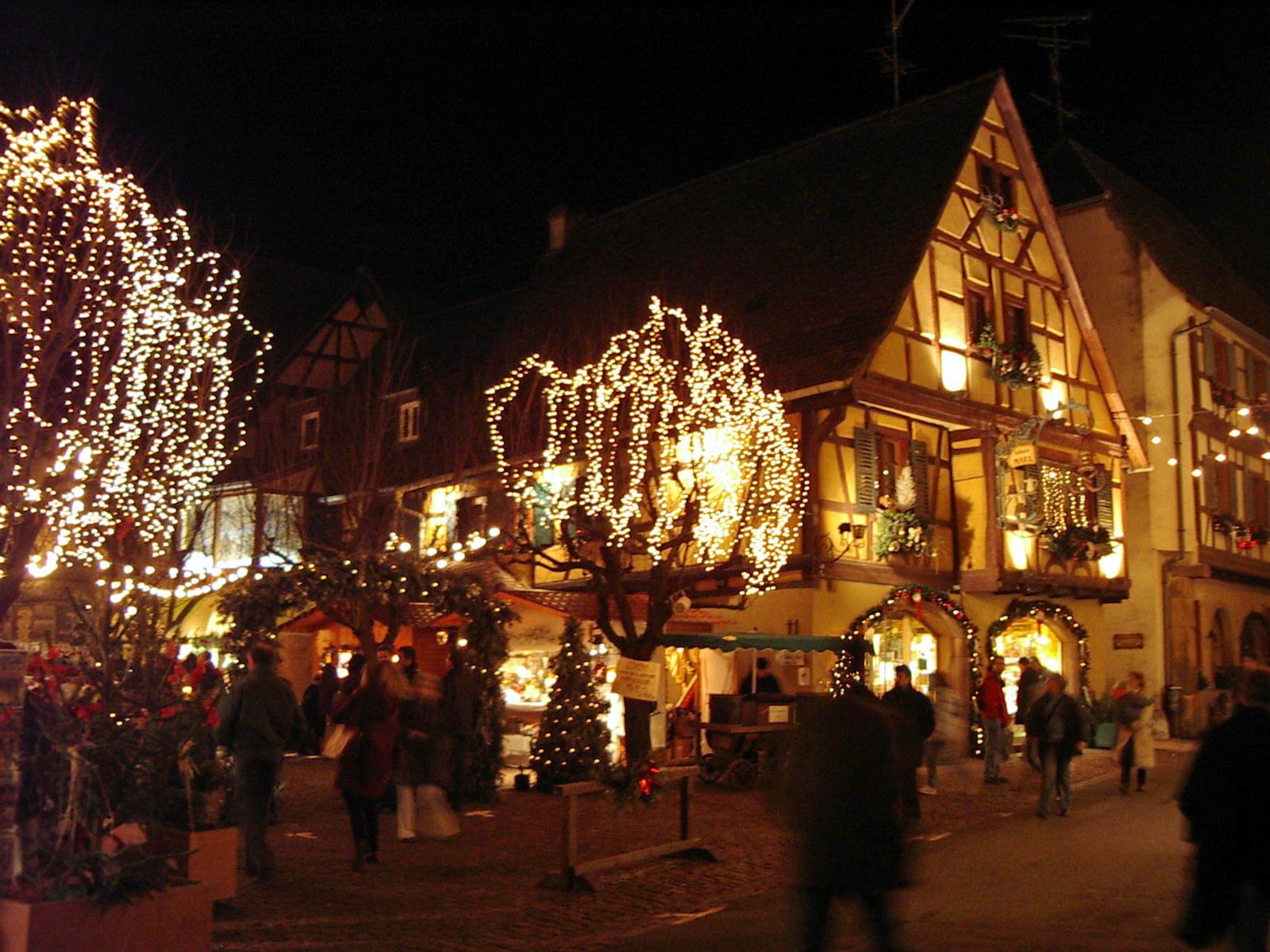
Eguisheim is built in concentric rings around its castle and the chapel of St Leo, so you can wander without ever turning back: the street simply brings you round to where you started. In winter a Christmas tree stands by almost every door, and together with the half-timbering and the lights it makes this one of the most photogenic villages in Alsace. According to preliminary information, the market runs from 27 November to 30 December, and after Colmar it feels almost homely.
Mulhouse: the town dressed in fabric
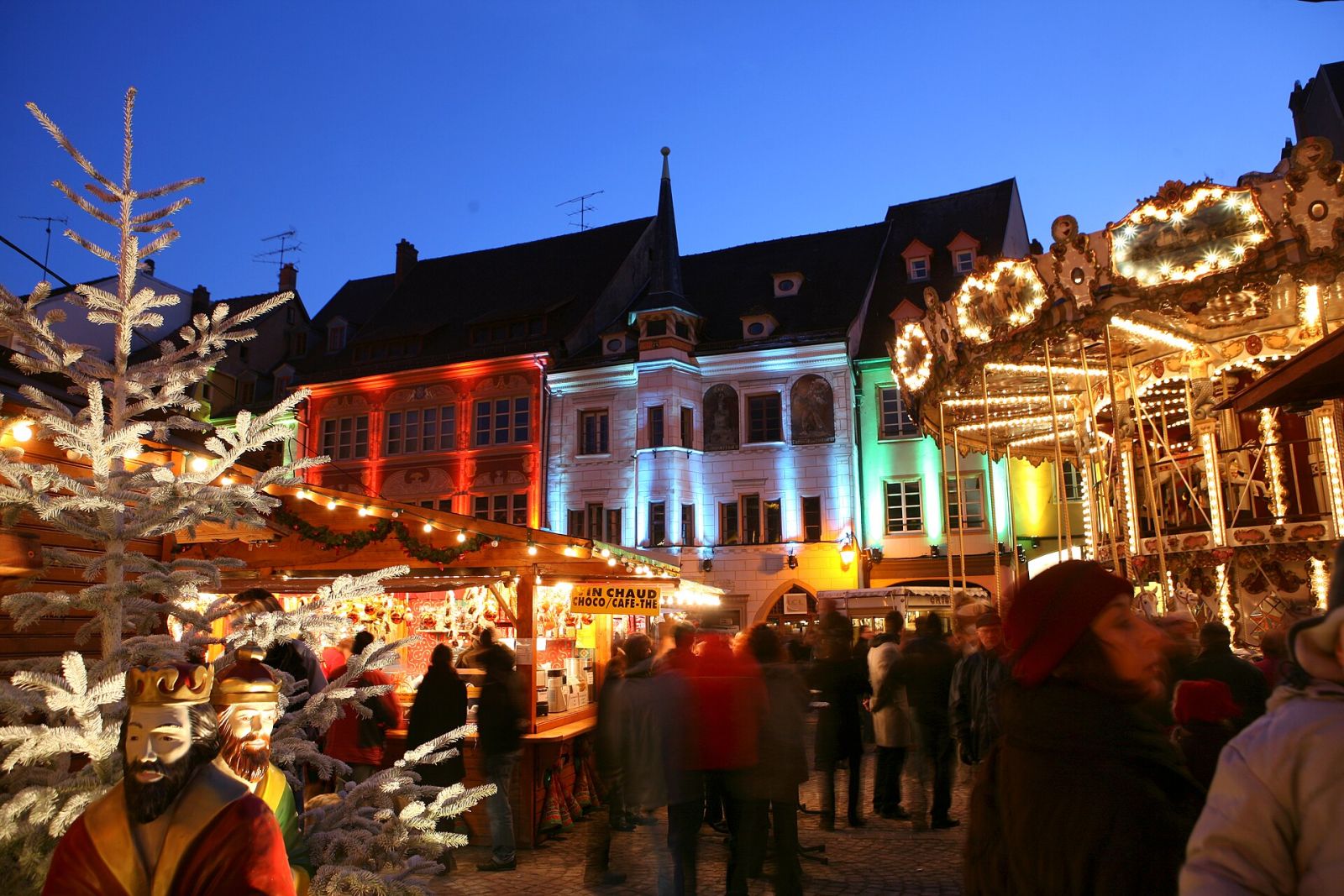
Mulhouse was once a textile capital, and at Christmas it remembers. Every year the town prints a new Étoffe de Noël, a Christmas fabric with its own design: it is draped over facades, market stalls and shop windows, and sold by the metre in the fabric shop. The market stands on Place de la Réunion by the Protestant St Stephen's church, in 2026 from 20 November to 27 December, closed on 25 December. Fewer tour coaches come here, so even on a Saturday you can breathe.
Sélestat: home of the first written Christmas tree
The original 1521 account book is kept in the municipal archives, while the Humanist Library, one of the oldest in France, displays a copy at its exhibition on the Christmas tree tradition. The entry itself says nothing about decorations, only about guarding the trees; how they were decorated is described in a local document from 1600. Those two papers give Sélestat its claim to be the birthplace of the Christmas tree. Under the vaults of St George's Church, around ten trees are hung every year, each decorated the way it was done in a different century, from the sixteenth to our own. The Sélestat market opens on 20 November, and the closing date is still being confirmed, so look it up on the Sélestat tourist office website.
Obernai: a town hall square and a gingerbread neighbour
Obernai lies at the foot of Mont Sainte-Odile, and its market of a few dozen huts spreads across the Old Town squares around the Kapellturm belfry. According to preliminary information, it runs from 27 November to 31 December. A few kilometres away in Gertwiller stands the Gingerbread Palace, a museum and shop devoted to Alsatian gingerbread, well worth a stop for gifts.
Bredele, white mulled wine and a deposit on your mug
- Bredele, small Christmas biscuits, are baked by Alsatian families in dozens of varieties: butter, aniseed, cinnamon stars, nut. At the market they are sold by weight in paper bags.
- Mulled wine here comes red and white, the latter made from Alsatian white wine with spices. Try both; the white is lighter and smells of orange.
- Mugs usually come with a deposit: return yours for a refund, or keep it as a souvenir, since every town has its own design each year.
- With the wine, people eat tarte flambée, a thin flatbread with cream cheese, onion and bacon, and take home gingerbread and kougelhopf.
How to get between the villages without sitting in traffic
TER trains from Strasbourg take about 15 to 20 minutes to Sélestat, roughly half an hour to Colmar, a little longer to Obernai and about an hour to Mulhouse. The villages on the Wine Route are not on the railway, so Colmar runs Christmas shuttles. In 2026 they operate from 27 November to 20 December from Colmar station: lines 1 and 2 via Kaysersberg, Riquewihr and Ribeauvillé from Friday to Sunday, and line 3 to Eguisheim at weekends and on some weekdays. A day ticket costs 17 euros at weekends and 8 euros on line 3 on weekdays; children under 12 ride free but still need a booking. Tickets are sold online only, go on sale on 12 November at noon, and Saturdays sell out first.
The busiest time is Saturday afternoon, especially in Colmar and Riquewihr. Monday to Thursday is noticeably calmer, and the markets run just the same. It is easier to stay in Colmar or Sélestat, near the station, than in Strasbourg itself, where December prices soar.
Alsace Christmas markets at a glance
The dates were gathered at the end of October 2026, and some towns may still adjust them, so confirm the schedule on the tourist office websites before you travel.
| Town | Dates 2026 | What makes it special | Getting there |
|---|---|---|---|
| Colmar | 23 November - 29 December, gourmet market until 3 January | six markets, Little Venice | TER from Strasbourg, about 30 minutes |
| Kaysersberg | 27 November - 20 December | medieval feel, craftspeople | shuttle from Colmar, lines 1 and 2 |
| Riquewihr | 27 November - 20 December | ramparts, Dolder tower | shuttle from Colmar, lines 1 and 2 |
| Eguisheim | 27 November - 30 December, provisional | circular streets, trees by the doors | shuttle from Colmar, line 3 |
| Mulhouse | 20 November - 27 December | the Étoffe de Noël Christmas fabric | TER, about an hour from Strasbourg |
| Sélestat | from 20 November, end date to be confirmed | the 1521 record, trees in the church | TER, 15 to 20 minutes from Strasbourg |
| Obernai | 27 November - 31 December, provisional | belfry square, gingerbread nearby | TER from Strasbourg, about 40 minutes |
Alsace fits neatly into two or three days based in Colmar: one day for Colmar itself, a second for the village shuttles, a third for Sélestat and Mulhouse by train. If you want more after that, our wider round-up of Christmas markets in Europe will suggest where to go next.