

A lost love letter, a famous painting, and a trail winding through the streets of Paris: do you hold the answer to a romantic riddle that has puzzled an American filmmaker for two years?
Doug Block stumbled onto the strange case of Betty and Henri while celebrating his wedding anniversary in Europe with his wife in late 2015.
"It all began in Paris," the documentary maker recalls.
Partner links: booking through them supports the blog at no extra cost to you.
On the final day of their trip, the couple decided to set off on a long walk, soaking up the fading autumn daylight. Block pulled out "Pariswalks," a battered secondhand guidebook he had tossed into his suitcase at the last minute.
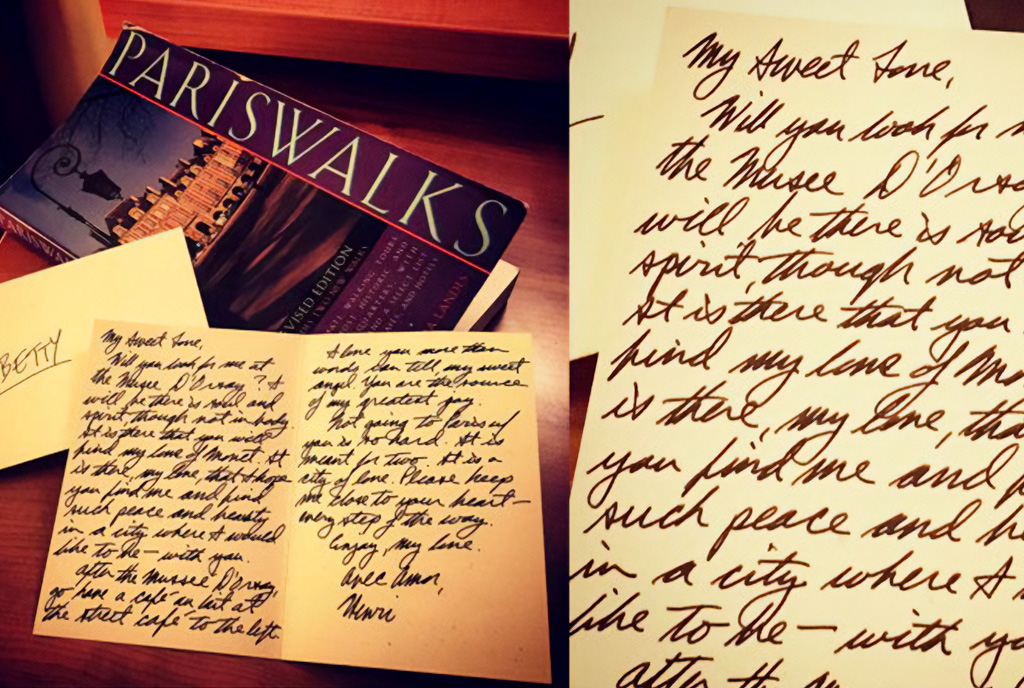
As he flipped through the pages, an envelope slipped out, bearing a single name: "Betty."
"It just fluttered to the floor, almost in slow motion," Block says.
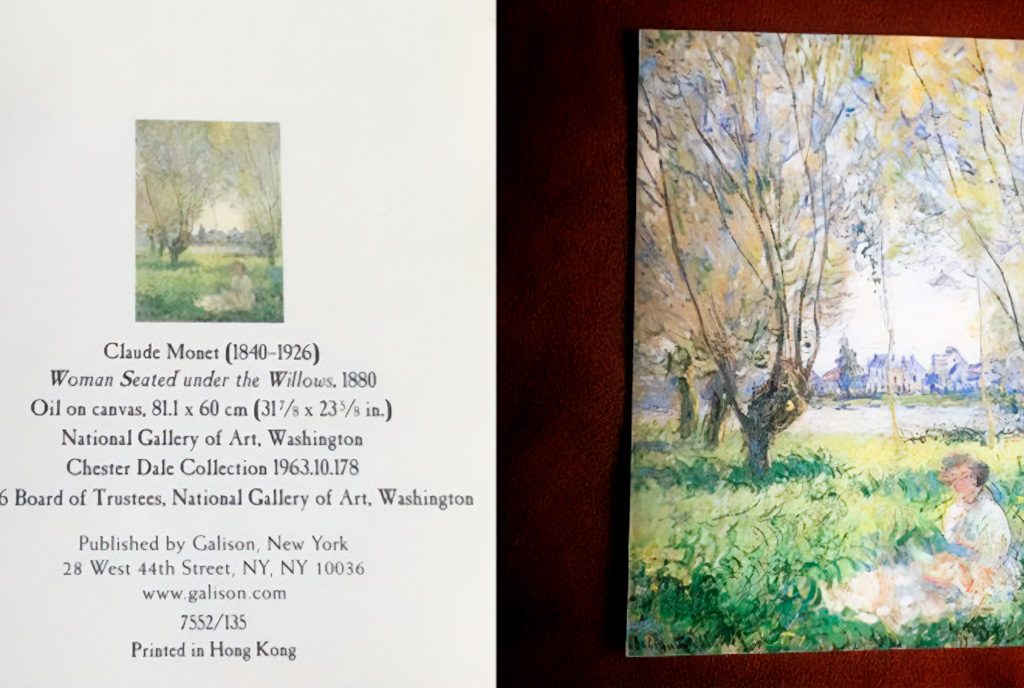
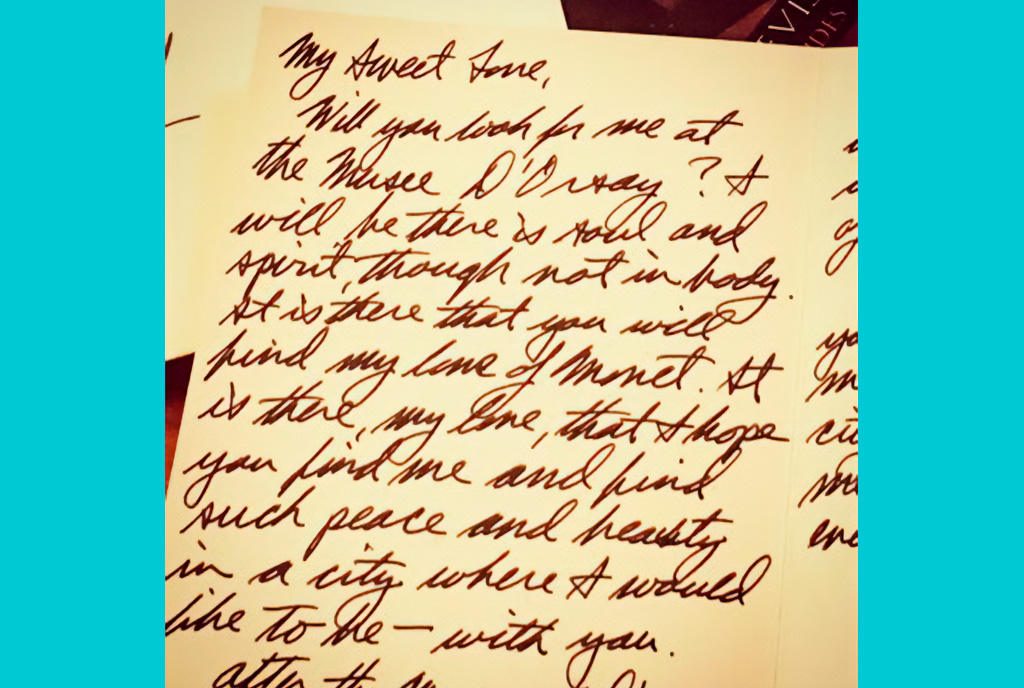
The envelope was unsealed. Inside was a postcard adorned with a Monet painting, "Woman Seated under the Willows." And inside that was a passionate declaration of love.
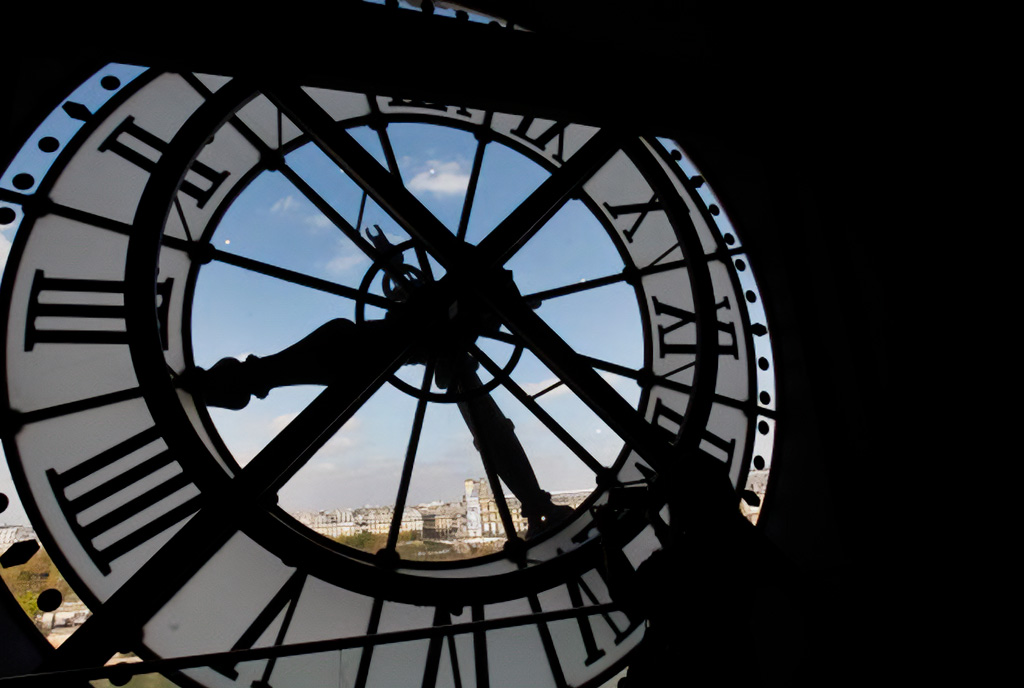
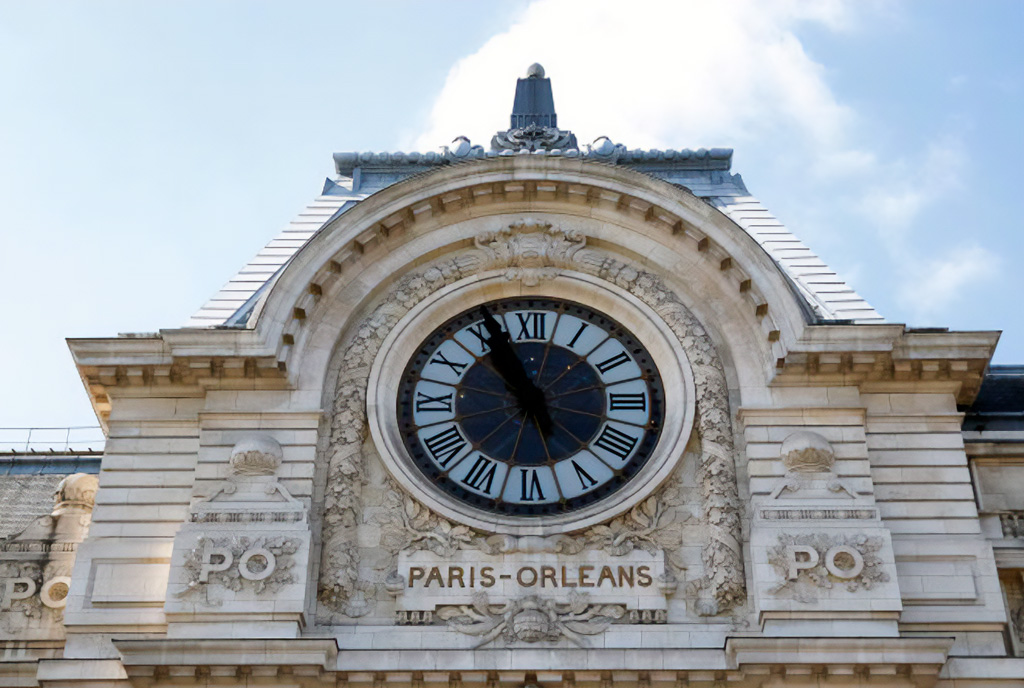
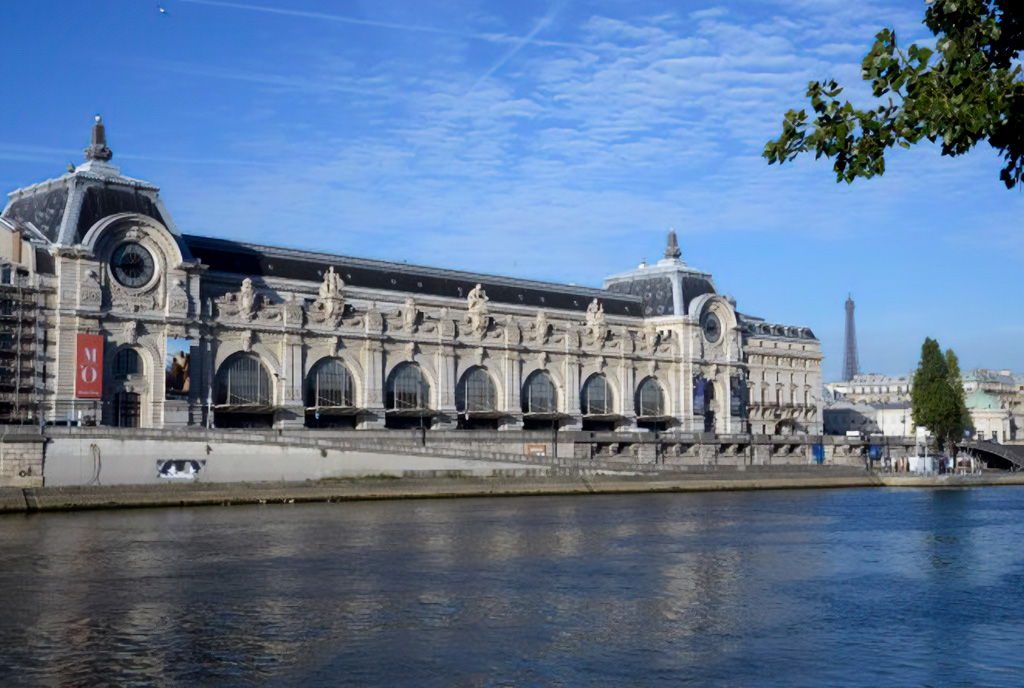
"Will you look for me at the Musee d'Orsay?" wrote Henri, the mysterious author. "I will be there in soul and spirit, though not in body. That is where you will find my love for Monet."
Bewildered, Block turned to his wife. Who was Betty? Who was Henri? And how had this letter ended up in his guidebook?
Little did he know that this letter would become the start of a search spanning the globe, an international labor of love celebrating Paris and the enduring power of romance.
An Accidental Discovery

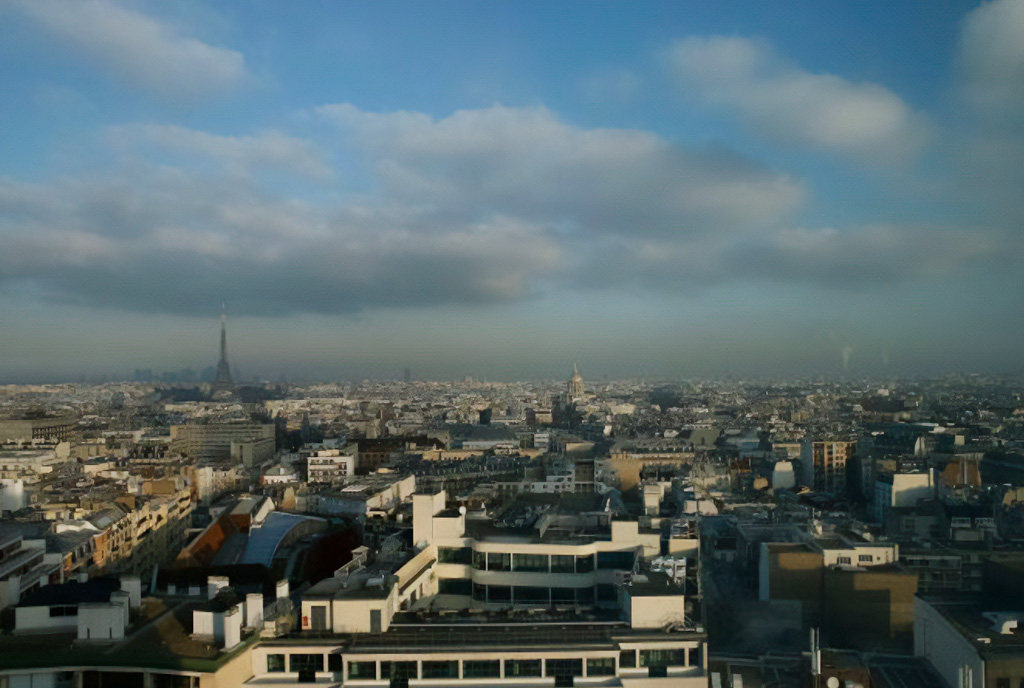
Block and his wife were traveling through Paris in November 2015. They spent their days strolling the broad boulevards, wandering along the Seine, and admiring the great Impressionists at the Musee d'Orsay.
On their second evening in Paris, on Friday 13 November, the city was struck by a series of deadly attacks that killed 130 people.
"I remember thinking, 'Oh my God, Paris, the city of love and romance, is now going to be associated with terrorism,'" Block says.
Finding the love letter felt like a sign from fate, a chance reminder of romance in a moment of heartbreak.
"The love letter struck a chord," he says. "The timing of it, given everything Paris was going through, and the whole international response to the terrorist attack."
The Search Begins

Back home in New York, Block says he was "haunted" by the ghosts of Betty and Henri. Yet it was only a year later that he decided to chase those ghosts, feeling disheartened by a post-election, divided America:
"I just thought, 'for the sake of my own sanity, I think I need to do something driven by love and romance.'"
But how do you begin searching for two people when all you have are their first names and their handwriting? Block's first step was to find out whether the guidebook had been borrowed from friends.

That line of inquiry led him to the door of a mutual friend in New York, a woman named Betty.
"It wasn't the right Betty, but she was a wonderful Betty," Block says. "She was 91 years old. She was very frank about her love life [...] I just had a feeling I'd find a whole string of Bettys and Henris on this search."
Block's conversations with this Betty strengthened his conviction that the story was worth pursuing. After all, a letter with its heartfelt emotions and memories of a lost love resonates with everyone.
On top of that, he adds, "people just love a good mystery."
Detective Work

Concluding that he and his wife had most likely bought the book secondhand, Block decided to press on with his investigation.
"I literally played detective by turning to a detective, that really was my first step," he says.
Since then, his hunt for Betty and Henri has spread far and wide.
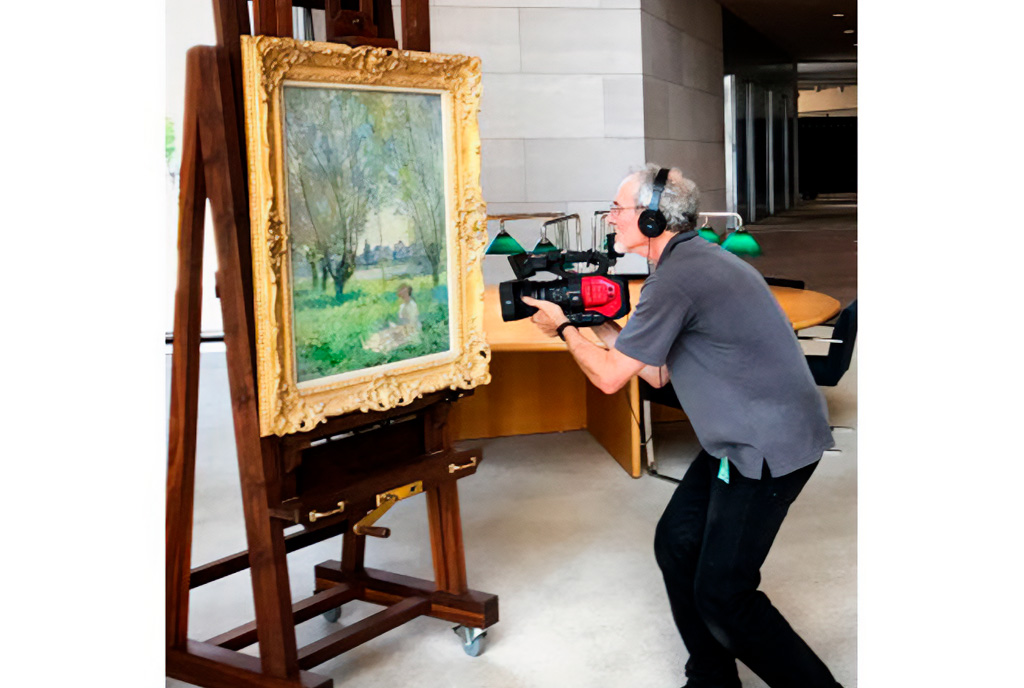
The Monet painting printed on the postcard hangs in the National Gallery of Art in Washington. Block filmed the gallery's collection and looked into how Monet's turbulent love life might connect to the real-life romance of Betty and Henri.
"The letter was put through forensic examination and handwriting analysis, and a historical novelist wrote a book about Monet."
Block even hired a psychic. The filmmaker crossed paths with a host of fascinating characters, all of them eager to unravel the mystery.
A year on, Betty and Henri had not been found, but the search had taken on a life of its own.
"It became clear to me that finding Henri and Betty is really unlikely, but the search is truly the heart of the film, and its joy," he says.
Fact and Fiction

Block still hopes that Betty and Henri might resurface. He urges anyone who recognizes the handwriting to reach out to him on Twitter.
Even so, he realizes that part of the couple's appeal lies in the romance, the fairy tale, the fiction.
Uncovering the reality, which may be bleaker than it seems, could be disappointing.
"There's something about idealizing who they are," Block reflects. "What's so captivating is that everyone I've spoken to has their own idea of who Betty and Henri are. When I ask them, 'How old are they and what's their relationship?' the answers vary."
For Block, who is in his 60s, Betty is Audrey Hepburn in her Paris films, an innocent young woman in an old Hollywood love story.
"We all carry these notions of love and romance, often fueled by the movies [...] I think finding out they were just ordinary people could be disappointing," he admits.
"It's entirely possible this was an affair, after which they went back to their marriages. And that's delicate, because I don't necessarily want to expose them publicly."
Block says he would only name the lovers publicly with their permission, acknowledging that it is a fine line.
Universal Romance

In the meantime, Block will carry on with his search. He loves connecting the dots, and connecting with others who are as captivated by romance as he is.
"The story just seems to resonate with everyone, this idea of a kind of message in a bottle, of how this note somehow found its way into this book, somehow ended up in my hands. The beautiful sentiment expressed in the letter. The mystery of the postcard and whether there's a connection, with Monet somehow mixed up in it all."
At its heart lies a love letter with a universal message:
"Betty and Henri are pretty much everyone," Block says. "Everyone, no matter their age, has this longing for romance. Even if they've been married for years, it doesn't put out that fire [...] I think this letter touches that in most of the people I've come across."