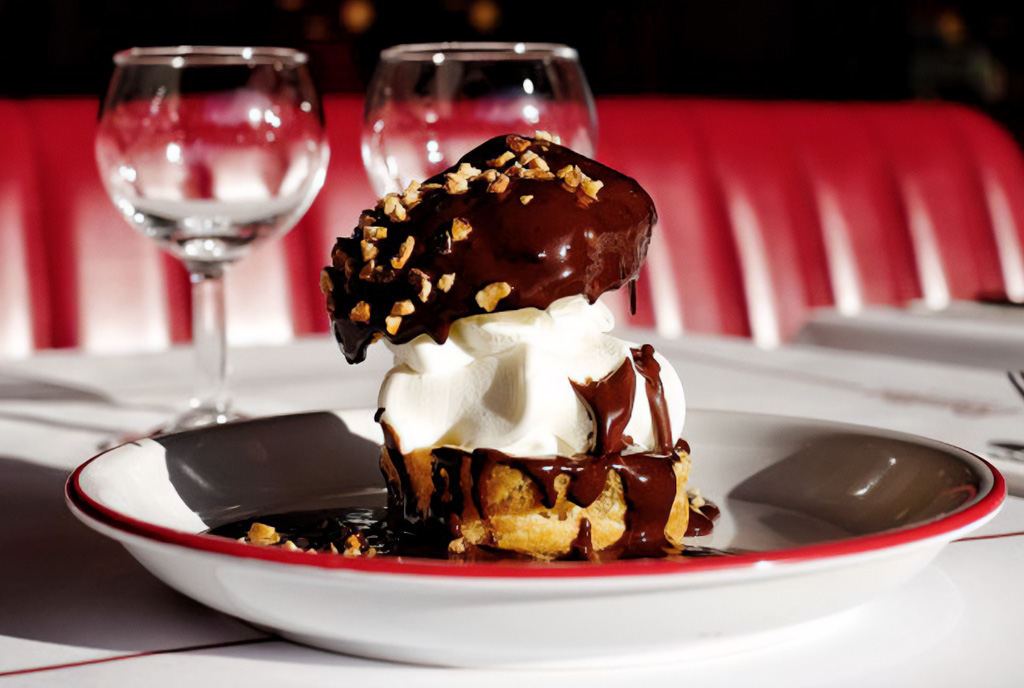


A peal of laughter rings out above the buzz of the dining room, coming from a table of three older Frenchwomen, probably friends, maybe sisters, who have just shared a moment of fun over empty, chocolate-smeared dessert plates.
A few tables away, a pair of intellectual-looking, silver-haired gentlemen in tweed jackets, turtlenecks and gleaming oxford shoes tuck into plates of sauerkraut and sausage, perhaps debating philosophy, perhaps just catching up on their weekly lunch date.
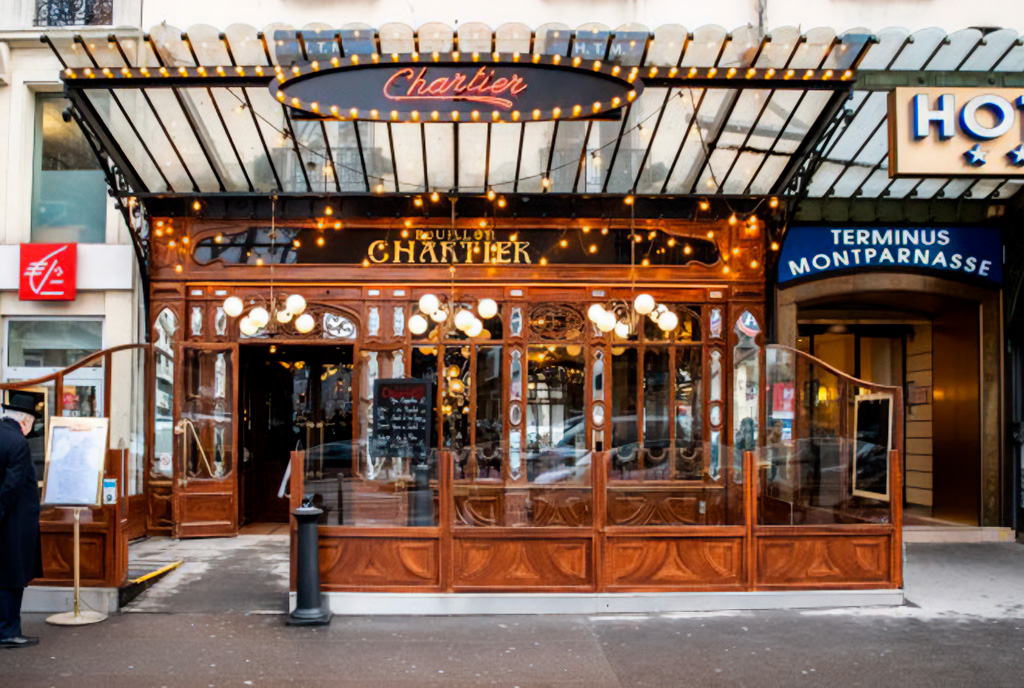
It is a Saturday afternoon at the recently opened Bouillon Chartier Montparnasse (59 Boulevard du Montparnasse, 75006 Paris; +33 1 45 49 19 00), and the Art Nouveau dining rooms are filled mostly with local Parisians who have come for the promise of cheap, cheerful French home cooking at low prices.
Partner links: booking through them supports the blog at no extra cost to you.
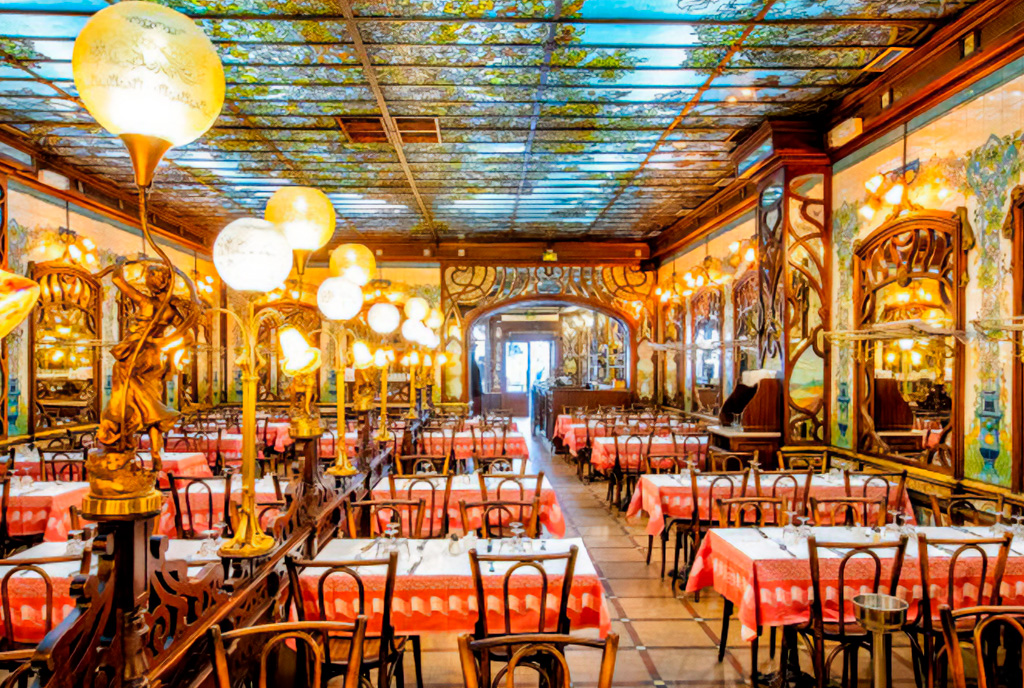
You could call it yet another French travel paradox: against a plush backdrop of brass railings, carved wood, painted glass ceilings, globe lamps and ceramic-tiled walls, diners enjoy classic French dishes such as leeks in vinaigrette, snails, beef stroganoff and calf's head, retro classics that are becoming harder and harder to find in Paris, at prices ranging from three to ten euros a plate (or less than $11).
The origin story of the bouillon

Bouillon Chartier Montparnasse is the latest "bouillon" to open in Paris in recent years, reviving a late 19th- and early 20th-century tradition that could be considered the forerunner of the restaurant as we know it today. In 2017, the opening of Bouillon Pigalle (22 Boulevard de Clichy, 75018 Paris; +33 1 42 59 69 31) shook up the local dining scene, and the historic Bouillon Julien (16 Rue du Faubourg Saint-Denis, 75010 Paris; +33 1 47 70 12 06) reopened last year after being transformed back from an upscale restaurant. More recently, the same group behind the wildly popular Bouillon Pigalle also announced plans to open a sister venue at Place de la République next year.
As the name suggests, the bouillon was first conceived as a place where the Parisian working class could stop in and refuel with a restorative meat broth, or bouillon.
It is widely accepted that the first bouillons were created in the mid-19th century by a Parisian butcher named Pierre-Louis Duval, who turned meat scraps into soups and broths and sold them as "bouillons restaurant." Here, the word "restaurant" in French is an adjective meaning "restorative."
Hence the word "restaurant."
By the early 20th century, thanks in large part to his enterprising son Alexandre Duval, Paris was home to around 250 bouillons, serving "restorative broths" to working-class citizens of modest means all over the city. The dishes were humble but hearty and comforting, and, most importantly, cheap as chips.
Eventually, as they grew more popular with the city's well-to-do bourgeoisie, the humble bouillon evolved into more refined and less affordable establishments such as brasseries and bistros, and became a relic of the Parisian dining scene.
Fast-forward to Paris in 2019, the year that the tastemakers at the influential French dining guide Le Fooding declared the year of "retrofoodism," a playful portmanteau reflecting the growing appetite for retro French dishes.
"Until recently, it was impossible to find a good French onion soup or a sole meunière," says Le Fooding founder Alexandre Cammas.
"And when something becomes impossible and rare, it becomes more and more desirable. In the end, it's no surprise that this retro food is fashionable again."
In other words, everything old is new again.
Affordable food in an elegant setting

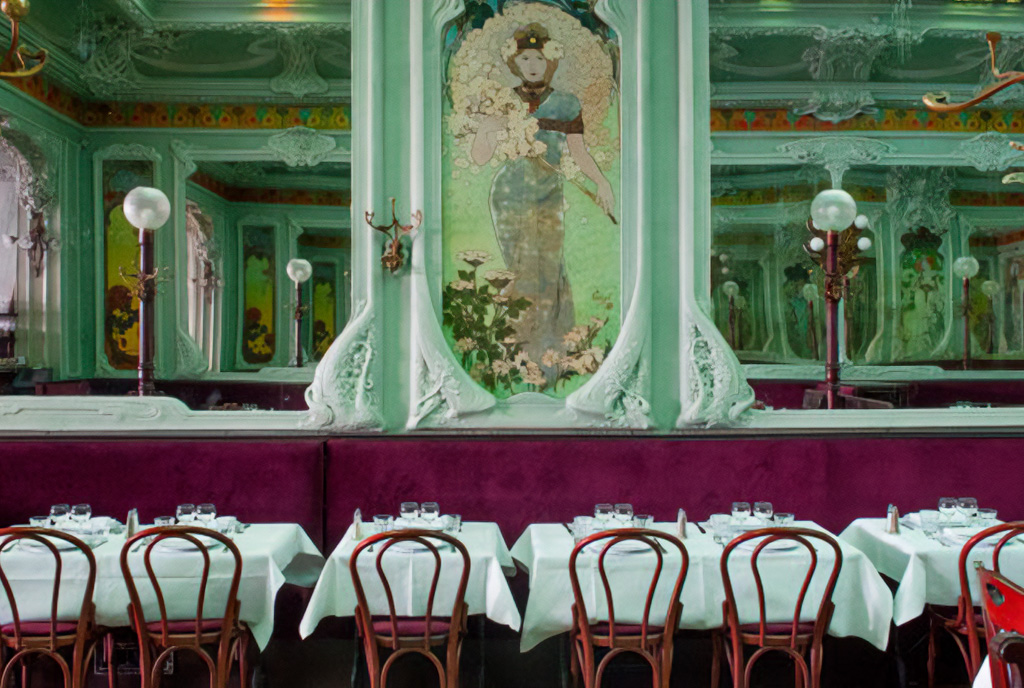
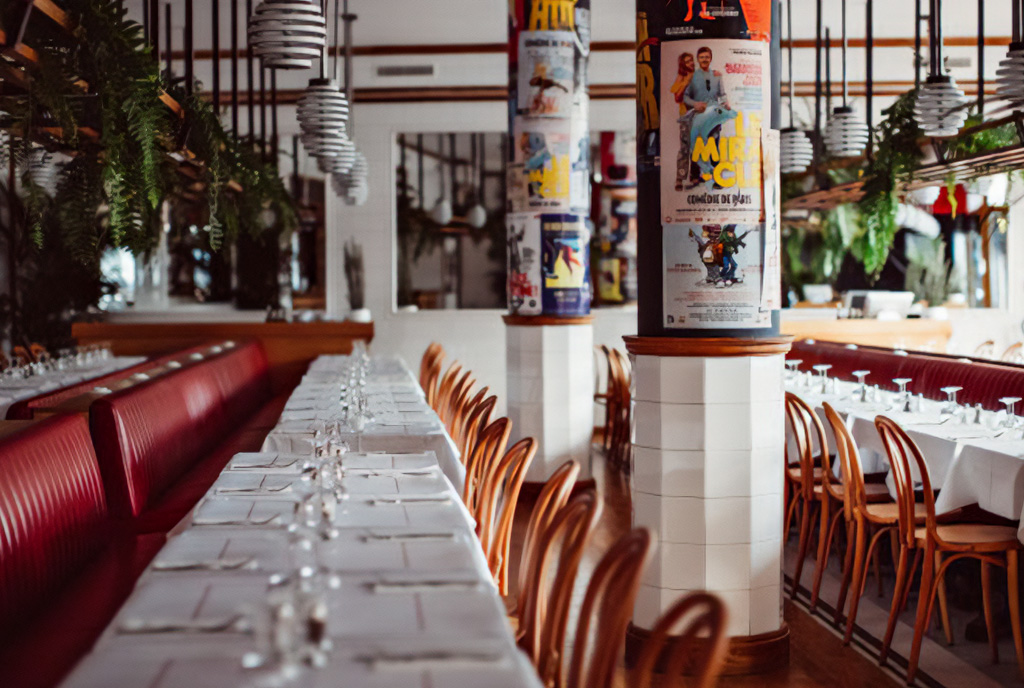
Walk past a bouillon on any given day, and chances are you'll find long but fast-moving lines of Parisians and in-the-know tourists who have come in search of inexpensive food in an elegant setting. While Bouillon Pigalle was built from scratch, Bouillon Chartier Montparnasse and Bouillon Julien are carefully preserved historic landmarks that transport diners back to the early 20th century with their sumptuous interiors, marked by stained-glass ceilings, painted tiles, wood carvings and mirrored walls.
Meanwhile, Parisians familiar with the bouillon concept know to temper their expectations: with starters averaging three to five euros and mains averaging ten, this is not going to be a gourmet feast.
By comparison, the price of a main course at a standard French restaurant usually hovers around 20 to 30 euros ($22 to $34).
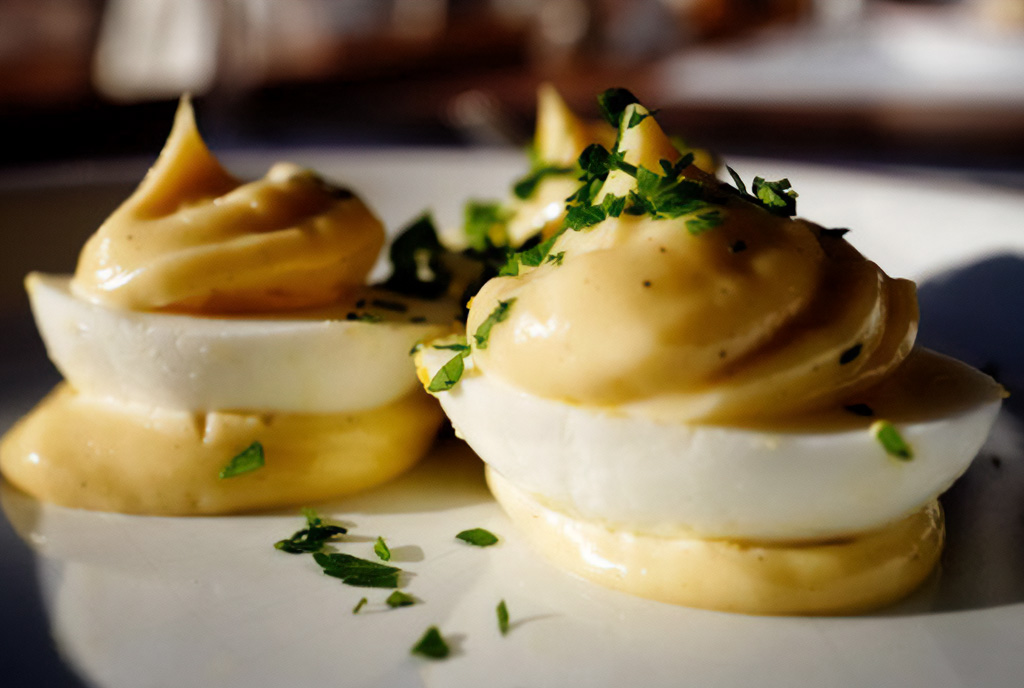
Dishes of veal blanquette (stewed veal), roast chicken with fries, veal sweetbreads and pot-au-feu (boiled beef and vegetable soup) are simple, honest and free of any pretension. There are no pretty but often unnecessary garnishes arranged with surgical precision using tweezers.
In fact, a plate of steak with peppercorn sauce might well arrive with an unceremonious splatter of sauce all around the rim of the plate, and a lone, sad little cornichon might roll back and forth beside a slice of terrine.
There are no ironic, chef-y deconstructions here, nor any modernized updates of old-fashioned recipes.
And that is exactly what appeals to young diner Augustin Boune, who has come to lunch with two friends.
"No surprises," says the 23-year-old. "I know exactly what to expect on my plate."
There is a certain comfort in this kind of meal, his friends agree.
Back to basics

"This is exactly the kind of food I'd eat at my grandmother's," Boune says of his plate of andouillette sausage and sauteed mushrooms. "It's a simple but classic family dish."
These are also time-consuming dishes that take hours to make properly at home, time that people simply no longer have, adds Yann Hulin, director of operations at Bouillon Chartier Montparnasse.
"People cook less and less these days, especially traditional dishes like pot-au-feu, which can take hours to prepare. Rather than spend five hours in the kitchen, people prefer to eat out," he says.
"At our restaurants, people are looking for a quick, cheap lunch that reminds them of Sunday family dinners."
Another distinctive feature of bouillons, the restaurants? They are unique to Paris.
Boune's friend, Maxence Lebeau, 22, is from Lyon and said he had never known what a bouillon was until their visit that day.
"I got the impression that it's a Parisian secret," he said. "A place where you can eat cheap, simple, working-class food in such an exceptional setting."
Exceptional, indeed.
Both Bouillon Chartier Montparnasse and Bouillon Julien are listed historic landmarks and are among the most striking examples of Art Nouveau decor in the city. Both landmarks also, until recently, operated as more upscale brasseries before being converted back to their original reason for being: bouillons.
Bouillon Chartier Montparnasse is a sister venue to the legendary Bouillon Chartier in the ninth arrondissement, a Parisian institution that has been running since 1896 and is also a listed historic landmark.
Authentic Paris

Bouillon Julien opened in 1906 in the working-class neighborhood of Faubourg Saint-Denis. Today, the area remains a vibrant, lively place where Turkish, Pakistani and Syrian eateries sit side by side with artisanal cheesemongers, butchers, colorful fruit and vegetable stalls, and bobo (bourgeois-bohemian) Parisians.
The legendary French singer Edith Piaf was a regular at the bouillon, where she often dined at table No. 24 with her boxer lover Marcel Cerdan. Bouillon Julien takes advance reservations, though you can also walk in without one.
"People come for the atmosphere and the prices. There are plenty of other good restaurants in Paris, but with correspondingly high prices," says Pascal Le Bihan, general manager of Bouillon Julien.
"It's lively, it's noisy, a little chaotic, and people sit elbow to elbow. It's a real Parisian experience that you can't find anywhere else in France."
That's because the tables, and by extension the guests, are packed tightly together in a family-style seating arrangement. A solo diner might be seated next to a trio of friends; couples next to a family of four. A request between strangers to pass the pot of Dijon mustard can lead to friendly encounters, and the hum of wine-fueled conversation is regularly interrupted by unrestrained, cheerful laughter.
In Cammas's view, bouillon restaurants serve as living museums, frozen in time; caricatures and cliches of French gastronomy, much like Parisian postcards of baguettes, wine and cheese.
"Calf's head is a French specialty, but how many French people eat it every day?" he notes. "Bouillons represent a narrowed vision of French cuisine today and of what the French actually eat every day."
That may well be true, but the historic decor still has the power to impress local Parisians such as Christine Schmitt, 56, and her friends.
"It's not only tourists; there are also real Parisians who go to bouillons," Schmitt says.
"The setting is wonderful, the prices are not at all typical of Paris, you eat well here, and it's fun."