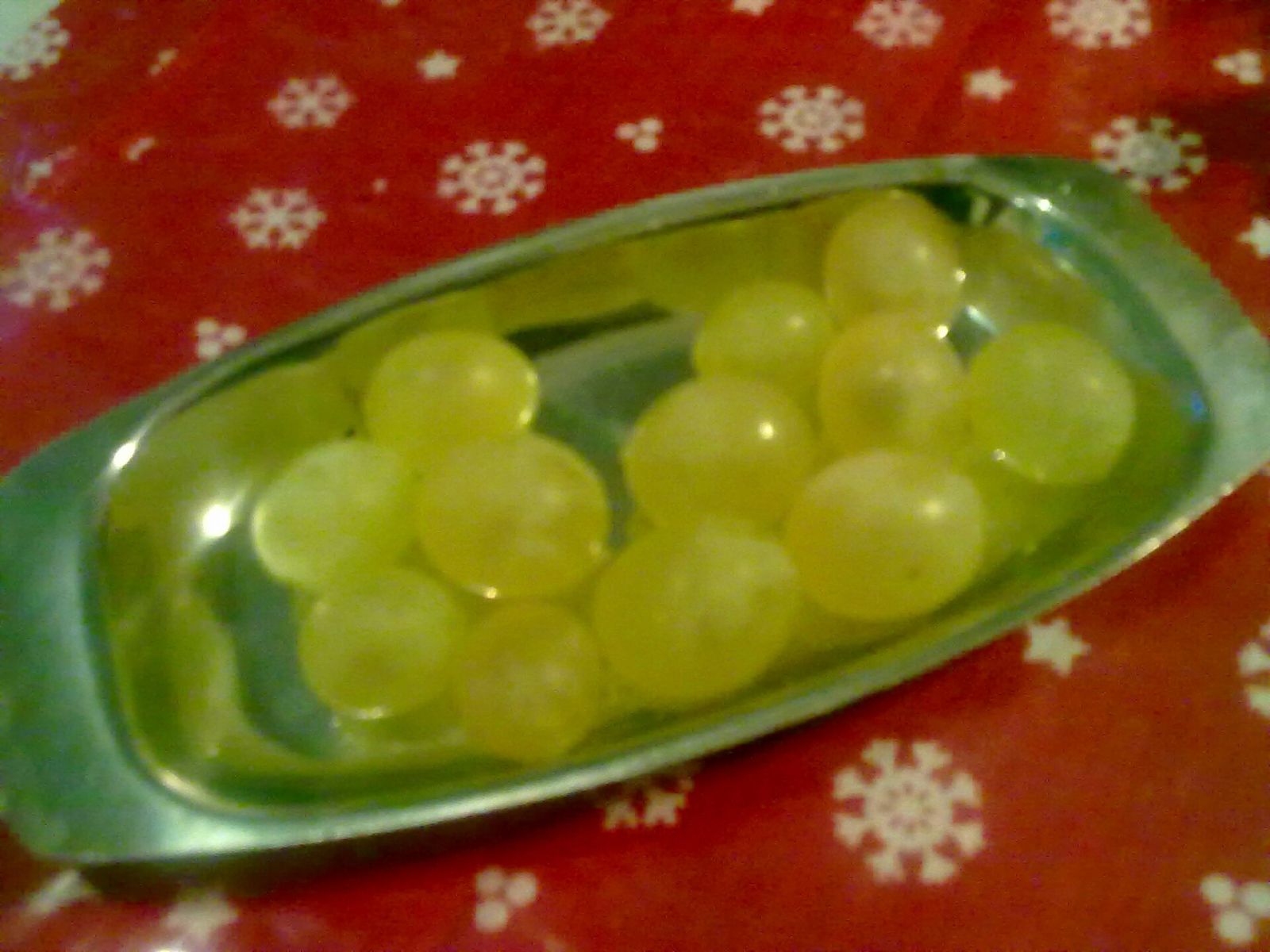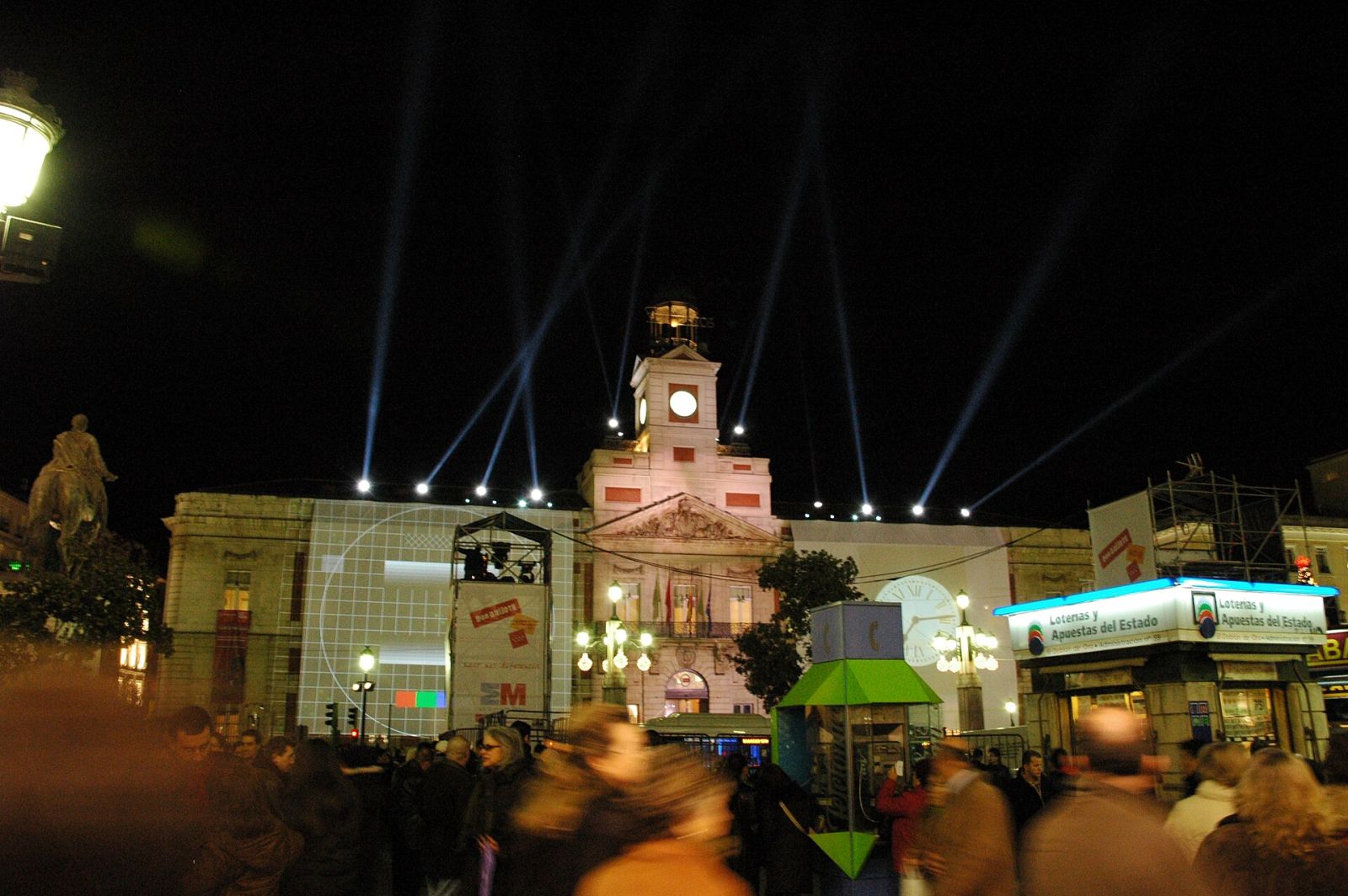


At midnight on Madrid's Puerta del Sol you are supposed to eat twelve grapes on the twelve strokes of the clock, and tourists usually lose before the race even starts: just before the chimes the clock rings four double "quarters", newcomers start chewing, and the locals simply laugh. Most of these unusual New Year traditions are open to visitors, and each comes with a small detail worth knowing in advance, because that detail decides whether you get a celebration or an embarrassment.
Spain: twelve grapes and red underwear
The Spanish have been eating one grape per stroke of the clock on the Royal Post Office building for well over a century, and the whole country watches the broadcast from Puerta del Sol at that moment. The grapes are large and full of seeds, which is why supermarkets sell little tubs of twelve peeled "lucky grapes". Buy them: nobody manages a seeded grape in three seconds. On New Year's Eve the square is closed off and entry is capped, so people arrive hours early, and some practise the day before at the "dress rehearsal" of the chimes. Under their party clothes, Spaniards, like Italians, wear red underwear for luck and love, and December markets sell it by the rackful.
Denmark: plates on doors and a leap into the new year
Danes save old crockery all year and on New Year's Eve smash it against the doors of friends and neighbours. The bigger the pile of shards on your doorstep in the morning, the more friends you have. Visitors should not experiment on strangers' doors: the custom only works between people who know each other. At 18:00 the country listens to the King's New Year speech, then comes dinner, and at midnight everyone stands on a chair and jumps into the new year, so it starts in mid-air. Kransekage, a tower of almond rings, is a must. In Copenhagen the midnight crowd gathers on City Hall Square, with the clock striking and fireworks going off right overhead.
Italy: lentils, red and old things out of the window
Italians also wear red underwear, and tradition says it should be new and ideally a gift. At midnight they eat lentils with cotechino or zampone, a pork sausage: the round little lentils promise money, so nobody leaves any on the plate. In Naples people used to throw old things out of the window, furniture included, but the custom has nearly died out because the police dislike it, and so do passers-by.
Brazil: white clothes, seven waves and flowers for Yemanjá
New Year's Eve on Copacabana beach in Rio draws more than two million people, nearly all dressed in white, the colour of peace. At midnight people wade in and jump seven waves, making a wish on each. Some bring flowers, mostly white, and candles for Yemanjá, the sea goddess of Afro-Brazilian religions, leaving them in the sand or setting them on the waves; if the sea takes the gift, the year will be a good one. Treat these offerings as someone else's altar, walk around them and do not photograph them up close. Carry as little as possible, because in a crowd that size pickpockets work as hard as the fireworks.
Ecuador and Colombia: effigies on fire and a suitcase round the block
In the days before New Year, Ecuadorian streets fill with años viejos, "old years": effigies of paper and sawdust with the faces of politicians, footballers and cartoon characters. People write joking "wills" for them, and at midnight the effigies are burned along with everything bad the year brought. Men dressed as the old year's "widows" stop cars and ask for coins for the "funeral". The biggest effigies are made in Guayaquil. Go and look during the day, and keep your distance from the midnight bonfires, because firecrackers stuffed inside go off without warning.
Colombians who want to travel in the coming year grab an empty suitcase at midnight and run round the block with it. If you are planning a long trip, take a bigger one. Colombians also eat twelve grapes, and wear yellow underwear rather than red. For a visitor this is the easiest tradition of all: you already have the suitcase.
Greece: vasilopita with a coin
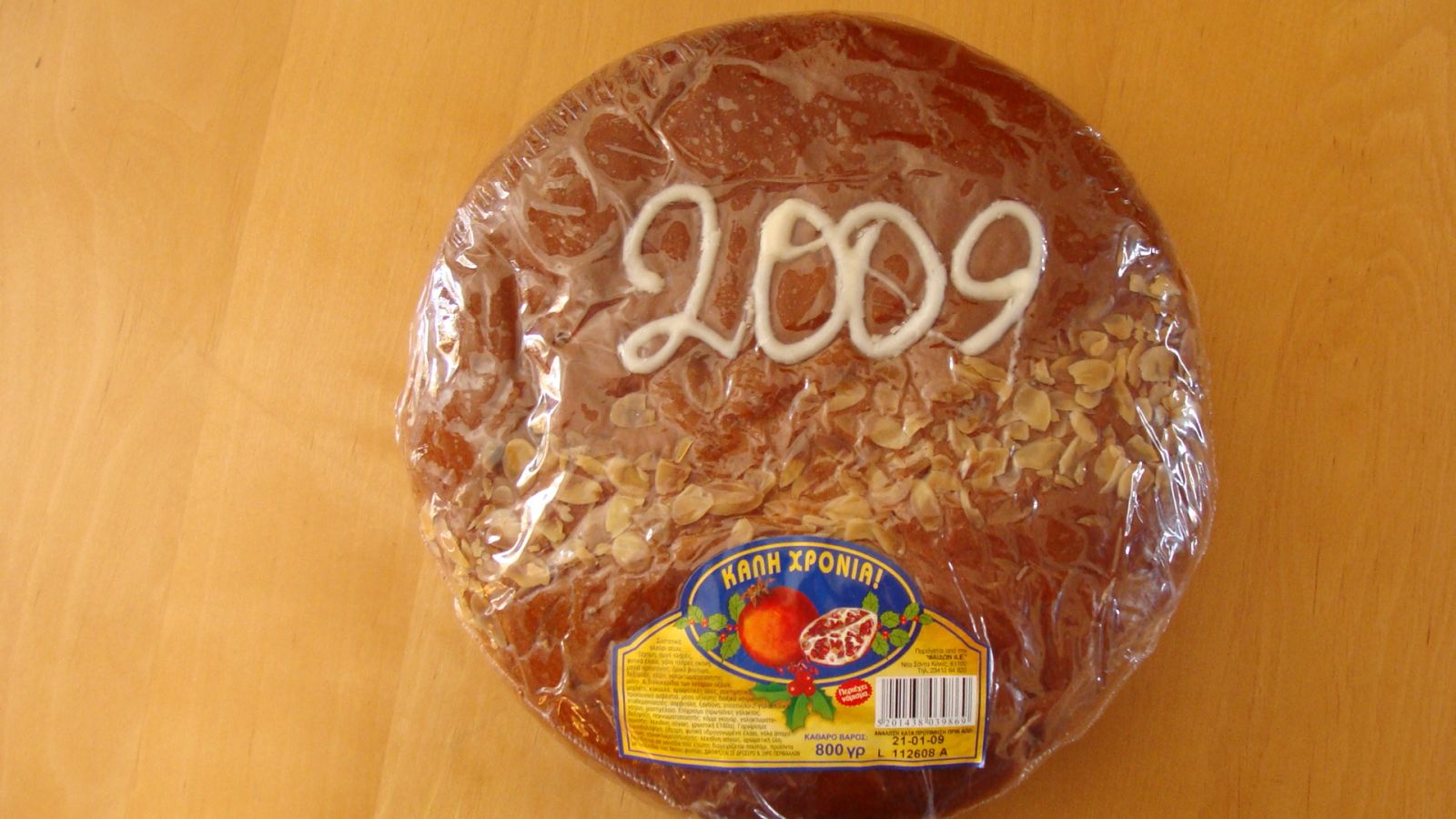
1 January in Greece is St Basil's Day, and the table gets a vasilopita, a cake with a coin baked inside. The head of the family cuts it in strict order: the first slice for Christ, then one for the house, then for family members from oldest to youngest. Whoever finds the coin is lucky all year. Every bakery sells vasilopita, and in January it is cut even in cafés and offices. Another custom is to smash a pomegranate on the doorstep so the seeds fly as far as possible.
Scotland: the first guest after midnight
New Year in Scotland is Hogmanay, and its key custom, first-footing, is about the first person to cross the threshold after midnight. The ideal first foot is a tall, dark-haired man bearing gifts: coal for warmth, shortbread, black bun fruit cake and whisky. A fair-haired visitor is bad luck by old belief, a superstition usually traced to memories of Viking raids. Edinburgh's Hogmanay runs from 29 December 2026 to 1 January 2027, with a torchlight procession, a ticketed street party on 31 December that sells out early, and "Auld Lang Syne" with crossed arms at midnight. On 1 January the bravest traditionally plunge into the cold Firth of Forth at the Loony Dook.
The Philippines: everything round
Filipinos welcome the year under the sign of the circle, because round things look like coins. The table holds twelve round fruits, one for each month, including grapes, oranges and melons. Clothes are polka-dotted, pockets are full of coins to jingle at midnight, and children jump so they will grow taller in the year ahead. The noise from firecrackers, horns and banged pots drowns out your own thoughts. A visitor can happily join the first half of the programme and should stay well away from home-made firecrackers.
Japan: 108 strokes of the bell
New Year's Eve in Japan is quiet. Buddhist temples strike their bells 108 times, one for each human desire, in a ceremony called joya no kane. The most famous is at Chion-in in Kyoto, where seventeen monks swing a bell of about 70 tonnes, starting at around 22:40. Access has been restricted in recent years, so check the season's rules on the temple's website. At many smaller temples visitors can strike the bell themselves, with a numbered ticket or a donation. Before midnight people eat toshikoshi soba, long buckwheat noodles for a long life, and on 1 January they make the first shrine visit of the year, hatsumode.
Table: unusual New Year traditions and what a traveller can try
| Tradition | Country | When | Can a visitor join? | Where to try it |
|---|---|---|---|---|
| 12 grapes | Spain, Colombia | midnight, 31 December | yes, preferably with peeled grapes | Puerta del Sol in Madrid, any party |
| Red underwear | Italy, Spain | 31 December | yes | December markets and shops |
| Plates on doors, jumping off a chair | Denmark | evening and midnight, 31 December | the jump yes, plates only with friends | Copenhagen, City Hall Square |
| White clothes and seven waves | Brazil | midnight, 31 December | yes, with minimal belongings | Copacabana, Rio de Janeiro |
| Burning años viejos | Ecuador | midnight, 31 December | watch from a distance | Guayaquil, Quito, Cuenca |
| Empty suitcase | Colombia | midnight | yes | any city |
| Vasilopita | Greece | 1 January | yes, buy one at a bakery | Athens, Thessaloniki, the islands |
| First-footing | Scotland | after midnight | if you are invited to someone's home | Edinburgh, Hogmanay 29 December - 1 January |
| Round fruit and polka dots | Philippines | midnight, 31 December | yes | Manila, Cebu |
| 108 bell strokes | Japan | from 22:40, 31 December | watch, and at small temples strike the bell | Chion-in in Kyoto, Tokyo temples |
We checked the Hogmanay schedule and the New Year ceremonies against organisers' websites in late October 2026, and tickets and access rules sometimes change closer to the date. You can only stand in one square at midnight, so choose the tradition together with the city and book somewhere within walking distance, because a taxi on New Year's Eve turns into the most expensive sport in town. Cities for the night are covered in our guide on where to spend New Year in Europe, and a wider choice of destinations is in where to go for New Year. Twelve grapes, by the way, are easy to practise at home; just peel them in advance.