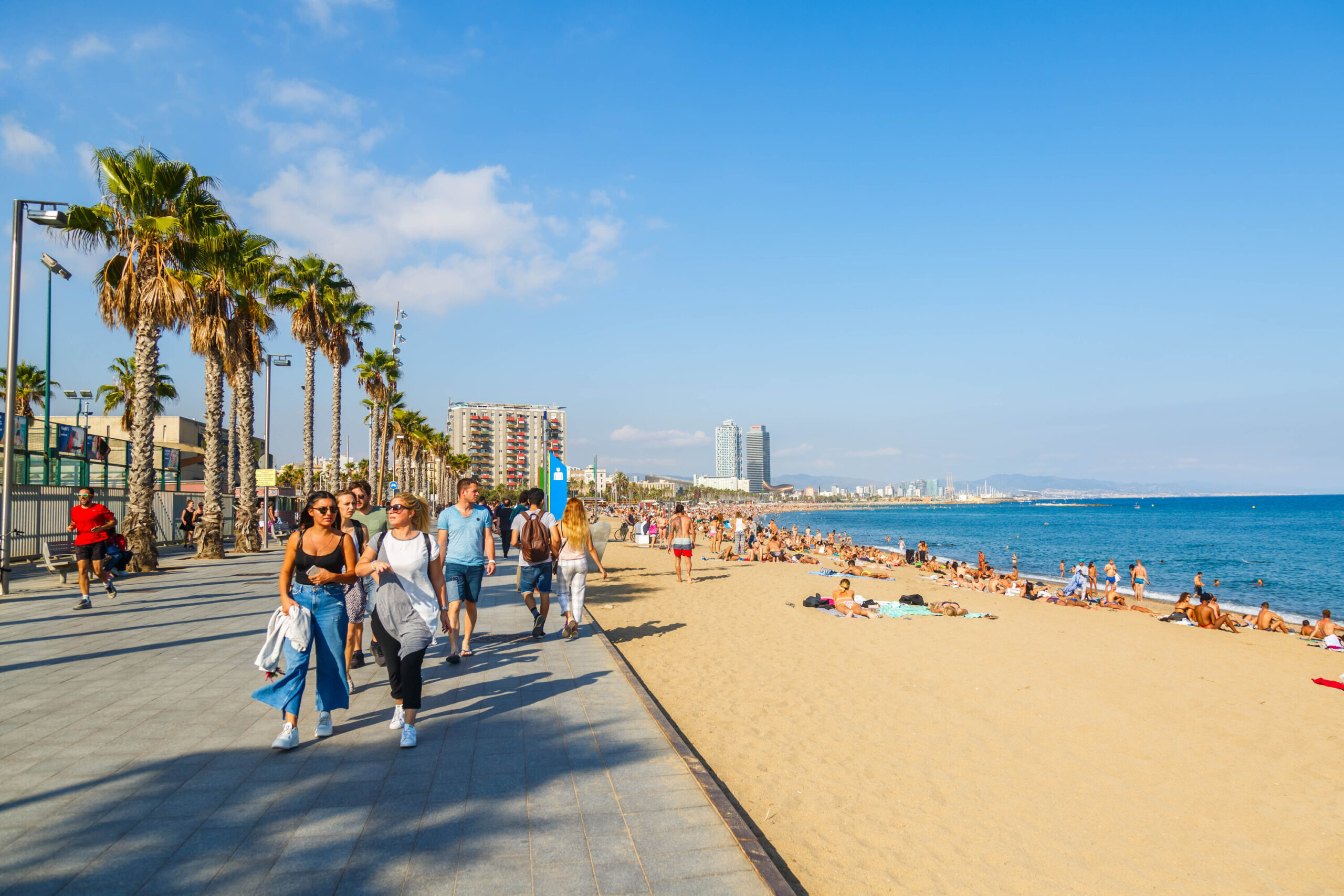


Even without its beaches, Barcelona would still be one of Europe's coolest destinations, thanks to its inventive cuisine, one-of-a-kind architecture, and legendary nightlife.
But the cherry on top is a three-mile stretch of almost unbroken golden sand, so woven into the heart of the city that it feels like everyone's backyard.
Along most of the seafront there's a carnival atmosphere all year round, with vendors tiptoeing between sunbathers to sell cold cans of beer, beach blankets, and trinkets.
Partner links: booking through them supports the blog at no extra cost to you.
On the pedestrian promenade that runs the length of the coast, musicians, street performers, and sand sculptors compete for tips amid a steady flow of tourists and locals from this part of Spain.
Weaving around them are bikes, Segways, skateboards, motorized scooters, rickshaws, roller skates, and just about every other wheeled contraption you can imagine.
The most popular beaches are just a 15-minute walk from the maze of alleyways in Barcelona's oldest quarter, while the quieter beaches to the north are easy to reach by public transport.
And there's something here for every kind of beachgoer, from the party animal and the family to the sun worshipper who just wants to relax with a book.
Here's your guide to finding your kind of beach in the Catalan capital:
Barcelona is a city of beaches. Golden sands and 300 sunny days a year mean the Barcelona coastline keeps a carnival atmosphere all year long. Here's our guide to the city's best beaches.
Barceloneta and Sant Miquel
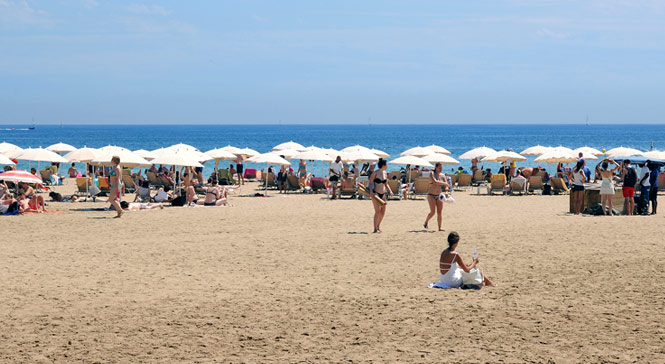
Whichever beach you choose, the Mediterranean sun shines around 300 days a year, so you'll always have at least a little company. The beaches start coming to life in April, when dozens of chiringuitos, or beach bars, pop up along the shoreline and vendors begin renting out umbrellas, sun loungers, and sports gear.
One more perk: a public toilet or an open-air shower is never too far away.
Barceloneta beach sits right in the middle of all this, and it's where to head if you're in the mood to party.
Walk down from the metro station of the same name along Passeig de Joan de Borbo, past the superyachts moored in the harbor, and you'll arrive at Sant Miquel. It won't take long to notice the upbeat music playing among the tanned tourists who've spent too much time waving off vendors offering mojitos.
Barceloneta lies north of a 30-foot structure made of steel and glass cubes, a sculpture called "The Wounded Shooting Star."
Both beaches are part of one continuous strip, but the upper half takes its name from the neighborhood next door. Traditionally a fishing quarter, it's now struggling with a glut of short-term rentals, which explains both the crowds and the blue-and-yellow flags of neighborhood pride hanging from nearly half the balconies.
That tension, though, is barely noticeable on the beach, where a calm mood holds despite the crowds of tourists.
The action carries on into the night, when groups of young locals show up for an affordable evening under the floodlights, strumming guitars and sipping beer.
Sant Sebastia
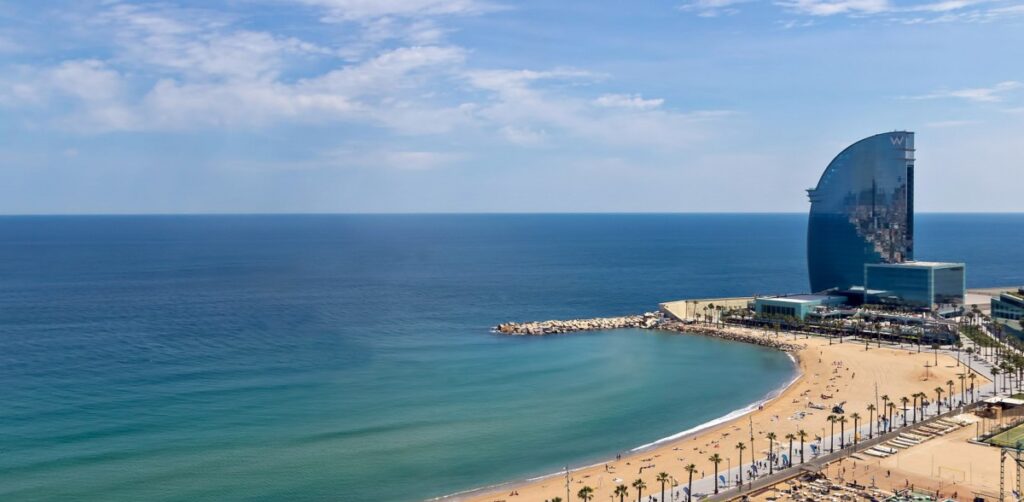
This beach is close to the heart of the action, just south of Barceloneta beside the sail-shaped W Hotel, yet on the whole it's quiet enough to hear the gentle wash of small waves over the ringing of bicycle bells on the promenade.
Sant Sebastia is one of the oldest swimming spots in the city, and the Club Natacio here began hosting bathing for the elite in the early 20th century. That history, along with the convenience of a central location, draws older people and families in the mornings. By midday, when the sun reaches its peak, the crowd grows livelier.
The beach is also home to the Pukas surf school, a sign that after a storm surfers come here to battle for the modest waves. On calmer days, the horizon is dotted with paddleboarders and windsurfers. Keep in mind that this is a clothing-optional spot, so you'll see a fair share of nude sunbathers who couldn't care less about the hundreds of people passing within eyeshot.
Sant Sebastia has always been liberal, in fact, and caused quite a stir when it became the city's first swimming spot where men and women were allowed to bathe together.
Somorrostro
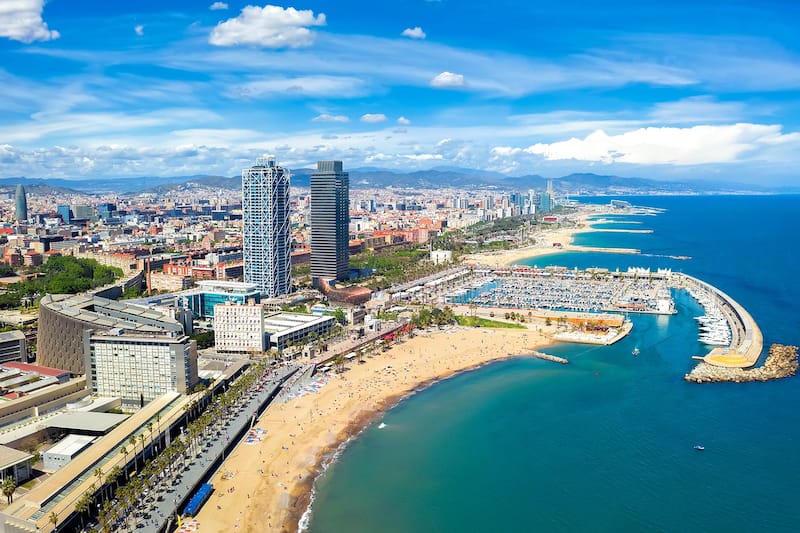
This area lies between the open exercise pier that marks the northern end of Barceloneta and the twin towers of Port Olimpic. Until the mid-20th century, Somorrostro was home to slums housing as many as 15,000 people, but today it's lined with the coast's most upscale restaurants.
A fashionable crowd relaxes on plush loungers beneath Frank Gehry's lacy bronze fish sculpture, snacking on traditional tapas and sipping sangria (try it with sparkling cava instead of wine). Just don't forget to put on a shirt and shoes before you try to step inside.
For those who'd rather skip the pricey cocktails, there are still kiosks selling drinks and ice cream, and the marina at the northern end of Somorrostro beach has a few restaurants offering better value.
There are a couple of fast-food chains and a few decent Middle Eastern spots to add some variety to your Spanish holiday diet of cured ham, olives, and fried croquettes.
Nova Icaria and Bogatell
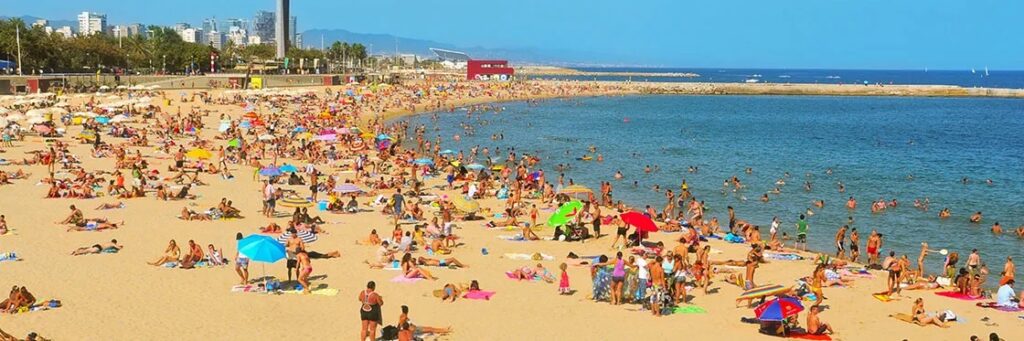
It's hard to believe these beaches were an industrial wasteland before the city tore up the coastal railway tracks ahead of the 1992 Olympic Games.
The sand was brought in from Egypt, and a hub for beach sports was born. Every summer the city sets up dozens of volleyball courts along this stretch north of Port Olimpic, but some stay up all year in Nova Icaria. They're free to use, so come early or be ready to wait. On weekend mornings you can also find lessons here.
A line of chiringuitos runs along both beaches, but the Passeig Maritim also has a few proper restaurants, where local families come to share a paella on a Sunday afternoon.
At the northern end of Bogatell is Nautica Base Barcelona, where you can take lessons in windsurfing, kitesurfing, and sailing, or rent kayaks and catamarans that set off from the pier into open water, gliding past all the swimmers. There's also a cafe there that's easy on the wallet compared with many of the other spots on the beach.
The easy access to two other metro stops and the range of activities make these spots a good option for families without a car, or for holidaymakers looking for a calmer vibe than the packed beaches to the south.
Mar Bella
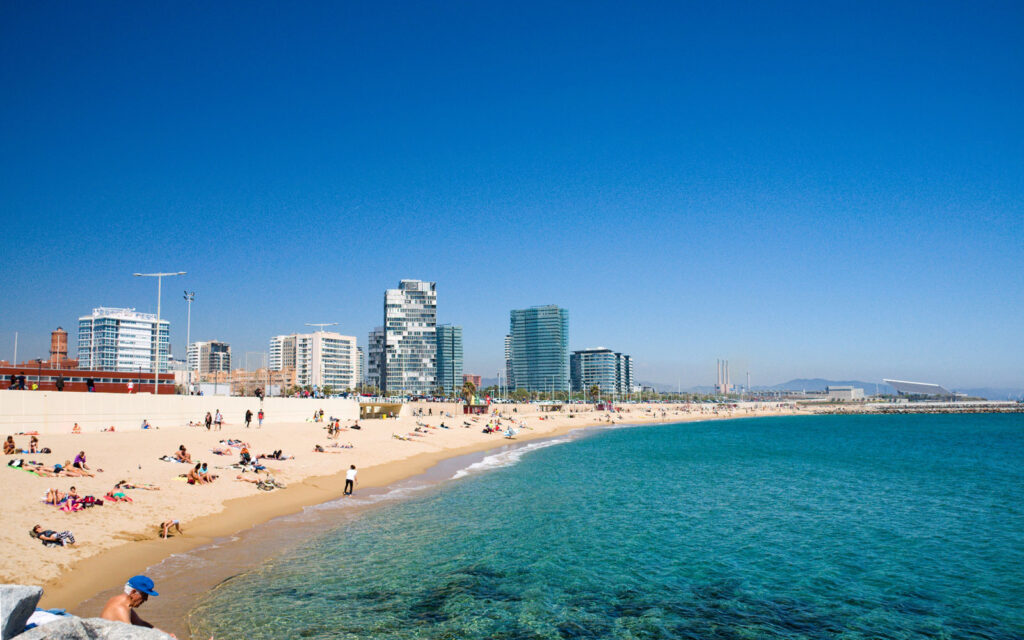
From Mar Bella and further north, things tend to get even quieter, cleaner, and lighter on beach vendors. Both Mar Bella and Nova Mar Bella, one beach to the north, have been recognized as Blue Flag beaches for their quality. They're also less tied to the city, though still well served by public transport.
On top of the cleanest sand and the clearest stretch of water in the city, Mar Bella offers yet another example of the city's liberal attitude. At one end of the beach there's a rope pyramid for kids and a small playground with a slide, and at the other, a nudist section.
Unlike Sant Sebastia, an artificial hill separates the nudist part of the beach from the pedestrian promenade, which runs alongside a park where you can find some afternoon shade. The park has a network of skateboard ramps, used mostly by kids on scooters, which always makes for good people-watching.
This beach also draws gay sunbathers, and every summer the Chiringuito BeGay beach bar opens here. But it's a mixed crowd, so everyone's welcome.
Nova Mar Bella and Llevant
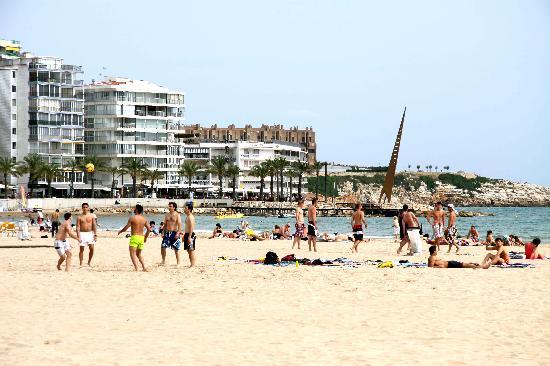
Amenities like restaurants get a little sparser on these northern beaches, though there are still toilets and showers. But what's lacking in services is made up for in parking. A 15-foot wall separates the beach from the parking lots and Barcelona's most modern towers, so it's still easy to focus on the clear Mediterranean.
Beyond how simple it is to get the kids down to the shore, other attractions make this beach an ideal spot for a family with a car to spend the whole day. In the morning you can visit Bosc Urba, Catalan for "urban forest," a covered adventure park in the Forum complex with zip lines, rope swings, and rope bridges.