

The optimal one-week Andalusia itinerary runs as a loop: fly into Malaga, head to Granada for the Alhambra, then Cordoba and its Mezquita, give Seville two full days, and swing back to the coast through Ronda and the white villages. That is roughly 750 kilometres in a circle, and this exact order keeps the driving efficient with no dead legs. The region's biggest trap is not distance but tickets: Alhambra slots sell out weeks ahead in high season, so book them before your flights, not after.
Seville: how many days do you really need?
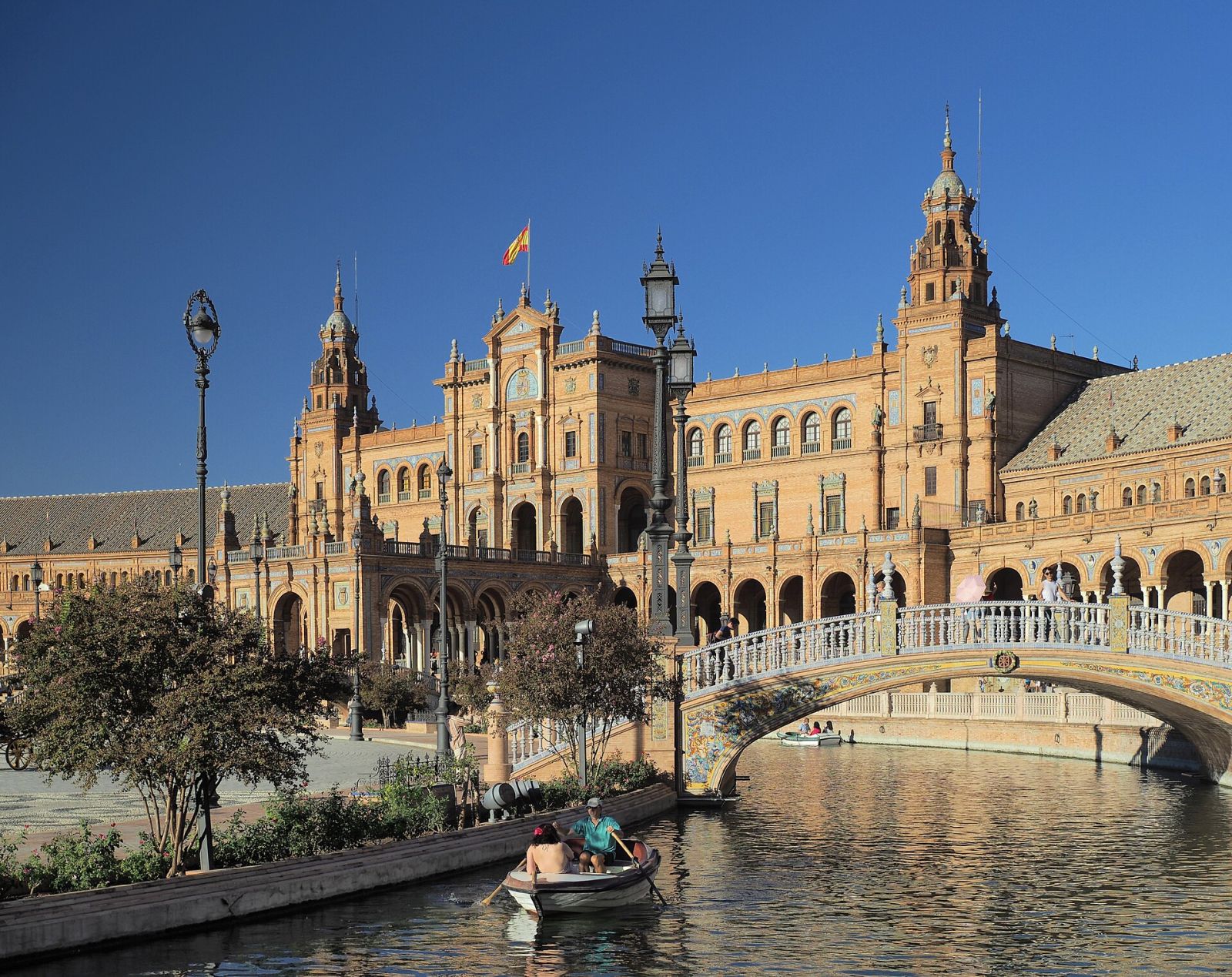
Seville is the biggest city on the route, and half a day is nowhere near enough. The essential minimum: the cathedral, third largest in the world, with the Giralda bell tower you climb via ramps rather than stairs (they were built so the muezzin could ride up on horseback). Next door sits the Real Alcazar, a royal palace of Moorish courtyards that stood in for Dorne in Game of Thrones. Walk-up queues eat an hour or more, so book both online for a specific time slot.
Save the second day for Plaza de España with its ceramic province benches, the Triana quarter across the river where azulejo tile workshops still operate, and an evening of flamenco. Seville is the birthplace of the art form, and one simple rule applies: the smaller the venue, the better the show. A 40-seat tablao in Triana beats a 500-seat tourist production every time.
Granada and the Alhambra: why tickets decide everything
The Alhambra caps daily visitor numbers, and entry to the Nasrid Palaces is tied to a half-hour slot: arrive late and you are not getting in. In high season tickets vanish two to three weeks before the date, earlier still around holiday weekends. Buy only from the official Alhambra ticket office: resellers flog the same ticket at double or triple the price. If your date is gone, plan B exists: night visits to the palaces, or combined tickets covering the Generalife gardens without the Nasrid interiors.
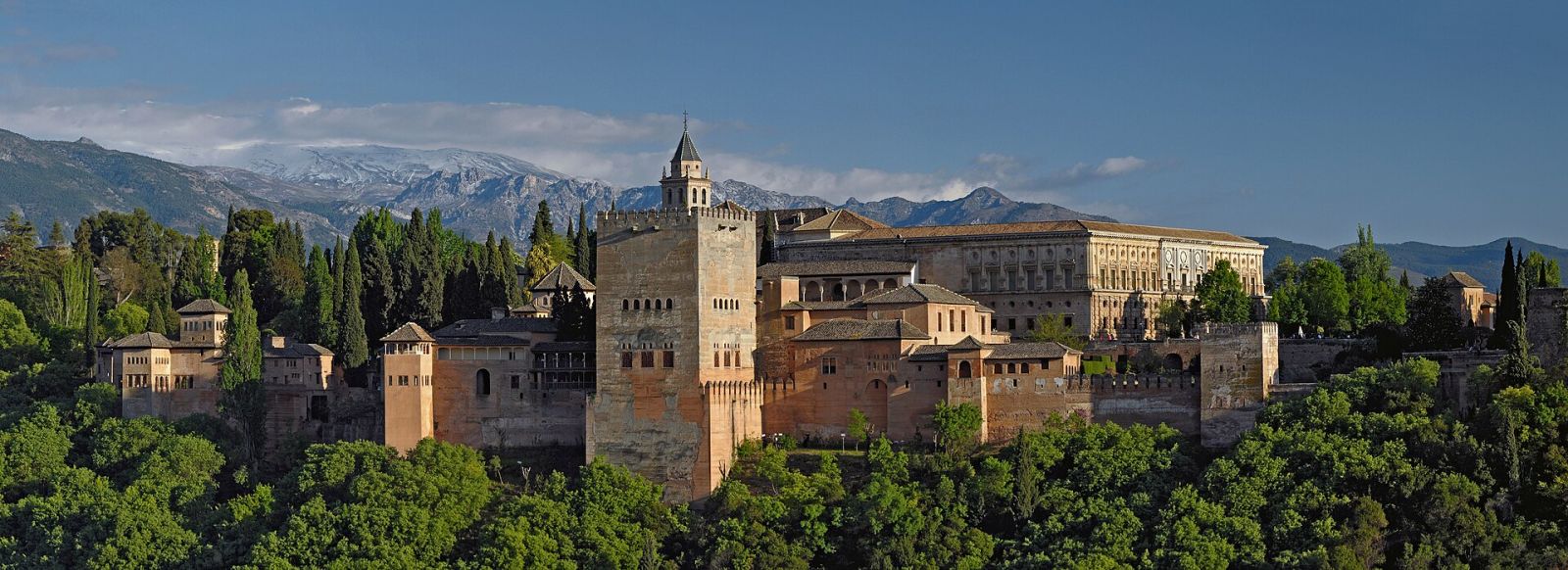
Allow at least three hours for the complex, ideally four: the Nasrid Palaces with their carved ceilings and Court of the Lions, the Alcazaba fortress overlooking the whole city, and gardens where water runs along the stair railings. Granada itself is no mere transit stop either: the Albaicin, the old Arab quarter, has the San Nicolas viewpoint facing the floodlit Alhambra, and the city's bars still serve a free tapa with every drink, a tradition most of Spain abandoned long ago. A full day plus an evening is the honest quota.
Cordoba: the Mezquita in half a day
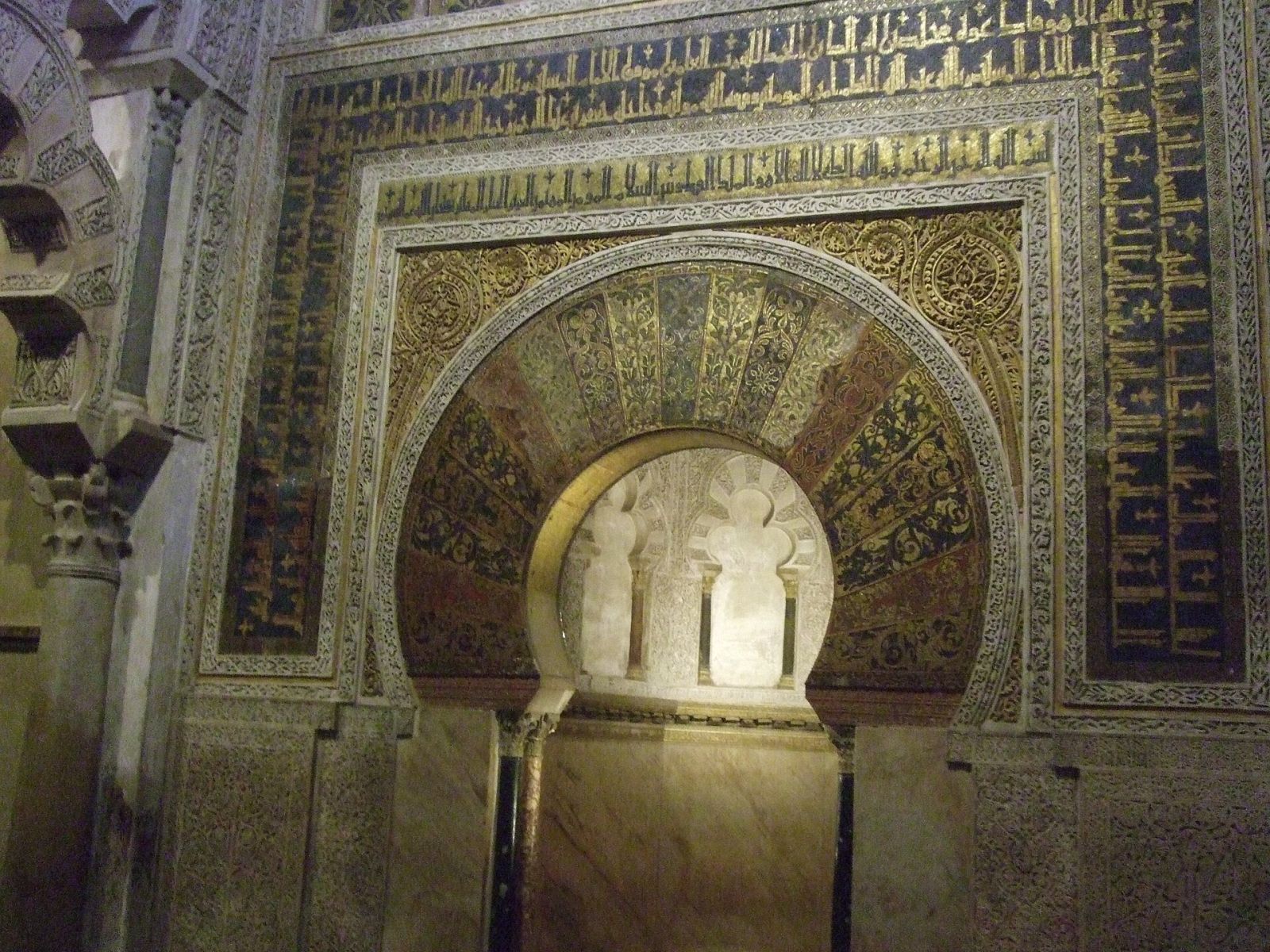
Cordoba sits conveniently between Granada and Seville, and plenty of travellers blast through it in two hours. A mistake, though a full day is not required either. The core of the visit is the Mezquita-Cathedral: a forest of some 850 columns under the striped arches of the former mosque, with a Christian cathedral planted in the middle of it in the 16th century. The effect of that combination is strange and powerful, and it exists nowhere else. From Monday to Saturday, 8:30 to 9:30, entry is free and groups are not admitted, with last entry at 9:20. Still, check the official site before you go.
After the Mezquita you still have the Juderia, the old Jewish quarter of whitewashed patios, the Roman bridge over the Guadalquivir and, if you land in May, the Patio Festival, when residents open their flower-drenched courtyards to everyone. Half a day plus lunch, then move on.
Ronda and the white villages: why leave the highway
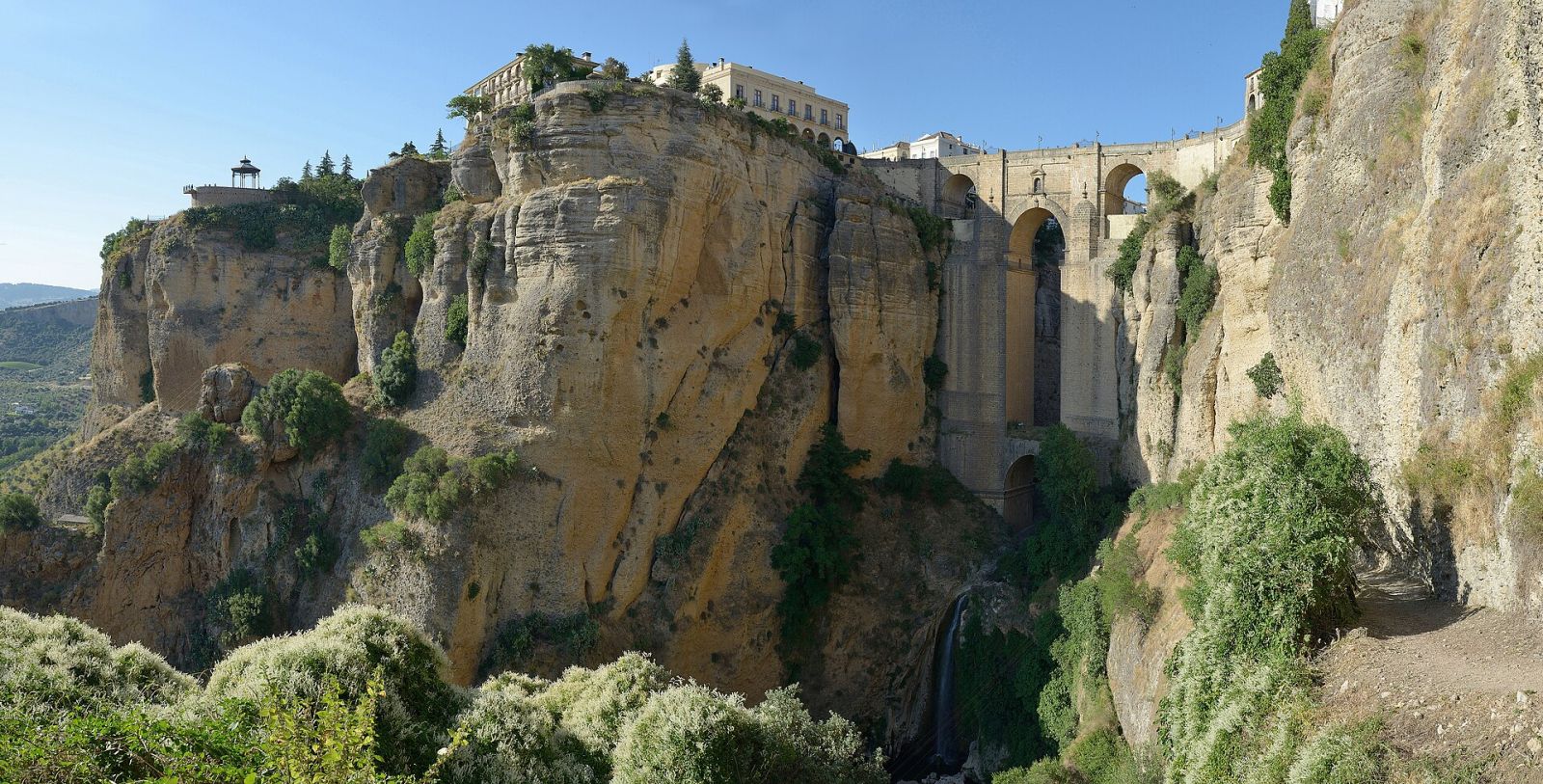
Ronda perches on the edge of the Tajo gorge, more than a hundred metres deep, and the Puente Nuevo bridge across it is the single most photographed spot in Andalusia. Beyond the bridge there is one of the country's oldest bullrings and a walking path to the gorge floor, where the bridge looks even more dramatic. Half a day covers it, but staying the night pays off: once the day-trip buses leave, the town becomes yours.
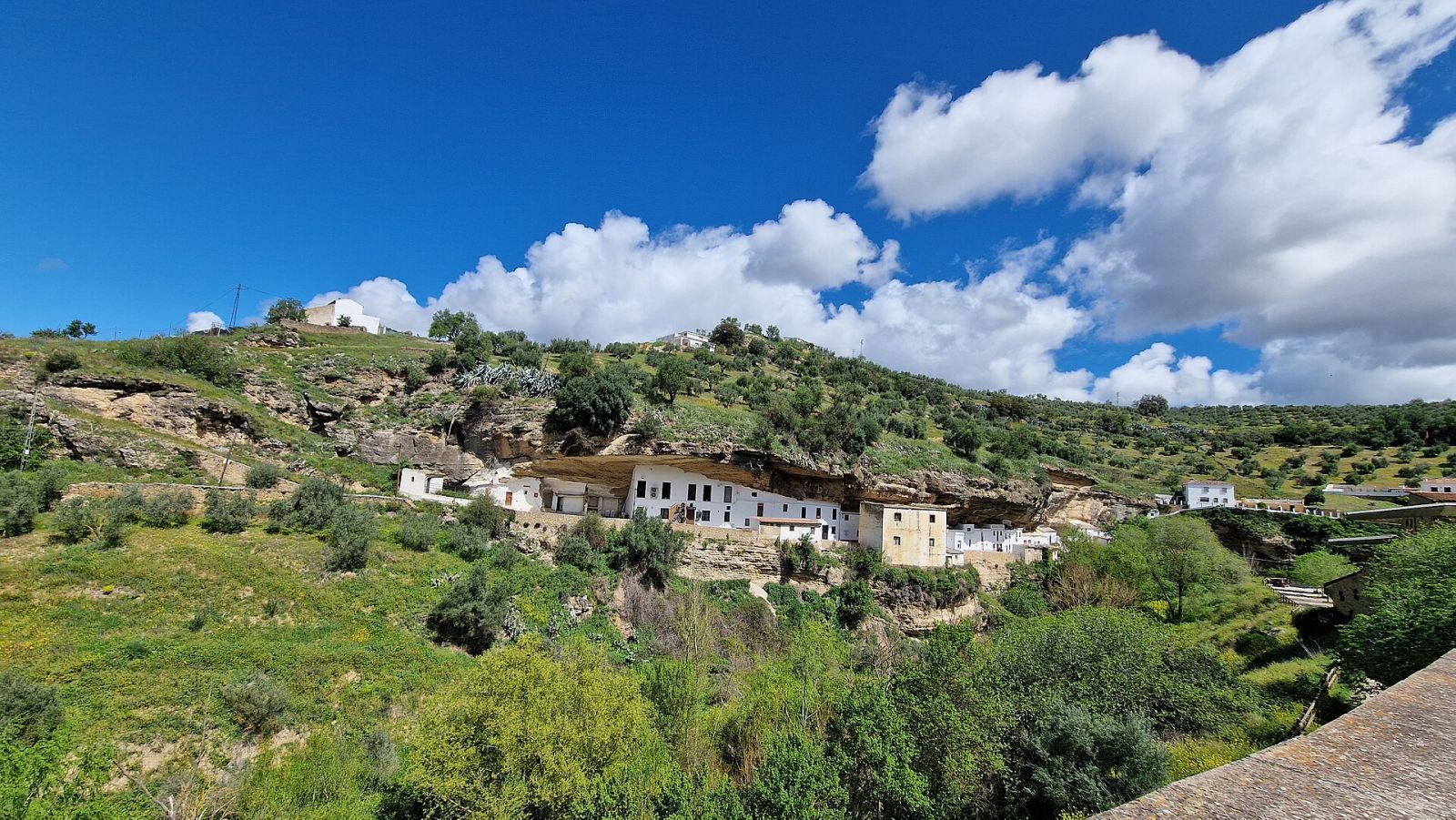
The white villages, pueblos blancos, are scattered between Ronda and Cadiz. Touring all of them makes no sense; pick two or three:
- Setenil de las Bodegas: streets cut directly under an overhanging cliff, houses roofed by raw rock. The most unusual village of the lot.
- Zahara de la Sierra: a white cascade of houses under a Moorish tower above a turquoise reservoir. Postcard material.
- Grazalema: gateway to the natural park of the same name, statistically the rainiest spot in Spain, which is exactly why it is the greenest.
Roads here are winding but well surfaced. Without a car this leg falls apart: buses between villages run once or twice a day.
Malaga: more than an airport
Malaga is usually treated as a transport hub, unfairly. Over the past decade the city has assembled some thirty museums, including the Picasso Museum in the Buenavista palace (Picasso was born here) and a branch of Paris's Centre Pompidou in a glass cube by the port. Above the city stands the Moorish Alcazaba fortress, linked by a wall to Gibralfaro castle with views over port and bullring alike. Add city beaches and espeto, sardines grilled on skewers at beachfront chiringuitos, and a day at the start or end of the loop is time well spent.
The 7-day itinerary: a ready-made plan
| Day | Where | What you cover |
|---|---|---|
| 1 | Malaga | Arrival, Alcazaba, Picasso Museum, evening at the port |
| 2 | Granada | Morning transfer (1.5 h), Albaicin, sunset at San Nicolas |
| 3 | Granada, Cordoba | Alhambra on a morning slot, afternoon transfer to Cordoba (2.5 h) |
| 4 | Cordoba, Seville | Mezquita in the morning, Juderia, evening transfer to Seville (1.5 h) |
| 5 | Seville | Cathedral and Giralda, Alcazar, flamenco in Triana |
| 6 | Seville, Ronda | Plaza de España, transfer to Ronda (1.5-2 h), the gorge, overnight |
| 7 | White villages, Malaga | Setenil and Zahara en route, back to the airport (2 h) |
The plan works by car or by public transport, with one adjustment: without a car, drop days 6-7 and swap Ronda for the fast Seville-Malaga train plus an extra day on the coast. Car hire in Malaga is reasonably priced, from around 30-40 euros a day for a compact in season. City-centre parking is paid and stressful, so in Seville and Granada leave the car at edge-of-town lots.
When to go, and what about the heat?
The best months are April-May and late September through October. Warm, green, and the sea still holds 21-22°C in October. March and November work too, allowing for shorter days and a chance of rain. Winter is mild at 15-17°C by day, and it is the cheapest season with empty queues.
Summer is another story, told here without varnish. Seville and Cordoba are the hottest cities in Europe: in July and August 40°C is not an anomaly but the weekly forecast, and records have reached 46. Summer life shifts to morning and night; from two to six in the afternoon the streets empty out, and visitors should copy the locals: sights before noon, siesta in air conditioning, walks after eight. If summer is your only window, base yourself in Malaga: the coastal breeze knocks off a good five degrees, and life there is noticeably easier than in the baking Guadalquivir valley.
A packed route does not mean inflated prices: Andalusia remains cheaper than Barcelona or Madrid, and a proper menu del dia lunch runs about 12-15 euros, though check current prices before you travel. One last thing: resist cramming Cadiz and Jerez into the same week. Both are wonderful, but they are a reason for a second trip, not items 8 and 9 on a list with no room to breathe.