

A few days before Christmas Eve, in many Czech flats the bathtub stops being a bathtub: a live carp swims in it, bought on the street straight out of a wooden tub. The children have usually named it by then, and on 24 December the family faces a small drama, because eating František has become much harder. The custom is slowly fading, yet it explains better than anything that Christmas in Czechia is celebrated above all at home and at the table, and a visitor should know which of those home rituals spill out onto the street.
The carp: from a tub on the pavement to the bathtub
Street sales of Christmas carp do not start in early December, as many assume, but roughly a week before Christmas Eve, with the busiest days falling on 18 to 23 December. Sellers set up large tubs outside supermarkets and on squares, scoop the fish out with a net, weigh them and gut them on request. Some buyers still carry their carp home alive in a bag of water. In recent years the tubs have become noticeably rarer: several big supermarket chains no longer allow such sales outside their shops, Prague has run campaigns against selling live fish, and more and more people buy ready fillets. Others go the opposite way, rescue their carp and release it into a river, and local news reports such stories every year.
A carp scale goes under the plate at Christmas dinner and then into the wallet for the whole year, so that money never runs out. Czech wallets therefore smell faintly of fish in January, and nobody complains.
The Generous Day: fish soup, breaded carp and the golden piglet
Czechs call 24 December Štědrý den, the "generous day". By old custom people fast during the day, and anyone who holds out until dinner is supposed to see a golden piglet. Parents still promise it to their children, and children still stare hard at the wall. Dinner opens with fish soup made from the head and trimmings of that same carp, followed by breaded carp with potato salad, and every family considers its own salad recipe the only correct one.
After dinner comes Ježíšek, the little Jesus. He, not Santa, brings the presents, and does so unseen: an adult rings a little bell, the children run to the tree, and the parcels are already waiting underneath. Children write letters to Ježíšek in advance, and the best-known address is Ježíškova pošta in the small town of Boží Dar in the Ore Mountains, where envelopes get a special postmark. One practical point for visitors: large shops close at noon on 24 December and stay shut on the 25th, while restaurants on Christmas Eve are often closed or take bookings only.
A shoe, an apple and little boats: Czech Christmas Eve fortune-telling
An unmarried young woman stands with her back to the door and throws a shoe over her shoulder. If the toe lands pointing at the door, she will marry and leave her parents' home within the year; if the heel does, she will have to wait. An apple is cut across the middle: a star of seeds promises a healthy year, a cross is a bad sign, and at that point the adults usually cut another apple quickly, "just to be sure".
Lead pouring was once the highlight of the evening: molten metal was poured into cold water and the shape read like a horoscope. Lead fortune-telling kits have long been restricted in the European Union because lead is toxic, so people now pour wax instead, and the imagination works just as well. The loveliest custom involves walnuts: tiny candles are set in half shells and floated in a bowl of water. Whoever's boat sails furthest will travel, and whoever's hugs the rim will stay at home. Czechia's official tourism portal describes all of these customs too, which shows they are living family games rather than museum curiosities.
Mikuláš with a devil and an angel on 5 December
Long before Christmas Eve, on the evening of 5 December, trios roam the streets: Mikuláš in bishop's robes with a crozier, an angel in white and a devil with a chain and a sack. Children have to recite a poem or sing a song, and then they get sweets and fruit, while naughty ones are jokingly threatened with coal or potatoes. The devil rattles his chain for effect, the angel calms everyone down, and the youngest often cry while clinging to their mothers. In Prague the easiest places to meet these trios are Old Town Square and Charles Bridge. Ukrainians will recognise the story: in Ukraine St Nicholas comes on the night before 6 December, only without a devil in tow.
Vánočka and cukroví: baked weeks ahead
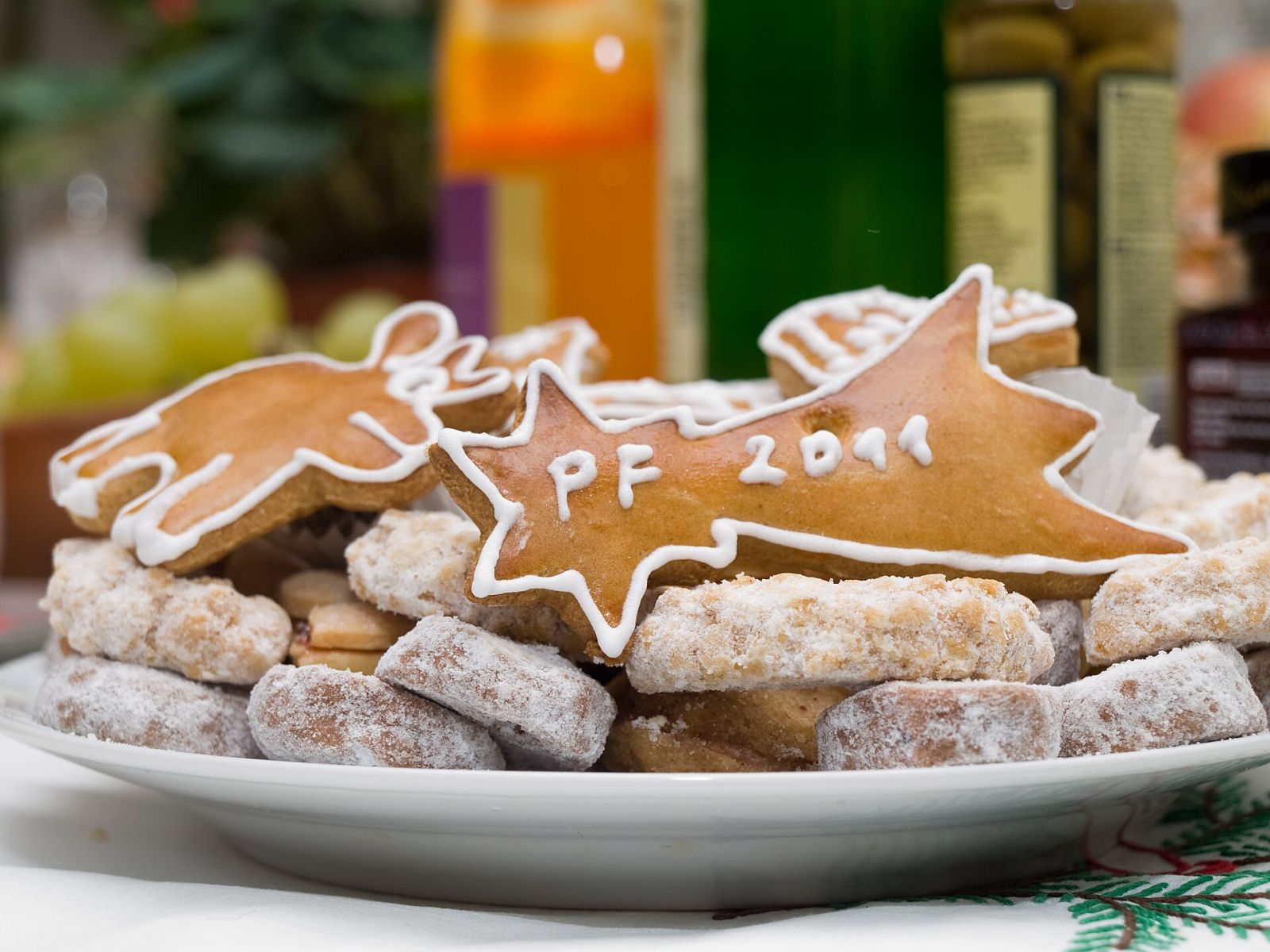
Vánočka looks like a big plaited loaf with raisins and almonds, braided from several strands in several tiers so it does not fall apart in the oven. A cracked vánočka is considered a bad omen, so bakers worry about it more than about the carp. Cukroví, the Christmas biscuits, are baked weeks in advance, and a serious home baker turns out a dozen kinds or so: vanilla crescents, Linzer rounds with jam, "beehives" filled with rum cream. They are kept in tins, offered to guests and swapped with neighbours. For more of what to eat in the country, see our guide to food in Czechia.
Markets beyond Prague: Brno, Olomouc and Český Krumlov
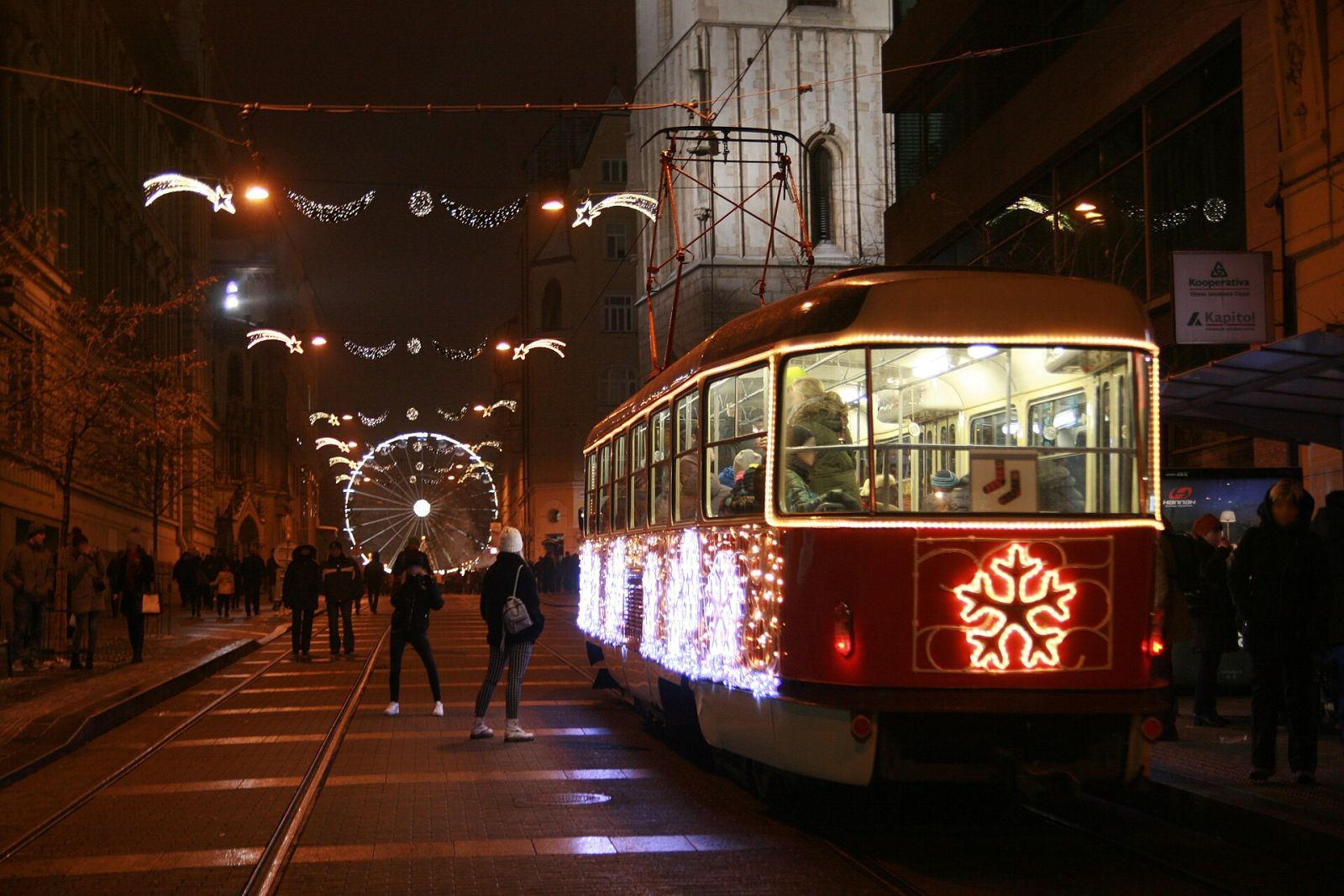
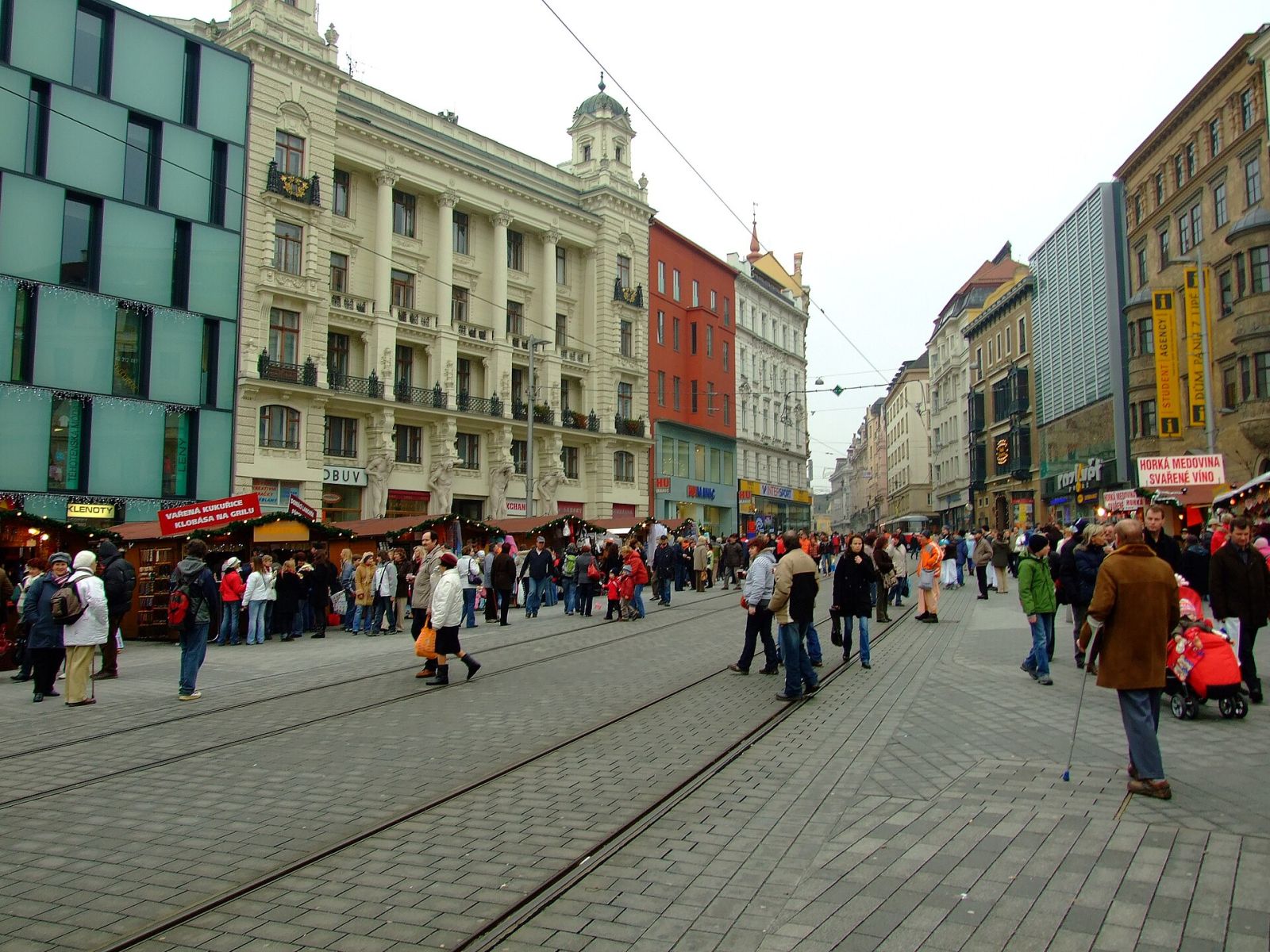
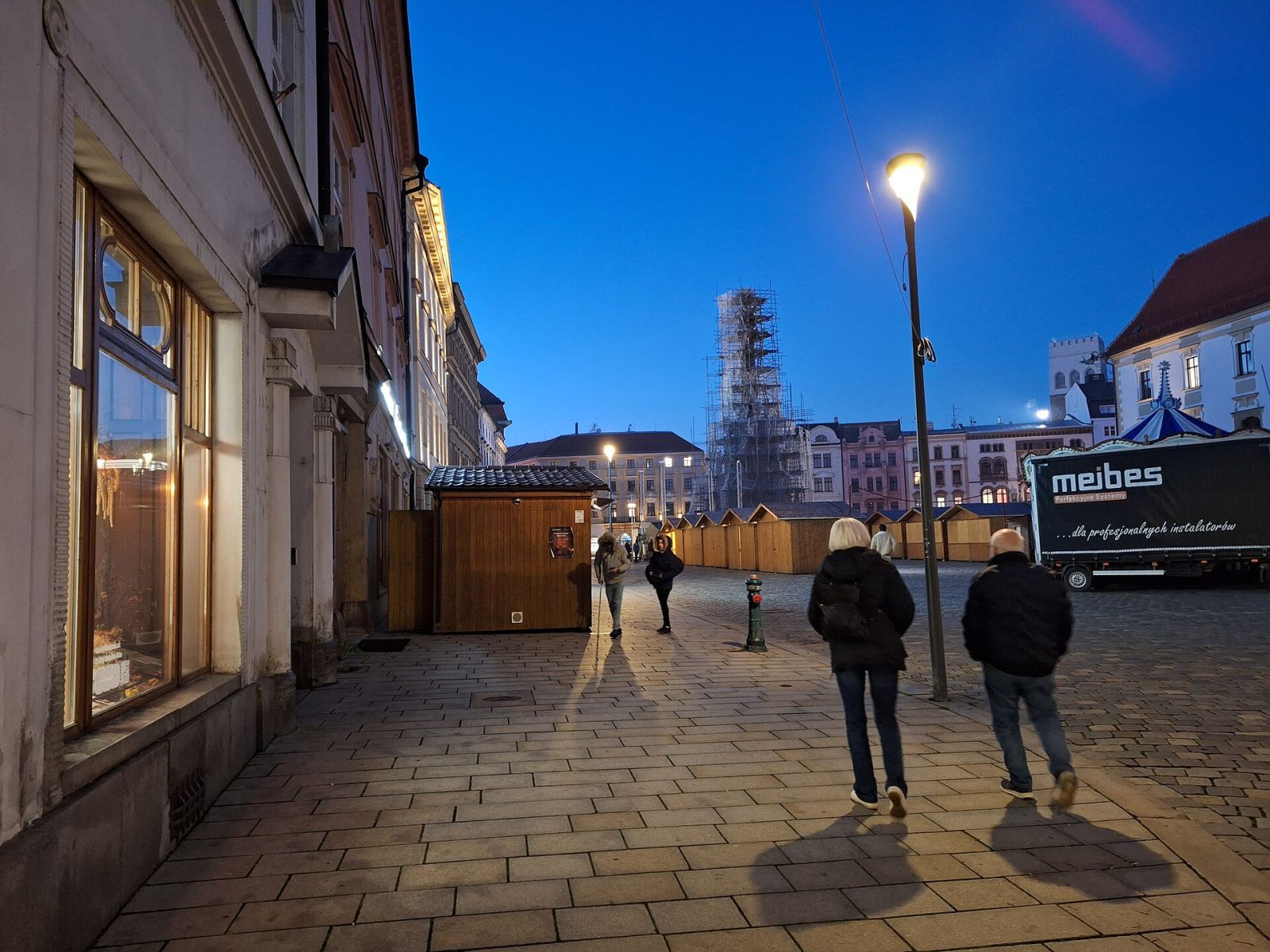
Prague's markets are the best known, and they have a guide of their own: Prague's Christmas markets. Elsewhere, though, the mood is often calmer and prices lower. In Brno the markets spread over several central squares, from Náměstí Svobody to Zelný trh, running roughly from late November to 23 December, and after work half the city gathers there with mugs of svařák. In Olomouc the stalls stand on the Upper and Lower Squares from late November to early January, next to the Baroque Holy Trinity Column, a UNESCO site, and this is the place to try tvarůžky, a local cheese whose smell leaves no one indifferent.
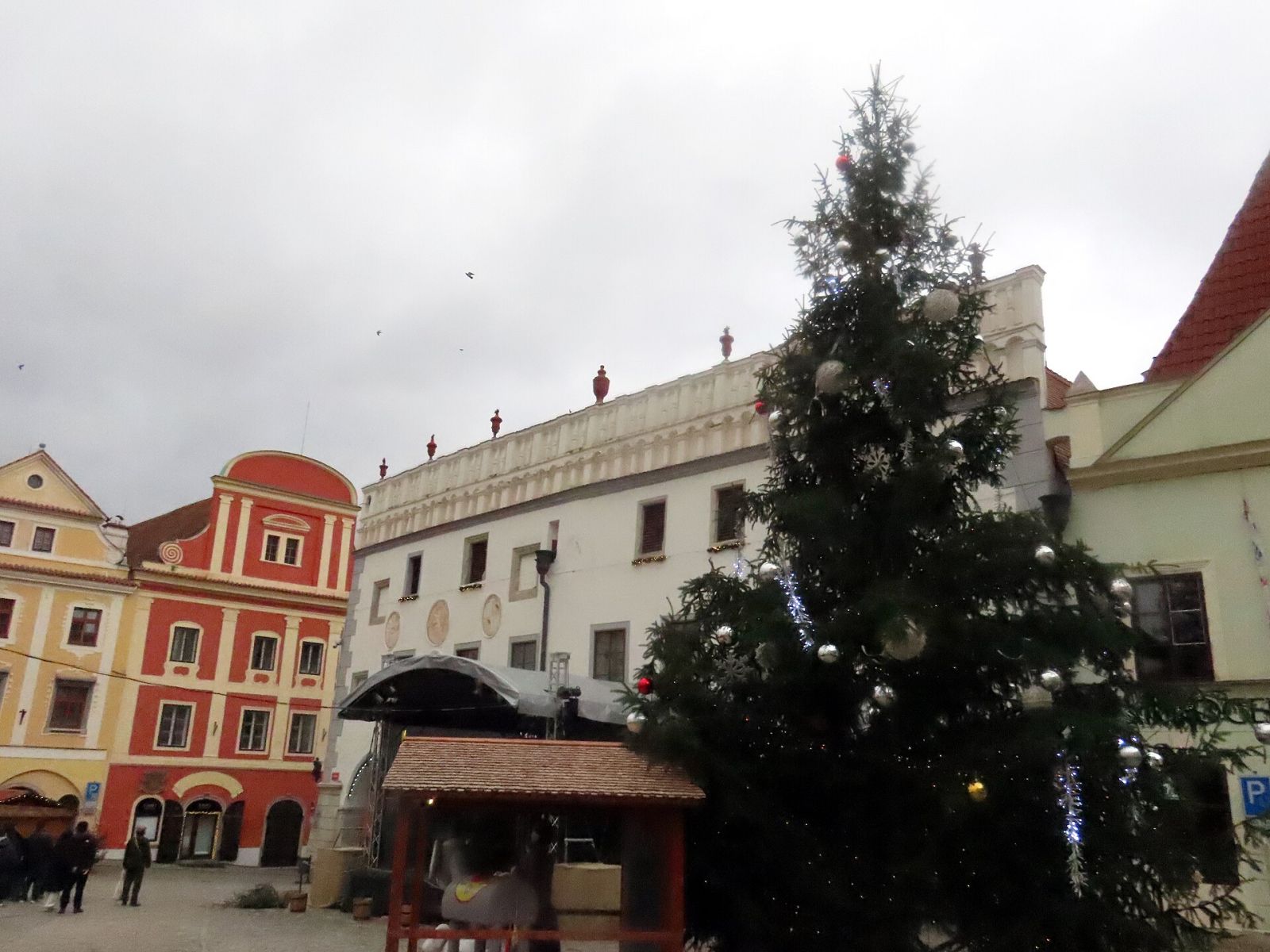
Český Krumlov suits anyone who wants a fairy-tale setting without a crowd at every step. The Advent programme on Svornosti Square runs, according to the preliminary plan, from 21 November 2026 to 6 January 2027, with details on the town's tourism website. The castle rises above the square, the Vltava loops around it, and in the evening photos from the bridge need no filter at all.
Table: Christmas in Czechia 2026/27
| Date | Tradition | What happens | Where to see it |
|---|---|---|---|
| from late November | Christmas markets | svařák, mead, cukroví at the stalls | Brno, Olomouc, Český Krumlov, Prague |
| 5 December, Saturday evening | Mikuláš, angel and devil | a poem in exchange for sweets | Old Town Square and Charles Bridge, streets everywhere |
| roughly 18-23 December | live carp sales | tubs of fish on the streets | outside supermarkets and on squares |
| 24 December, Thursday | Štědrý den | fasting until dinner, fish soup, carp with salad, gifts from Ježíšek | at home, shops close at noon |
| 24 December, evening | fortune-telling | shoe over the shoulder, apple, wax, walnut boats | the family table |
| 25-26 December | Christmas holidays | visits, cukroví, vánočka | at home, churches with nativity scenes |
| until 6 January 2027 | Advent programme | tree and stalls below the castle | Svornosti Square, Český Krumlov |
We checked this information in late October 2026. Brno and Olomouc announce exact market dates in November, so look at their websites before you travel, while the calendar of home traditions has not changed in decades: Mikuláš on 5 December, carp on the 24th, cukroví right up to New Year.