

The Canary Islands in winter offer something no other place in Europe can: a steady 20-23C in January daytime, an ocean around 20C and a 4-5 hour flight from Central European hubs. Formally this is Spain; in practice it is seven volcanic islands off the African coast, on the same latitude as the Sahara, where winter simply never arrives. That is why the Canaries are the continent's number one winter destination: people come not to gamble on a weather window but to walk around in a t-shirt, guaranteed, while it is freezing back home.
Why is it warm in January?
The secret is geography. The archipelago sits on the 28th parallel, level with Morocco and Florida, so the sun stays high all year. Atlantic trade winds and the cool Canary Current act as a natural air conditioner: they stop summer from overheating past 30C and keep winter cold out entirely. Hence the old nickname, the islands of eternal spring: the gap between January and July amounts to just a few degrees.
One nuance the brochures skip: weather depends heavily on which side of an island you are on. Northern coasts are greener but cloudier and windier; southern coasts are dry and sunny. In winter this matters: you can sunbathe in southern Tenerife while the north of the same island drizzles. That is why every major winter resort sits on a southern shore. The ocean in January runs about 19-20C: bracing but swimmable, though most people stick to heated hotel pools.
Tenerife, Gran Canaria or Lanzarote?
The three most popular islands serve three different holiday scenarios, and mixing them up is a mistake.
| Criterion | Tenerife | Gran Canaria | Lanzarote |
|---|---|---|---|
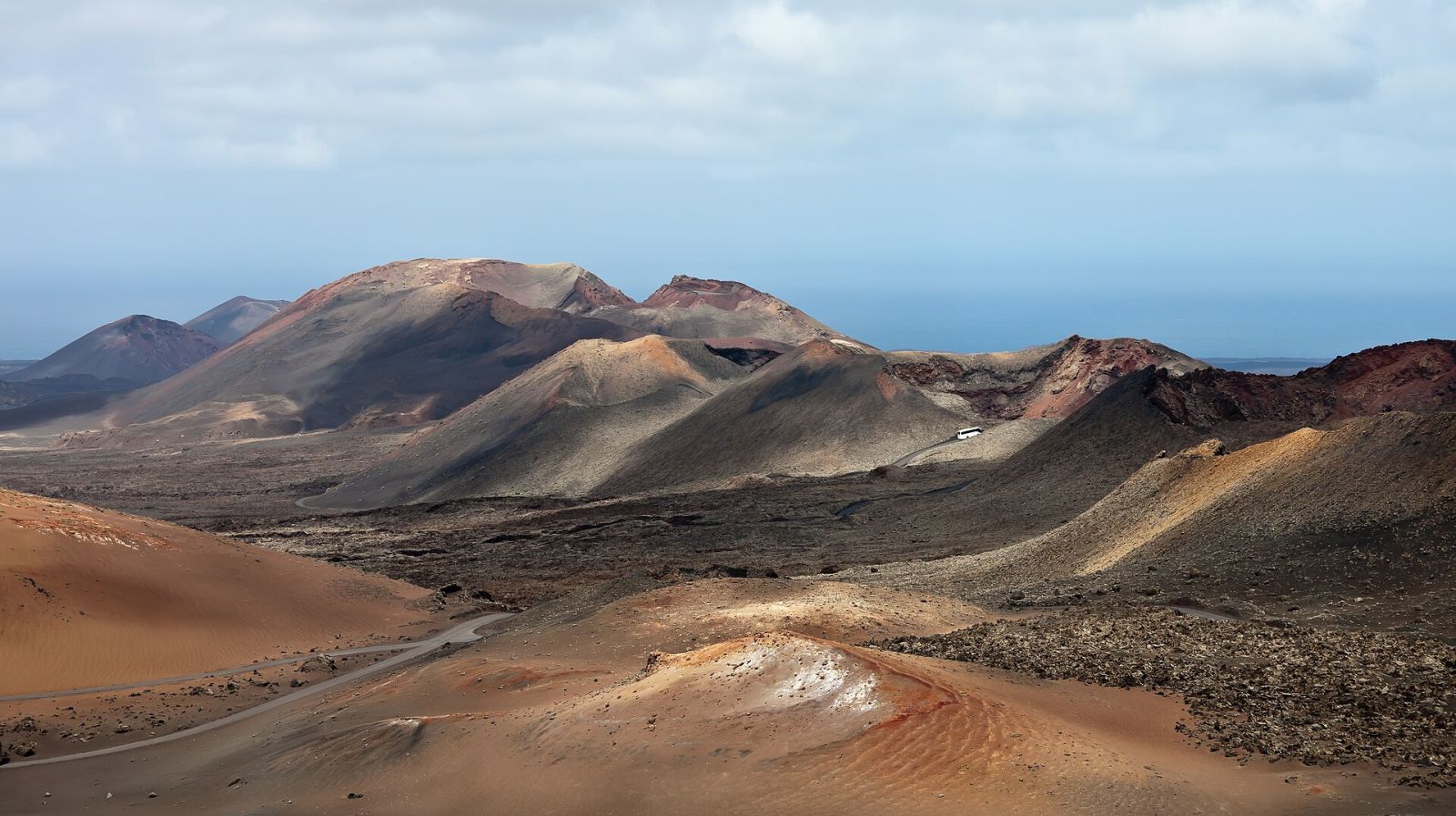
| Trump card | Mount Teide and the most varied island overall | Maspalomas dunes and the lively city of Las Palmas | Volcanic landscapes and Cesar Manrique's architecture |
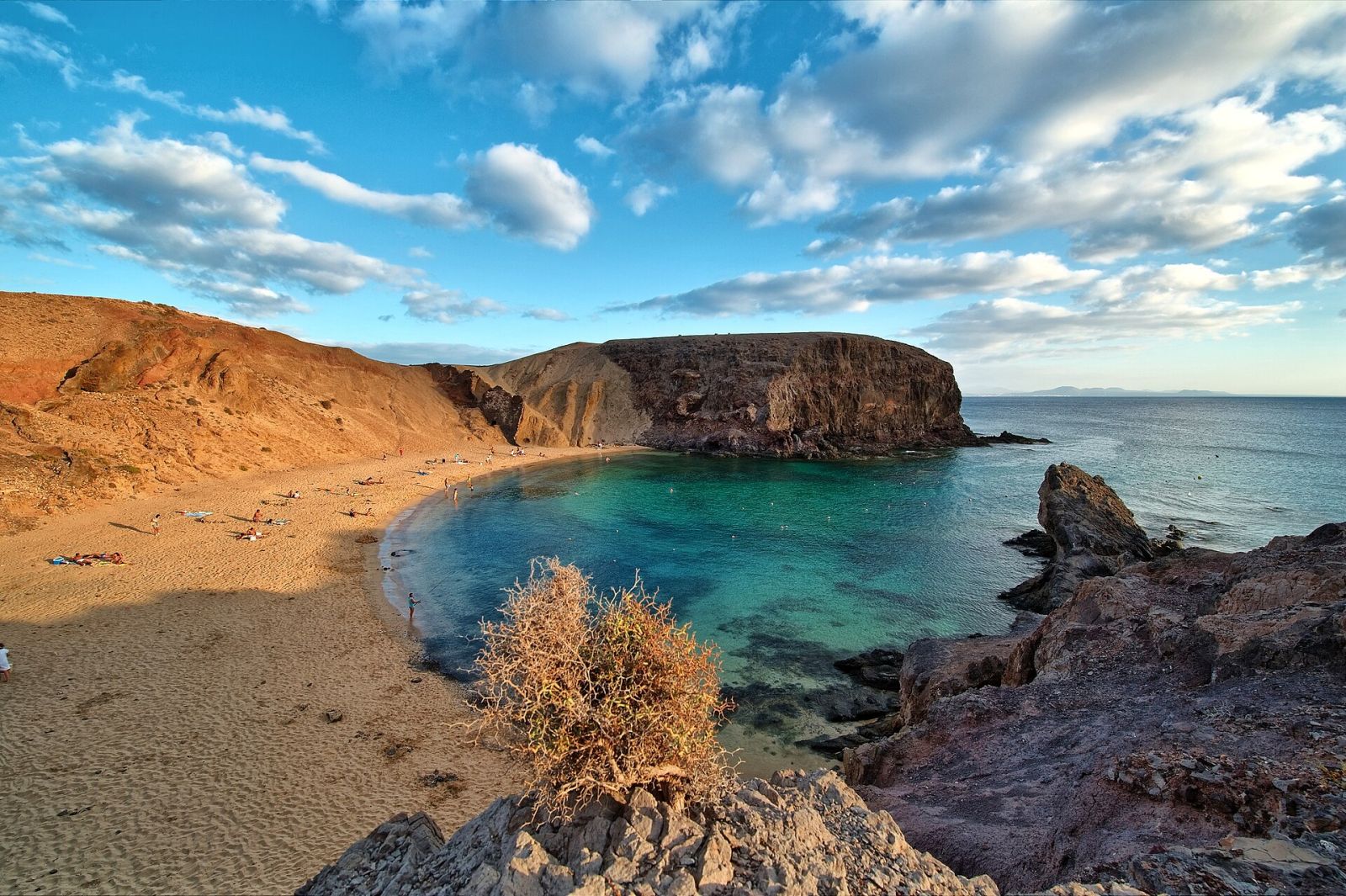
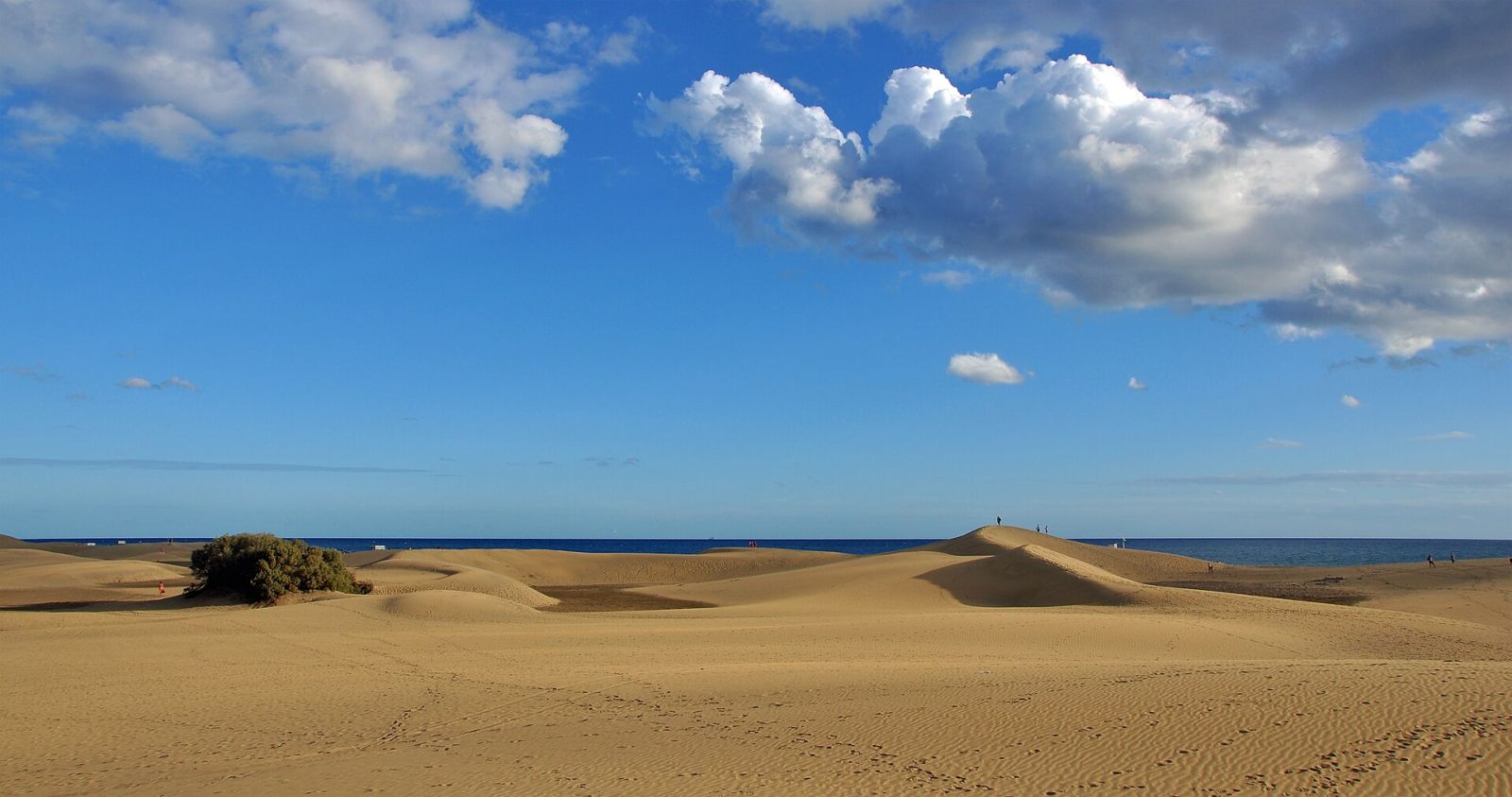
| Beaches | Black sand in the north, imported light sand in the south | Long golden beaches, dunes by the ocean | Golden Papagayo coves, half wild |
| Best for | First-timers, families, a mix of beach and mountains | Beach holiday plus real urban life | Return visitors, photographers, surfers |
| Honest downside | Southern resorts are built up and crowded | Less wow-factor nature than its neighbours | Windiest of the three, almost no greenery |
Quick advice: for a first trip take Tenerife, it packs the most into a single ticket. Gran Canaria suits those who want an actual city next to the beach: Las Palmas lives year round, and its urban beach Las Canteras ranks among Europe's best. Lanzarote is an island-stage-set: black lava fields, white villages and not a single high-rise, because the artist Cesar Manrique once capped the island's development, and it still keeps his style.
Teide: why drive uphill in the middle of a beach holiday?
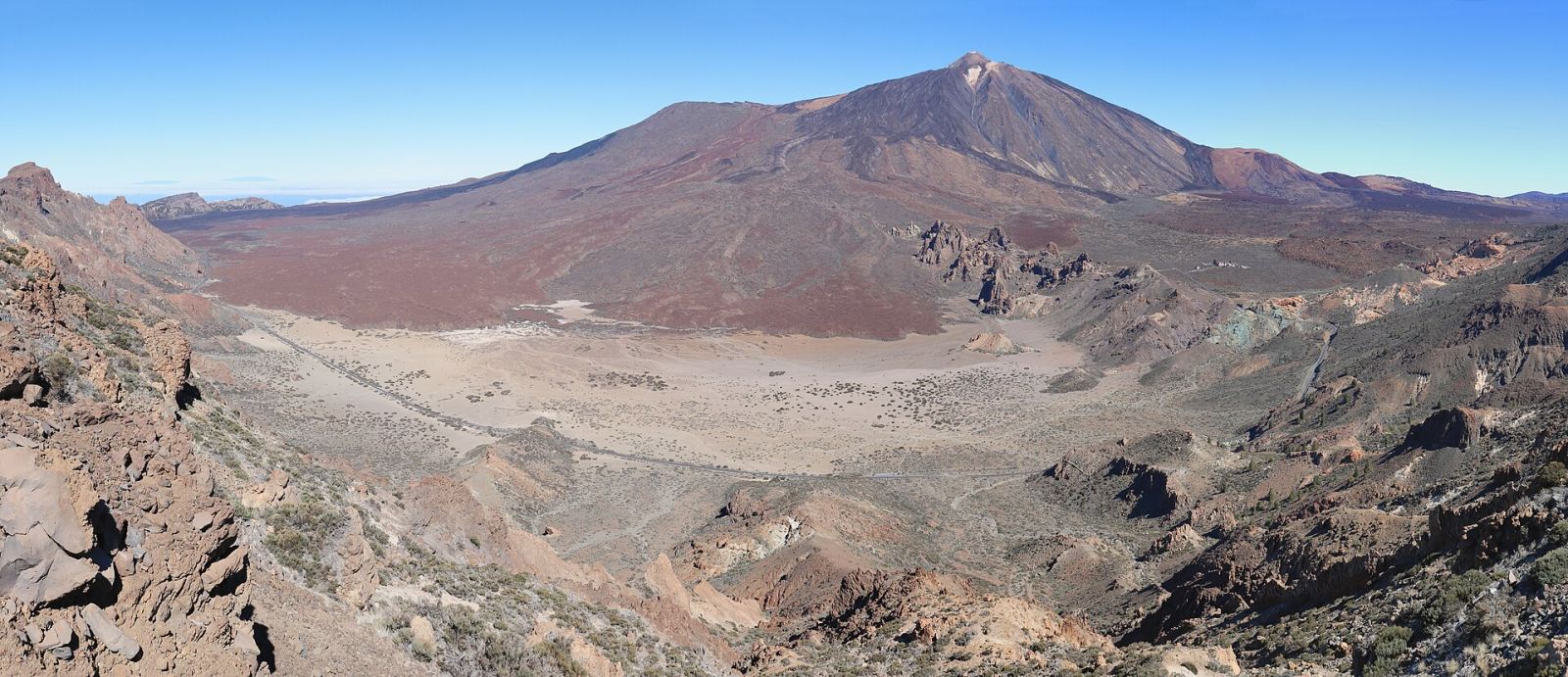
The main non-swimming adventure of the season: Teide National Park on Tenerife, home to Spain's highest peak at 3,715 metres. The drive from the southern resorts takes about an hour and a half and is an attraction in itself: switchbacks climb through the clouds and the pine belt onto the Martian plateau of the caldera. In winter the summit can carry snow, producing the strangest photo the Canaries offer: a snow-capped volcano above an island where people are sunbathing below.
The cable car lifts you to 3,555 metres; the trail to the crater itself requires a free permit that gets snapped up weeks ahead. Book cable car tickets and permits in advance on the official site volcanoteide.com. Two tips distilled from thousands of shivering tourists: bring a jacket, it can hover around zero up top even on a sunny day, and do not schedule Teide for the day after you land, the altitude is real. The park is also one of Europe's best stargazing spots, with evening astro tours running regularly.
Black sand beaches
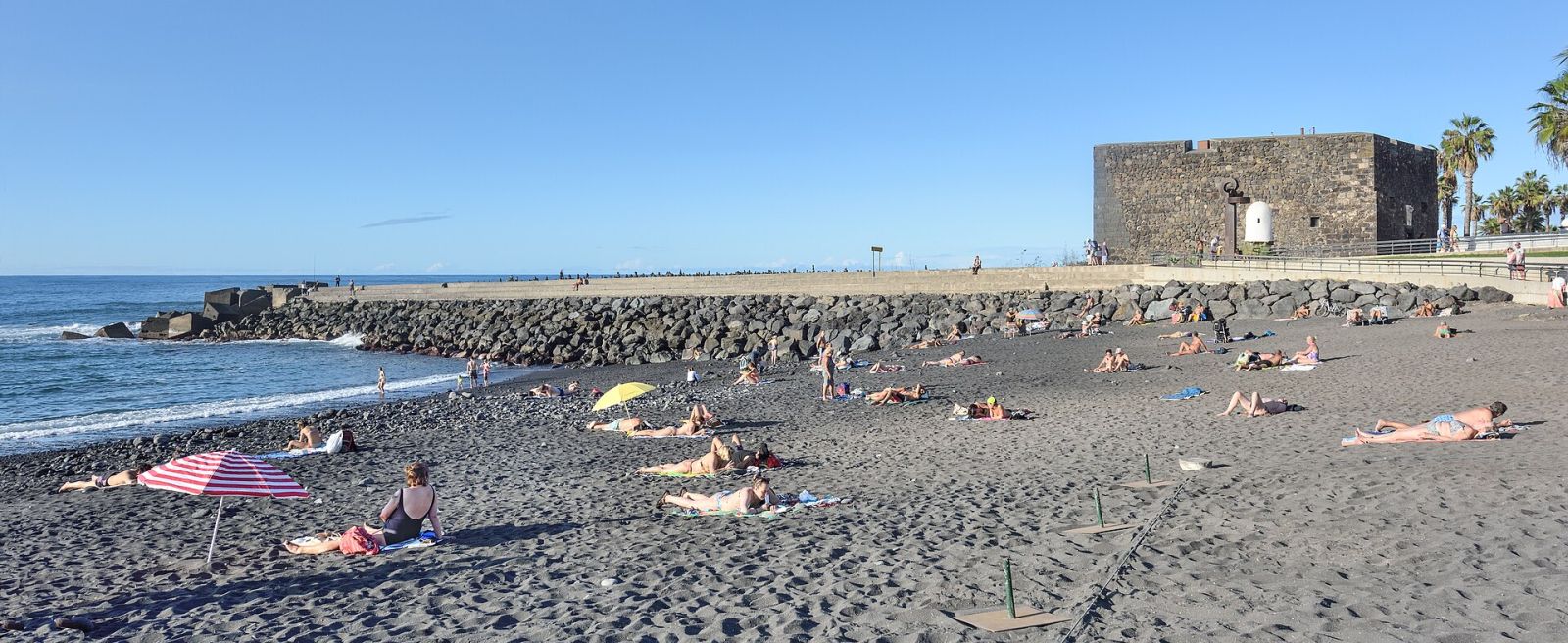
The islands' volcanic origins gave the Canaries a format rare in Europe: beaches of black sand. On Tenerife the best known are Playa Jardin in Puerto de la Cruz, landscaped with gardens designed by Manrique, and Playa de la Arena in the west. Black sand heats up faster and hotter than light sand; at midday you literally cannot cross it barefoot, but it looks spectacular, especially against the white foam of the surf. Classic light beaches exist too: southern Tenerife's are man-made, Gran Canaria has the natural golden dunes of Maspalomas, a mini-Sahara several kilometres long, and Lanzarote hides the wild Papagayo coves. Winter brings swell to the ocean, so watch the flags: a red one here is not a formality, the currents are serious.
What does winter in the Canaries cost?
The key thing to know: winter is the high season here, not the low one. Prices peak over the Christmas holidays and in February, when half of Northern Europe flees the dark. Rough guides, not tied to a specific year: low-cost flights from Europe start at a few dozen euros each way if booked early, decent apartments in southern Tenerife from 60-80 euros a night, dinner at a non-beachfront restaurant 12-18 euros. Most expensive: the weeks around New Year, which need booking months ahead. Best value: late November, early December and March, same weather, noticeably kinder prices. Car hire in the Canaries is among the cheapest in Europe and close to mandatory: the best of the islands lies outside the resorts. Prices are volatile, so verify current rates before booking.
Getting there: direct flights from Europe
In winter the airports of Tenerife (TFS in the south, TFN in the north), Gran Canaria and Lanzarote handle dozens of direct flights a day from across Europe: low-cost carriers fly from Warsaw, Krakow, Berlin, Vienna, Budapest, Milan and far beyond. There are currently no direct flights from Ukraine; the working scheme is to reach Warsaw, Krakow or Rzeszow and fly from there, with the flight itself taking about five hours. Ferries and short local flights link the islands, so Tenerife plus a day on La Gomera or Gran Canaria is a perfectly realistic combination within one holiday.
What else to factor in?
- The Canaries are part of Spain and the Schengen area; visa and entry rules are standard Schengen.
- The time zone matches the UK, an hour behind Central Europe, so there is no jet lag to speak of.
- The weather is stable but not sterile: a couple of days per fortnight may turn cloudy or bring calima, a haze of Saharan dust. Plan B for those days: Manrique's museums on Lanzarote, Loro Parque on Tenerife, the colonial Vegueta quarter in Las Palmas.
- Evenings drop to 16-18C, so a light jumper is needed even in eternal spring.
- Check current events, routes and opening times on the islands' official portal hellocanaryislands.com.
The bottom line: the Canary Islands in winter run like clockwork. The sun is guaranteed by geography rather than a forecast, choosing an island comes down to your holiday format rather than luck, and you can even order snow on demand: at the summit of Teide, overlooking the beaches below.