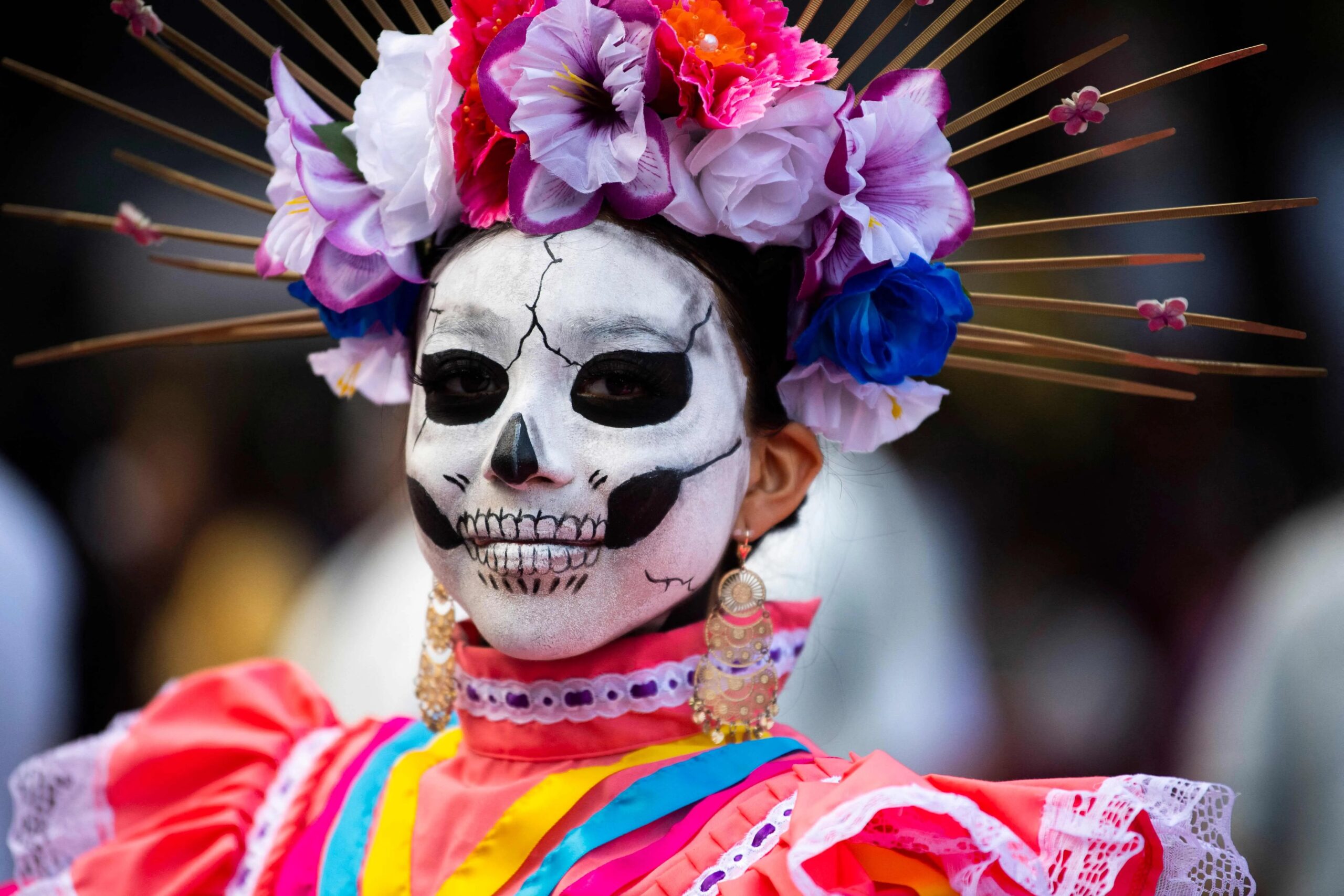


The Mexican holiday of Día de los Muertos, or Day of the Dead, honors and remembers loved ones who have passed away through a wealth of traditions: altars covered in photographs, armfuls of orange marigolds, revelers with faces painted in elaborate makeup, countless parades and parties, images of human skeletons and skulls (calaveras), and offerings of every kind (ofrendas) set out along roadsides and in cemeteries.
The tradition is deeply tied to the identity of Mexico's Indigenous peoples, stretching back thousands of years to the annual corn harvest, when maize was the country's staple crop.
At the heart of Día de los Muertos lie family, love, and remembrance.
Partner links: booking through them supports the blog at no extra cost to you.
And if you have never witnessed this holiday, we promise it is something you should experience to truly feel its power and its poignancy. It comes as no surprise that in 2008 Día de los Muertos was added to UNESCO's list of the Intangible Cultural Heritage of Humanity.
What better place to celebrate than San Miguel de Allende, itself a UNESCO World Heritage Site? This picturesque town in north central Mexico, famous for its pristine, colorful colonial and Spanish architecture, is also a magnet for expats and artists.
Día de los Muertos in San Miguel is a four-day celebration of history and family, art and culture, food and fun, known as La Calaca.
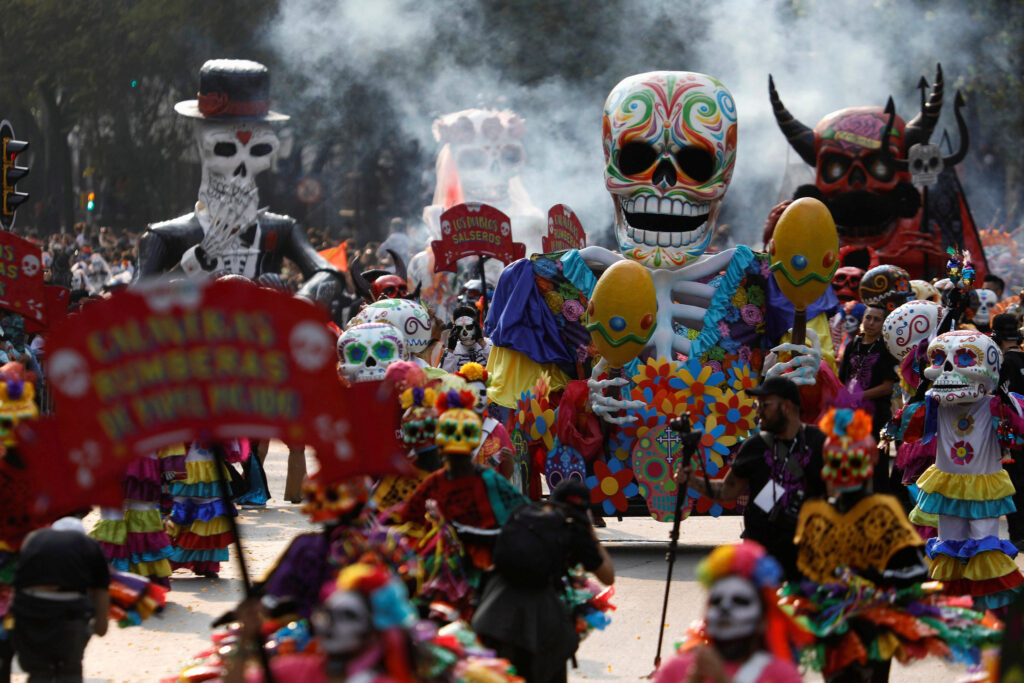
On November 1, costumed festivalgoers with calaveras, or skulls, painted on their faces make their way slowly through the cobblestone streets of San Miguel, ending the procession at the Parroquia de San Miguel Arcángel, a 17th-century church on the town's main square. This ancient tradition, a blend of Aztec and Christian customs, has been observed across Central America and Mexico for thousands of years.
Despite the timing, the Day of the Dead is not directly connected to Halloween. Their closeness on the calendar, however, may help explain the popularity of Day of the Dead events, especially in the United States.
Pixar's 2017 film "Coco," set in a fictional Mexican town during the Day of the Dead celebrations, won two Academy Awards and fueled the fascination with the holiday. Beyond the film, and in true American fashion, it has become something of a commercial juggernaut.
Sugar skulls go on sale. Makeup artists get booked. The retailer Party City sells Day of the Dead costumes and decorations. Even Target carries a collection of Day of the Dead merchandise.
No matter how, where, or why it is celebrated, visiting Mexico at this time of year is a real privilege.
Watching the love, care, and beauty that true believers pour into their altars and shrines, seeing photographs of departed loved ones bathed in orange marigolds and the orange glow of candles, joining a parade or simply watching from the sidelines, is magical and transformative. It is a deeply moving journey that any passionate traveler will treasure for a lifetime.