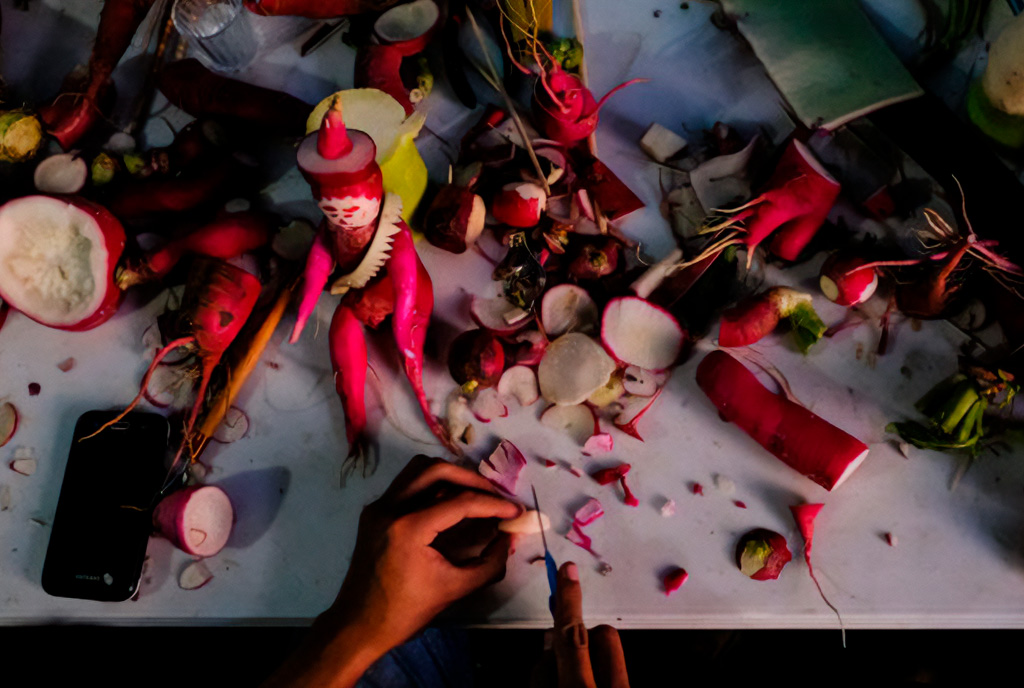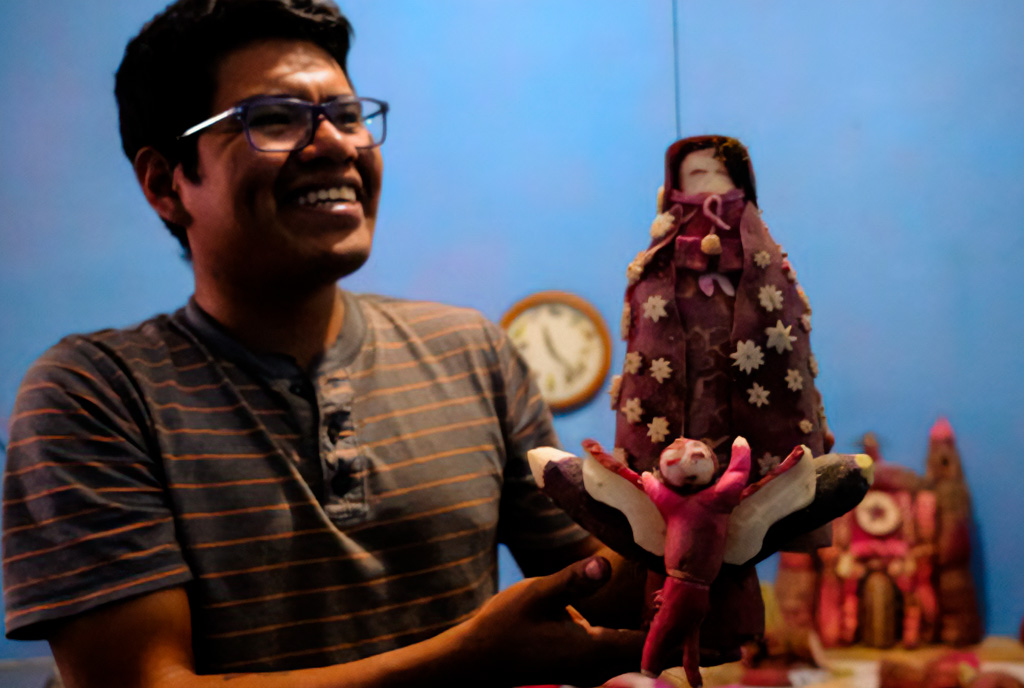


“I'm so proud to be part of something so deeply rooted in Oaxaca,” Daniel Rojas tells me as I step into a dimly lit room thick with the earthy smell of radishes.
They're getting ready for the radish carving festival, which celebrated its 120th anniversary in Oaxaca, Mexico, in 2017. Rojas and his friend Antonio Aquino keep carving away at their radishes, shaping little churches, people, and figures of Catholic virgins as they chat. About a hundred large radishes still waiting to be carved lie on the floor beside them, and everything has to be finished by noon the following day.
“We won't be sleeping tonight,” Aquino says, and both men laugh. They're clearly running on adrenaline, thrilled but exhausted.
Partner links: booking through them supports the blog at no extra cost to you.
A different kind of food fair

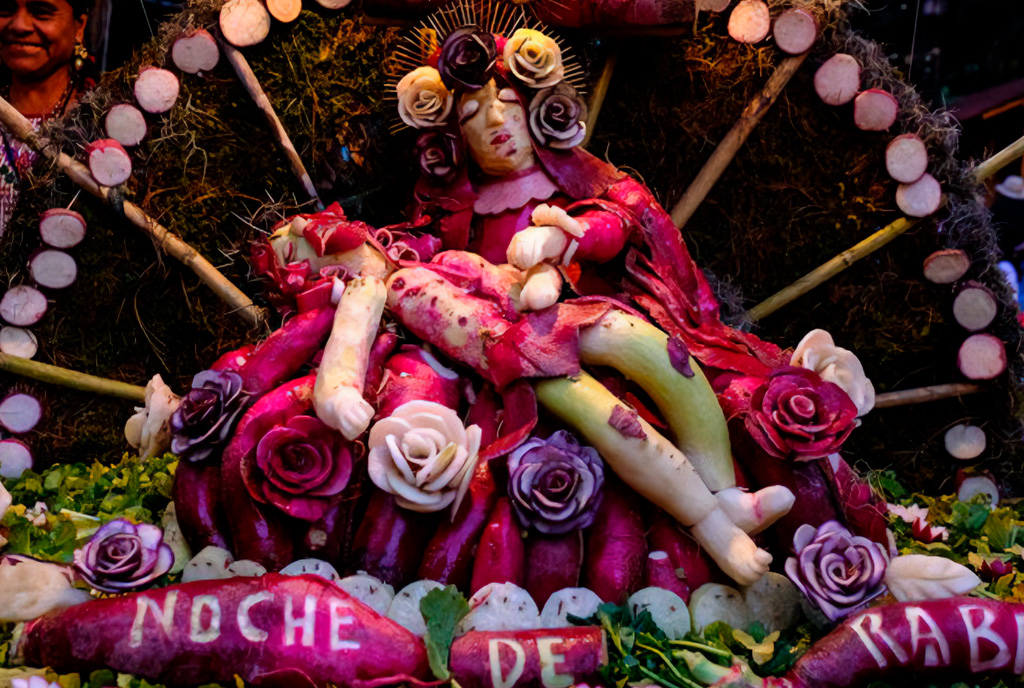
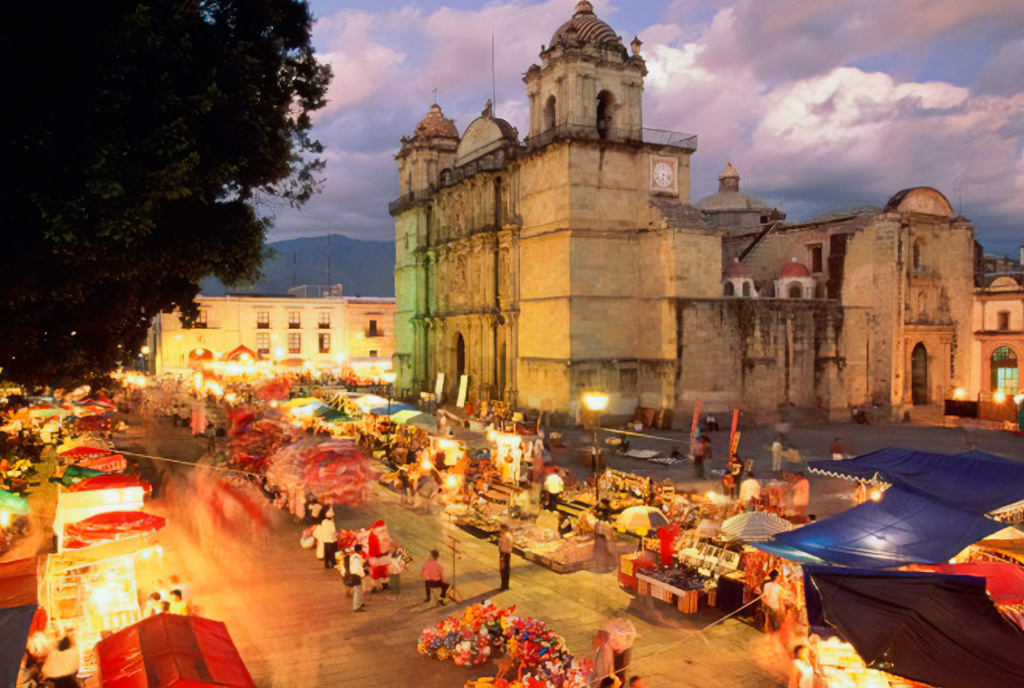
La Noche de Rábanos, or the Night of the Radishes, began when vendors at the Christmas market held every year in Oaxaca's main square started carving radishes to draw in customers. In 1897, the city's municipal president, Francisco Vasconcelos, declared that an official radish carving competition would be held every year on December 23, and it grew into an annual tradition.
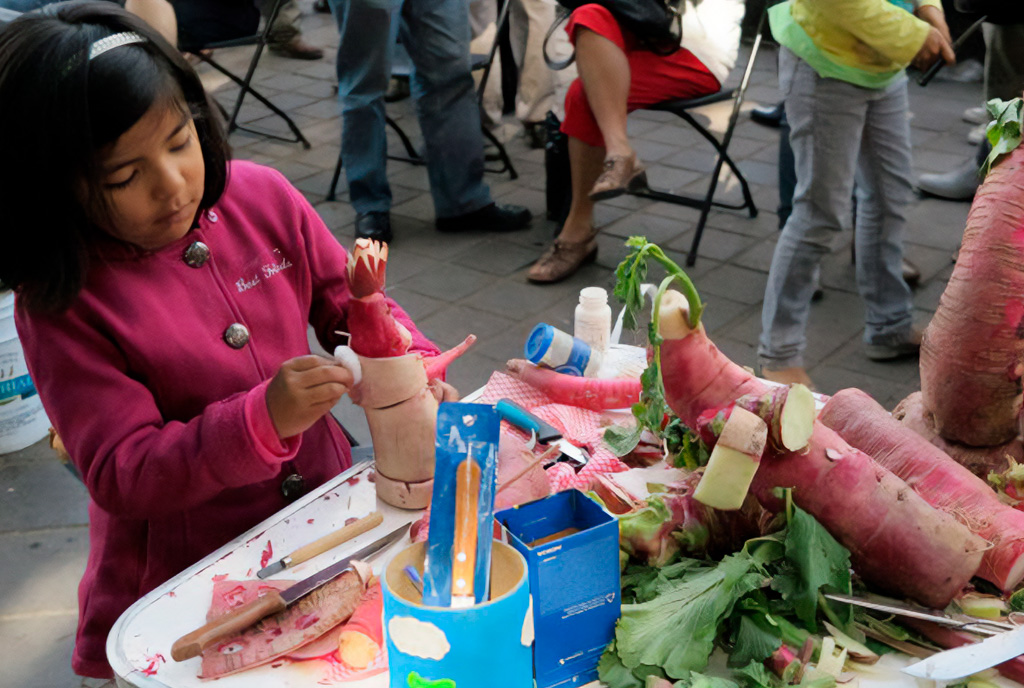
Entrants can either compete in the Free category, carving whatever they like out of a radish, or in the more popular Traditional category, which requires the work to somehow reflect the culture and festivals of Oaxaca. There are also two more categories for children.
To keep the competition fair, the government grows the radishes on a plot of land not far from the city airport. Four days before the festival, entrants head out to the land to harvest their allotted patch. The plot number is assigned to them based on the order in which they signed up for the contest.
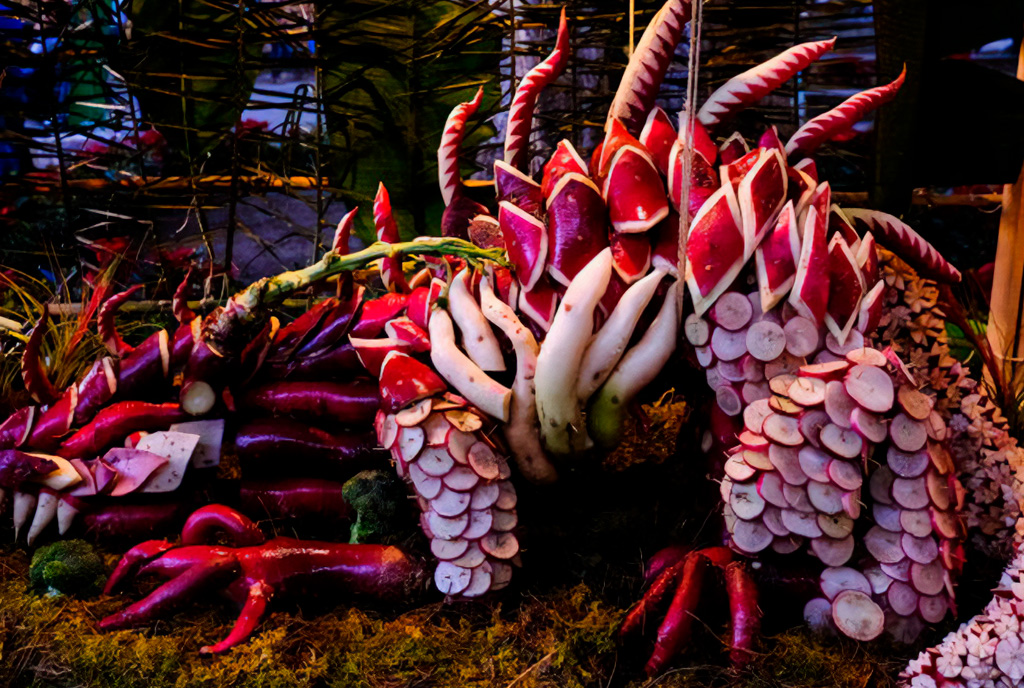
These aren't the small, bright pink radishes you'd find in a supermarket. These are enormous, deep purple radishes, some of them growing up to 80 centimeters long. They're planted over the course of three months so they vary in size, giving the carvers more variety to work with. Around ten tons of radishes are harvested every year exclusively for the competition.
“I don't think they're edible,” Rojas says, tossing a big vegetable from one hand to the other. Grown specifically for the contest, this radish is packed with fertilizer to make it big, and it probably wouldn't be kind to your stomach.
A week before Christmas

Because the contest takes place on December 23, entrants in this largely Catholic country spend the five days right before Christmas immersed in the world of radishes. One day for harvesting, one day for cleaning the radishes, two days for carving, and a final day for putting them on display, when thousands of visitors file past all through the day and night to see them.
Carving a perishable vegetable calls for more than an artistic eye (Rojas is a textile artist when he isn't carving radishes); it also poses another challenge: making sure the radishes don't wilt before the judges score the competition.
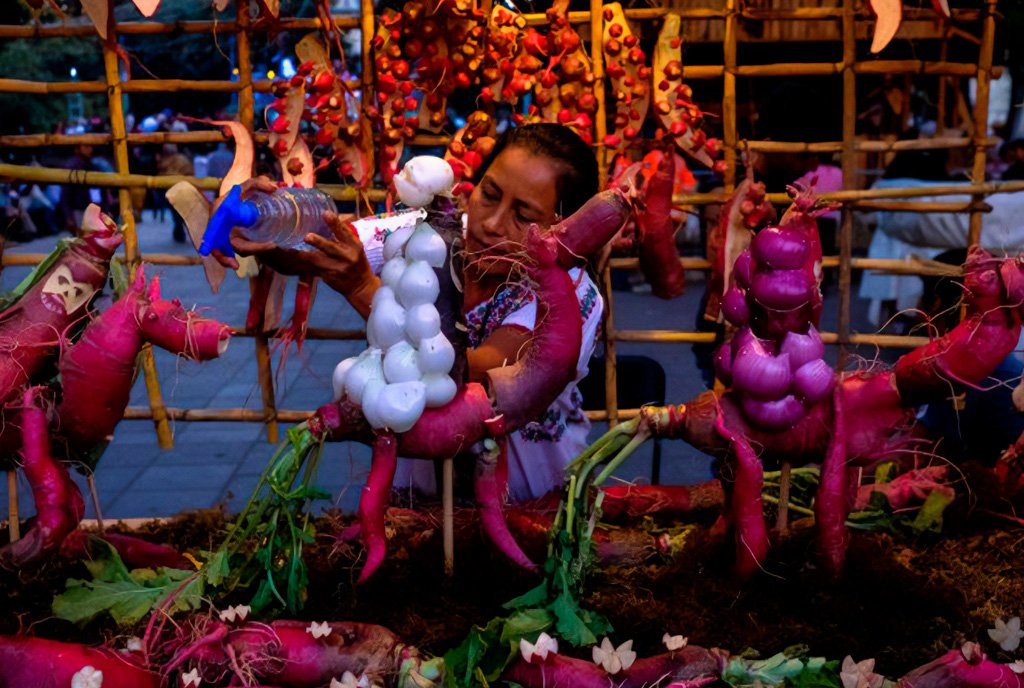
Rojas and Aquino have various tricks for keeping their radishes fresh, from placing moss on the figures to spraying them regularly with water. (They also have another secret method, developed over four years of competing, but that one they aren't willing to share.)
Carving, then, demands skill, creativity, and judgment: deciding what to carve first, what to leave until the last moment, and then how to display it on competition day. The rivalry is friendly but serious. Both men are clearly out to win, and with a prize of 30,000 pesos (around 1,500 dollars), the incentive is real. Even so, it's obvious that the pride of being part of something so quintessentially Oaxacan seems to be a stronger driving force than the prize money.
As I leave them to their work, I can't help thinking about how much is still left to do. Through the evening, I picture them still there, carving and creating, as the sun sets and rises again.
Judgment day

The next morning I head to the main square to find Rojas and Aquino. Disheveled after a long night, their nervousness is plain to see. Rojas is worried that their display space is smaller than last year's, which means he has to rethink his presentation. Later that day, though, as the sun draws close to setting, I come back, and they're calmer, settling into a happy sort of tiredness.
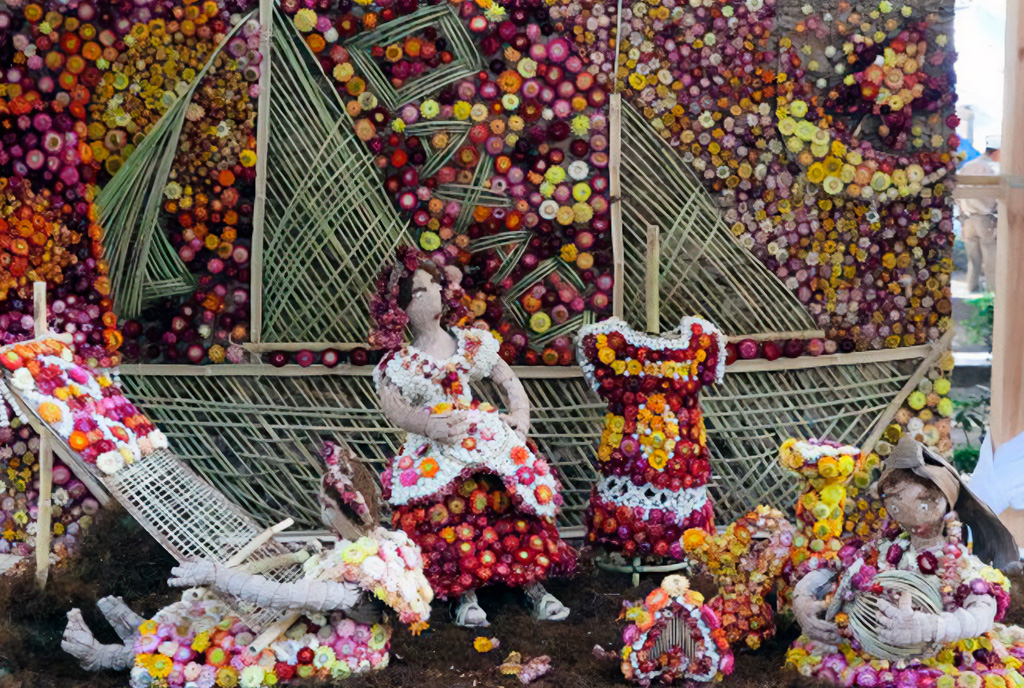
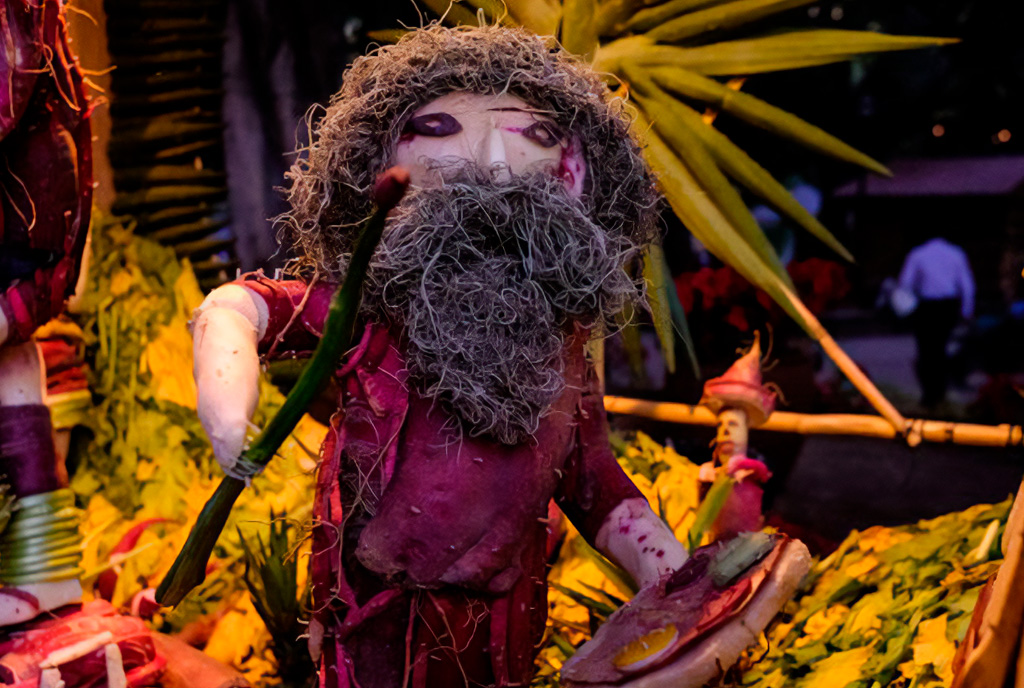
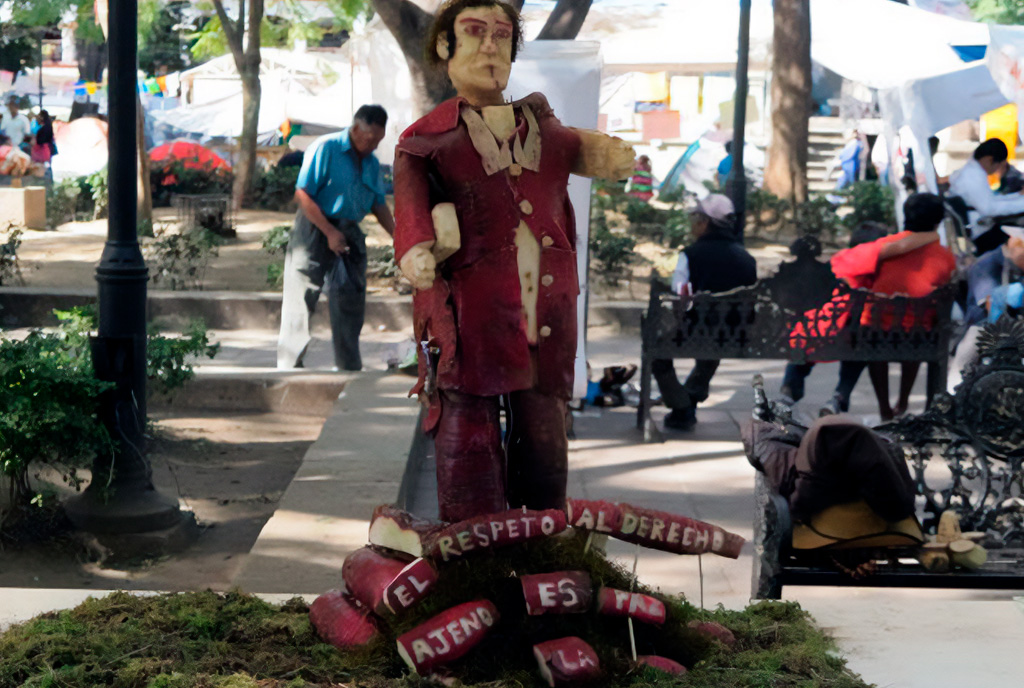
Huge lines of visitors are still waiting to see the exhibits, which will be on display until midnight. Some entrants sit tucked behind their works of art, eating and chatting with family members, while others talk with visitors eager to learn more about their creations. The carvings range from Egyptian gods and scenes of mezcal production to the three kings bringing gifts to Jesus. Oaxaca's most famous living artist, Francisco Toledo, even makes an appearance in radish form, complete with a beard of moss.
The entrants are young and old, and some come from families who have carved radishes for the contest for decades. One entrant explains that for him and his family, the Night of the Radishes is as fundamental a part of the Christmas celebrations as Christmas Eve dinner.
By now, most entrants are eagerly awaiting the announcement of the winner. A few hours later, they'll learn that an ethereal nativity scene, carved by Ermenegildo Contreras Cruz, who has been competing for around forty years, took first place.
Though Rojas and Aquino are clearly disappointed not to have won, they aren't discouraged, and they're already forming ideas about what they'll carve for the Night of the Radishes in 2018. That, however, is yet another secret they're willing to share.
All we know is that, starting on December 19, 2018, on the outskirts of the city of Oaxaca, there will once again be a room rich with the scent of radishes, waiting to be carved.