

Thessaloniki tends to sit in Athens' shadow, undeservedly so: Greece's second city holds 15 Early Christian and Byzantine monuments on the UNESCO list, the country's longest seafront promenade and a food scene Greeks themselves rank as the best in Greece. There is no Acropolis here, but there is a 4th-century Rotunda, markets trading since the 1920s and a city that lives its own life rather than catering to tourists. Two days cover the essentials; three let you actually taste the place.
The White Tower and the waterfront
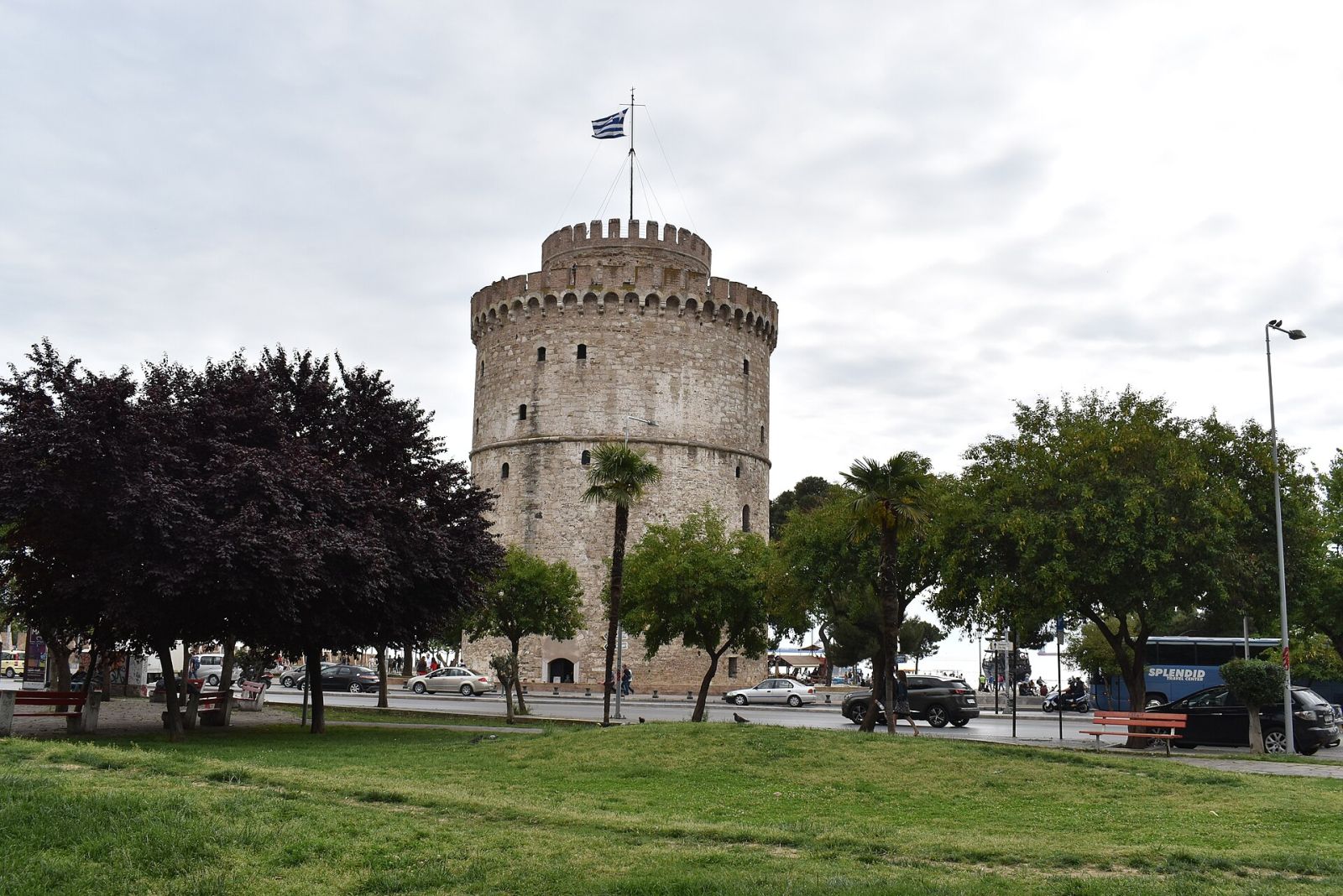
Thessaloniki's symbol stands right at the water's edge: the White Tower, a round 15th-century Ottoman fortification about 34 metres tall. Its biography is grim: under the Ottomans it served as a prison and execution site and was known as the Blood Tower; it became "white" after a symbolic repainting in the late 19th century. Today it houses a six-level museum of the city's history: the exhibition is compact, but the climb up the spiral ramp is worth the ticket on its own, and the top terrace overlooks the whole city and the Thermaic Gulf, with Mount Olympus on the horizon on a clear day.
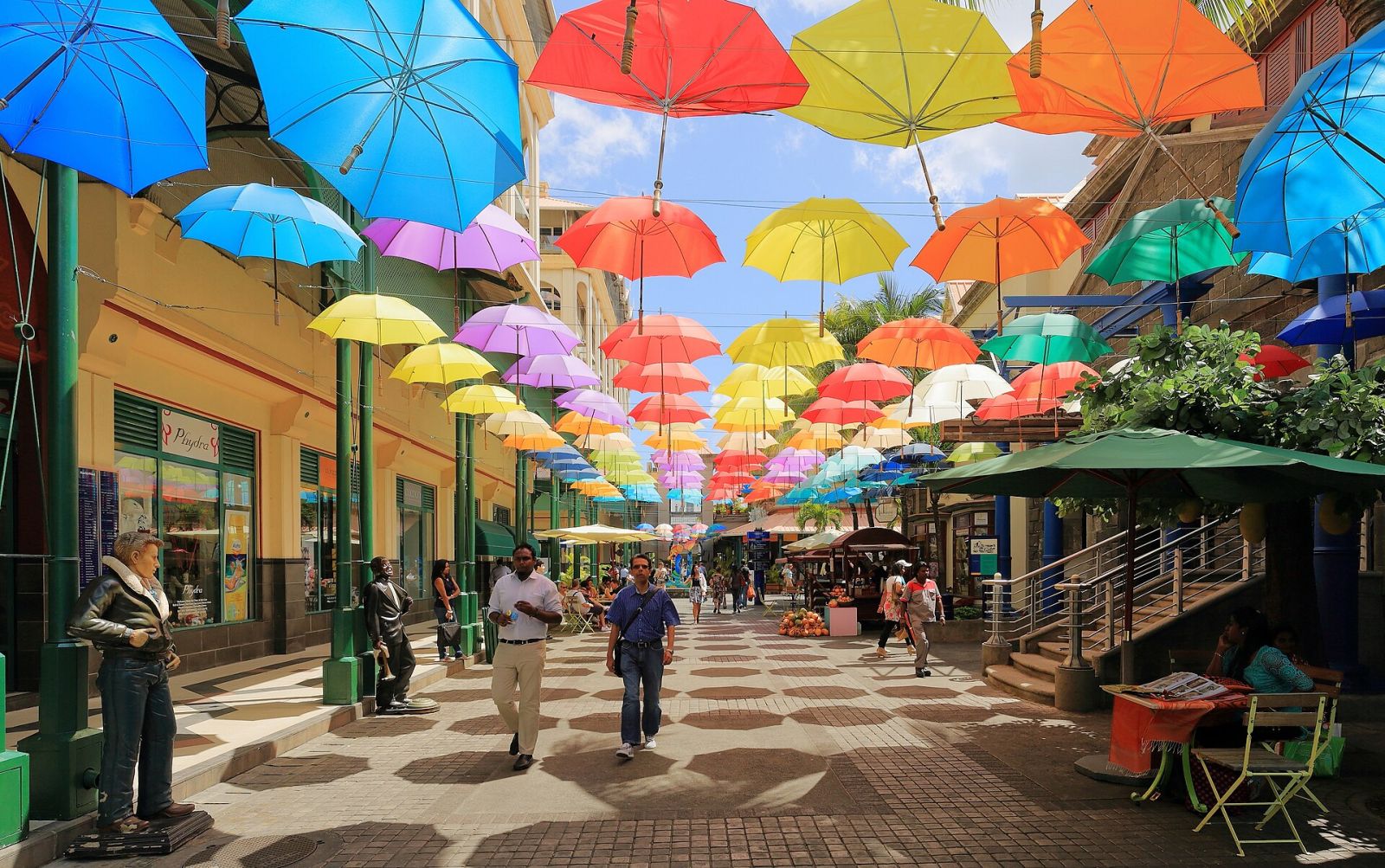
East of the tower stretches Nea Paralia, a redeveloped promenade several kilometres long: themed gardens, a cycle path, bars facing the water. This is where the city's most famous artwork stands, the Umbrellas by Giorgos Zongolopoulos, a 1997 sculpture of steel umbrellas that turns into Thessaloniki's most popular photo spot at sunset. An evening walk here is not optional but essential: the whole city comes out for the volta, the traditional seaside stroll.
The Rotunda and the Arch of Galerius
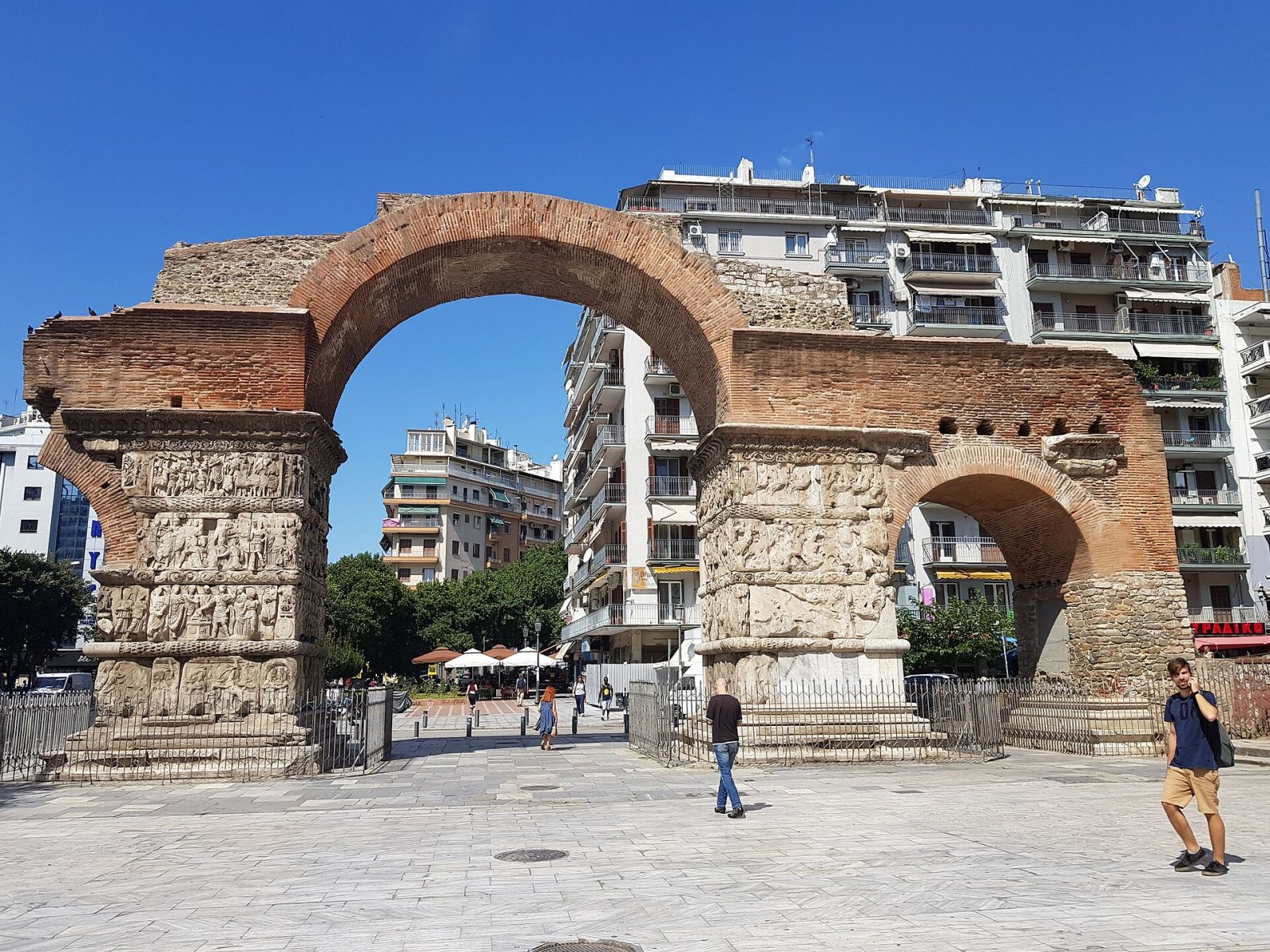
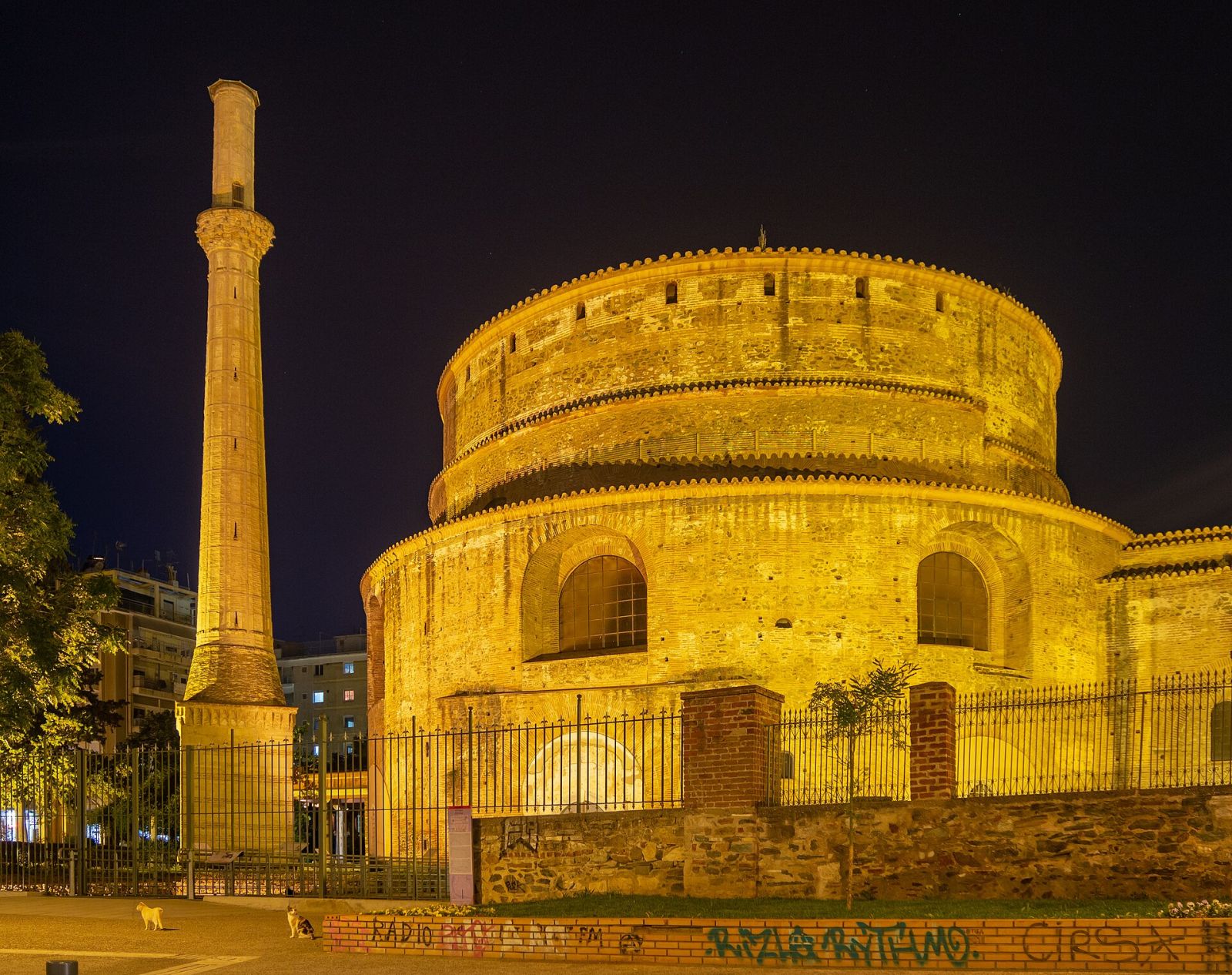
The city's main ancient axis was left by the Roman emperor Galerius, who made Thessaloniki his residence in the early 4th century. Three parts of his palace complex survive within five minutes' walk of each other. The Rotunda: a cylindrical building of 306 AD with a dome and walls six metres thick, which has served as a mausoleum, a church and a mosque, with its minaret still standing beside it. Inside are fragments of early Byzantine mosaics on gold ground, and the scale of the space hits harder than any photo. The Arch of Galerius, known as Kamara: a triumphal arch celebrating victory over the Persians, covered in battle reliefs, and today the city's default meeting point, "at Kamara" needs no address. Plus the excavated palace itself at Navarinou Square, viewable from above for free.
Byzantine churches on the UNESCO list
Thessaloniki was the second city of the Byzantine Empire after Constantinople, and its churches show it. Fifteen monuments make up the UNESCO listing; you do not need them all, but three are unmissable:
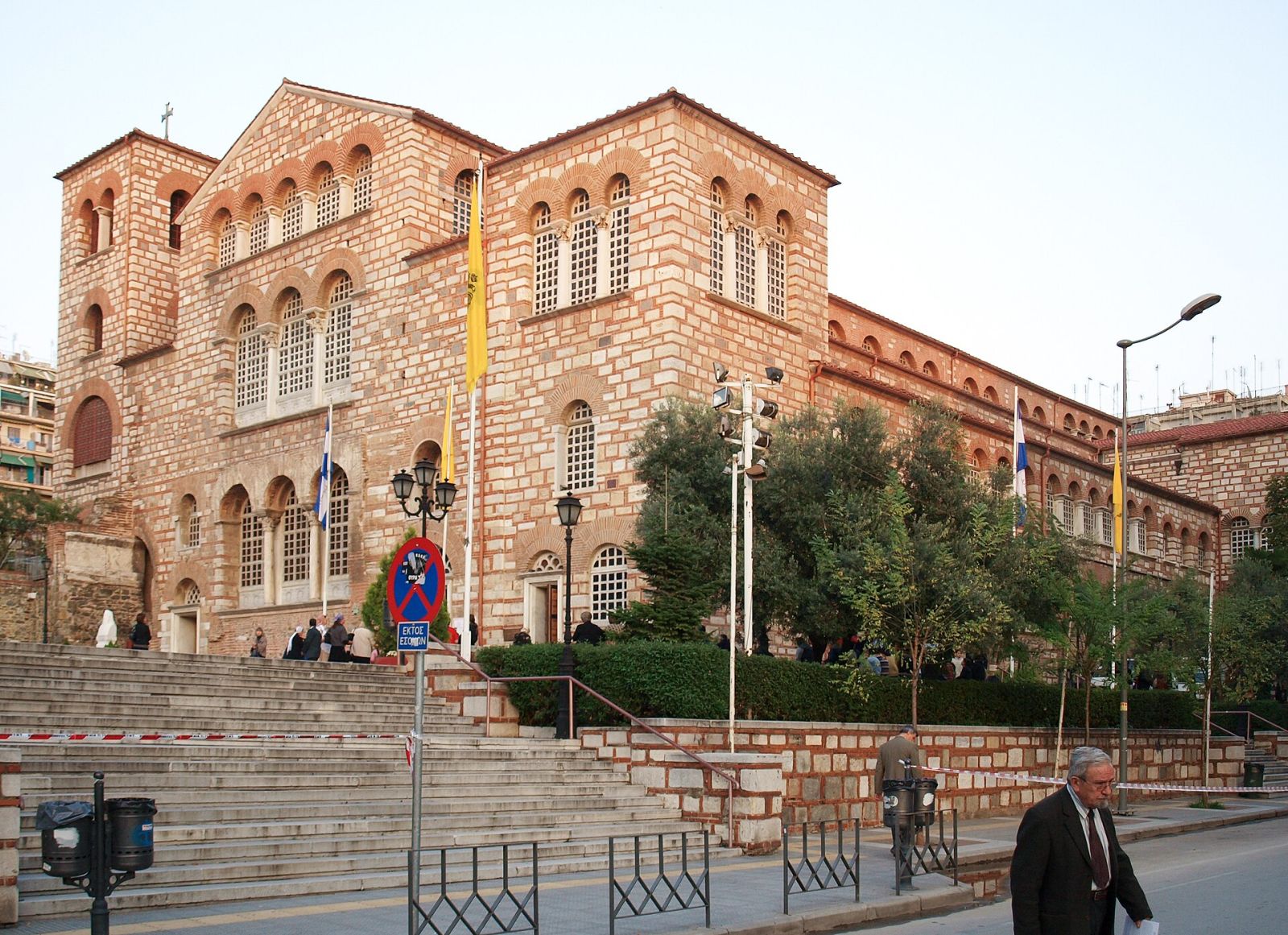
- Hagios Demetrios: a five-aisled basilica over the site where St Demetrius, the city's patron, was imprisoned and killed. Rebuilt after the 1917 fire, it kept unique 7th-century mosaics, and the crypt reveals the Roman baths where the saint was held.
- Hagia Sophia: an 8th-century church echoing its Constantinople namesake at a smaller scale, with an Ascension mosaic in the dome.
- Osios David: a tiny 5th-century church in the upper town with a mosaic of Christ Emmanuel that art historians rank alongside Ravenna's. It is not always open, which is exactly why it is nearly empty inside.
Entry to working churches is free, but the dress code applies: shoulders and knees covered. And mind the siesta: many churches close midday and reopen towards evening.
Ano Poli: the upper town that survived
The Great Fire of 1917 destroyed most of old Thessaloniki, and the modern centre with its straight avenues was rebuilt to a new plan. What survived is the upper town, Ano Poli: a maze of steep lanes with Ottoman houses, bougainvillea courtyards and cats in every doorway. Come up in the late afternoon, on foot or by bus to the Heptapyrgion fortress, then walk down along the Byzantine walls to the Trigonion Tower: its platform gives the classic panorama of the city and the gulf, the best sunset spot in Thessaloniki.
Modiano and Kapani markets
The covered Modiano market has been trading since the 1920s: after renovation it became a food hall of cheese, olive, wine stalls and tapas bars, tidy and slightly polished. If you want the raw version, dive into neighbouring Kapani, the city's oldest market: fish on ice, mountains of olives, spices, vendors shouting and prices without the tourist markup. Buying olive oil, cheese and herbs for gifts here beats any souvenir shop. Next door lies Ladadika, former olive oil warehouses turned into a district of tavernas and bars: in the evening it holds the densest concentration of life in the city.
What and where to eat?
Thessaloniki's culinary reputation rests on a blend of Greek, Ottoman and Sephardic kitchens plus the sea next door. The minimum programme: bougatsa, filo pastry with custard or cheese, for breakfast, treated here as a civic religion; koulouri, a sesame bread ring, from street carts; gyros and souvlaki, juicier and cheaper than in Athens; fried mussels and small fish in Ladadika tavernas washed down with tsipouro, the local grape spirit. In tavernas, order mezedes, lots of small plates for the table: you get to try twice as much. For dessert: trigona, crispy cream-filled triangles that locals drive to the Panorama district for, though the centre sells them too.
A two-day itinerary
| Day | Route |
|---|---|
| Day 1 | White Tower and museum, Aristotelous Square, Modiano and Kapani markets, Hagios Demetrios, Ladadika in the evening |
| Day 2 | Arch of Galerius, Rotunda, Hagia Sophia, climb to Ano Poli with Osios David, sunset at the Trigonion Tower, volta along the waterfront to the Umbrellas |
With a third day, split it between the Archaeological Museum and the Museum of Byzantine Culture: the latter counts among the best museums in Greece, and the city's churches read completely differently after it.
Practical notes
- Makedonia airport lies 15 kilometres from the centre, with a city bus running day and night. Direct flights connect half a dozen European hubs, so connections are easy.
- Best seasons: April to June and September to October. July and August are hot and humid; the sea is close, but city beaches are underwhelming, so people head to Halkidiki, the first peninsula an hour away.
- The centre is fully walkable; you only need transport for the upper town and the airport. The city recently opened a metro, and Venizelou station is an attraction in itself: it displays an excavated Byzantine street.
- Monument opening hours shift with the seasons; verify current times on the official tourism portal thessaloniki.travel before your trip.
Thessaloniki wins not with a single superstar sight but with density: a Roman arch, a Byzantine mosaic and a 1920s market all stand within a ten-minute walk. Add the waterfront with the Umbrellas and Greece's strongest street food, and you get a city that makes leaving on schedule genuinely difficult.