

When the Greek messenger Pheidippides burst into Athens in 490 BC, having run the very first marathon, he probably never imagined that his superhuman effort would one day be considered old news. Perhaps he simply never had the time to reach that thought. According to legend, he collapsed and died the moment he delivered his message.
Yet this is exactly the kind of world we live in today. For a growing number of athletes, 26.2 miles (42.19 km) is nowhere near enough. For these restless souls, Pheidippides' other feat, a 150-mile run from Athens to Sparta, is the far more inspiring one.
The rise of ultramarathon running in the 21st century has been unstoppable. Steve Diederich, founder of the global race database Run Ultra, says that 12 years ago he had roughly 60 events on his list. Today he estimates the number somewhere between 2,200 and 2,300.
Partner links: booking through them supports the blog at no extra cost to you.
Many ultramarathons offer relatively safe and managed access to some of the most remote places on Earth. "There are incredible parts of the world where just getting there is a huge privilege, and it's a real privilege to cross those regions on foot," says Diederich.
The Marathon des Sables in the Moroccan Sahara has long been regarded as the premier desert ultramarathon and one of the longest, stretching roughly 250 kilometres (155 miles). But last month, an even longer race was born in the Dubai desert.
Set within a rugged nature reserve, the Al Marmoom Ultramarathon lays claim to being the longest desert ultramarathon in the world. The 270 km (168 mile) route was covered over five days in December, with temperatures reaching up to 35 degrees Celsius (95 degrees Fahrenheit).
In its inaugural year, 19 runners (15 men and four women) completed the race, with 36-year-old Moroccan Rachid El Morabity, a six-time winner of the Marathon des Sables, crossing the finish line first after 31 hours and 17 minutes. Eleven runners failed to reach the finish, as did many of those tackling the shorter 100 km and 50 km versions of the race.
Race manager Ole Brom kept a close eye on the athletes' health and wellbeing. Running distances like these across energy-sapping sand is on a par with an extreme sport, the Norwegian said, and "it's not something to be taken lightly."
"On the first day, after about 40 km, roughly 12 km from the end, (one athlete) lost consciousness," says Brom. "He ignored the signs of dehydration and paid the price."
Sections of the race, including one 100-kilometre stage, were only reachable by air for first-aid crews, explained event director Ruth Dickinson. Athletes carried tracking devices and emergency beacons, and also kept anti-venom pumps on hand in case of snake bites.

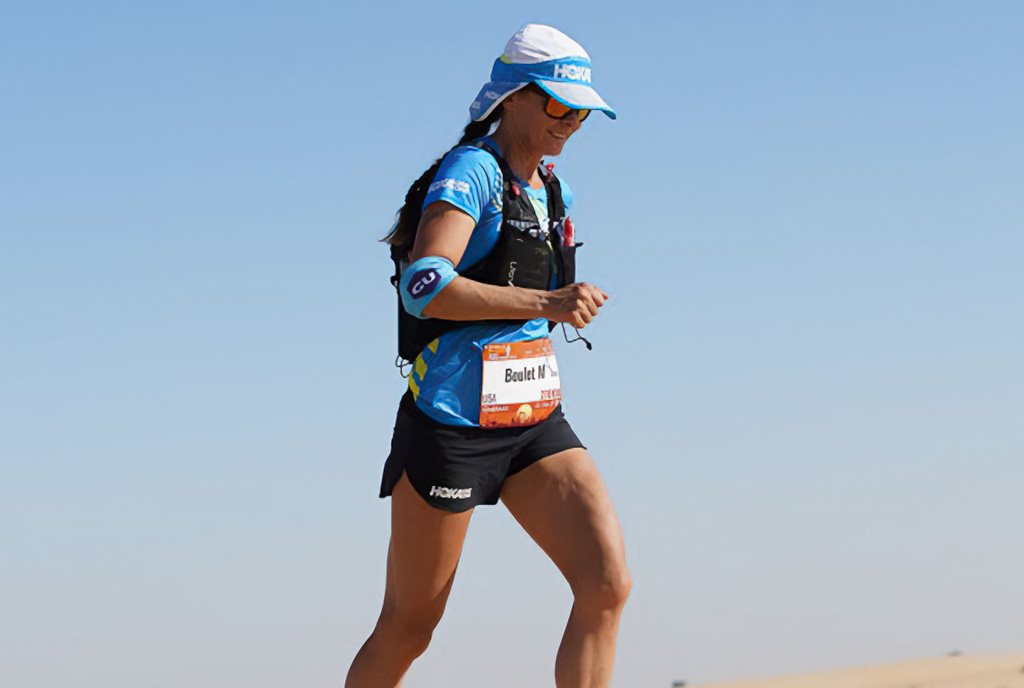
Running through the dunes had its rewards too. "It's incredibly peaceful out there," says 45-year-old women's race winner Magdalena Boulet, "(you) really can't see a thing for miles around."
"It's mesmerising," adds Brom. "On certain routes there were oryx, sand gazelles, mountain gazelles. We saw eagles (and) plenty of different migratory birds." (Because it's a protected area, runners were fined for dropping litter and had to bury any human waste if the need arose.)
There were flashes of luxury as well: between stages, runners were provided with hot water, tents and massages. Brom says some athletes told him they'd come back for the toilets alone.
The Bigger Picture
In 2015, the consulting firm Deloitte valued sports-related spending in Dubai at 1.7 billion dollars a year. The government is actively working to grow the sector as part of its plans to further diversify the economy.
Extreme sports are playing an ever greater role in raising Dubai's profile as a sporting destination. The photogenic workout on the Burj Al Arab helipad was once the preserve of A-list athletes like Tiger Woods and Roger Federer. Now you're just as likely to spot a kitesurfer launching off it. Events such as the Red Bull-sponsored cliff dives in the marina and Skydive Dubai's BASE jumps from the Burj Khalifa have made headlines all over the world.
The Al Marmoom Ultramarathon will join more than 400 local sporting events ranked by the Dubai Sports Council. Acting director of events Ghazi Al Madani says planning for the 2019 race is already well underway.
Brom believes the transit hub of Dubai could become a home base for desert ultramarathoners, hosting regular events right in its "backyard." "Ten percent of Dubai's area is sand," he adds, "so it makes perfect sense."