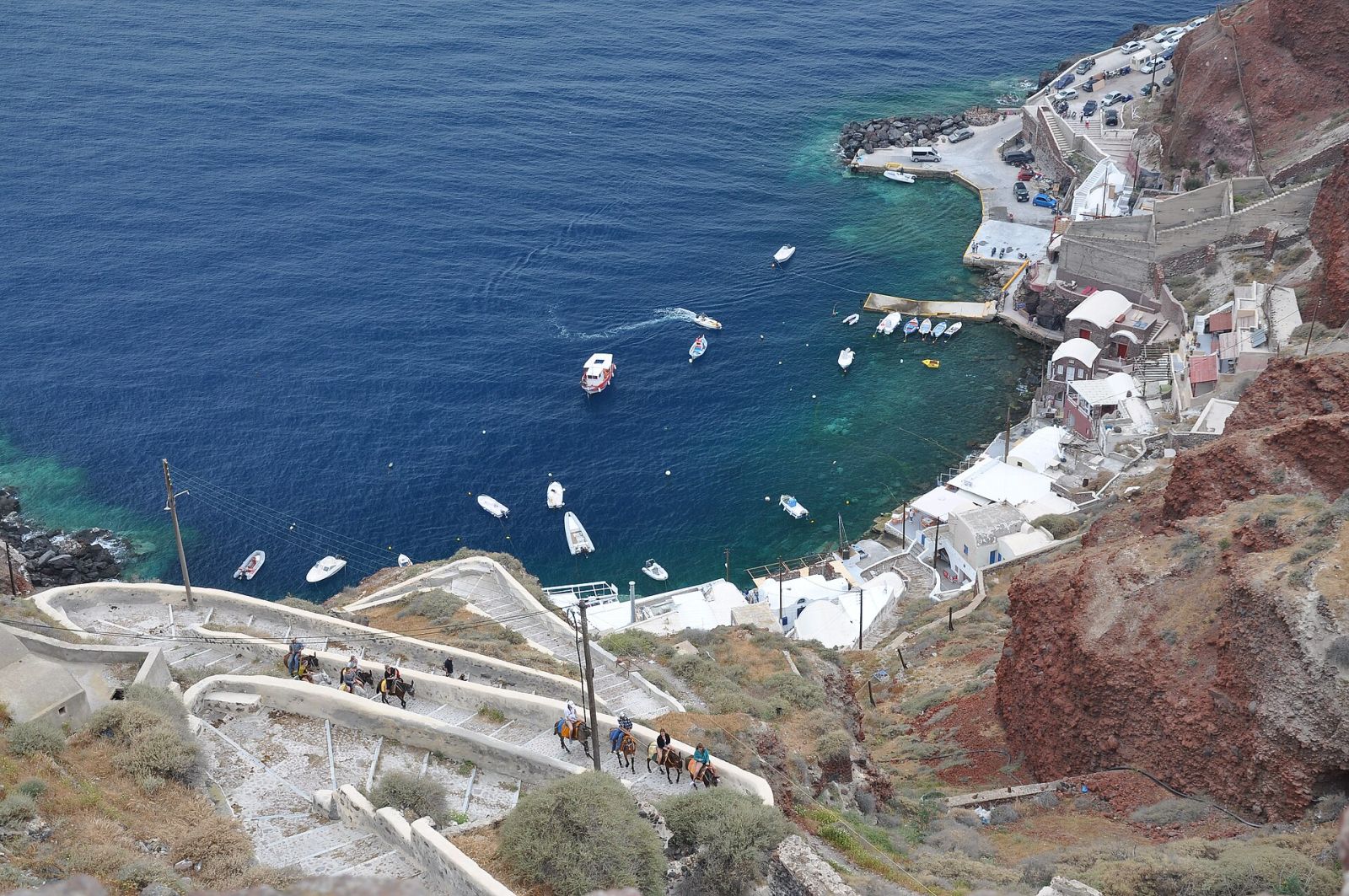
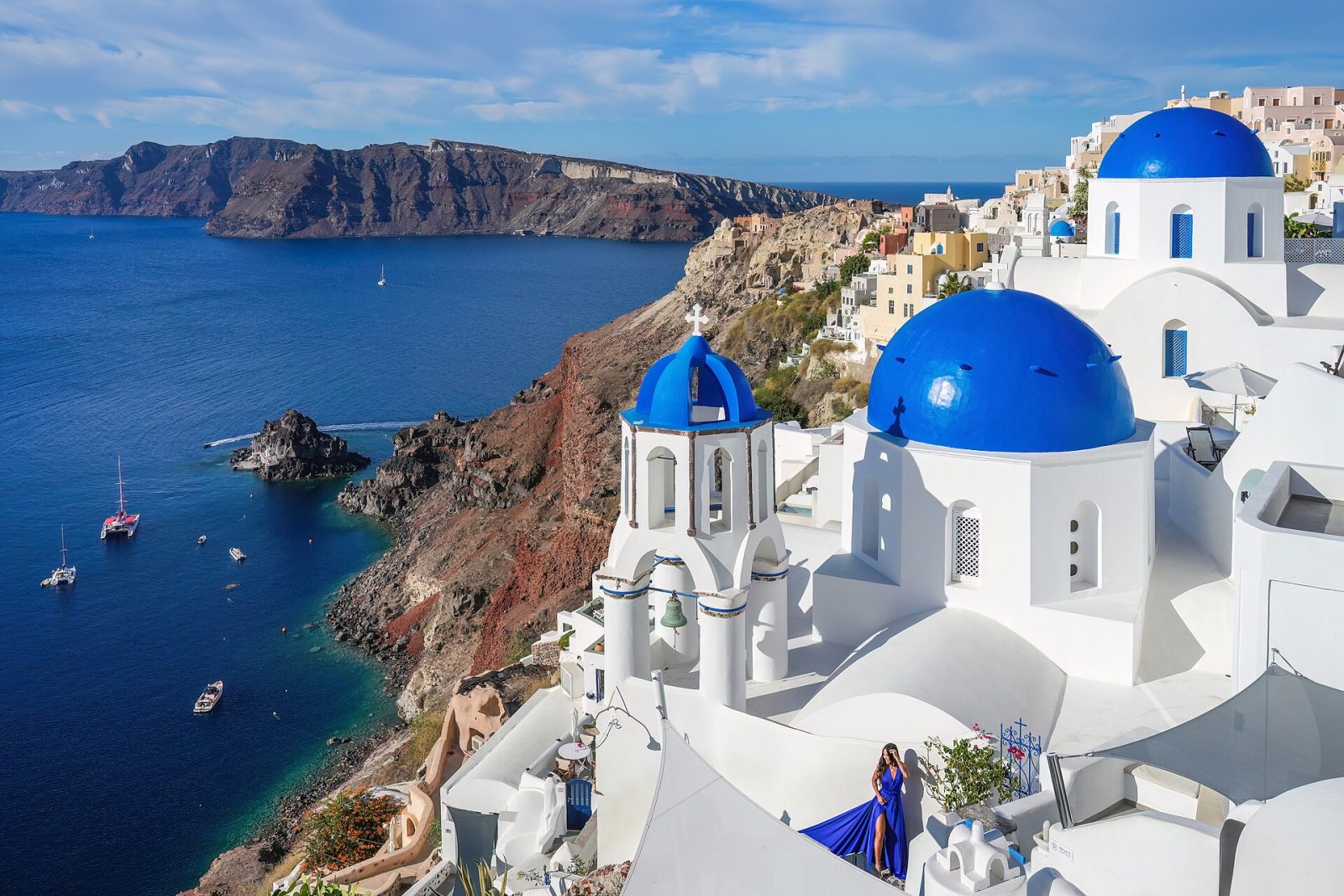
In short: you choose the Greek islands not by how pretty the photos are, but by what you want from your holiday. Crete wins on variety and suits almost everyone, Rhodes pairs a beach with a medieval town, people go to Santorini for the caldera views, Corfu offers greenery and Venetian character, and Zakynthos is famous for Navagio bay. Below is a breakdown of who each one is for, with beaches, season and honest caveats.
The main planning trap is that all five islands sit in different corners of the country. Crete is off on its own in the south, Rhodes hugs the Turkish coast, Santorini is in the centre of the Cyclades, and Corfu and Zakynthos are already in the Ionian Sea to the west. Combining Corfu and Santorini in a single week is practically impossible: there is no direct, convenient ferry between these groups. So choosing an island is at the same time choosing a region, not just a beach.
Which Greek island should you pick for your specific needs?
The quickest way to decide is to look at what matters most to you on the trip and work from there. The table below lines up the five most popular options side by side.
| Island | Who it suits | Main beach | Airport |
|---|---|---|---|
| Crete | Those who want it all at once: sea, mountains, history, food | Balos, Elafonisi | Three (Heraklion, Chania, Sitia) |
| Rhodes | Beach holiday plus a medieval town | Tsambika, Lindos | Its own international |
| Santorini | Couples, views, photos, a short trip | Kamari, Perivolos (black sand) | Its own, plus a port |
| Corfu | Greenery, Venetian architecture, families | Paleokastritsa, Glyfada | Its own international |
| Zakynthos | Beaches and nature, coastal romance | Navagio (from 2026 accessible only from the viewpoint) | Its own international |
Crete: why it makes sense to start your acquaintance with Greece here
Crete is the largest Greek island, around 8,300 sq km with more than 1,000 km of coastline. In size it is closer to a separate country than to a single resort spot: from west to east it is about 260 km, and in one week you physically will not manage to see it all.
People come here when they want both sea and activity in one trip. In the west there is Balos lagoon with its pinkish sand and shallow turquoise water, and nearby Elafonisi with the same effect. Deeper into the island there is the Samaria Gorge for trekking, the Venetian harbours of Chania and Rethymno, and in Heraklion the Palace of Knossos, the heart of the Minoan civilisation. Because of all this Crete rarely gets boring even over two weeks.
The honest downside is the distances. Balos and Elafonisi are in the west, while most hotels around Heraklion are in the centre, so without a rental car you will be tied to your hotel beach. Planning Crete without a car means losing half the point of it.
Rhodes suits those who want history and a beach in one place
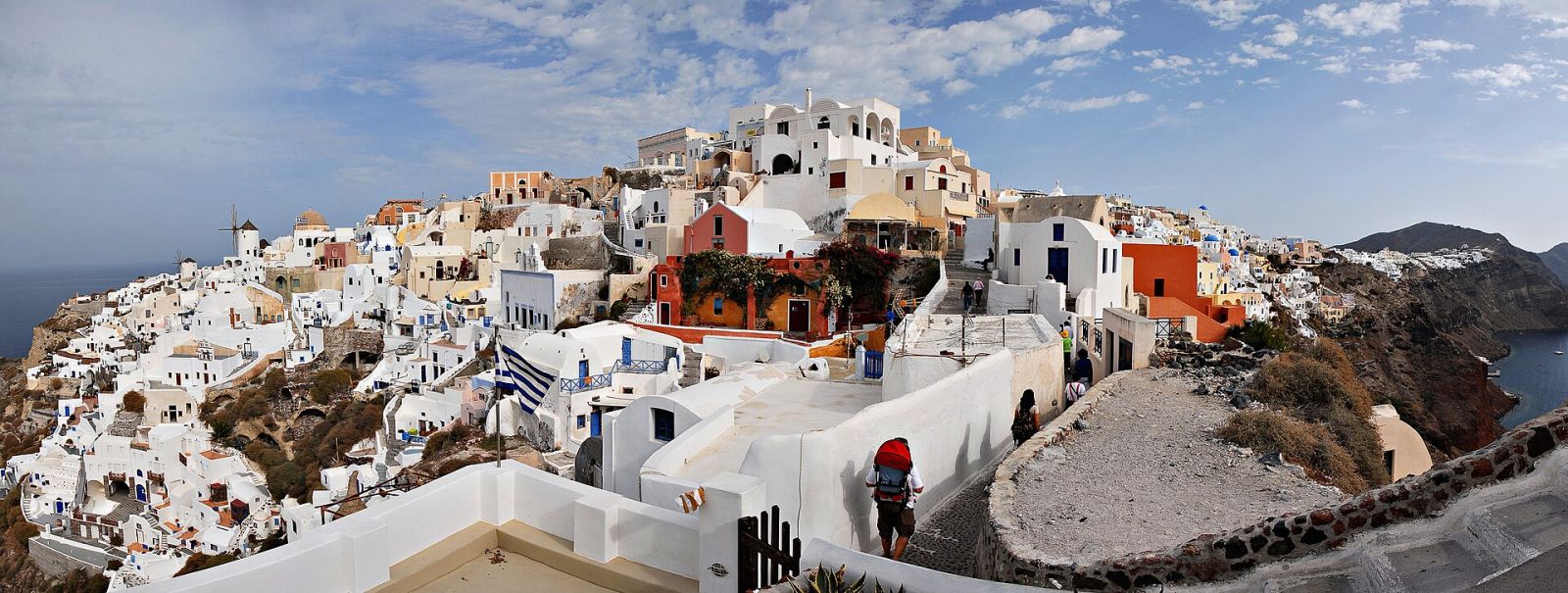
Rhodes is the largest island of the Dodecanese, roughly 1,400 sq km, and its main advantage is how compact the experiences are. The Old Town of Rhodes has been on the UNESCO list since 1988: it is one of the best-preserved medieval fortresses in Europe, with the Palace of the Grand Master and the Street of the Knights inside its living stone walls.
That means you can wander the fortress of the Hospitallers in the morning and lie on a beach in the afternoon. The coast here varies: on the eastern, leeward side the sea is calm and warm (Tsambika, Kallithea), while on the western side there is more often wind and waves, which surfers love. It is also worth a separate trip to Lindos with its white little town beneath an ancient acropolis.
The downside of Rhodes is that it is frankly touristy and crowded in summer, especially the northern part around the capital. For quiet you will have to head to the south of the island.
Santorini: what you pay for and what not to expect here
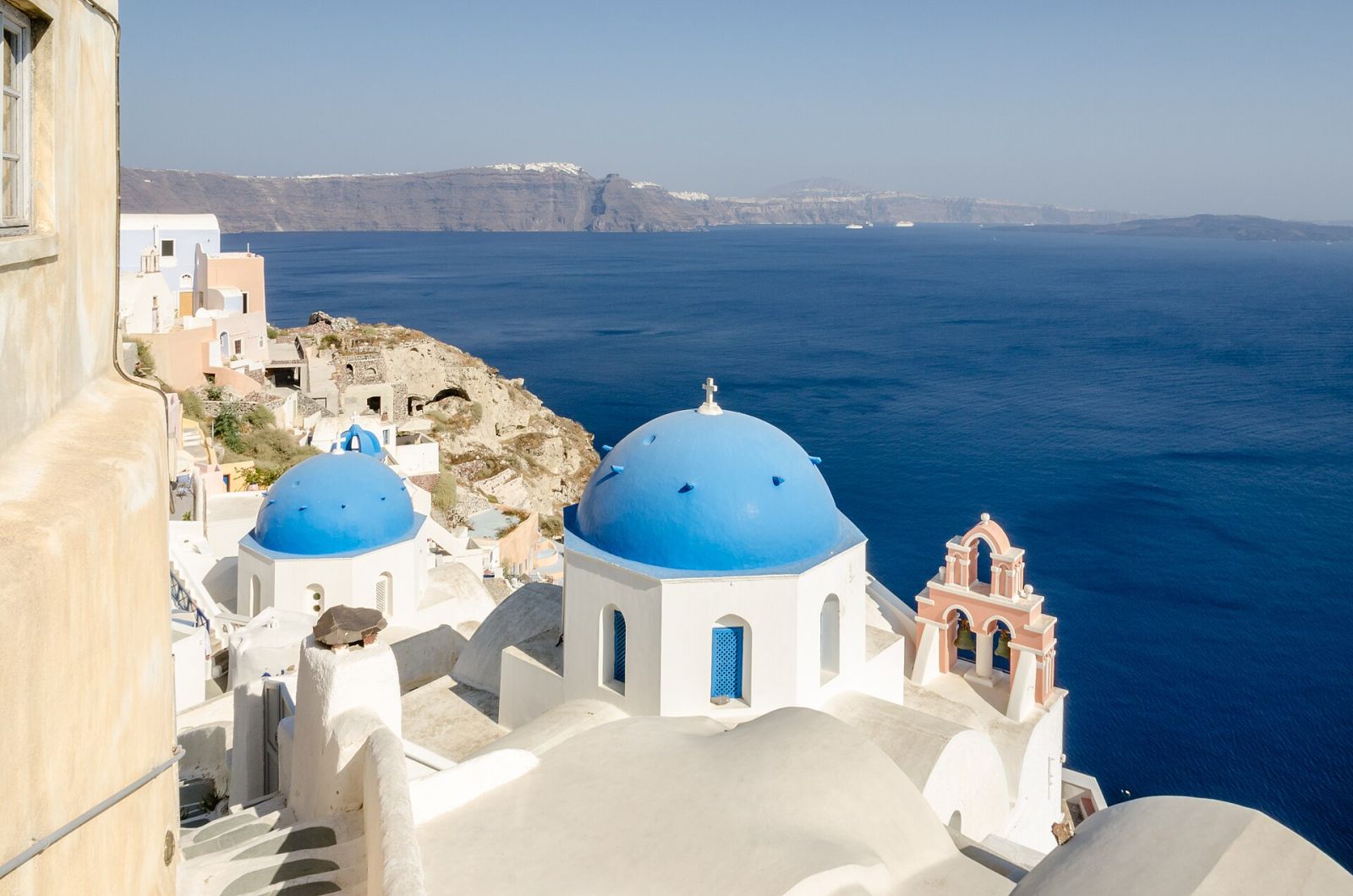
Santorini was born from a volcanic catastrophe: about three and a half thousand years ago an eruption destroyed the centre of the island, and the sea flooded into the crater. That is how the caldera formed, the very bay with sheer cliffs, over which the white towns of Fira and Oia are perched. The sunset over the caldera is the main, almost the only product of the island, and it is sold dearly.
It is worth coming here for the views and the atmosphere, not for the beaches. The beaches here are volcanic, with black or reddish sand (Kamari, Red Beach), the water is cooler, and getting in is not convenient everywhere. Santorini is small, you can realistically see it in two or three days, and it is more of an addition to a route than a place for two weeks of lying by the sea.
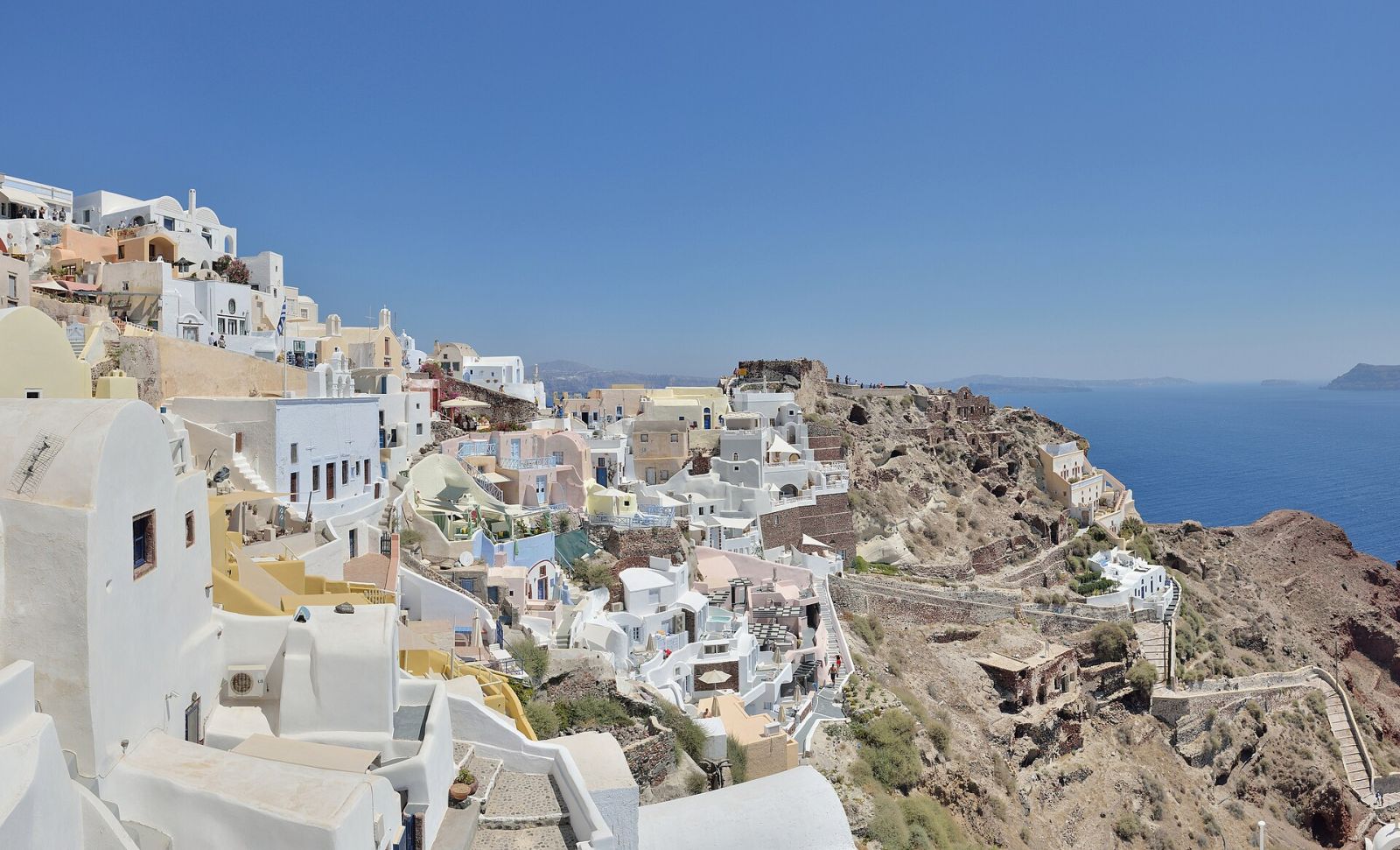
The main caveat: at peak season Oia turns into one solid crowd at sunset, and prices for accommodation with a caldera view are among the highest in Greece. If your budget is limited, look at hotels deeper in the island and come to the caldera for a walk.
Corfu: the greenest and least "Greek" of the islands
Corfu lies in the north-west, in the Ionian Sea, almost opposite the coast of Albania, and it looks different from the rest of Greece. Thanks to a milder climate and more rain the island is densely green, full of cypresses and olives rather than scorched by the sun. The Old Town of Corfu has been on the UNESCO list since 2007 as the fullest example of a fortified Venetian port: pastel houses, arcades, two fortresses and narrow lanes that really do resemble an Italian town.
It is a good choice for families and a relaxed holiday. The beaches in the west are picturesque (Paleokastritsa with its coves, Glyfada with sand), though some are squeezed between cliffs and small. The downside is the same as the advantage: the moist greenery means the weather here is less predictable than on the southern islands, and rain is possible at the start and end of the season.
Zakynthos and the main caveat of the 2026 season
Zakynthos is also an Ionian Sea island, and its calling card is Navagio bay, also known as Shipwreck Beach: a rusty cargo ship on white pebbles among sheer white cliffs. It is probably the most photographed view in all of Greece.
And now honestly and up to date: the descent to Navagio beach itself is closed. Because of landslides and the risk of falling rocks, access to the bay has been restricted, and by the authorities' decision the ban is in force at least until 31 October 2026. You can see the ship and the bay only from the official viewpoint above it, or from the water, on an excursion boat that does not land on the shore. So if you are going to Zakynthos specifically for "that photo on the beach by the ship", check the access status before buying tickets so you are not disappointed on the spot.
Beyond Navagio the island is still worth attention: the Blue Caves in the north, caretta turtles on the beaches of Laganas bay (a protected area) and quiet sandy beaches in the south for families.
When to visit the Greek islands?
The beach season on the Greek islands lasts roughly from May to October, but the best balance of weather, price and crowds comes at the end of spring and the start of autumn. In July and August warmth is guaranteed, but that is the peak of prices and people, and on the smaller islands there is not enough shade or space.
| Period | Weather and sea | Who it suits |
|---|---|---|
| May, June | Warm, the greenery still alive, the sea warming up | Sightseeing, trekking, moderate prices |
| July, August | Heat, the warmest sea, peak crowds and prices | Beach only, those tied to school holidays |
| September, early October | The sea at its warmest of the year, fewer people | Comfortable beach plus excursions |
In winter most of the island infrastructure sleeps: on the smaller islands hotels and restaurants close. The exception is Crete and Rhodes, where life goes on all year round, but the sea is already too cold for swimming.
How to get to the islands?
Each of the five islands has its own airport, and Crete has as many as three (Heraklion, Chania, Sitia), so in summer plenty of charters and low-cost flights fly there from Europe. The second route is ferries: from the Athenian port of Piraeus, vessels sail to Santorini and Crete, while the Ionian islands are more convenient to reach from ports on the west of the mainland.
For travellers from Ukraine there are currently no direct flights because of the closed airspace, so the route is built through neighbouring countries with a connection at a European hub. Check specific connections and prices before the trip, as they change with the season and the carrier. And remember the advice from the start: take one region instead of trying to cover half the country in a week.
So which island should you choose?
There is no universal winner among the Greek islands, there is only the match to your needs. If you are going for the first time and want one island for everything, take Crete: it covers sea, culture and mountains, and does not get boring. If a medieval atmosphere next to a beach matters, Rhodes is yours. For views and romance over a few days, fly to Santorini, but without illusions about the beaches and prices. If you want greenery and cosiness instead of scorched sun, look at Corfu. And go to Zakynthos for the coast and nature, keeping in mind that the descent to Navagio is closed for now and you will only be able to see the bay from above.