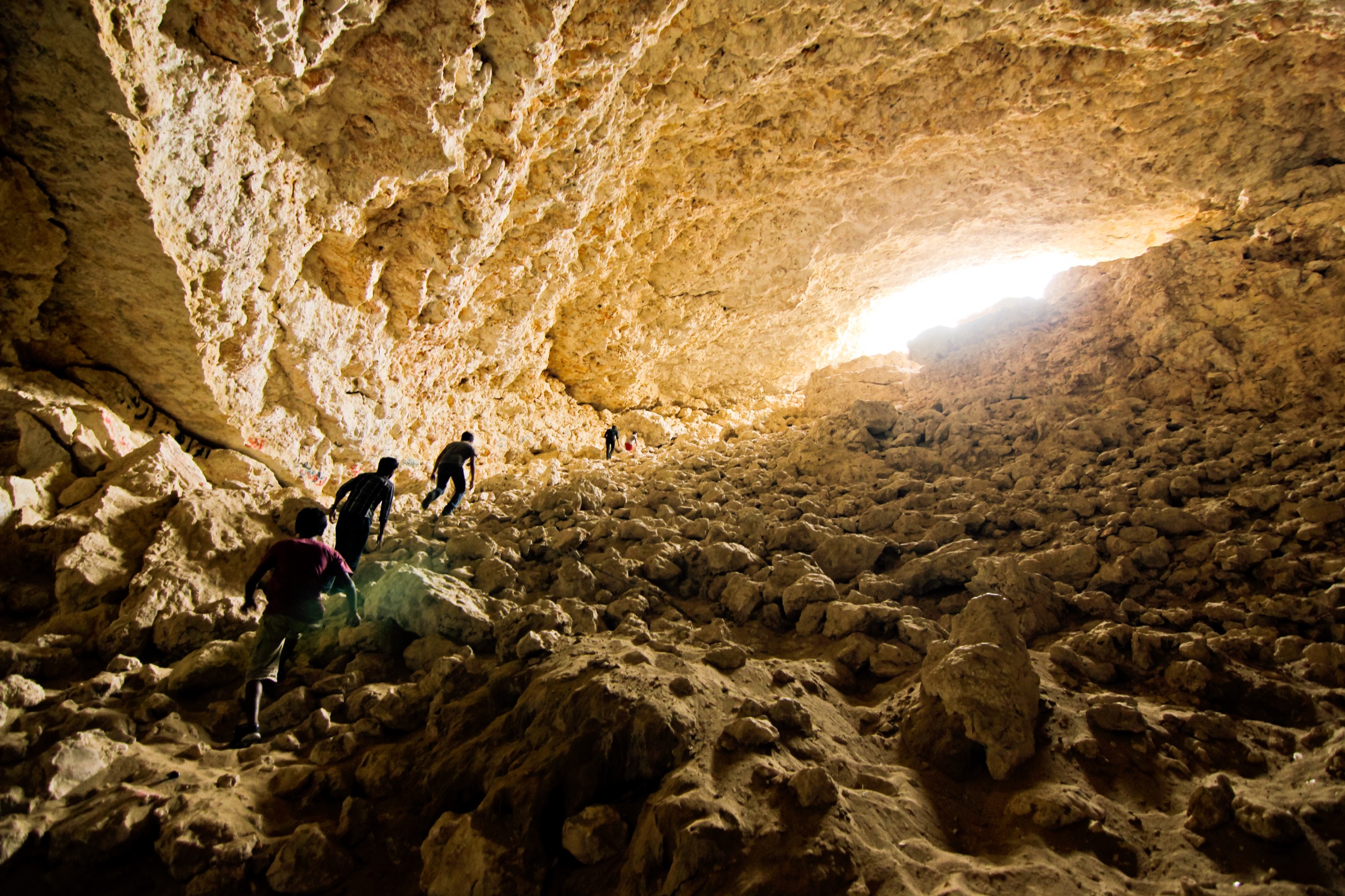


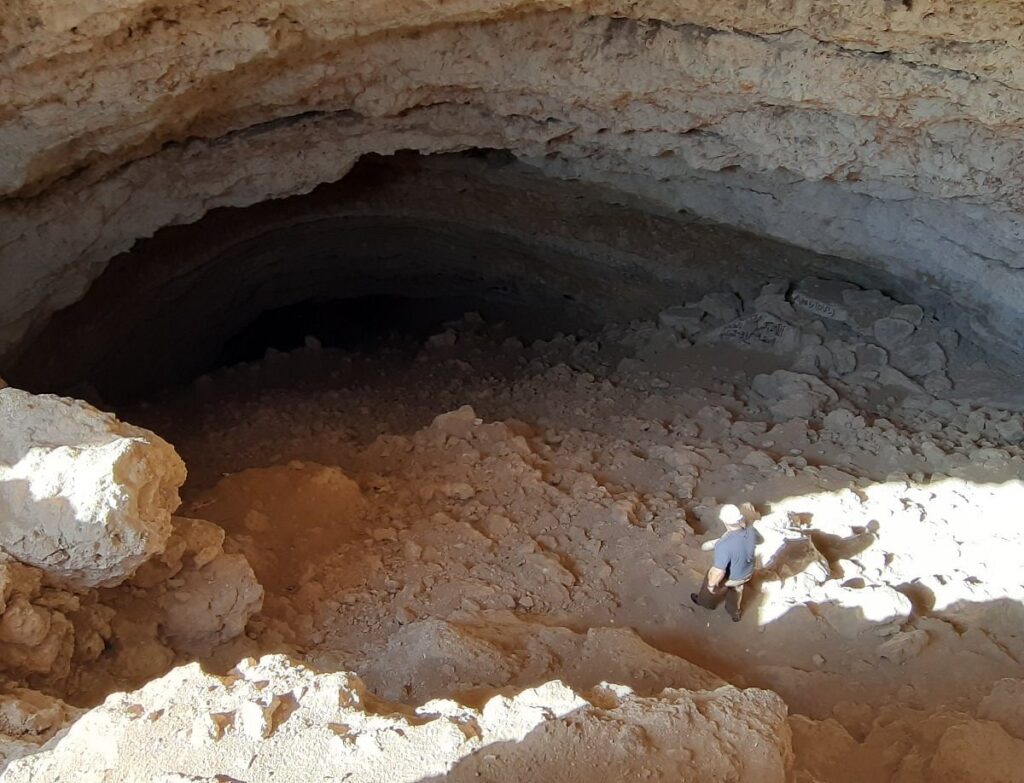
Right in the middle of the Qatar Peninsula, a vast chasm suddenly opens up from the rocky desert, dropping 100 metres into the earth.
It is a striking sight, and it hardly matters whether you are standing at the top or down below.
This is Musfur, a massive ancient cave that is considered the deepest sinkhole ever discovered in Qatar.
Partner links: booking through them supports the blog at no extra cost to you.
The site sits less than an hour's drive west of Doha, right beside the main Salwa Road, which makes it an ideal spot for a quick and easy outing for anyone keen to explore the underground world.
The entrance to Musfur is fenced off for protection. Reaching the sandy depths of the sinkhole is relatively easy, but visitors should stay alert as they climb down the steep, rough passage. Hiking boots are a must, but take extra care not to step on the insects crawling across the rocks.
The light from the entrance gradually fades as you make your way down, while a pleasant breeze filters through the layers of limestone and gypsum.
Although plant life is mostly absent, you may come across small birds that have built their nests high up in the cracks of the cliffs.
Karst Formations
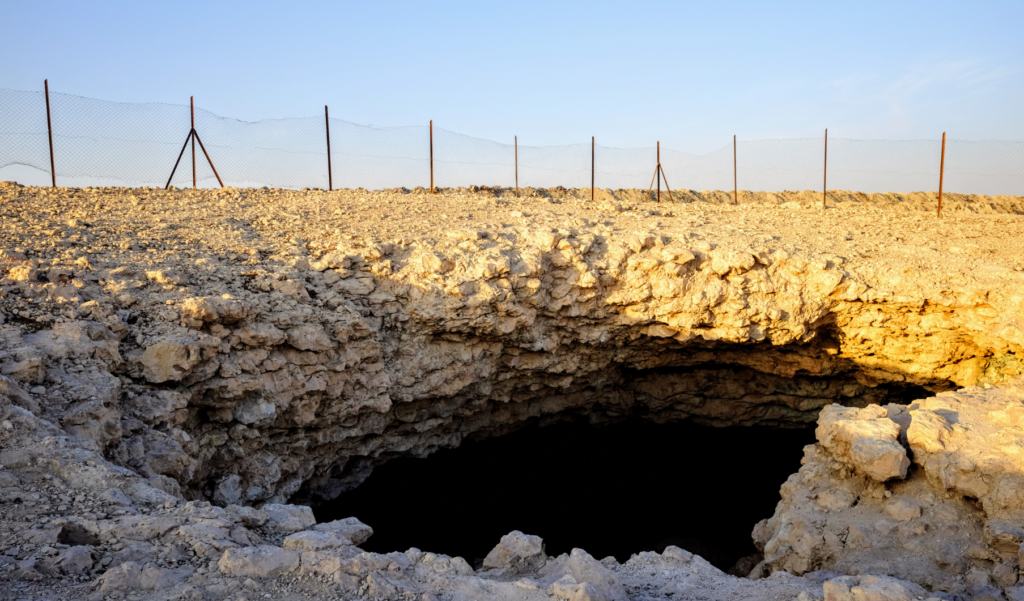
Sinkholes are a typical feature of karst terrain.
This distinctive landscape is the result of slightly acidic water acting on soluble rocks such as limestone. As the water seeps into the rock, it slowly wears it away and creates cavities. Over time, these hollows fill with sand and soil. Once they grow large enough and the arched roof collapses, a sinkhole is formed.
Alongside sinkholes, the karst landforms of Qatar include depressions, caves, solution hollows and rawdas (gardens, meadows or fertile depressions in Arabic).
According to geologists Abdulali M. Sadiq and Sobhi J. Nasir, writing in the Journal of Cave and Karst Studies: "Most of the karst rocks of central Qatar formed as a result of extensive subsurface dissolution of carbonate and sulphate deposits under humid climate conditions of the middle Pleistocene [about 000,000 years ago] and subsequent collapse."
A Snapshot of the Past
Imiu, a senior ecologist and conservation coordinator with the Qatar Natural History Group, who has visited Musfur several times over the past decade, said that descending into the sinkhole opens a window onto the very distant past.
"If you understand how karst forms, it is as though you are stepping back in geological time; you can see how the water circulated and carved openings into the bedrock," she said.
"You get a snapshot, and this happens [often] in Qatar, a journey back through geological time."
To reach Musfur from Doha, you need to head south along Salwa Road until the Mekaines exit. After that it is off-road, so it is best to use a map app and an all-terrain vehicle, because driving along the pitted track is very bumpy. Be sure to bring a headlamp and water, and, of course, to take your rubbish with you.