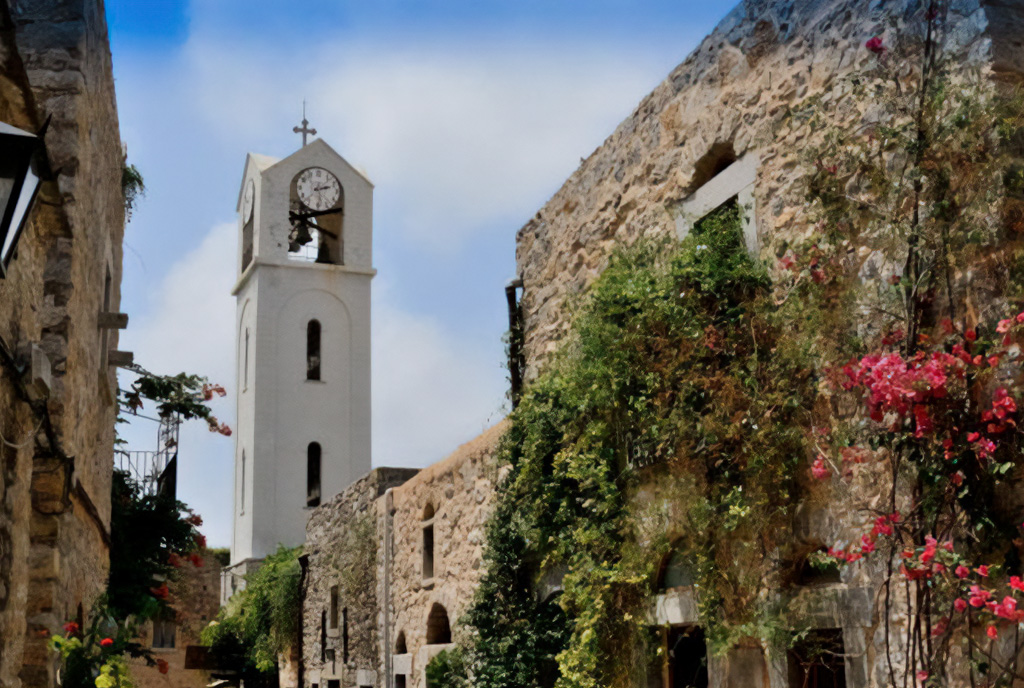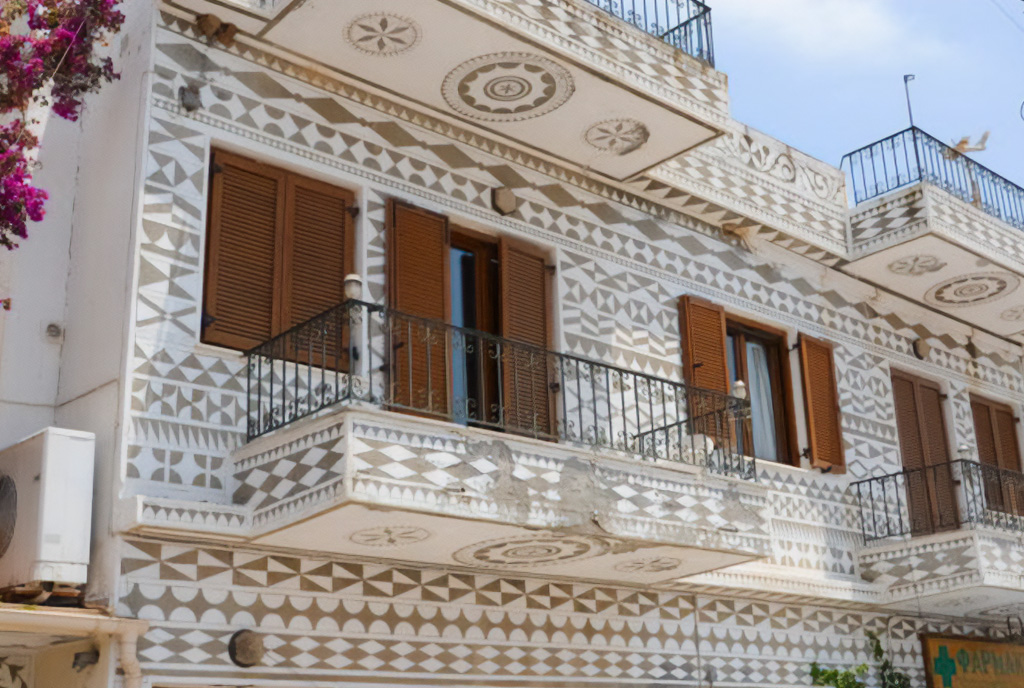


Known as the “painted village,” Pyrgi is without a doubt one of the most photogenic places in the world.
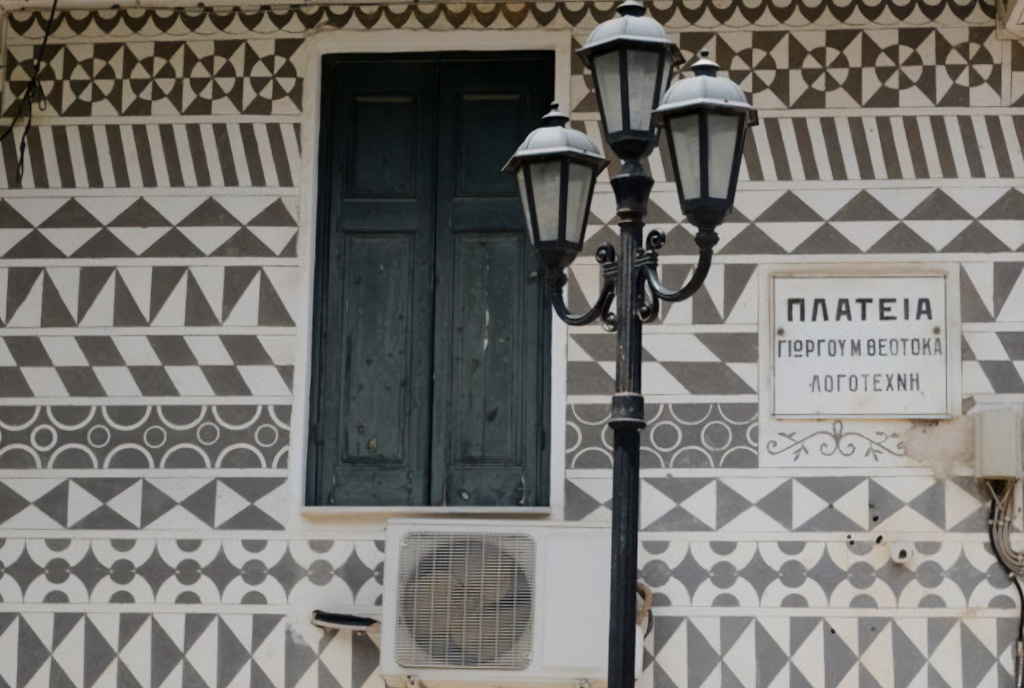
Set on Chios, the fifth largest of the Greek islands, it is made up of houses adorned with geometric engravings created using the sgraffito technique.
This process, most likely brought over by the Genoese who ruled here during the Middle Ages, begins with three layers of white paint, black volcanic sand from the nearby beach of Mavra Volia, and a coat of lime.
Partner links: booking through them supports the blog at no extra cost to you.
The builders then scrape away the layers to create intricate patterns.
Although this painstaking process is very expensive, for the villagers it is a matter of pride.
Besides, money is not an issue here. Over the centuries, Pyrgi has proven to be one of the wealthiest villages in the Mediterranean.
For hundreds of years, the local economy was strengthened by the cultivation of mastic trees, which produce a fragrant resin called “mastic.”
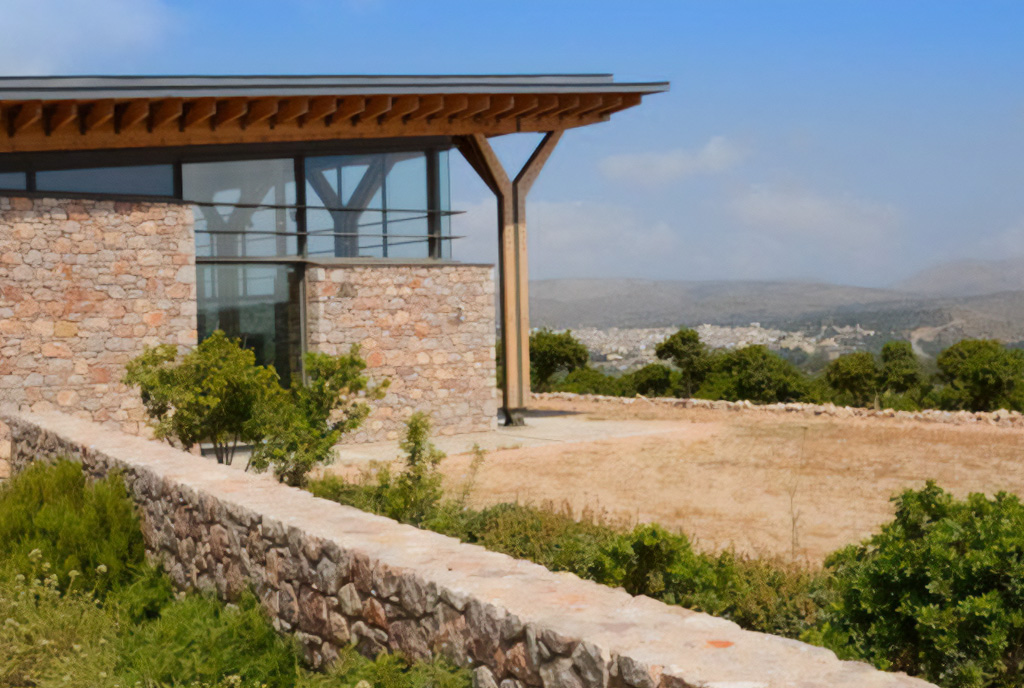
The story of mastic is beautifully told in a museum just outside Pyrgi, which offers stunning views of the surrounding hills carpeted with Spanish broom and those mysterious mastic trees.
A Highly Prized Resin

The English word “masticate” (to chew) comes from a Latin adaptation of the Greek word for “to chew,” which sounds like mastichein.
In the days before dental hygiene, the wealthy chewed mastic to freshen their mouths and/or protect themselves from plaque.
As a result, it was held in very high regard.
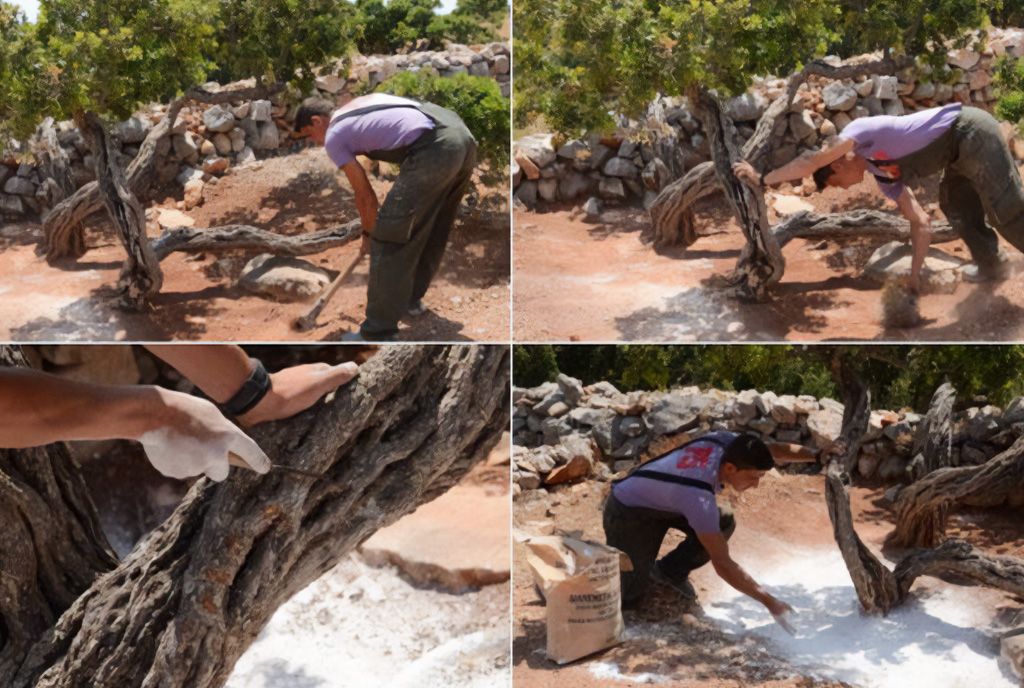
Nikos Zervoudis, a farmer from Pyrgi, shows off the grueling cultivation process in a grove of mastic trees just outside the museum.
“In winter, the tree needs fertilizing and pruning into a rounded shape so the resin can be harvested properly,” he explains.
“But in spring, it needs a special kind of cleaning.”
“First we prepare the ‘table’ by weeding a circular patch beneath the tree and clearing it of stones and pebbles. Then we spread lime to create a flat surface where the resin can fall and set without dissolving.
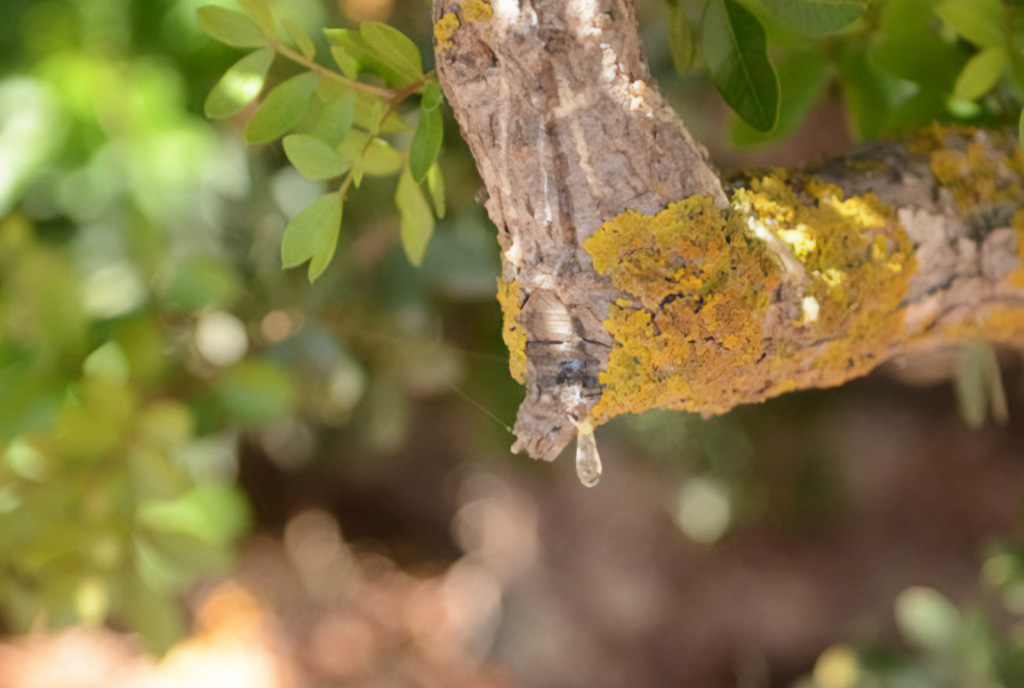
“After that, we make shallow incisions, starting at the bottom and working our way up; the lower part produces thicker drops, while the upper part produces finer ones. About three to four weeks after the incisions are made, we collect the drops from the table and gather the ones left on the trunk.
“If it rains even once during this process, the resin dissolves and the entire harvest is lost. In autumn, we clean the harvest by sifting it, washing it, and picking out the impurities.”
A One of a Kind Substance

What is especially remarkable is that the variety of mastic tree that produces this particular resin (Pistacia Lentiscus var Chia) grows only around 24 villages in the southern part of Chios, including Pyrgi, collectively known as the “Mastichochoria” or “mastic villages.”
There have been attempts to graft such trees in Italy, across the sea in Turkey, and even in northern Chios, but they all proved fruitless.
According to local legend, this is because of St. Isidore, a Christian sailor in the Imperial Roman navy who was martyred on Chios in the third century, during the reign of Emperor Decius, and dragged by horses across the rugged terrain of Chios.
When the mastic trees saw his suffering, they are said to have wept tears of mastic.
Modern agronomists, however, say it comes down to a combination of the volcanic soil of southern Chios, the exceptionally dry microclimate, and the eugenics practiced over generations, when only the trees with the best yields were propagated.
The Genoese optimized the cultivation and trade of mastic while they ruled Chios from 1261, until the Ottoman Turks captured the island in 1566.
To gain control and prevent smuggling, the Genoese built a network of fortified villages from scratch, the Mastichochoria, and forcibly relocated the islanders from their farms.
All of these villages were built with the same layout to deter pirates: a surrounding wall, a gate, and a web of narrow streets leading to a central defensive tower.
It was not until 1920 that a resident of Pyrgi dared to build a house beyond these walls, and he was later mocked for “going into exile.”
The fortifications of the village of Olympi remain intact, with a few outward-facing windows and doors dating back to the early 20th century. Its central tower, which lost its upper floors due to the construction of neighboring houses, is now shared between two cafes.
The village of Mesta is the most enchanting of them all, with an abundance of ivy, jasmine, and bougainvillea decorating a medieval labyrinth of passages, porticoes, and arcades.
A Renewed Interest

The mastic trade took a heavy hit after 1900, when Thomas Adams mass-produced chewing gum in the United States under the name Chiclets, made from the resin of the Mexican sapodilla tree, and sold it around the world.
This coincided with war and instability on Chios, which resulted in the island being incorporated into the Greek state, soon followed by World War I and the confrontation with Turkey.
Today, there is a renewed interest in mastic thanks to its supposed health benefits.
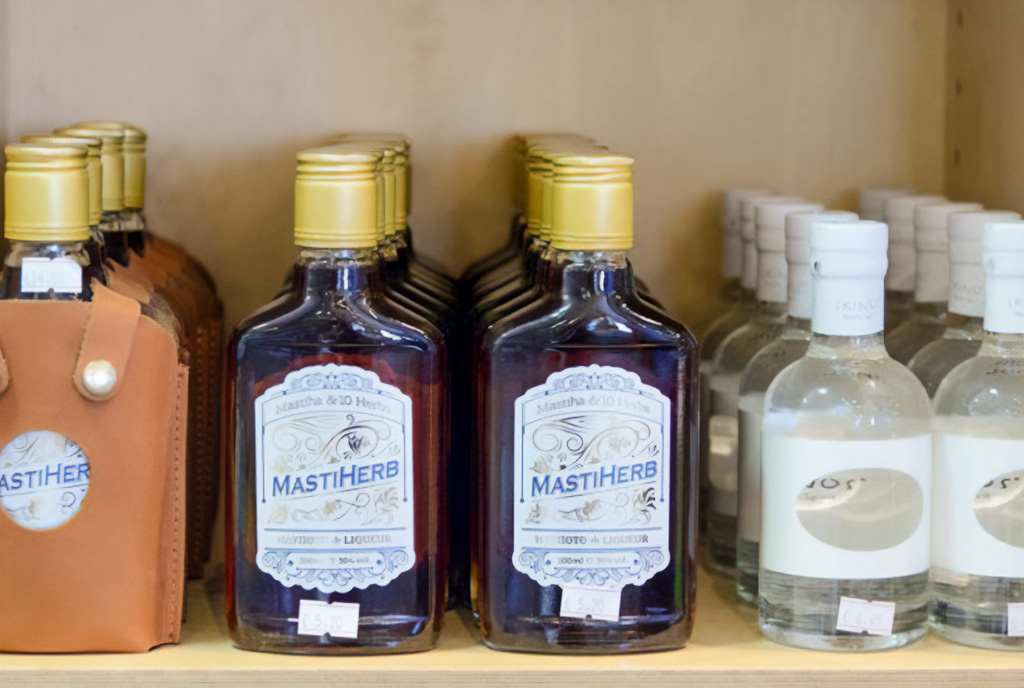
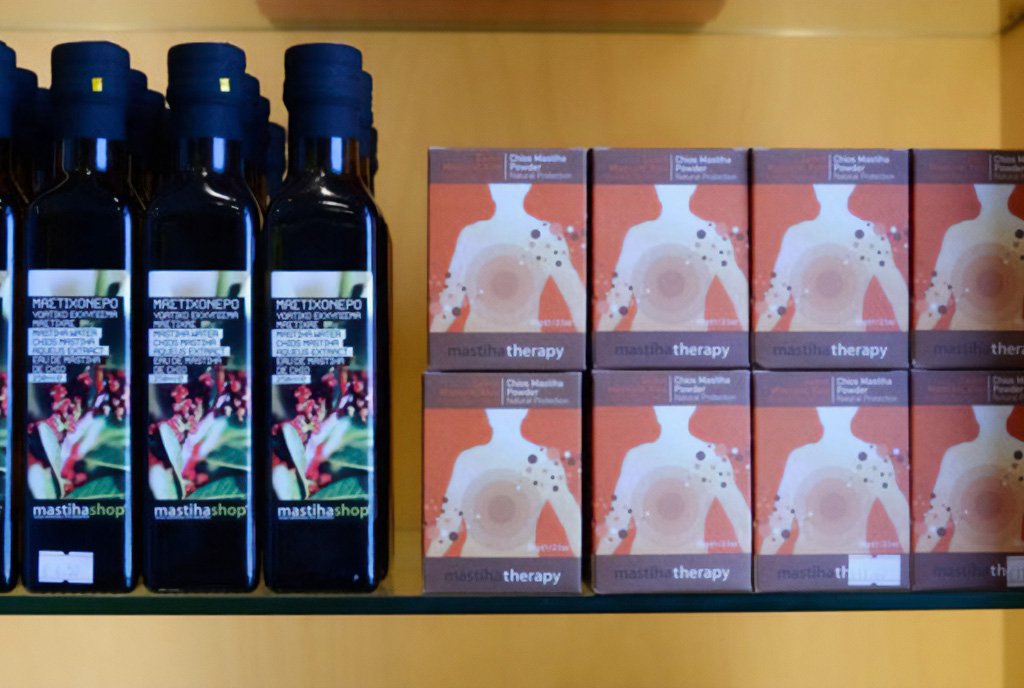
“The EU has recognized mastic as a traditional herbal medicine for digestive problems, and the know-how behind its cultivation has been declared an intangible cultural heritage of humanity by UNESCO,” says Ilias Smyrnioudis, scientific director of the Mastic Growers Association, at the official mastic shop in the town of Chios.
“We export 90% of our annual production to 45 countries. You can even find mastic in the American health food store GNC as a dietary supplement.
“Most of the exports go to the Middle East, which has never lost its taste for mastic. Muslims use it during Ramadan as a spice in their food, as well as a home fragrance.”
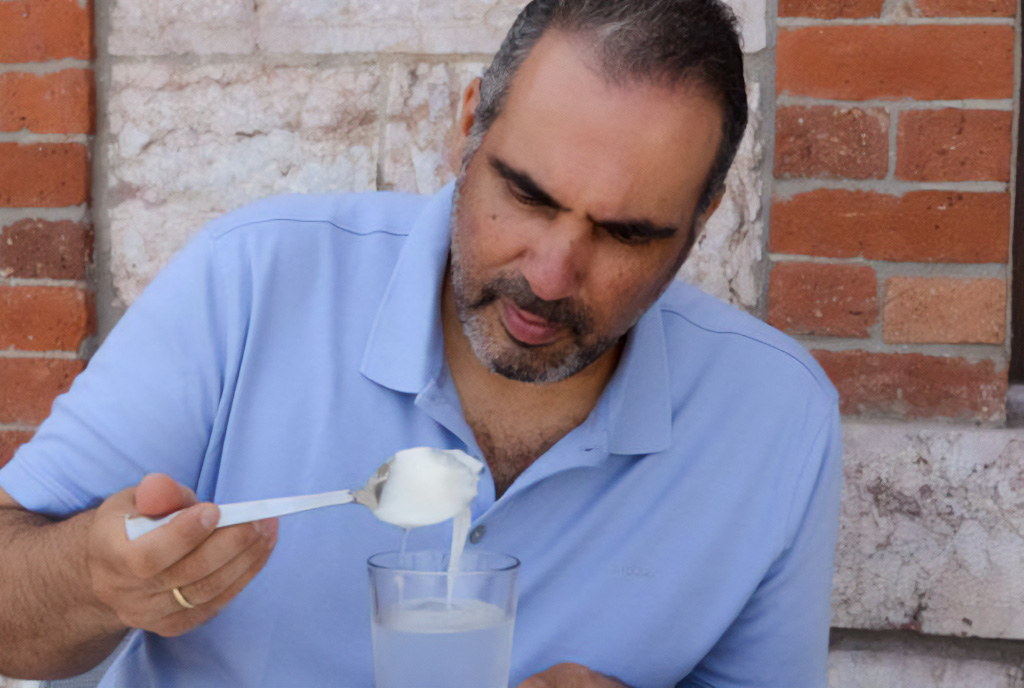
In Greece, it has been used as chewing gum, a digestive liqueur, and for a sweet treat called “submarine,” a soft mastic fondant served on a spoon in ice cold water.
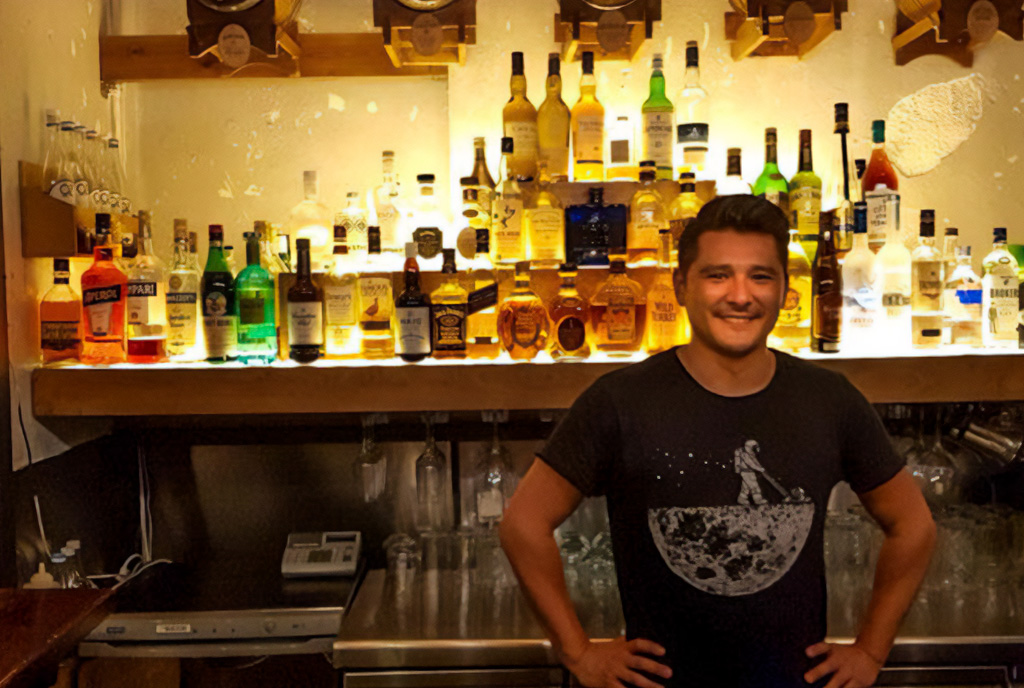
Iakovos Kontas, an award-winning mixologist from the Oz cocktail bar in the town of Chios, wants to change all of that with his “mastic project.”
“It's an initiative by the Oz team to make mastic known on the bartending scene by taking part in various mastic cocktail competitions,” he says. “I love mastic as a spice. Its flavor is earthy, bitter, herbal, woody.”
Kontas created a cocktail called “Black Pebble,” made with mastic liqueur, sesame oil syrup, fresh ginger, cucumber with a little brine, and served in a glass with two round ice cubes and roasted sesame seeds around the rim.
It is inspired by the beach of Mavra Volia, where the builders of Pyrgi collect the black sand for their sgraffito designs, and it is wonderfully refreshing.
“When I was in New York recently, I went to the famous Angel's Share bar in the East Village,” he adds. “And there, 5,000 miles from home, I spotted a bottle of mastic liqueur.”
“Give it five years and mastic will be used all over the world!”
Iakovos has already begun his quest for world domination, mixing mastic cocktails in Edinburgh, Scotland.
How to Get There
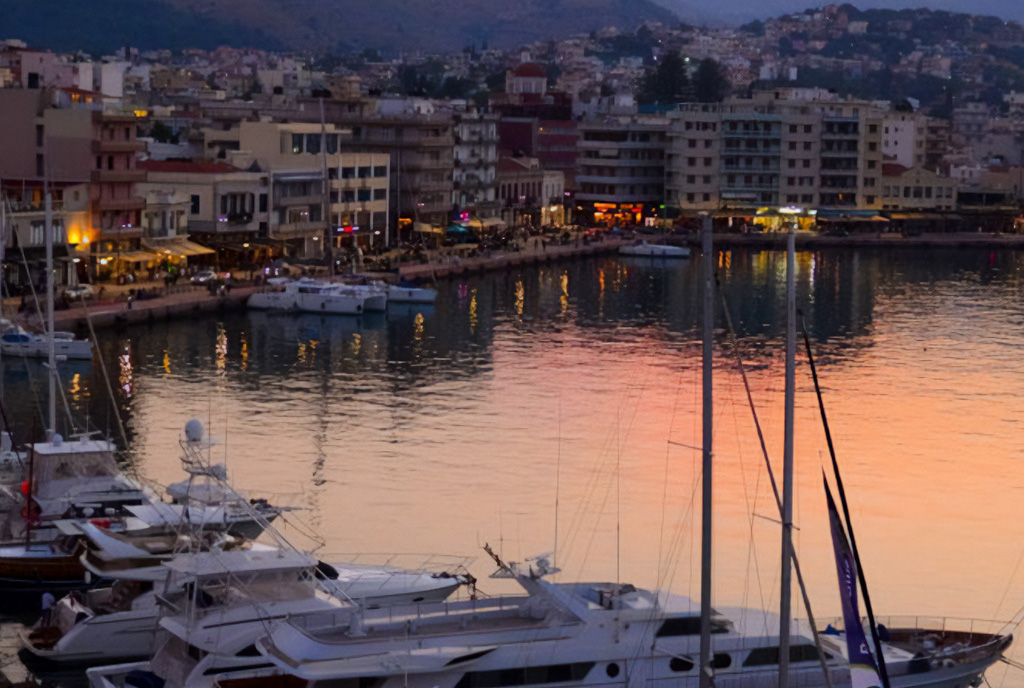
Chios is a 35-minute flight from Athens with Olympic Air.
Visitors can take a bus from the town of Chios to the Mastichochoria or rent a car.
Mastic Museum, Chios: +30 2271 072212