

Handling 20 million passengers a year in pre-pandemic times, the sleek, spotless halls of Athens International Airport served as the world's gateway to Greece's treasures for much of the 21st century.
But while officials hope that the slow return of international travel later in 2021 will eventually bring the arrivals halls of the Eleftherios Venizelos hub back to life, a few kilometers to the west another airport sits eerily silent, just as it has for most of the past 20 years.
Set on the southern coast of Athens across an area roughly three times the size of Monaco, Ellinikon, which translates as "Greek," was for decades the only international airport in Athens.
Partner links: booking through them supports the blog at no extra cost to you.
The former airport complex was first built in the late 1930s, when Greek aviation was still in its infancy. During the Axis occupation of Greece in World War II, the site was used by Nazi Germany's Luftwaffe and became a target for Allied air raids.
A Major Gateway

After the war ended, Ellinikon hosted Greek, American and British forces, but by the 1950s it had become Athens' main hub for commercial air travel. Significant redevelopment work took place, including extended runways, a new control tower and terminals.
As Greece's tourism industry expanded rapidly, Ellinikon served as the gateway for millions of people arriving from every corner of the globe to explore the country's archaeological wonders and sun-drenched beaches.
Time took its toll, however, and on March 30, 2001, after years of debate and planning, Ellinikon closed its doors indefinitely to make way for a bigger, more modern facility.

"By the 1990s the airport was eventually handling more than 10 million passengers [a year]," says Vasilis Tsatsaragkos, president of the cultural center of Olympic Airlines employees.
"Ellinikon couldn't keep up with the country's dynamically growing tourism needs."
In 2004, parts of the unused complex were converted into venues for the Athens Olympic Games, hosting competitions in baseball, fencing, canoe and kayak, and other sports.
But then came years of neglect, and the 1,530-acre brownfield site, once envisioned largely as a metropolitan park, was left to decay amid disputes over its redevelopment and Greece's plunge into economic turmoil following the 2008 financial crisis.
Related article: Nicosia International Airport: The Cypriot airport abandoned for 44 years
Redevelopment Delays

In 2014, a consortium of investors signed a €915 million ($1 billion) development deal, a key part of a post-bailout agreement between debt-laden Greece and its international lenders.
Under the deal, Ellinikon is to be transformed into one of Europe's largest coastal resorts, filled with luxury hotels and apartments as well as shopping centers, a park, a casino and an entertainment complex.
Yet efforts to get the project off the ground repeatedly stalled amid political opposition and various bureaucratic obstacles. Five years ago, at the height of the European refugee crisis, a large part of the site became an informal settlement that sheltered thousands of refugees living in dire conditions, its abandoned terminals and Olympic venues filled with a sea of tents.
More recently, the Greek government has pledged to speed up regulatory procedures so that the long-awaited redevelopment project can finally get started. Demolition crews began clearing work in July 2020, tearing down the first of hundreds of buildings that need to be removed.
Related article: The Cold War secret past of a Spanish tourist landmark
Frozen in Time

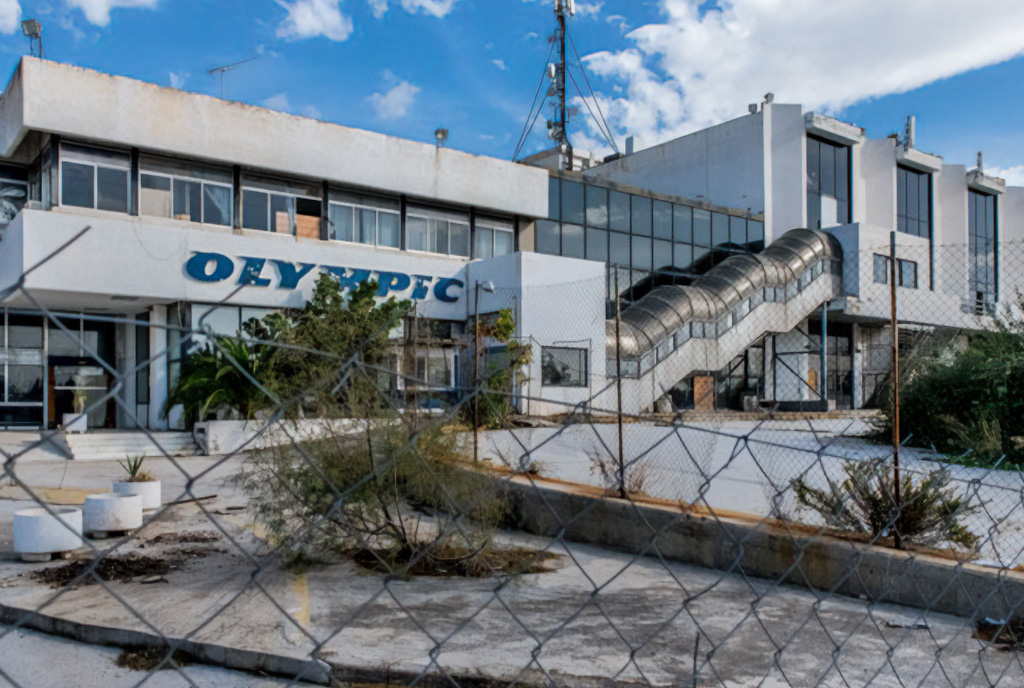
Some of its listed buildings that will be saved from demolition include the former East Terminal, designed in the 1960s by the firm of pioneering Finnish-American architect Eero Saarinen.
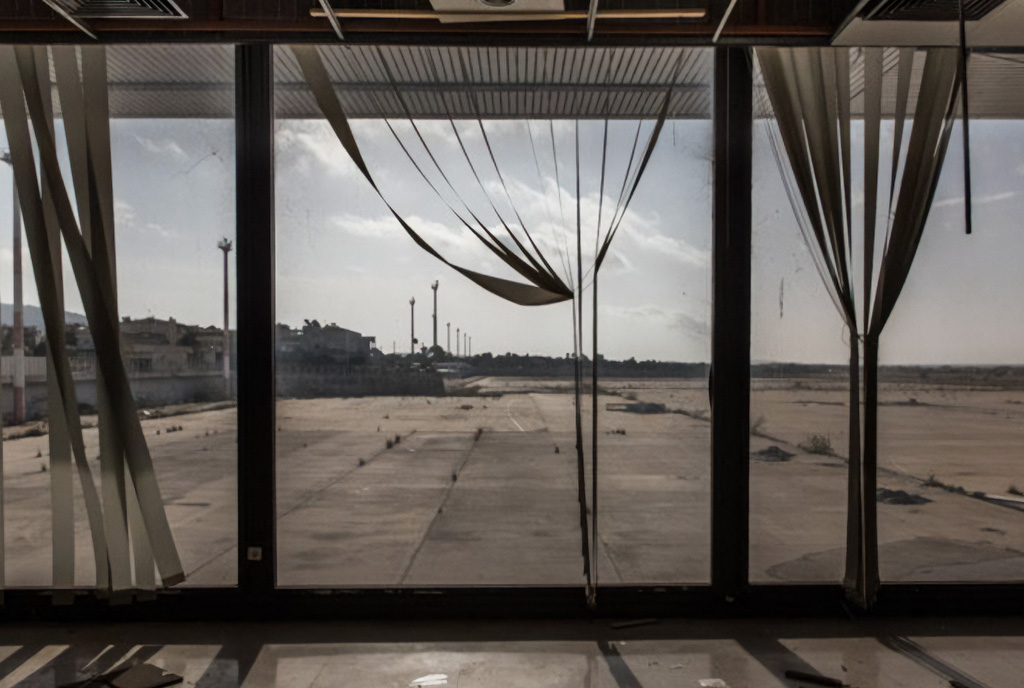
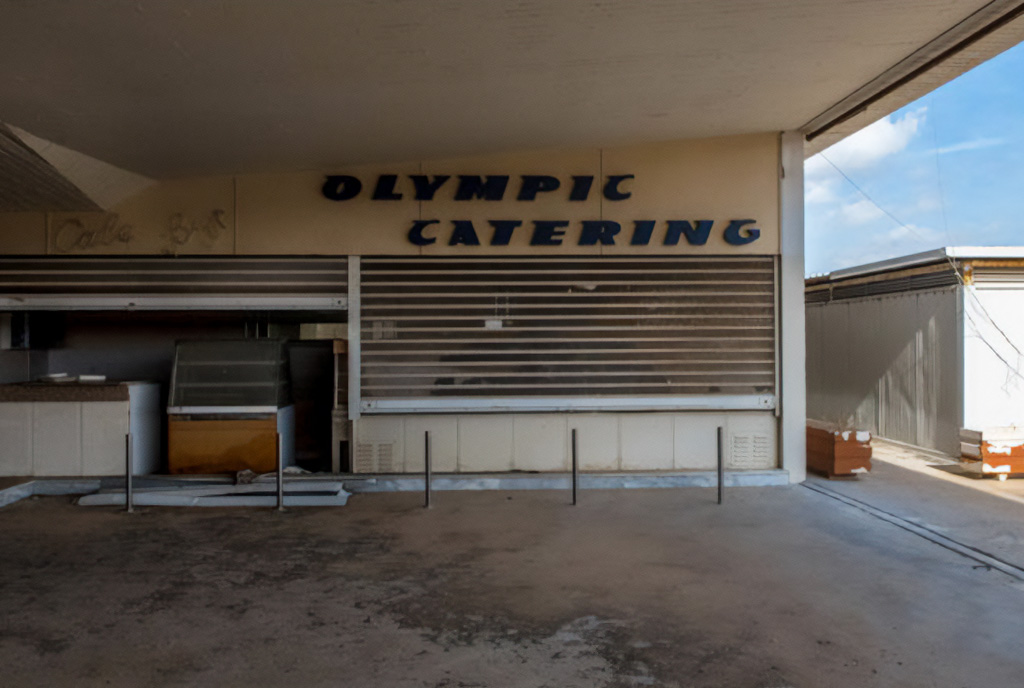
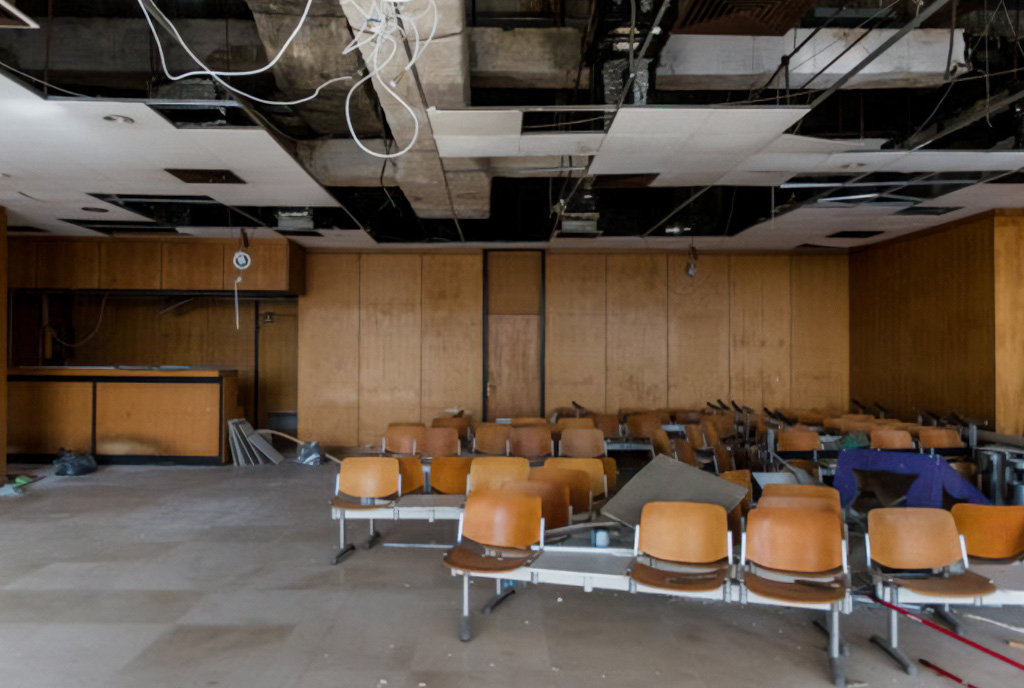
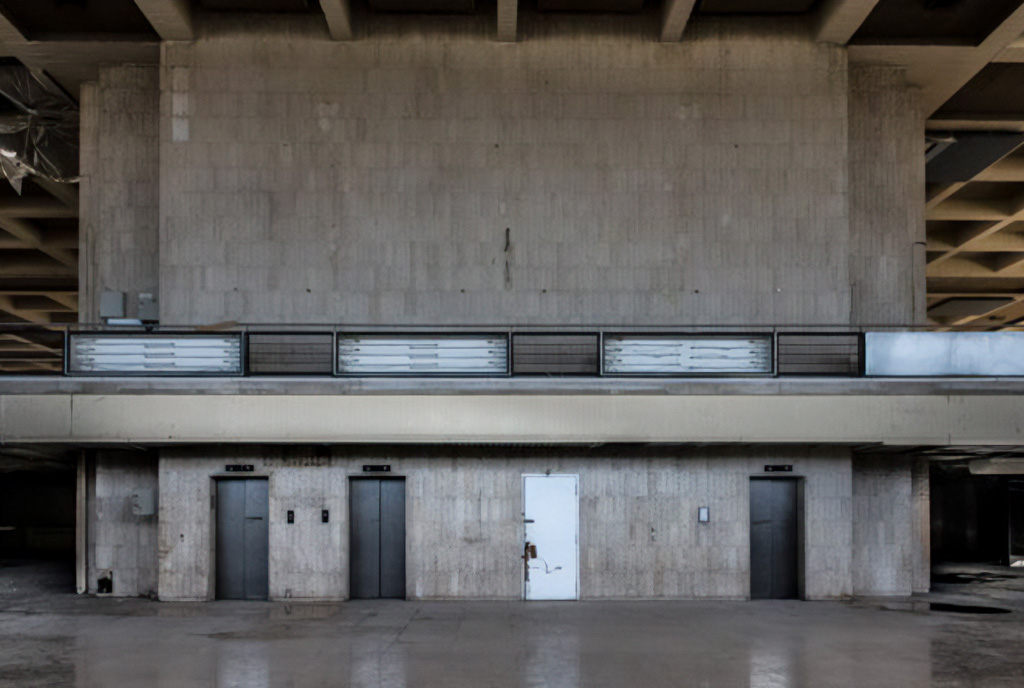
These days a sense of emptiness pervades its worn, cavernous ground-floor hall. A short walk down the stairs brings you to what was once a bustling lounge, now littered with debris from half-collapsed walls and a fallen ceiling that exposes tangles of twisted wires dangling from above.
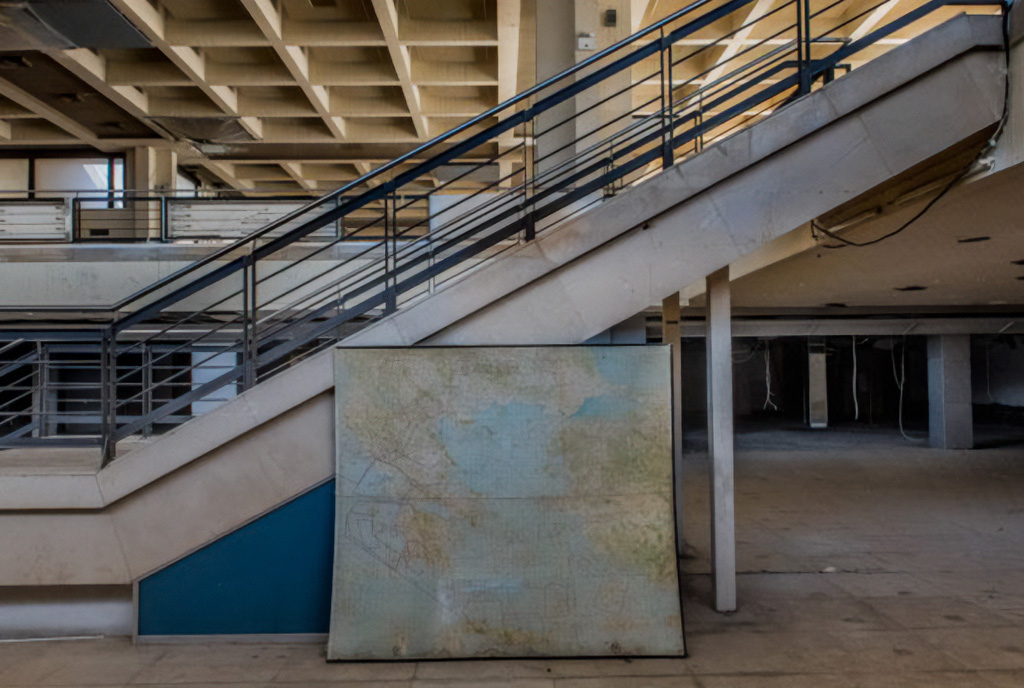
Elsewhere, a heap of trash, broken glass and discarded ledgers reveals the eerie scale of the decay, while faded travel posters and torn maps add a note of gloom to the scene.
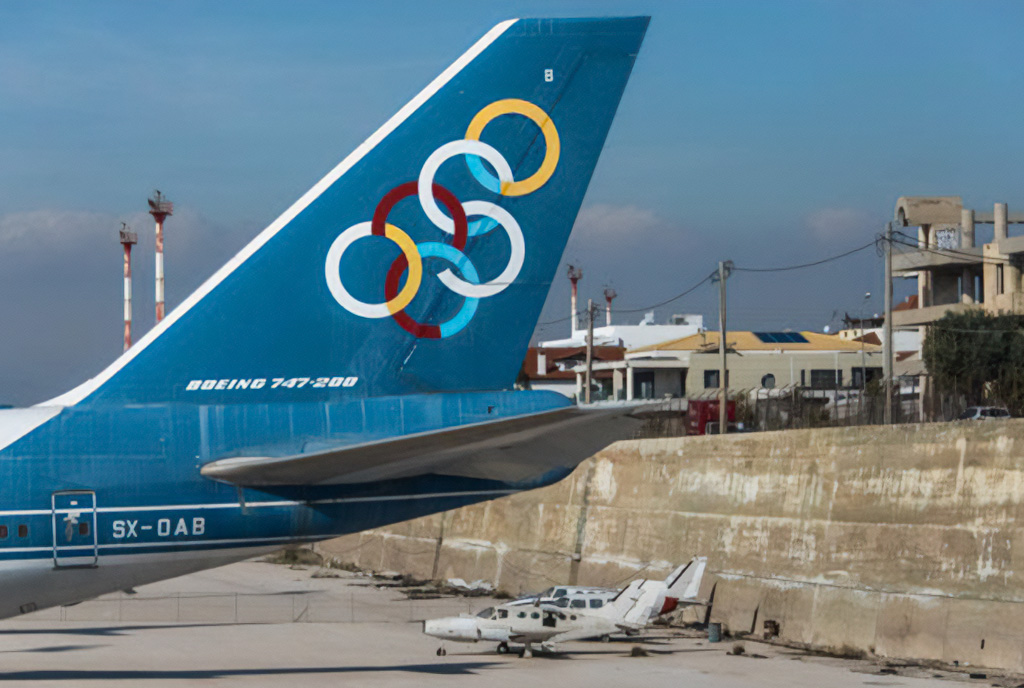
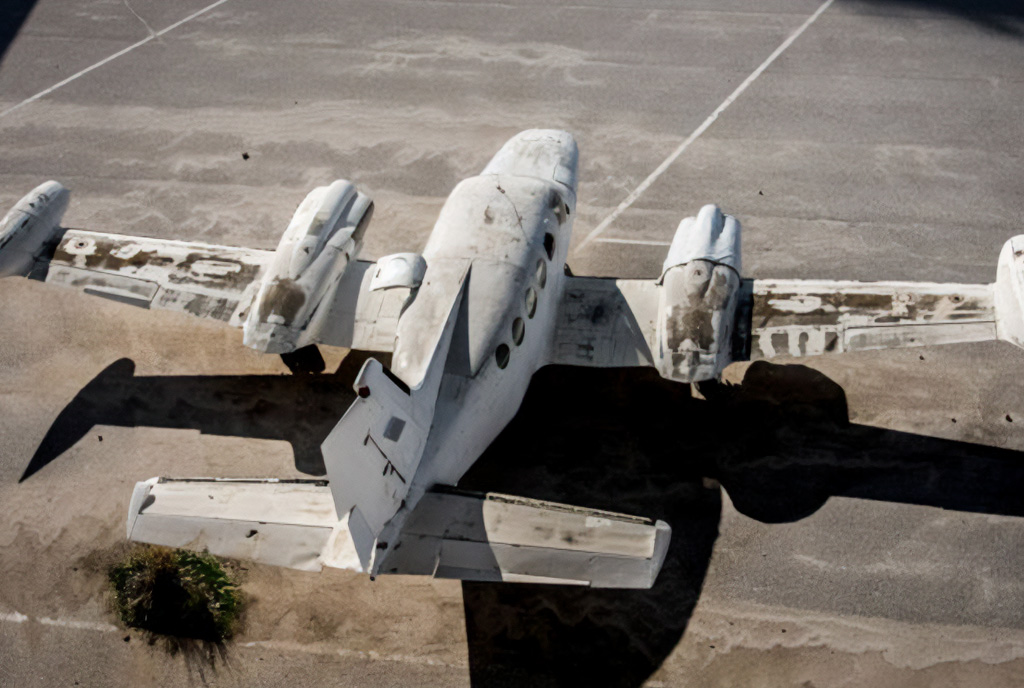
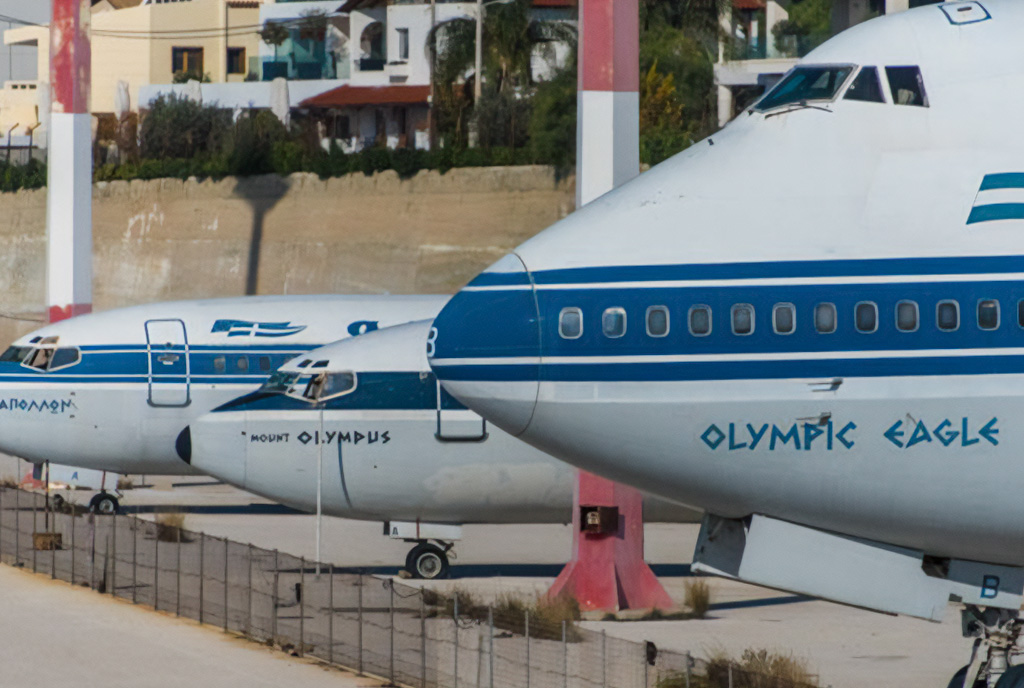
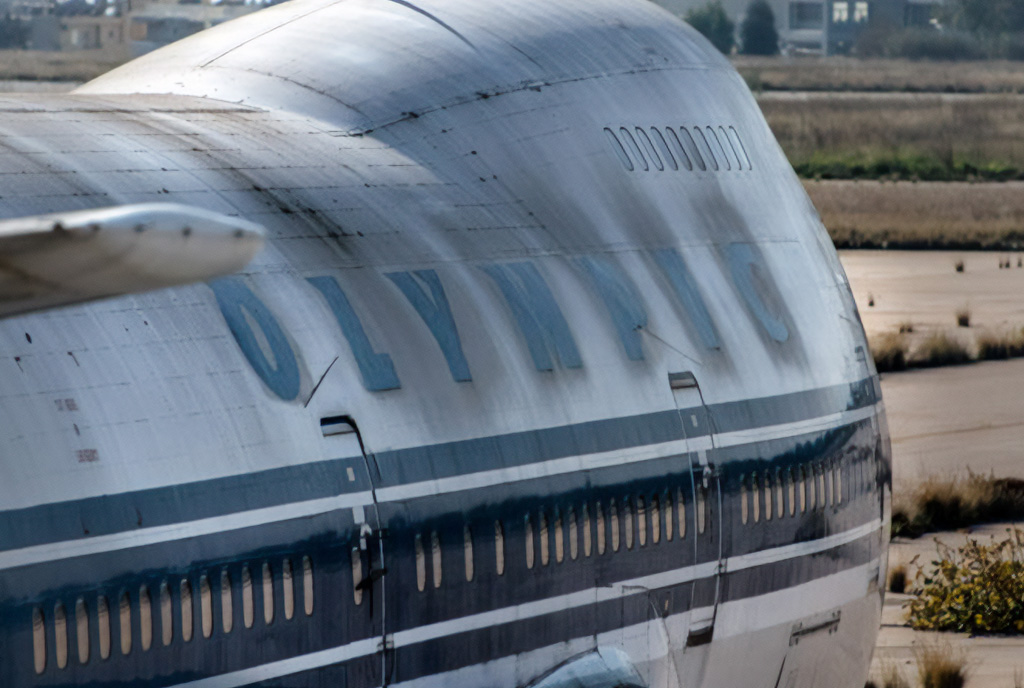
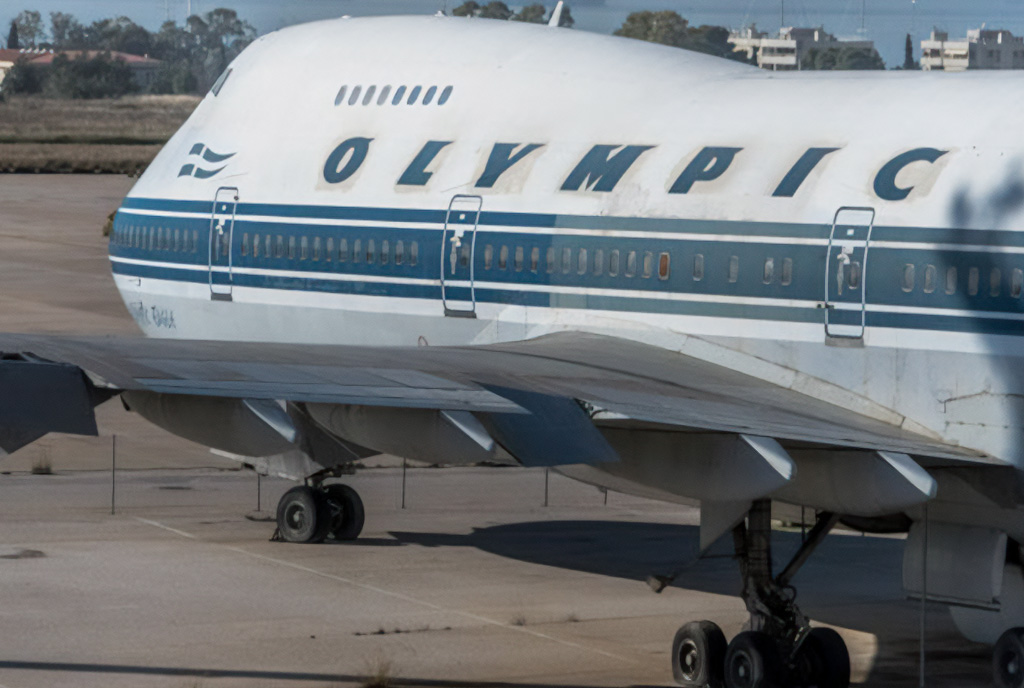
Beyond the crumbling structures, a small fleet of retired Boeing aircraft, including a striking 747-200 alongside a Boeing 737 and a Boeing 727, sit idle at the edge of the complex.
The rusting, stripped-down airliners all belonged to Olympic Airways (OA), the carrier that ruled Greek skies for decades and became synonymous with Ellinikon.
Related article: Striking photos show abandoned Cold War sites around the world
When OA Ruled the Skies

Launched by business tycoon Aristotle Onassis in 1957 after a deal with the Greek government granting exclusive use of air transport, OA rapidly expanded its fleet and helped put the country on the global tourism map.
"It was an airline that connected Greece with the whole world. Within 23 hours, Athens had a 'contact' with five continents," says Tsatsaragkos.
OA quickly became known for its unrivaled luxury in-cabin service, reflecting the glamorous style of its Greek founder and one of the world's richest men. Its flight attendants wore chic uniforms created by renowned designers such as Coco Chanel and Pierre Cardin, while its passengers famously enjoyed their meals on porcelain plates with gold-plated cutlery and crystal glasses.
After the 1969 opening of the Saarinen-designed East Terminal, which served all foreign carriers, Ellinikon's West Terminal was reserved exclusively for OA. A steady stream of celebrities passed through its gates, from Elizabeth Taylor and Sophia Loren to Omar Sharif and Neil Armstrong, arriving in Greece.

But in 1973, the death of Onassis' 24-year-old son, Alexander, in the crash of a twin-engine Piaggio amphibious aircraft shortly after takeoff from Ellinikon shook Greece and the Onassis family, and ultimately brought about the end of OA's "golden age."
On January 1, 1975, Onassis formally sold the company to the Greek state, and he died on March 15.
Over its first 18 years, OA's fleet grew from 15 to 28 aircraft, including the technological marvel of the era, the Boeing 747-200B Jumbo, purchased in 1973 for the Athens-New York route, but the national carrier faced serious financial troubles in the following decades due to chronic mismanagement.
Renamed Olympic Airlines in 2003, the company ceased operations in 2009, a few years after its move, along with the rest of Greece's aviation industry, from its former home at Ellinikon.
But the memory of both the abandoned airport and OA will live on in a new museum that will be housed in a dedicated building on the grounds of the redeveloped site, according to Tsatsaragkos.
"We have gathered 23,000 items documenting the history of both OA and civil aviation," he says, adding that seven aircraft will be among the future exhibits.
"We keep collecting material. This museum is our grand vision."