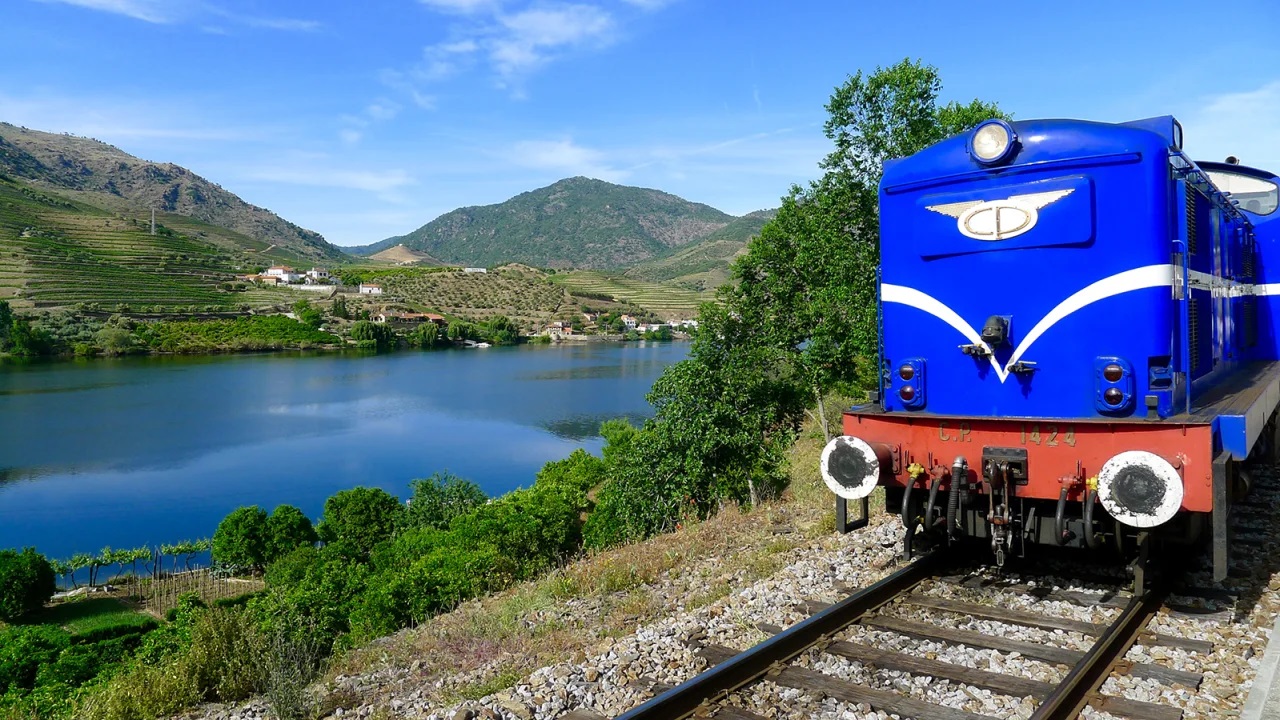


Bathed in sunlight that gleams off its regal blue livery, Portugal's Presidential Train pulls out of medieval Porto bound for the Douro Valley, launching a new addition to Europe's roster of luxury rail escapes: a nine-hour foodie excursion through one of the world's most beautiful wine regions.
The oldest carriages were built in Parisian workshops 127 years ago so that Portugal's kings and queens could travel their realm in comfort.
Now the royal rolling stock carries paying passengers on a lavish day trip across 200 kilometers (125 miles) of breathtaking scenery, from Porto to the grand estate of Quinta do Vesuvio on the far eastern edge of the Douro wine country.
Partner links: booking through them supports the blog at no extra cost to you.
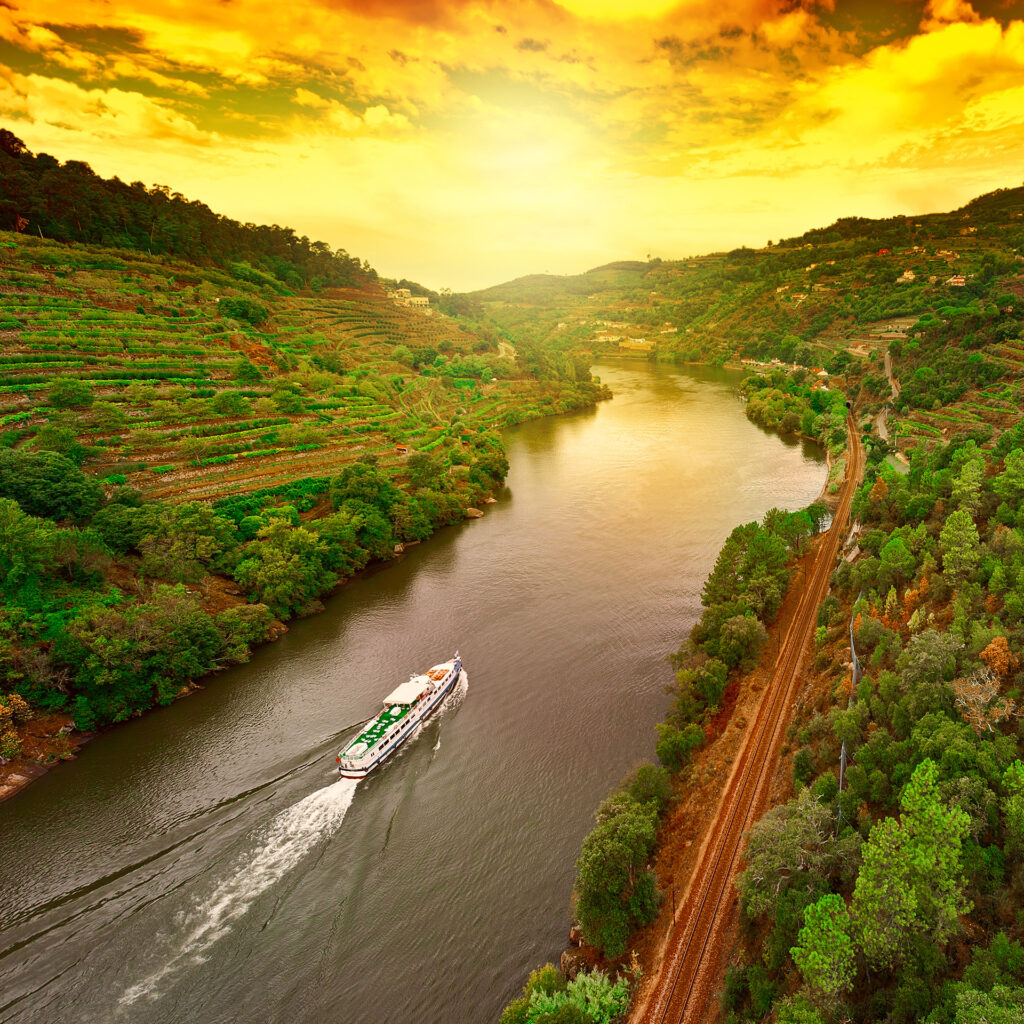
For much of the way through Portugal, the train hugs the riverbank. Every bend reveals another jaw-dropping view of the wide blue Douro slipping past vine-clad slopes dotted with granite villages or the stately mansions of old winemaking families.
This is not a cheap pleasure. Tickets for this railway cost 500 euros ($560), compared with 24.60 euros if you take an ordinary train along the same line. The presidential price tag includes a few extra touches, starting with the sumptuous dining.
A handful of Michelin-starred chefs from Portugal and beyond serve up fine lunches to travelers on the 30 or so trips scheduled for spring and autumn 2017. Their multi-course menus are paired with award-winning Douro wines.
Opening the show was to be Esben Holmboe Bang, the youngest and most northerly three-star chef in the world. His restaurant Maaemo, in the Norwegian capital Oslo, is hallowed ground for fans of the new Nordic cuisine.
A Gastronomic Revival
Sadly, Holmboe Bang broke his leg the day before he was due to fly out of Oslo.
His Irish sous-chef, Haley Whelan-McManus, had to step boldly into the breach to save the show, treating the 60 or so passengers to a blend of Scandinavian know-how and northern Portuguese seasonal produce: from a starter of onion puree infused with rhubarb oil and fiery Scandinavian aquavit, to strawberries and smoked custard for dessert.
The gastronomic revival of the Presidential Train is the brainchild of businessman Goncalo Castel-Branco. He fell in love the moment he spotted the carriages languishing in Portugal's railway museum.
"I had to put them back on the line, but I couldn't figure out how to do it," Castel-Branco says. "When my 10-year-old daughter suggested turning it into a restaurant, I told her, 'That's a terrible idea, go to your room,' but when I woke up the next morning I thought she was absolutely right."
After much persuasion, the national rail company agreed. Last year the train made 10 trial runs with meals prepared by Dieter Koschina, chef of the two-star restaurant Vila Joya on Portugal's southern coast.
This year the train is back, with 10 trips planned for May and around 20 more in the autumn, when the Douro vineyards come alive for the grape harvest.
Porto chef Pedro Lemos and Joao Rodrigues of Lisbon's Feitoria restaurant will cook for the remaining spring trips, but Castel-Branco has yet to announce the lineup for the autumn runs.
"This is something that works," Castel-Branco says. "When you have this train and the Douro, this landscape, everything else is easy and simple."
Spectacular Views
The journey begins at Porto's Sao Bento terminal, a shrine to the golden age of the railways, built in the early 1900s with a grand granite facade in the French Beaux-Arts style. Its cathedral-like concourse is lined with more than 20,000 painted tiles depicting medieval Portuguese warriors battling their Spanish or Moroccan neighbors, along with other scenes of historic heroism.
Once all the passengers are aboard, the train departs, heading straight into a tunnel that runs beneath the cafes and theaters of Porto's central Batalha district.
Out of it comes the first stunning view of the Douro.
The river is spanned by the iron arch of the Maria Pia bridge, built in 1877 by Gustave Eiffel, the French engineer better known for his tower in Paris. Below, passengers can spot the brightly painted merchant houses along the riverbank and the old port-wine lodges on the far shore. For a while the tracks pull away from the river through Porto's eastern suburbs, time to take in the train itself.
Portugal's royal family did not get to enjoy their luxurious carriages for long. The monarchy was toppled in the revolution of 1910, but the train kept running under the republic. It served Portugal's presidents until the 1970s.
High-ranking guests were also invited aboard. In 1957, Britain's Queen Elizabeth II used this train to travel around Portugal during a state visit to her country's oldest ally.
Vintage Comfort
One of the train's last journeys was the 1970 funeral of dictator Antonio de Oliveira Salazar, when it carried his body from Lisbon to his home town of Santa Comba Dao.
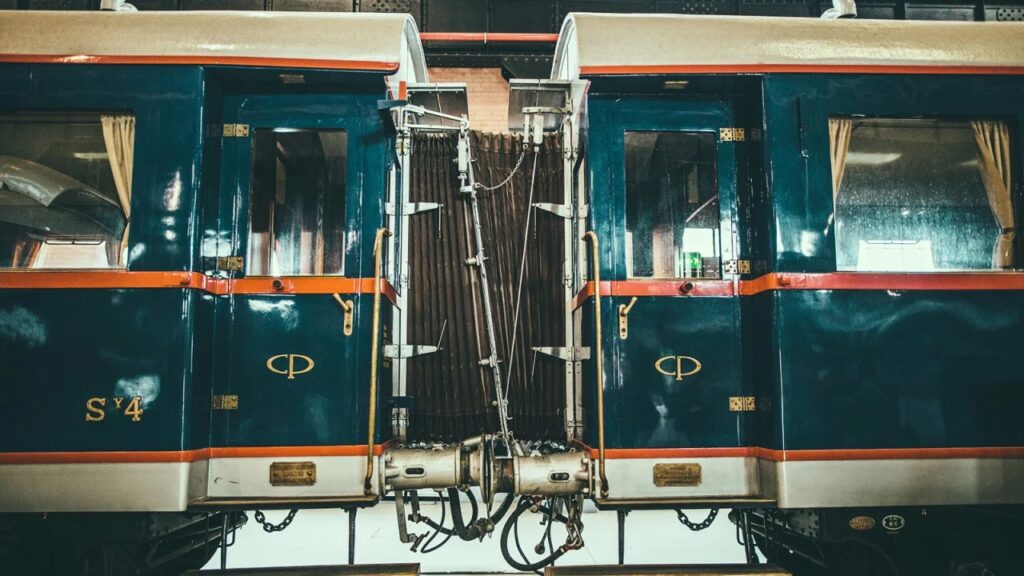
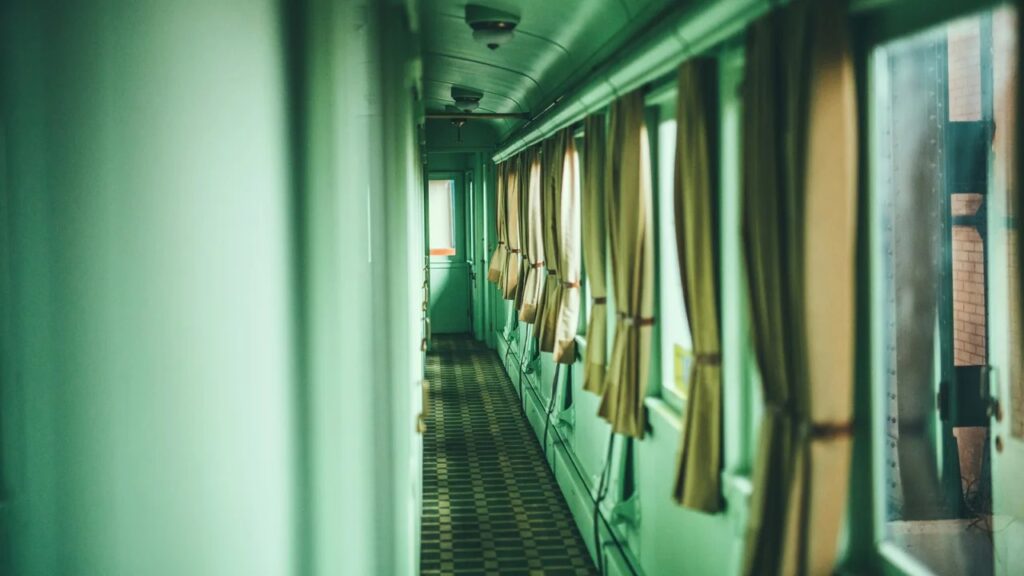
In the years that followed, the train lay abandoned until restoration work began in 2010 to bring back the Art Deco elegance enjoyed by heads of state after the last major refit in 1930.
The lovingly restored presidential, ministerial and press carriages are filled with soft, velvety seats, alongside a bar car and two wood-paneled dining cars with crisp white linens. The attention to detail extends right down to the vintage comfort of the restrooms.
These days the train is pulled by a bulky 1960s diesel locomotive, gleaming in glossy blue with red and white trim, rather than the steam engine that once hauled Portugal's 19th-century monarchs.
The staff are already serving the first drinks, a glass of crisp white from the Quinta do Vallado estate in the Douro, as the train rolls through the suburbs. By the time it reaches its top speed of 80 km/h (50 mph), this elderly train does not like to be rushed, passengers will be sipping Vallado rose with an onion tart.
As the line crosses the Douro again, a broad ribbon of water framed by trellised green vines destined to make young vinho verde wine, the first course is ready: a delicate pairing of green peas, asparagus and elderflower.
Now the train enters the Douro wine region: a land of ancient estates on hillsides that rise steeply from the riverbank. Terraces buttressed by rough stone walls are carved into the slopes, forming a landscape like nowhere else.
Small riverside stations glow with the blue, white and yellow patterns of azulejos, Portugal's signature ceramic tiles.
The extreme climate, with summer temperatures regularly hitting 40 C (104 F) and frequent winter frosts, explains why the train trips are limited to the green of spring and the harvest season, when the vineyards turn amber and crimson.
The Douro has been a protected wine region since the 18th century, producing the raw material for fortified port and, increasingly, some of the world's finest red and white table wines. Several of them keep arriving as the train presses on. At least seven different wines were poured over the course of the trip.
Between stops at the pretty wine ports of Regua and Pinhao, a white reserva was served to accompany flower-strewn mackerel fillets with apple and wild garlic.
Then came pigeon breasts in a wild mushroom sauce with roasted celery, paired with the day's first red: a smoky, spicy wine from the Niepoort family, originally from the Netherlands but making wine in the Douro since 1840.
Before dessert, the train reaches the Quinta do Vesuvio stop, a deserted platform in a romantic setting where tiers of low conical hills tumble down to the river. Surrounded by vineyards, citrus groves and palms, the aristocratic manor at the heart of the estate stands in splendid solitude on the southern bank of the Douro.
The Golden River
Local legend has it that the estate got its name because one of its seven hills reminded a 19th-century noblewoman of the volcano she gazed at during her Neapolitan honeymoon.
Passengers can relax in the riverside garden under a canopy of orange trees, enjoying coffee, port and cigars while taking in the view from the courtyard, or head into the cool of the winery, where amid the monumental stone basins in which grapes are still trodden by foot, tastings of reds and rare ports are on offer.
More port awaits on the return journey: a Graham's 30-year-old Tawny to accompany savory and sweet nibbles, cold cuts of local smoked meats and fruit tarts with brunost, a unique Norwegian cheese.
The trip was not without its hitches: in a region famed for its hearty cooking, Porto's signature dish is a mountainous mix of offal and beans, some diners grumbled that the delicate Scandinavian dishes could have been more filling; there were complaints about the slow pace of service, though the wine never stopped flowing; and a technical fault caused a 90-minute delay on the return to Porto.
Still, it was hard to be too disgruntled when the setting sun lent the Douro a golden glow, a troubadour strolled through the carriages playing his 12-string Portuguese guitar, and a pianist in the bar car took requests while waiters lined up the after-dinner spirits.