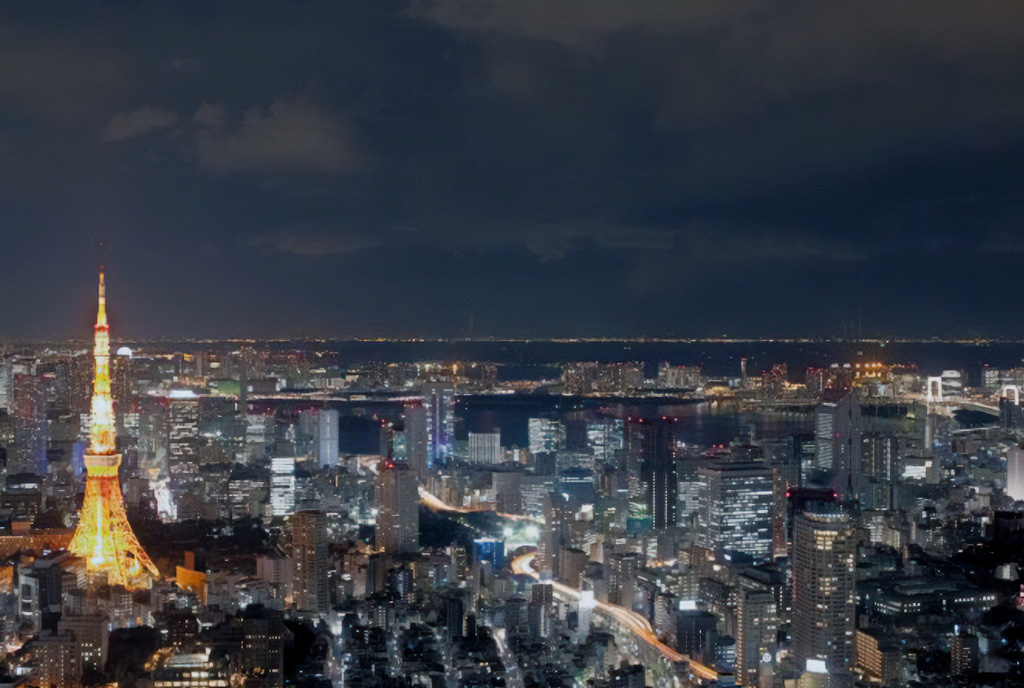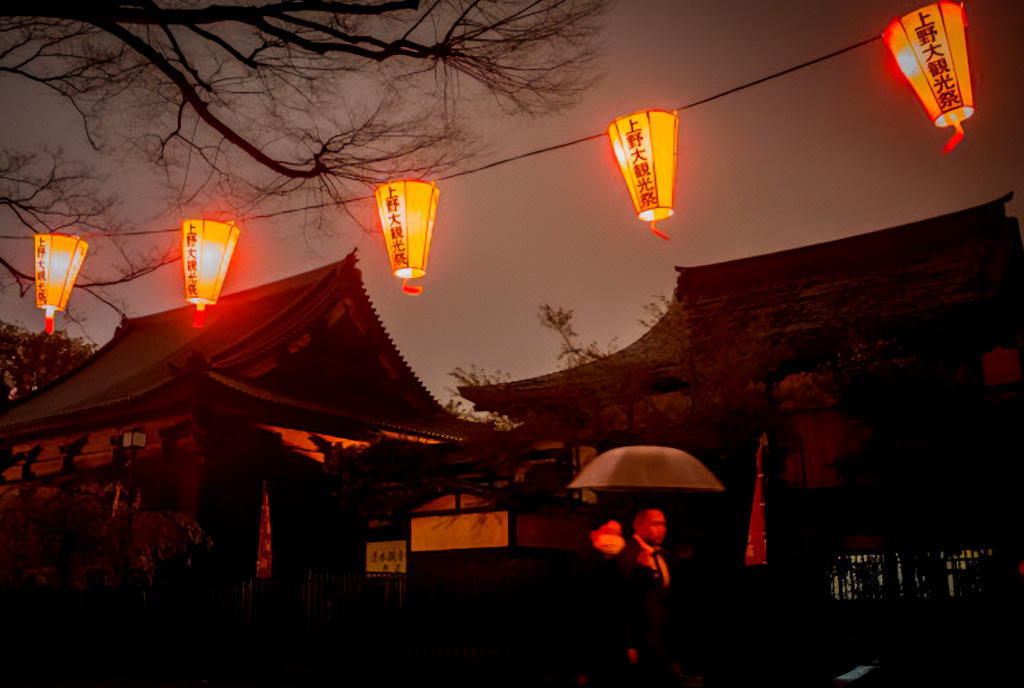


It doesn't matter how many times you've visited Tokyo. It doesn't even matter how many years you've lived there.
In the most populous city on the planet, there's always something new to discover. To get a truly insider take on Japan's capital, we reached out to bloggers from the worlds of food, fashion, cycling, music and photography.
Here, they'll walk us through their favorite spots and share valuable tips on how to get the most out of this astonishing city.
Partner links: booking through them supports the blog at no extra cost to you.
Yukari Sakamoto, Food Sake Tokyo
Yukari Sakamoto, author of "Food Sake Tokyo," has built a huge following by keeping her readers in the loop on Tokyo's food trends through her blog of the same name. But what about first-timers who feel too nervous to dive into the local food scene?
Sakamoto says department stores are actually a great place to start, offering a wealth of flavors under one roof. "They usually have floors of restaurants on the upper levels, often with plastic food models outside the venue," she says.
"There, you can point and order. The restaurants in department stores are very good, otherwise they wouldn't be there. It's nothing like the food courts in big shopping malls you'll find in other parts of the world."
One of Sakamoto's top picks is the Ginza Matsuya department store, set in one of the city's most upscale districts. Still, she says there's no reason to be shy about stepping into local spots.
"If the staff is friendly and welcomes you in, take a seat. If they're not very welcoming, close the door and move along."
To sample the flavors of regional Japanese cuisine, visit an "antenna" shop.
"We have 47 prefectures, something like states in the US, and each prefecture will have a shop in Tokyo where you can go and buy regional foods and craft goods made in that region or that prefecture," she says. Okinawa's antenna shop, for example, is known for its huge selection of awamori, a type of distilled spirit.
A crash course in Japanese
Sakamoto recommends arming yourself with a few words before you head out. For instance, "arigato" for thank you, "oishii" for delicious and "sumimasen" for excuse me will get you a long way.
When it comes to dining, two handy Japanese words are "omakase" and "osusume."
"Omakase means you trust them to bring you their recommended dishes," Sakamoto says. "It works best at restaurants where you'll be eating lots of small plates. Osusume is good for casual restaurants that serve a set lunch."
At the end, if you enjoyed it, tell them it was "oishii."
Sakamoto's tips for Tokyo
"If it's your first time in Japan, I strongly recommend staying at a hotel," she says.
"As a newcomer, you really need to rely on the concierge to help you with plenty of things, from booking restaurants to using the train and much more. Your experience will be far better."
Here are a few more tips for those visiting the city for the first time:
- Wi-Fi isn't easy to come by, but it's simple to rent portable Wi-Fi devices to carry with you.
- The Japanese dress formally. Be sure to check a restaurant's dress code.
- If you get lost, look lost. Someone will usually come over to offer help, even if they don't speak your language.
- There's no tipping in Japan.
Most importantly, she says, just enjoy every bit of it.
"There's no country quite like Japan. You'll be overwhelmed by so much. Bring a journal along and jot down notes about whatever catches your eye."
Byron Kidd, Tokyo by Bike
Byron Kidd is the editor of the Tokyo By Bike blog. He has lived and cycled in Japan for the past 20 years.
"Every time you head out on a bike, you see something new," he says. "I think it's the best way to get to know the city."
That said, it's worth keeping in mind that the city's infrastructure really wasn't designed with cyclists in mind. "Don't expect dedicated bike lanes or plenty of bike parking," Kidd says.
Tips for cycling around Tokyo
Tokyo doesn't have a bike-sharing system like other global cities. But there are a few companies offering rentals. Kidd describes some of them on his blog.
While he doesn't want to talk newcomers out of renting a bike, he says there are a few things worth considering.
"I'd suggest getting a little familiar with the map before a bike ride in Tokyo," he says. "Learn where the main hubs are in relation to one another, and then you'll never get lost."
As for all that traffic, though it may look intimidating, Kidd says most drivers are relatively polite and friendly. Many of them have cycled themselves at some point in their lives, "so they know how cyclists react and how they want to be treated," he says. "But you're free to ride on the sidewalks if you're not comfortable on the roads... that's exactly how the locals do it!"
Luckily, most road signs are in English.
"You can explore to your heart's content, and when you find yourself hopelessly lost, a sign will point you toward a place you remembered, so you won't be lost for long," Kidd says. "Once you get on a bike, you realize Tokyo is actually a small city, and those distances you used to cover by subway are easy to walk, and even easier to bike."
Looking for a unique neighborhood to explore? Among Kidd's recommended cycling routes is a tour of Suginami, as shown on the map above. The trip takes in the town of Okinawa, a few cafes, shrines, a temple and the Eifukucho shopping street.
Brian MacDuckston, Ramen Adventures
There are plenty of ramen fans in the world, but few are as passionate about Japanese noodles as Brian MacDuckston.
He has written nearly 1,000 posts since launching his "Ramen Adventures" blog back in 2008.
"Everyone has something to say about ramen," he says. "Rich, poor, young, old... everyone has some sort of connection to it. It's a kind of food for every person. The price never goes above $10, 1,000 yen."
MacDuckston's obsession with ramen has given him a unique perspective on Japan.
"For me, I pair travel with ramen," he says. "I've been all over the country. There are hundreds of ramen styles. It's a cure for loneliness: come into a shop, make friends. It's Japanese comfort food."
MacDuckston's tips for finding ramen
- When you walk into a ramen shop with a ticket machine, go for the top-left button. In 99.9% of cases, it's the shop's signature dish.
- Many great ramen shops are one or two stations away from the main stops, so exploring ramen has shown me a far more local side of Tokyo, and of Japan.
Backing up that last point, MacDuckston took us to enjoy a fairly unique style of ramen, shio tsukemen, at the tiny Toka restaurant in Tokyo's Yotsuya district, east of Shinjuku.
"Shio" means salt, and "tsukemen" refers to dipping noodles served separately from the soup.
"Many say shio ramen is the test of a real ramen chef," MacDuckston says. "If they can pull off a good bowl with just salt, they've made it."
Lee Chapman, TokyoTimes.org
Another longtime Tokyo resident, Lee Chapman has lived in the city since 1998.
"I love taking photos," he says. "It's what I want to do whenever I have free time."
Over the years, he has watched the city go through dramatic changes, many of which he has documented on his photo blog, TokyoTimes.org.
That includes the gradual modernization of the city's older, less glamorous neighborhoods.
"The same goes for its shabbier side. I suppose it's progress, but personally, for me, it makes Tokyo less interesting. Once lost, the character of these neighborhoods can never be brought back."
Among the areas he's eager to document before they change forever is Hikifune, a district that has been under the watch of Skytree, the giant broadcasting tower, since 2011.
"This area has changed a lot since Skytree was built," he says.
"Lots of new homes, lots of shops gone, new ones appearing. You can see Skytree from almost everywhere here. But then you also see old houses and people still tending [to them]."
Chapman's tips for Tokyo
- Tokyo's train system is incredibly convenient, but try to walk as much as you can. You'll see so much more.
- The city is friendly to photographers. Lots of different people around, and it's fairly rare for subjects to get too angry or offended.
"Tokyo has so many different parts, different environments, different atmospheres... So I think it's important to explore them," Chapman says.
"Often I go back to the same place; by doing that, I meet people, I see different things. Basically, I'll pick maybe a starting point, then an end point of a certain area, and just walk."
One change that English-speaking tourists will likely be glad about is the growing number of signs and announcements, he says.
"It only keeps increasing as the 2020 Olympics approach. Shop and restaurant staff also tend to be helpful and eager to assist. So the language barrier really shouldn't worry you all that much."
Melodee Morita, lifestyle vlogger
It's impossible to pin the videos of YouTube lifestyle and beauty vlogger Melodee Morita into a single genre.
In one video you'll watch a bilingual Japanese American ballerina run through fitness workouts for anyone looking to shed thigh fat; in the next, she's off shopping for kitchen gadgets.
Although Morita lives in New York, she travels to Tokyo often.
Like food blogger Sakamoto, Morita says first-time visitors to Japan should really make an effort to learn a bit of basic Japanese, "because a lot of people in Japan get shy or intimidated when someone walks up to them and suddenly starts speaking English."
Whether you're a first-time visitor or a long-term resident, you'll want to download some apps for Tokyo's train and subway stations. These include Navitime and Tokyo Subway Navigation for Tourists.
"Since I grew up in the states my whole life and don't know how to get to every spot in Tokyo, I'm constantly using apps when I'm visiting. Even people in Japan use them every day, because they show you different route options, plus suggestions based on the lowest prices, the fewest transfers, travel time and much more."
Morita's favorite spots in Tokyo
Although Morita grew up in Los Angeles and New York, she soon fell in love with Japanese style.
"Until high school, I was a very 'SoCal' girl, wearing a plain shirt, shorts and flip-flops. But ever since I made my first visit to Shibuya at the age of 17, my style changed dramatically.

"I still visit Shibuya/Harajuku every year for fashion and lifestyle inspiration, because everything there is so fast-moving and trendy.
"I don't cover myself in trendy clothes from head to toe, but I love drawing inspiration from the latest styles and working certain elements into my outfits to enjoy fashion as it evolves over the years. Now that I'm in my 20s, I also love shopping in the Ebisu area, because it has a more refined vibe with hidden shops.
Among her favorite spots in Tokyo? The wild Kawaii Monster Cafe in Harajuku, which you have to see to believe. (Luckily, we've got a video. Watch it above.)
"Kawaii means cute in Japanese. And it doesn't necessarily have to be super girly-cute," she says. "It can have an edge to it."
Another priority for Morita is nail care. And we're not talking about your ordinary manicure/pedicure. Tokyo salons create mini works of art with wild designs and tiny gemstones.
"So the first time I came to Tokyo, I got my nails done, because I'd watched a lot of Japanese dramas and films... I was really inspired by how stylish everything was, including the nails."
Among the best spots for killer nails is Joli Nails in Tokyo's Roppongi district. According to the owner, one of its nail designers took first place at last year's Nail Pro Cup in Las Vegas.
Mademoiselle Yulia, designer/musician
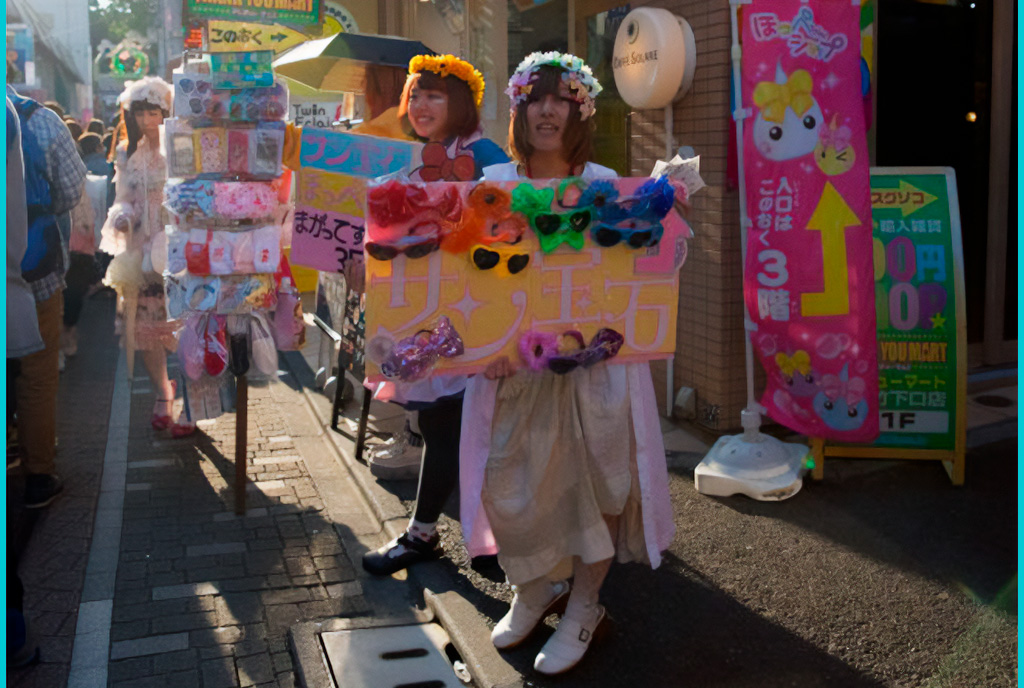
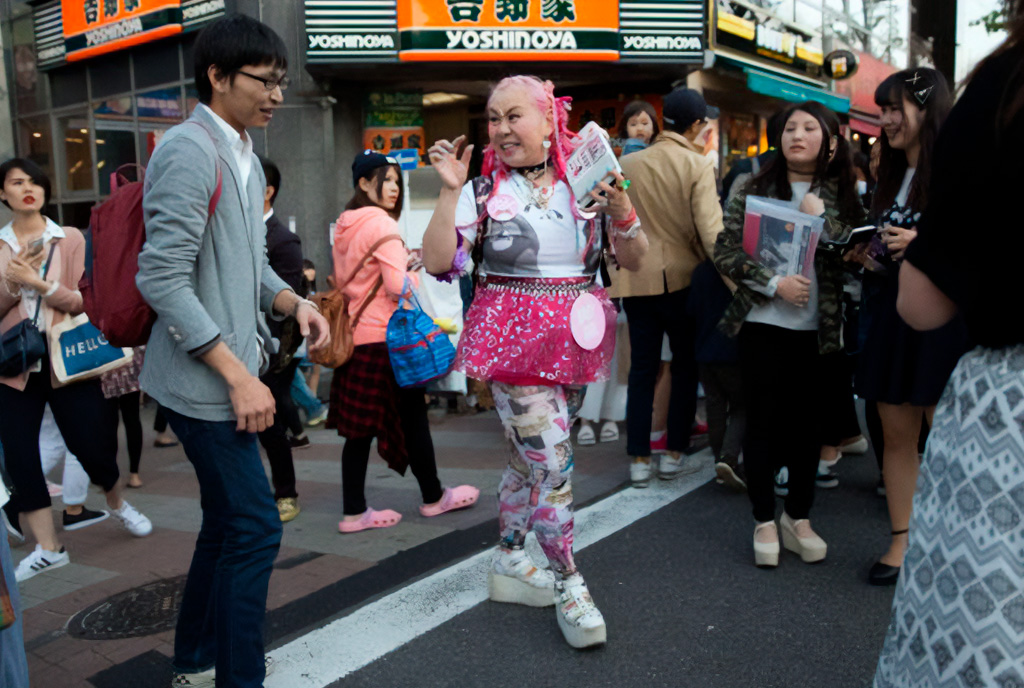
When it comes to exploring Tokyo's wild side, there's no better guide than Mademoiselle Yulia. Born and raised in Harajuku, the fashion designer/DJ has watched the famous district change over the years.
"Harajuku is really known for fashion," she says. "There are lots of vintage shops on this street."
But during a recent tour of the neighborhood with us, she had a miniature fashion icon on her mind: Barbie.
For vintage toys, Yulia recommends the Harajuku shop Spiral.
"I've been collecting Barbie for maybe more than 20 years. I have over 300 of them. She's the most fashionable lady in the world. It's really inspiring for me when I make clothes. For me, fashion is really important as a way to express myself."
However, she says Harajuku's vintage scene is slowing down as the big department stores move in. Among her favorite vintage clothing shops is Nude Trump, try to block any mental images the name might conjure, in Shibuya.
"Japanese people love wearing colorful things, and some people who are into fashion don't particularly care what's trendy or what [other] people are wearing. So they find their own style."
Karaoke with flair
It wouldn't be a real guide to Tokyo if we didn't suggest somewhere to get your karaoke fix, which, by the way, happens to be one of Yulia's passions.
She took us to a new spot in Shibuya, Rainbow Karaoke. What makes it special is that there are even instruments you can bring into your performance.
"I love karaoke and come pretty often," she says. "I think most Japanese people love karaoke, because you can shout or do whatever you want. There's no stress. I'm a really shy person, but when I go to karaoke, I can be not so shy. So it's a really good way for me to connect with people."
Rainbow Karaoke; 1 Chome-21-3 Jinnan; Shibuya-ku; Tokyo 150-0041