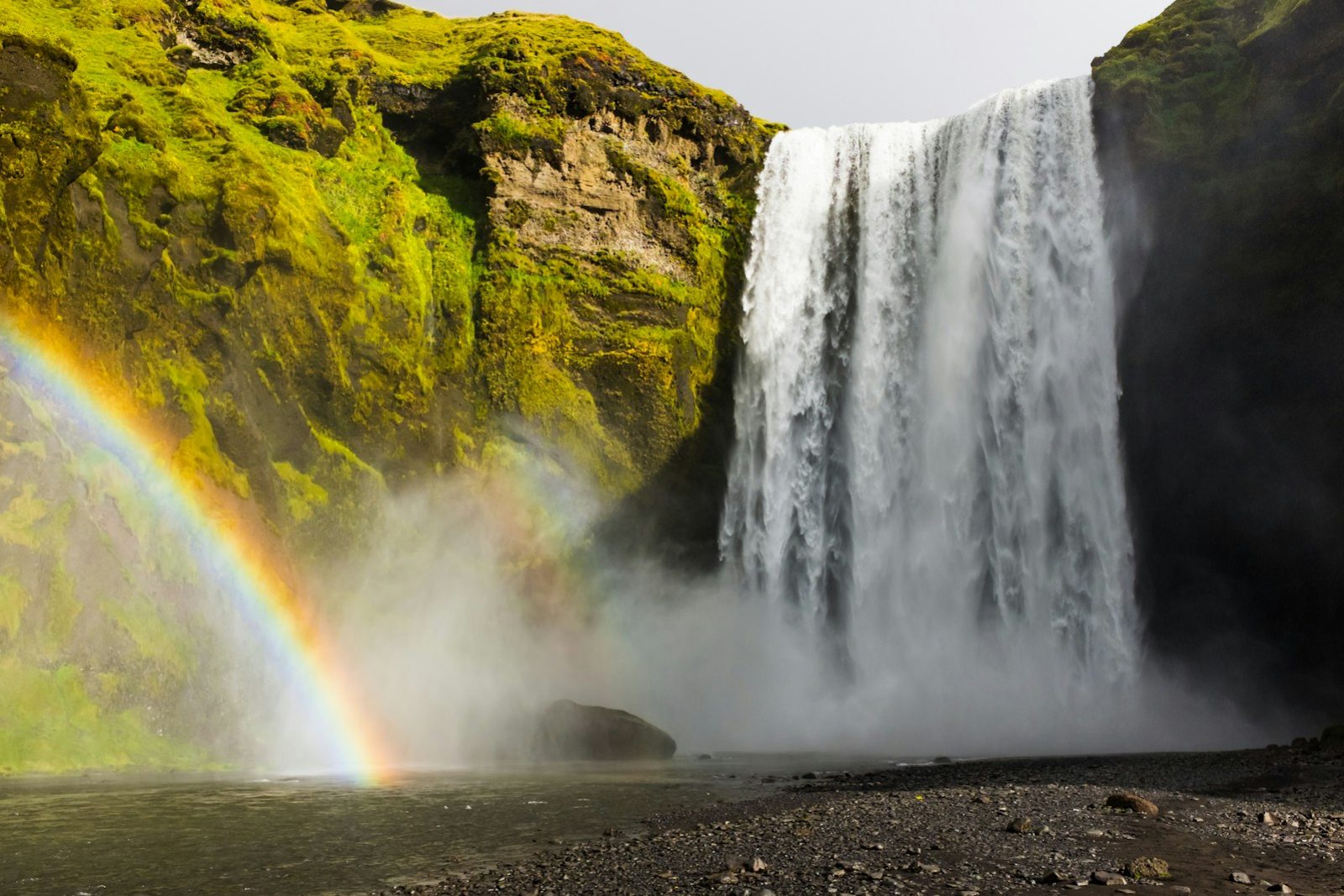


Iceland's most striking scenery isn't hidden in the remote highlands where only 4x4s are allowed. It sits along a single paved road, an hour or two from Reykjavik. If you're wondering what to see in Iceland in two or three days with no special preparation, the answer is short: the Golden Circle, the waterfalls of the south coast, the Jokulsarlon glacier lagoon and the geothermal Blue Lagoon. All of it is reachable in an ordinary rental car in any season when the Ring Road is open.
What Makes Up the Golden Circle, and Why People Start Here
The Golden Circle isn't a single sight but a loop route of roughly 230 to 250 km out from Reykjavik and back, easily driven in a day (6 to 8 hours with stops). It has three anchor points:
- Thingvellir (Þingvellir): a national park 47 km from the capital, about 45 minutes on the road. This is where the rift between the North American and Eurasian tectonic plates runs as they slowly drift apart, and it's the very spot where Iceland's Althing assembly gathered from the year 930. A UNESCO site with free entry; only parking is paid.
- Geysir (Geysir): a geothermal field about 100 km from Reykjavik. The historic Geysir spring, which gave the word "geyser" to every language, is now nearly dormant, but its neighbour Strokkur shoots a column of boiling water up to 20 metres high every few minutes. The trick is catching the shot on the second or third try.
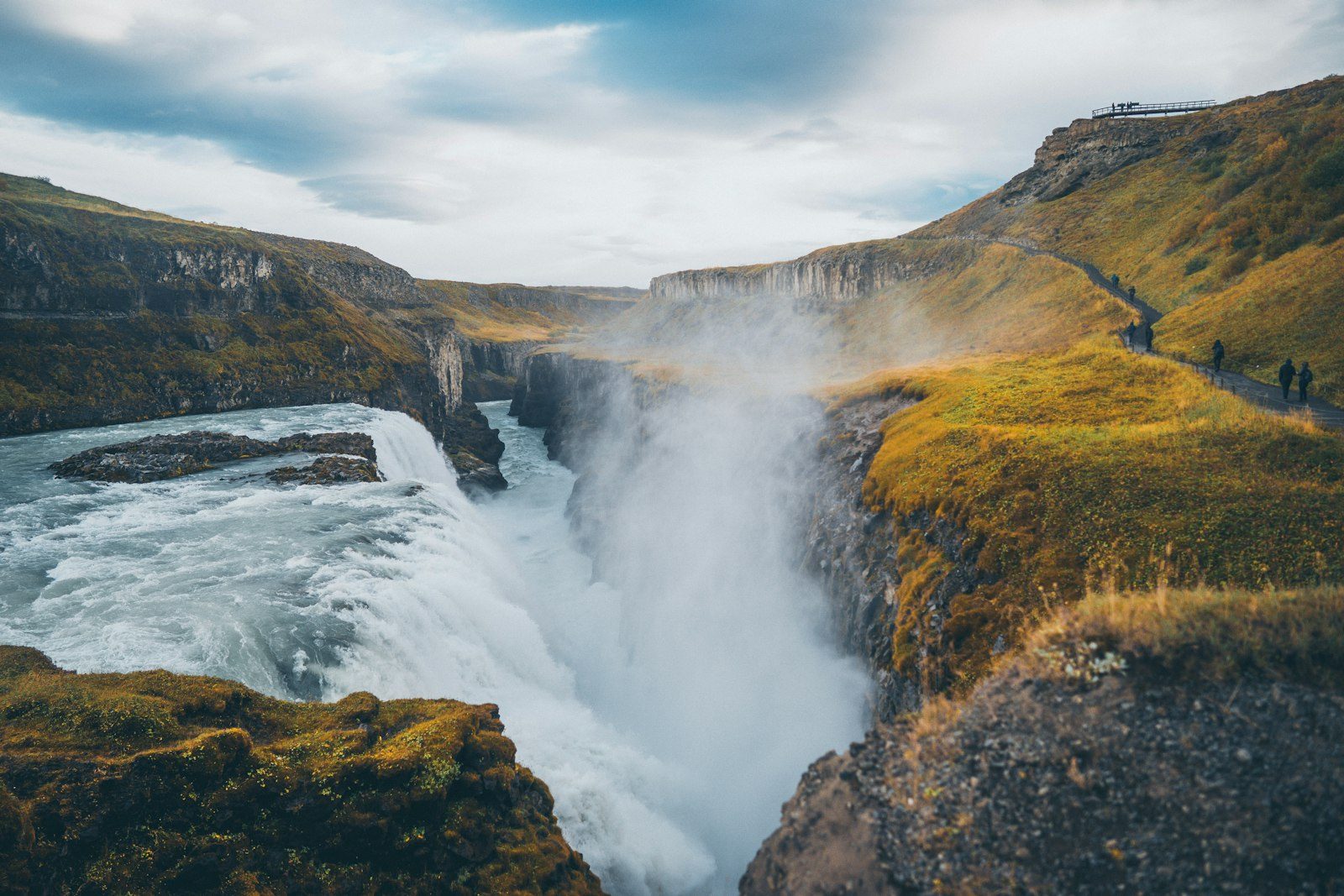
- Gullfoss (Gullfoss): a two-tier waterfall ten minutes' drive from Geysir and the farthest point on the loop. The Hvita river drops into a narrow canyon over two ledges, so on a sunny day a rainbow often hangs above it.
If you like, you can fold the Kerid crater with its turquoise lake into the same loop (a small entry fee) along with a geothermal complex. But the essential minimum is the three sights above. It's only fair to name the Golden Circle's downside: it's the most popular route in the country, so at the height of the day tour buses line up at Gullfoss and Strokkur. Setting off at eight in the morning saves the day.
Partner links: booking through them supports the blog at no extra cost to you.
What You Can Fit Into One Day on the South Coast
The south offers a different kind of beauty: not geysers, but waterfalls, black sand and basalt cliffs. There's a single road, the Ring Road (Route 1), so the route is linear and hard to lose.
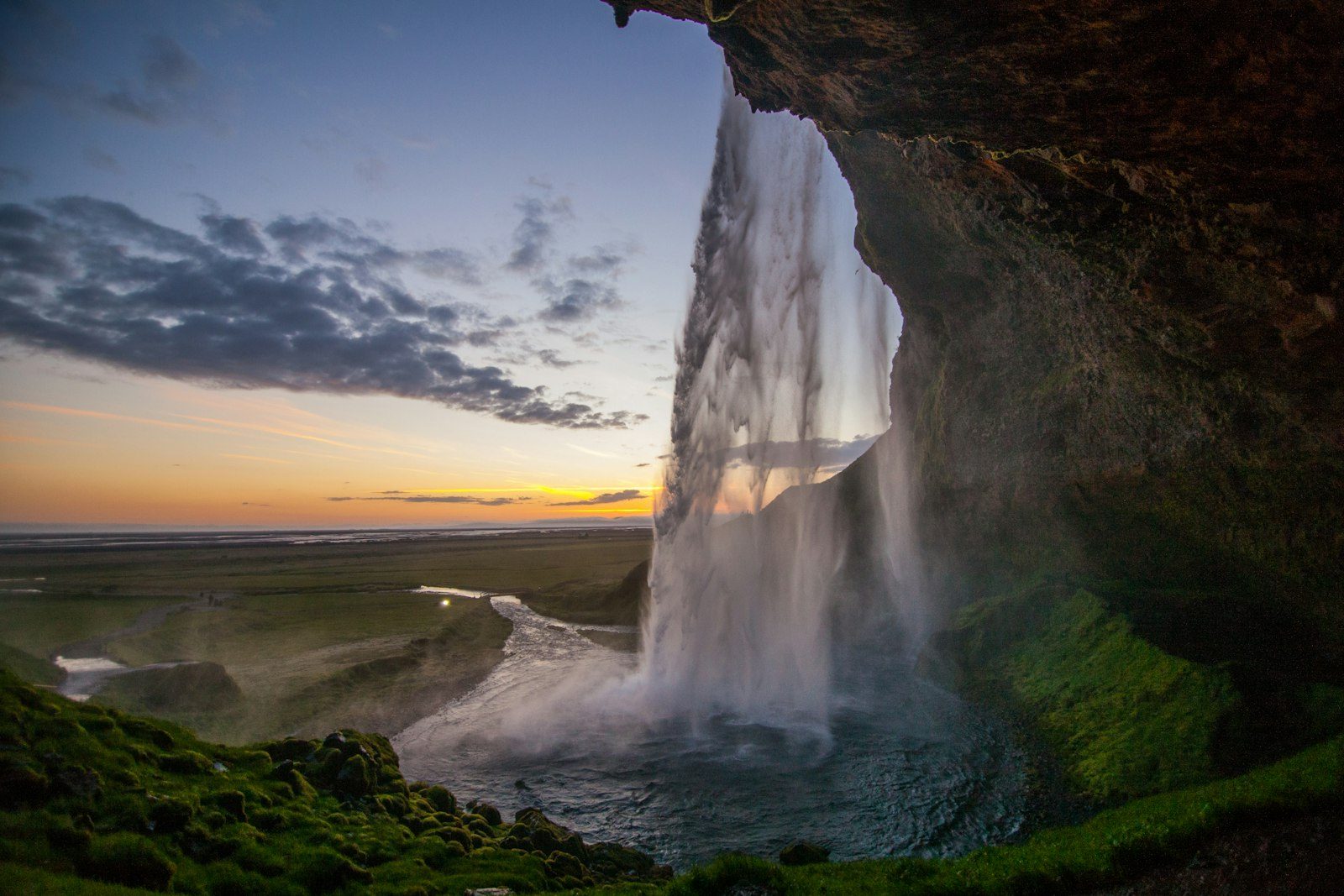
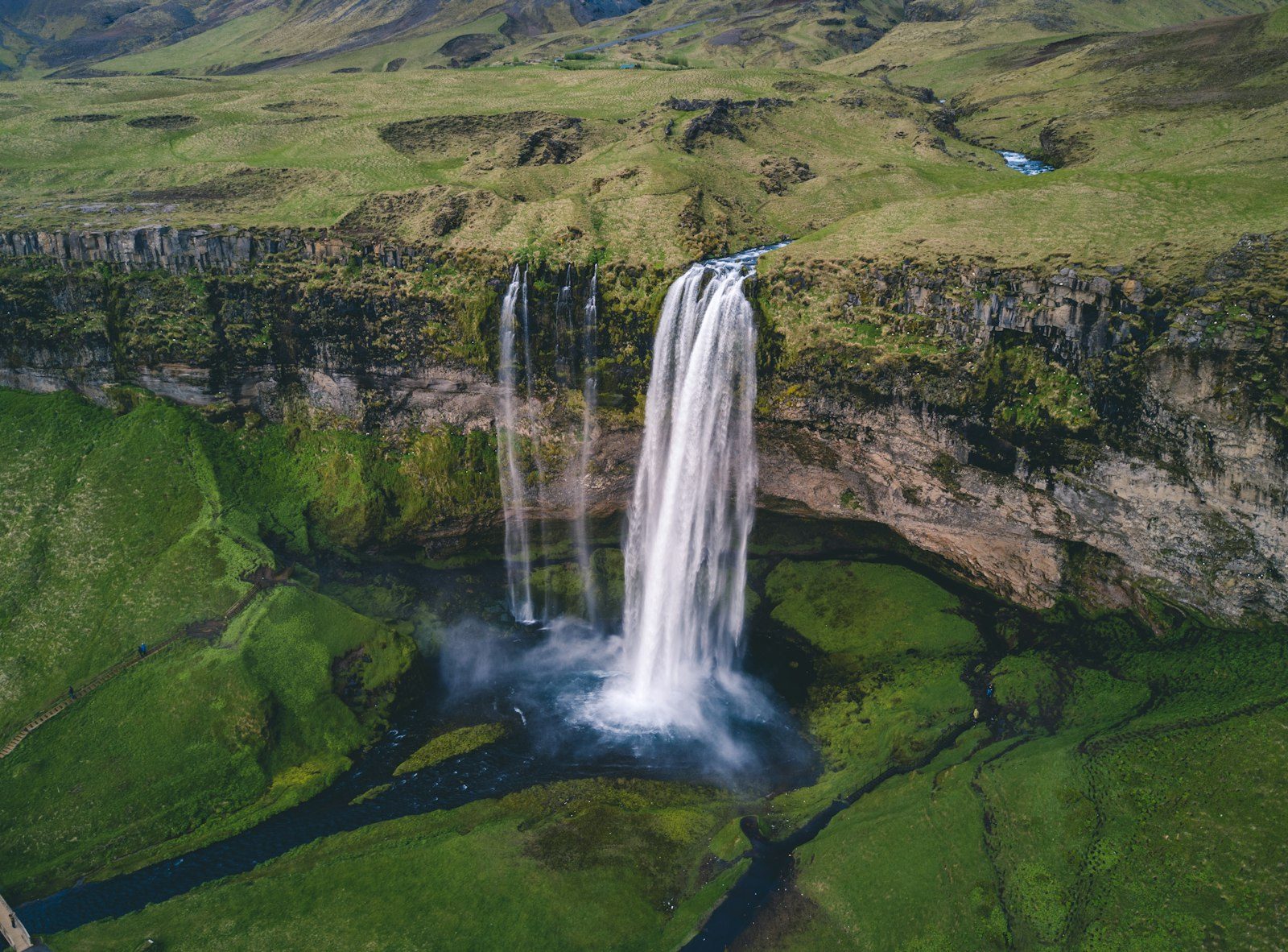
The first stop, Seljalandsfoss (Seljalandsfoss), sits about 130 km from Reykjavik, roughly an hour and a half away. Its signature feature is a path that runs behind the falling water, so you see the waterfall from the inside. Be ready to get wet and wear non-slip shoes: the spray makes the rocks slippery.
Another 30 km on stands Skogafoss (Skógafoss), a wall of water nearly 60 metres tall and about 25 metres wide. You can walk right up to it, so in sunny weather you can get as soaked as if you'd stepped into a shower. To the side, a staircase climbs up to a viewing platform and the start of the Fimmvorduhals hiking trail.
Why Reynisfjara Black Beach Demands Caution
Near the town of Vik lies Reynisfjara (Reynisfjara), a beach of black volcanic sand with basalt columns and the Reynisdrangar sea stacks on the horizon. It's one of the country's most photogenic spots and, at the same time, one of the most dangerous. The reason is what are known as sneaker waves: the sea stays calm for stretches, then without warning throws up a tall wave that knocks a person off their feet and drags them into the water. At least six people have died here since 2007, the most recent known tragedy in August 2025. There's one safety rule: don't come closer than 30 metres to the water's edge, and never turn your back on the ocean.
One more recent detail that most guidebooks don't have yet: in February 2026 a landslide destroyed part of the slope above the beach, and heavy erosion temporarily washed the sand away. The beach reopened by spring and the sand is returning, but the Halsanefshellir cave is now cut off by the sea and inaccessible. The beach's condition depends on weather and waves, and it's closed regularly, so check access before your trip.
Is the Jokulsarlon Glacier Lagoon Worth a 5-Hour Drive Each Way
Jokulsarlon (Jökulsárlón) is a lagoon where icebergs float, calving off the tongue of the Breidamerkurjokull glacier. The water carries the chunks out to the ocean, waves toss them back onto the black sand, and nearby the so-called Diamond Beach forms, where clear pieces of ice glitter against the dark backdrop.
The honest problem here is distance. From Reykjavik it's roughly 370 to 380 km one way, about five hours behind the wheel. You can technically make it there and back in a single day, but that's ten hours of driving for an hour and a half on site, and there'll be no time left for the south coast. It's smarter to plan an overnight somewhere around Vik or Kirkjubaejarklaustur and see the lagoon the next day without the rush. In summer, boats and amphibious craft cruise the lagoon between the icebergs; in winter, people come here for guided ice-cave tours.
The Blue Lagoon: Overpriced or a Must-Do
The Blue Lagoon (Blue Lagoon) is a large geothermal bath with milky-blue silica water on the Reykjanes peninsula, about 20 minutes from Keflavik airport. Precisely because it's so close to the airport, it's convenient to make it the first or last stop of your trip rather than spend a separate day on it in the middle of the route.
Prices in 2026 start at roughly 11,990 Icelandic kronur for the basic Comfort package (around 80 euros), Premium costs more, and the private Retreat areas run several times higher. The exact figures fluctuate: dynamic pricing means popular dates and times cost more. The key logistical rule: you can't simply show up. Entry is by advance booking for a specific time only, and at peak season the slots sell out weeks ahead. Children aged 2 to 13 enter free with an adult. Check the exact amounts on the official website before your trip.
If you'd rather not stretch the budget, there are honest alternatives. Sky Lagoon, right next to Reykjavik, offers a similar format with an ocean view, while the ordinary town pools with hot tubs found across the country cost a few hundred kronur and show you how Icelanders themselves relax in geothermal water. One more thing: the Reykjanes peninsula has been volcanically active in recent years, and the Blue Lagoon is closed from time to time because of nearby eruptions, so keep a backup plan.
Why You Need a Car in Iceland and How Much to Budget for Rental
Public transport between the sights barely exists here, so the choice is simple: an organized tour or your own car. A car gives you the main thing, the freedom to stop anywhere, and in Iceland the views are often right by the roadside rather than at the final destination.
Rough rental prices depend heavily on the season. In low season a small car works out at roughly 50 to 80 euros a day, while in summer a full 4x4 easily climbs past 100 euros a day before insurance. August is the priciest month, December one of the cheapest. On top of the rental, add fuel, insurance (it's worth taking gravel and wind protection separately, as these are real risks on local roads) and the new per-kilometre road charge introduced in January 2026.
One more thing people forget: every road with an F prefix leads into the highlands, legally requires four-wheel drive and is open only in summer, roughly from late June to September once the snow has melted. For the Golden Circle, the south and the Blue Lagoon, four-wheel drive isn't required and an ordinary car is enough, but don't underestimate speed on gravel or crosswinds.
How Long to Budget for Each Place
| Place | What makes it special | How long | From Reykjavik |
|---|---|---|---|
| Thingvellir | Plate rift, Althing history, UNESCO | 1 to 1.5 hrs | ~47 km |
| Geysir and Strokkur | Active geyser every few minutes | 45 min | ~100 km |
| Gullfoss | Two-tier waterfall in a canyon | 45 min | ~115 km |
| Seljalandsfoss | Path behind the sheet of water | 30 to 45 min | ~130 km |
| Skogafoss | 60 m wall of water, staircase up | 45 min | ~155 km |
| Reynisfjara | Black sand, basalt (mind the waves) | 30 to 45 min | ~180 km |
| Jokulsarlon | Icebergs in the lagoon, Diamond Beach | 1.5 to 2 hrs | ~370 km |
| Blue Lagoon | Geothermal bath near the airport | 2 to 3 hrs | ~50 km |
The times in the table are for the stop itself, not the drive. Add them up and it becomes clear why the Golden Circle and the south are each taken as a separate day, while Jokulsarlon calls for an overnight on the way. In short, everything worth seeing in Iceland on a short visit fits into two days of driving plus a soak at the end.
Do Ukrainian Citizens Need a Visa for Iceland
No. Iceland is part of the Schengen Area, so Ukrainian citizens with a biometric international passport enter visa-free for up to 90 days within any 180-day period. There's no separate Icelandic visa to arrange for a tourist trip.
One caveat for the future: the European Union is preparing the ETIAS electronic authorization system, with a launch expected around the end of 2026. It's not a visa but an online authorization you'll need to obtain in advance. The dates are still being finalized, so check the current entry rules before your trip on official sources (mfa.gov.ua and the official ETIAS portal).
Where to Start, Specifically for You
If it's your first time in Iceland and you have two or three days, take the classics without the highlands: the Golden Circle on day one, the south coast as far as Vik on day two, and tie the Blue Lagoon to your arrival or departure day. If you've already seen the Golden Circle and want stronger impressions, bet on Jokulsarlon with an overnight and guided glacier walks, and in summer add the highlands in a 4x4. Either way, budget more time for the drive than the map shows: here the weather is the route's chief dispatcher.