

“Looks like the weather will be good to us tomorrow,” says Thordis Anna Gylfadottir, studying the pinkish sky. “When the day is fine, more people come out to the valley.”
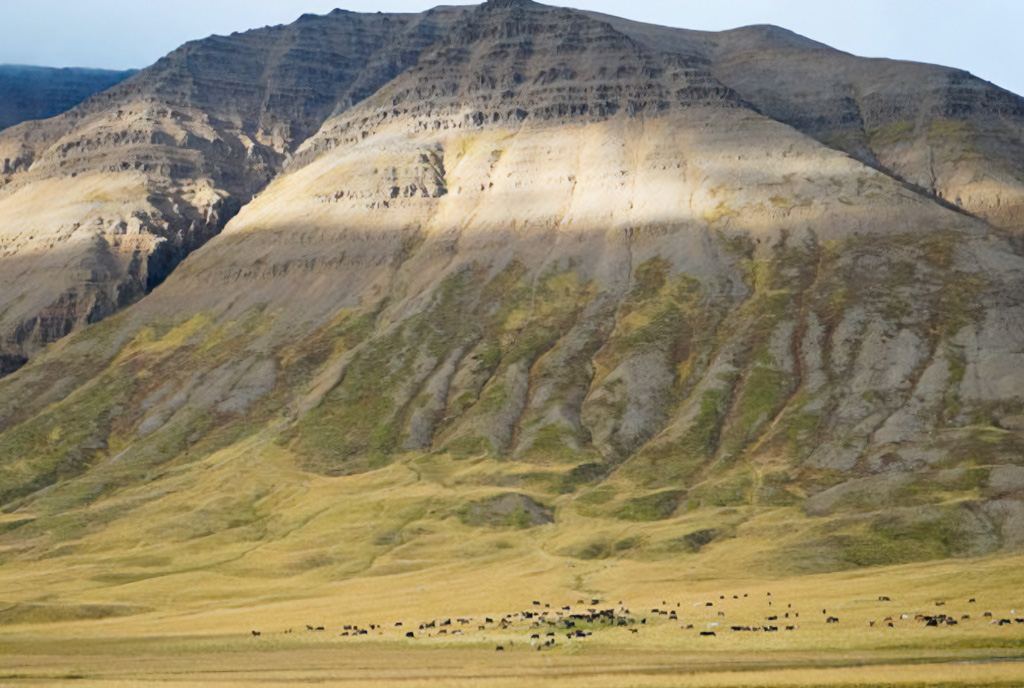
The Hjaltadalur valley is quiet, and there is little sign that hundreds of horses and thousands of people will pour into this remote spot in the northern Skagafjordur region the next day, all to witness the biggest horse round-up on Iceland's calendar: the Laufskalarett horse festival.
And in Iceland, rounding up horses is a big deal; the country is home to around 90,000 of them.
Partner links: booking through them supports the blog at no extra cost to you.
Iceland fiercely protects its horses, which are known the world over for their gentle temperament, thick manes and hardiness.
The purity of the breed is guarded by strict rules on bringing other horses and riding gear into the country, which means Icelandic horses are purebred and carry few diseases. Even the way people ride is unique. There are five gaits: alongside the standard gallop, trot and walk, there is the tolt and the flying pace, known as “fifth gear.” Iceland's riding school, Holar University, is world-renowned.
Each year, horse farmers turn their geldings and mares out onto the pastures for the summer. The horses, purebred and first brought to the island nation in the 10th century, roam free across the mountains.

In September, when the temperature drops and a bitter Icelandic wind sweeps through the valleys, the horses are brought in for the winter.
The event is a reason to celebrate, with traditional dried fish (hardfiskur), smoky meat soup and plenty of Icelandic liqueur handed out to the participants who arrive in minivans, off-roaders and horse trailers to take their four-legged steeds home, often over distances of up to 20 kilometers.
The festivities carry on at farms across the region into the small hours, as well as at the local riding arena.
“An amazing feeling”

“It's hard to get together, because everyone lives quite far apart,” says Thordis, who owns 40 horses. “And that's why it has become a legendary weekend event. Even if you don't have any horses in this round-up, you still come, because it's simply the tradition. It's the most famous round-up in Iceland.”
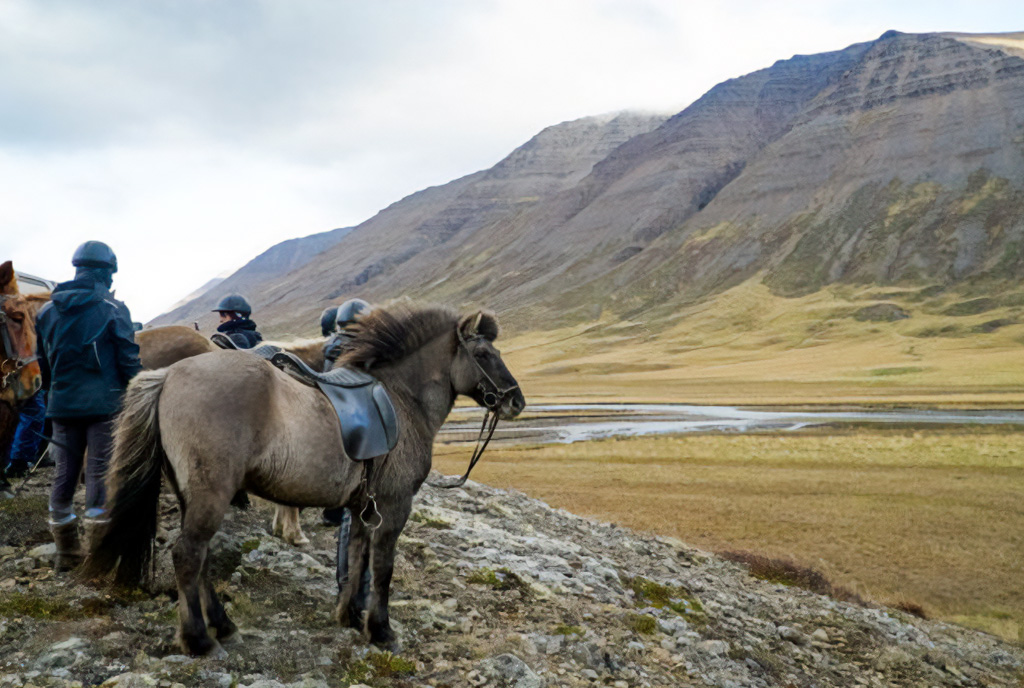
For Saunn Kristin, a kindergarten teacher, this is the fifth time she will ride in the round-up on her 25-year-old horse Tungl (“moon” in Icelandic).
“I don't have any horses here, but it's just the most amazing feeling to ride out and help bring the horses back. They're these wild animals, and seeing them roam free is beautiful. And the feeling of riding just sets you free.
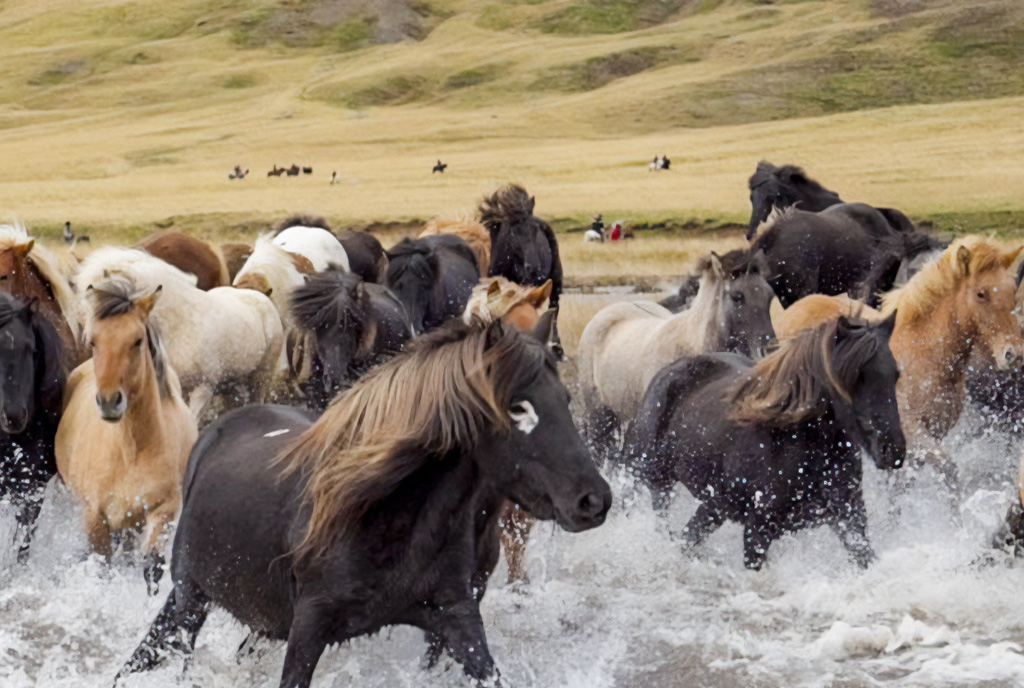
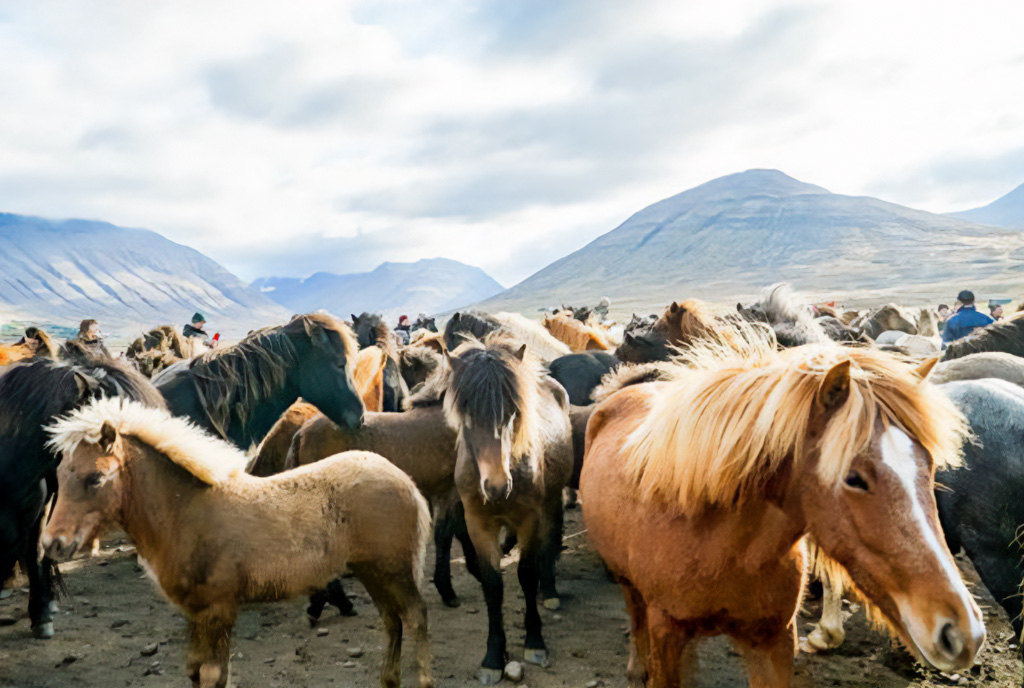
This year there are about 20 farmers here to gather roughly 500 horses scattered across the mountains. But they are joined by tourists from all over Europe, who come to ride and help guide the horses across the river and up to the pen, where the animals are sorted onto their respective farms.
“All the horses are chipped,” explains Atli Mar Traustason, who is overseeing the round-up this year. He is a farmer and horse breeder, and he has his own horses to escort home to Sydri-Hofdalir, his farm.
“But every farmer knows their horse, by name, by its face. I know each of my horses. I've trained them all from foal to adult; I know all their individual characters. But we also use branding, an ear tag, to identify them.”

Before the sorting can begin, the horses have to be coaxed off the grazing land.
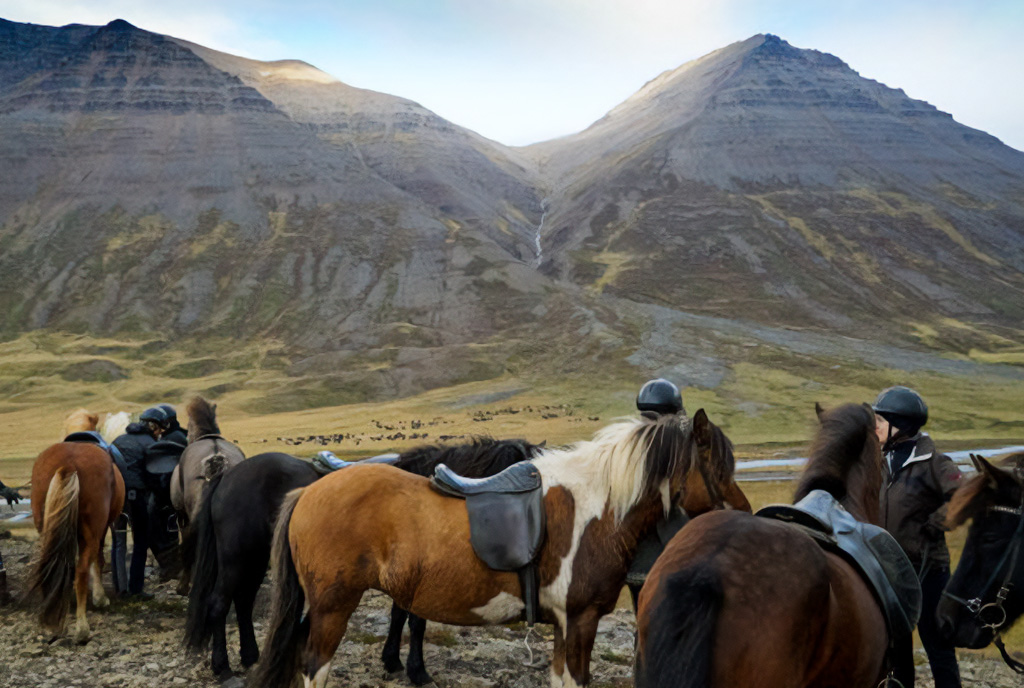
The riders, whether farmers, Icelanders or tourists, set off at noon to start herding the horses into one big group. Sitting astride their horses, which were kept over the summer for riding, the farmers wear black riding trousers, thick coats, gloves and helmets to guard against the cold wind as they gallop across the plains, gathering the animals together.
Icelandic sheepdogs nip at the horses' heels, deftly helping their masters and mistresses round up hundreds of horses and cross the river in a single formation.
Chipped horses

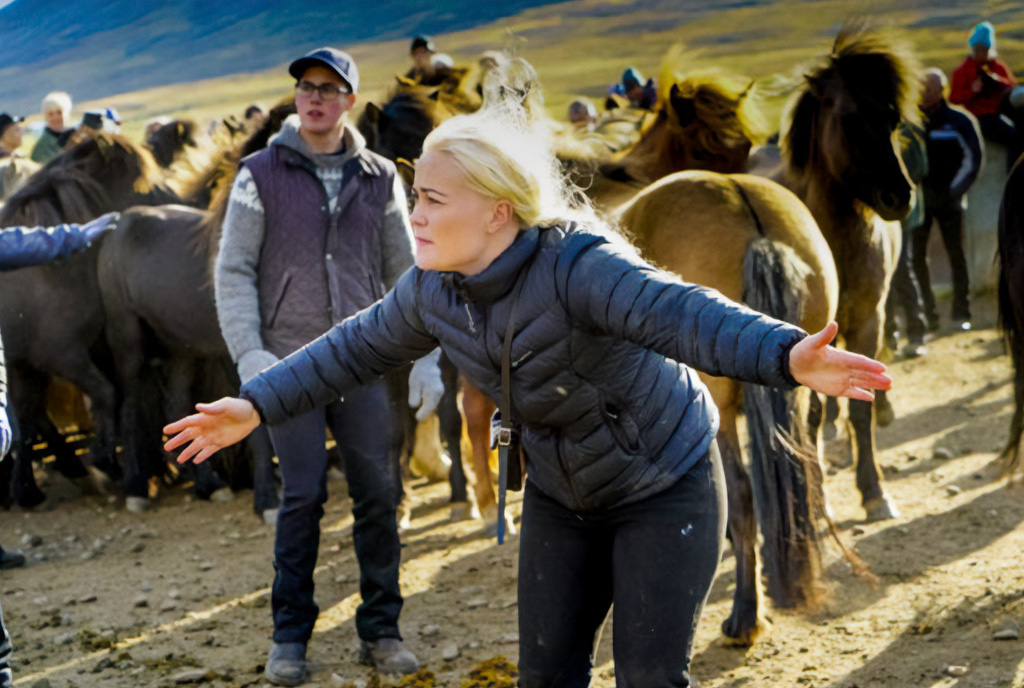
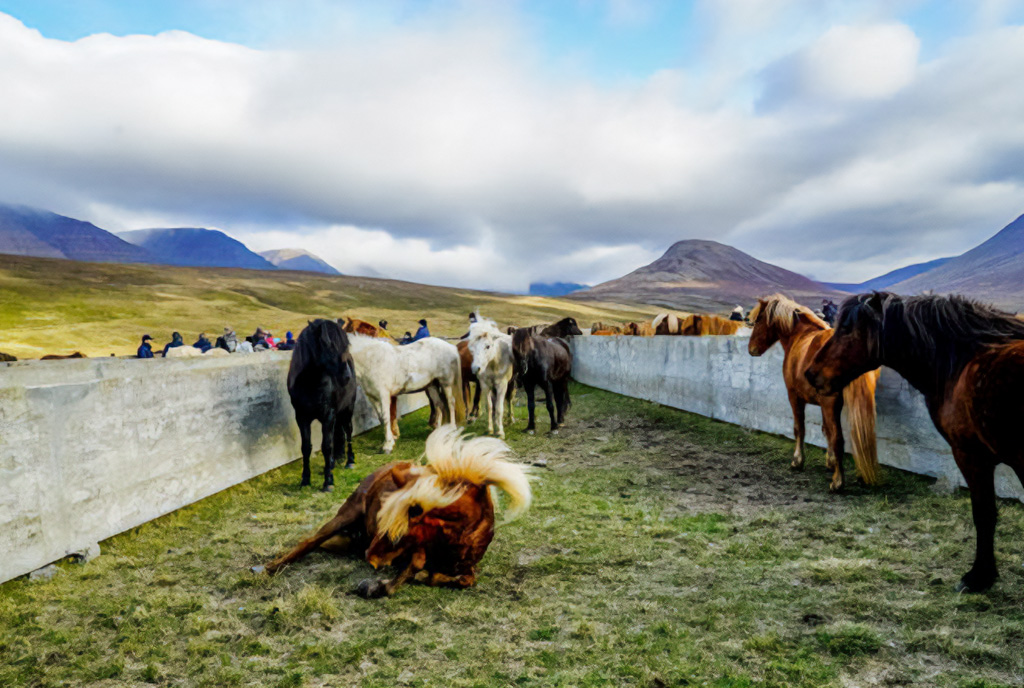
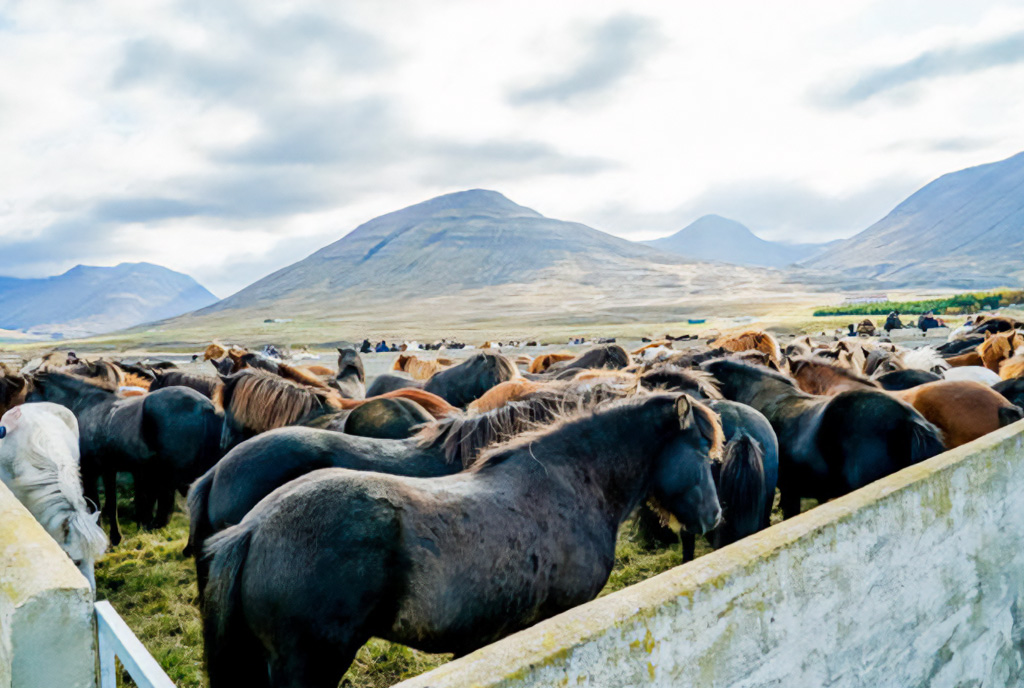
The hundreds of horses are led along a narrow dirt track in a line stretching almost three kilometers, until they reach the Laufskalarett pen, where they are driven into a fenced field before small groups are taken into the central corral. Concrete walls radiate out from the central corral, each one marked with the name of a farm, creating a giant pie-shaped structure.
“All the farmers help each other,” Atli continues. “You identify your horse, and then you work to drive it into your own pen.”
Shouts, whistles, whinnies and snorts echo through the valley as each horse is sorted, some more easily than others. In the past, farmers had to jump onto the back of a difficult horse to steer it into the pen, and injuries were not uncommon. About 15 years ago, the farmers came together to work out a strategy to make the process easier.
Atli, an earpiece in his ear, says: “It's much better now. And of course, we have technology now. We wanted to find a way to protect people and horses, so now we have small groups to drive each horse into the right farm's pen.” A horse's microchip is scanned through a phone app into the national horse database, so there is no confusion.
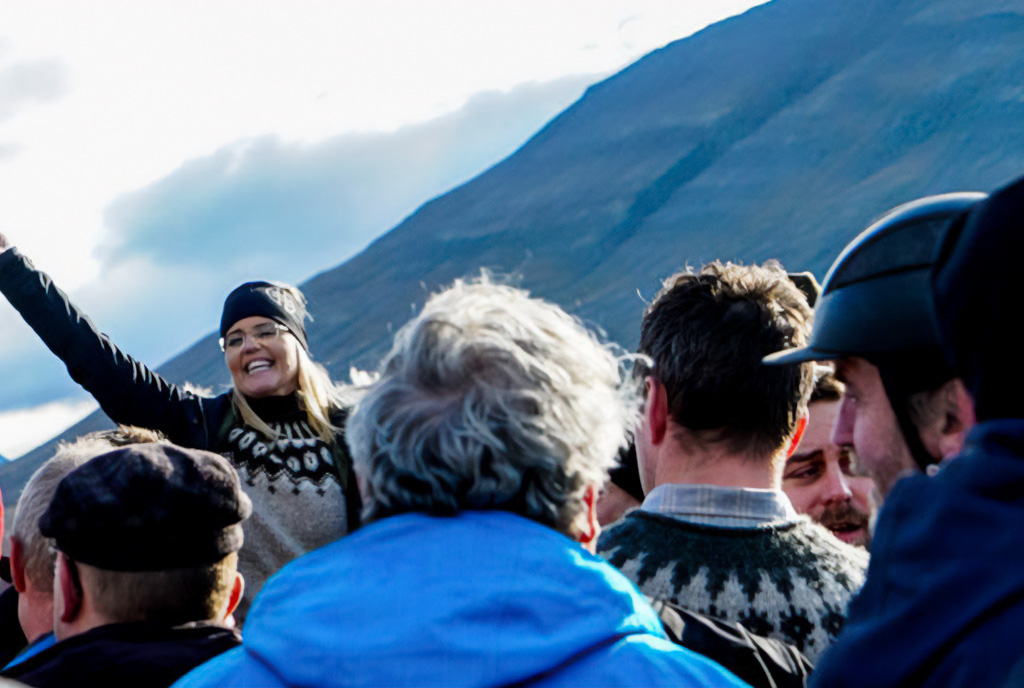
While the farmers work hard, a group of men in flat caps, dressed in traditional woolen sweaters, have gathered in a circle beside the pen and are singing traditional Icelandic songs.
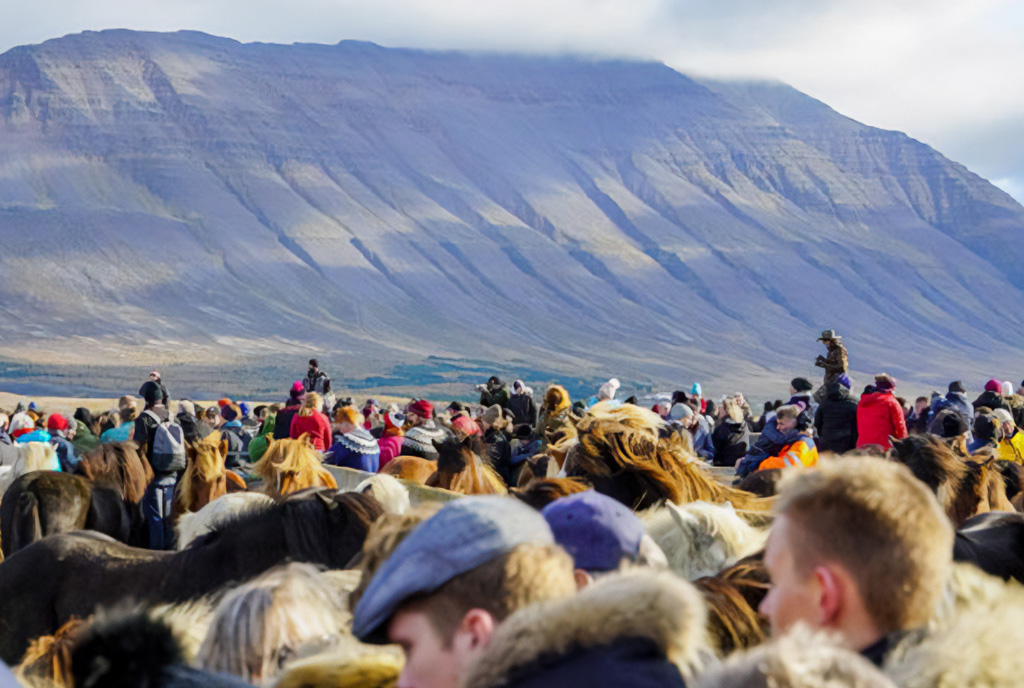
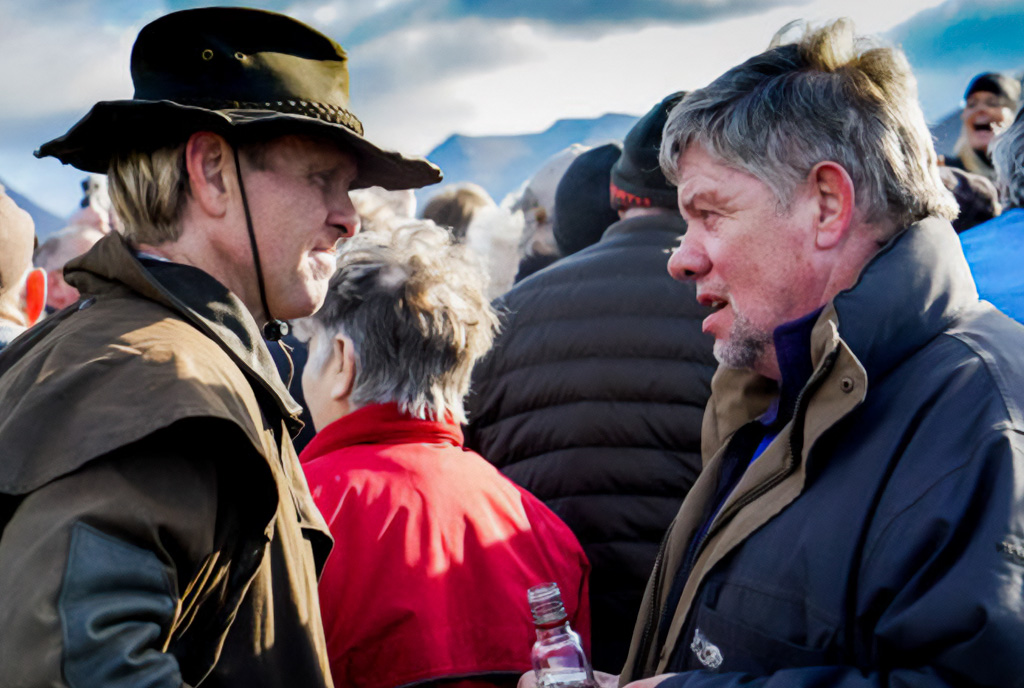
With Viking beers in hand, the group grows as more people join in, and soon the operatic singing drowns out the horses. Some horse trailers have turned into makeshift cafes, with picnic benches where smoky coffee is poured and rye bread and soup are served to the crowds who squeeze inside to warm up and socialize.
Drinking and riding

In recent years, the round-up has grown more popular with tourists. Annabel Loch flew in from Niedernhausen in Germany specifically to take part in the event.
“A friend told me about the round-up, and I found a farm that offered to take tourists along to join in. I had never seen so many horses in one place, and it was amazing to see all the different-colored horses crossing the river. I couldn't believe how close they ran to us.”
She adds: “It was also fun to see how much the Icelanders could drink without falling off their horses.”
Horses are an inseparable part of the Icelandic way of life, especially here in the remote north.
“In Skagafjordur it's a tradition to have horses,” Atli notes. “Most people here have at least 10 horses. It's actually more unusual if you don't have a horse.”
By 3:30 p.m. the center of the pen is empty. “Every horse is accounted for,” Atli reports. “And no one has lost a horse.”
Now the celebration can truly begin.