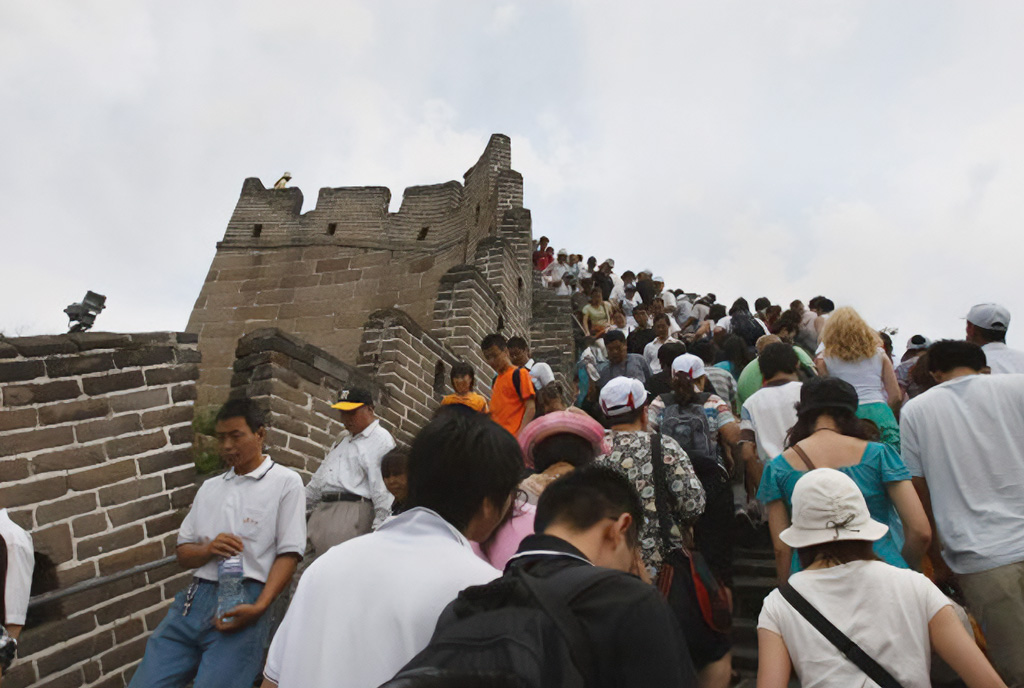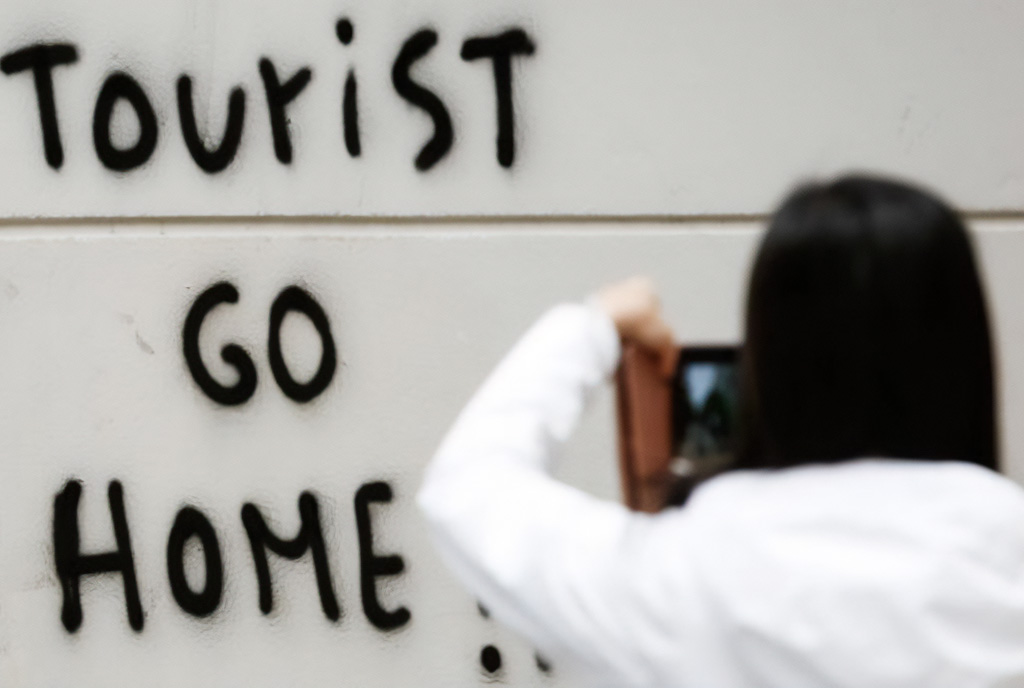


Whether it's swimming naked in Venice's canals, chasing geisha through the streets of Japan, or simply showing up in unsustainable numbers, tourists have been making the news lately for all the wrong reasons.
Every week, it seems, brings fresh stories of travelers getting up to some kind of mischief in popular or far-flung places.
Though tourists were once seen by destinations as a very welcome source of income (and in some cases still are), it feels as if we're living in an age where travel has become a byword for trouble.
Partner links: booking through them supports the blog at no extra cost to you.
But has tourist behavior genuinely gotten worse over time, or is it just the inevitable side effect of more and more people packing their bags and setting off into the wider world?
There's no doubt that tourism has surged over the past century. According to the United Nations World Tourism Organization (UNWTO), last year saw a record 1.4 billion international tourist arrivals, up 6% on 2017.
Go back to 1970, before the tourism boom sparked by budget airlines, and that figure was just 166 million. Earlier still, in 1950, it stood at a mere 25 million.
Tourism's role in the global economy has grown in importance too. In 2018 it was worth around $1.7 trillion (£1.3 trillion), or roughly 2% of total world gross domestic product.
According to the UNWTO, France is the most popular country in the world to visit, followed by Spain, the US, China, and Italy.
Yet some destinations have fallen victim to their own popularity.
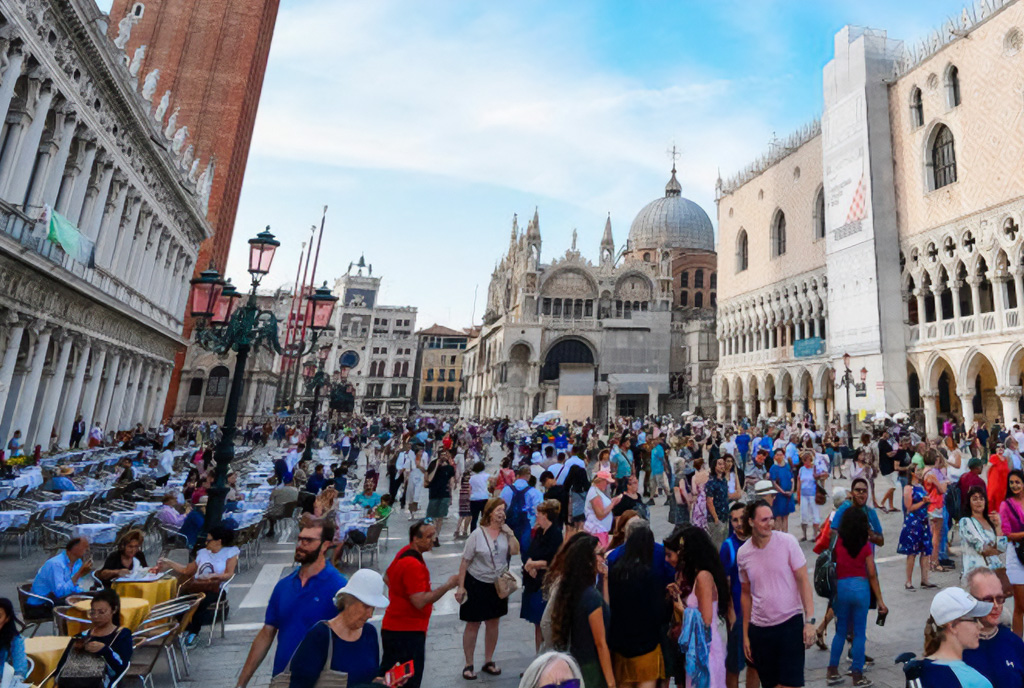
Overtourism has pushed many locals out of Venice, and the Italian city, along with destinations like Ibiza and Barcelona, has introduced a tourist tax to counter some of the damaging effects, such as water shortages and waste pollution.
The steady stream of tourists drawing attention with their unruly behavior hasn't exactly helped either.
However, Professor Phaedra C. Pezzullo, a tourism specialist and author of the book "Toxic Tourism," argues that these aren't necessarily new problems.
"As long as people have traveled, cultures have collided, and the environment has paid the price," Pezzullo says.
"Access to long-distance travel for more people has increased. I'm not convinced behavior has gotten worse."
"There are also encouraging stories of collaboration and environmental restoration."
Social Media Shaming

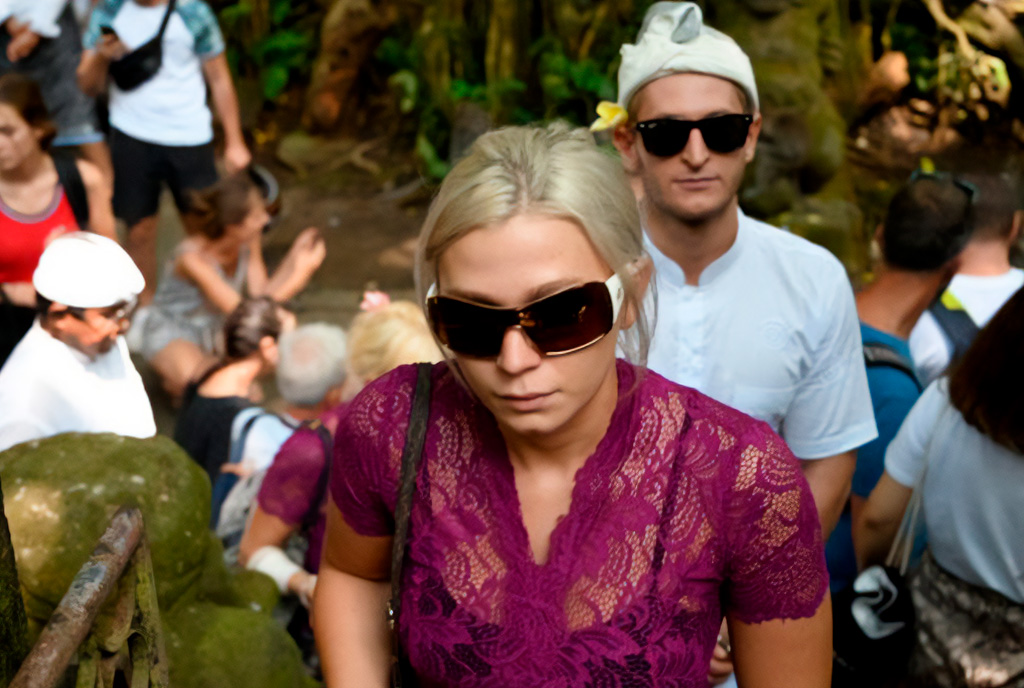
In August, Czech YouTube vloggers Sabina Dolezalova and Zdenek Slouka issued a public apology after facing online backlash when Slouka was filmed lifting his girlfriend's skirt and splashing water on her body inside the Beji Temple in the Sacred Monkey Forest in Ubud, Bali.
The scandal came just weeks after a video went viral showing five Australian men running naked through the streets of the Indonesian island and urinating in public.
Both incidents drew widespread criticism, and officials proposed banning the badly behaved tourists from Bali.
The Bali Tourism Board says its government is in the process of drafting new legislation to regulate the conduct of travelers visiting the popular Indonesian island. But, it adds, there's no sign that misbehavior is on the rise.
"At this point there are no statistics to suggest that tourist misbehavior is increasing," says Herry Rahmat Wijaya, deputy director for tourism crisis management at the Ministry of Tourism of the Republic of Indonesia.
"However, in this digital age, things can easily go viral, creating the impression that cases of inappropriate behavior are growing in number.
"This is actually an important reminder for security forces and the tourism industry to keep educating tourists about respecting local culture and rituals.
"It may be that the recent tourist misbehavior in Bali is linked to a lack of awareness and understanding among individuals of the local wisdom and values of the Balinese people."
Michael O'Regan, senior lecturer at Bournemouth University and a former assistant professor at the Institute for Tourism Studies in Macau, shares these sentiments, saying that the trend of sharing such videos on social media only worsens the relationship between tourists and locals.
"When a video goes viral, politicians are forced to act," O'Regan says, pointing to an incident in Venice where two German tourists were fined €950 (about $1,040) after being caught on camera brewing coffee on the steps of the city's famous Rialto Bridge.
"Naming and shaming people erodes public support for tourists, creating an 'us' and 'them.'
"Everyone wants that perfect tourist. But it builds a system where there are good tourists and bad tourists, which only makes things worse."
Do Codes of Conduct Actually Work?

Rome is one of several major destinations that have brought in guidelines for tourists in an attempt to curb bad behavior.
In 2018, the Italian capital passed a law banning drinking alcohol in the street, organizing bar crawls, and bathing in the city's fountains.
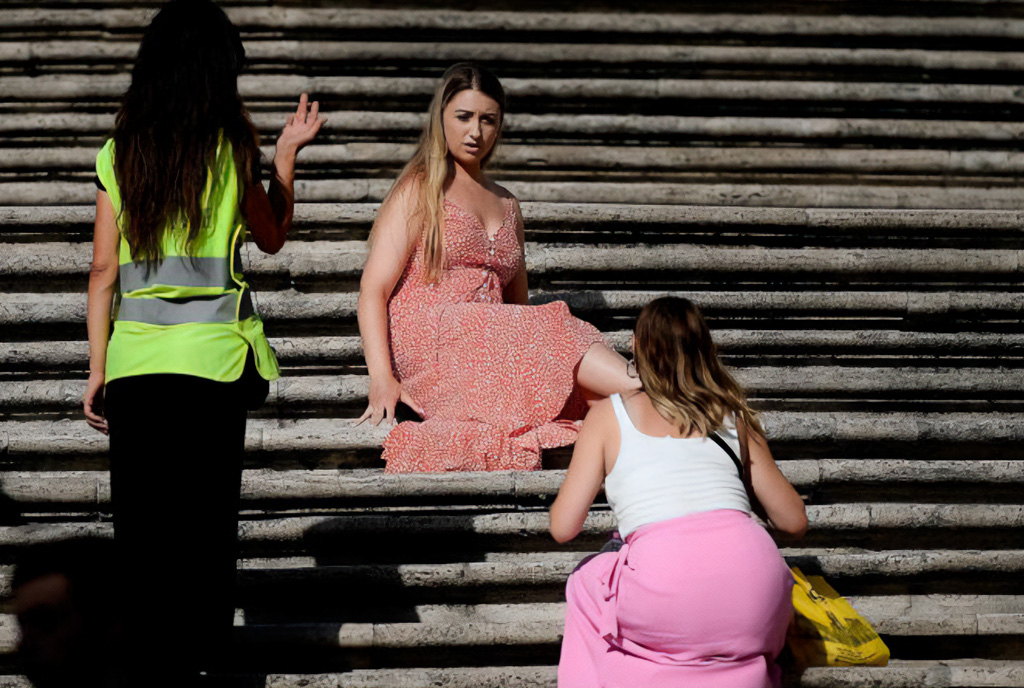
Tourists are also forbidden from eating snacks in public places and sitting on the steps of historic landmarks, such as the Spanish Steps.
Sara Verde, chief executive and founder of Rome Tour Guide, which runs tours around Rome and the Vatican, believes these rules are necessary, saying that tourist behavior has had a negative impact.
"In July and August, the city turns into one giant sewer, and people couldn't care less about any rules," Verde says. "It's contributing to the ruin of the city."
Verde, who has worked in the tourism industry for nearly two decades, has witnessed countless cases of travelers behaving disgustingly.
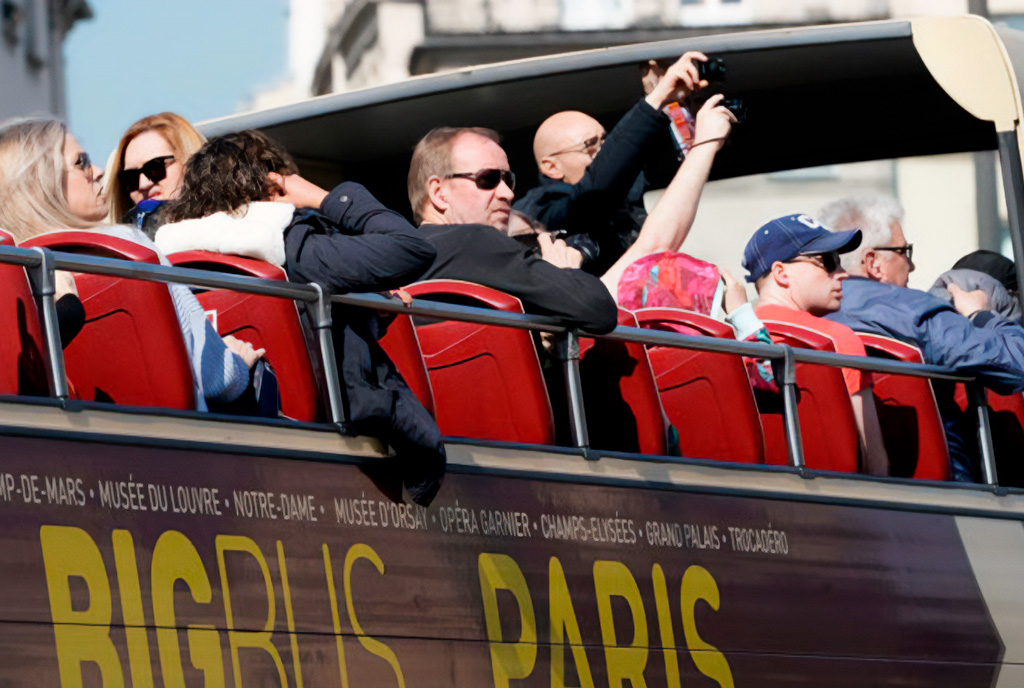
Her horror stories include a tourist who emptied his bladder shortly after stepping off the bus to the Vatican, and someone who threw up on one of the seats.
According to Verde, feats like these have taken some of the shine off Rome.
"Rome is a place where you can no longer keep tourists under control," she adds, stressing that behavior does seem to have deteriorated over time.
Other destinations that have introduced codes of conduct include New Zealand, which now asks visitors to make the "Tiaki Promise" to behave well and address the many tourist-related problems, including careless driving, harmful camping practices, and disregard for outdoor safety.
Some parts of Croatia have also decided to bring in local codes of conduct.
The European country, with a population of four million, recorded just under 18.7 million arrivals in 2018, meaning it has more tourists per capita than many other travel destinations.
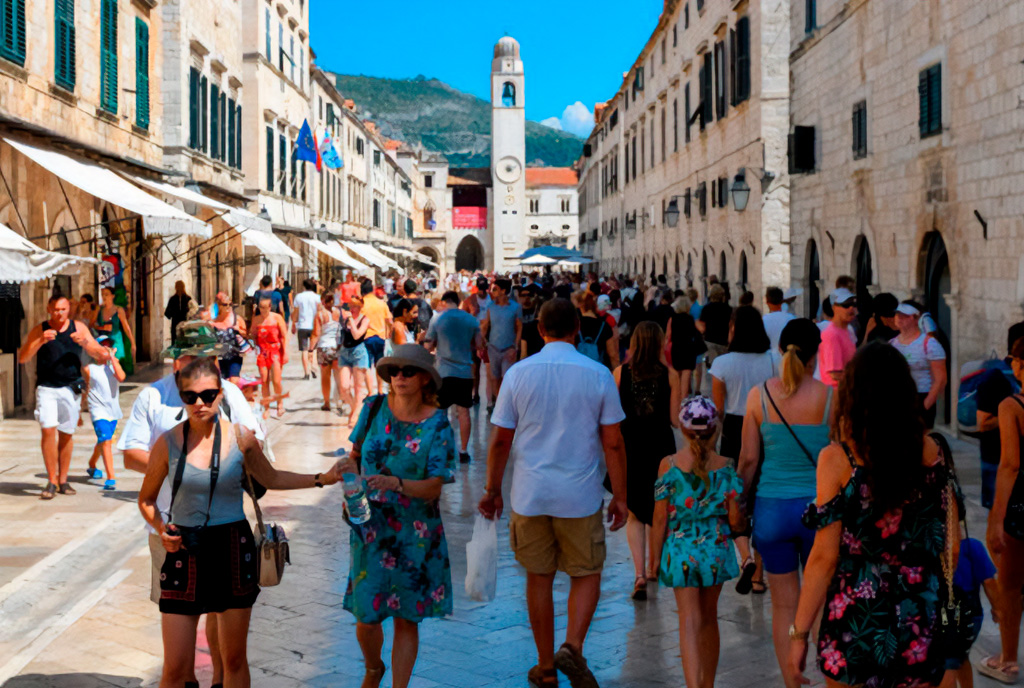
Like Venice, Croatia has felt the massive impact of tourists arriving by cruise ship, with Dubrovnik alone expected to see 50,000 passenger arrivals this year.
Several of the country's most popular destinations, including Split and Dubrovnik, have introduced "rules" or guidance for visitors amid concerns about unacceptable, alcohol-fueled behavior.
This includes a requirement to wear appropriate clothing in historic districts, bans on drinking and gathering in public places where alcohol consumption is prohibited, and general advice on the best ways to avoid causing offense.
"Broadly speaking, codes of conduct are a way of informing our visitors about the destination's expectations regarding acceptable behavior," says Ina Rodin, director of the North American office of the Croatian National Tourist Board.
Cultural Misunderstandings

"It's usually well received, and resistance to compliance has been limited."
She goes on to stress that, while the country has faced "isolated problems with unruly tourists," Croatia does not consider tourist behavior a serious issue at present.
"Typically these incidents involve alcohol abuse and the subsequent drunken, disorderly conduct that follows," she says.
Although codes of conduct have been introduced in some of its most popular destinations, Croatia has no plans to roll them out nationally.
"At a national level, we'd say the best way to handle this is to work on public awareness and education about respecting the place someone is visiting," Rodin adds.
O'Regan agrees that communicating with tourists and teaching them about local culture is the best course of action.
He says there's no evidence that codes of conduct really work, pointing out that many tourists won't even be aware of them in the first place.
"I think we're going about it the wrong way," he says. "We can't expect every single tourist to know about every cultural practice in a place they travel to.
"Tourism was meant to educate. Travelers would go somewhere different, adapt to different cultures, and come back somewhat changed."
He emphasizes that simply putting up signs in taxis or at the airport, or issuing etiquette guides, could prove effective.
For example, the Japanese city of Kyoto recently introduced a smartphone update to rein in impolite tourists, following reports of travelers lying down in the street to take photos and harassing geisha.
Launched by the Ministry of Land, Infrastructure, Transport and Tourism in partnership with the Kyoto city government, the pilot project delivers etiquette reminders through city-sponsored tourism mobile apps and portable electronic devices rented from local hotels.
The trial, which began in late September, will run around Hanamikoji Street in the Gion district until the end of the year.
"No one is going to walk into the Vatican without knowing you need to cover your shoulders," says Pezzullo, stressing that the tourism industry should take on more responsibility for travelers' behavior.
While many initiatives, including Kyoto's smartphone project, provide behavior guidance for tourists after they arrive, Pezzullo believes it should kick in earlier.
"Educational work about expectations before tourists arrive can help ease tensions," she adds. "We can't expect ready-made, perfect tourists the moment they land at a destination. It's a learning process."
Being branded an unruly tourist can be devastating, as was the case with Dolezalova and Slouka, who took part in a cleansing ritual as an apology for their actions.
Some countries have gone to great lengths to prevent their citizens from being named and shamed in this way.
After a string of negative stories about Chinese tourists, the government even issued its citizens a behavior guide titled "Guidebook for Civilized Tourism and Travel."
The 64-page book, released in 2013, advised against spitting and jumping queues, as well as lying down in public places or taking off shoes and socks.
But while we can certainly make a case for cultural misunderstandings in some instances, it doesn't explain every case of tourist misbehavior.
Lowered Inhibitions

According to tourism expert Dr. Peter E. Tarlow, some travelers may act out of character when they're in a new destination, thanks to the excitement and anonymity of being somewhere likely unconnected to their everyday lives.
"While away from home, travelers tend to lower their inhibitions, standards, and behavior," he wrote in his 2018 book "Tourism-Oriented Policing and Protective Services."
"Because many travelers enjoy their sense of anonymity, they're more inclined to engage in rude, quasi-legal, or even illegal acts they wouldn't attempt at home.
"This lowering of inhibitions can range from minor issues, like using foul language, to problems of drunkenness or the use of illegal drugs.
"The problem of low inhibitions is something that runs through almost every aspect of tourism policing."
This certainly seems to have been the case in Amsterdam, which has become synonymous with stag parties, drunken tourists, and binge drinking as travelers take advantage of the city's freedom and liberalism.
After numerous complaints from locals, the Dutch capital decided to introduce on-the-spot fines for drunkenness or excessive noise and banned its popular beer bikes in a bid to rein in unruly visitors.
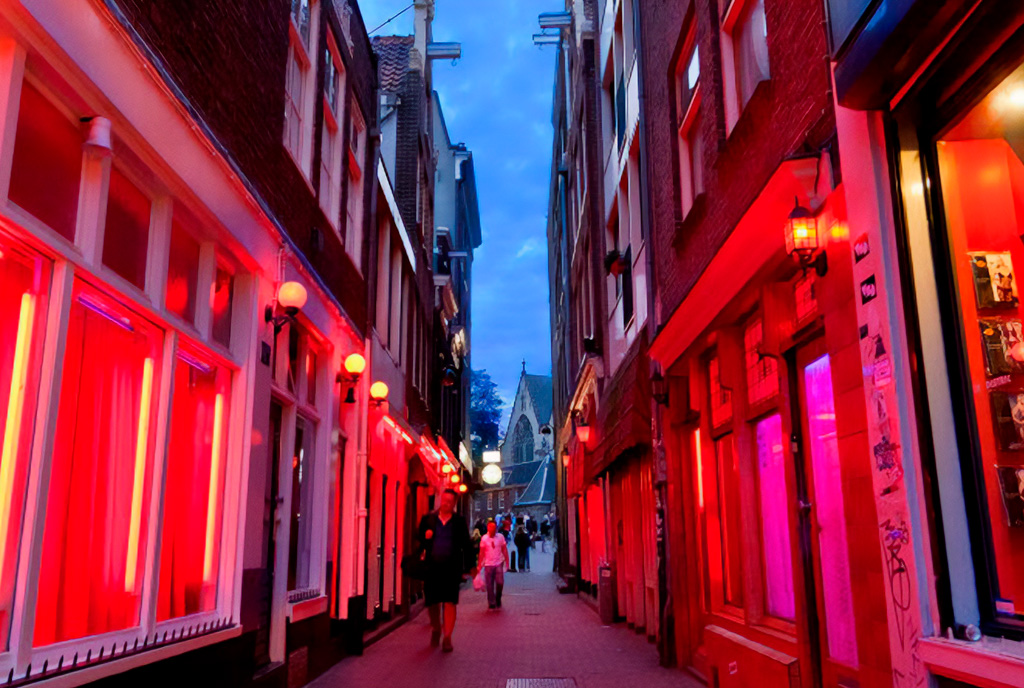
Earlier this year, the city government also announced it would stop running tours through the Red Light District in central Amsterdam over concerns that sex workers were being treated as a tourist attraction.
"Amsterdam is an appealing city, and visitor numbers are rising," says a spokesperson for Amsterdam & Partners, a non-profit organization focused on strengthening the reputation of the wider Amsterdam metropolitan area.
"This appeal has its upsides, but there's a downside too: some visitors cause a nuisance by being too loud, or urinating or being intoxicated in public.
"We're seeing an increase in litter, which can be extremely unpleasant in some areas. It affects the quality of life in certain neighborhoods."
In April, the city launched its "Enjoy and Respect" campaign to tackle offensive tourist behavior in the city, and Amsterdam & Partners believes the message is getting through.
"We're making it clear to visitors that this kind of behavior is unacceptable and has consequences," the spokesperson says.
"A structural shift in the perception that not everything goes in Amsterdam will lead to changed behavior in the long run."
Local Backlash

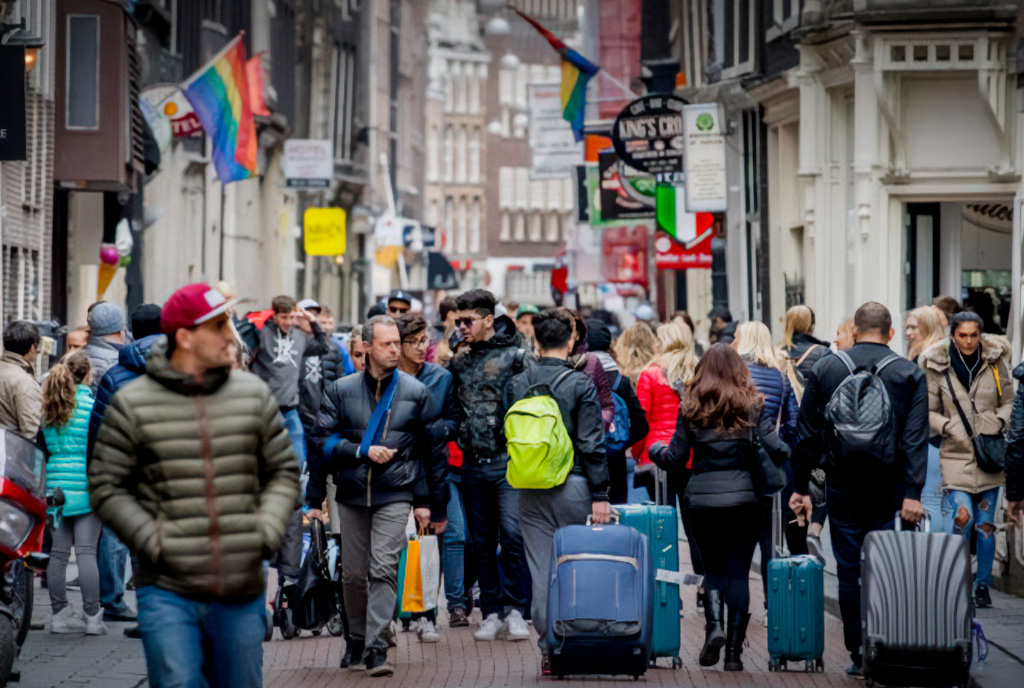
Amsterdam is now so popular with travelers that officials have decided to stop advertising it as a tourist destination.
The city has also raised its tourist tax by an extra three euros per person (around $3) a night for travelers staying overnight in hotels, and introduced stricter rules for Airbnb to tackle the problem.
"Overcrowding can also cause significant inconvenience, especially when there are simply too many pedestrians, cyclists, and motorists in a given spot at a given time," adds
the spokesperson, explaining that this has also had a negative impact on the lives of locals.
Of course, Amsterdam isn't the only destination where mass tourism has had a damaging effect on residents' quality of life.
Every year, around 1,000 locals leave Venice as the cost of living rises due to the growing number of tourists.
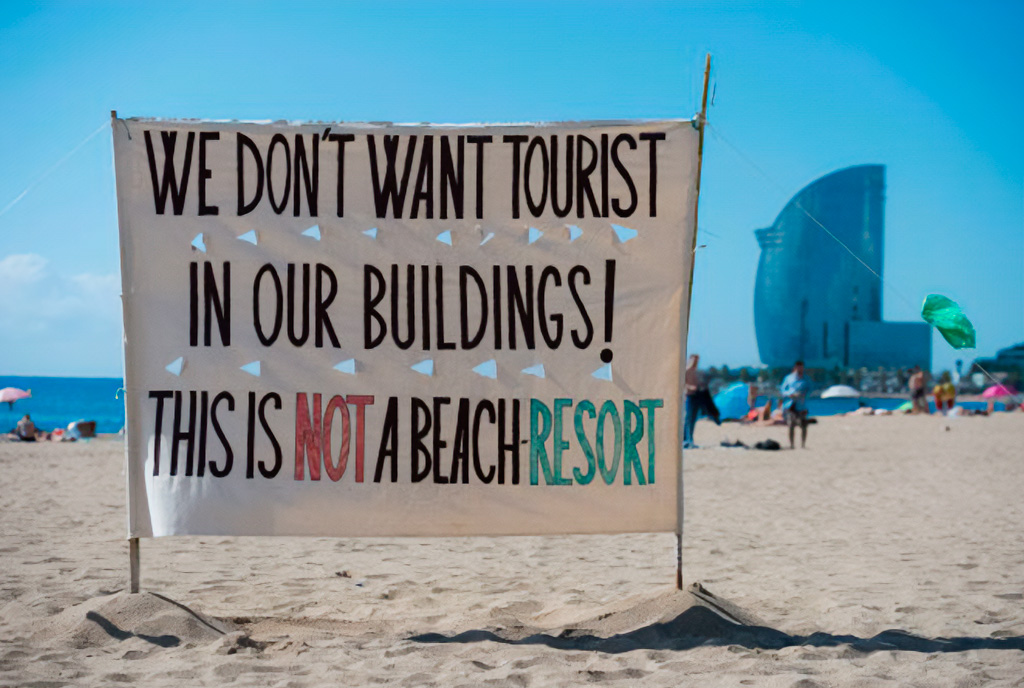
In 2017, 150,000 people marched against the rising number of tourists arriving in Barcelona and the popularity of Airbnb, which led to a housing shortage in the city.
O'Regan believes locals should have more of a say in how tourism is managed in different destinations, since they're the ones who suffer the most.
"Politicians and advisers need to look beyond the numbers and ask locals what's really going on," he says.
"Before thinking about codes and practices, entrance fees, or even banning buses from city centers, they need to fully assess the impact.
"Does having cruise ports in places like Venice and Dubrovnik add anything to anyone's quality of life, for example?"
Naturally, being seen as a problem by various destinations isn't especially reassuring for prospective tourists.
Judy Randall, chief executive of travel and tourism research firm Randall Travel Marketing, believes that some of the supposedly unruly behavior is simply a reaction to a change in how travelers are treated now that tourism is booming worldwide.
"I firmly believe that everything comes down to that frontline: giving visitors effective orientation and information," Randall says.
"Treat them [travelers] well, and they'll repay you in kind. Leave them entirely to their own devices, and they'll get irritated and behave badly.
"If you think about air travel, it's exactly the same. Most people would agree that first-class flyers behave better than those in economy.
"Is that because they're genuinely different types of people, or because they're treated better from start to finish? I think they [travelers] miss being treated well."
While there's no clear evidence that travelers are behaving worse than they used to.
As tourist numbers keep climbing, it seems clear that friction is growing between some destinations and the people who travel to them.
So if codes of conduct aren't necessarily the answer, how can destinations communicate effectively with travelers without alienating them entirely?
"I think a good sense of humor, a willingness to listen, and a desire to change matter most," says Pezzullo.
"We can all offend people within our own cultures, let alone other cultures we're less familiar with.
"To improve the tourism industry, we need to make sure local communities have a seat at the table, not just multinational corporations.
"Tourism as a practice is widespread; demonizing it won't help anyone."