

The Greek islands! This was a bucket-list trip, made all the more precious after a long pandemic travel drought. I'd already been to Athens, so on this trip it was the islands that drew me in, above all the chance to see those gorgeous cliffside houses on Santorini.
I'd seen the photos of blue-and-white houses perched high above the sea. Could the island really be that stunning in person?
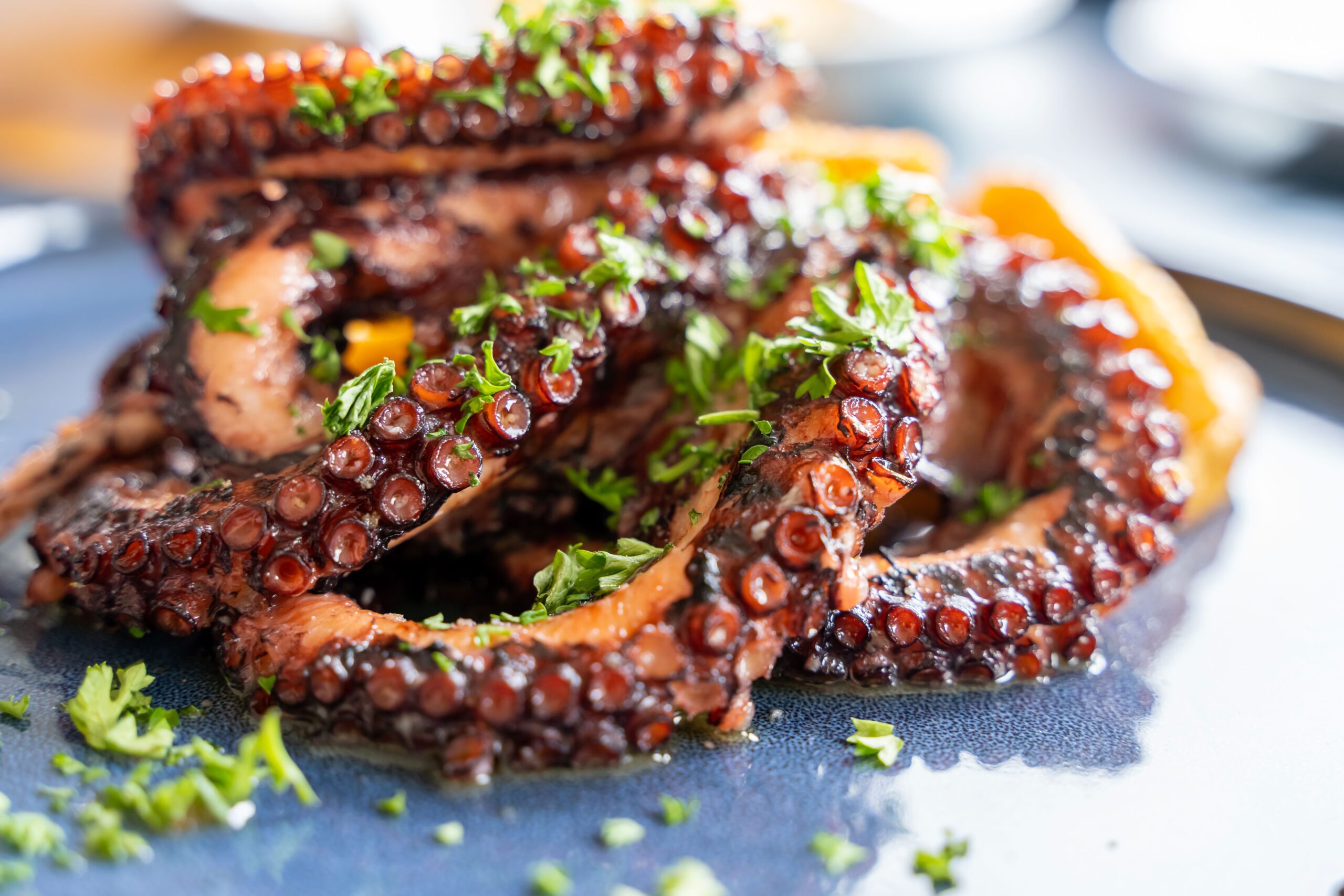
On top of everything else, I got to eat my way through one of the birthplaces of the Mediterranean diet. It's an award-winning style of healthy eating that I've covered for years as a health journalist. I needed to see, smell, taste and photograph all those dishes I'd written about, made from recipes passed down over centuries from Greek yiayias to their grandchildren. Do these dishes really look as healthy and delicious in person? The answer to both questions is yes.
Partner links: booking through them supports the blog at no extra cost to you.
On the island of Milos, my fiance and I had lunch at the unassuming Nostos Sea Food cafe, one of many little waterfront restaurants. Our taxi driver told us it was a local favorite, and the moment the food arrived we understood why. Dolmades, stuffed grape leaves usually served rolled up, had been reimagined as delicate morsels filled with shrimp and topped with a lemon foam.
The galaktoboureko, a classic custard pie with ruffled edges, was a sumptuous feast of buttery filo and creamy custard, artfully finished with pistachios. Despite a tiny kitchen, the chef had managed to turn out a dish worthy of a four-star restaurant.
All across Greece, every dish we ate was made with pride. The thick, rich Greek yogurt with walnuts and honey felt more like an exquisite dessert than an everyday breakfast.
On Santorini we kept coming back to one restaurant that served traditional Greek cooking, but dialed all the way up. At 218 Degrees Cafe, the freshly made spanakopita, that beloved Greek spinach pie, was unlike anything I'd tried in the States. The zucchini fritters were packed with fresh vegetables and herbs, then lightly fried in olive oil. They came with another Greek staple: tzatziki, a yogurt-based sauce brightened with cucumber, dill and lemon.
The traditional Greek salad, called horiatiki (which translates to "village"), was another revelation. For one thing, there's no lettuce in it, just lots of plump, juicy tomatoes, cucumbers, green peppers and onions, seasoned with a few kinds of Greek olives, crowned with big chunks of fresh feta and drizzled with olive oil.
And the feta! None of the sharp bite of the feta I'd always known back in the States. This cheese melted in your mouth, rich, creamy and delicious. No wonder the Greeks say feta goes with anything.
One of my favorite dishes was beautifully simple: perfectly roasted vegetables, glistening with olive oil, scattered with seeds and herbs. Of course, it didn't hurt that we were eating these dishes while taking in the view of the Santorini cliffs. And yes, those blue-and-white houses really are just as beautiful in person as they are in the photos.
The Benefits of the Mediterranean Lifestyle
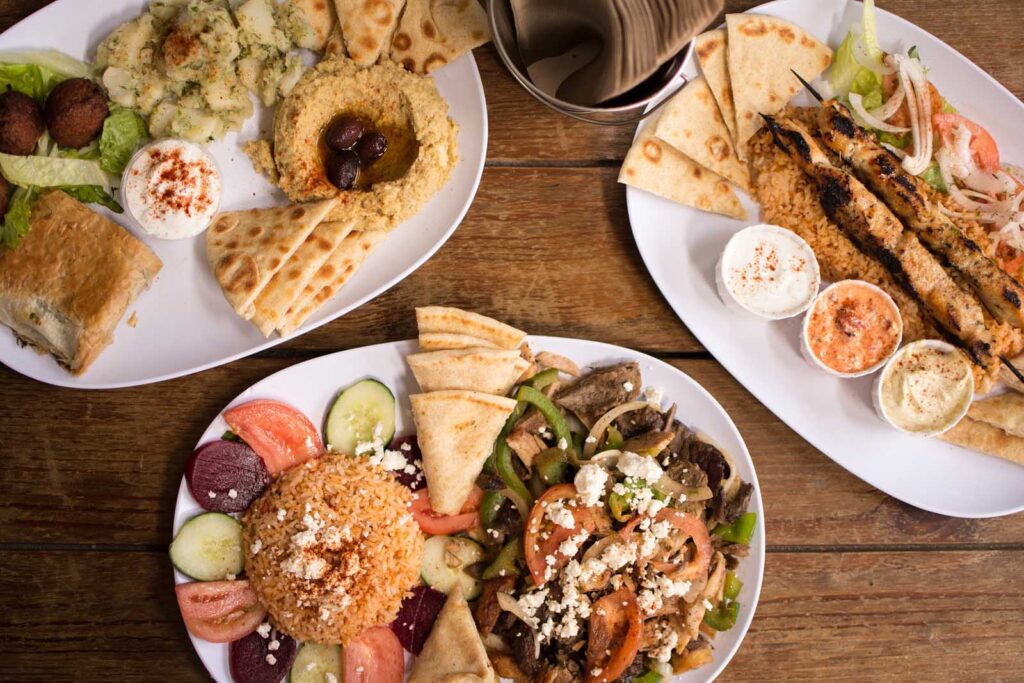
Speaking of olive oil, I can confirm that it's the king of the Mediterranean diet. It's so deeply woven into Greek life that when locals think someone is a little crazy, they say he's "horis ladi," or "missing his oil."
Scientists believe olive oil may be one of the reasons Mediterranean cooking is so good for us. Study after study shows that Mediterranean eating lowers the risk of diabetes, high cholesterol, dementia, memory loss, depression and breast cancer, while also supporting stronger bones, heart health and a longer life. And don't forget the weight loss!
Although the Mediterranean way of eating draws on the traditional foods of the 21 countries that border the Mediterranean Sea, they all share a common thread. The focus is on simple, plant-forward cooking that features fresh vegetables and fruit, whole grains, legumes, seeds and nuts, along with top-quality extra virgin olive oil.
Say goodbye to refined sugar and flour, except on rare occasions. Fats other than olive oil, such as butter, are used rarely, if at all. Red meat may show up only now and then, usually just to flavor a dish. In its place, the diet may include eggs, dairy and poultry, but in far smaller amounts than in a typical American diet.
Fish, however, is a staple. At one local restaurant we watched three young men feast on an enormous, freshly caught fish, leaving nothing behind but a few bones and the head. And speaking of heads, fellow picky eaters, get used to it. Most of the seafood I saw in Greece was served whole, eyeballs and all. For someone used to fish fillets and ready-to-eat shrimp, it took a little getting used to. (But if you live by the sea, you expect fresh seafood, and you get it.)
Don't forget the fresh fruit, the foundation of desserts here. While most tourist restaurants will happily sell you traditional baklava or loukoumades (Greek doughnuts), that's not at all what the locals eat every day. Once, at a restaurant, I watched a family order a fruit platter with watermelon as their celebratory cake.
Orange, lemon and fig trees grow in the courtyards, ready to be picked the moment you step outside. I even saw orange trees growing along the sidewalks in Athens.
Unlike a high-sodium diet, Mediterranean dishes let herbs and spices take the lead over salt and pepper. Fresh herbs are so important that Greeks grow them in every corner. In Athens I saw pots of herbs on windowsills, along the sidewalks next to parked cars and at the base of trees lining the streets.
But the Mediterranean "diet" is about so much more than food. It's built on movement, like walking, cycling and gardening, as well as mindful eating and time spent with friends and family.
You could see it all over town: as the workday wound down, people would start gathering in the town center or by the sea, children in tow. Families and friends reconnected, shared the news of the day, laughed, and then it was time to eat.