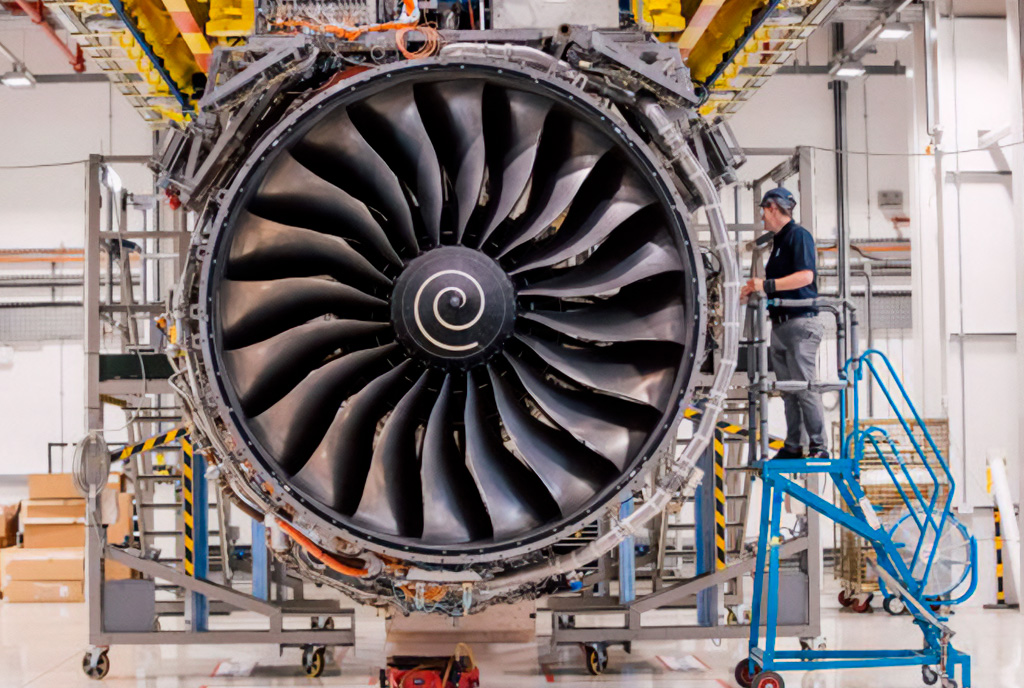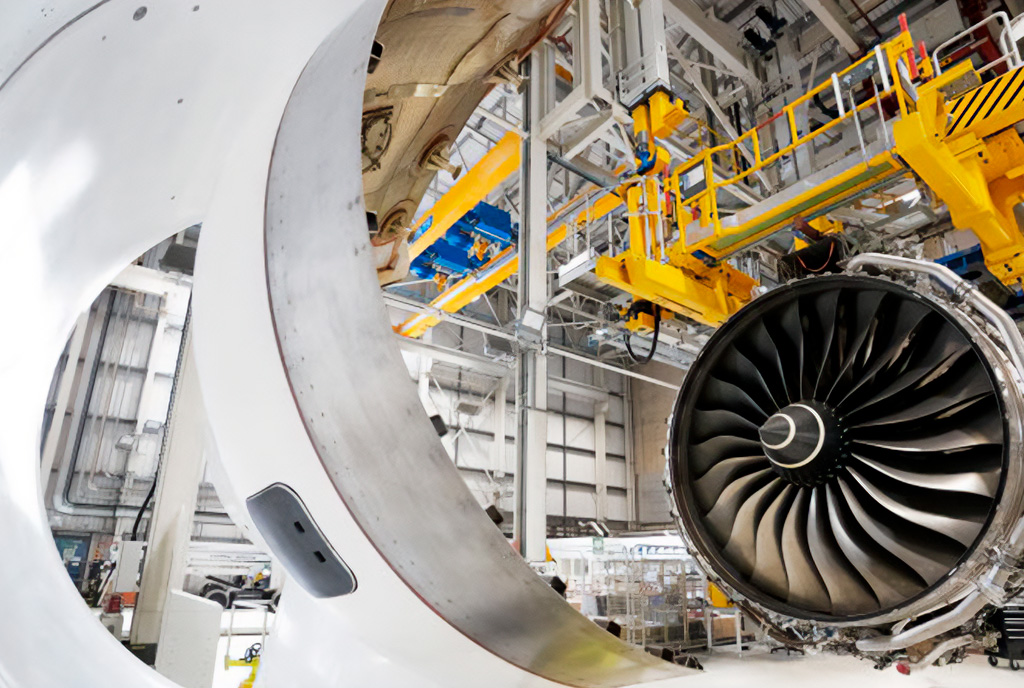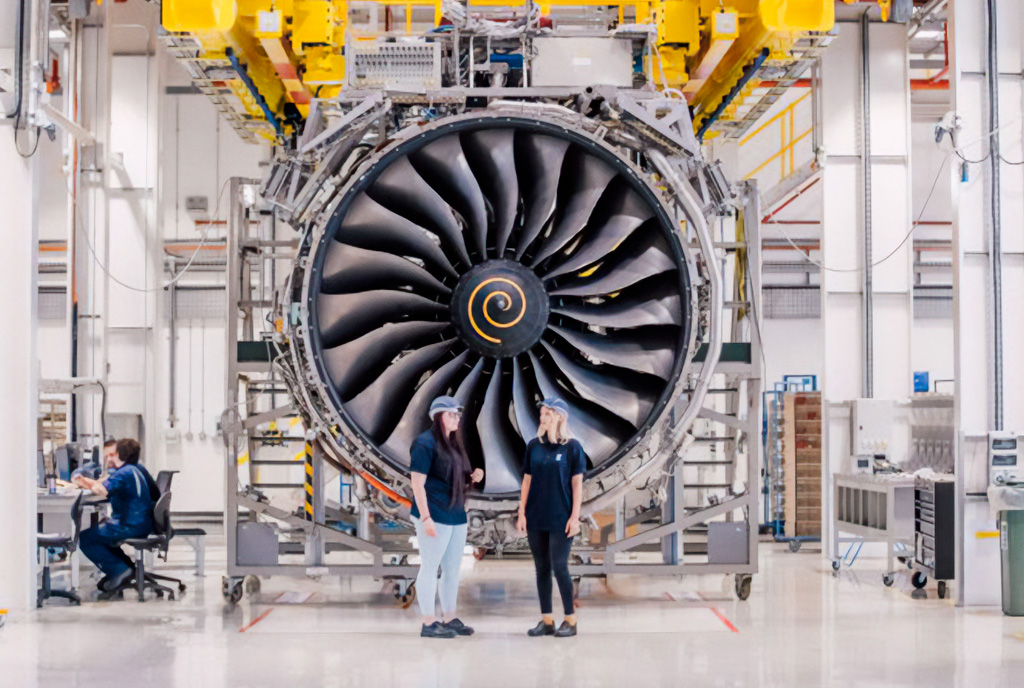


Behind the closed doors of the Rolls-Royce Aerospace headquarters in the UK, machinery hums, fans whir and blades whine as around 1,000 people tackle the complex job of bringing an aircraft engine to life.
"It all comes down to keeping customers happy and matching the popularity of the engine we're trying to build," says Michael McRae, an improvement engineer on the Rolls-Royce Trent XWB engine line.
"Sure, we've created popular designs, we've created popular products, but can we keep up the pace of production?"
Partner links: booking through them supports the blog at no extra cost to you.
The Trent XWB is a turbofan jet engine that powers the Airbus A350 XWB. Chances are you've flown with one. You'll find it with airlines all over the world, including Qatar Airways, Singapore Airlines and Lufthansa.
More than 1,800 Trent XWB engines are in service or on order worldwide. And at the Rolls-Royce facility in Derby, in England's East Midlands, the goal is to produce these engines safely, quickly and to the highest standards.
McRae walks us through the process, offering an insider's look at how the XWB engine is built and the steps it takes to get it airborne, from manufacturing and testing to flight.
A marvel of engineering
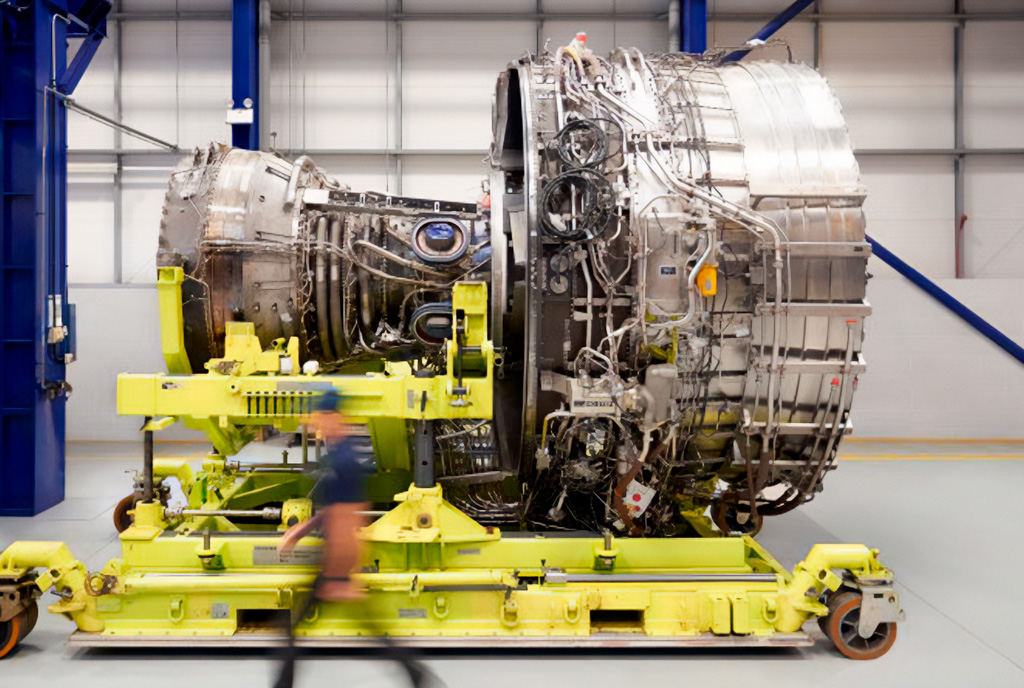
The Trent XWB engine is made up of eight key modules.
"We build six of those eight modules in Derby," says McRae. "The other two we hand off to suppliers."
The IP compressor is built by KHI in Japan, while the LP turbine is assembled by ITP in Spain and then shipped back to the UK.
McRae begins the tour of the XWB engine production line in Derby at the fan case.
This is the part that wraps around the outside of the engine and is usually covered by a fairing displaying the name of both the product and the airline.
"It's designed to hold all the wiring and piping, and to contain the fan blades," says McRae, pointing to a bare fan case topped with carbon fiber.
The fan case has a "wet" side and a "dry" side. The wet side is where the fuel and oil sit, while the dry side is home to the cables and electronics, kept far enough from any fluids to avoid trouble.
"We've got three fitters per shift working on each fan case," McRae explains.
"Each fan case is split into three sections, so one person works on a specific part of the build without crossing over with the others."
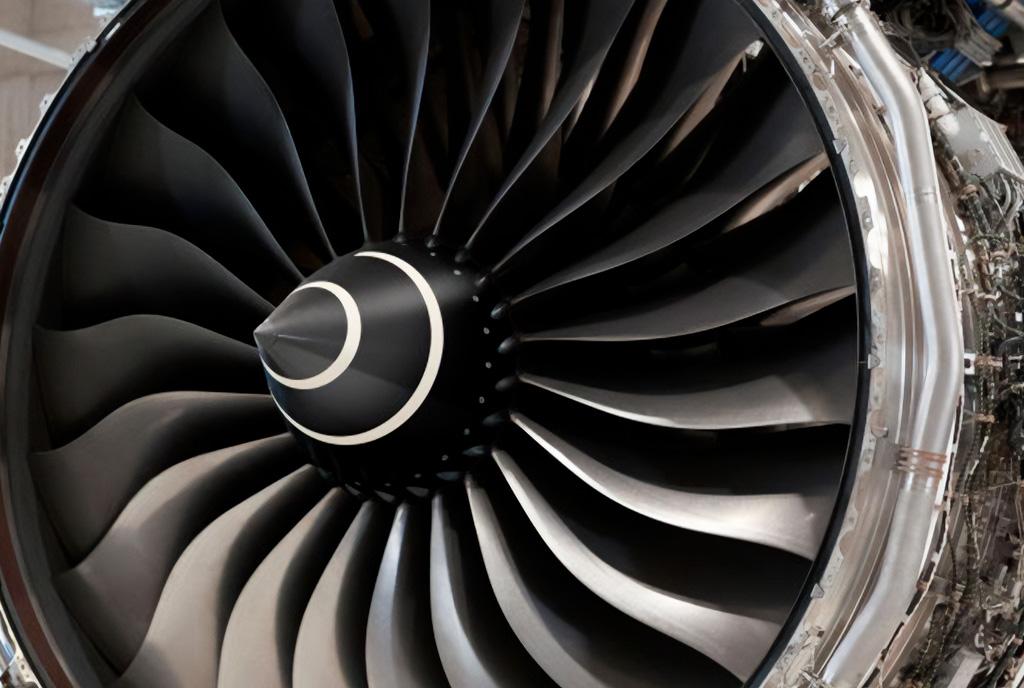
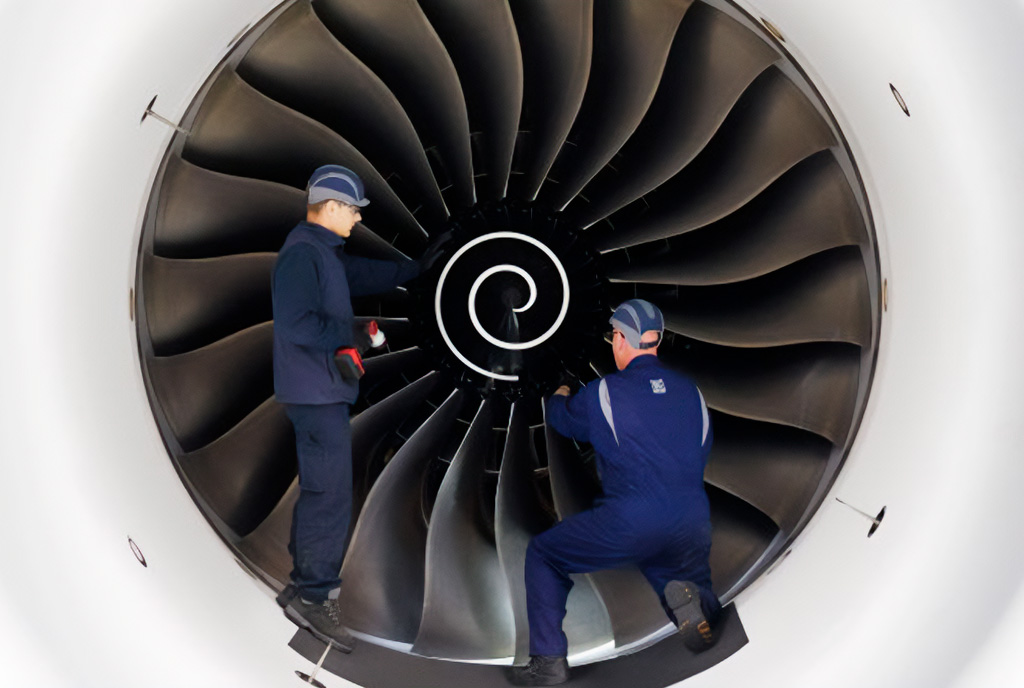
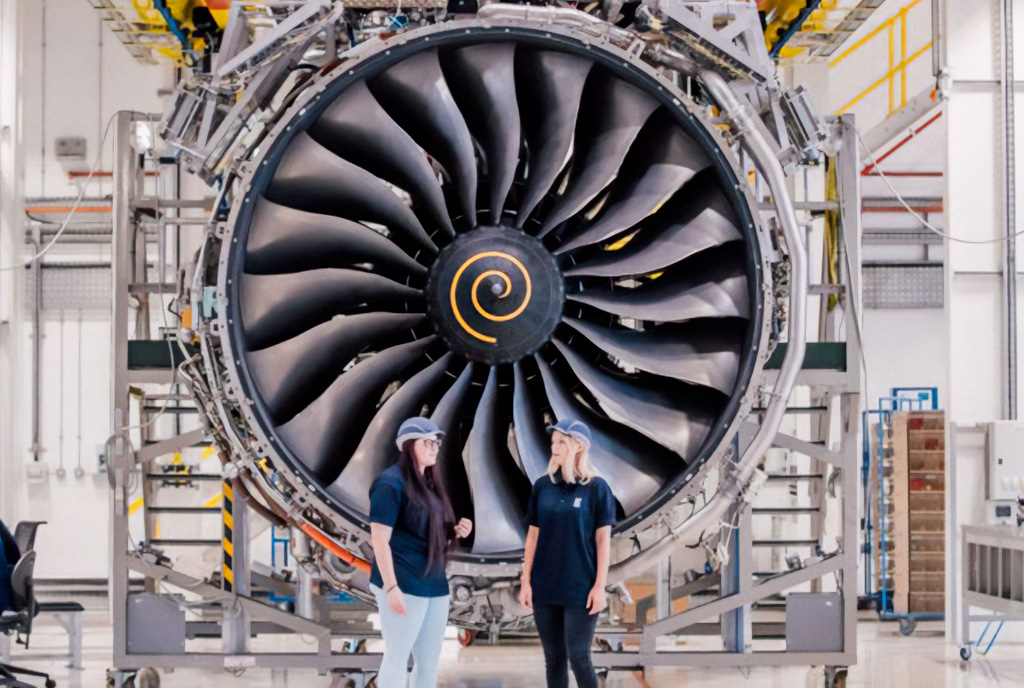
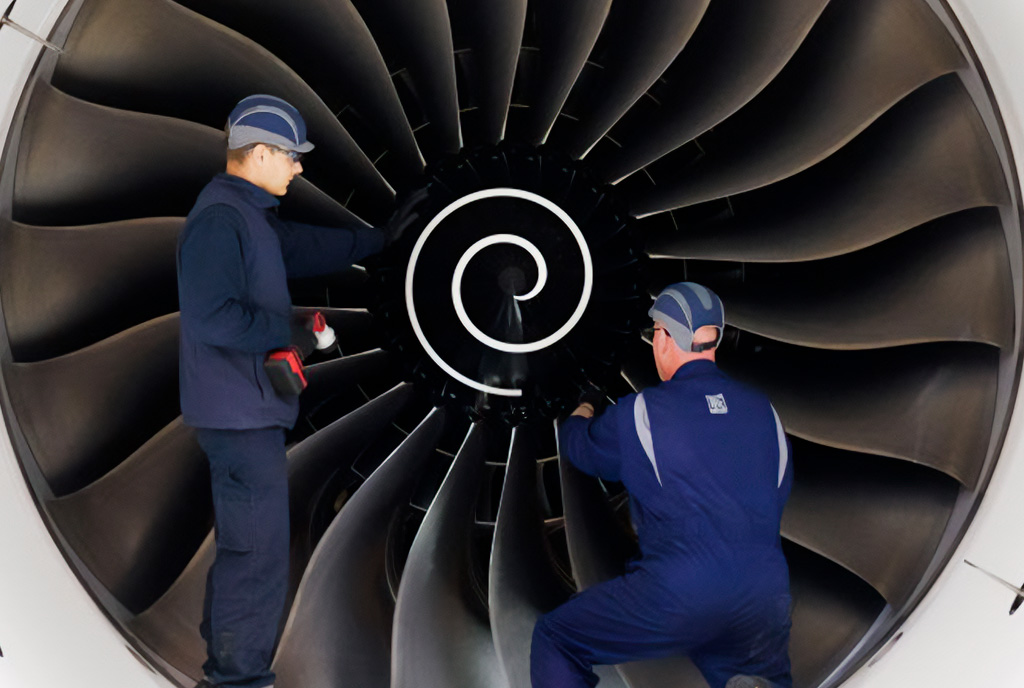
The next step is the part of the engine you'd actually see on a plane: the big fan that spins up front.
Weights are used to balance the fan and make sure it runs to spec.
"It's like if your car's wheels were wobbling a bit, you can attach extra weights inside. We actually bolt some weights inside to offset any tiny differences in vibration, so we need to reach a kind of net-zero vibration across the whole engine, across every part, to make sure the customer's ride is as comfortable as possible," says McRae.
The passenger experience is always front of mind at Rolls-Royce. Ideally, you're barely aware of the engine at all, apart from the fact that it's getting you from A to B.
As we walk past this stretch of the line, one of the Rolls-Royce staff spins a fan inside a large box-shaped machine. Computer software shows where the weights need to go.
"It's really important that it's as balanced and precise as possible," says McRae.
Any imbalance would cause serious problems for the engine.
The next steps
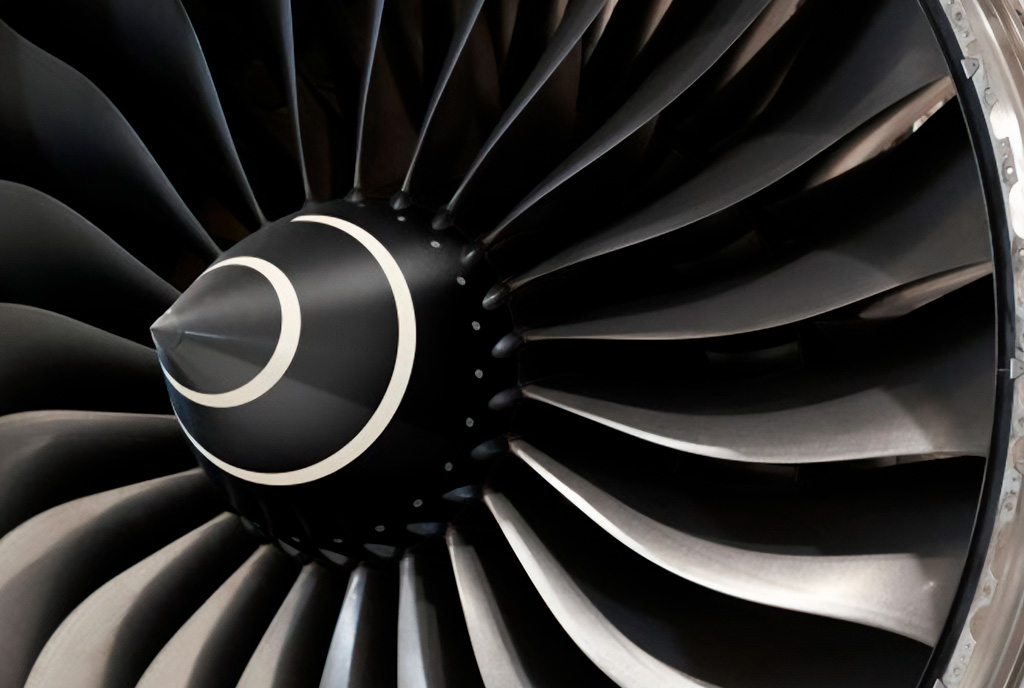
Walk through the facility and you see people everywhere. Yes, there are machines, but not as many robots as you might expect.
"It really is a very skilled job, more so than a big-machine job," says McRae, who studied mechanical engineering at Imperial College London before joining Rolls-Royce as a graduate.
The next step is to join the combustor section to the intercase. The intercase is where the engine, with a shaft running through the middle, connects to the gearbox.
This part of the production line is part of a moving assembly line:
"Essentially, the floor moves forward while the tooling stays put, so the team follows the engine as it moves along," says McRae.
At this stage, the engine is essentially "bald," McRae says. It needs to go from a core to what's known as a dressed core.
"A dressed core is when you fit all the pipes connecting the hot and cold engine, and any cables running through it," says McRae.
The fan case is then brought over, set on the floor, and the engine is lifted and lowered into the center of the fan case.
Now it looks more like an aircraft engine, but it's still not ready to fly.
The testing process
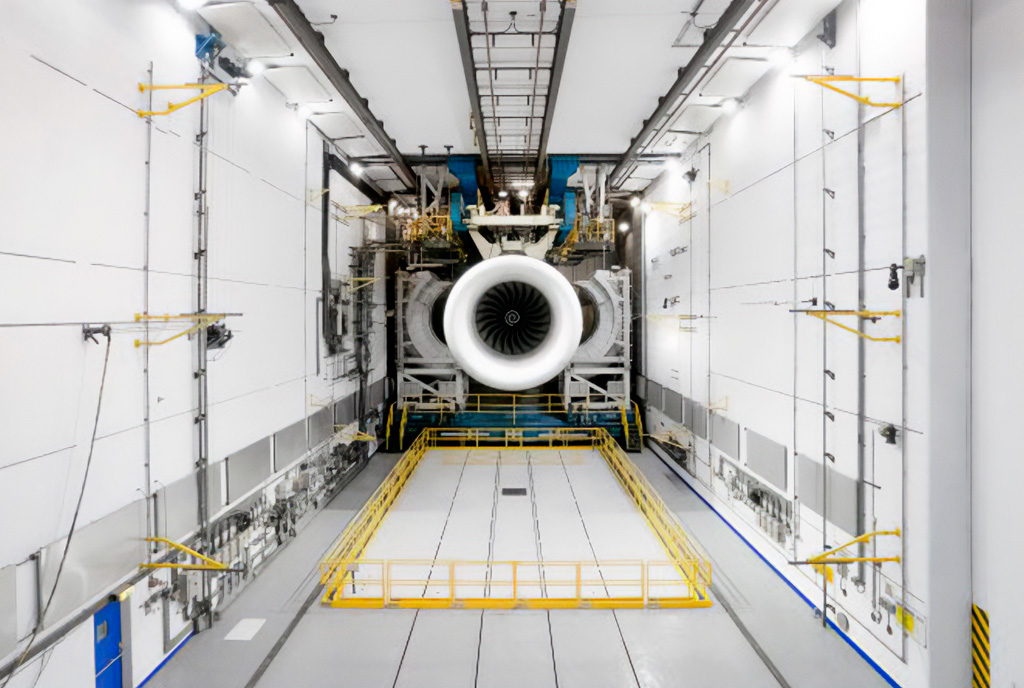
Perhaps the most impressive part of the facility is the test bed.
It's a huge, long room with a giant rig holding the engine in place, ready for testing.
While the engine sits on the test bed, testers experiment with how well it handles start-ups, emergency shutdowns and even bird strikes. Dead birds, along with gelatin models, are thrown into the engine to recreate a bird strike.
Thrust is also recorded. You don't want any imbalance, as that would affect how the engine performs.
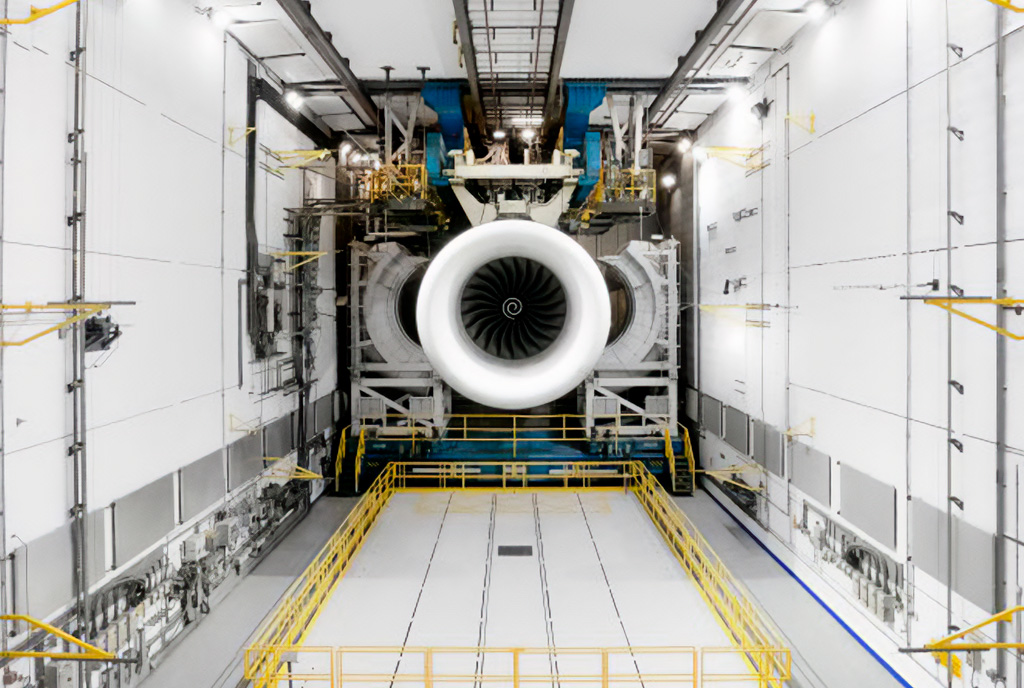
The engine is also checked for cabin odor issues using what's called a smell test.
"We make sure there's no smell coming off the engine that could get into the cabin," says McRae.
So what happens if an oil leak is suspected?
Cameras are fed into the engine, and changes can be made.
The length of the testing process at Rolls-Royce varies. New products will be studied thoroughly over several days, but for engines already in production, flight readiness can be confirmed after a shorter round of testing.
Getting the plane in the air
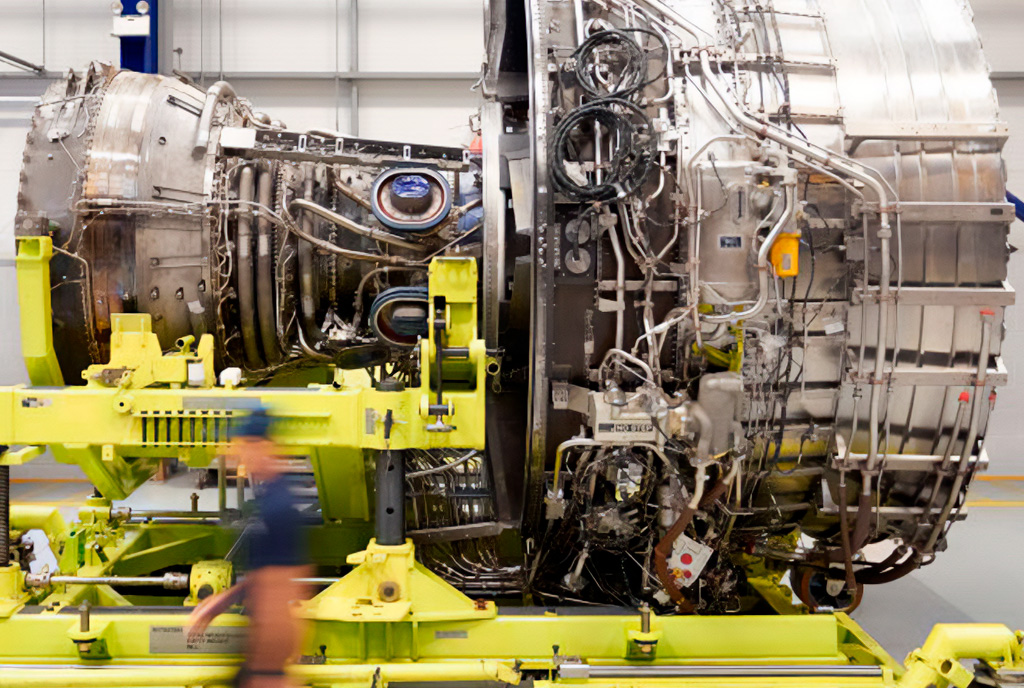
Once the engine is ready to go, it's taken apart, split in half using a hydraulic machine and transported by truck, usually to the Airbus headquarters in Toulouse, France, where it will become part of an Airbus A350 XWB.
Each engine will fly roughly 3,000 flight cycles before it needs servicing, carrying thousands upon thousands of passengers to their destinations.
So how does an aircraft engine lift a plane into the air?
"There are four words that describe our jet engine: suck, squeeze, bang, blow," says McRae.
First up, the suck: the fan at the front draws in air, and 80% of that air passes around the engine and is blown out the back. That provides most of the thrust pushing your engine forward.
The fan is turned by the core, which takes the remaining 20% of the air and compresses it, so it gets smaller and smaller.
"That's the squeeze part," says McRae.
The air mixes with fuel and is then ignited by the igniter. That, of course, is the bang.
The last part? Well, as the compressor gets smaller, the turbine gets bigger, extracting more energy. The air passes through it and spins at each stage.
"It's a bit like when you're at the beach and you have those little pinwheels that you blow into," says McRae. "Essentially, it's a whole series of stages extracting more and more of that energy."
Civilian feedback
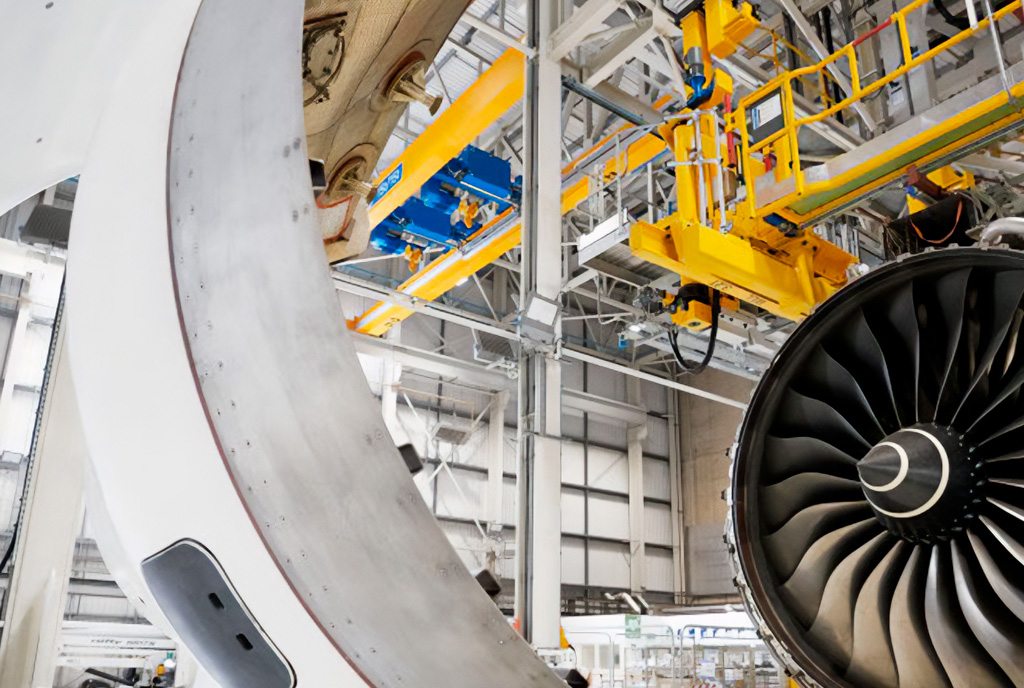
Rolls-Royce is keen to stress that the Trent XWB is economical and reliable. It's said to be 15% more fuel efficient than the original Trent engine.
It's also quiet, even though each of the 68 high-pressure turbine blades produces 800 horsepower at take-off, the equivalent of a Formula 1 car.
That's 68 blades in all, producing a combined 50,000 horsepower at take-off.
It's precisely the sheer inconspicuousness of an aircraft engine that means air passengers, unless they're self-proclaimed aviation geeks, probably don't give much thought to the mechanics of what's lifting them into the sky.
"A lot of people get on a plane and they don't know who makes the engine, and often they don't care," says Caroline Day, head of marketing, strategy and future programs at Rolls-Royce.
That said, she says, growing awareness of the climate crisis is shifting that mindset to some degree.
In this era of constant connection, an engine maker can't just cater to aircraft manufacturers and airlines. The average passenger is being drawn into the conversation too.
And many travelers are increasingly concerned about their carbon footprint and are holding carriers to account.
"I think, thanks to social media, we're now getting far more engagement with the public, which is great," says Day.
"We're very aware of this pressure from climate change. I'd like to think we can show that we're absolutely doing our part," she adds. "We're trying to burn less fuel and cut emissions."