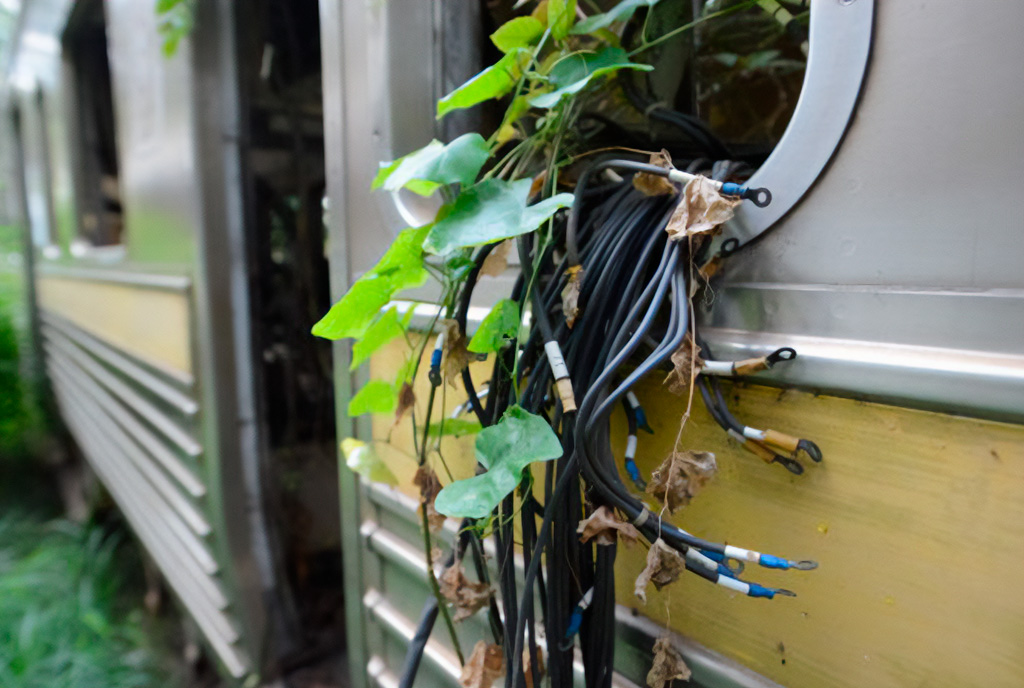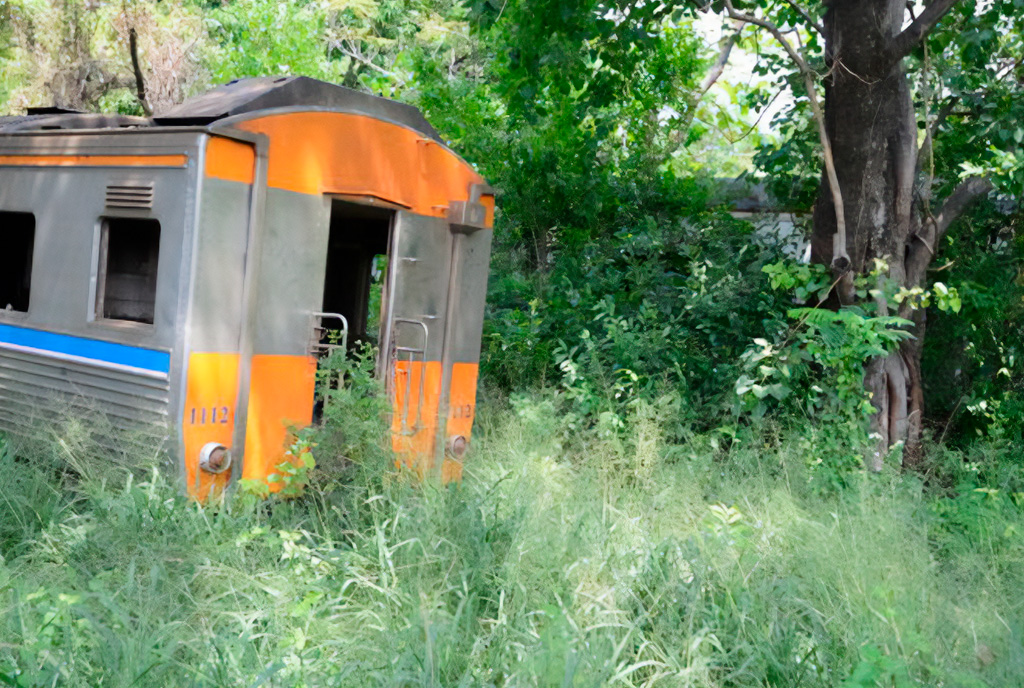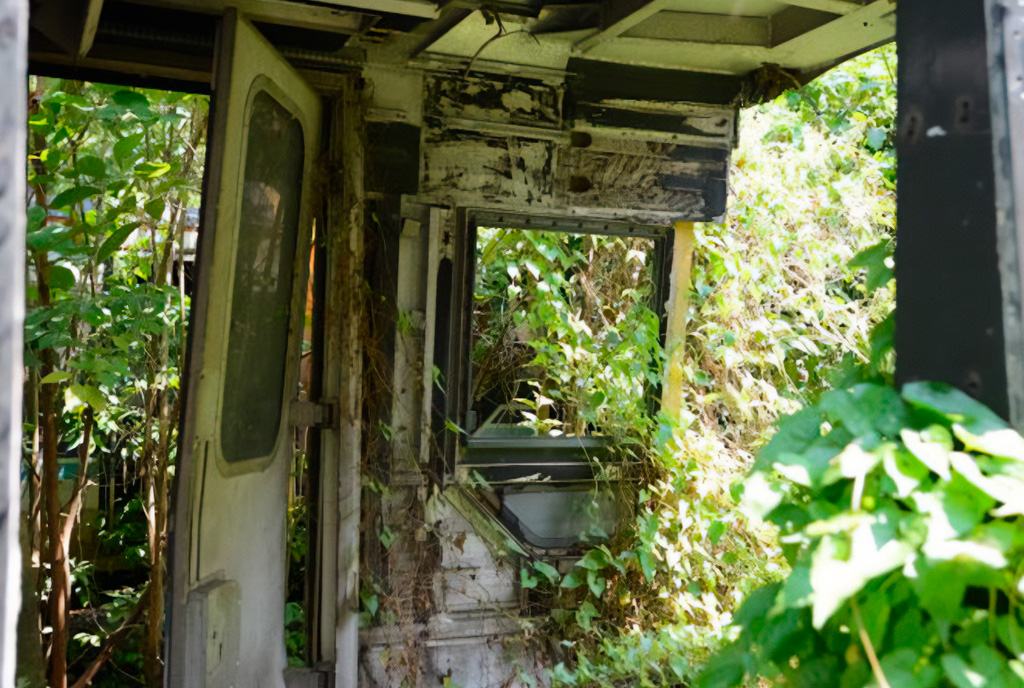


The contrast is striking. You glide along an elegant elevated rail line into central Bangkok from the main international airport, Suvarnabhumi. Just a few stops from the city center, you spot an old railway yard, locomotives and carriages, scattered across what looks almost like an urban jungle.
As you draw closer to the center, the jungle gives way to old warehouse buildings, and beside them Bangkok's skyline gleams.
This is Makkasan, hardly an obvious stop for travelers heading to the Thai capital. But if you have a taste for the offbeat when you travel, it offers rich rewards.
Partner links: booking through them supports the blog at no extra cost to you.
Beneath the airport rail line, between Makkasan and Ratchaprarop stations, you'll find the State Railway of Thailand's Makkasan station, which is separate from the airport link station of the same name. Walk along Nikhom Makkasan road toward the station, and you'll step back into what feels like the Thailand of 40 or 50 years ago.
Related article: Vietnam by planes, trains, automobiles... and more
You'll enter through a market, but it's nothing like the LED-lit, buzzing night markets that draw tourists all across the Thai capital. This place is strictly for the locals. It has everything: fresh fruit and vegetables, cuts of fresh pork, whole chickens and household goods such as plates and cleaning supplies.

On a recent Sunday morning, the market was packed with shoppers, the aroma of Thai food mingling with the scent of fresh flowers, the sharp smell of dried fish and the exhaust of passing scooters, pulling the visitor right into the experience.
At the far end of the market sits the railway station. It's completely open. No fast food outlets, no bars, no waiting rooms, no big flat screens with timetables. But you can board a State Railway of Thailand Eastern Line train that will take you to Pattaya or to the Cambodian border, or simply one stop back to central Bangkok if you fancy a quick visit.
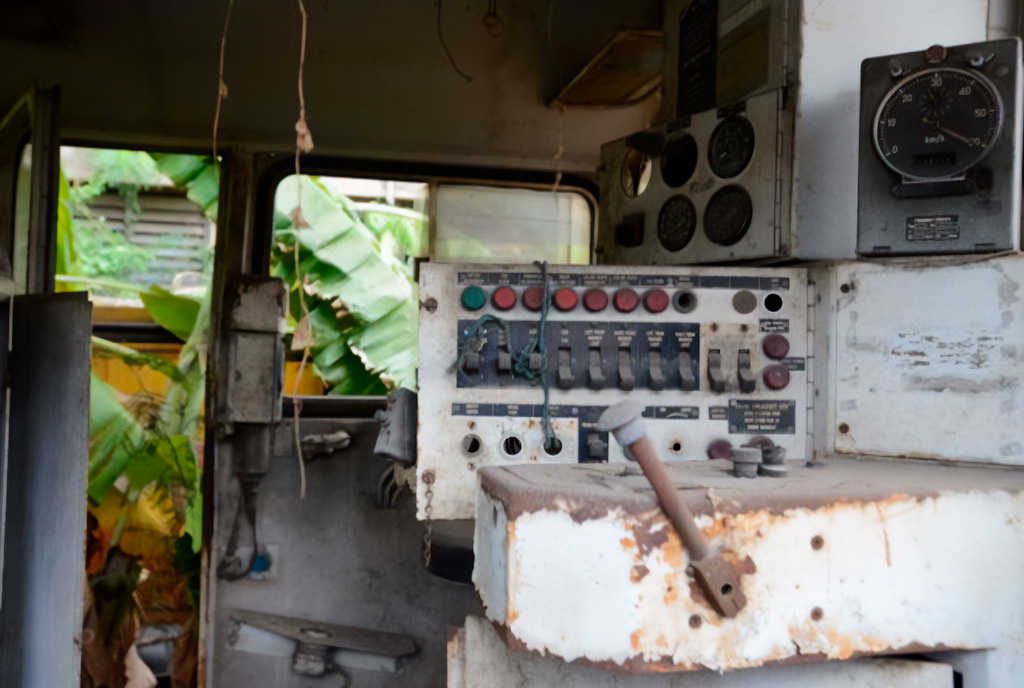
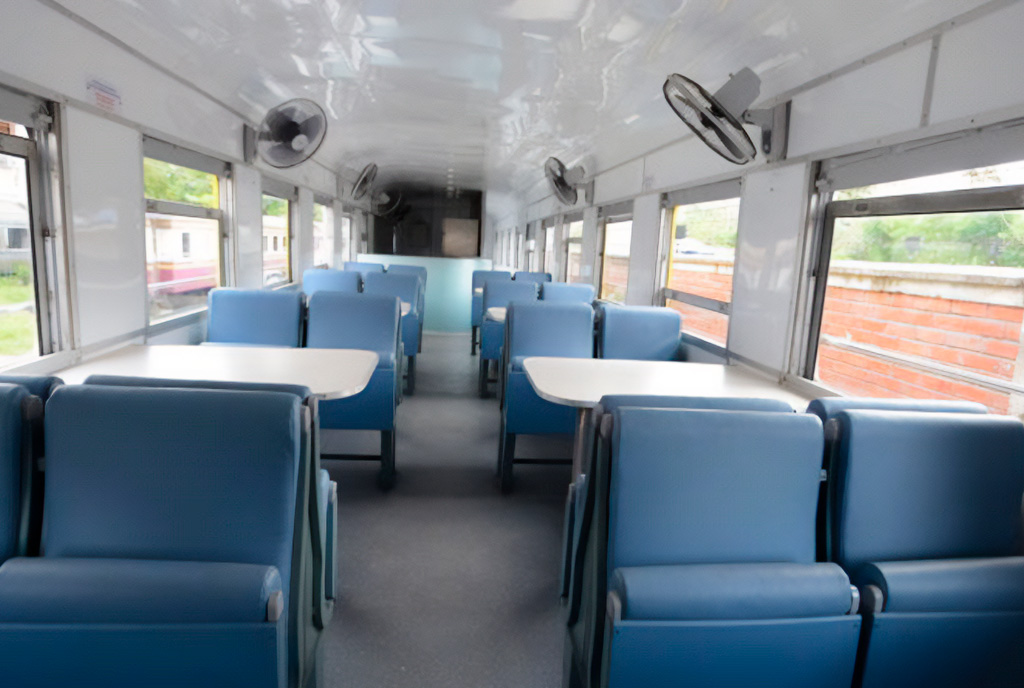
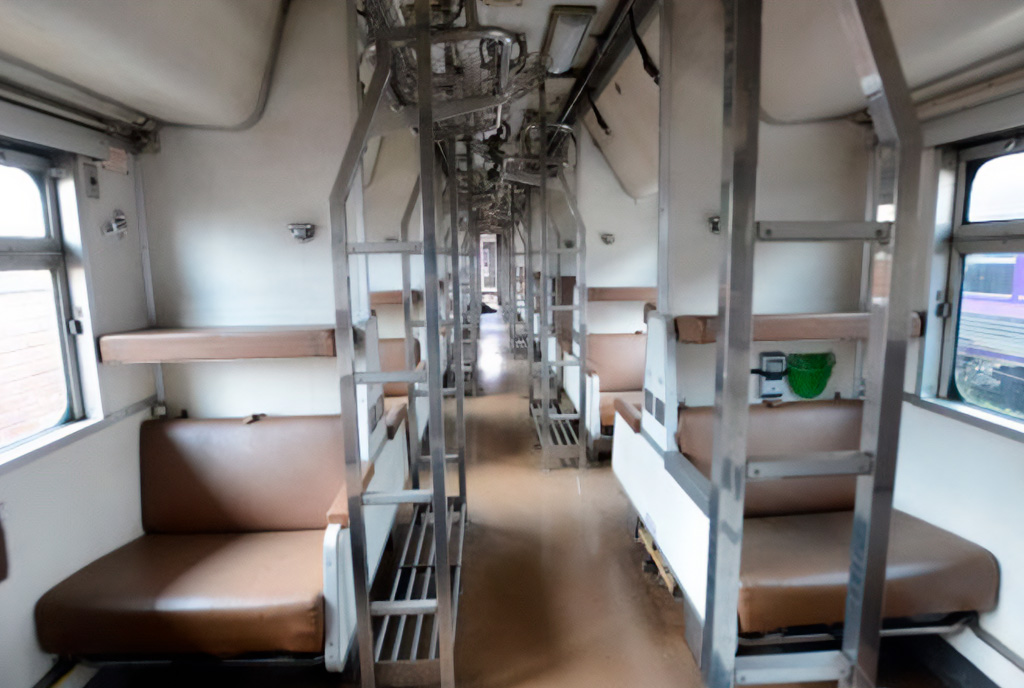
And you might well be riding an antique. The locomotives and carriages used on the line can be up to 50 years old, though you might not guess it from their condition.
Here another of Makkasan's secrets reveals itself.
On the opposite side of the tracks from the station lies the state railway's sprawling main repair yard. Those railway carriages you saw seemingly being swallowed by the jungle on the way into Bangkok might one day carry you to Cambodia.
Where trains come back to life
Railway officials recently gave us an exclusive tour of the vast, 186-acre (752,000 square meter) site, which is closed to the public.
Away from the main working buildings, and stretching into the jungle, stand rows of carriages. Some are victims of crashes and disasters, damaged beyond repair. They may be stripped for parts to fix the carriages that will return to Thai rails.
Other surprises are scattered through the woods.
Among the shells of old railway carriages, we tried not to step on freshly planted mango and banana trees. In other spots the fruit trees are thriving, their branches tangled with the old carriages.
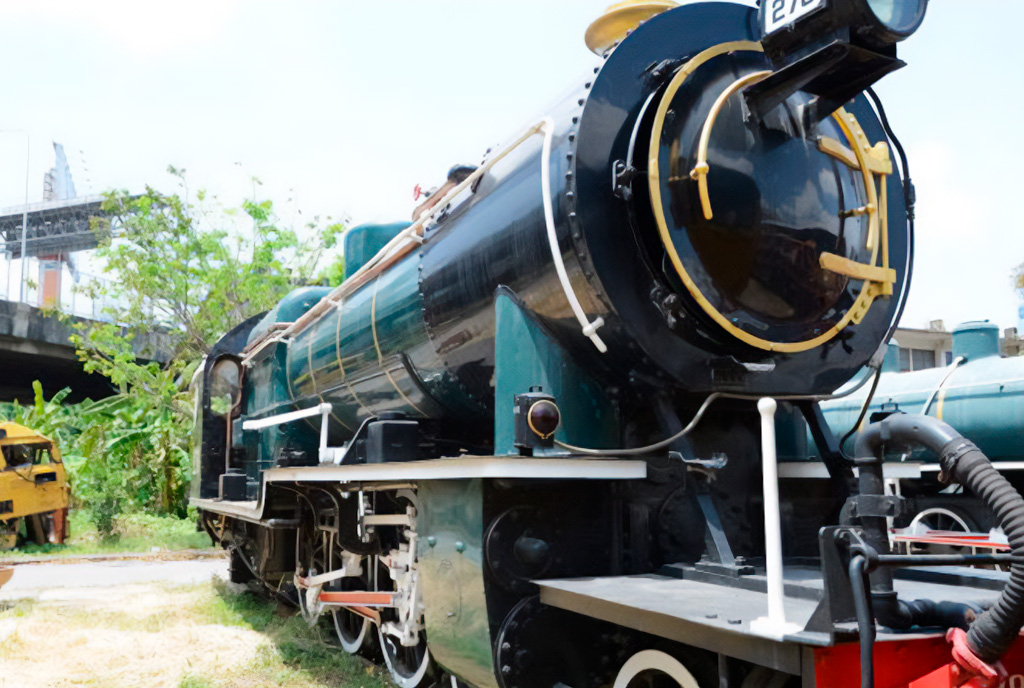
There's also a pair of old Japanese steam engines that once supplied power to the huge complex.
The Japanese engines date back to World War II, when the Makkasan yard was linked to Japan's Burma Railway, which connected Japanese forces in Thailand with those in present-day Myanmar.
This 258-mile link was also known as the Death Railway, because of the tens of thousands of forced civilian laborers and Allied prisoners of war who died during its construction.
Related article: Hellfire Pass: A Thai museum tells the grim story of World War II
That link made Makkasan a target for Allied bombers during World War II, says Kohpong Suttikorn, an engineer in the site's mechanical department and a 32-year veteran of the state railway system.
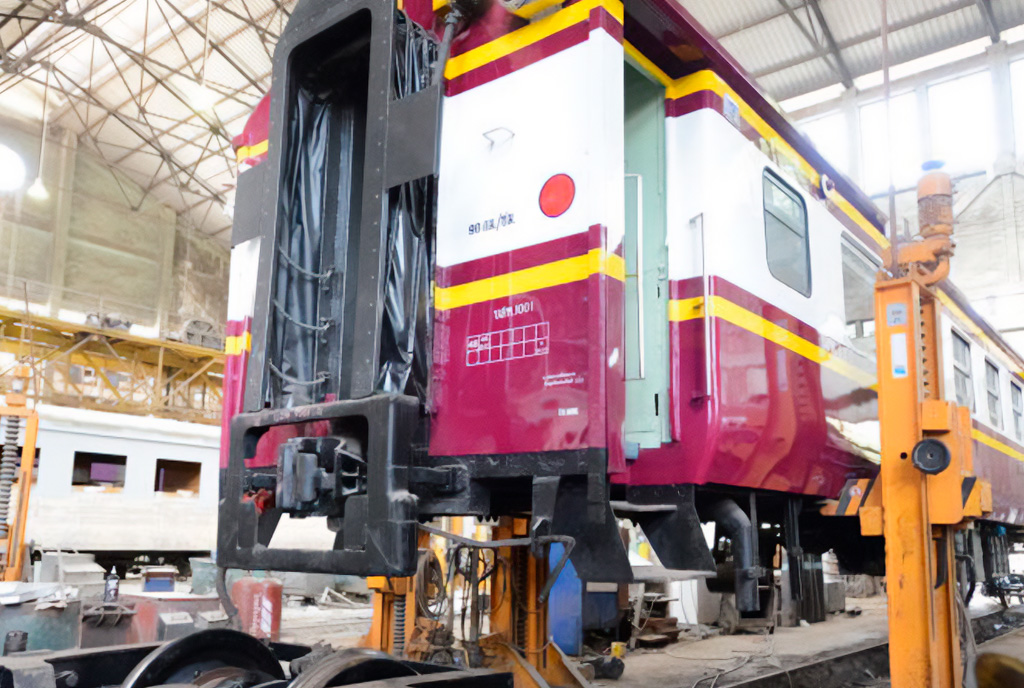
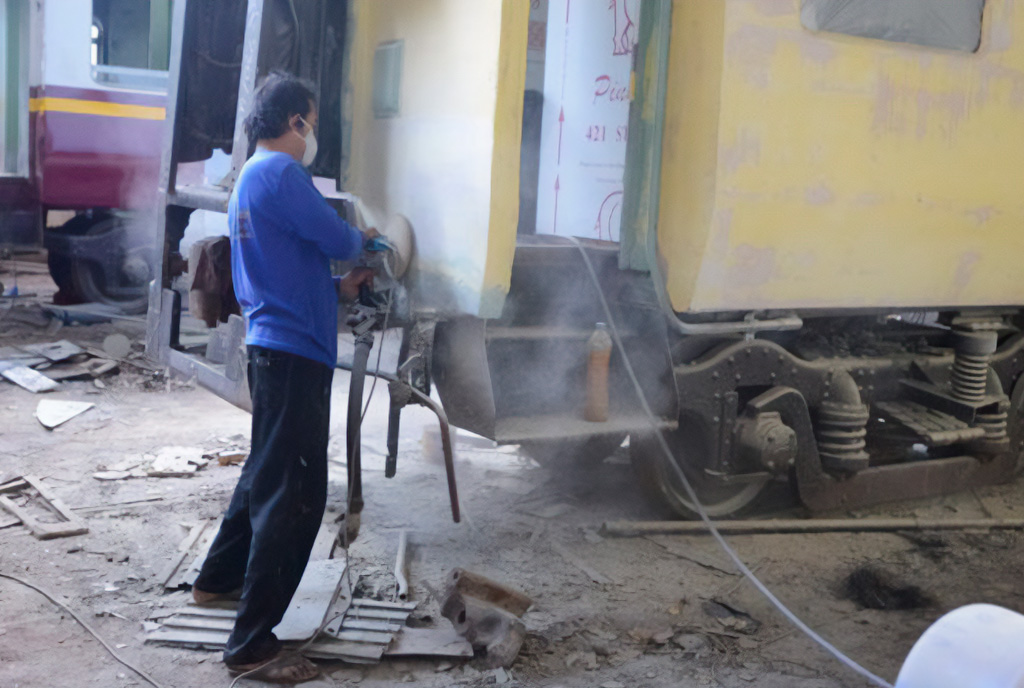
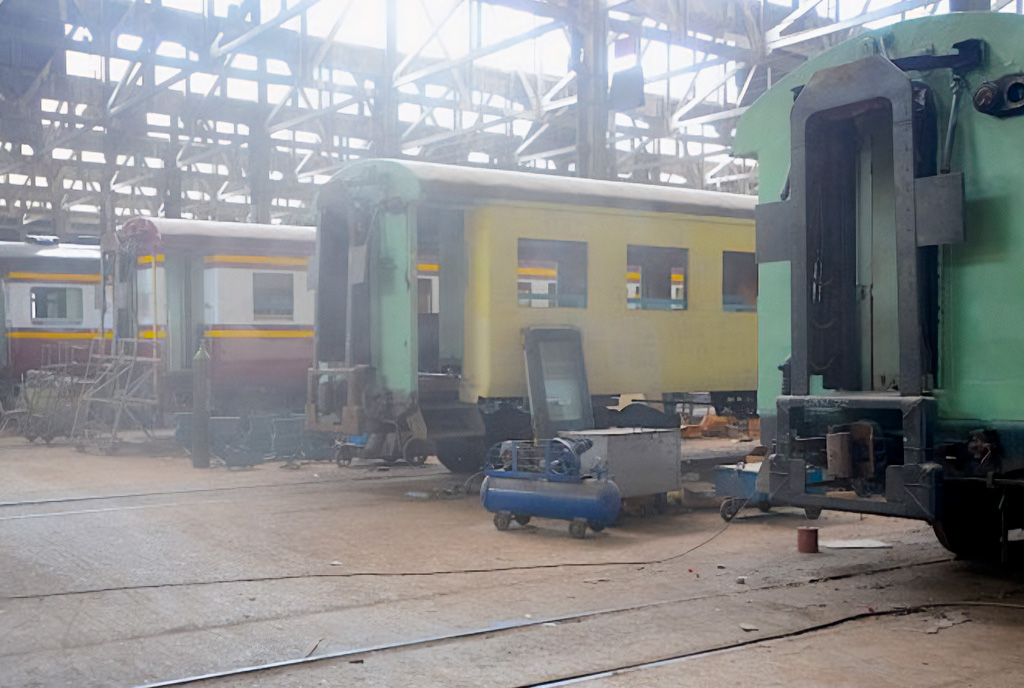
Inside the buildings of the Makkasan yard today, about 1,100 workers strip down old passenger, dining and sleeping carriages and return them to the rails in a nonstop restoration process.
In one huge, 150,000-square-foot (14,000 square meter) building, dozens of passenger carriages sit in various states of repair. Some are sanded all the way down to bare metal. Others are raised so that new chassis and wheels can be fitted. And still others are waiting for restored doors and interior fittings.
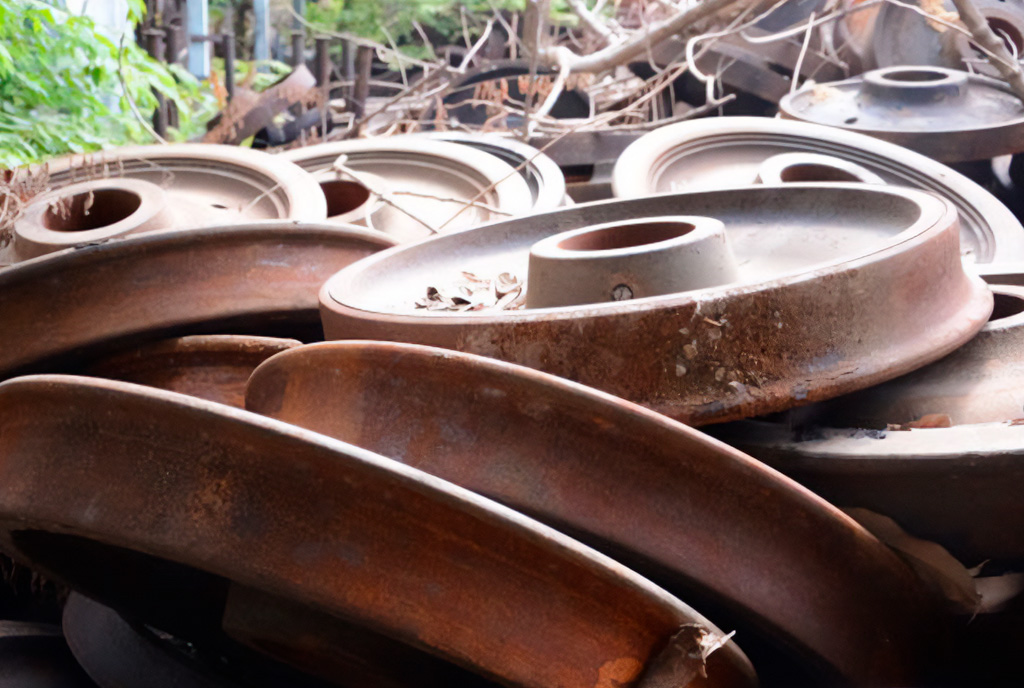
In another building, workers use massive furnaces and lathes to give restored railway wheels the edge that keeps them on the rails.
In other buildings the focus is on engines, as the big diesel blocks standing outside make clear.
Suttikorn says that of the 1,000 passenger carriages owned by the Thai railway system, roughly 15% are out of service for maintenance at any given moment. And 20% of the 2,000 freight cars are undergoing routine servicing at any time.
Suttikorn saves the yard's best results for last: gleaming American General Electric locomotives and French Alstom ones, ready to run, perhaps on the very line that passes through Makkasan station.
The Thai Labour Museum

If you've made it to Makkasan for the railway station, and you're something of a history buff, it's worth spending an hour visiting the Thai Labour Museum, a few minutes' walk east along Nikhom Makkasan road.
You won't find flashy interactive exhibits or grand IMAX presentations. But you'll learn about the history of slavery and unpaid labor in Thailand, about how Chinese immigrant workers transformed the country, how the Japanese occupation planted the seeds of organized labor in Thailand and how the labor movement fought military governments.
There's also a somewhat haunting display of items from one of the worst workplace tragedies in Thailand's history, the 1993 Kader toy factory fire, which killed 188 workers, most of them women.
The museum is open Wednesday to Sunday, from 10 a.m. to 6 p.m., and admission is free.