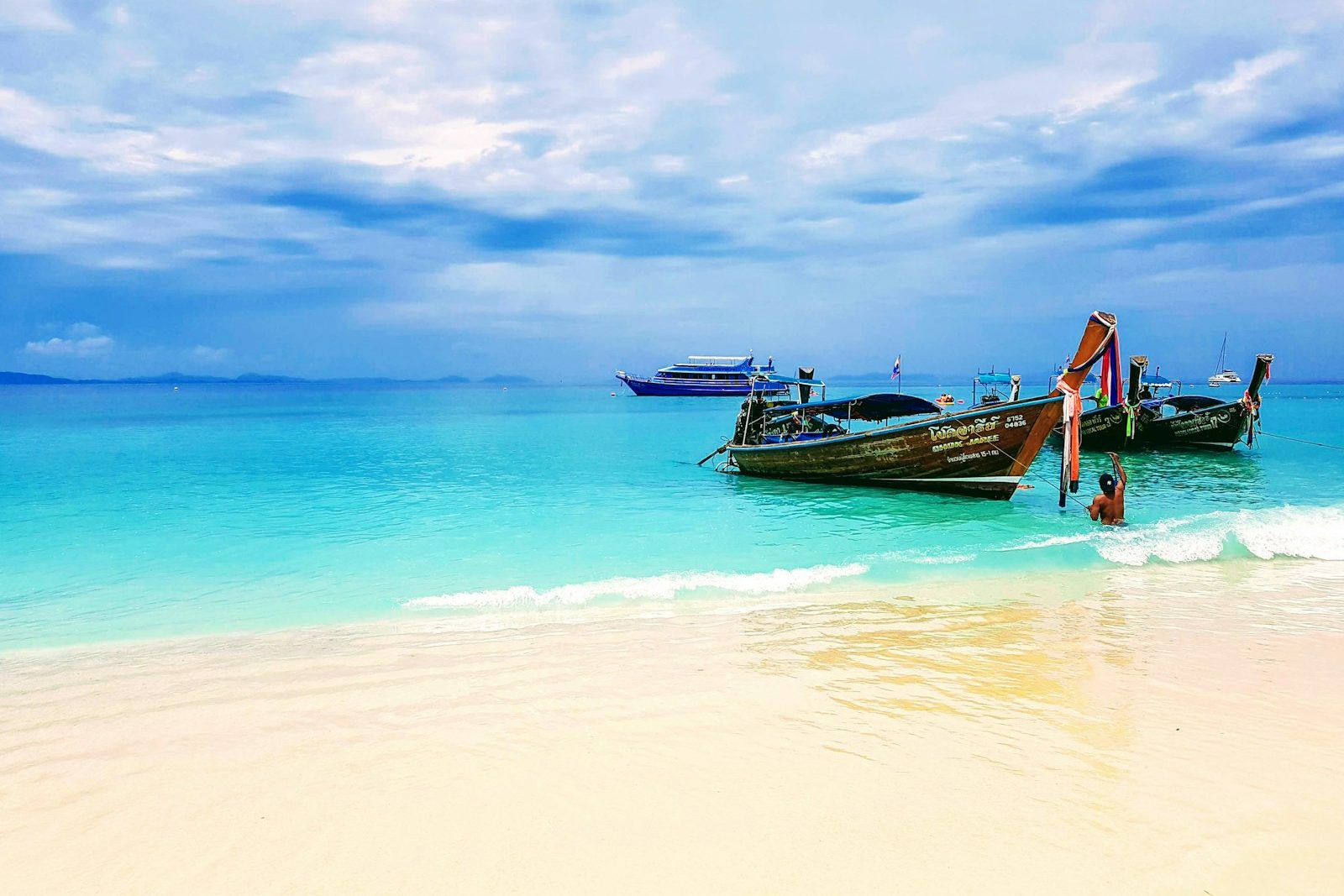


The classic answer to the question of when to visit Thailand is the cool season, November through February: dry, not stifling, calm seas. But that answer is only half right. Thailand has two coastlines running on opposite monsoons, so the "best month" depends less on the country as a whole and more on which shore you are flying into. It can happen that in the same week Phuket gets drenched while Samui basks in sunshine, and the other way around.
When to go to Thailand, in short?
For most itineraries (Bangkok plus the Andaman Sea islands, from Phuket to Krabi) the answer to when to visit Thailand is November through February. It is dry, humidity is lower, daytime temperatures hold around 30 to 33 °C, and the evenings do not wear you down. This is also the peak for prices and crowds, especially over the New Year holidays.
If your goal is the islands in the Gulf of Thailand, Ko Samui, Ko Phangan and Ko Tao, the calendar shifts. There the worst months are actually late autumn, while the comfortable weeks run roughly from February through September. The very same December means a different trip depending on the coast.
Partner links: booking through them supports the blog at no extra cost to you.
Why is there no single "best month" in Thailand?
The country is split by the mountain range of the peninsula, and each coast lives by its own monsoon. The Andaman coast in the west catches the southwest monsoon, while the Gulf of Thailand in the east depends more on the northeast one. Because of this, the rainy seasons on the two shores do not line up, and in places they are almost mirror images.
The Andaman coast: Phuket, Krabi, Phi Phi, Lanta
The dry season here runs from November to April: clear water, great visibility for diving and snorkelling, calm seas for boats out to the islands. This is the main reason December and January are the priciest months in Phuket.
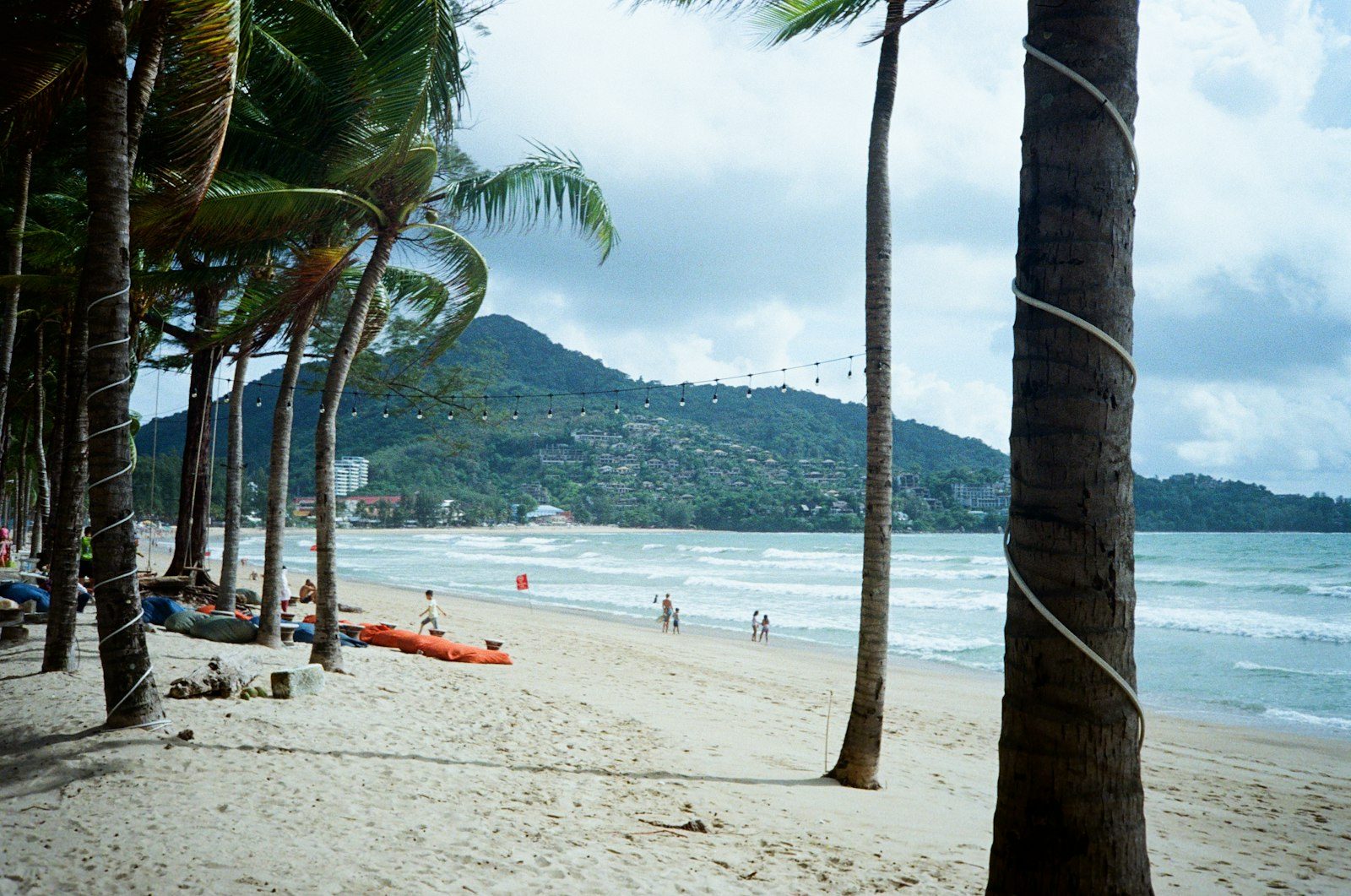
The rainy season lasts roughly from May to October, with the heaviest downpours in September and October. The rain tends to come in short bursts rather than one solid wall, so a beach holiday is not always ruined. But the sea turns murky and choppy, some boat trips get cancelled because of the swell, and the Similans (the marine park with the best diving) are traditionally closed from about mid-May to mid-October. The exact reopening dates change every year, so check before you travel.
The Gulf of Thailand: Ko Samui, Ko Phangan, Ko Tao
Here the rhythm is different. The Gulf islands stay relatively dry when the Andaman is already flooding, and then catch their own rain in late autumn. The wettest month on Samui is November: around 300 mm of rainfall and rain on roughly two days out of three (rainfall figures vary by source, so check before you go). In other words, at the height of the country's "high season" this particular coast sits under downpours.
The steadiest weather on Samui, Phangan and Tao holds roughly from February through September. If you are planning a summer holiday in Thailand (July, August), the Gulf makes more sense than the Andaman: while Phuket gets soaked, here the sun shines more often.
What does the cool season offer, and why is it the peak?
The cool season, November to February, is not about cold. It is the pause between the rains and the exhausting heat: lower humidity, fresher nights, pleasant walks around Bangkok and the temples without feeling like you are in a sauna. That is exactly why the main flow of tourists gathers here, and prices head upward.
The peak within the peak is mid-December through February, with a separate spike over Christmas and New Year, when accommodation and flights can cost two or three times the usual rate. Want good weather but without the New Year price tags? Take the second half of November or February: the air is still dry and the bills are more modest.
The hot and rainy seasons: when can you really save?
The hot spell: March to May
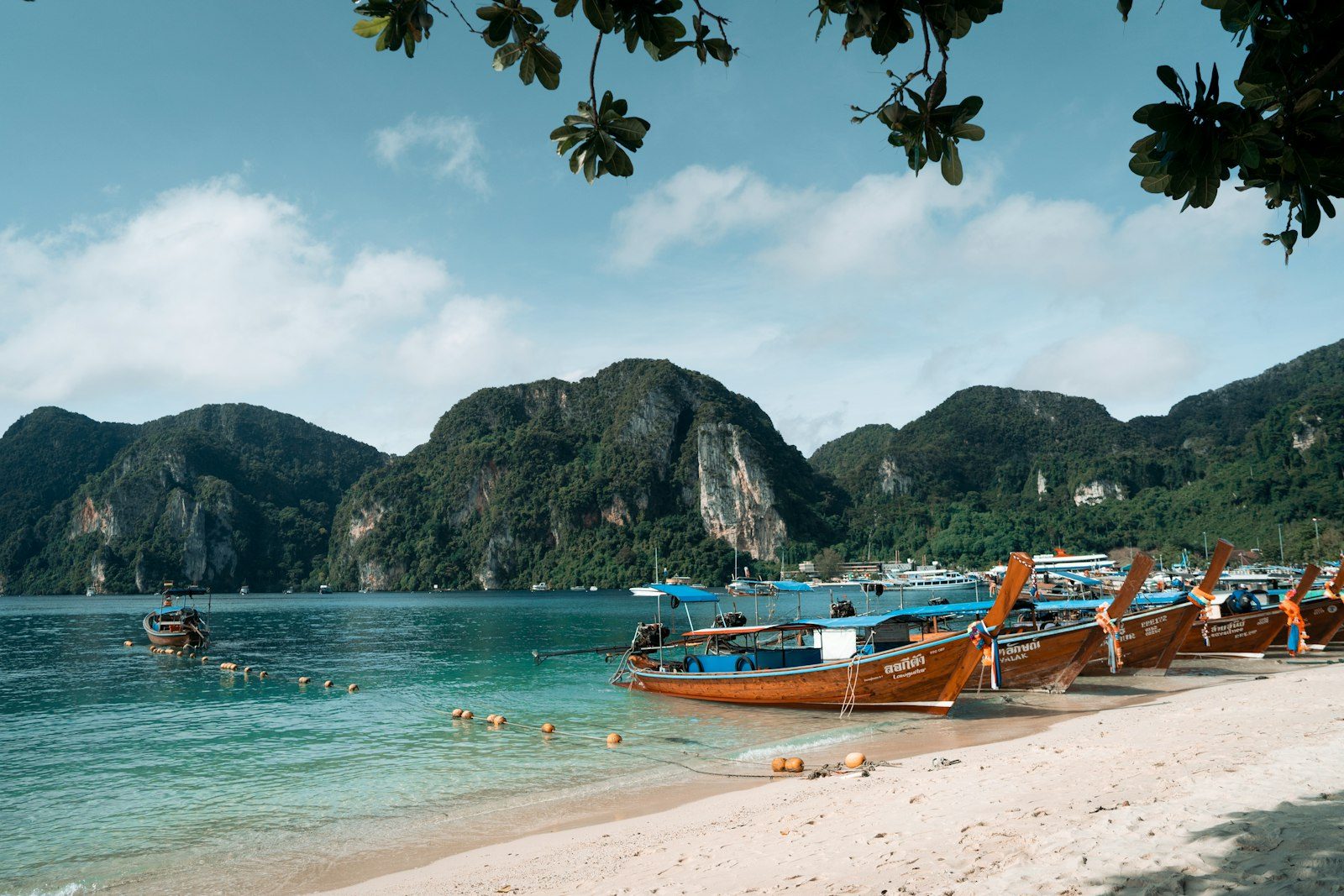
From March to May Thailand heats up noticeably, often above 35 °C during the day, with high humidity toward the end of the period. This does not bother the beaches, but sightseeing and long transfers become draining. There is a separate trap up north: in Chiang Mai and the surrounding provinces this is the "burning season", when farmers set fire to stubble and forest. The thickest smog falls in February to April, peaking in March, and on some days up to 70% of the fine particles in Chiang Mai's air come from exactly this burning. Planning the north for March is a bad idea; the islands suffer less at this time.
The rainy season: when it is actually worth it
The low season scares people more than it deserves. A tropical downpour often lasts an hour or two in the evening, and the sun shines the rest of the day. In return you get empty beaches, lush greenery and the lowest prices of the year. For the cities (Bangkok, Ayutthaya) and for the Gulf during its drier weeks, the rainy season can be a smart compromise. For Andaman boat trips, September and October are the riskiest: cancellations happen more often.
How much does a trip cost in different seasons?
The difference between peak and low season is not 10 to 15%, it is half your accommodation budget. In peak season (mid-December to February) hotels cost roughly 30 to 50% more than in low season. A typical mid-range beach hotel in Phuket that runs about 4,500 baht a night in January might cost around 2,200 baht in May, the same room and the same pool. The figures are rough, so check before you travel.
| Period | Weather (Andaman) | Crowds and prices | Who it suits |
|---|---|---|---|
| November | Dry, the sea is calming down | Start of high season, still no New Year prices | A balance of weather and budget (Andaman) |
| December to February | The best: dry, comfortable | Peak prices, maximum crowds, holidays twice as pricey | Those who want perfect weather and are ready to pay |
| March to May | Hot, stifling by the end | Prices drop, fewer people | Beaches without the crowds, not the north (smog) |
| June to September | Rain on the Andaman, drier in the Gulf | Low season, cheapest | A summer holiday on Samui, budget travellers |
| October | Wettest on the Andaman | Rock-bottom prices, risk of tour cancellations | Budget travellers with a flexible plan |
Where to go in a specific month?
The simplest way not to get it wrong is to start not from the month but from the coast and your goal. Below is a quick guide by region.

| Destination | Best months | When to avoid |
|---|---|---|
| Phuket, Krabi, Phi Phi, Lanta (Andaman) | November to April | September to October (peak rains) |
| Ko Samui, Phangan, Tao (Gulf) | February to September | October to December (wettest) |
| Bangkok, Ayutthaya | November to February | March to May (heat) |
| Chiang Mai, the north | November to February | February to April (burning season) |
Do you need a visa, and what else to keep in mind in 2026?
As of 2026, Ukrainian citizens do not need a visa to visit Thailand as tourists: visa-free entry of up to 60 days applies. That said, the authorities have announced an intention to cut this back to 30 days, and the change will only take effect 15 days after official publication, so the exact date is not yet known. Be sure to check the current limit on the official visa portal before buying tickets.
Two more practical points on arrival. First, all travellers fill out the electronic arrival card (Thailand Digital Arrival Card, TDAC) within 72 hours (3 days) of arrival, including the day of arrival, and it is free. Second, in principle you may be asked to show proof of funds, roughly 20,000 baht per person or 40,000 per family, and your passport must be valid for at least 6 months from the date of entry. This is rarely checked in practice, but the rule exists.
One coast or both: how to build your route
If it is your first visit and you want guaranteed weather, take December to February and the Andaman coast: Phuket as your base, with boats out to Phi Phi and Krabi from there. Want to save without the rain lottery? Look at the second half of November or February.
If your holiday falls in summer, do not try to squeeze in Phuket in July; go for the Gulf instead: Samui plus Phangan catch their drier weeks right then. And for anyone who wants to combine both coasts in one trip, the most even window is early February to April: the Gulf is still dry, the Andaman is already dry, and the northern smog in February is only just gaining strength. The main thing is to watch the forecast for your specific island, because here the weather is decided not by the country but by the coast.