

It is world famous for the Roman ruins of Herculaneum and Pompeii, destroyed by the eruption of Vesuvius in 79 AD, yet Naples' newest attraction reveals an entirely different side of the city.
The Ipogeo dei Cristallini, opening in June (the Hypogeum of Via Cristallini), is part of an ancient cemetery that lay beyond the walls of Neapolis, as the city was known 2,300 years ago.
This cemetery is not only 400 years older than the ruins of Pompeii and the other Roman towns along the Bay of Naples, it is not Roman at all. In fact, it was built by the ancient Greeks, who founded Naples in the eighth century BC and kept it a thoroughly Greek city, even after it passed under Roman control centuries later.
Partner links: booking through them supports the blog at no extra cost to you.
Archaeologists call it a groundbreaking discovery, one that promises to reshape our understanding of Naples, of the ancient Mediterranean, and even of Greek art. What's more, those involved in the project believe it has the potential to protect Naples from a tourism boom that, if it continues, could tip the city into overtourism.
Deep beneath the city
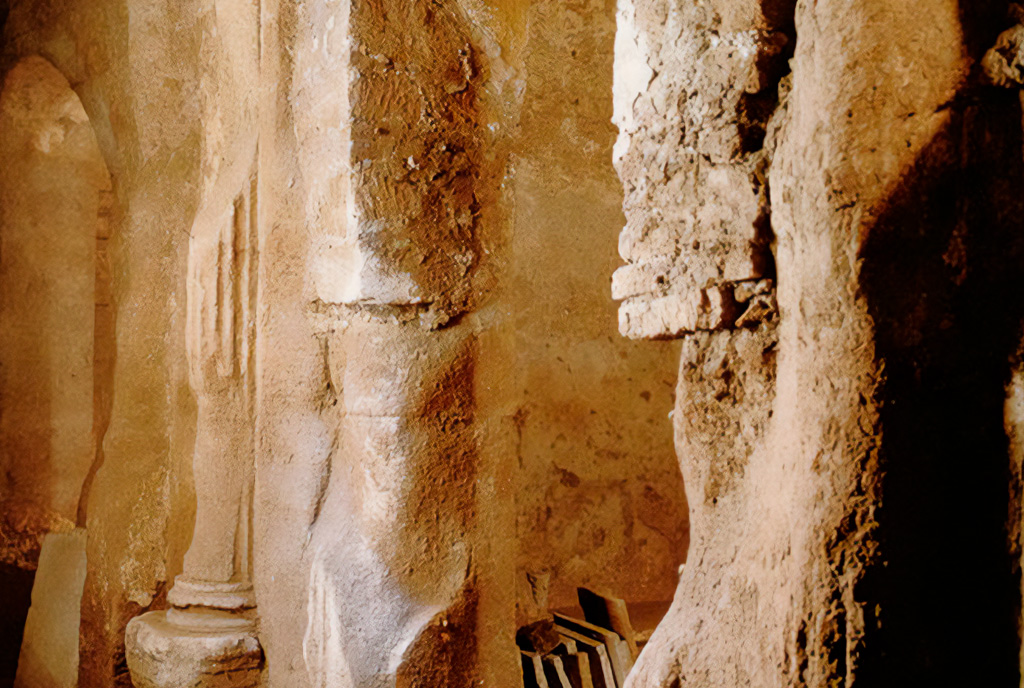
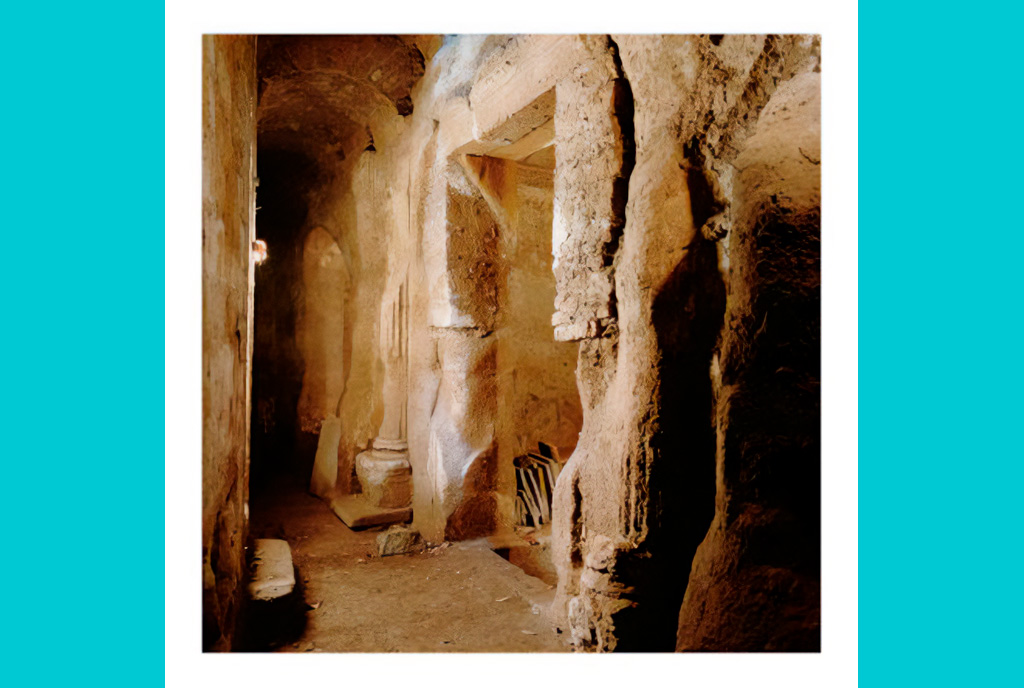
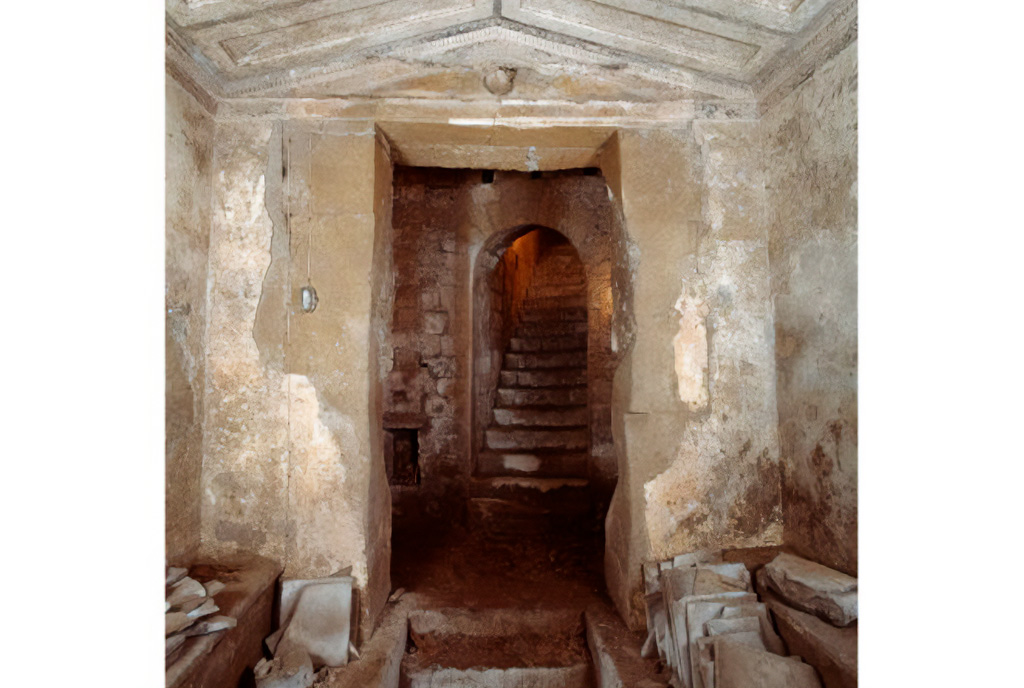
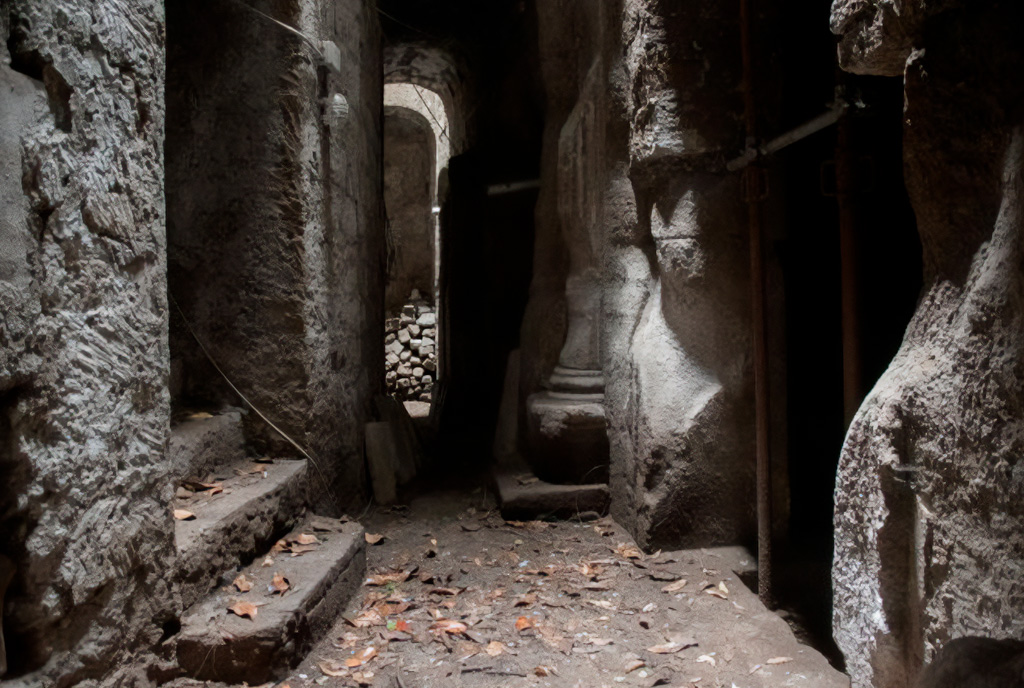
Forty feet below the garden of a 19th-century palazzo, in what is now the city's Sanità district, a steep staircase descends underground to four tombs. Each with its own grand entrance (one even has Ionic columns carved into the facade), they open onto what is thought to be the original path once walked by mourners.
This is only a small part of the original necropolis, or cemetery, built by the Greeks. In the fourth century BC, when the tombs are believed to have been built, dozens of them were dug into the hills beyond the city walls, says Luigi La Rocca, who, as Naples' Soprintendente, is responsible for the city's archaeological heritage.
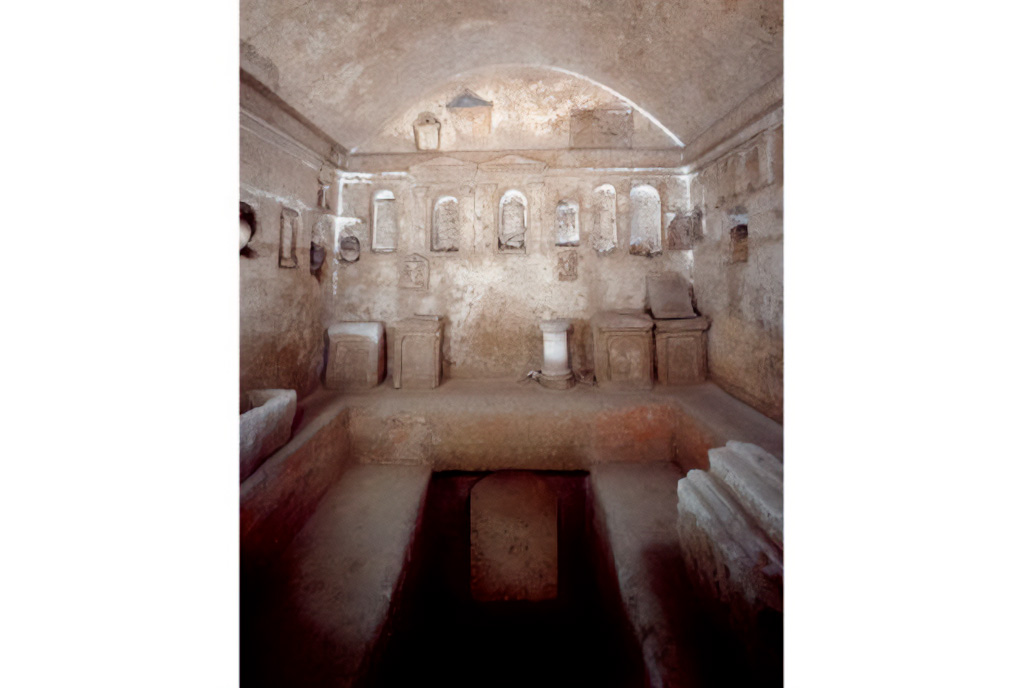
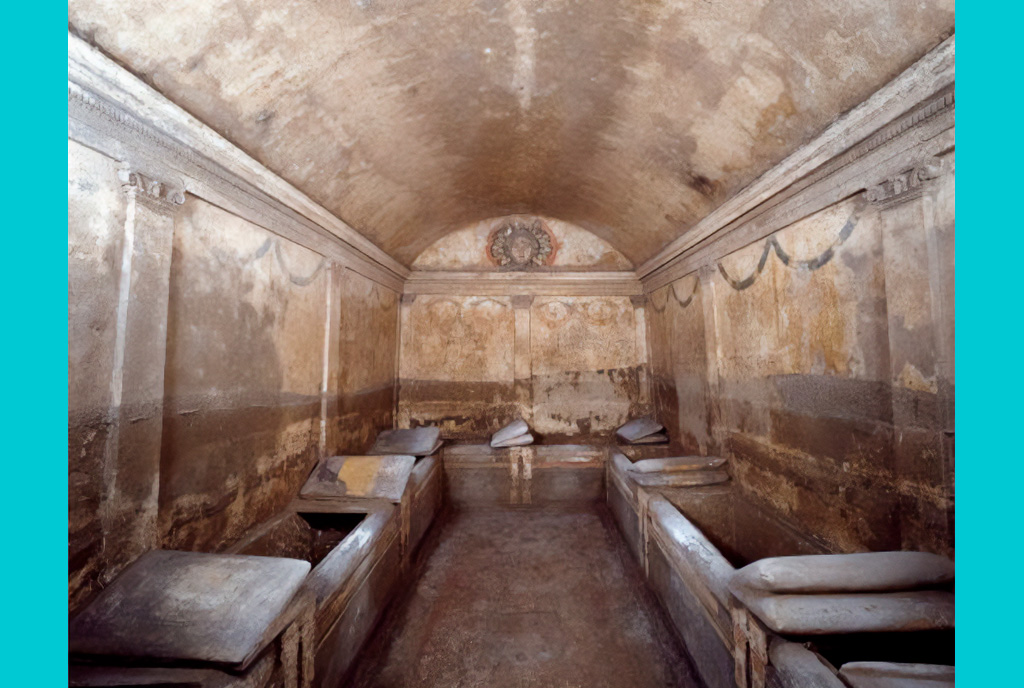
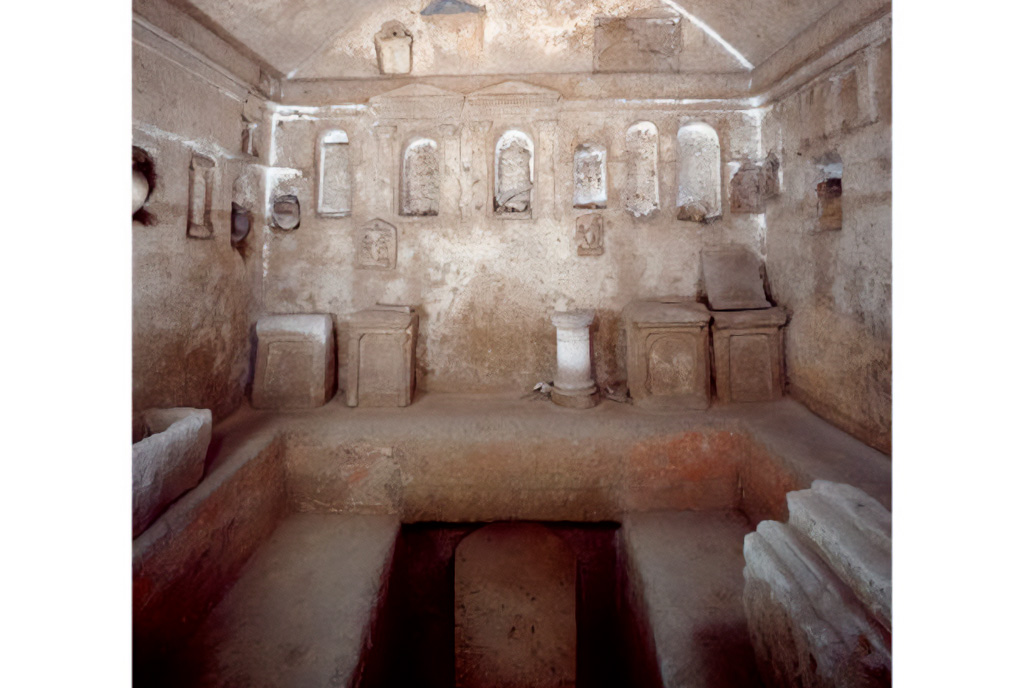
The ancient Greeks built two-chamber tombs (an upper chamber where prayers were said, and a lower one where the bodies rested) by carving into the soft tuff stone, much like making a cave.
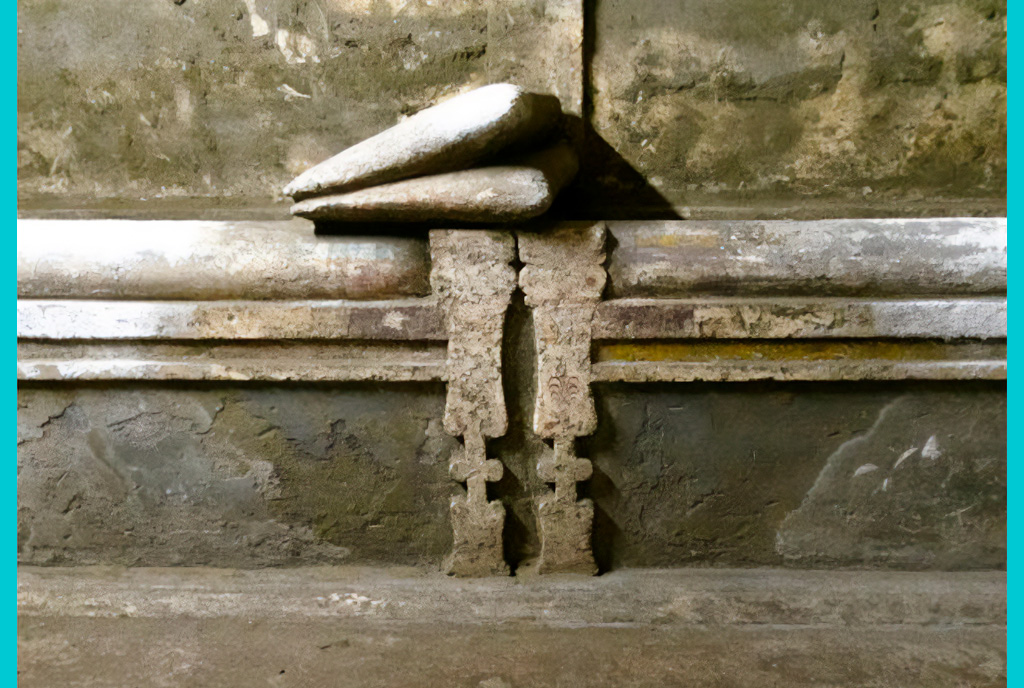
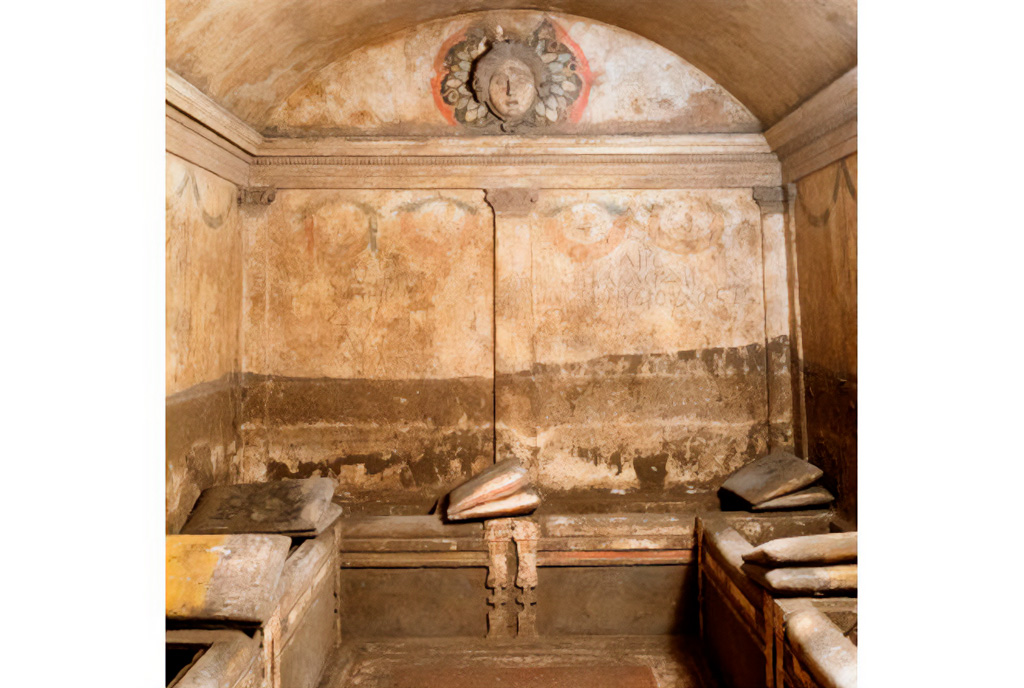
But these are no ordinary caves. The chambers were cut to resemble real rooms, complete with false ceiling beams, benches, steps and even high-mattressed "beds" (sarcophagi that held many bodies inside). And they were not carved elsewhere and brought in. Every detail, right down to the perfectly plumped "pillows" on those beds, was cut from the original stone.
Precious paintings shed light on Greek art
Although they now sit underground, their entrances were originally at street level, hence those striking Ionic columns that signal the elite status of their occupants. Only the lower chamber would have been below ground.
But centuries of landslides, which regularly devastated the area (and only stopped in the 1960s, when the sewer system was modernized), buried the tombs a few centuries after they were made.
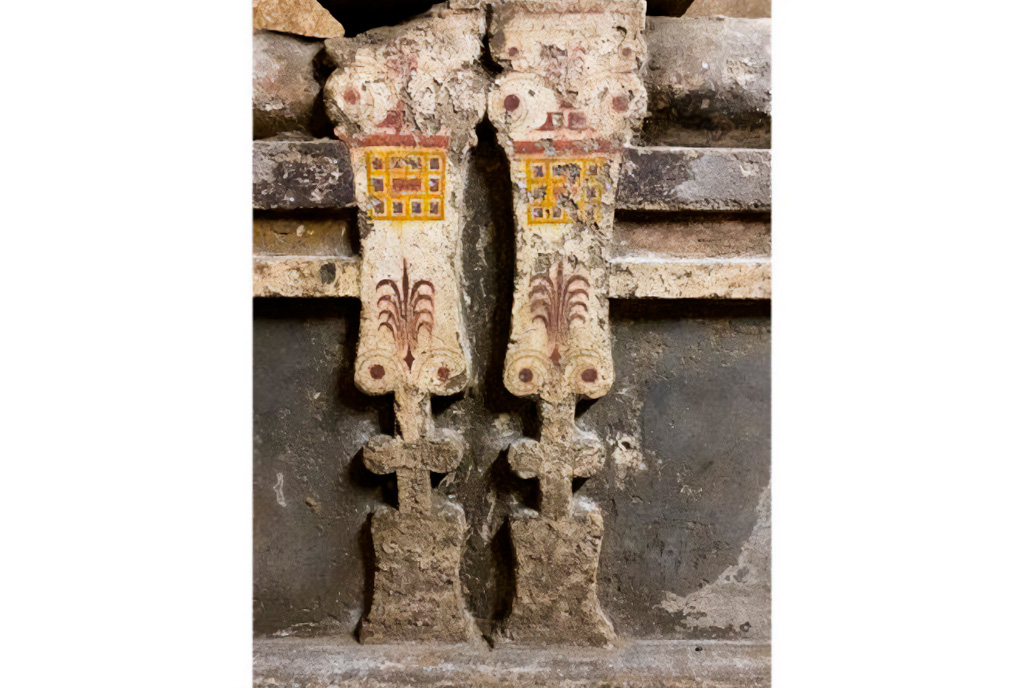
That means their state of preservation is exceptional, according to archaeologists. Crucially, they have kept their vivid wall paintings.
Ancient Greek art is, of course, known the world over, but what survives is mostly sculpture.
"Greek painting is almost entirely lost. Even in Greece, almost nothing remains of the painting, though we know from written sources that it was important," said Federica Giacomini, who has spent the past year overseeing the monitoring of the site for Italy's ICR, the Central Institute for Conservation.
"Practically nothing survives of anything painted on wood or furniture, and very little wall painting, mainly the Macedonian tombs that preserve important pictorial frescoes, but it's almost nothing.
"We have plenty of Roman painting, but far less Greek. So this is rare and very precious."
Into the depths
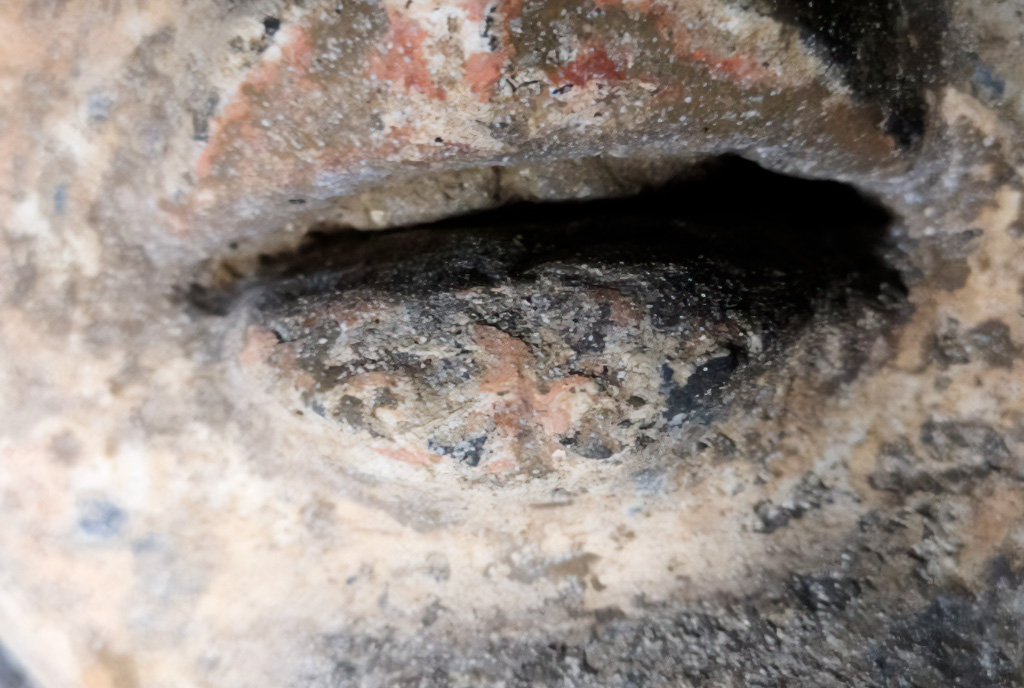
The painted tombs give a completely different impression of Greek art than those bone-white sculptures and buildings (which were originally colored too). In one tomb, bright red steps lead down to a red faux-marble floor. The stone pillows (turquoise with yellow stripes) have red hatching along the side, mimicking the cross-stitching that joins textiles together.
The walls, meanwhile, are lavishly decorated with frescoes: lush garlands hanging from columns, blazing candelabra, vases and dishes used in funeral rites, and even two human figures thought to be the god Dionysus with Ariadne, the woman to whom he granted immortal life.
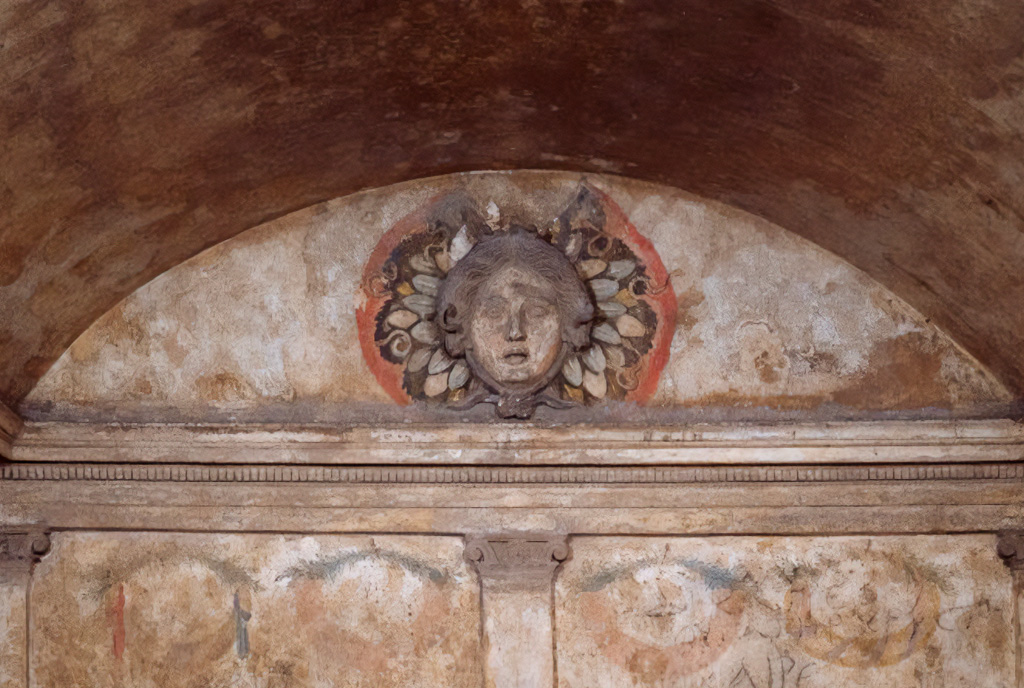
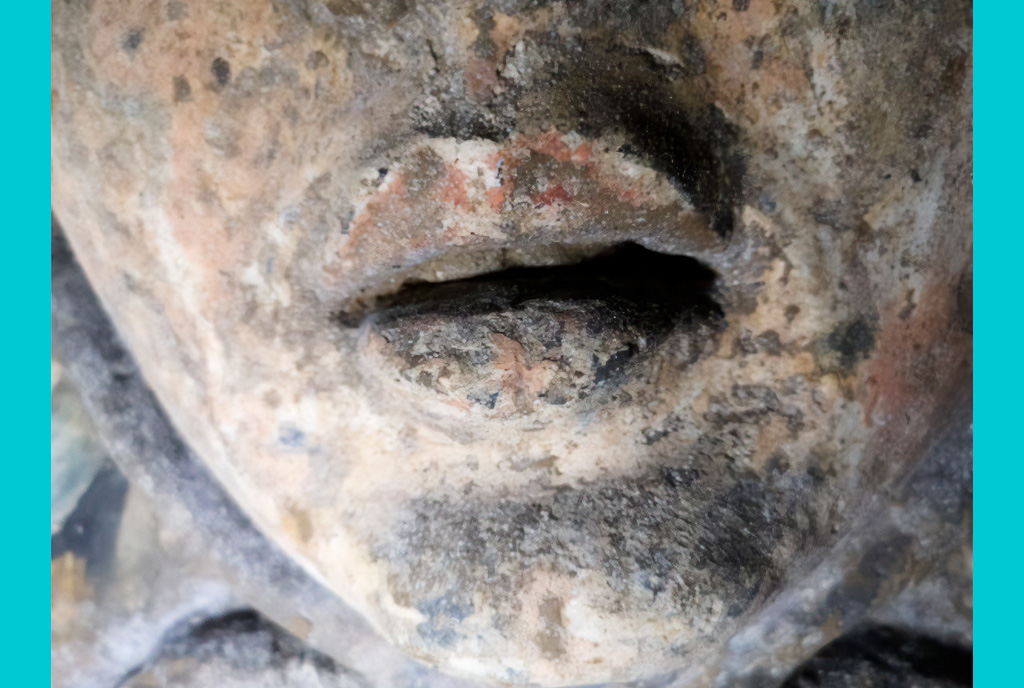
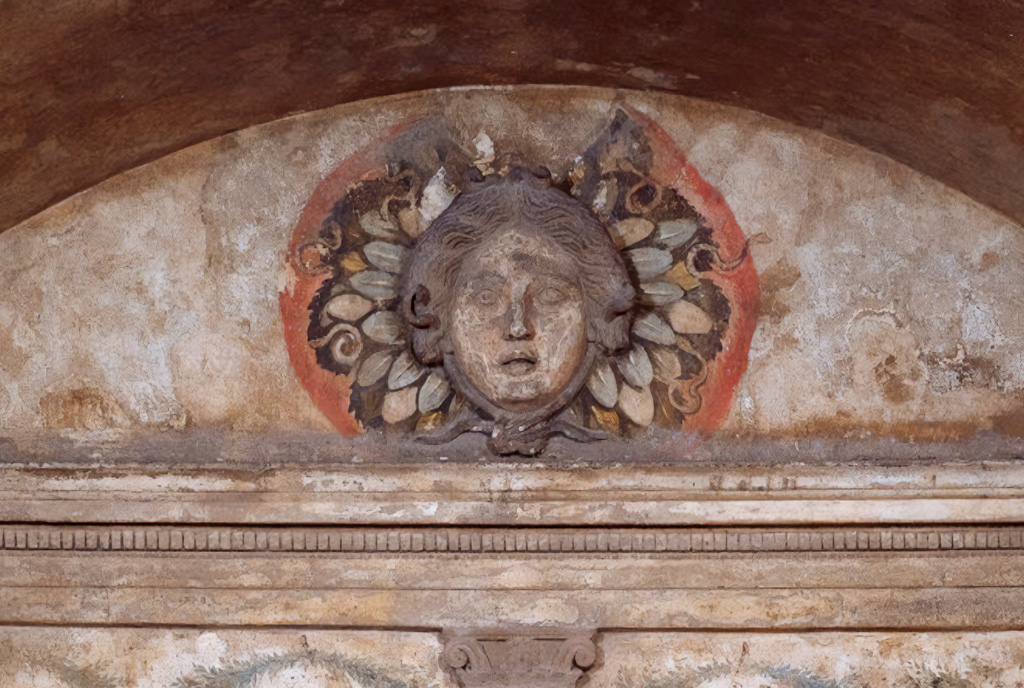
There is even a sculpted gorgon, the mythical monster with a woman's head but snakes instead of hair, coiling around her beautiful face. It is the only element in all four tombs that was carved and attached rather than dug out of the hillside.
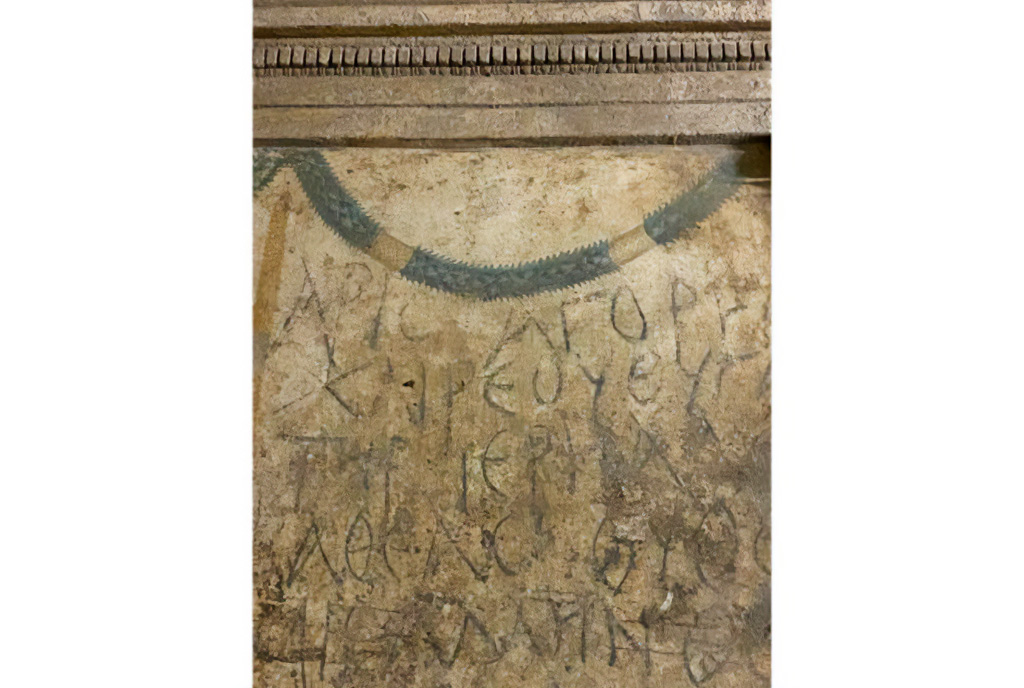
On the walls, meanwhile, names are scratched in ancient Greek: lists of those buried inside.
The three other tombs are no less fascinating, if not quite as spectacular. One was also decorated with frescoes, though the paintings were damaged, and there is hope that future restoration will bring them back to light.
Another holds six gravestones dedicated to the dead. Each lists the name of the deceased and ends with the inscription "khaire" (an ancient Greek greeting, similar to the "ciao" used by modern Neapolitans).
The tombs even have niches cut by the Romans, who reused them to bury their own dead after the original Greek dynasties died out. In all, the necropolis was in use from the end of the fourth century BC to the beginning of the first century AD, before landslides buried it.
Elsewhere there are sculptures of people and traces of portraits, potentially of deceased ancestors, according to Paolo Giulierini, director of the National Archaeological Museum of Naples, which holds hundreds of finds from the tombs, including sculptures, vases and carved symbols of resurrection such as pomegranates and eggs.
A city of the dead beneath the modern city
The Romans "repurposed" the Greek tombs, carving niches for their funerary urns.
These are not the only tombs of the ancient necropolis to have been found. La Rocca says about 20 have been uncovered beneath buildings in the Sanità district, which was built up in the 16th century. Some of them preserve paintings, and archaeologist Carlo Leggieri runs tours of five of them, including three partly painted tombs and one with the remains of a carved panther. But, Giulierini says, these appear to be the most important yet.
Damaged by construction work in the 1700s, the tombs were officially discovered in 1899, but had always been closed to the public, until now.
Archaeologists have been monitoring the surrounding environment since May 2021 to understand the potential risks. Once they complete a year of monitoring, the tombs are set to open for limited visits while restoration work begins. Visitors will be able to see the tombs in their current state (much as they were when they were discovered) and be present as they gradually come back to life.
Those in the know have high hopes.
"This is a space of extraordinary importance, because it gives us valuable data about the beliefs and social structure of Neapolis in the Hellenistic and Roman eras," said La Rocca.
Giacomini calls it "testimony to a civilization of which we have remarkably few traces."
For Giulierini, it is proof of the high standing that Neapolis ("new city" in Greek) once held in the ancient Mediterranean. The tombs most closely resemble those found in Macedonia, the homeland of Alexander the Great, spanning present-day North Macedonia and northern Greece.
"It shows that Neapolis had an enormous international profile," he said, calling it a "top-tier cultural capital" on a par with today's New York, London or Berlin.
Naples' changing tourism
Giulierini, who oversees tens of thousands of objects from Pompeii and Herculaneum in his museum, hopes the tombs will also correct an "imbalance" in how visitors perceive the city today, linking it to the Roman ruins in the area.
In fact, he says, while the citizens of Pompeii held bloodthirsty gladiatorial games, the people of Neapolis staged a more refined version of the Greek Olympic Games, launched by the emperor Augustus. Another emperor, Nero, came to perform on stage in Neapolis before later touring Greece. And, of course, for centuries they buried their dead in grand painted chambers dug into the hillside.
La Rocca, meanwhile, hopes the discovery will help draw more cultural tourism to Naples, which is currently living through a tourism boom.
"Naples is more than ancient, but it is rarely thought of as an archaeological city," he said. "The city should be told through its archaeological remains, but they are mostly known only to professionals. Sadly, many sites are not open to the public."
"Sustainable tourism in the service of cultural preservation" could be the way forward for the city, he added.