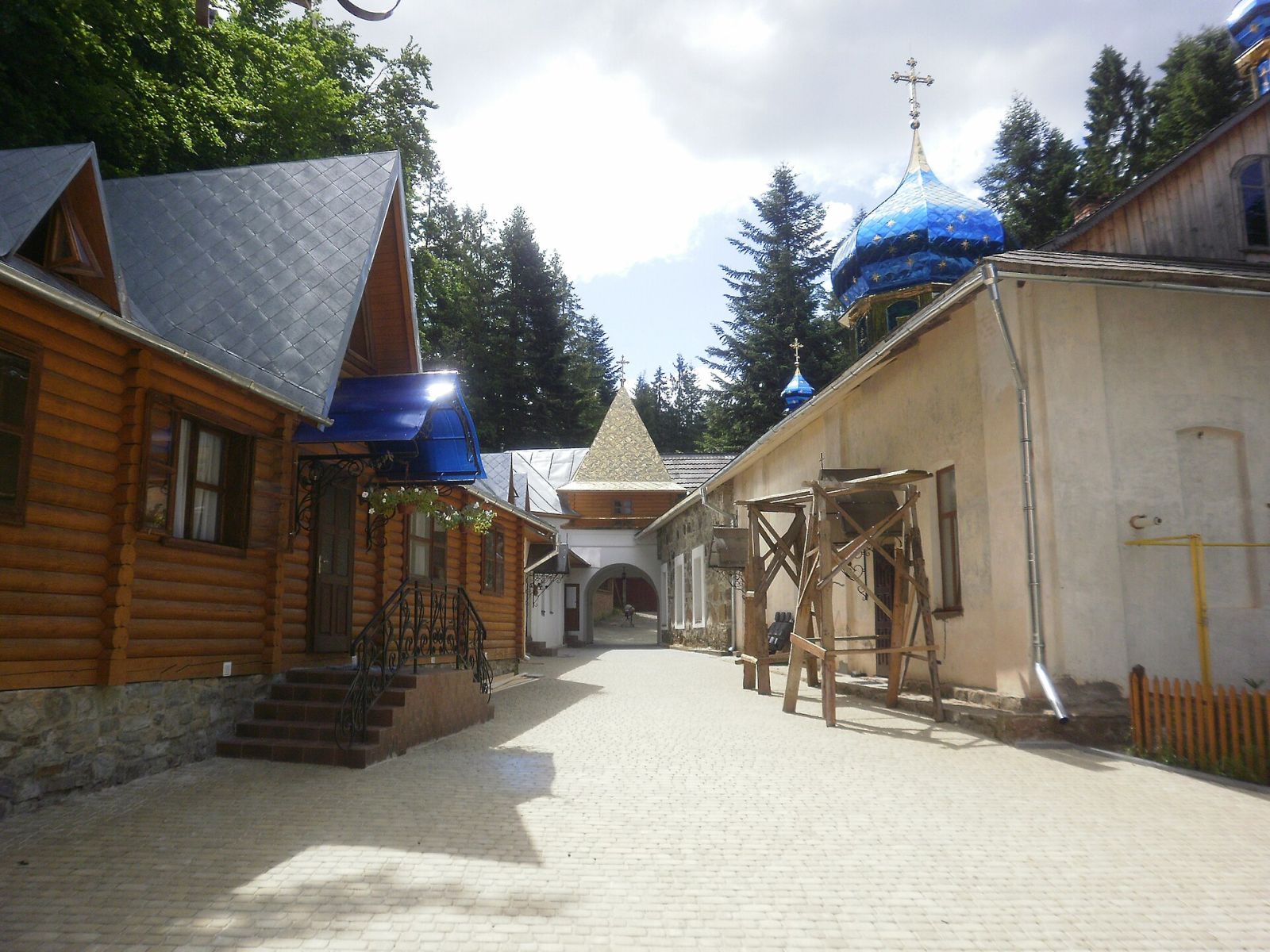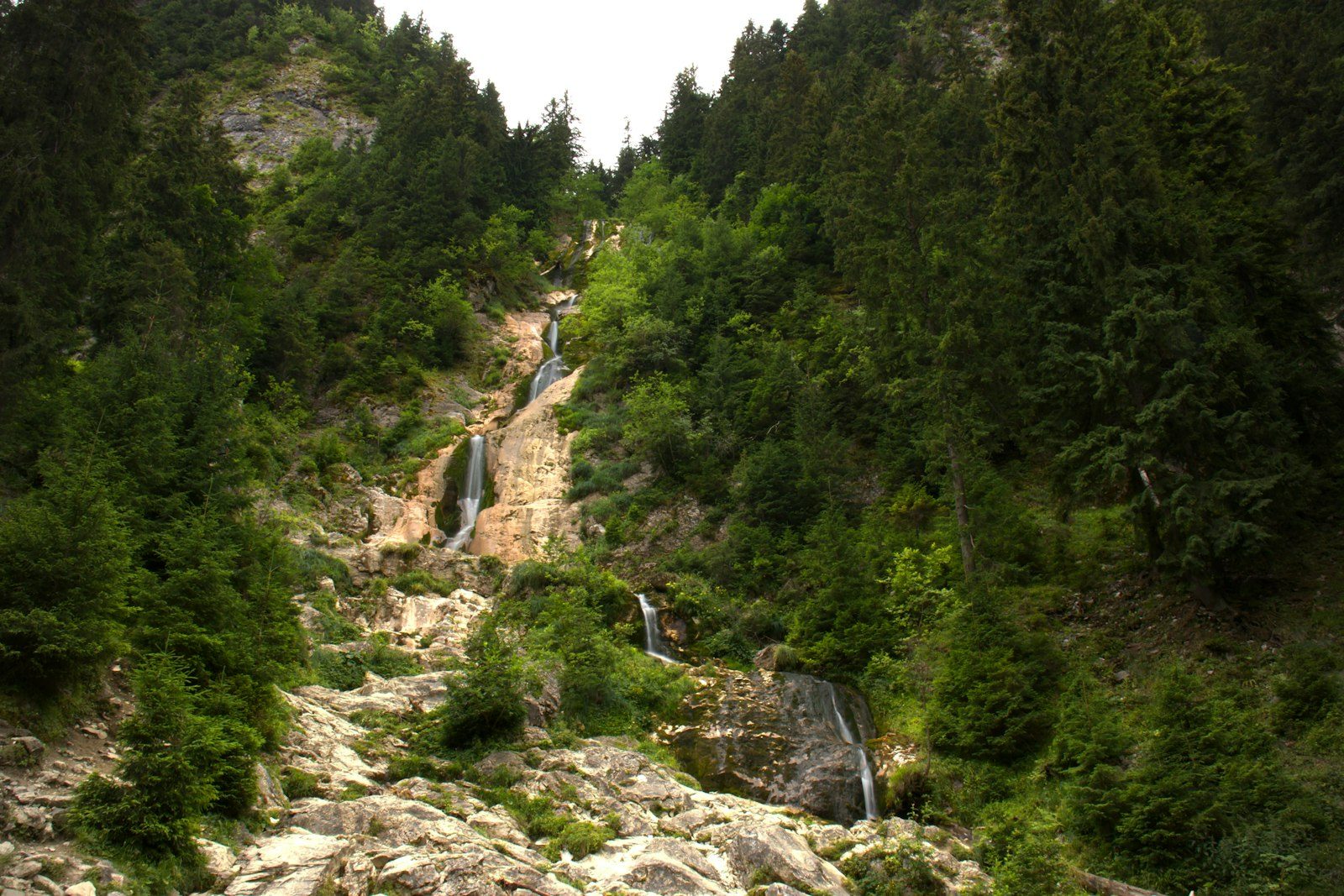


Manyava Waterfall drops from a height of about 20 meters in the narrow gorge of the Manyavka River, some 3 to 3.5 km from the village of Manyava in the Ivano-Frankivsk district (formerly Bohorodchany) in the Prykarpattia region. You can only reach it on foot, but the reward is one of the tallest waterfalls in the Ukrainian Carpathians and a 17th-century monastery next door. Here is the practical rundown: how long the hike takes, when the water is at its fullest, and what to put on your feet.
Where is Manyava Waterfall located and why do people go there?
The site lies in the Gorgany massif, in the Solotvyn community of the Ivano-Frankivsk region. The water breaks off a ledge on the Manyavka River, a left tributary of the Bystrytsia-Solotvynska, in a scenic gorge amid spruce and beech forest. Over a stretch of about 200 meters, the valley in front of the waterfall narrows into a genuine canyon with walls up to 20 meters high, and below it runs a cascade of smaller rapids.
This is not just a pretty picture for photos. Manyava Waterfall holds the status of a hydrological nature monument of national significance, with roughly 1 hectare around the riverbed under protection. The old local name sounded like "shypit," after the characteristic hiss of the falling water, and this detail explains why many Carpathian waterfalls are colloquially called "shypoty."
How tall is Manyava Waterfall?
Here it is worth being honest with the numbers. Most reliable sources give about 20 meters, while some guides write a range of 16 to 20 meters, because the water does not fall as a single sheer sheet but as a cascade, and the point of measurement differs from one author to another. In any case, this is one of the tallest waterfalls in this part of the Carpathians, and the drop is visually impressive even during a dry spell.
For scale: 20 meters is roughly the height of a six-story building. In summer the flow is noticeably thinner, so if you are coming specifically for a powerful wall of water, plan your visit for another season.
How to get to Manyava Waterfall?
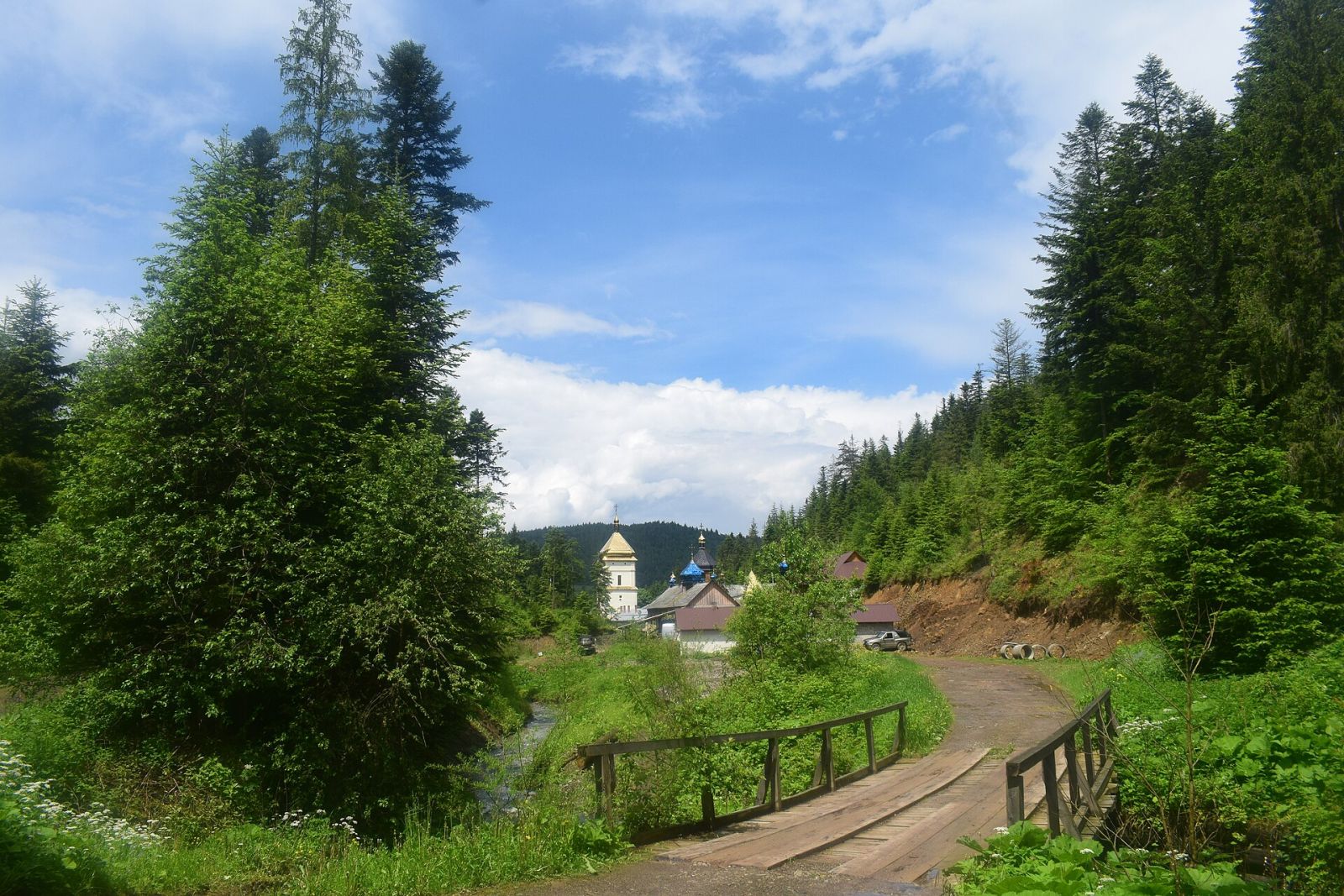
By car you drive to the village of Manyava, and from there it is only your own two feet. The asphalt ends, a dirt forest road along the river begins, and the last few hundred meters are a narrow trail with roots and wet stones. The landmark is simple: stick to the riverbed and walk toward the sound of the water.
| Stretch of the route | How | Approximately |
|---|---|---|
| Ivano-Frankivsk - Bohorodchany | car, bus | about 25 km |
| Bohorodchany - Manyava village | car, local transport | about 27 km |
| Edge of the village - waterfall | on foot along the forest trail | 3 to 3.5 km, 40 to 60 min one way |
| By off-road vehicle from the village | hire from the locals | a longer forest road, agree on the price on the spot |
Getting there by public transport is inconvenient: services to Manyava run irregularly, so most people come in their own car or as part of an excursion tour that often combines the waterfall with the monastery. Entry to the waterfall itself is free, and there is no separate ticket office. A fee might only be asked for parking near the village or for the services of a guide with an off-road vehicle, and this amount is worth checking on the spot, because it is not fixed.
When is it best to go, and when is it not worth it?
The Manyava Waterfall is at its fullest in spring, when the snow melts, and after long rains. That is exactly when the flow is loudest and the canyon looks most dramatic. Autumn adds a bonus in the form of the yellow forest all around. In summer, especially in July and August, there is less water but more people on weekends.
| Season | What the water is like | Note on the trail |
|---|---|---|
| Spring (April to May) | fullest, powerful flow | the trail is soggy, waterproof footwear needed |
| Summer | thinner stream | dry and comfortable, but crowded on weekends |
| Autumn | medium, beautiful forest framing | slippery leaves on the stones |
| Winter | partly freezes over, striking icicles | the trail is dangerous, ice, shorter daylight |
Footwear decides everything. Sneakers that leak will turn the last kilometer into an ordeal, because the trail runs through wet patches and a rocky riverbed. Bring trekking shoes with good tread and set aside time for the climb back, which is noticeably harder than the descent.
What to see near the waterfall?
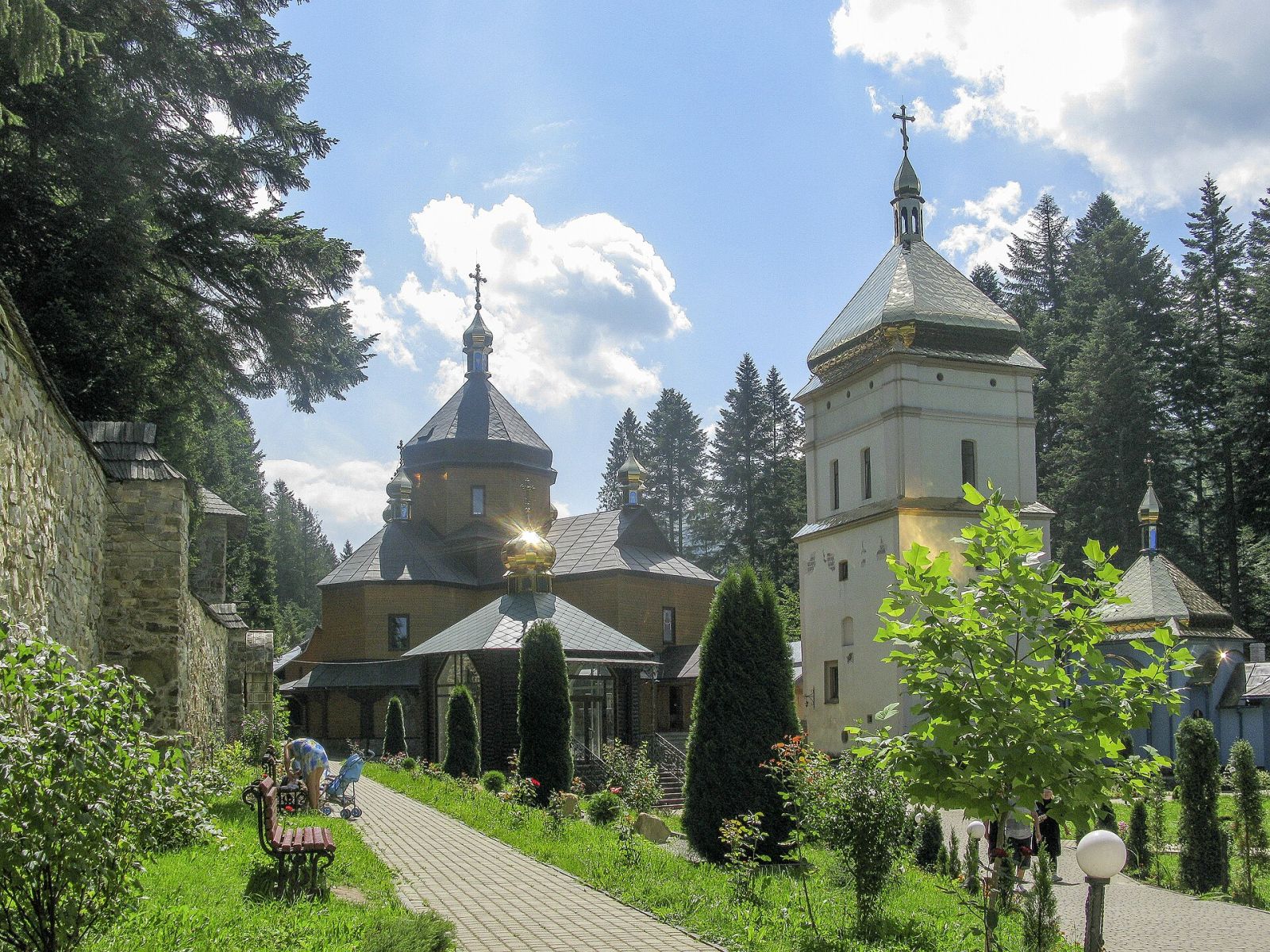
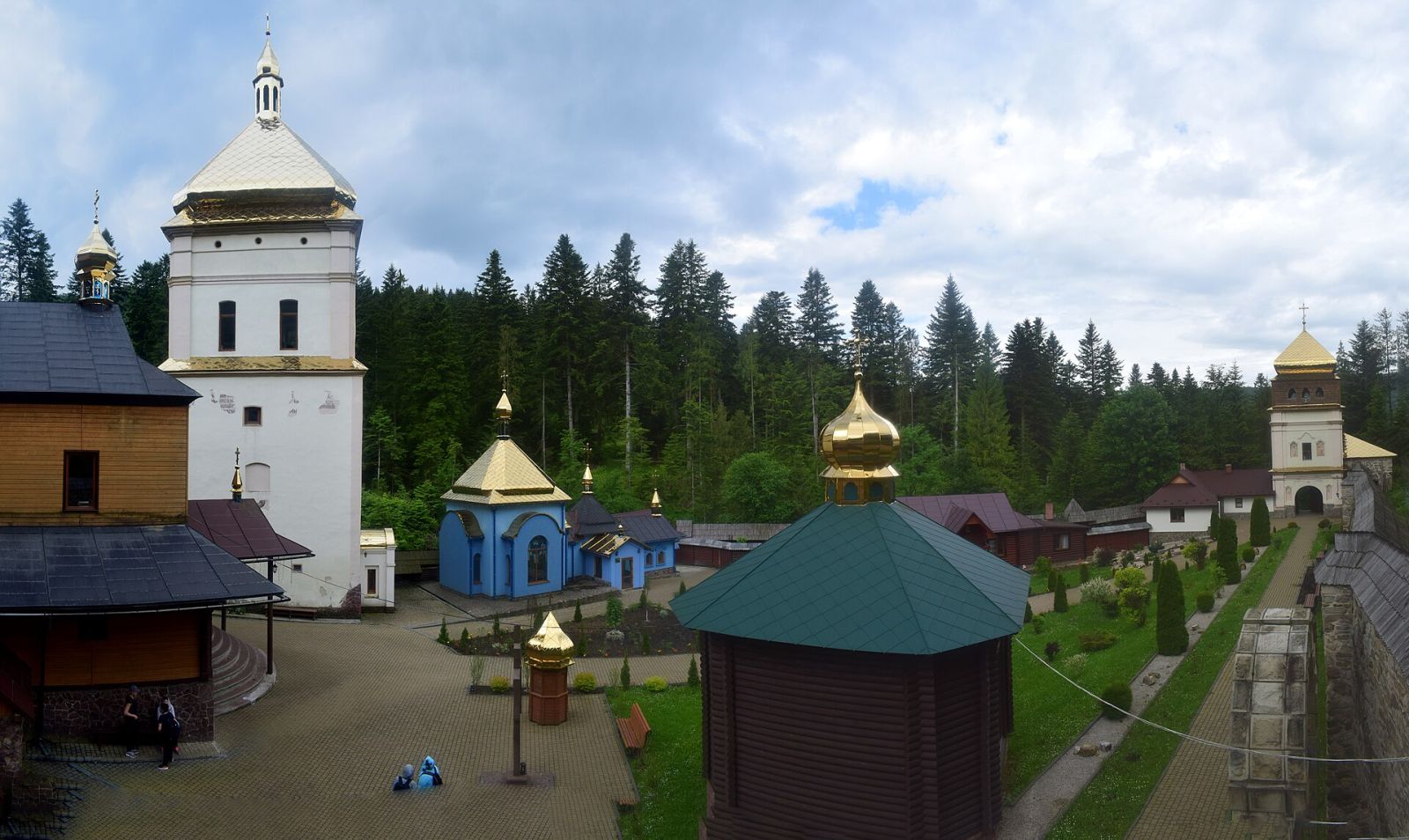
The main neighbor is the Manyava Skete, an Orthodox monastery whose first church on the site appeared around 1611. It stands a few kilometers from the waterfall, so it makes sense to plan a one-day route: first the skete with its towers and defensive character, then a forest walk down to the water. Many tours build their program exactly this way.
At the foot of the waterfall there is a small natural pool where daredevils take a dip in summer, though the water here is icy even in the heat. The gorge itself, with its canyon walls and the rapids downstream, is worth not rushing back right after a few photos.
Who might this route not suit?
Honestly about the downsides. The road, that last stretch, is not for strollers or for people who struggle on uneven ground: roots, stones, a steep climb on the way back. It is doable with small children, but slowly and with support in the slippery spots. In the rain and right after it the trail becomes truly muddy, so planning a hike here during a downpour is not a good idea.
One more thing: do not expect developed infrastructure. There are no cafes by the water, no stable signal, and no lighting, so bring water, a snack, and a charged phone with you, and try to head back while it is still light.
A quick checklist before you set off
- What it is: a cascade waterfall about 20 m tall on the Manyavka River, a nature monument of national significance.
- Where: the village of Manyava, Solotvyn community, Ivano-Frankivsk district, the Gorgany massif.
- On foot: 3 to 3.5 km from the edge of the village, 40 to 60 minutes one way along the forest trail.
- When for the water: spring and after rains; outside July and August there are fewer people.
- What to bring: waterproof trekking shoes, water, a snack, a rain jacket.
If you are going for the first time, combine the waterfall with the Manyava Skete and set aside half a day for everything without rushing. If you have already been here in summer and seen the thin stream, come back in April after the snowmelt: the same gorge sounds completely different when the water is running at full force.