

The light fixture above our dining table starts to sway. The windows rattle. The table shakes. Then the whole room shudders, the walls vibrating hard.
A vase of flowers wobbles on the top shelf. Glasses jingle. There's a loud rumble and roar. The bookshelf tears away from the wall, scattering books everywhere, and then we hear a deafening crack.
Then silence falls. But not for long.
Partner links: booking through them supports the blog at no extra cost to you.
A few seconds later the floor begins to buckle. The walls bulge. The room bounces up and down, rocking from side to side. Dishes start flying through the air.
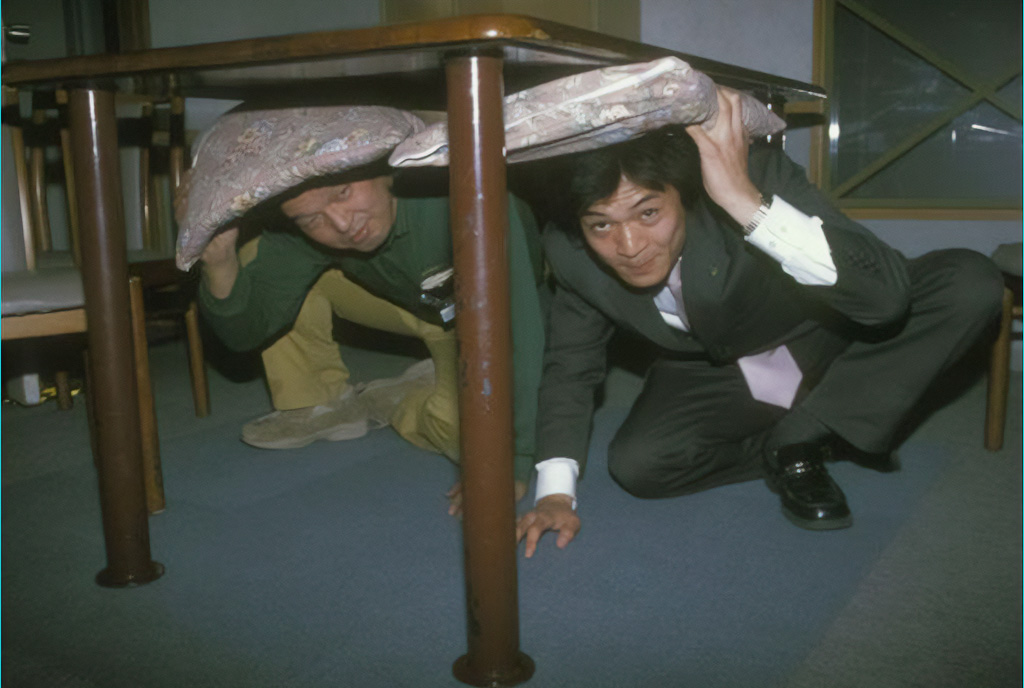
I dive under the table, hold a cushion over my head, close my eyes and start to laugh. When I open them, I watch Tokyo crumbling before my very eyes.
A buzzer sounds, and an instructor walks into the room. My disaster preparedness instructor leans down and looks at me, crouched under the table. She's pleased with how I handled it.
"Well done, you've survived your first earthquake," she says with a smile. "Not bad for a beginner."
Getting Tokyo's residents ready for disaster

Tokyo has a few unusual and relatively little-known tourist attractions: the world's only tapeworm museum and a noodle museum that holds the world's largest collection of instant noodle packaging.
But only one tourist spot has been declared an official disaster zone.
The Tokyo earthquake simulation centre sits on the fourth floor of the Ikebukuro Bosai-kan fire station. It's open to the public, and there's no charge for two minutes of terrifying tremors.
"Tokyo residents are required to attend courses to raise awareness of disaster preparedness," my instructor says. "Children and office workers come here to learn what to do in the event of an earthquake."
The computerised earthquake simulates tremors measuring 6.2 on the Richter scale.
Around the world, 50,000 earthquakes are recorded every year. They vary in seismic intensity. No part of the planet is entirely free from the threat, though some regions are more active than others.
Japan has experienced more than 60 major earthquakes, the first of which was recorded in the year 684. The 2011 Tohoku earthquake had a magnitude of 9.0 and claimed nearly 16,000 lives.
The most powerful earthquake in the world is believed to have been the 1960 Valdivia earthquake in Chile, which reached a magnitude of 9.5.
The earthquake that struck California in 1906 and ruptured a 70-mile stretch of the San Andreas Fault had a magnitude of 8. Other major earthquakes occurred in Lisbon in 1755, in New Madrid, Missouri, in 1811, and in Alaska in 1899.
The Lisbon earthquake, which claimed at least 60,000 lives, was so powerful that the water in Loch Lomond in Scotland kept rising and falling for two minutes.
Your regularly scheduled earthquake is about to begin
A serious earthquake with follow-up aftershocks is simulated every half hour, every day except weekends and Tuesdays, at Tokyo's Life Safety Learning Center.
Similar centres can be found in Tachikawa and Honjo.
"The Great Hanshin-Awaji earthquake caused catastrophic destruction," my disaster preparedness instructor tells me.
"We all need to learn safety measures so we know what to do in an emergency like that. It could save our own lives and the lives of others. Here we learn how to behave during a disaster. How to stay cool-headed and keep the body calm. Our programmes build well-rounded earthquake response skills."
The centre has a permanent exhibition devoted to the Tokyo earthquake of 1923.
On 1 September, 74,000 people died in seven seconds. Around 54% of brick buildings and 10% of all reinforced concrete structures collapsed.
One percent of the city's homes were destroyed, and 700,000 houses burned down. The quake triggered a tsunami that reached 36 feet in Atami on Sagami Bay, where another 150 homes were destroyed and 60 people lost their lives.
"Real earthquakes are no fun at all"

Students learning earthquake response skills are shown video footage of the 1995 Kobe earthquake.
We watch highways buckle and skyscrapers collapse. It could pass for fiction. But there are no special effects here.
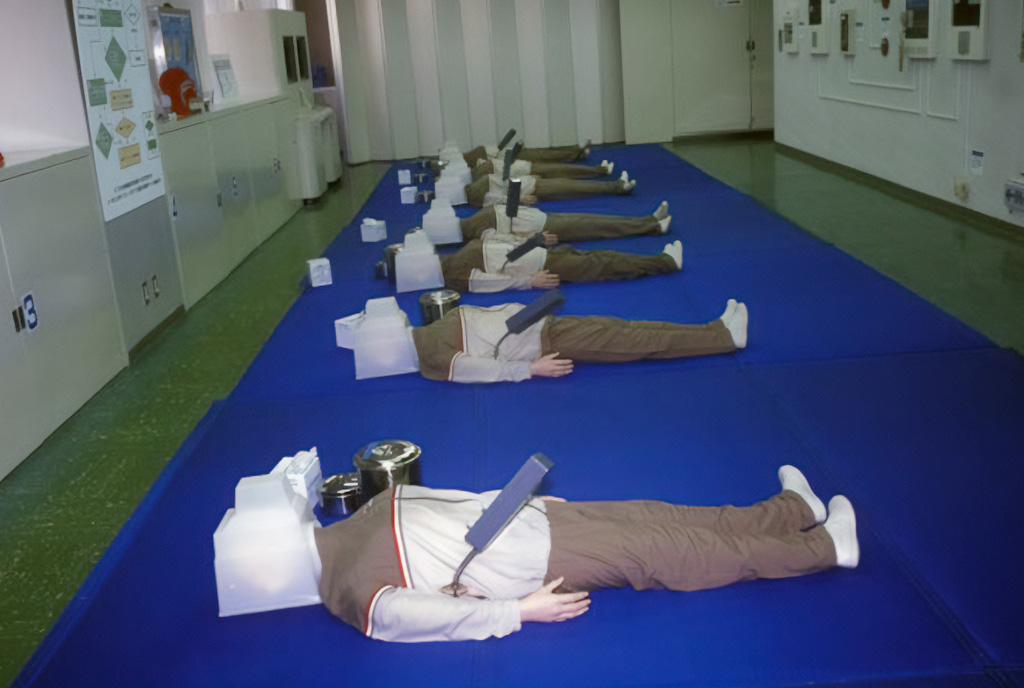
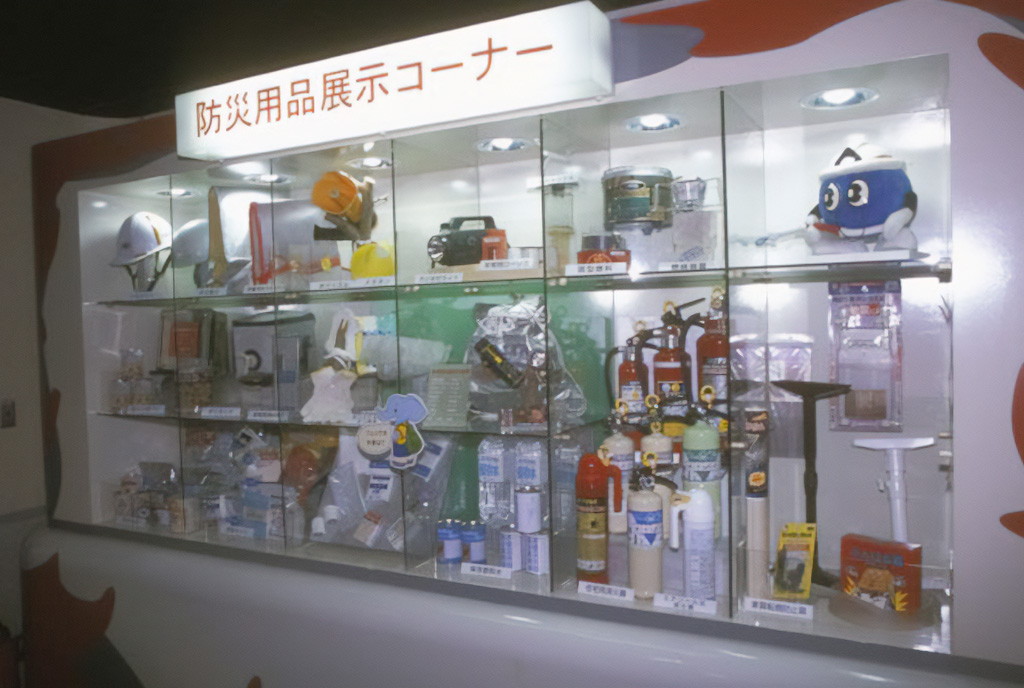
The courses at the centre include basic training in how to use a fire extinguisher. There's a special room where you're handed a canister and told to spray foam over everything in sight.
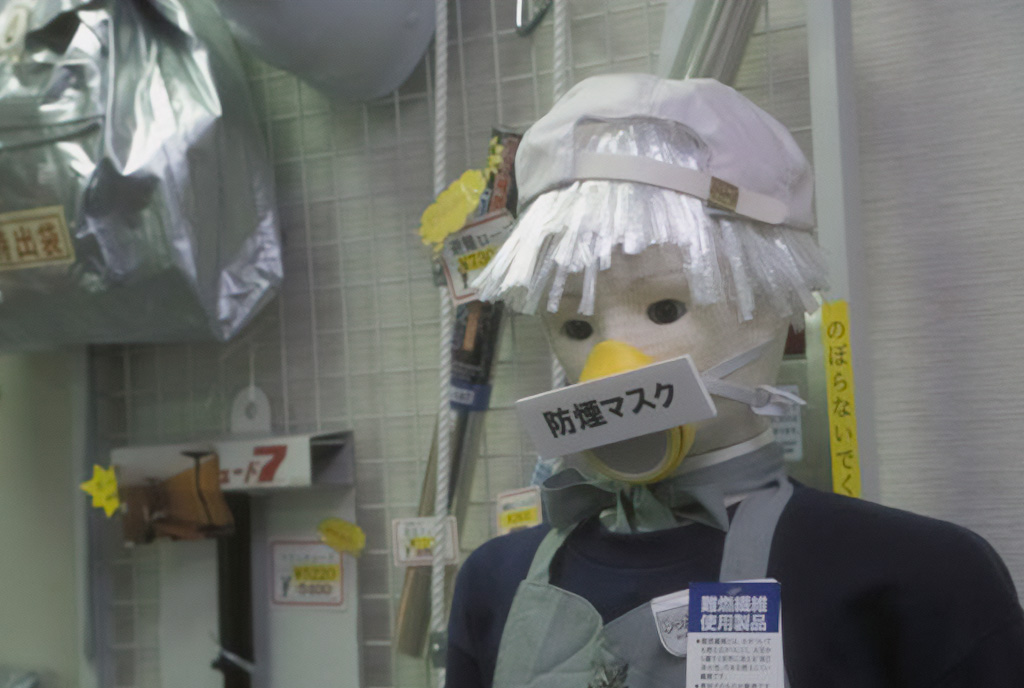
"This is very popular with both adults and children," my instructor says. "But there's a serious side to it too. Students learn to protect themselves and prevent fire from spreading after an earthquake. We also use a smoke maze and tunnel to help people get used to being in smoke and learn how to escape smoke-filled buildings in an orderly way.
"We teach emergency first aid. And how to resuscitate the injured and perform chest compressions. All of this is to minimise casualties when, and if, an earthquake happens. We also run drills using emergency evacuation chutes.
"A lot of people come back to us. Not because they want to learn more. They just enjoy being in the artificial seismic setting. Would you like to try it again yourself?"
She smiles.
"I can arrange that. I can summon earthquakes!"
So I sit back down at the table in a mock-up of a typical small Japanese apartment, complete with a kitchenette. A young woman asks whether I'm ready, then presses a button. The room starts to shake again.
Following the instructions, I run to the stove to shut off the gas supply, then open the door. Grabbing a cushion, I find a safe spot under the kitchen table.
The walls tremble, and then the floor does too. The bookcase sways. Through the window I see video footage of falling masonry and enormous clouds of dust.
One moment the building is still standing, the next it's gone. Minor tremors happen every day in the Tokyo area. My second session of the day is over.
I pass with flying colours and am now ready to cope with an earthquake, should I ever find myself at its epicentre.
"But it won't be nearly as much fun," my earthquake examiner says. "Real earthquakes are no fun at all."
Tokyo earthquake simulation centre: Ikebukuro Bosai-kan (a 5-minute walk from the west exit of Ikebukuro Station); closed on Tuesdays and every 3rd Monday of the month; open from 9:00 to 17:00; +81 (0)9 3590 6565. Admission is free.
Other Tokyo museums and disaster preparedness centres open to visitors include: the Tokyo Rinkai Disaster Prevention Park, Honjo Bosai-kan, Tachikawa Bosai-kan, and the North Tokyo Earthquake Science Museum (Nishigahara metro station).