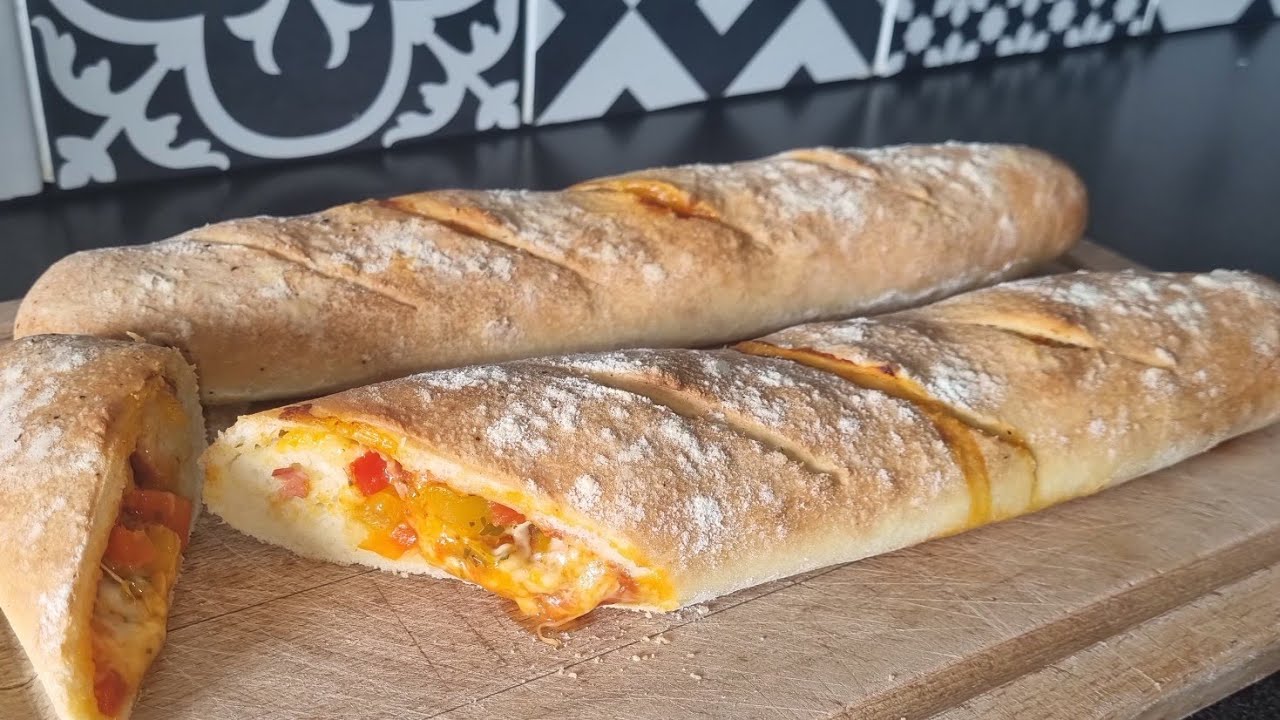


Baker Christian Vabret gently presses on a baguette to make it "sing".
As he presses, the crust cracks apart on its own, giving off a faint, crackling sound.
"You can tell a good baguette by the way it sings", he says.
Partner links: booking through them supports the blog at no extra cost to you.
"Le pain qui chante", or "the bread that sings", is a phrase French bakers use, and it is one of the telltale signs of a perfectly baked baguette, Vabret says.
It is a world away from the supermarket baguette he had tried to coax into chirping a few minutes earlier. Instead of a bright crackle, the pale loaf of bread sat there mute, refusing to respond to his pleading and squeezing.
This scene unfolded in April in Paris, while the city was under its third lockdown.
Vabret had opened his Covid-19 tearoom "Marie-Antoinette", next door to his bakery Au Petit Versailles du Marais in the 4th arrondissement, to demonstrate how to tell a good baguette from a bad one (the tearoom has since reopened).
Along with the title of Meilleur Ouvrier de France, a prestigious award that honours the country's finest craftspeople, Vabret founded the Bakery World Cup in 1992, an international competition held every two years in Paris that could be compared to the Olympic Games of the baking world.
Few people are more qualified than Vabret to give this bread lesson.
Because when it comes to French baguettes, one of France's most iconic culinary symbols, not all of them are created equal.
The best of the best
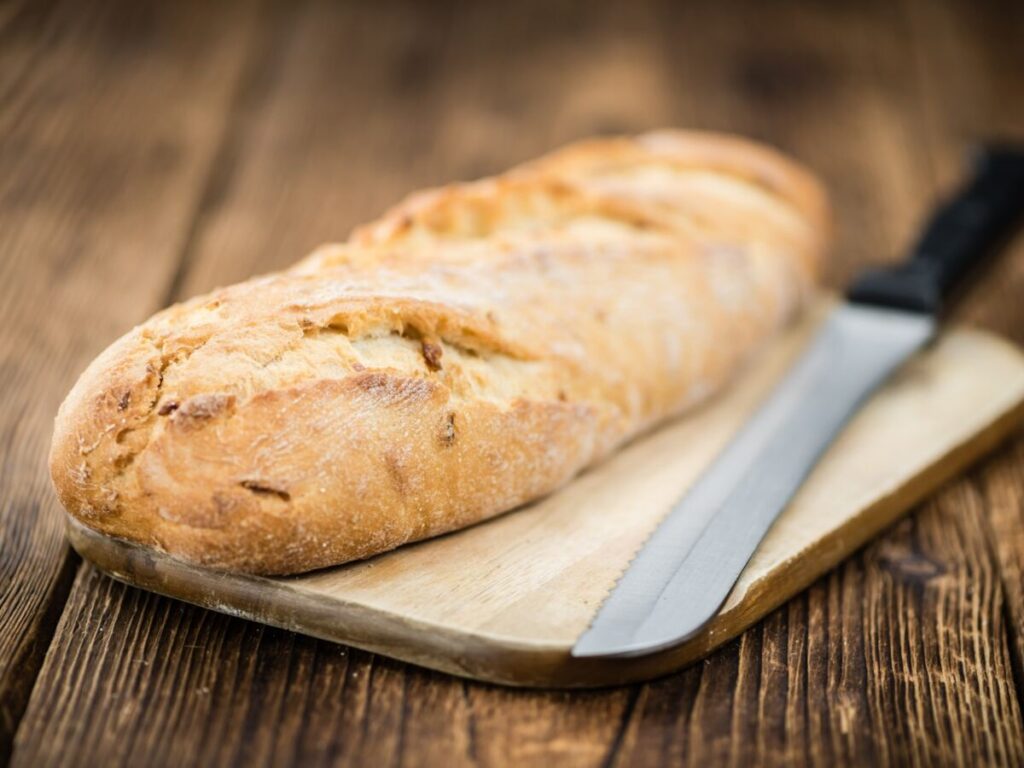
First of all, the best baguettes are not called "baguette". The best of the best are called traditions (pronounced tra-di-syon), they cost roughly 20 to 30 cents more than a "classic" baguette, and they must be made according to a strict set of rules laid down by a government decree in 1993.
To be called a tradition, the bread may be made from only four ingredients: flour, water, salt and yeast or leavening agent, because all additives, preservatives and fillers are strictly forbidden. The bread must also be made on the premises. Ordinary baguettes, on the other hand, are the quick-baking cousins of the traditional loaf, often loaded with additives and inferior in both taste and quality.
In other words, as baker Djibril Bodian, a two-time winner of the prestigious Paris baguette contest known as the Grand Prix de la Baguette, points out, there are no shortcuts.
"You can't cheat your way through this bread", he says. "A baker has to find his own method to create a beautiful tradition".
This is exactly the "savoir-faire", or know-how, that Dominique Anract, president of the French Federation of Bakers and Pastry Chefs, hopes will be added to UNESCO's list of intangible cultural heritage in 2022. In March, the ministry of culture announced that France had chosen the baguette as its next UNESCO candidate over the zinc rooftops of Paris and the grape-harvest and wine festival in the eastern village of Arbois, which had also been shortlisted.
The announcement was the culmination of a four-year campaign led by the Bakers' Federation, which had been sounding the alarm over the decline in overall bread consumption in France and the threats bearing down on the trade.
A threat to traditional bread and culture
According to the Observatoire du Pain, a research group that tracks bread-consumption habits and trends in France, the average daily bread intake among adults fell from 143 g/day (5 ounces/day) in 2003 to 103 g/day (3.6 ounces/day) in 2016.
In total, there are around 33,000 bakeries across France. But every year the spread of superettes, small grocery stores opened by large supermarket chains that sell industrially produced baguettes, leads to the closure of 1,000 family bakeries, Anract says.
"Our craft is slowly disappearing", he says. "Our goal with this UNESCO dossier is to set in stone our artisanal know-how, as well as the culture of bread in France".
Because for the French, the baguette plays an important role as they grow up, both young and old.
For little ones, the heel or end of the loaf, so important that it has its own name, le quignon, is often their first introduction to solid food. The classic, perhaps clichéd image associated with the French is the Parisian nibbling on the quignon while walking home with what is left of a beheaded baguette to eat at dinner.
According to Anract, for school-age children the baguette marks another milestone in their childhood.
"It is often the first purchase a child makes", he explains. "Parents give the child a little change and send them off to run their first errand on their own".
For homebuyers, renters and estate agents, the neighbourhood bakery also becomes one of the key selling points. And for the elderly, especially those living alone, the daily trip for baguettes is often their only human interaction of the whole day, he said.
"Old women who have lost their husbands come into the bakery to chat with the shop assistant until the next customer arrives. The bakery is a real place of social connection".
Don't turn your back on your roots.
The American historian Steven Kaplan, in his book "Pour le pain" ("For Bread"), published in 2020, also laments what he sees as the slow decline of the rich bread-baking culture cherished in France, and calls on the French to reclaim their national heritage.
"The book asks the French not to give up their identity, because French identity is deeply tied to bread. Don't turn your back on your roots", he says.
The modern baguette, for example, is the product of various socioeconomic and cultural forces of the 20th century, Kaplan says. In 1919, a law banning night work forced bakers to look for faster and more efficient methods of baking bread, which until then had been a labour-intensive, exhausting job that required regular feeding of the sourdough starter.
The solution was to use baker's yeast. The new baguette also became popular with the urban bourgeoisie, who were used to eating freshly baked bread several times a day. Demand for white bread, which came to be associated with cleanliness, success and upward mobility, grew after people had subsisted on dark bread made from leftover oats, barley and unrefined grain during and after the Second World War.
But therein lies the irony.
Because the experts agree: the best baguettes are not white. The best baguette, the aforementioned tradition, is baked long enough to achieve the Maillard reaction, a chemical reaction between sugars and proteins that produces a caramelised brown crust which creaks and crunches when squeezed (the baguette's song), Vabret says.
In addition, the crumb should be cream-coloured or pale yellow, never completely white, and have irregularly shaped holes, known as the alvéolage. The aroma can range from floral to a pleasant tang, fruity and fresh, and the crumb should dissolve pleasantly in the mouth.
Perfecting the craft
Meanwhile, at Bodian's bakery Le Grenier à Pain Abbesses in the Montmartre district, long but fast-moving queues are a common sight thanks to the baker's fame. At 44, Bodian is the only baker to have won the Grand Prix de la Baguette twice (in 2010 and 2015), a blind contest in which around 200 traditional loaves compete for a cash prize of 4,000 euros, the honour of becoming the official bread supplier to the French president's Élysée Palace for a year, and the respect of their peers.
Bodian, who immigrated from Senegal to France at the age of six, said he took up the craft after growing up in a family where his father, also a baker, spoke passionately and proudly about his trade throughout his childhood.
"Every day my father came home tired but happy, and always told us he had the best job in the world. He never complained, never spoke badly of his profession".
Despite his victories, he said, he is constantly striving to perfect his craft. And that means he refuses to bake ordinary baguettes and produces only traditions.
"Rather than making mediocre bread, I would rather focus on producing only traditions and doing it well".