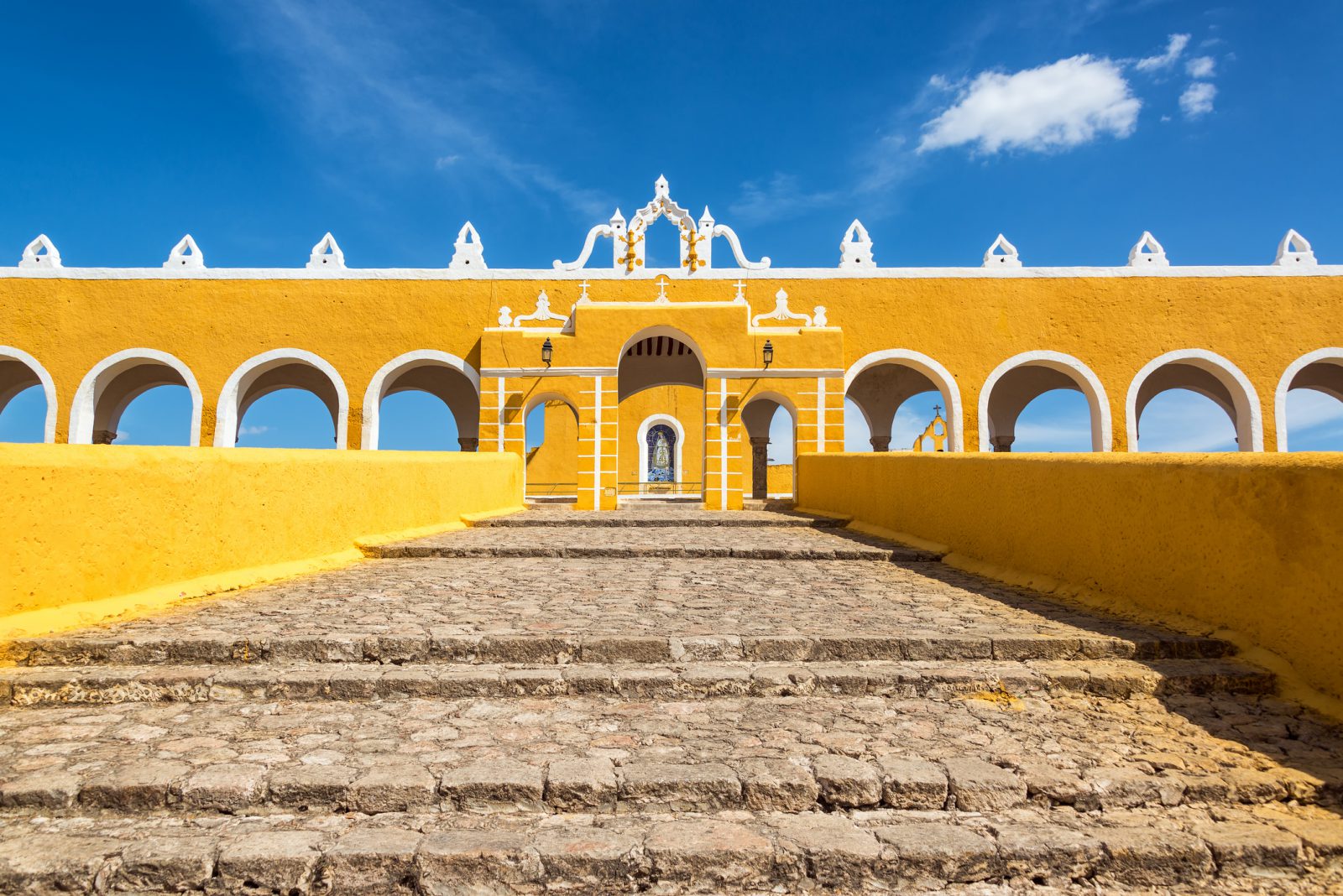


No matter which direction you approach from, before you even reach the town of Izamal, Mexico, bright shades of blue, yellow and even orange start to appear on the houses and buildings.
But you'll know you've arrived when you find yourself surrounded by golden-yellow walls on every building along every street.
Nicknamed "La Ciudad Amarilla" (or "the Yellow City"), Izamal is a small town in the state of Yucatan, sitting roughly 44 miles (70 kilometers) east of the state capital, Merida. The name Izamal means "dew that falls from the heavens."
Partner links: booking through them supports the blog at no extra cost to you.
The reason behind its sunny color remains a mystery.
"When I was just starting out as a guide, I was told it was painted yellow to honor the visit of Pope John Paul II in 1993," says Julia Miller, a local archaeologist and guide. "So I dutifully repeated that for years, until I said it in front of another guide who told me, 'No, that's not right! It was already yellow.'"
After asking around, Miller came to the conclusion that no one really knows why it was painted yellow in the first place. Yucatan's tourism website simply states that the current yellow color with white trim was chosen "by the will of the authorities and the neighbors."
Pueblos Magicos
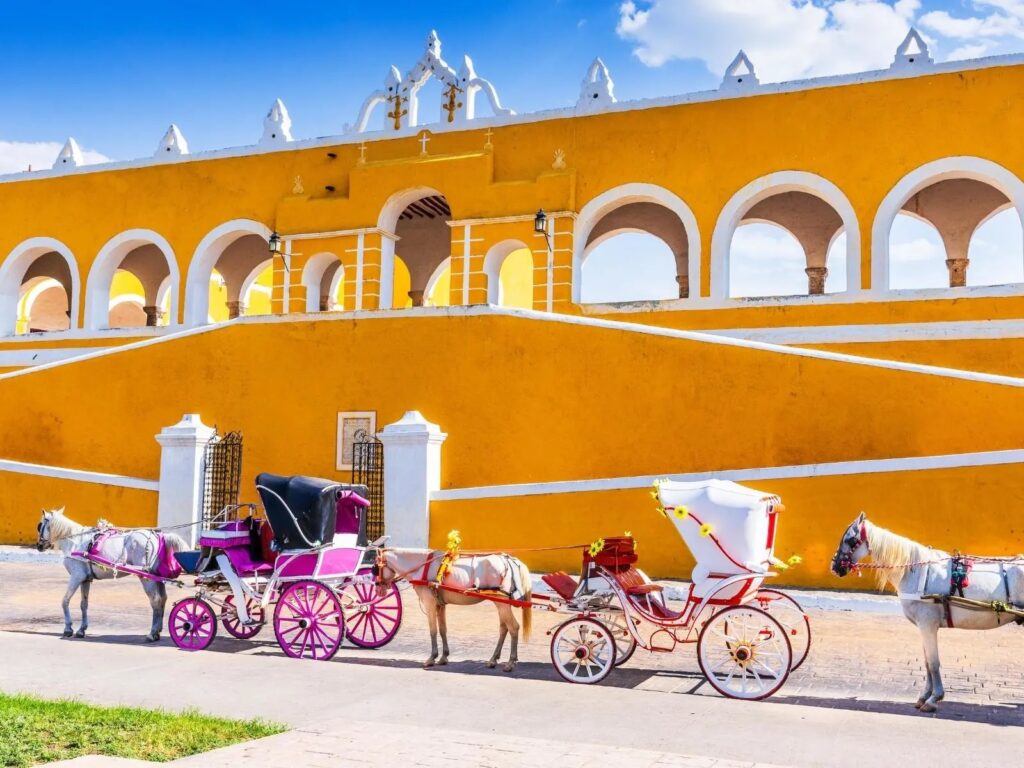
Izamal is one of Mexico's "magical towns," or "Pueblos Magicos." This program, created by the government to preserve Mexican places with special cultural histories, includes 132 towns.
A steady stream of tourists, who usually travel between Merida and the Mayan ruins at Chichen Itza, passes through the town. It rarely feels crowded, and the locals go about their everyday lives.
Izamal was founded by the Maya nearly 2,000 years ago. The town is believed to be named after the ancient Mayan god Itzamna.
"The Spanish town was founded in the 1550s, and because it was an important Mayan pilgrimage site, the Catholics decided it was a good place to build one of their first churches on the Yucatan Peninsula," says Miller.
The Catholic church is called the Convent of San Antonio de Padua, and it was built in 1561 on the site of an existing ancient Mayan place of worship. Originally, it was used to convert the Mayan people to Catholicism.
Today this church is still active and is one of the oldest Catholic churches in the Americas.
Although the church is the biggest landmark, Izamal is also known as the "city of three cultures," because it preserves the history of the ancient Mayan people, along with its Spanish colonial past and its modern-day population.
Mayan Ruins
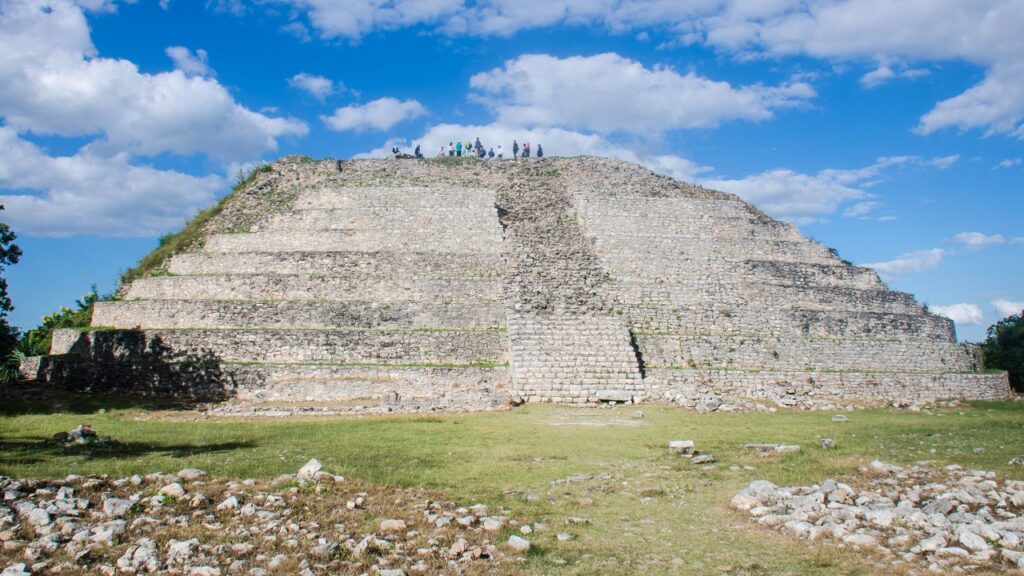
Just a few blocks from the church stands Kinich Kak Moo, the largest surviving Mayan ruins in Izamal.
Named after the Mayan sun god, the 35-meter (115-foot) pyramid has 10 levels. Adventurous visitors can climb its uneven, steep steps to take in a 360-degree view of Izamal, the surrounding jungle and the wider Yucatan.