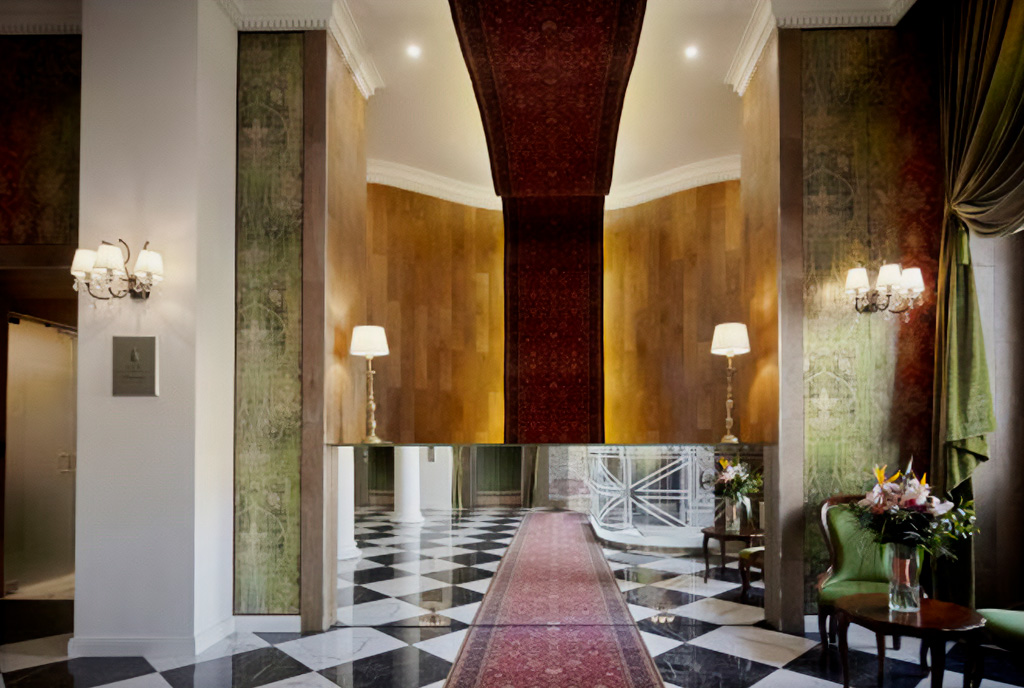


One of the first things you'll notice as you step into the Mystery Hotel Budapest is the Aladdin-style flying carpet that appears to "hover" above the reception desk.
It's the first sign that there's far more to this boutique hotel than meets the eye.
Next you'll spot the countless light boxes on the walls displaying animated images that change several times a day, along with an elevator half-hidden behind velvet curtains.
Partner links: booking through them supports the blog at no extra cost to you.
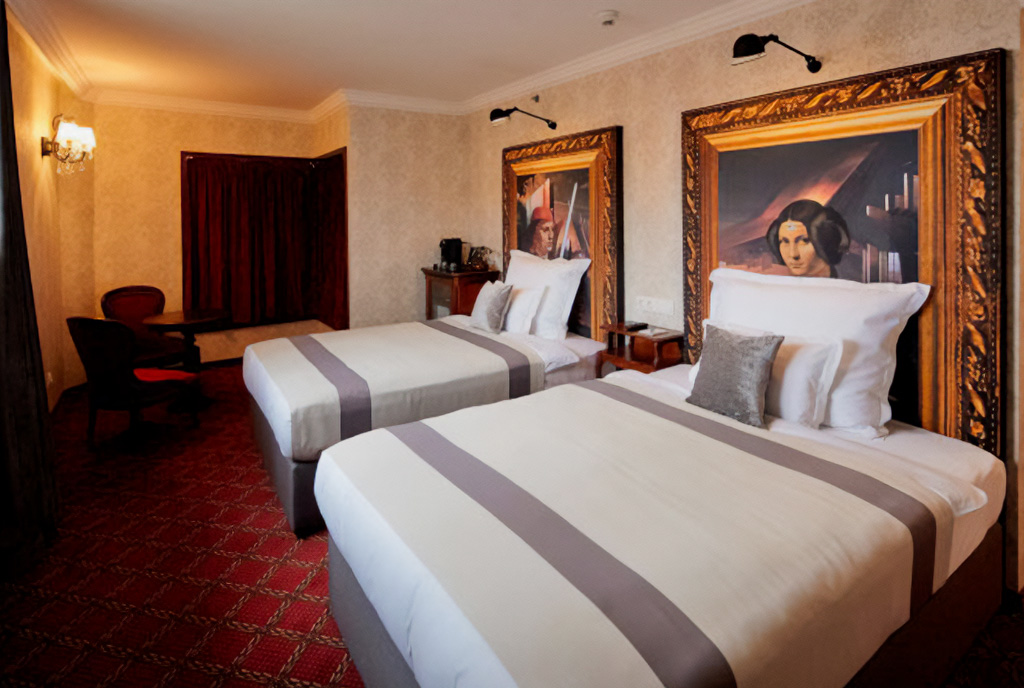
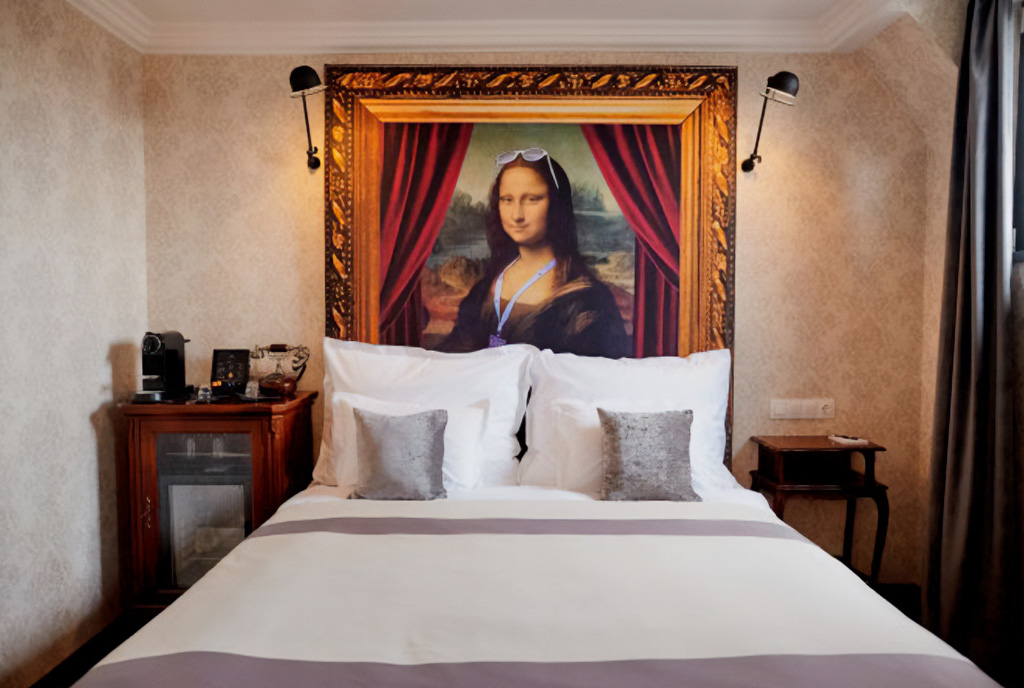
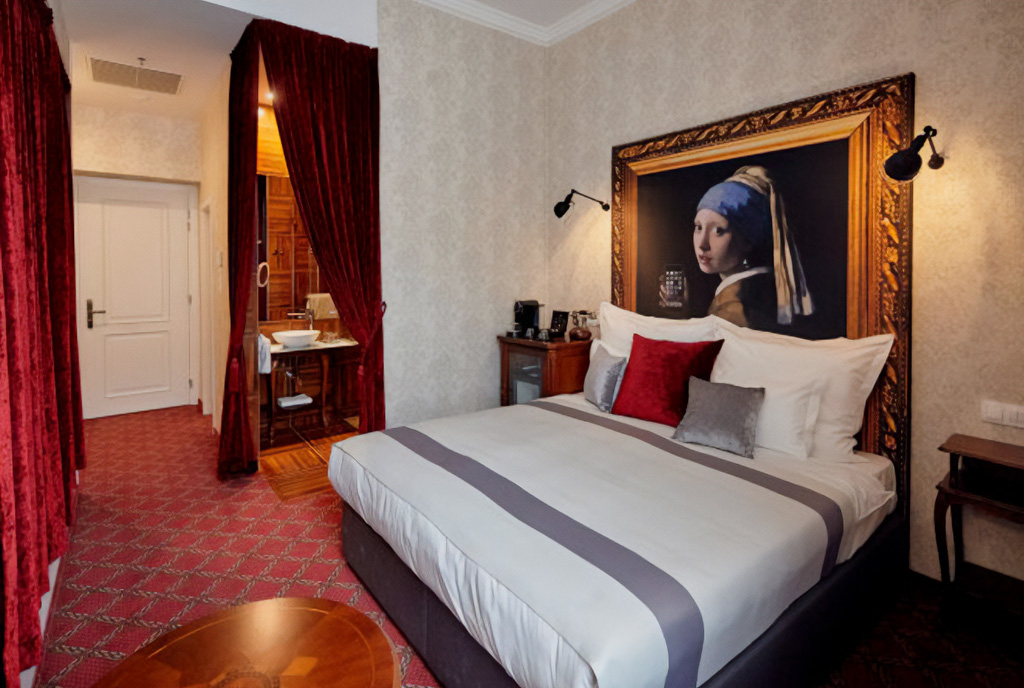
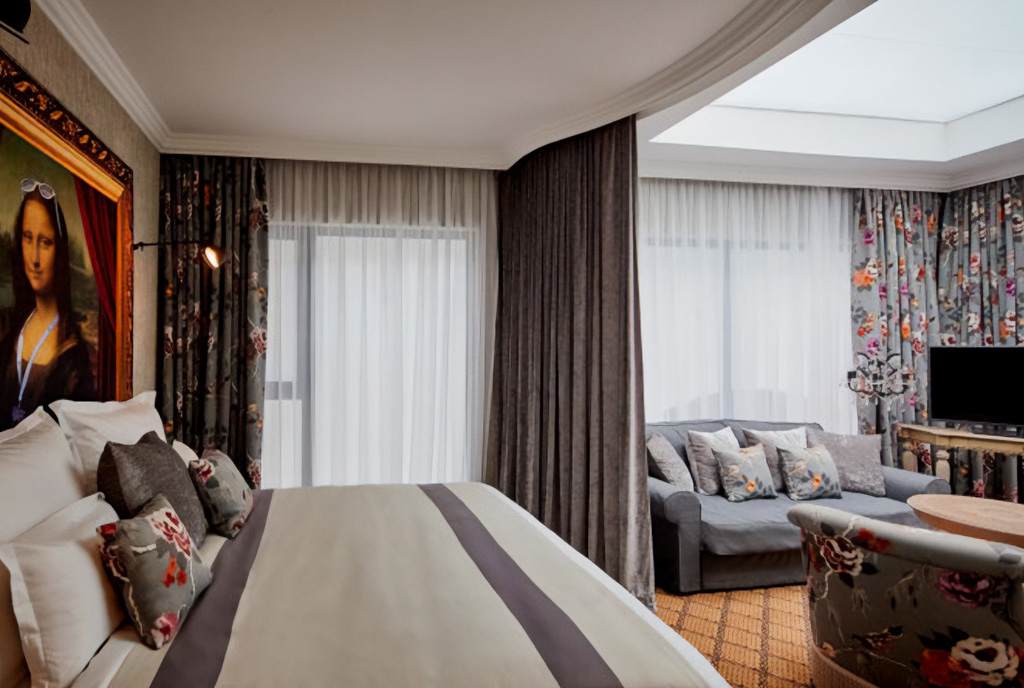
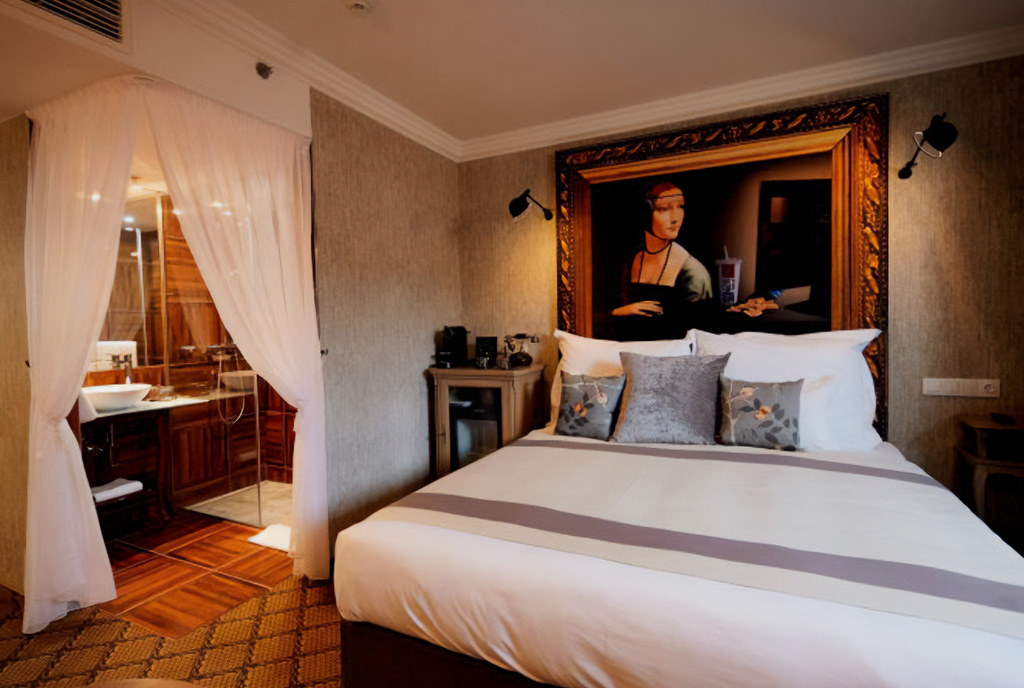
Depending on which room you check into, you might find yourself lying beside a headboard featuring a version of Johannes Vermeer's "Girl with a Pearl Earring" in which the "girl" is holding an iPhone, or a "party girl" reimagining of Da Vinci's "Mona Lisa" clutching VIP passes to Budapest's Sziget Festival.
And if you happen to book the "secret" Pythagoras meeting room, you'll have to figure out how to open it yourself (here's a hint: an unassuming box is involved).
Set in Budapest's Terezvaros district, the Mystery Hotel is arguably one of the city's most fascinating places to stay, thanks to the intrigue tucked away within its walls.
It occupies a building that was once the headquarters of the Symbolic Grand Lodge of Hungarian Freemasons, which inspired its enigmatic theme along with films like "The Da Vinci Code."
Made for Instagram
Although it lacks the dramatic city views and central location of some of Budapest's better-known hotels, this property, which opened in May 2019, is fast becoming one of the most Instagrammable places to stay in the city.
That's no accident, of course. In fact, the hotel's designer, Zoltan Varro, admits he had "likes" in mind while developing the concept.
"Instagram has really changed the hotel industry," says Varro. "About 20 years ago, people wanted to stay at well-known chains because they felt safe with them."
"Now the most important thing is to stand out. Everyone is looking for something special. Social media is vital."
"When a guest sees something amazing and takes a photo, it can be shared with the rest of the world in seconds."
Viktoria Berenyi, business development director at the Mystery Hotel, says social media has helped bring in a huge number of bookings.
"First impressions are everything," says Berenyi. "There's a lot of competition in Budapest. At first, we had some trouble attracting people."
"But we've had plenty of guests who came here because they saw photos on Instagram."
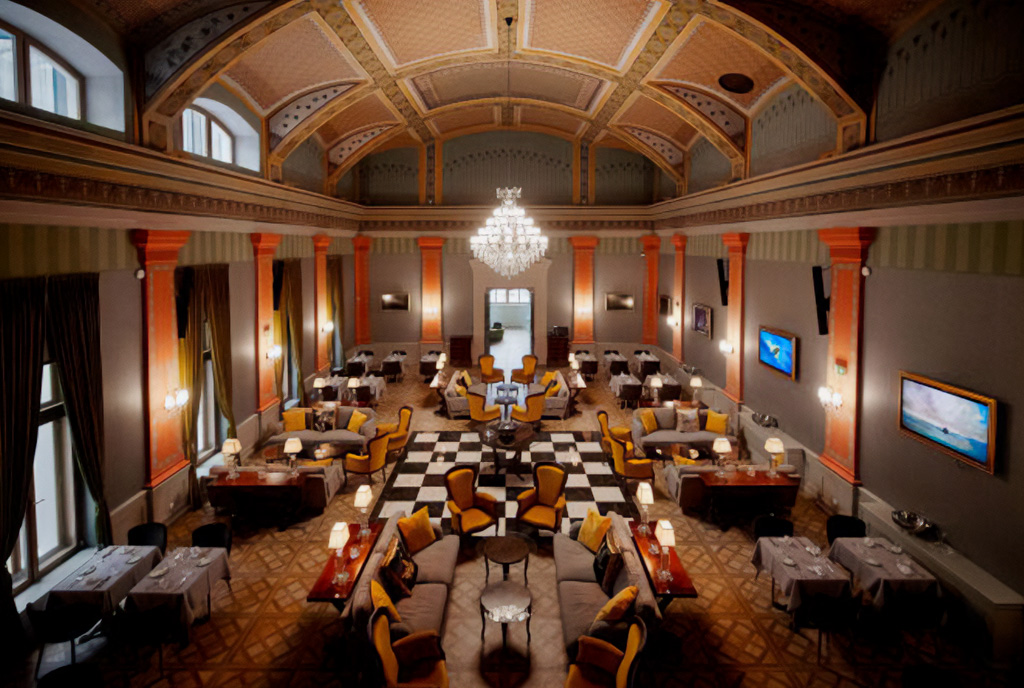
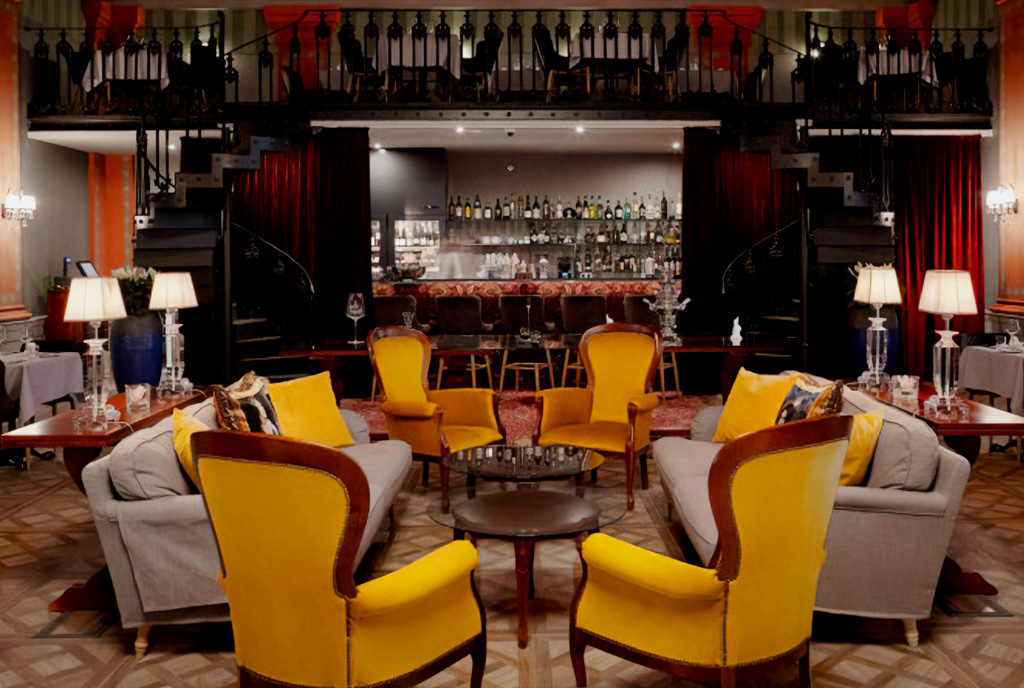
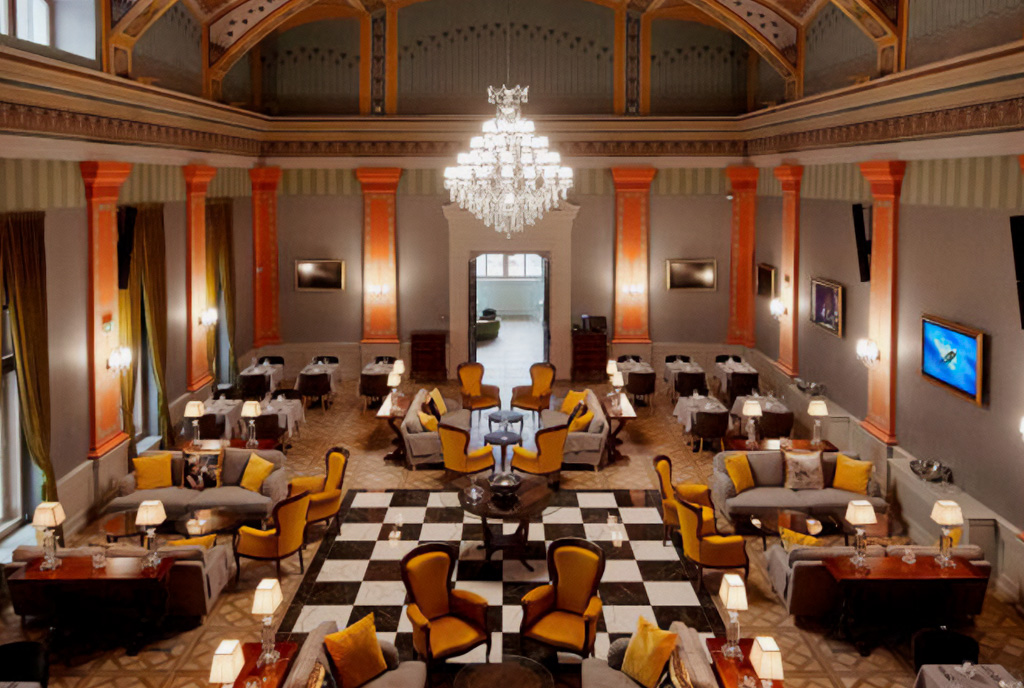
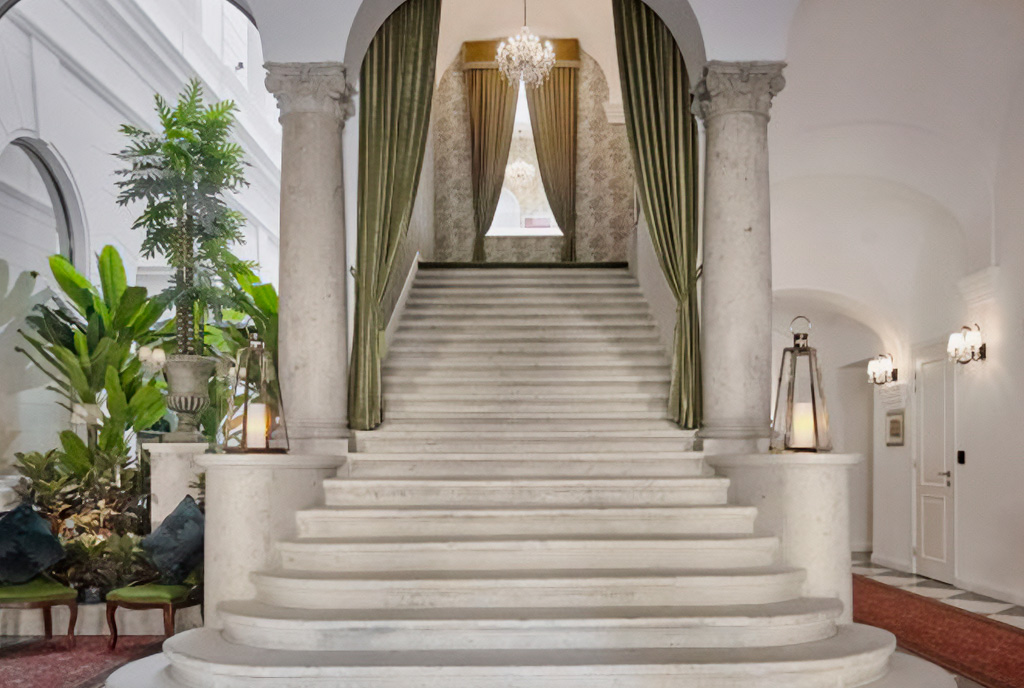
One of the hotel's many intriguing spaces is the Grand Hall, which doubles as a dining area, a bar, and the lobby.
Varro decided to make it the building's centerpiece after seeing photographs that revealed how significant this room was in the 1890s, when Hungarian Freemasons gathered here regularly.
A Masonic Past
One of the most influential and famous secret societies, Freemasonry was founded in Great Britain but quickly spread to Europe and the rest of the world.
This secular movement models itself on the brotherhoods of medieval stonemasons, who used secret words and symbols to confirm one another's legitimacy.
After the former Hungarian Soviet Republic, and later Hungarian Interior Minister Mihaly Domotor, banned Masonic activity in 1920, the building was used as a military hospital.
It also served the Hungarian National Guard Association before returning to Masonic use after World War II. But during the communist era, it was used by the Ministry of the Interior until the regime fell in 1989.
Needless to say, the building changed considerably through its many incarnations, and its Masonic elements were hidden away.
"After communism, the room was ruined," says Varro. "The Masonic aspects were completely concealed, because no one wanted to talk about it."
"I didn't want it [the Grand Hall] to be hidden. It's the heart of the building."
Its vaulted ceiling, which has been fully restored, is decorated with beautiful motifs, while the walls are adorned with vivid columns and light boxes.
Although the entire hotel is filled with chandeliers, the largest hangs directly above a marble chessboard in the Grand Hall.
At the far end of the room, two iron spiral staircases lead up to a gallery that houses a private dining area for large groups.
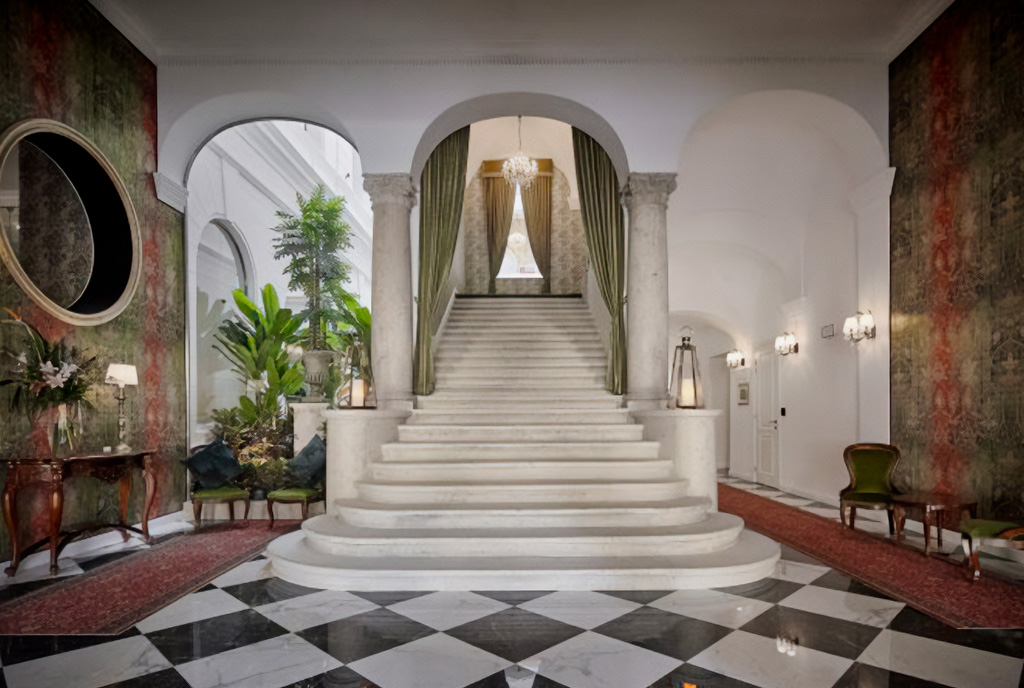
Lit by candlelight, the grand staircase is one of several elements that survived from the original building, which dates back to 1896, along with the main doors.
From the sixth floor, you can see features of the old and new building facades side by side.
Varro preserved various motifs used in Masonic symbolism throughout the building, as well as sculptures of the sphinx, the square, and the compass.
Even the paintings in the corridors are connected to Freemasonry, some created by Masons themselves and others by artists from countries with strong ties to the secular movement.
Berenyi stresses, however, that the Mystery Hotel represents far more than just Freemasonry, noting that an organization shadowed by conspiracy theories can carry negative connotations for some.
"As proud as we are of the history, we can't make it all about the Masons, because they mean different things to different people," she says.
One-of-a-Kind Rooms
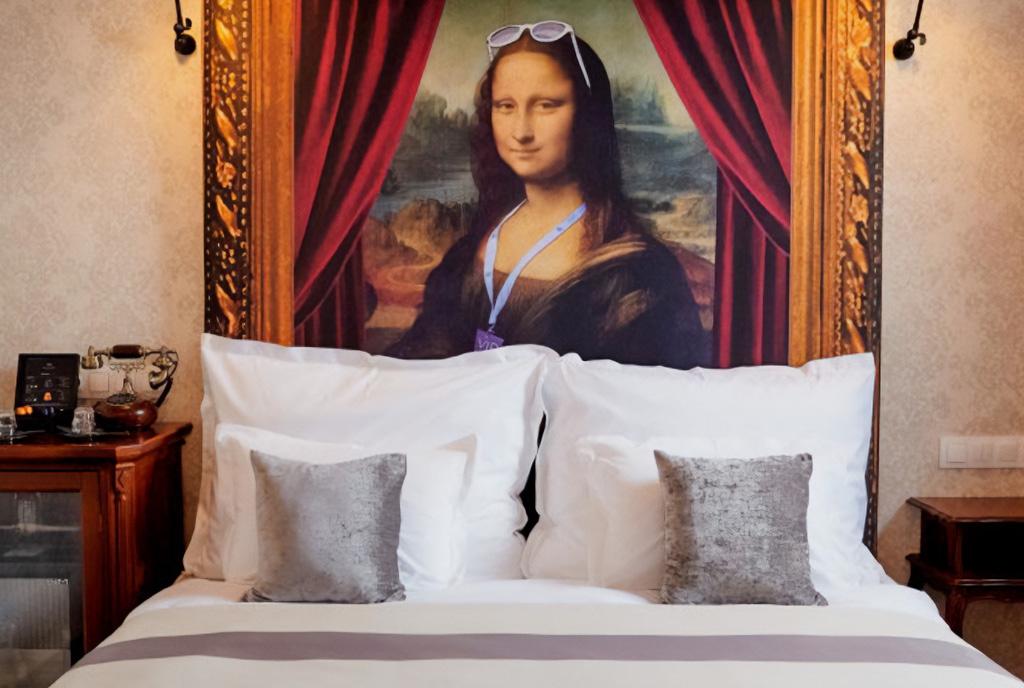
The hotel offers three different suite styles: Doric, Ionic, and Corinthian. The Doric rooms, which look out onto the hotel's inner courtyard and the Secret Garden spa, feature touches of English Victorian style and are decorated in various shades of green.
The Ionic rooms sit on the hotel's upper floors and are done in a French mansard style, while the Corinthian rooms feature baroque furnishings such as burgundy velvet curtains.
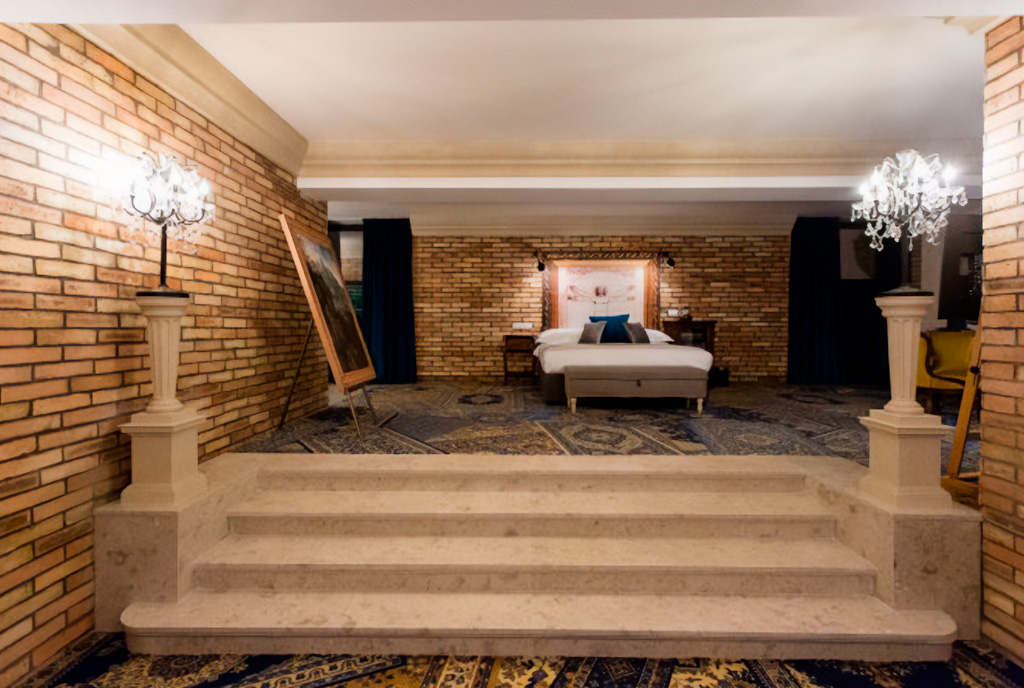
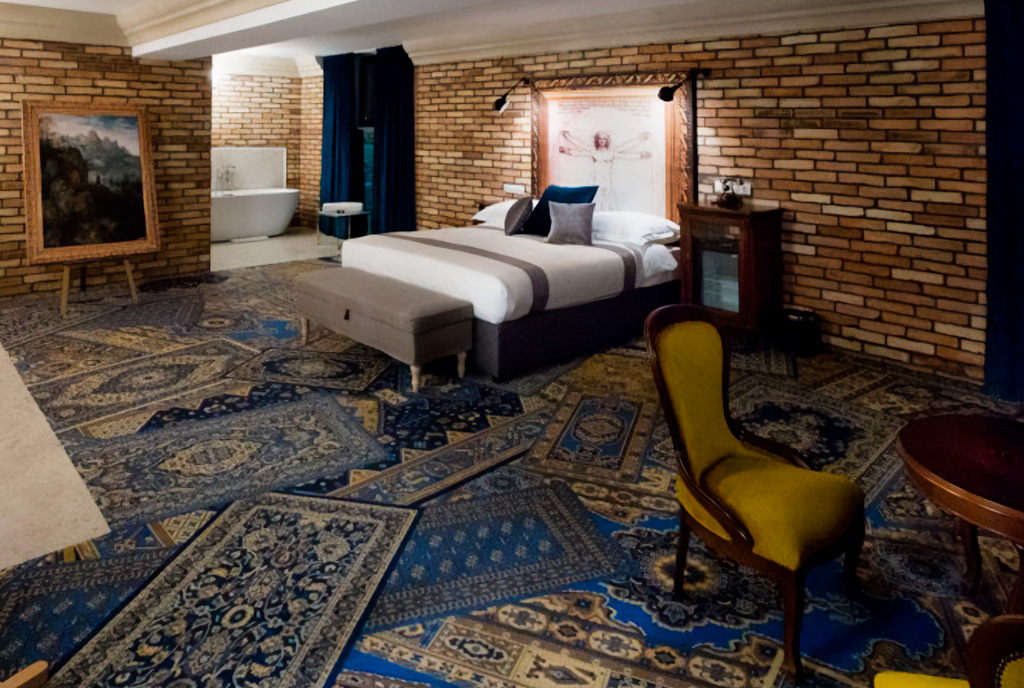
Located on the sixth floor, the Atelier suite is the most unique room in the building. Designed to resemble an artist's studio, it has marble stairs, brick walls, enormous paintings, and dozens of rugs. Even the television stand is shaped like an easel.
"This room was originally meant to be used as storage, because it only has two small windows," Varro explains.
"When I decided to turn it into one of the largest suites, the owner thought I'd lost my mind. But it turned out to be very popular."
This suite is often requested for private events; the Italian luxury fashion house Dolce&Gabbana, for example, rented it out for a private function.
A Stunning Spa
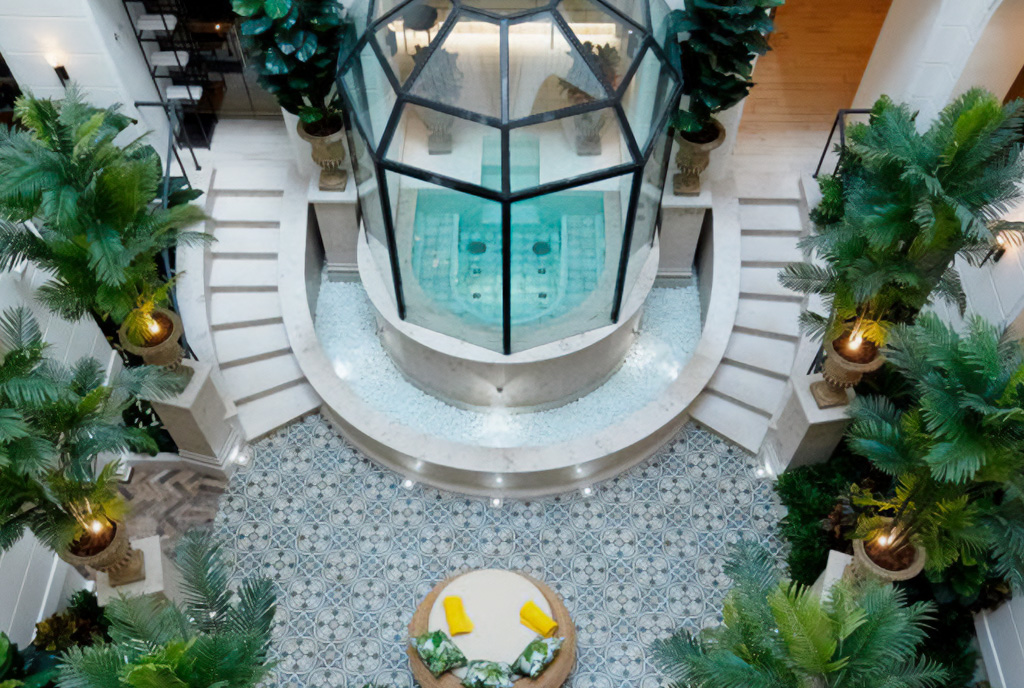
While the Grand Hall is hard to beat, not to mention the Sky Garden rooftop bar with its views of the Royal Palace, the hotel's spa is yet another standout spot.
Budapest has no shortage of beautiful thermal baths to choose from, which means any hotel spa here has to be seriously impressive to draw visitors.
The Secret Garden Day Spa certainly doesn't disappoint.
Set in the hotel's inner courtyard, it has the feel of a baroque garden, complete with striking palm trees and a beautiful fountain.
Guests can relax on loungers, visit the sauna and steam room, or choose from a wide range of beauty treatments, body treatments, and massages.
The lighting in the spa is also fantastic, thanks to its courtyard setting as well as a host of crystal chandeliers.
"It was an empty space," says Varro. "I wanted to create something different. I think it [the courtyard] is the perfect place for a spa. Budapest isn't a very sunny city, but here it's always summer."
Its centerpiece is, without question, a magnificent jacuzzi that offers a fantastic view of the building's facade.
"We don't have thermal waters here, but we have this," says Berenyi. "This jacuzzi is very popular on Instagram."
Mystery Hotel Budapest, 1064 Budapest, Podmaniczky utca 45; +36 1 616 6000