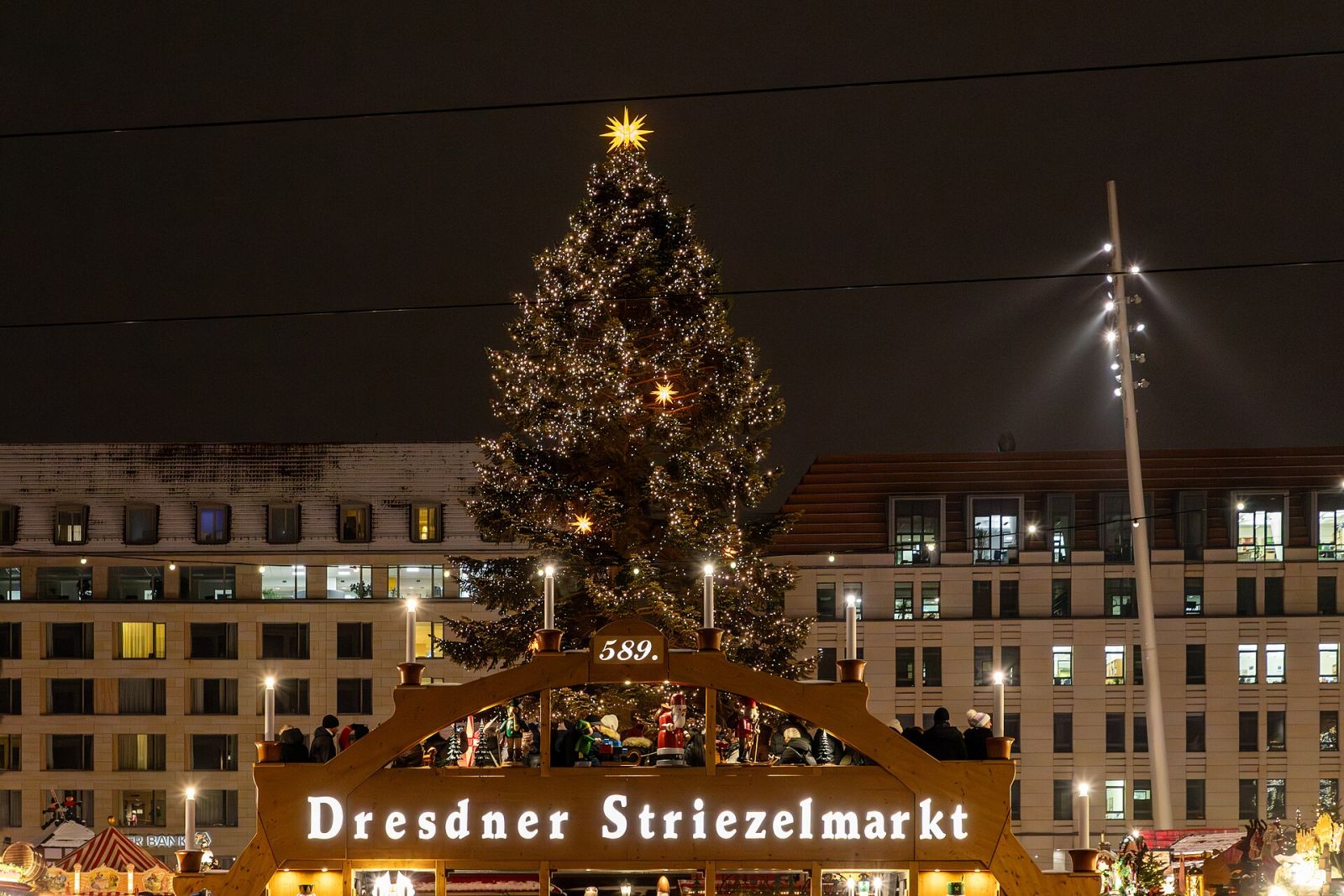


The Striezelmarkt on Altmarkt square has been running since 1434, which makes it Germany's oldest documented Christmas market. That is exactly why Dresden Christmas markets beat the more hyped Vienna or Nuremberg: the celebration here is lived-in rather than staged, with its own signature pastry, its own quirky figurines and a festival that exists nowhere else. The season runs roughly from the last week of November until Christmas Eve, and you can comfortably walk between five or six markets in a single day.
Why the Striezelmarkt matters
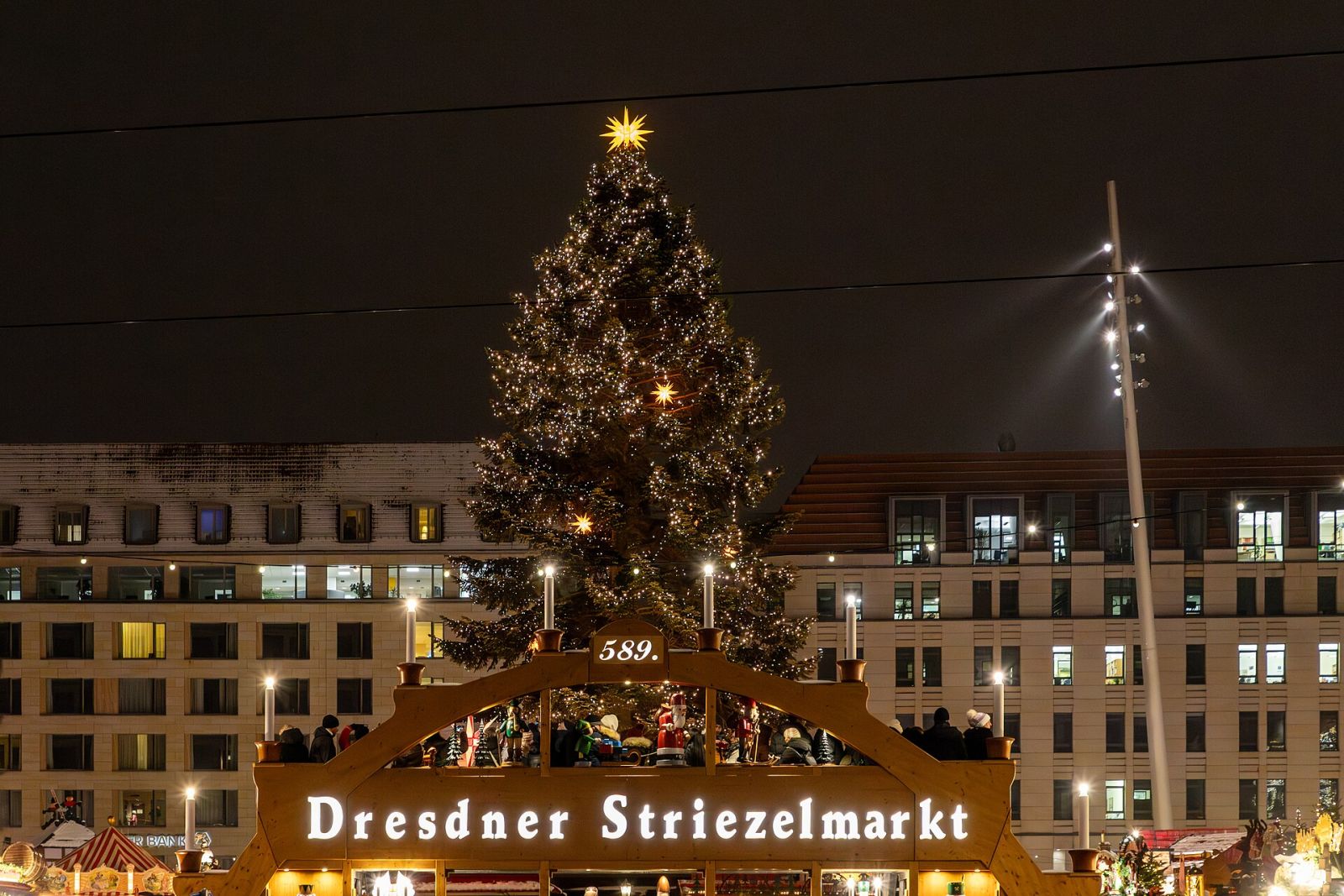
The name comes from Striezel, the medieval word for stollen. The market has now been held more than 590 times, and the city guards its character carefully: no plastic tents, only wooden stalls, a tall tree in the middle of the square and the world's largest stepped Christmas pyramid from the Ore Mountains, over 14 metres high. Its figures rotate on real convection from candle heat, just like the miniature home pyramids sold a few steps away.
None of it feels like a theme park. Locals genuinely come here after work for mulled wine and grilled sausages. The city publishes each year's dates, stall map and stage programme on the official page at dresden.de/striezelmarkt, and it is worth checking before you book, since opening dates shift slightly with the Advent calendar.
Stollen and the Stollen Festival
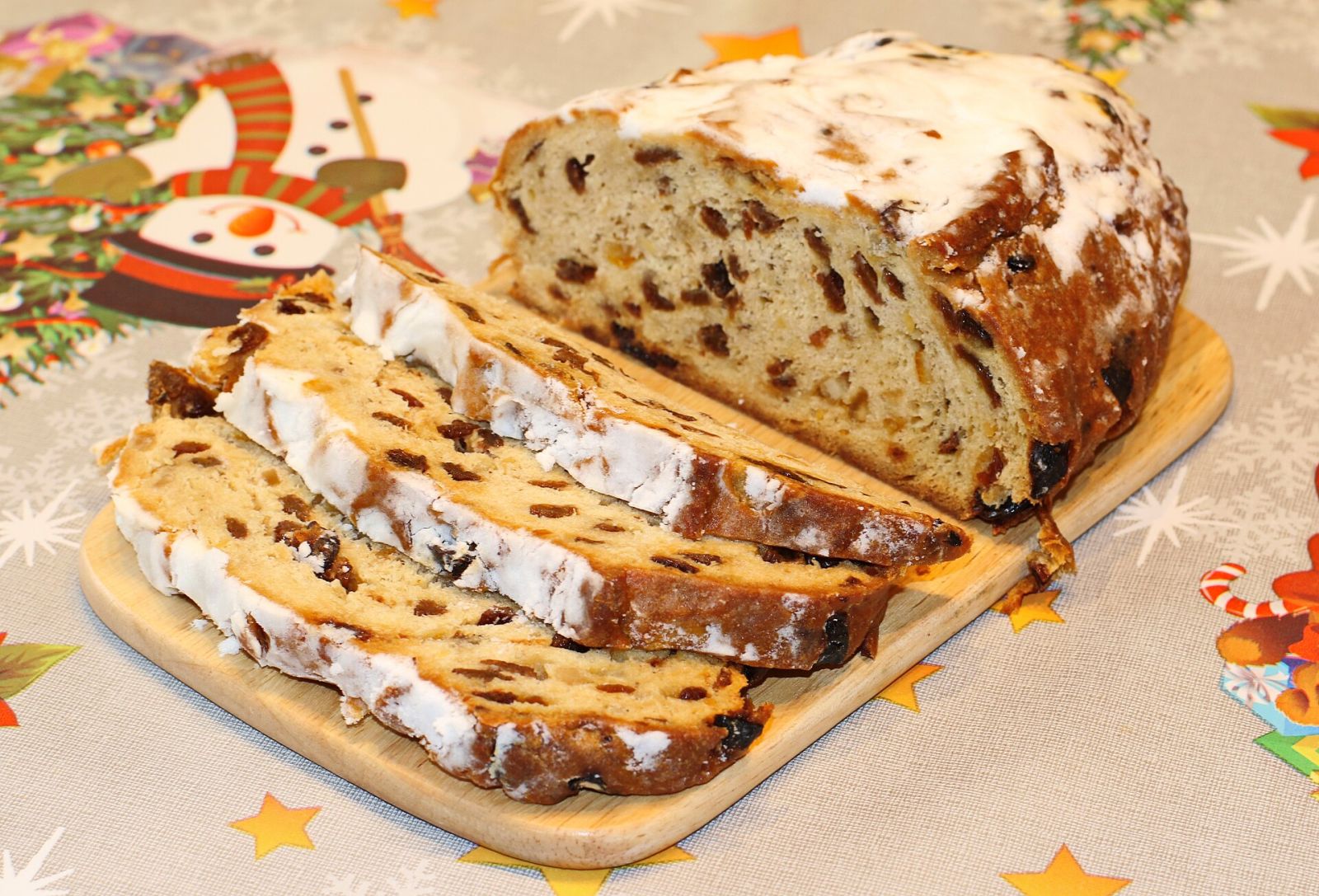
Dresdner Christstollen, a dense buttery loaf packed with raisins and candied peel under a thick coat of icing sugar, carries protected geographical status. Only bakeries in the region may produce the real thing, marked by a golden seal showing Augustus the Strong on horseback. At the market it is sold both as whole loaves of a kilo or more and as slices with coffee. A one-kilo loaf costs roughly 12-18 euros; certified bakeries charge more, and the difference in taste is noticeable.
The season's headline event, the Stollenfest, takes place on the Saturday before the second Advent, usually in early December. Bakers parade a giant stollen weighing several tonnes through the old town, cut it with a ceremonial knife the size of a person and sell the pieces for charity. The procession of carriages and brass bands moves from the Zwinger to Altmarkt, drawing tens of thousands of spectators. If your trip hinges on that date, verify it on the official site, as it changes every year.
Beyond Altmarkt: the other markets
In December Dresden turns into one continuous chain of markets, each with a distinct personality. These are the ones genuinely worth your time.
| Market | Location | What sets it apart |
|---|---|---|
| Striezelmarkt | Altmarkt | The main and oldest one, the pyramid, the stage, a fairy-tale lane for kids |
| Medieval market | Stallhof, the castle courtyard | Blacksmiths, archers, mead served in horns, no electric lights at all |
| Augustusmarkt | Hauptstrasse in Neustadt | International food, slower pace, mostly local crowd |
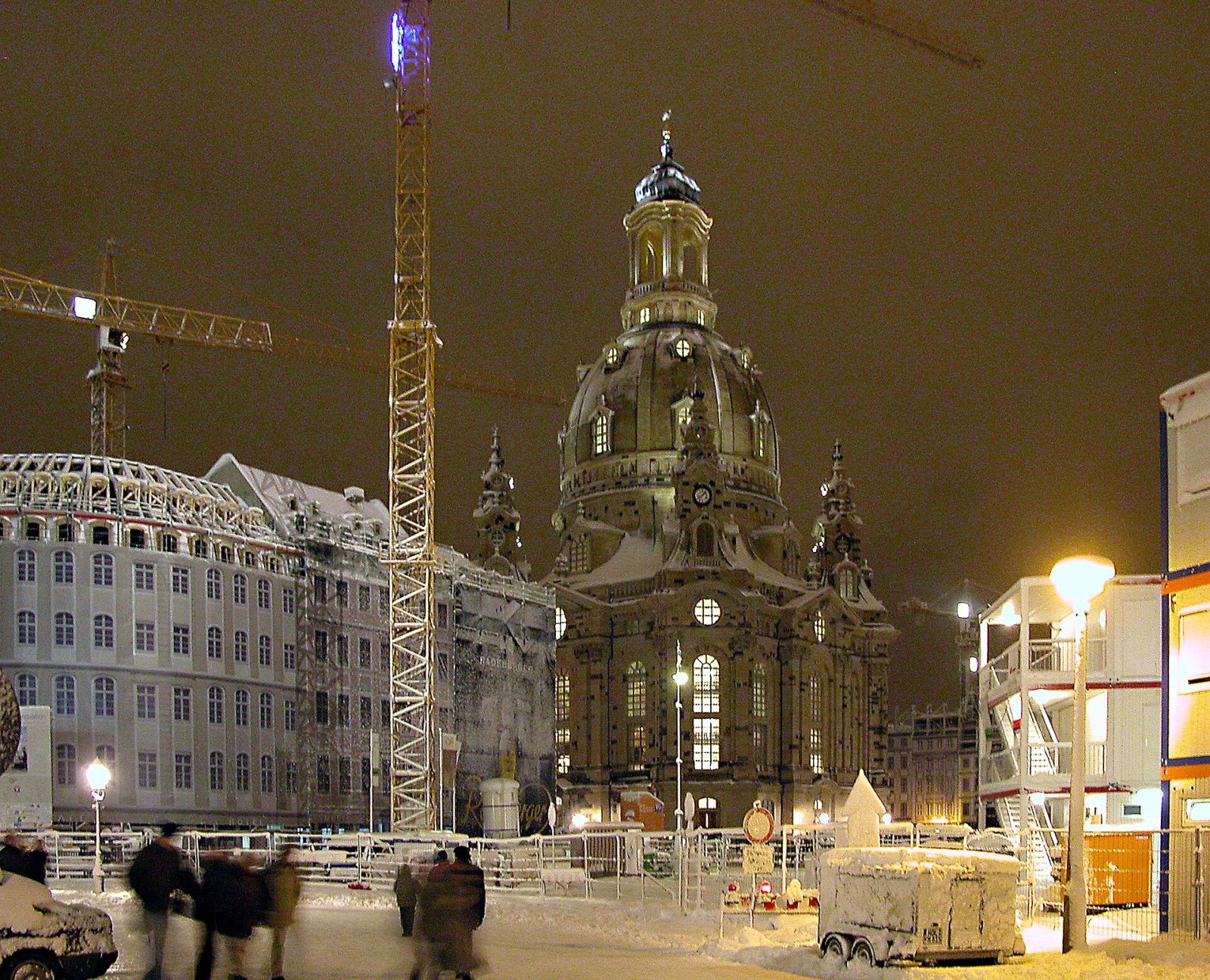
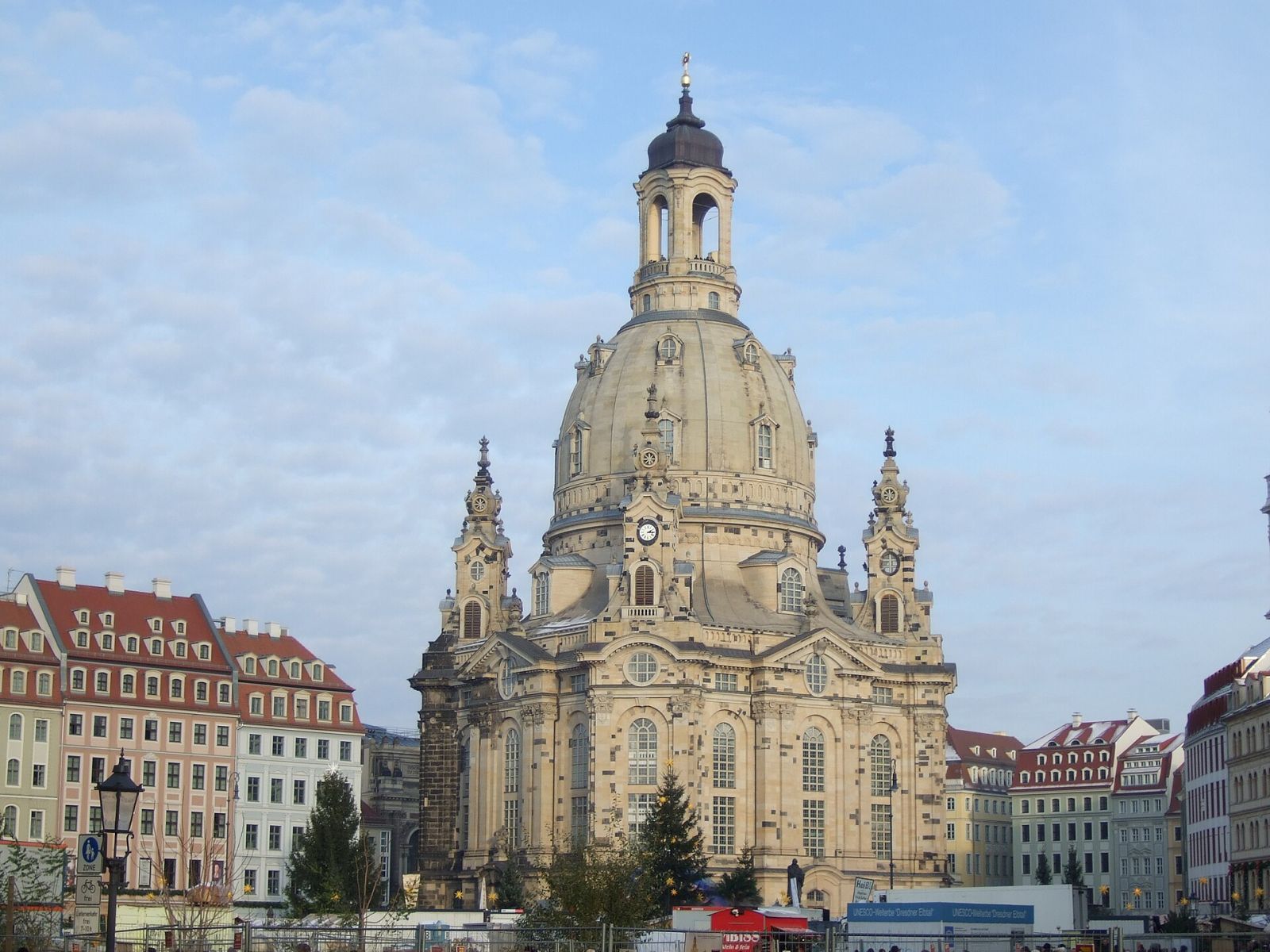
| Frauenkirche market | Neumarkt | The prettiest backdrop, right under the rebuilt church |
| Prager Strasse market | between the station and Altmarkt | Handy on the way in, with an ice rink and a Ferris wheel |
The medieval market in the Stallhof charges a small entry fee at weekends, but the immersion is total: performers never break character, and mulled wine comes in ceramic mugs thrown on a potter's wheel right there.
What to eat and what to bring home
- Stollen. Buy it vacuum-packed; it keeps for two or three months and actually improves with age.
- Pulsnitz gingerbread. A town 30 km from Dresden has baked it since the 16th century, with dough matured for months. Softer and spicier than the Nuremberg kind.
- Pflaumentoffel, comical chimney-sweep figurines made of dried prunes on a wooden frame. A purely Dresden souvenir for a few euros that survives a suitcase just fine.
- Ore Mountains woodcraft: nutcrackers, incense smokers, angels and miniature pyramids. Factory-made pieces are cheap; hand-carved ones from Seiffen cost far more, but that is genuine craft rather than souvenir filler.
- Mulled wine in the collectible mug. The deposit is about three euros, you may keep the mug, and the design changes annually.
When to go and how long to stay?
The season opens in late November and closes around midday on 24 December; nothing runs after Christmas Eve. Crowds are thinnest on weekdays before 4 pm and heaviest on Saturdays and during the Stollenfest. The first week of December hits the sweet spot: the full programme is on, the peak crowds are not. Two full days cover the city well: one for the Altstadt with all the old-town markets, one for Neustadt, the Zwinger and the Old Masters Gallery, because Dresden is much more than stalls of mulled wine.
Getting there from Prague
Dresden pairs naturally with Prague. The direct Prague - Dresden train takes about two hours twenty minutes, with EuroCity services every two hours along the scenic Elbe valley. Advance tickets start around 15-20 euros, and FlixBus is sometimes cheaper still. Get off at Dresden Hauptbahnhof; Altmarkt is a 15-minute walk up Prager Strasse, past the first market on the way. A day trip from Prague works perfectly: leave in the morning, return on the last train around nine in the evening.
Practical details
- Cash still helps: some stalls do not take cards, and mug deposits are almost always handled in coins.
- Hotel prices climb in December; for the Stollenfest weekend book two or three months ahead.
- The lights come on around four o'clock, which is prime photo time: the sky is still blue while the garlands already glow.
- December weather here is more wet than snowy, hovering around two degrees with drizzle. Warm waterproof boots matter more than a heavy parka.
- Opening hours, season dates and prices shift a little every year, so double-check them before travelling.
December Dresden offers a rare combination: a tradition that predates Columbus, a compact walkable old town and a ride from Prague shorter than many big-city commutes. As a first taste of the German Christmas season, there is no better entry point.