

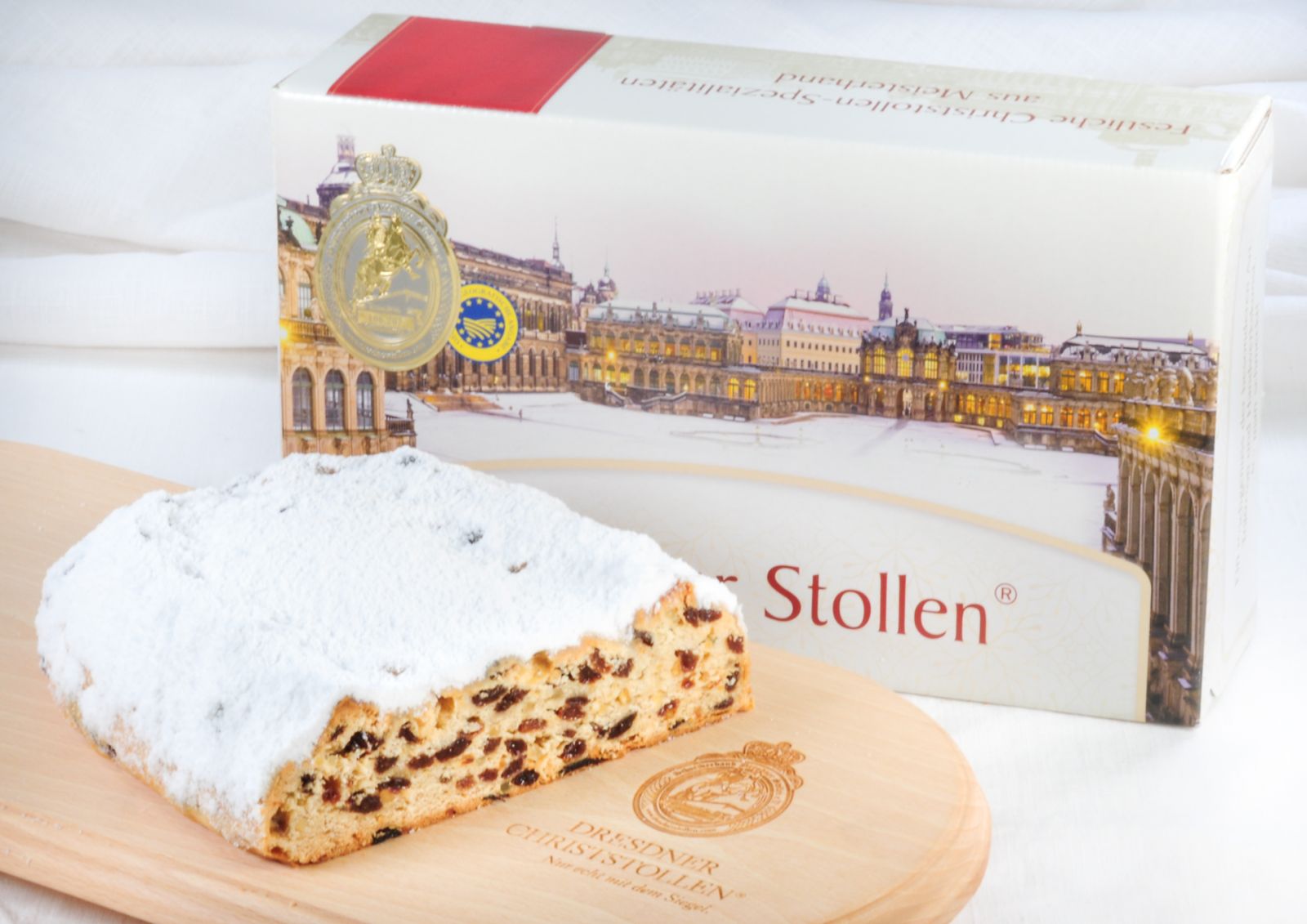
A stollen may only be called Dresden stollen if every 100 parts of flour are matched by at least 50 parts of butter and 65 parts of sultanas, and the finished loaves carry the seal of the city's protective association. Margarine and baking tins are banned. In most Christmas sweets cities, a law or a guild guards the recipe in much the same way, so it is worth travelling to where the thing is baked and buying from the local shelf rather than the airport display.
Nuremberg: a Lebkuchen with hardly any flour
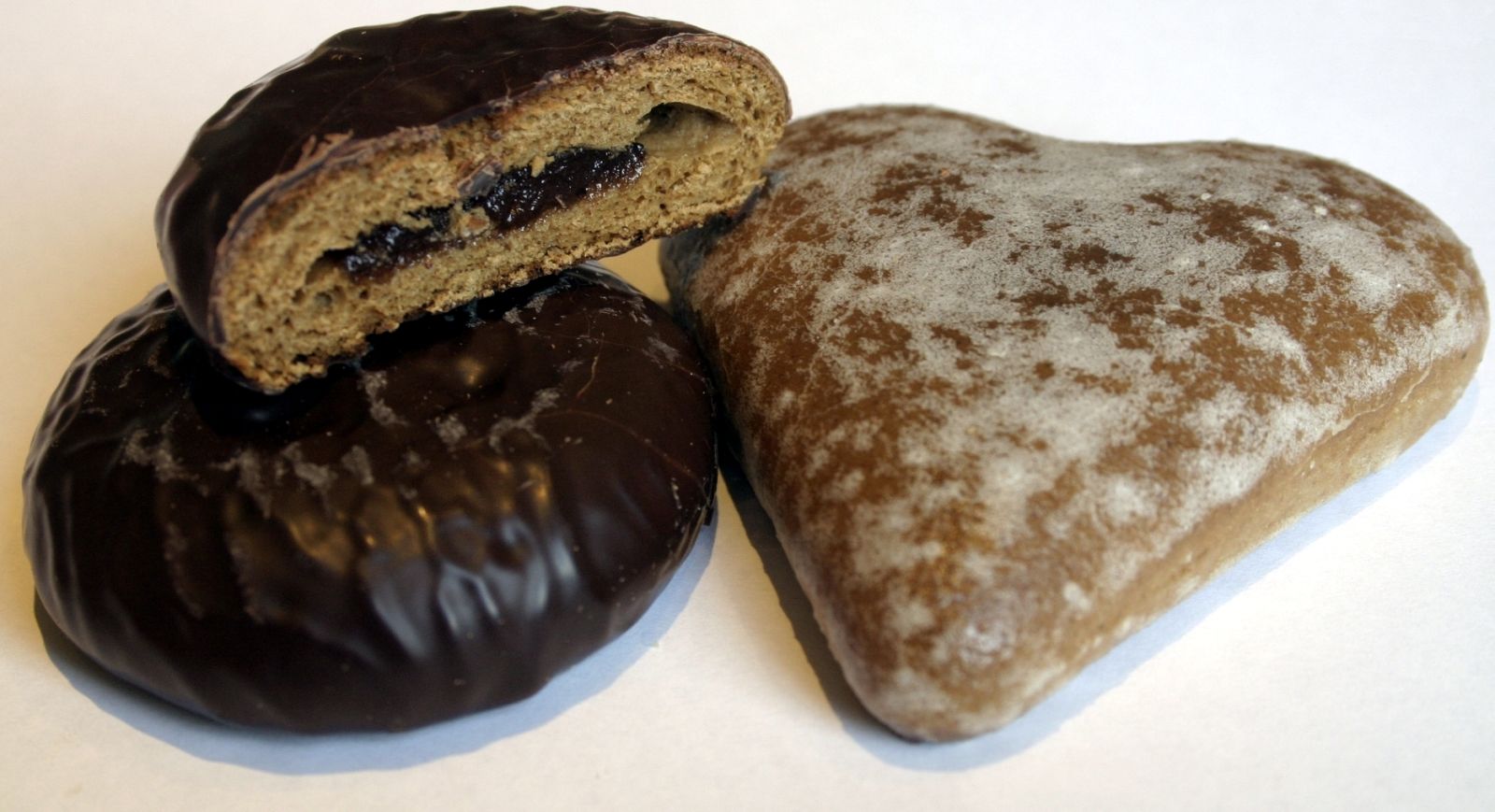
Nuremberg Lebkuchen has held a protected name since 1996 and may only be baked within the city limits. The top grade, Elisenlebkuchen, must contain at least 25% nuts and less than 10% wheat flour, and the best bakeries approach 40% nuts. The easiest place to try it is the Christkindlesmarkt, open from 27 November to 24 December 2026, daily from 10:00 to 21:00 and until 14:00 on the 24th. The Lebkuchen Schmidt and Wicklein brands sell tins that long outlive their contents. Prices run from a few euros for a plain packet to several tens of euros for a collector's tin.
Dresden: a sealed stollen and a giant on parade
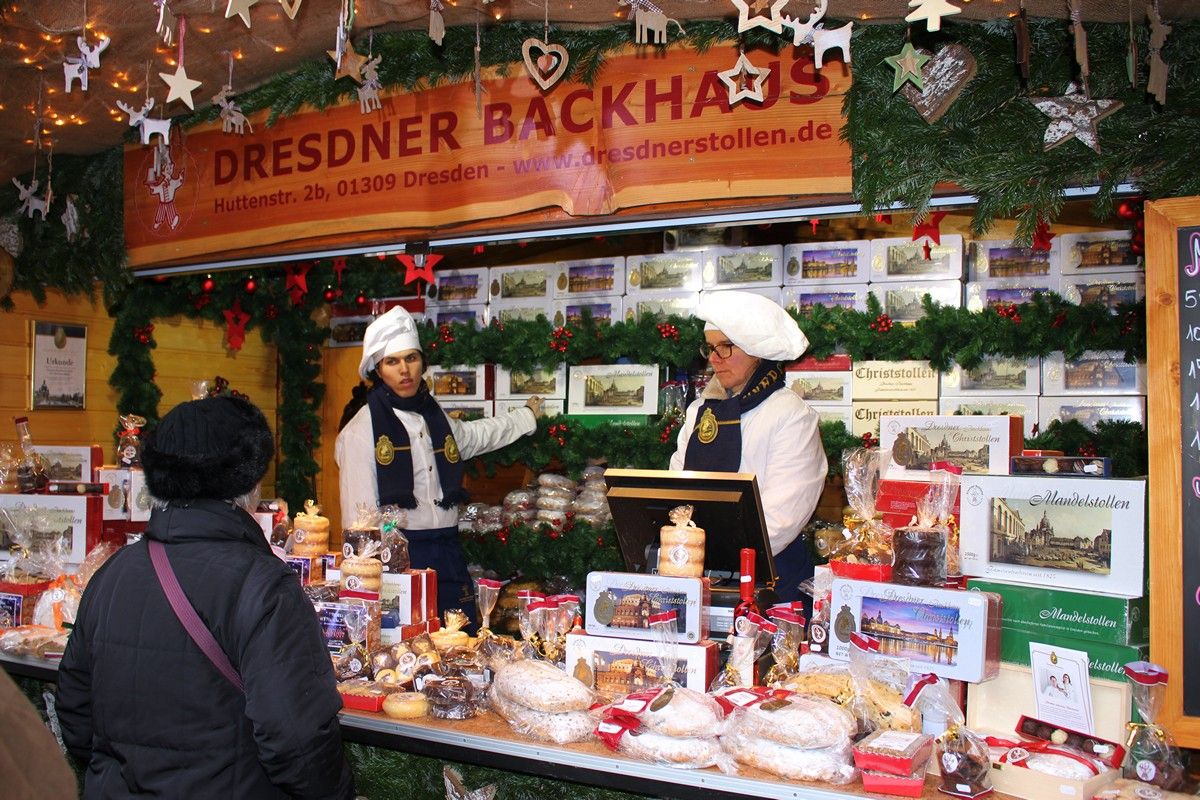
Hundreds of bakers will turn out on 5 December 2026 for the Stollenfest, held on the Saturday before the second Sunday of Advent. The procession sets off at about 11:00 from the stage by the Kulturpalast, passes the castle and the Fürstenzug on the way to the Frauenkirche, and returns around noon to the stage, where the giant stollen is cut. The giant's weight changes every year, and the association's site does not give this year's figure. Genuine Dresden stollen bears the seal of the Schutzverband Dresdner Stollen, and only bakers from Dresden and its surroundings, about 120 producers, may use the name. The Striezelmarkt runs until 24 December. A kilo usually costs a few tens of euros, and stollen happily keeps for months, although almond and poppy seed versions are best eaten within two weeks. For more on the city, see our piece on Dresden's Christmas markets.
Milan: panettone at the price of dinner
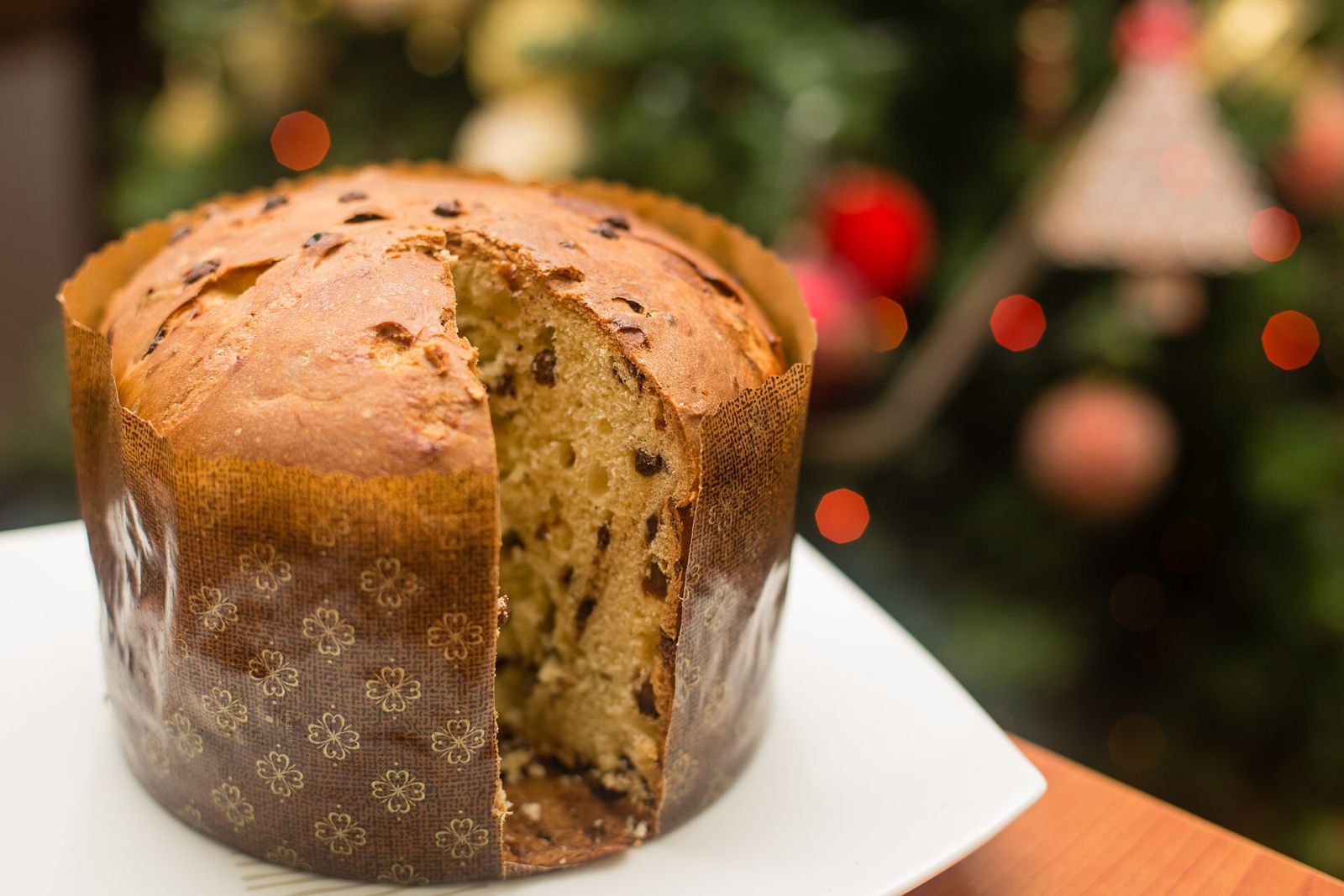
Panettone from a Milanese pasticceria costs about 35-50 euros per kilo, several times the supermarket price. A 2005 Italian decree governs what can be sold under the name. Marchesi 1824 asks 45 euros for a 960-gram panettone, and Cova on Via Montenapoleone and Peck on Via Spadari charge similar prices. To avoid buying blind, look in at Re Panettone, a fair of artisan bakers: last year's edition took place on 29-30 November at Parco Esposizioni Novegro, and the 2026 dates are not published yet. The tall box is awkward in hand luggage, but it remains the best way to bring the dome home intact.
Xixona: turrón, Alicante and a museum with a walkway over the factory
The town of Xixona, Jijona in Spanish, lies north of Alicante, and the two names of turrón live side by side here. Turrón de Jijona is soft, made with ground almonds, at about 64%. Turrón de Alicante is hard, with whole almonds, at about 60%, so go easy on your teeth. Both have protected geographical status. The Museo del Turrón stands in the Ciudad del Turrón industrial estate and charges 3 euros in cash from 16 June to the end of the year. Entry is in timed sessions, in the morning from 10:00 and again in the afternoon, mornings only on 24 and 31 December, and closed on 25 December and 1 January. The walkway over the factory operates only from June to November on weekday mornings, so in December you get the museum without production. It is awkward to reach without a car.
Toruń: gingerbread you bake yourself
Toruń has two gingerbread museums, and they are easy to mix up. The Muzeum Toruńskiego Piernika, in an old factory at Strumykowa 4, opens Tuesday to Sunday from October to April, 10:00 to 16:00; a visit costs 33 zloty, or 52 with baking. The Żywe Muzeum Piernika, the "living museum" at Rabiańska 9, opens daily from 10:00 to 18:00, with tickets at 42 zloty and a programme staged like a show. Holiday hours need checking. Shaped Toruń gingerbread is also sold in ordinary shops around town for a few zloty apiece. For the wider festive picture, see our article on Christmas in Poland.
Basel and Aachen: two old biscuits that travel well
Läckerli in Basel are made from honey, hazelnuts, almonds, candied peel and Kirsch, then glazed and cut while still warm. Jakob's Basler Leckerly calls itself the oldest producer, dating from 1753, and Läckerli Huus sells a one-kilo gift box for 27.50 francs. Basel's Christmas market on Barfüsserplatz and Münsterplatz runs from 26 November to 23 December 2026, daily from 11:00 to 20:30. Switzerland is outside the EU, so pay in francs and check the import limits on your way back.
Aachener Printen also have a protected name. These spiced biscuits took their modern form in 1806, when Napoleon's blockade cut off sugar and honey and beet syrup went into the dough. The Lambertz factory outlet is at Ritterstraße 9, and the family bakery Klein at Franzstraße 91 has kept its recipe since 1912. A packet costs a few euros. Aachen's Christmas market runs from 20 November to 23 December 2026.
York and Lviv: baking best eaten on the spot
The English mince pie really did once contain meat. Today's filling is fruit and nuts, though often made with beef suet. The much-repeated story that Puritans banned these pies is considered a myth by historians. The natural place to buy them is York during its Christmas Market, which according to Visit York runs from 12 November to 21 December, except Tuesdays, while Bettys tea room has long been the local address for desserts. A box from a shop costs a few pounds. Ukrainian travellers need a separate UK visa.
In Lviv, the winter table leans heavily on baking. Pampukhy, Christmas Eve doughnuts with jam and poppy seed, are sold by bakeries and cafés in the centre, and each winter the city holds a Pampukh Festival, whose dates are worth checking closer to the season. Ask there for layered medivnyk honey cake too. A piece costs a few tens of hryvnias. For what to see between bakeries, read our guide to what to see in Lviv. Before you travel, keep an eye on air raid alerts.
How do you get sweets home?
- Solid turrón, Lebkuchen, Printen and stollen fly happily in hand luggage. Liquid creams and liqueurs over 100 ml must go in the hold.
- Carry panettone in its rigid box and stollen in its sealed factory packaging.
- Into Ukraine, goods for personal use enter duty-free up to 500 euros and 50 kg at land crossings and up to 1,000 euros by air; verify the limits on the customs service website before you travel.
- Under the GOV.UK rules, Britain admits biscuits, chocolate and cakes without fresh cream. Going from Britain to the EU, remember the strict rules on animal products: a mince pie made with beef suet is safer eaten on the spot.
Christmas sweets cities at a glance
We gathered these dates and prices in early November 2026; where it says "a few", treat the price as a guide.
| Sweet | City | Where to try it | Price |
|---|---|---|---|
| Lebkuchen | Nuremberg | Christkindlesmarkt, Lebkuchen Schmidt, Wicklein | from a few euros a packet |
| stollen | Dresden | Striezelmarkt, bakeries with the association's seal | a few tens of euros per kilo |
| panettone | Milan | Marchesi 1824, Cova, Peck | about 35-50 euros per kilo |
| turrón | Xixona | Museo del Turrón and town shops | museum 3 euros |
| gingerbread | Toruń | two museums, town shops | museum 33-42 zloty, a piece a few zloty |
| Läckerli | Basel | Läckerli Huus, Jakob's | 1 kg for 27.50 francs |
| Printen | Aachen | Lambertz, Klein | a few euros a packet |
| mince pies | York | Bettys, Christmas Market | a few pounds a box |
| pampukhy, medivnyk | Lviv | bakeries and cafés in the centre | a few tens of hryvnias |
Two or three cities combine easily: Nuremberg and Dresden are in the same country, and Aachen and Basel slot into longer routes. Our overview of Christmas food around the world describes these holiday dishes in more detail.