

"When a man is tired of London, he is tired of life," Samuel Johnson famously declared. After which that man was, in all likelihood, buried in London. Lucky him (or her).
The city is home to some of the finest, most atmospheric cemeteries in the world.
Famous figures rest here, including Karl Marx (Highgate Cemetery), the suffragette Emmeline Pankhurst (Brompton Cemetery) and Johnson himself (Westminster Abbey, which is not really an ordinary resting place at all).
Partner links: booking through them supports the blog at no extra cost to you.
Fame, however, is no guarantee of an interesting headstone. Some of the finest tombs belong to largely forgotten people who nonetheless seem to have had grand plans for the afterlife.
You might enjoy visiting the following places:
Tom Sayers: The Big Sleep
Highgate is the best known of London's great Victorian cemeteries, crowded with famous names and lavish memorials.
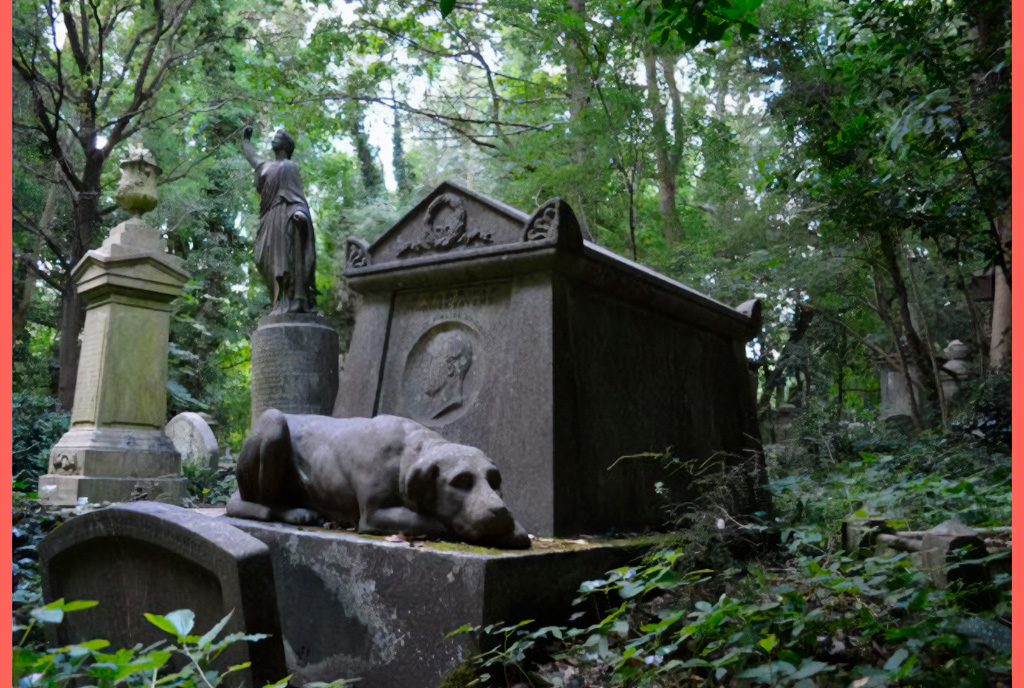
Even so, when choosing her favourite headstone, Catharine Arnold, author of "Necropolis: London and Its Dead," picks someone far removed from the world of literature and art usually associated with Highgate.
The grave of Tom Sayers, guarded by his "immortal dog... faithful to the end, is a wonderful example of Victorian memorial art featuring animals," she says.
Sayers was a bare-knuckle boxer whose final fight is regarded as effectively the first world boxing championship.
It ended in chaos, but earned him an army of admirers.
An estimated 100,000 people are said to have attended his funeral in 1865, and his dog Lion was the chief mourner.
Andrew Ducrow: The Colossus of Tombs
Kensal Green is one of the more formal of London's great cemeteries, yet even here there are tombs eccentric enough to make the curtains of the dead sway, or so it seems.
The eccentric Victorian circus owner Andrew Ducrow, the so-called "Colossus of Equestrians," could not decide which classical theme he wanted for the family tomb, so he chose them all.
Egyptian sphinxes sit alongside Greek capitals, and Roman tablets lean on Gothic angels in what Catharine Arnold describes as "a suitably over-the-top monument to a flamboyant showman."
The Builder magazine simply calls it "ponderous self-conceit."
William and Agnes Loudon: 6 Feet Above
The immaculate churchyard of St John the Baptist in Pinner, a former village in London, has its share of carved skulls and weathered inscriptions to once-beloved octogenarians, plus one very strange memorial.
Legend has it that William Loudon and his wife Agnes inherited money, but the inheritance was to end once they were buried.
The obvious solution was to place their coffin inside an enormous stone wedge, which made burial practically impossible, as well as rather difficult to view.
It was erected in 1809 by their son John Loudon, who later became an influential voice in the movement to preserve cemeteries.
Sir Richard Burton: Kama Sutra Forever
Sir Richard Burton is best known for his racy translations of "One Thousand and One Nights" and for publishing the "Kama Sutra" in English.
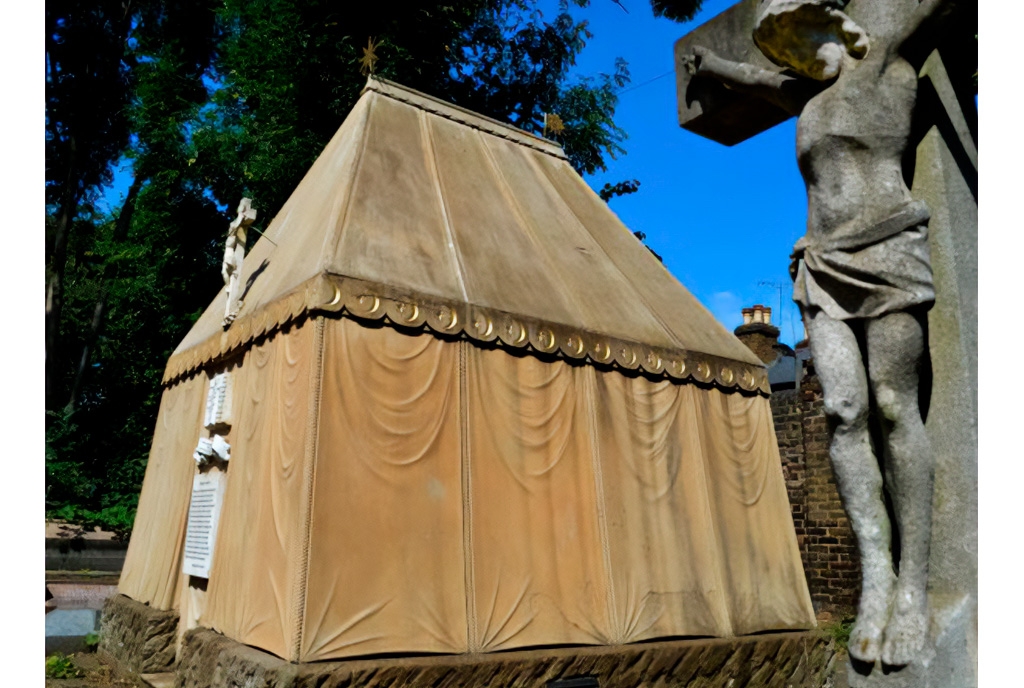
Although his wife Isabel, a devout Catholic, claimed to be shocked by his interests, she seemed to celebrate them after his death by building a mausoleum in the shape of an Arab tent in the incongruous setting of a suburban churchyard.
For the rest of her life, Isabel took afternoon tea and held the occasional seance inside the tomb, before joining her husband there after her own passing.
Curious visitors can peer through a window in the roof at two dusty coffins surrounded by lanterns, camel bells and frescoes of the night sky.
Frank Bostock: Guarded by London's Most Beautiful Lion
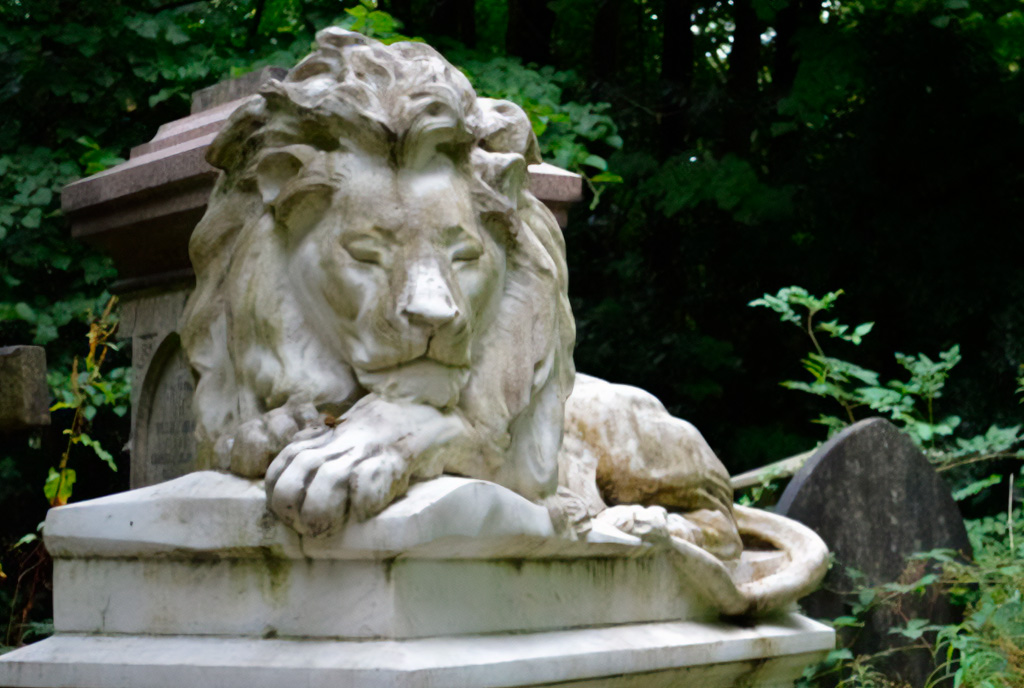
Many London cemeteries have a lion (animals of every kind are well represented among its graves), but perhaps the most elegant, dating from 1912, sleeps in the jungle of the overgrown Abney Park in Stoke Newington.
This lovely stone creature honours the memory of the menagerist Frank Bostock, who travelled the world with big cats, sometimes expanding his repertoire to camels and hyenas.
"People stroke the left paw of the Abney Park lion for luck, and the marble has become bright and shiny as a result," says Catharine Arnold.
Thomas Hardy: The Tree of Death
The first job of the acclaimed author Thomas Hardy in the 1860s was at Old St Pancras Church, where he helped exhume thousands of skeletons from the graveyard that stood in the way of the new Midland railway line.
The bones were reburied, but Hardy was left with the headstones.
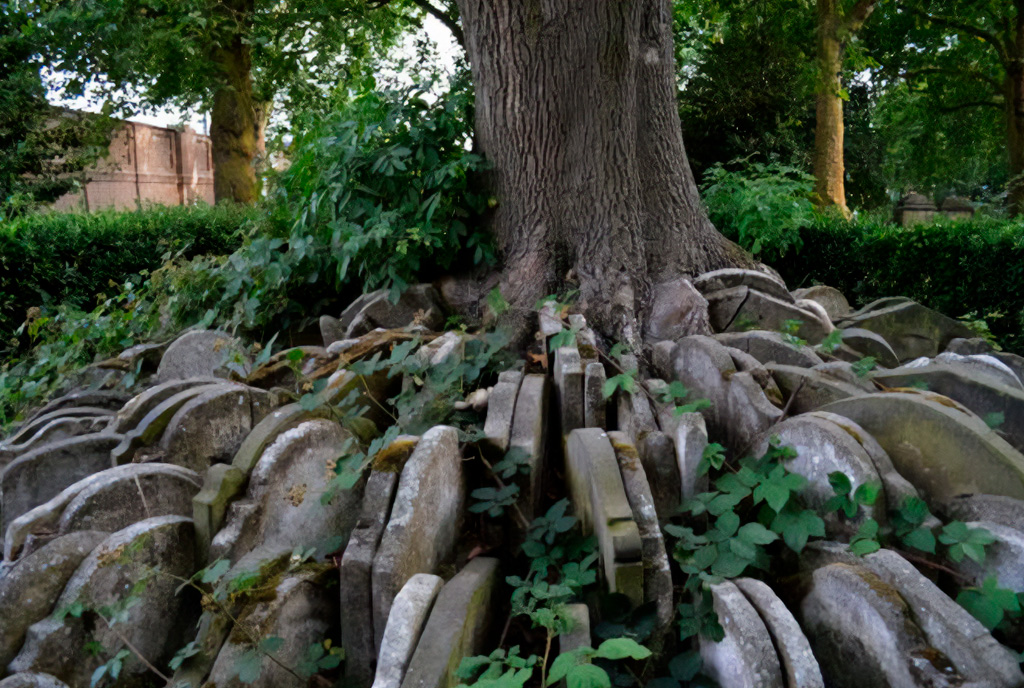
He disposed of some by stacking them around a young ash tree.
Whether or not he intended the arrangement to be permanent, the roots and stone have now fused completely.
The ancient graveyard, once a haunt of grave robbers, is today one of the most peaceful spots in bustling St Pancras.
Hannah Courtoy: The Spinster's "Time Machine"
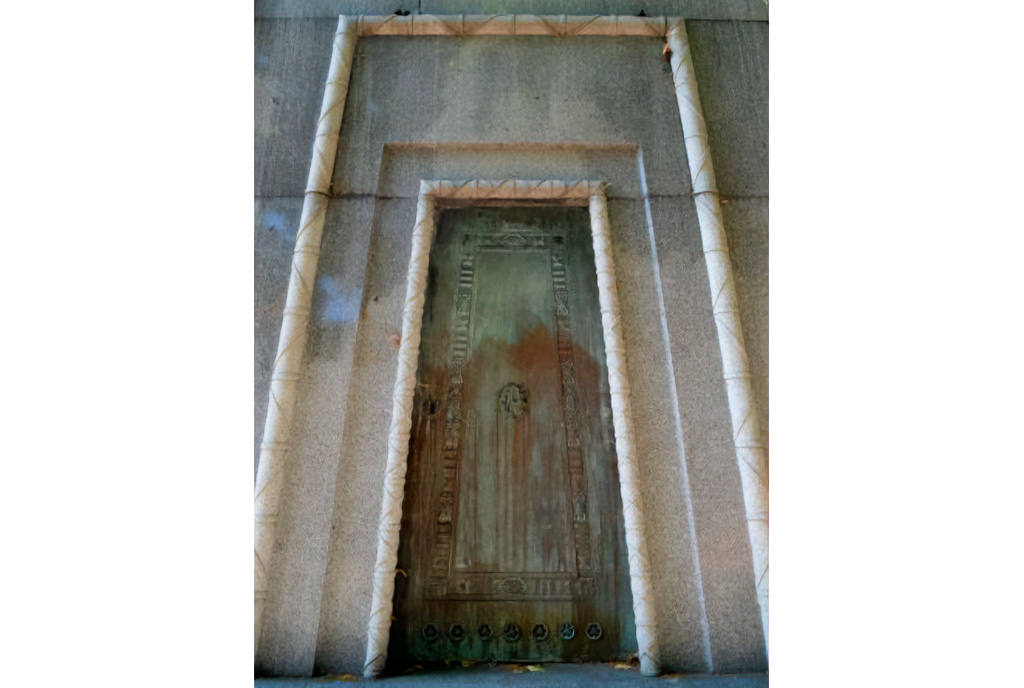
"It looks like Doctor Who's TARDIS designed by the architects of the Death Star," says the author and publisher Mark Pilkington, who investigates the time-machine claims linked to the mysterious final resting place of three Victorian spinsters.
Like many British tombs of the 19th century, this one at Brompton Cemetery is done in the Egyptian style. What sets it apart are its strange hieroglyphic carvings and an elaborate monogram on the door.
Built in 1852 for the unmarried Hannah Courtoy and her daughters, the tomb's plans have never been found, and it is the only monument at Brompton Cemetery for which no key can be located.
The time-machine story most likely dates back to a tongue-in-cheek press release from 1998.
Douglas Adams: Bare Bones
It is hard to find a stronger or more stylish contrast to the dominant grand trend in headstone design than the simple memorial to the bestselling comic science fiction author Douglas Adams.
Located in the newer, eastern section of Highgate Cemetery, the grave of the author of "The Hitchhiker's Guide to the Galaxy" bears only his name, the year of his death (2001) and a description: "Writer."