

It's no secret that Greece boasts some of the most spectacular beaches in the world.
While many of the Mediterranean country's most famous beaches are often packed with sunbathers, there are still plenty of wonderful hideaways for anyone hoping to escape the crowds.
Just keep in mind that the most secluded beaches tend to be the hardest to reach.
Partner links: booking through them supports the blog at no extra cost to you.
Here's our pick of the 17 most secluded beaches for your trip to Greece:
Voutoumi, Antipaxos
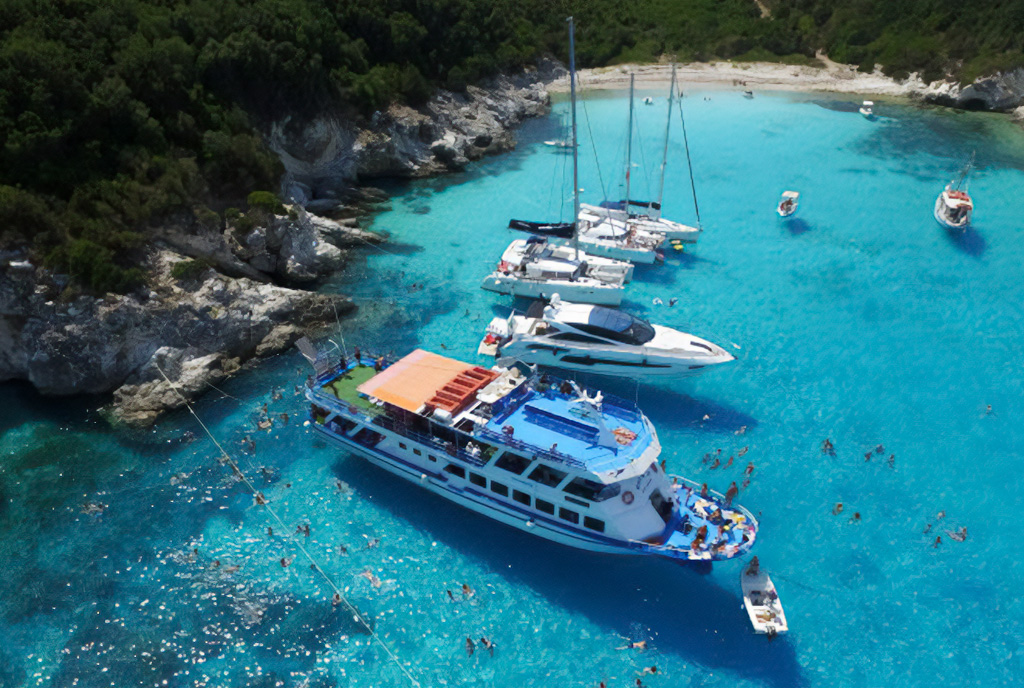
The effort and determination it takes to reach Voutoumi and the neighboring beaches of Vrika and Mesovrika almost add to their beauty.
This tiny island of Antipaxos (population 20) sits in the Ionian Sea, three kilometers south of the island of Paxos, which is itself a 90-minute ferry ride from the mainland port of Igoumenitsa.
Once there, visitors will discover that its jungle-like landscape looks more Brazilian than Greek, as the tree line reaches all the way to the shore and even the rocky outcrops are crowned with tufts of green.
Excursion boats from Paxos are an option, but book a water taxi early in the morning if you want to avoid the midday gawkers.
Kalogria, Patras
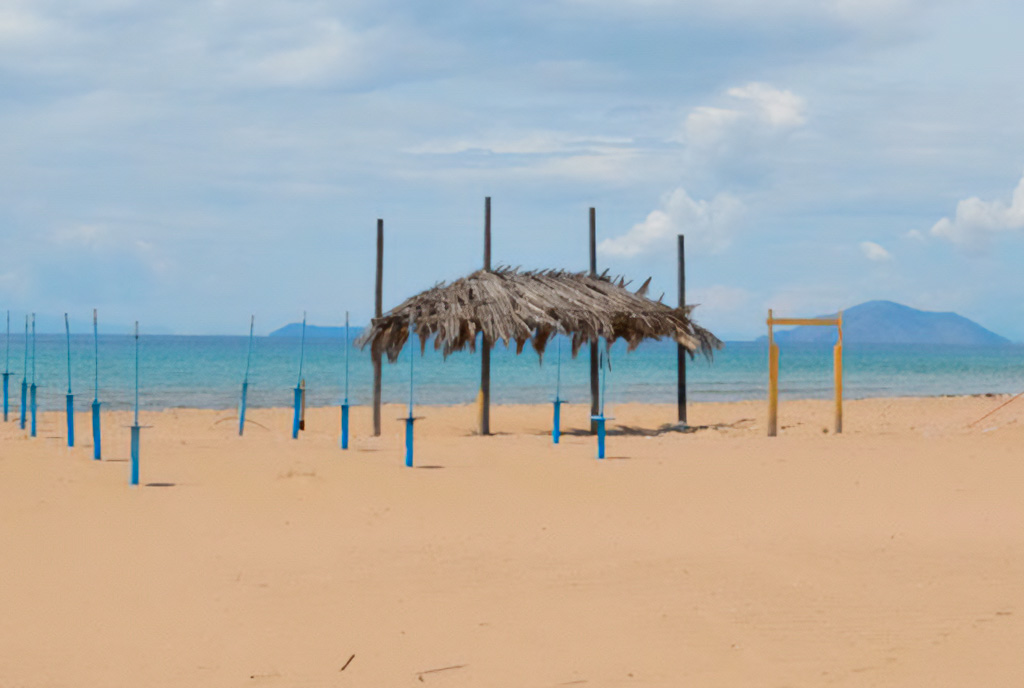
Located 45 kilometers west of Patras, Greece's third-largest city, Kalogria beach looks more like North Africa than the northern Peloponnese.
Look out toward the Gulf of Corinth and you'll see dunes shaped by the westerly winds, sand reminiscent of the Sahara, and waters so clear they seem to belong in a mirage.
But look inland and you'll find Strofylia National Park, home to a pristine Mediterranean pine forest spanning 22,000 acres.
Life is abundant here: foxes, badgers, hedgehogs, otters, owls, moorhens, herons, these are just a few of the many creatures visitors might encounter.
Papa Nero, Pelion
The Greek branch of the YMCA set up its first campsite in 1924 in the sleepy port of Agios Ioannis, in the eastern foothills of Mount Pelion.
The mountain, a secret the Greeks love to keep to themselves, rises over a narrow peninsula that combines superb alpine hikes with enchanting beaches.
Agios Ioannis has since grown into a popular resort, but most visitors can't be bothered to cross the footbridge to Papa Nero, the next beach along, which stays relatively isolated even at the height of summer.
Karidi, Halkidiki
This deserted stretch of sand in Sithonia, the middle prong of the three-pronged Halkidiki peninsula in Greek Macedonia, boasts a wonderfully rare landscape.
Here, relentless winter winds have carved the white marble headlands into smooth stone and left the trees permanently bent and twisted.
The whole scene looks post-apocalyptic, especially in summer, when the calm turquoise waters and wide blue sky contrast sharply with the coastal terrain.
Gomati, Lemnos
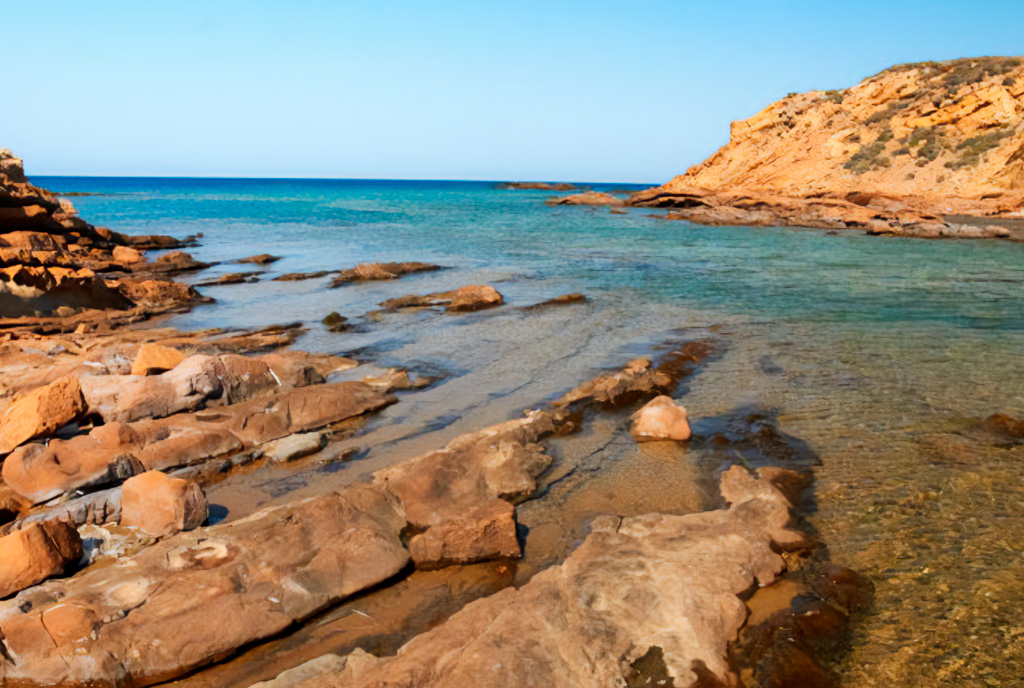
The island of Lemnos has no forests at all, as winter winds and livestock grazing have halted the growth of trees.
But it does have exceptional ecosystems, such as the idyllic dunes of Gomati beach.
Travelers can swim in an arc of ultra-fine sand ringed by sand lilies, woody thickets of beach vitex, lilac bushes, wild thyme, and stands of oleander.
You can also take advantage of those tree-stopping winds, as Gomati is one of the best spots for kitesurfing and windsurfing in Greece.
Mesi, Komotini
Mesi beach (no relation to the famous Argentine footballer) lies in northeastern Greece, a region mostly visited by travelers from neighboring countries: Bulgaria, Serbia, and Turkey.
Even so, it boasts a string of uncrowded, untouched beaches, such as the beautiful arc of white sand and shimmering water at Mesi, a classic Blue Flag beach stretching alongside the delta of the Nestos River, a national park renowned for birdwatching.
Eftalou, Mytilene
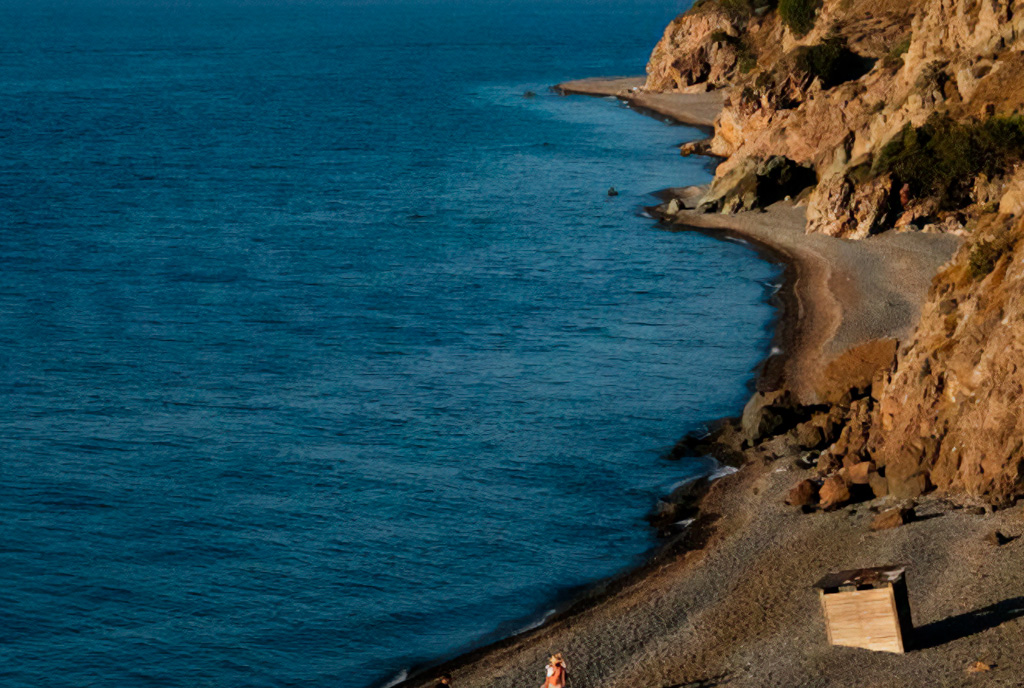
Though relatively unknown to the wider world, Eftalou beach is famous for its local thermal healing springs, which have a high natural radium content.
An 17th-century building across the way holds seven private bathrooms where visitors can enjoy a quick soak, 20 minutes being the maximum the body can withstand at a temperature of 43 degrees Celsius.
In a wonderful twist of nature, the sea at Eftalou beach stays perpetually cold, no matter how high the mercury climbs in summer. Some say it's because of a sharp drop in the seabed, while others blame cold currents.
Whatever the reasons, there aren't many other places where you can leap, as if from a sauna, from one of the Mediterranean's hottest springs into some of its coldest waters.
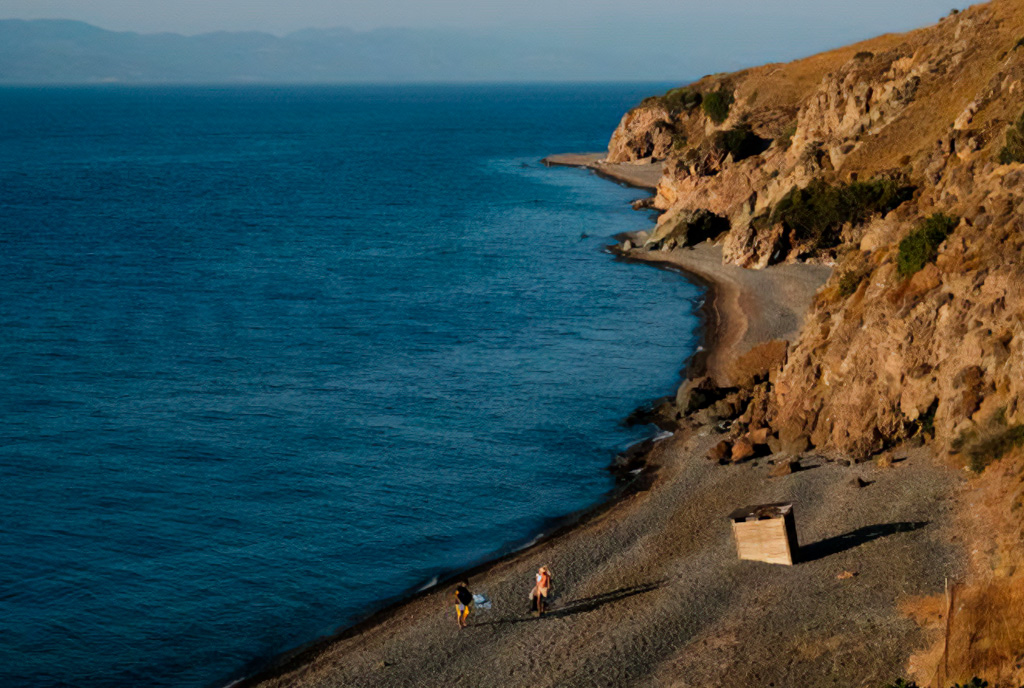
Mavra Volia, Chios
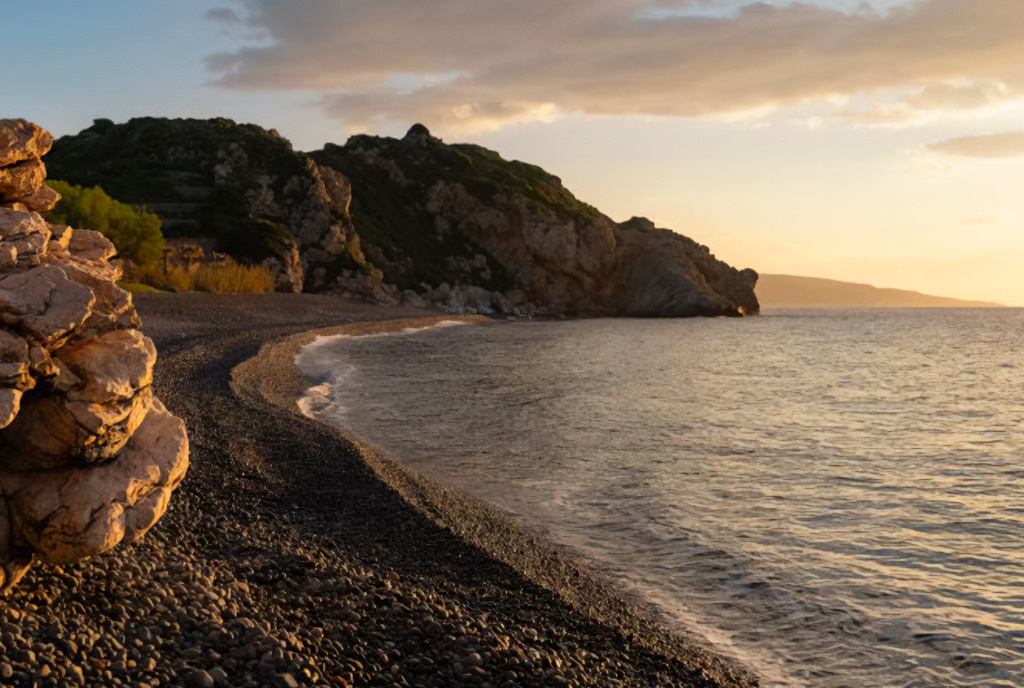
The island of Chios's most striking attraction is the southeastern beach of Mavra Volia (Black Pebbles), which takes its name from the volcanic pebbles that cover its short but dramatic curve.
Its reddish rocky backdrop, marked by multicolored bands of geological strata, gives the area an otherworldly character.
Even the sea looks less blue and more purple as the day wears on and the sun turns orange in the west.
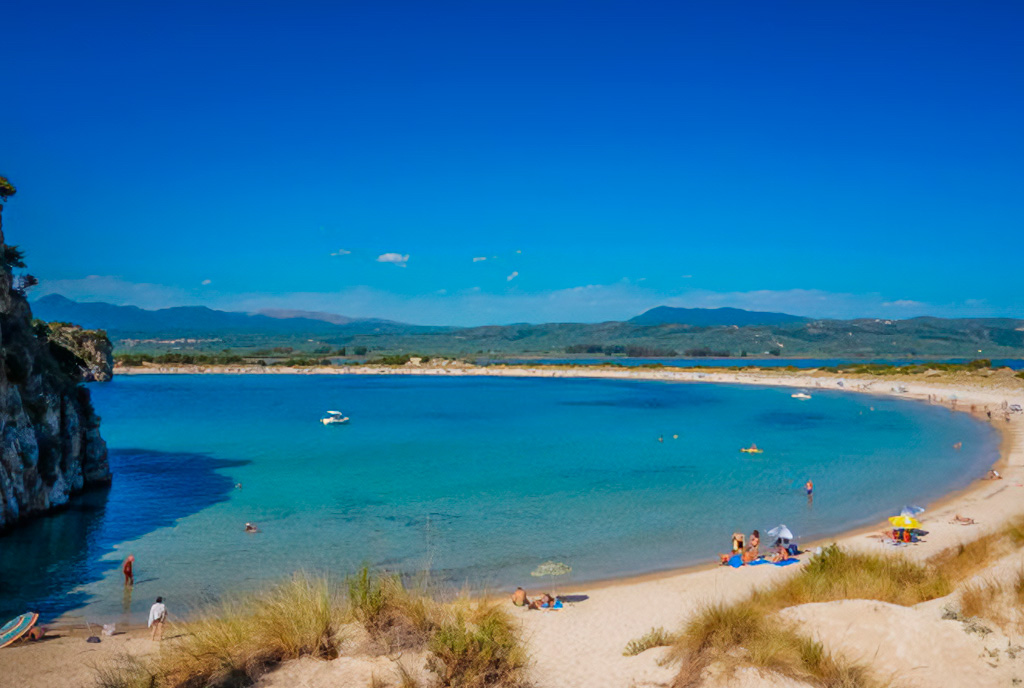
Voidokilia, Messenia
Only from the nearest hill in the village of Palaiokastro can you fully appreciate the beauty of Voidokilia beach (Cow's Belly).
The beach's semicircular shape is so improbably perfect that it looks as though it were drawn with a ruler and compass.
Dunes and scrub create a photogenic backdrop, while the constant chirping and cawing is a reminder that the beach sits in a wetland teeming with life. One of its unexpected residents is the African chameleon, whose ancestors are believed to have reached these shores from Egypt as stowaways on ancient trading ships.
Simos, Elafonisos
The island of Elafonisos isn't easy to reach. Visitors have to brave a four-hour drive from Athens to Neapoli on the southeastern edge of the Peloponnese peninsula, plus a 15-minute ferry ride on top of that.
Even so, even the Greeks, who debate the merits of beaches the way the French debate the quality of wines, speak of the island in hushed tones.
Of how its fine sand and azure waters recall the Caribbean; how the lack of tourist infrastructure guarantees a complete digital detox; and how camping on its most famous beach, Simos, makes for an unforgettable stargazing experience.
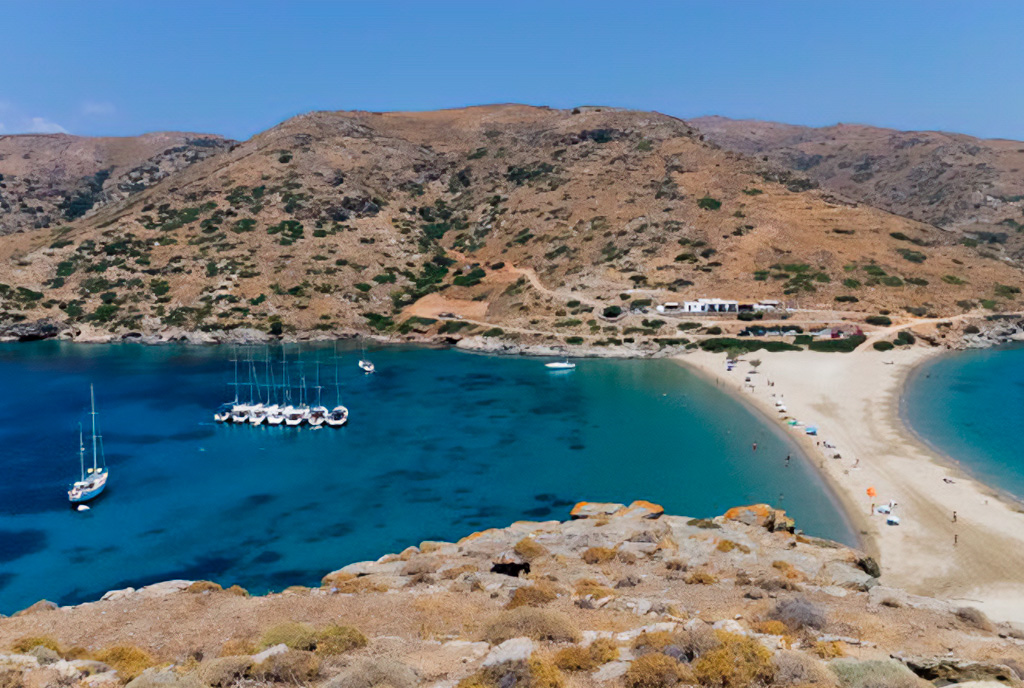
Kolona, Kythnos
Although Kythnos is just a two-hour fast ferry from Piraeus, it feels as if the 21st century hasn't yet arrived on this timeless, laid-back island.
Set in the Western Cyclades between Kea and Serifos, it boasts many stunning beaches, including Kolona, a broad strip of sandbar connecting Kythnos to the islet of Agios Loukas.
After a long trek down a gravel road and a sun-baked climb over a deserted headland, catching sight of this glorious 300-foot tongue of sand feels like a transcendent experience.
Gria Spilia, Syros
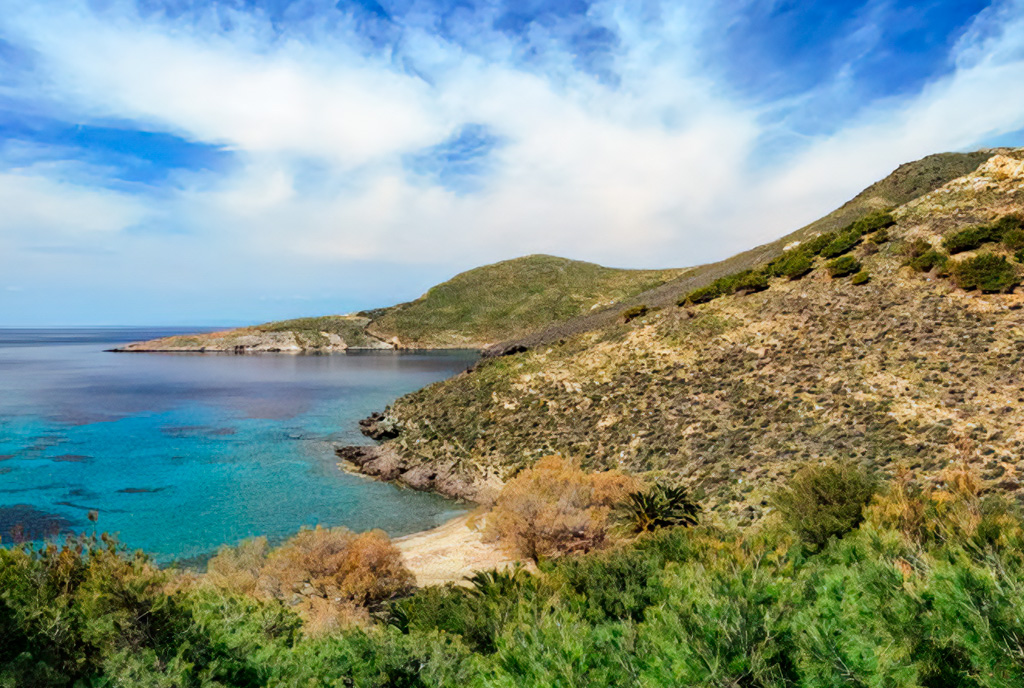
The northernmost and most secluded beach on the island of Syros, Gria Spilia is also known as "Americanou" or "the American."
The American in question was John H.G. Pearson, an economist from New York who arrived in the 1960s and began planting tamarisks and pines in what was an utterly barren landscape.
Pearson built a small house nearby and asked for his ashes to be scattered in the bay when he died in 2001.
The shade cast by the surviving trees from his time on Syros has made Gria Spilia a magnet for campers and pleasure boats.
Any Beach on Rineia
Flat, rocky, and inhabited by a handful of goatherds and their flocks, Rineia's absence of tourists stands in stark contrast to cosmopolitan Mykonos, just an hour's sail away.
Rineia has the full deserted-island atmosphere, and the fact that visitors aren't really supposed to be there only heightens the feeling.
It's actually an archaeological site, closed to tourists, but a few trusted operators are permitted to run day trips from Mykonos.
The island's jagged coastline also guarantees that no matter which way the wind blows, visitors can always find shelter on one of its beaches, Glyfada, Stena, Lia, or Ambelia, for a lazy swim and some snorkeling.
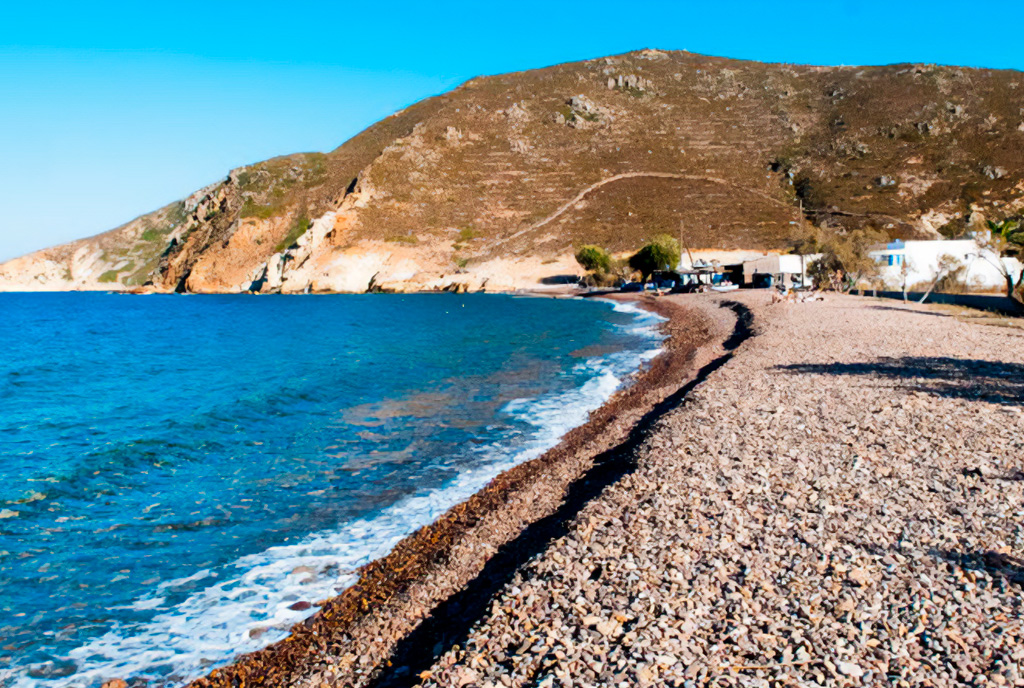
Lambi, Patmos
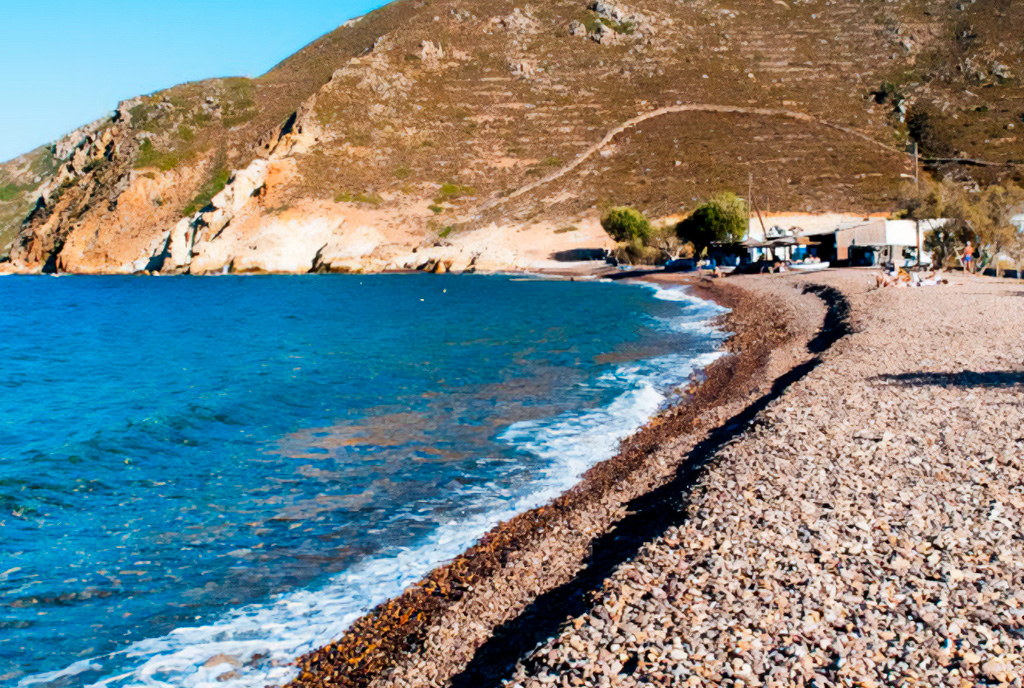
For those who consider sand an essential part of a true beach, try pebble-strewn Lambi, a protected area on the island of Patmos.
At the entrance there's a warning in English: "Strictly forbidden: collecting pebbles. Offenders will be punished."
When you step onto the beach, the reason becomes obvious: the palette of multicolored pebbles at Lambi is mesmerizing.
Some overexcited visitors have even compared the experience to swimming inside an abstract painting.
Kedros, Donousa
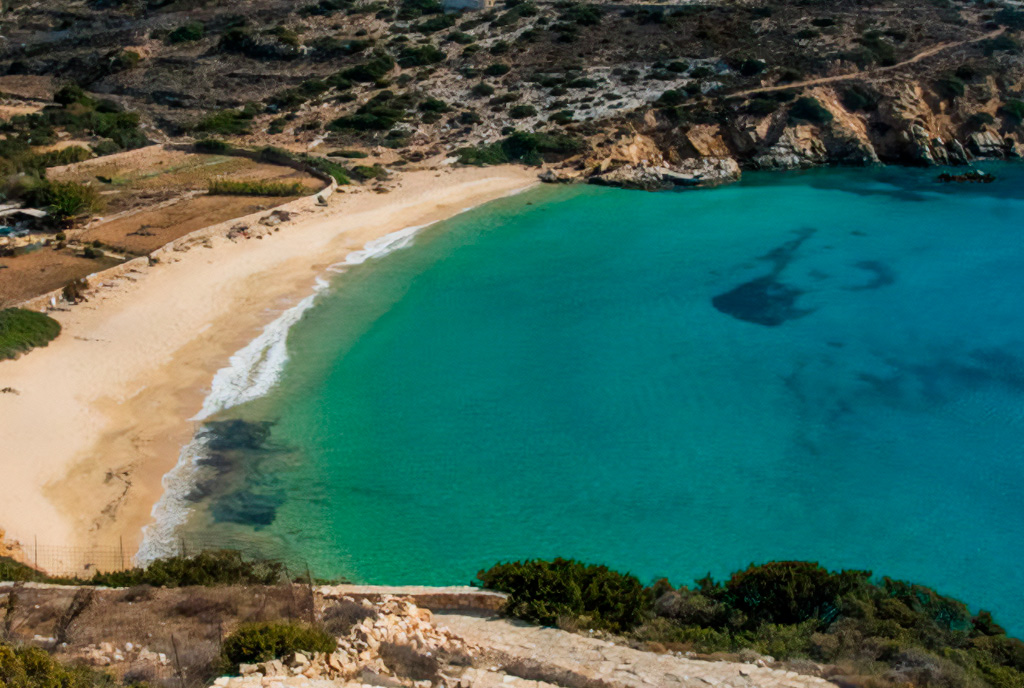
Thanks to word of mouth, the small island of Donousa has become a popular spot for Greek students whose budgets don't stretch to pricey tourist resorts.
While the main beach of Livadi is an easy walk from the capital, the compact cove of Kedros can only be reached via a steep, rocky path that separates the sun-seekers from the die-hard beach fans.
An added attraction, especially for divers, is the wreck of the Orion, a small Greek steamer clearly visible on the seabed.
It was requisitioned by the Germans in 1941, when Greece fell to the Axis powers, and sunk by Allied aircraft in September 1944.
Kaminakia, Astypalea
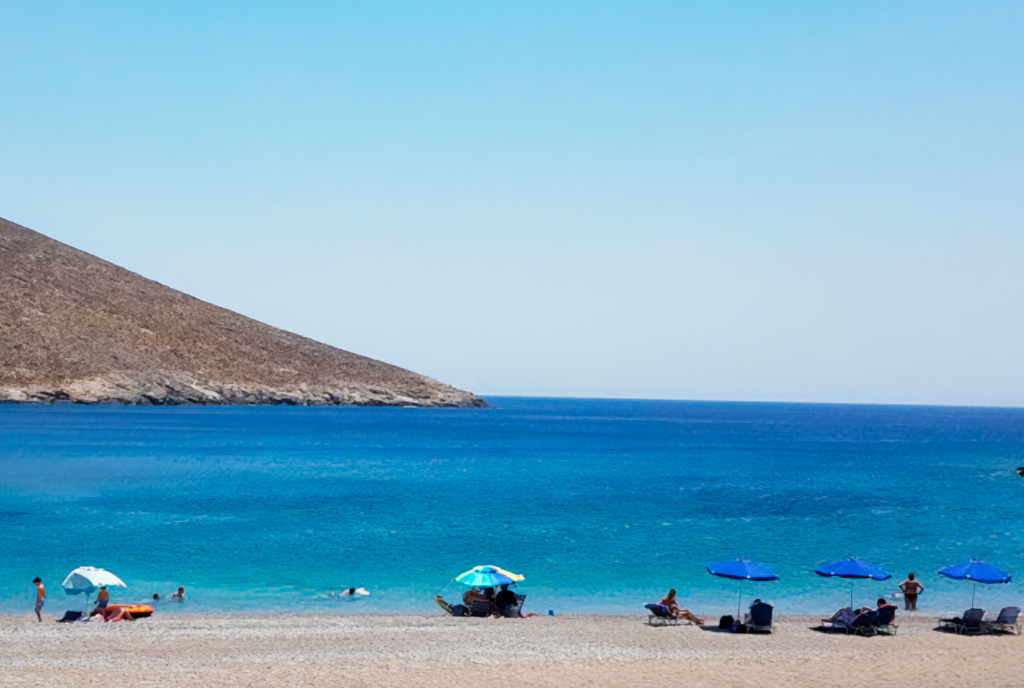
Reaching the island of Astypalea takes a 10-hour ferry ride (yes, really) from Piraeus, Athens.
Kaminakia, its finest beach, is a gorgeous sand-and-pebble crescent surrounded by barren cliffs.
You can get there via a five-kilometer, heavily rutted dirt road, but small motorcycles can't handle its steep, rocky approach, and even ordinary cars put their suspension to the ultimate test.
But those who manage to reach this hard-to-access beach are rewarded with some of the cleanest and most inviting waters in the Aegean Sea.
Vai, Crete
Though it's no longer as secluded today as it was 15 years ago, Vai, located 24 kilometers east of the town of Sitia, is still a sensational sight.
Surrounded by the largest palm forest in Europe, it's one of the most beautiful beaches on Crete.
Eastern Crete is notoriously dry, but the forest survives, almost miraculously, in a valley that is irrigated year-round by streams.
The exotic landscape is heightened by Vai's fine sand, and the palm forest looks more like some remote corner of the Indian Ocean than the familiar Mediterranean scrub.