

The restaurant that topped The World's 50 Best Restaurants list in 2025 is not in Paris or Tokyo, but in Lima. It is Maido, and its kitchen is built on fish, lime, corn and potato. Food in Peru is that rare case where a street portion of ceviche for a few dollars and a world class tasting menu grew from the very same ingredients.
Peru became a food destination not through fashion, but through geography. The cold Humboldt Current runs along the coast and drives fish toward the shore, the Andes gave the world the potato and thousands of its varieties, and successive waves of migration from Spain, Africa, China and Japan mixed in their own techniques. That is why a Peruvian plate is not a single flavor, but several cuisines that have learned to live together.
What ceviche is and why it is more than fish with lime
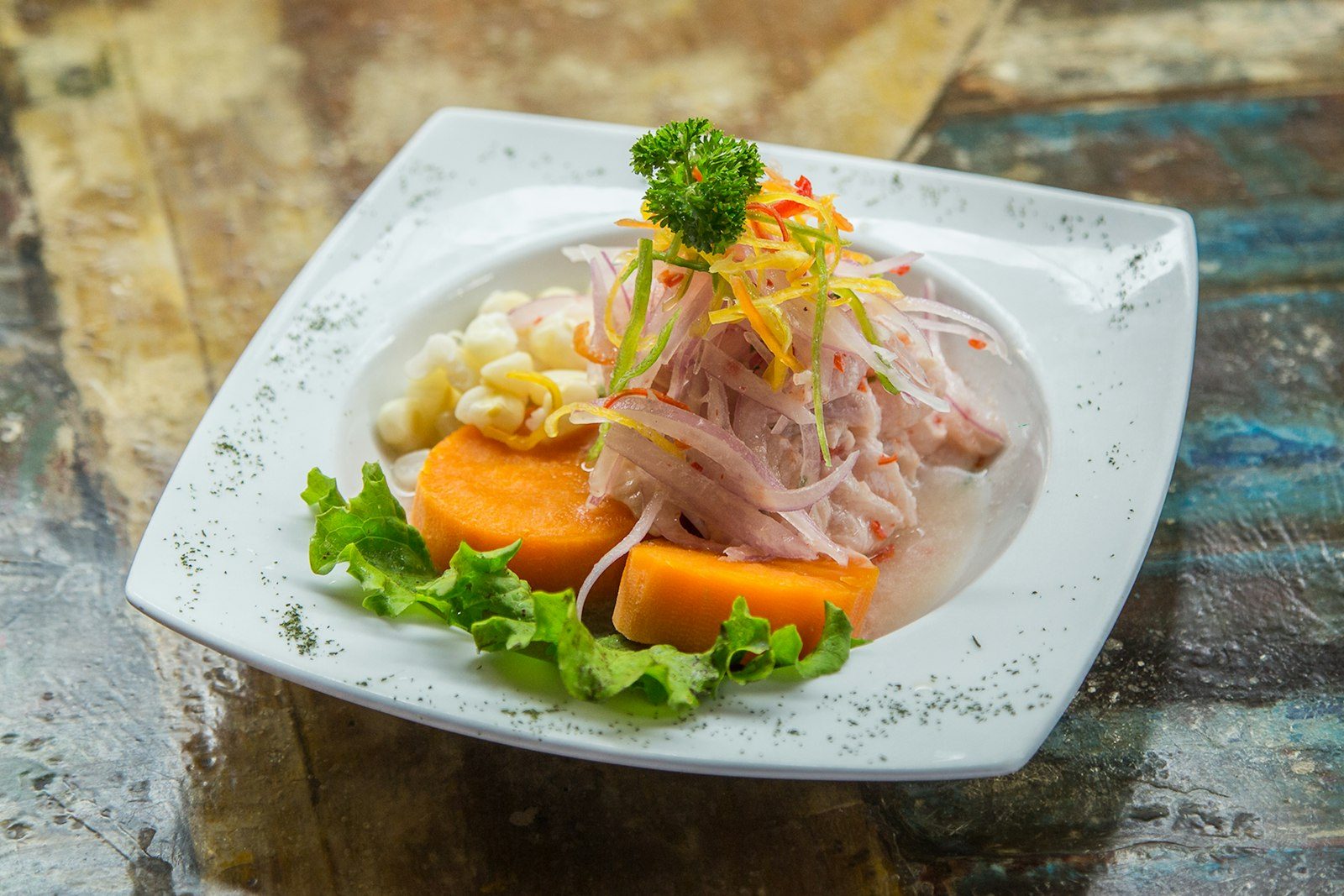
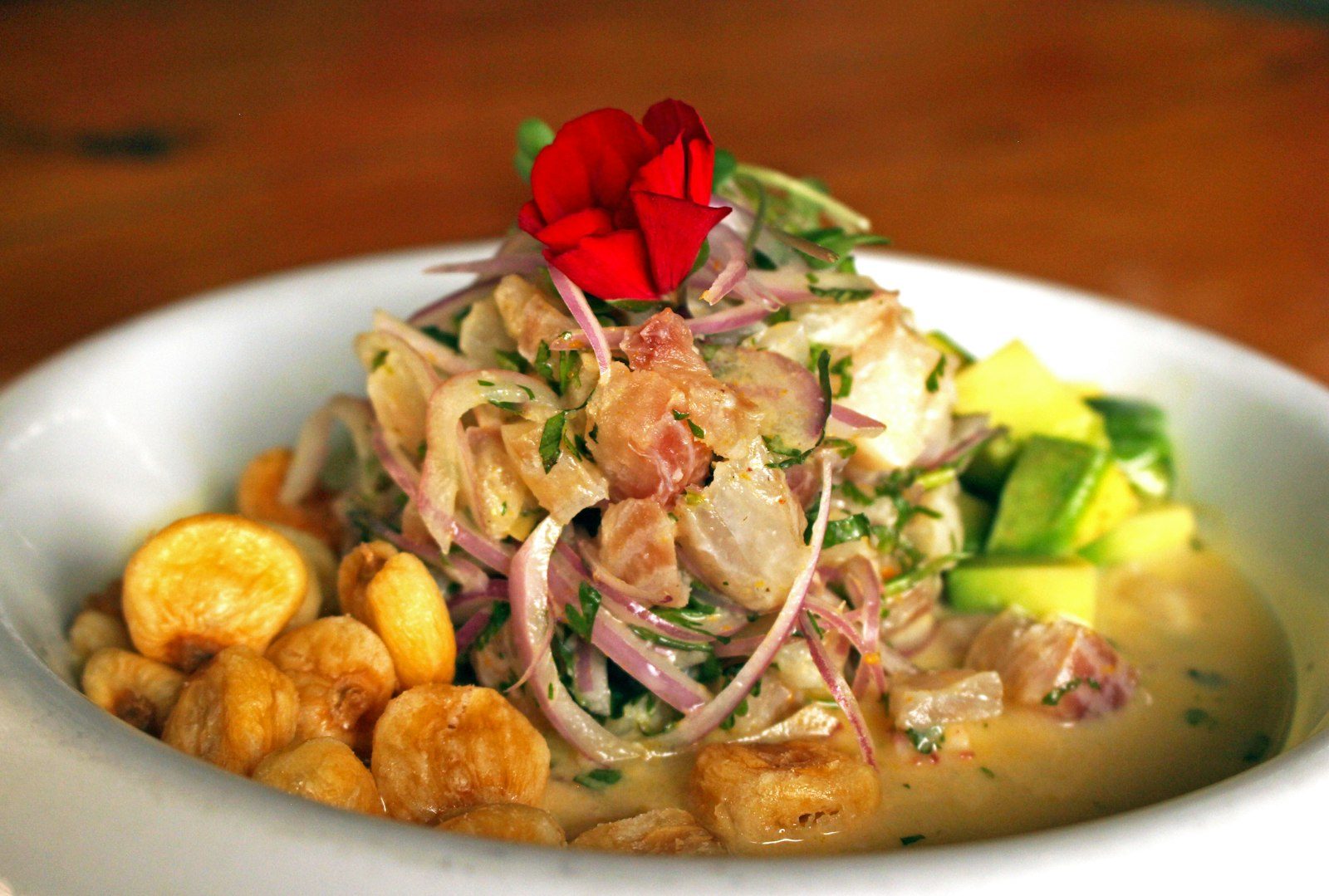
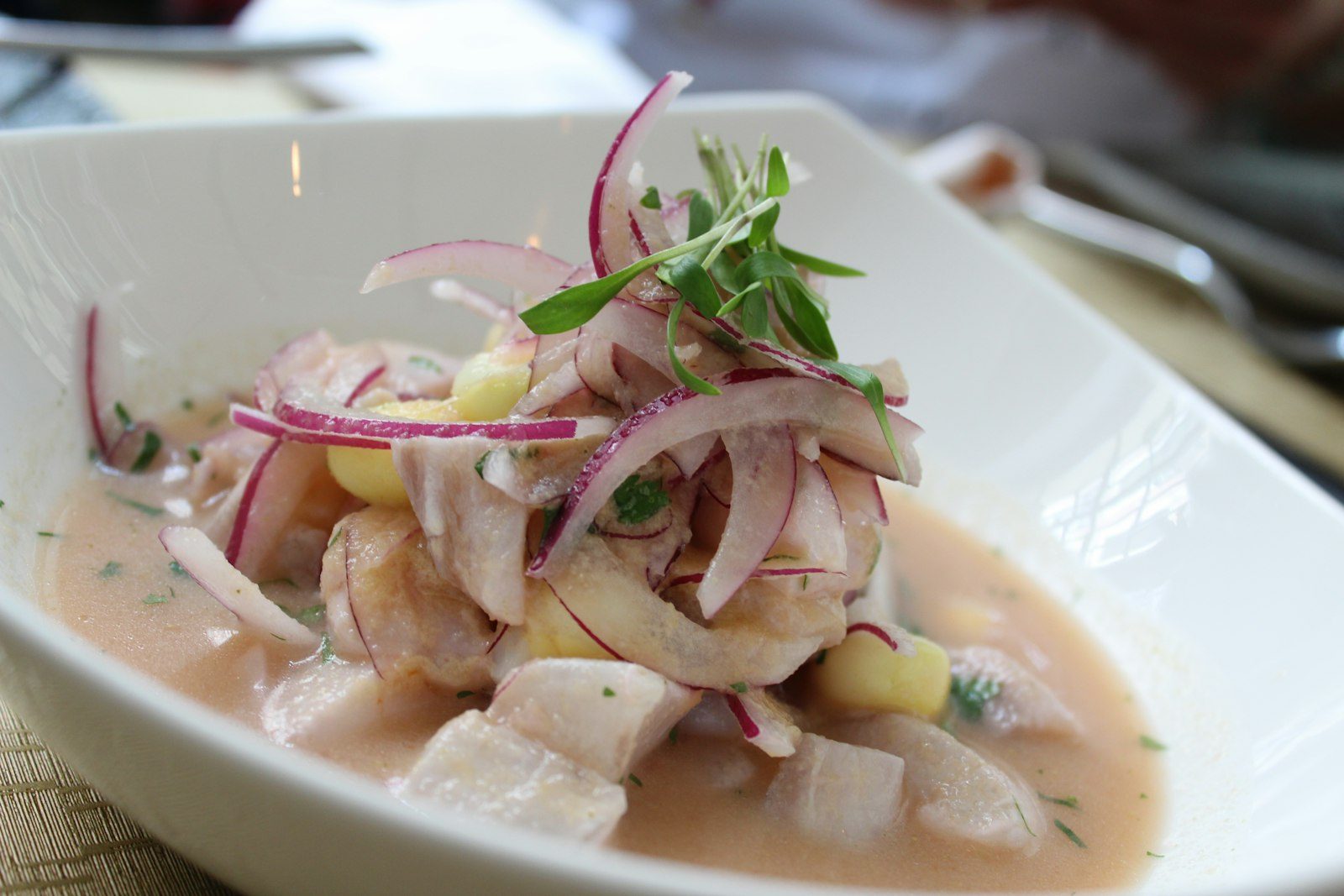
Ceviche (locals more often say "seviche" or "cebiche") is raw ocean fish, diced and "cooked" by the acid of lime in a matter of minutes. It comes with red onion, spicy ají pepper, salt and cilantro. The classic side pairing: boiled sweet potato camote and large kernel corn choclo.
Partner links: booking through them supports the blog at no extra cost to you.
The key detail tourists tend to miss is leche de tigre, "tiger's milk." That is the name for the juice left at the bottom of the plate: a blend of lime marinade, fish juices, pepper and salt. Locals drink it on its own, sometimes as a hangover tonic. Ordering yourself a glass of leche de tigre at a cevicheria is a sign that you understand how people eat here.
Ceviche here is not just a popular dish. In 2004 it was declared part of the national heritage, on 28 June the country celebrates Ceviche Day, and in December 2023 UNESCO added the culture of preparing ceviche to the Representative List of the Intangible Cultural Heritage of Humanity.
A practical tip: real cevicherias work mostly in the first half of the day, while the fish is fresh. A portion of ceviche at ten in the evening in a tourist district is worth treating with caution. Locals eat it for lunch, not as a late dinner.
Where the Asian influence in Peruvian food comes from
The two most interesting branches of Peruvian cuisine grew out of migration, and without them the picture would be incomplete.
Chifa is Chinese Peruvian cooking. It appeared in the 19th century, when thousands of workers arrived from Canton. Its most famous offspring, lomo saltado, is strips of beef stir fried over high heat with red onion, tomatoes and soy sauce, served at the same time with french fries and rice. Two starchy sides on one plate is not a mistake, but a signature Peruvian excess.
Nikkei is a fusion of Japanese and Peruvian cooking. It is exactly what brought Lima first place in the world ranking: in a nikkei version, ceviche might pick up a note of wasabi or soy sauce, and the raw fish is served with a technique close to sashimi. Japanese immigrants brought a respect for the freshness of the product, Peruvians added their pepper and acidity, and a distinct cuisine was born at the intersection.
Do Peruvians really eat guinea pig
Yes, and it is not a tourist attraction but everyday food in the mountain regions. Cuy (guinea pig) was a source of protein in the Andes even before the Incas. It is roasted whole or fried, most often in the regions around Cusco and Arequipa rather than on the coast.
Honestly, about who will not enjoy it. Cuy is served as a whole carcass, often with the head and paws, there is not much meat on it, and the skin is tough. If the look of a dish matters to you more than ethnographic interest, it is better to choose something else. Cuy is an experience rather than an everyday lunch, and it is worth ordering where they really know how to cook it, not at the first tourist spot in Cusco.
How many potato varieties Peru has and why it needs so many
The Andes are the homeland of the potato, and the numbers here impress even people who grew up on potatoes. According to estimates by the International Potato Center, Peru grows around three thousand varieties of native potato, and across the whole Andean region there are more than four thousand.
This diversity is not a collector's whim. Farmers plant different varieties at different altitudes, from 3500 to over 4000 meters, because each one holds up better against frost, drought or a particular soil. The flesh can be yellow, purple, blue or red. Many varieties never reach the market: they are traded between villages and given as wedding gifts.
On the plate, this history turns into several signature dishes. Papa a la huancaína is boiled potato under a creamy sauce of cheese and yellow ají pepper. Causa is a cold "pie" of mashed yellow potato, lime and pepper with a filling of chicken, tuna or avocado. And there is chuño, potato dried by frost and sun using an ancient Andean method, which keeps for years.
Where to go for each dish and what it costs
The prices below are a guide for 2026, in Peruvian soles and an approximate conversion into dollars. Rates and menus change, so double check before your trip.
| Dish | What it is | Where to look | Approximate price |
|---|---|---|---|
| Ceviche | Raw fish in lime with onion and pepper | Cevicheria, lunchtime, the coast | A portion at a local cevicheria costs tens of soles |
| Lomo saltado | Chinese style beef with potatoes and rice | Chifa, ordinary restaurants across the country | Mid range bill, a budget option |
| Cuy | Roasted guinea pig | Cusco, Arequipa, mountain regions | Higher than a regular main, like a festive dish |
| Tasting menu | Cuisine at the level of Maido or Central | Lima, the Miraflores and Barranco districts | Roughly 950 to 1600 soles (about 250-440 dollars) without drinks |
| Pisco sour | The national pisco cocktail | Bars in Lima and Cusco | The price of a cocktail at a bar, inexpensive outside hotels |
The gap between the rows of that table is the very essence of Peruvian gastronomy. Here you can have ceviche for lunch for the price of a coffee in Europe, or you can book a table months ahead and pay hundreds of dollars for a menu where each dish is a separate ecosystem of the country.
What to drink: pisco sour and beyond
Pisco is a grape brandy that is not aged in a barrel, so it stays clear and sharp. The national cocktail, pisco sour, is shaken from pisco, lime juice, sugar syrup, egg white and a few drops of Angostura bitters. Its first version, it is believed, appeared in Lima in the 1920s.
A separate topic of dispute is whose pisco it is, Peruvian or Chilean. Both countries produce it and both consider it their own. In Peru there is one clear answer to this question, and arguing with locals about the origin of pisco is pointless. If alcohol is not for you, try chicha morada, a purple drink made from boiled corn with pineapple and cinnamon, non alcoholic and available almost everywhere.
Why Lima in particular is called a food capital
Not because the guidebooks decided so. Lima has held its position in world restaurant rankings for years, and in 2025 the local nikkei restaurant Maido became first on The World's 50 Best Restaurants list. Earlier, in 2023, the top of the same ranking was held by another Lima establishment, Central. In 2026 the awards ceremony will be held in Lima itself for the first time, a historic event for South America.
The culinary heart of the city is the coastal districts of Miraflores, Barranco and San Isidro. There, simple cevicherias where locals come for lunch sit next to venues with waiting lists months long. But reducing food in Peru to three star restaurants would be a mistake: the real strength here is that even in a modest family run place the fish was brought in that morning, and the potato is known by taste, variety by variety.
Do you need a visa to taste all of this
No. As of 2026, citizens of Ukraine do not need a visa for a tourist trip to Peru. Entry is by biometric international passport, with an allowed stay of up to 90 days within every 180 days. Visa rules change, so before your trip check the current terms on official sources (mfa.gov.ua and Peruvian consular resources).
One practical detail about altitude, not about visas. Cusco and Machu Picchu lie high in the mountains, and in the first days the altitude hits your appetite and digestion. It is not worth planning your first encounter with heavy cuy right after arriving in the mountains: give your body a day to acclimatize, and the local tea made from coca leaves will make it easier.
If you are going for the first time, build your first food circuit around three things: a ceviche lunch on the coast, a plate of lomo saltado at an ordinary chifa, and a pisco sour in the evening. That is enough to understand the logic of the cuisine. If you have already been to Peru and tried the basics, go deeper: a tasting menu in Lima booked well in advance, cuy in a mountain region where they truly cook it, and a journey through the markets for potato varieties you had never even heard of back home.